Links & Quotes

link quote

Pay attention, guys: 3 Ways A Man Should Lead His Home. I love this quote from this post: “A husband and father can’t impart what he doesn’t possess. So the best strategy for the everyday preacher is to first preach the gospel to himself. Then, through his own repentance, he is able to lead his family to the very place where he himself has been.” —Dave Bruskas

This is a fun quiz: 100 Bible Knowledge Questions from Kevin DeYoung.

A brand new book from John Piper which he calls “the one most different from all the others.” Read more about Seeing Beauty And Saying Beautifully, and download a free PDF version.

A beautiful reminder from Chilly Chilton that God wants to bless us: The Search.

More Spirit-Filled Leaders

Listen to the podcast of this post by clicking on the player below, and you can also subscribe on AppleSpotify, or Audible.

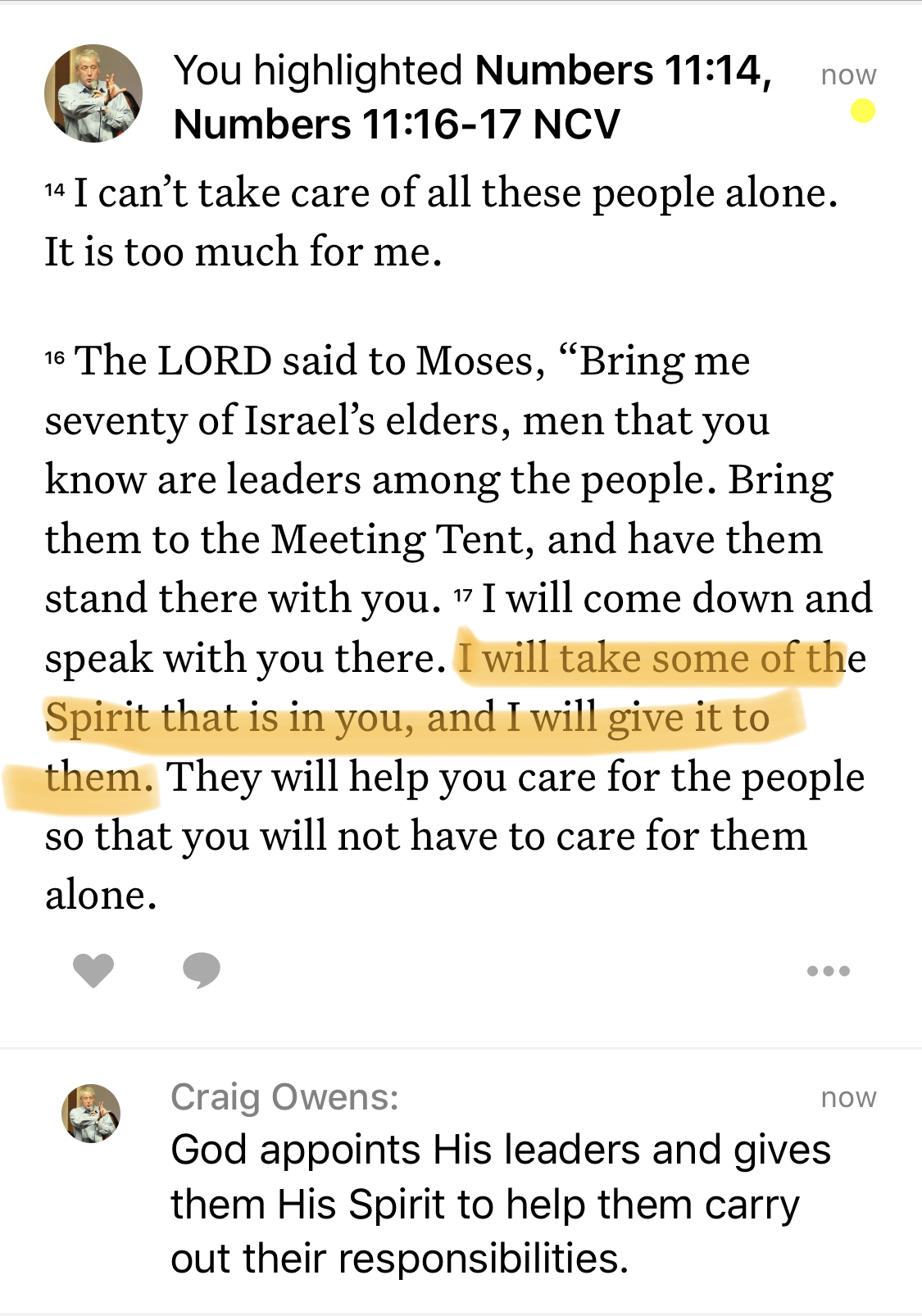
Moses was so right on the mark when he cried out, “I cannot carry all these people by myself; the burden is too heavy for me!” (Numbers 11:14)

It takes a confidently humble man to ask for help (Numbers 12:3). But God gives more grace to that humble person, while He stands aloof from those know-it-alls and those I-can-do-it-all-by-myselfs.

God anointed leaders to assist Moses. He took the same Spirit that was on Moses and imparted it to those 70 leaders. But—note this carefully—the Spirit on Moses was not at all diminished!

Moses’ responsibility was to pick the 70 “who are known to you as leaders” and then the Lord placed His Spirit on them. There were 70 who prophesied but Moses correctly desired “that all the Lord’s people were prophets and that the Lord would put His Spirit on them” (Numbers 11:16-17, 25, 29).

Leadership is necessary, and it is meant to be shared. From the senior leader, this requires:

  1. Humility
  2. Responsibility
  3. Willingness

Oh Lord, raise up more Spirit-empowered leaders!

►► Would you please prayerfully consider supporting this ministry? My Patreon supporters get behind-the-scenes access to exclusive materials. ◀︎◀︎

10 Quotes From “You Don’t Need A Title To Be A Leader”

You Don't Need A Title To Be A LeaderMark Sanborn has given us a wonderful book to help people be more well-rounded in their leadership, whether they have a title or not. You can read my full book review by clicking here. These are some of the quotes from this book that caught my eye.

“Leaders, untitled or otherwise, realize the extraordinary impact they can have on others and the world around them. They consciously choose to exercise their abilities, skills, and knowledge to help make a difference.”

“The reality is that we all work ‘backstage’ in our lives at times. Real leaders bring the same commitment to excellence to whatever they do, whether on the stage or behind it.”

“I began to see what happened to me as an opportunity rather than an obligation. And it made all the difference. Now when the phone rings, I respond to each call as an opportunity to serve, earn, learn, influence, network, encourage, or teach. The difference isn’t in the caller or the purpose for the call; the difference is in my response. … Genuine, authentic leadership infuses meaning into your life, because you know that your efforts count and that you are serving the needs of others as well as your own.”

“I think of the ‘self-mastery index’ as the ratio between promises made and promises kept—both to oneself and to others. If your mouth keeps making promises that you can’t keep, there is a great deal of room for improvement. Integrity, after all, is measured by the distance between your lips and your life. If you want to be a leader in your own life and in the lives of others, you’ve got to follow through on your own promises, whether you have a title or not.”

“You don’t necessarily have to be smarter or better educated to succeed. Your power lies in your ability to focus on doing what is important. If you focus on the right things, and work at them often, you will achieve exceptional results.”

“People do things for their own reasons, not for yours. To be an effective leader, you need to know how to motivate others.”

“One of the greatest compliments you can be paid as a leader is to have someone say that you helped them be better than they thought they could be.”

“People remember stories. Stories are the coat pegs of the mind. They are where people hang their ideas. Once they have a memorable story to help them remember, they can recall whatever important moral or point you have to make. … Telling an entertaining story is important, but being the story is better.”

“When something doesn’t happen, there is always an explanation. But never accept an explanation as an excuse. … Instead, use explanations to figure out what happened, then look for the lesson that will prevent that something from happening again.”

“Everyone makes a difference. The choice we all have is whether we want to make positive difference or a negative one.”

My Brothers

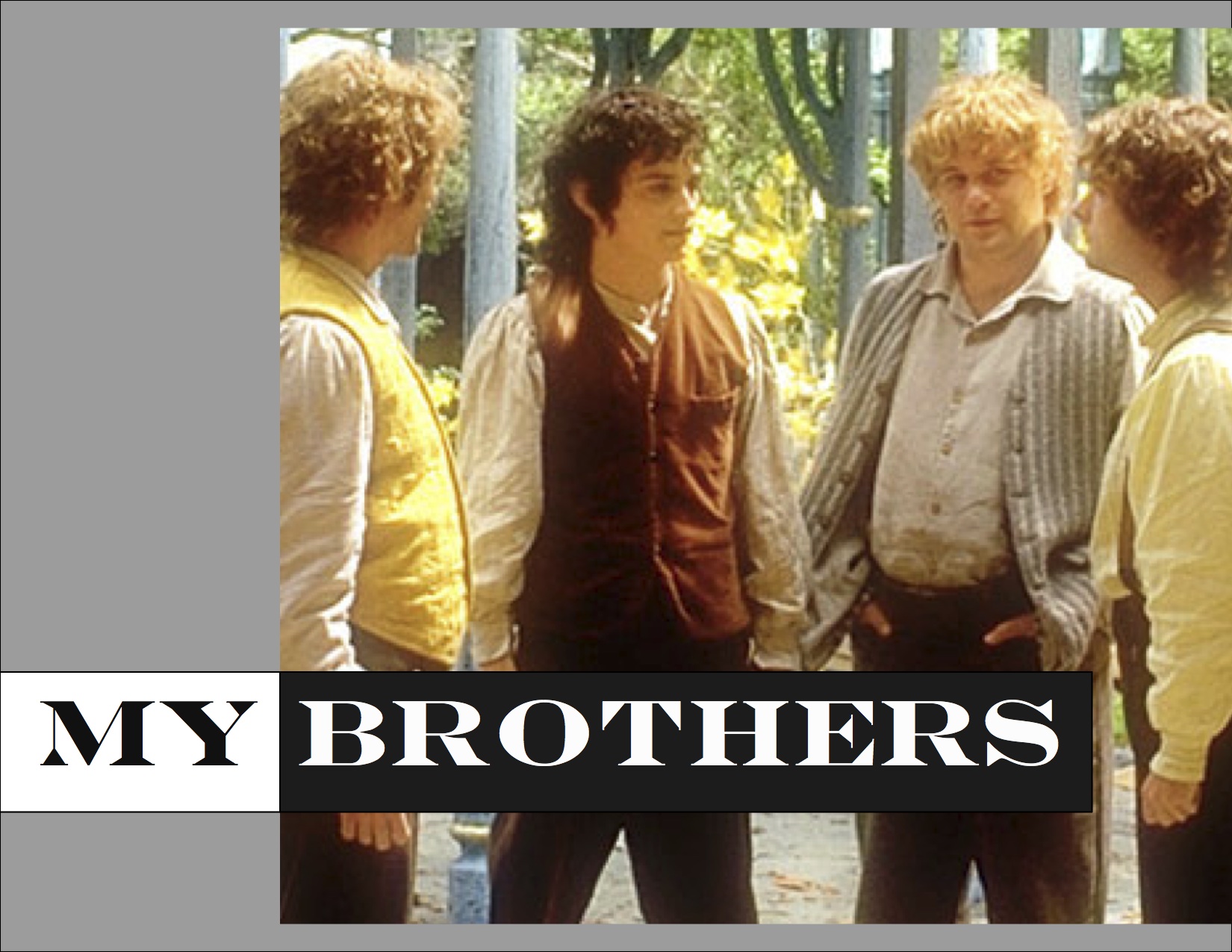
My brothersPastor, I love how the Apostle James consistently addresses his audience in his epistle. Over a dozen times in his five short chapters, Pastor James addresses his congregation as my brothers (sometimes the phrase is even my dear brothers).

The word brothers is always the Greek word adelphos, which means from the same womb. James didn’t elevate himself, nor put down others in the church; he constantly put himself on the same plain. He was saying, “Look, I struggle with what you struggle with—we all have the same issues. I’m not immune to these things because I’m the so-called leader of the Jerusalem church. I have to keep alert and keep on working in these areas too!”

Sometimes James adds the adjective dear (or as the KJV says, beloved). This word is from the root word which means to be fond of someone, to love dearly, or to be well pleased. James, in essence, is saying, “I like you! You’re not just someone that goes to church with me, but you’re a dear friend.”

As the adage goes—People don’t care how much you know until they know how much you care. So almost every point James covers in this epistle is introduced by the my brothers tag. It’s his way of reminding them, “I’m sharing this with you because I really like you, and I want us to grow closer to God together.”

Wow! What a great example for me as a pastor. I’m not immune to struggles. I’m not in a separate category. I’m in this with my dear brothers and sisters, and I want us to all overcome and grow in our level of intimacy with God together.

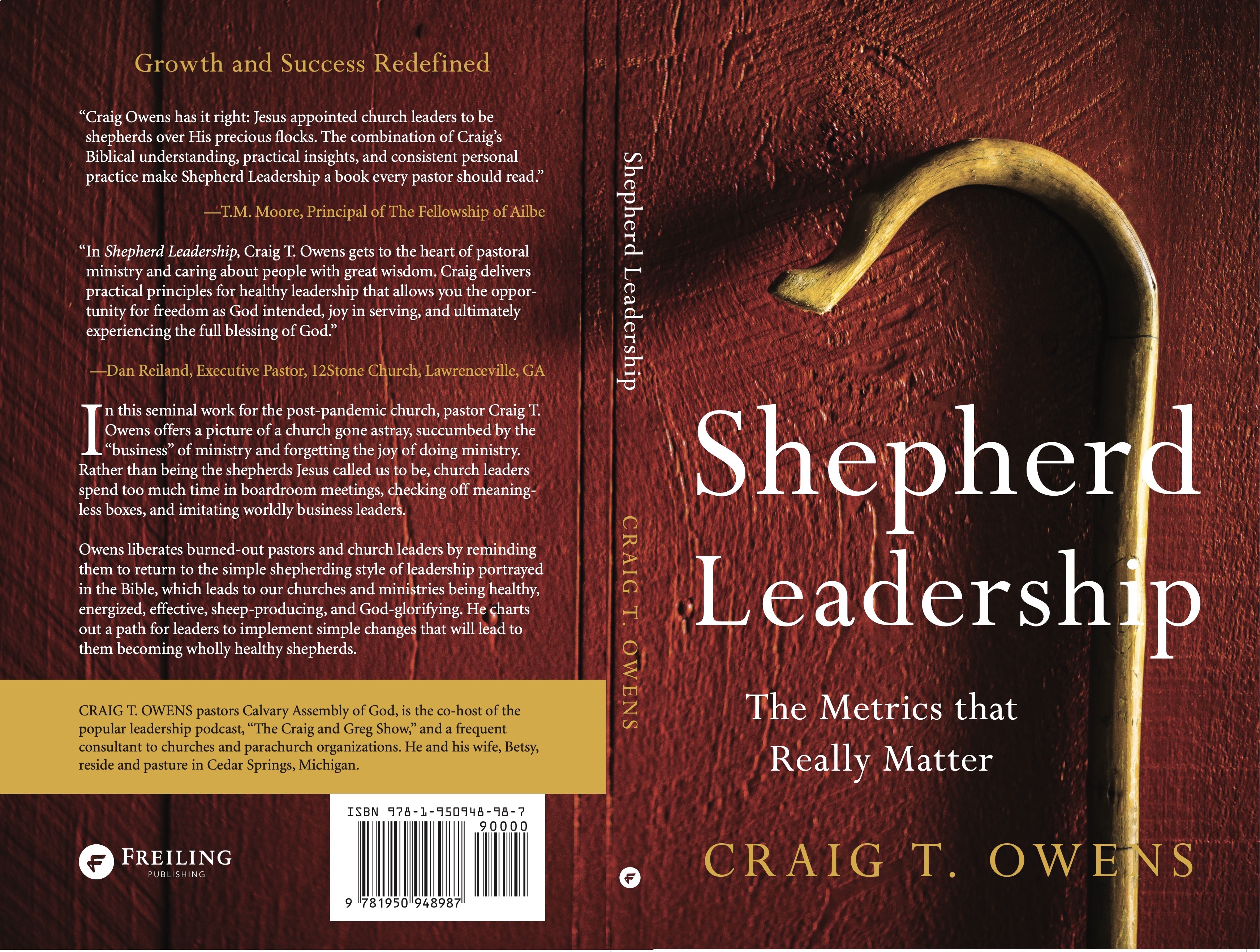
UPDATE: This is one of the major themes in my book for pastors called Shepherd Leadership. I hope you will check it out!

I Have Arrived!

Listen to the podcast of this post by clicking on the player below, and you can also subscribe on AppleSpotify, or Audible.

Do you remember when you got your first job that came with your name on a business card? What about when you were promoted to an office with your name on the door? Even better: what if you became so influential that your name is now on the stationary, or even becomes a part of the organization’s official name?!?

Look at you! You’ve arrived!

At least that’s how a lot of people see it. The more their name is plastered all over something, the more powerful they feel.

On Sunday evenings our Next Level Bible study is looking at the Book of James. In the first week of our study, we barely got past the first word: James. Who was this guy that has his name attached to a book in the Bible?

  • James was the half-brother of Jesus. In fact, since his name is listed first, he probably was the next oldest sibling after Jesus. Isn’t this the carpenter’s Son? Isn’t His mother’s name Mary, and aren’t His brothers James, Joseph, Simon and Judas? (Matthew 13:55).
  • Since Joseph (the earthly father of Jesus) is not mentioned again in the New Testament, many feel he died while Jesus was a teenager. As a result, after Jesus began His public ministry, the head-of-the-household responsibilities would have passed to James.
  • James met with Jesus one-on-one after His resurrection. Then [Jesus] appeared to James, then to all the apostles (1 Corinthians 15:7).
  • James was recognized by others as the leader of the Church in Jerusalem. James, Peter and John, those reputed to be pillars… (Galatians 2:9). He was also the chairman of the Council in Acts 15, and his decision was the final decision at that meeting.

From all appearances, it looks as though James has arrived! He’s got his name in all the right places, and is one of the most influential people in the early Church.

Yet look at how James referred to himself: James, a servant of God and of the Lord Jesus Christ (James 1:1).

If James thought he had “arrived,” it was only to arrive as a servant. His name may have been on the business card, or the church door, or the church letterhead. But he was only there to serve!

History gives us two other names for this great man: James The Just and Old Camel Knees (because of how much time he spent kneeling in prayer, and kneeling in service to Jesus and His followers).

If I ever “arrive,” I pray that like James I’ve only arrived to serve!

►► Would you please prayerfully consider supporting this ministry? My Patreon supporters get behind-the-scenes access to exclusive materials. ◀︎◀︎

Commissioned = Struggling

As I like to do on Fridays, this post is especially for my fellow pastors.

I have become [the church’s] servant by the commission God gave me to present to you the Word of God in its fullness. (Colossians 1:25)

Let’s be honest: What pastor wouldn’t say he/she wants to “serve” the church?

But look at Paul’s definition of a servant of the church (Colossians 1:24-2:5):

  • Suffering
  • Rejoicing in that suffering
  • Proclaiming the gospel
  • Admonishing the saints
  • Teaching with all wisdom
  • Maintaining a passion for everyone’s perfection
  • Laboring
  • Struggling

That’s quite a list!

Paul also says, “I want you to know how much I am struggling for you” (2:1). The word here and in 1:29 come from the same root word meaning: A contest (whether sports or a courtroom trial) in which there is a large audience, and in which one contestant is representing a larger group.

It’s like an Olympic athlete competing for his country, or an attorney speaking on behalf of her clients.

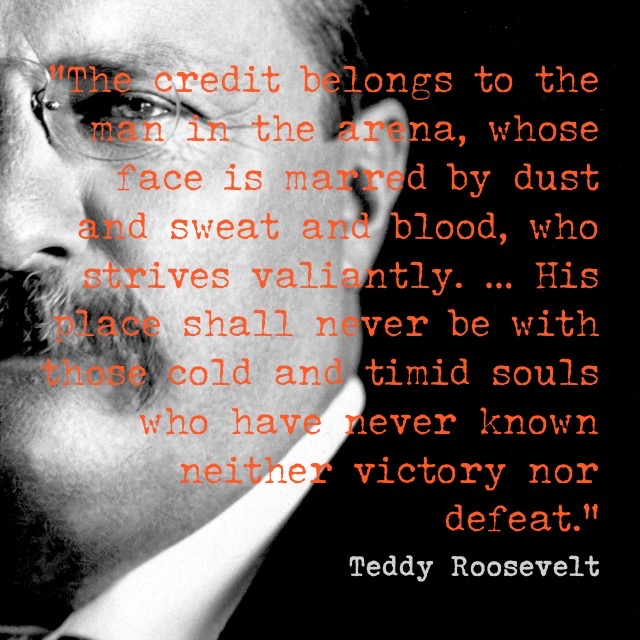
Then Paul adds, “I tell you this so that no one may deceive you by fine-sounding arguments” (2:4). In other words, actions speak louder than words. As Teddy Roosevelt famously said—

“It is not the critic who counts; nor the many who point out how the strong man stumbles, or where the doer of deeds could have done them better. The credit belongs to the man in the arena, whose face is marred by dust and sweat and blood, who strives valiantly…who knows the great enthusiasms, the great devotions, who spends himself in a worthy cause, who at the best knows in the end the triumph of high achievement, and who at the worst, if he fails, at least fails while daring greatly, so that his place shall never be with those cold and timid souls who have never known neither victory nor defeat.”

Pastor, stay in the arena!

Don’t walk away from the struggles!

Persevere through the difficulties!

People are watching you. What people? Specifically those sheep whom God has commissioned you to shepherd in His pasture. So stay in the fight!

I’m praying for you!

Pastoral Submission

What do you think of when you hear those words pastoral submission?

We may not be on the same page about this yet. I don’t mean people in a congregation submitting to a pastor. I mean something deeper than that.

Allow me to start with an unusual verse for this topic. Paul wrote,

When Peter came to Antioch, I opposed him to his face… (Galatians 2:11).

First of all, this is the proper way to handle an issue like this. Paul didn’t talk to others, nor run to the leaders in Jerusalem, but he went one-on-one with Peter.

Consider Paul’s relationship to Peter if there was a “corporate flowchart” for the First Century Church—Peter would have been Paul’s superior. Yet, Peter not only received this correction from Paul but continued to speak highly of Paul.

Beginning in the first chapter of Galatians we see Paul’s level of accountability. He answered to God, but he also submitted to other church leaders. Not only that, but this passage (Galatians 2:7-9) tells us that other church leaders submitted to Paul.

When I know God has called me, and I am doing my work for His approval alone, and when I know God has called others, and they too are ministering only for His approval then we can mutually submit to one another.

It’s not a top-down hierarchy in the church, except for Jesus being the Head and all others are below Him. All others (clergy and congregation) in the Body of Christ are on equal standing—no one is more important than any other. Therefore, as we submit to Christ’s Headship, we can also mutually submit to others in the Body.

What keeps us from doing this? Pride! We say, “What will others think of me if I submit?” Pastors think, “If I submitted to someone in my congregation, how could I ever lead this church? People will take advantage of me! No one will ever listen to me again!”

Not true!

When I am fully submitted to Christ, there is no stronger grounds for SERVANT leadership.

I don’t pastor to lead; I pastor to serve. 

I’m not building my church; I’m building Christ’s church. 

I’m not growing my followers; but followers of Jesus. 

Holy God, help me to know who I am in You. You have called me to pastor, so I am Your servant. Help me kill my pride! Help me serve and submit. Help me to build Your Church.

UPDATE: This post was one of the seed thoughts that went into fashioning my book Shepherd Leadership: The Metrics That Really Matter.

Thursdays With Oswald—Serving Like Christ

This is a weekly series with things I’m reading and pondering from Oswald Chambers. You can read the original seed thought here, or type “Thursdays With Oswald” in the search box to read more entries.

Am I Serving Like Christ?

The Son of Man did not come to be served, but to serve… (Matthew 20:28)

     Jesus also said, ‘Yet I am among you as the One who serves’ (Luke 22:27). Paul’s idea of service was the same as our Lord’s—‘…ourselves your bondservants for Jesus’ sake’ (2 Corinthians 4:5). We somehow have the idea that a person called to the ministry is called to be different and above other people. But according to Jesus Christ, he is called to be a ‘doormat’ for others—called to be their spiritual leader, but never their superior. Paul said, ‘I know how to be abased…’ (Philippians 4:12). Paul’s idea of service was to pour his life out to the last drop for others. And whether he received praise or blame made no difference. As long as there was one human being who did not know Jesus, Paul felt a debt of service to that person until he did come to know Him. But the chief motivation behind Paul’s service was not love for others but love for his Lord.

     …The institutional church’s idea of a servant of God is not at all like Jesus Christ’s idea. His idea is that we serve Him by being the servants of others. Jesus Christ actually ‘out-socialized’ the socialists. He said that in His kingdom the greatest one would be the servant of all (see Matthew 23:11). The real test of a saint is not one’s willingness to preach the gospel, but one’s willingness to do something like washing the disciples’ feet—that is, being willing to do those things that seem unimportant in human estimation but count as everything to God.

From My Utmost For His Highest

I cannot add anything to this brilliant observation. But I can tell you the parts that the Holy Spirit is really working in my heart:

  • “…called to be a ‘doormat’ for others—called to be their spiritual leader, but never their superior.” God, help me to keep my pride in check.
  • “The real test of a saint is not one’s willingness to preach the gospel, but one’s willingness to do something like washing the disciples’ feet.” May I never shrink back from willingly serving at the lowest level of society.

UPDATE: This idea of servant-leaders plays prominently in my book Shepherd Leadership: The Metrics That Really Matter.

A Spiritual Reflex

I love this quote from Martin Luther—

“I first lay down these two propositions concerning spiritual liberty and servitude. A Christian man is the most free lord of all, and subject to none; a Christian man is the most dutiful servant of all, and subject to everyone.”

Yesterday we had our annual business meeting—although it was really our annual celebration. The one thing that stood out to me about 2011 is how much serving Calvary Assembly of God did in Cedar Springs. We are servants to everyone!

We picked up trash, put on carnivals, cleaned the Cedar Creek, helped our neighbors, worked with other community organizations, and presented a living nativity. We answered the call to serve whenever and however it came to us. We served individuals, our city governments, our ministerial association, and other churches and non-profit organizations.

Doctors routinely check our patellar reflex, where they tap our leg just below the knee cap and watch the involuntarily response of our leg. This reflex helps maintain posture and balance, allowing us to keep our balance with little effort or conscious thought.

I want my and Calvary Assembly of God’s spiritual patellar reflex in 2012 to be servanthood. When anyone asks for help, our involuntary response should be service. This is the best way to keep our posture and balance as servants of Jesus Christ and servants of our Cedar Springs neighbors.

This is why so many people around here say, “I My Church!” Come join us in serving in 2012.

A Pastor’s Work

I have blogged before about how heavy I feel the responsibility of being a pastor. When I think of the awesome responsibility God has given me as His under-shepherd to His precious people, I am humbled.

Humility is a good thing.

Since the pastor is “out in front” at every gathering, speaking to the people, leading the church in a particular direction, people tend to view their pastor as their leader. And without humility, the people’s esteem can “puff up” a pastor. Unfortunately, I’ve been around pastors who have gotten a little too, shall I say, “puffy.”

So this dose of godly wisdom from J.C. Ryle is just the preventative medicine I need:

“We should beware of resting our claim to the people’s attention on our outward [pastoral] call only. It will never do to tell our people, ‘We are your ordained ministers, and therefore you must believe and follow whatever we tell you.’ On the contrary, we must tell them to prove our teaching by Scripture, and not to receive it unless it is scriptural. That man has no right to expect the attention of his people, who does not preach the Gospel and live the Gospel. The rule of Paul is clear on this point. He told the Thessalonians to esteem their ministers very highly ‘for their work’s sake’ (1 Thessalonians 5:13). When there is no ‘work’ done, it is vain to expect the people’s esteem.

Pastors, do the work of humbly working as God’s servant to His people. Use your position to serve, not to presume upon others.

Church attendees, make us pastors “prove our teaching by Scripture.” We don’t get to say, “Because I’m the pastor and I say so!”

UPDATE: This post went into my thinking for my book Shepherd Leadership: The Metrics That Really Matter.