“All that is necessary for the triumph of evil is that good men do nothing.” —Edmund Burke
This is as true for Christians as it is for anyone else.
In addressing the church at Pergamum (see Revelation 2:12-17), Jesus calls the Christians out for their silence. He tells them that what He has against them is their close relationship with those who hold to unbiblical ideas.
Pergamum’s sin is our sin in the USA today: tolerance. We let things slide, hoping to get along with others, trying not to rock the boat, trying to avoid being labeled a “hater,” and finding ways to be everyone’s friend.
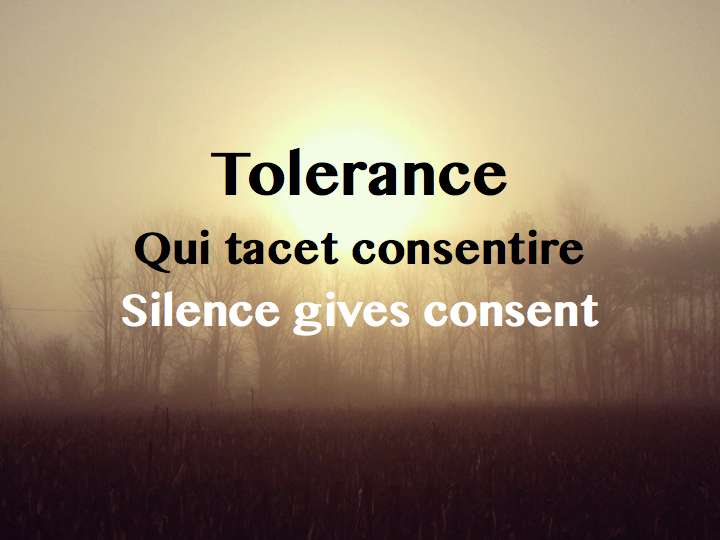
There is a Latin phrase used in legal circles that says: Qui tacet consentire, which means Silence gives consent. If you don’t speak up to challenge what is stated, it is assumed that you believe it.
Jesus calls the church at Pergamum to repent for their tolerance. He calls for them to speak the truth of God’s Word. Twice the phrase is used to remind us of God’s Word being sharper than a double-edged sword.
Our job as Christians is not to win an argument, bring conviction, or become the sin police. Our job is to speak God’s truth in love.
True friends speak out when someone they care about is making a foolish choice. True Christians loving speak The Truth when the world around them is selling out to a convenient lie.
“In keeping silent about evil, in burying it so deep within us that no sign of it appears on the surface, we are implanting it, and it will rise up a thousandfold in the future. When we neither punish nor reproach evildoers … we are ripping the foundations of justice from beneath new generations.” —Alexander Solzhenitsyn
The message Jesus had to deliver to the church at Smyrna (Revelation 2:8-11), was a heavy message. It’s a message I believe Christ is still speaking to the church today. In essence Jesus said, “I know how hard it’s been for you as a Christian. You’ve stood tall so far, but brace yourselves because more persecution is coming.”
Charles Spurgeon said, “There are no crown-wearers in Heaven who were not cross-bearers here below.” How true!
But I love the message from Jesus to us: “Yes,” He says, “things are hard, but weigh those things against the rewards I have for you! Hang in there! You will bring Me glory and you will earn the very highest rewards I can give!”
I tried to illustrate Christ’s message this way—
I will be continuing my series on The 7-Star Church next Sunday. If you are in the Cedar Springs area, I would love to have you join us!
I love our annual Q Series where the subject matter for those Sundays is driven by the questions people have submitted to me. It’s a bit scary too! Over the last couple of Sundays I’ve fielded questions on topics like freewill versus predestination, divorce and remarriage, the Trinity, backsliding, and more.
As is usually the case, there were more questions than I had time for, so I’ve attempted to answer a couple of remaining questions via video—
Just because The Q Series is done for this year doesn’t mean I’m done answering questions. I love having these sorts of conversations! So feel free to keep sending the questions my way and let’s search the Bible together.
“Heaven will solve our problems, but not, I think, by showing us subtle reconciliations between all our apparently contradictory notions. The notions will all be knocked from under our feet. We shall see that there never was any problem.” —C.S. Lewis
Seven times in just two chapters of the book of Revelation, Jesus says, “He who has an ear, let him hear what the Spirit says to the churches.” That same Spirit is still speaking to the churches today.
As you may know, the number seven in the Bible stands for completion. Although there were many more churches in Asia minor, Jesus delivered a message to seven of them. In other words, He delivered a complete, well-rounded message to all churches by speaking to those seven. Those messages are still speaking to us today.
This Sunday I’m beginning a new series of messages called The 7-Star Church—Becoming The Church That Pleases Christ from this text in Revelation. It’s going to be a challenging word, but an encouraging word at the same time.
If you are near Cedar Springs, please join me at Calvary Assembly of God on Sunday morning at 10:30am. Come with an ear to hear what the Spirit is still saying to us today.
Listen to the podcast of this post by clicking on the player below, and you can also subscribe on Apple, Spotify, or Audible.
John opens the book of Revelation with this greeting: Grace and peace to you from Him who is, and who was, AND WHO IS TO COME… (Revelation 1:4). This is so significant because of the other descriptive phrases John uses for Jesus:
Jesus was pre-existent before creation (John 1:1).
John was witness to everything Jesus did during His public ministry, including all of the claims Jesus made about Himself (1 John 1:1).
And now John says not only has Jesus existed before time existed, not only is He alive now, but He is coming back again!
This is what makes the resurrection of Jesus so important. Jesus Himself told us exactly what was going to happen with His death by crucifixion and His resurrection three days later. The fact that these statements all turned out to be true gives us greater assurance that His promise that He is coming back is also true.
In His very first sermon, Jesus quoted from Isaiah about how He would conduct His earthly ministry (see Isaiah 61:1-2 and Luke 4:18-19). But when He quotes the passage from Isaiah, He leaves off a phrase “and a day of vengeance of our God.” God’s wrath against sin is being held back for now, but the day of judgment is coming.
John says Jesus is the One Who is to come, and records later on how Jesus will come—
I saw Heaven standing open and there before me was a white horse, whose rider is called Faithful and True. With justice He judges and wages war. His eyes are like blazing fire, and on His head are many crowns. He has a name written on Him that no one knows but He Himself. He is dressed in a robe dipped in blood, and His name is the Word of God. The armies of Heaven were following Him, riding on white horses and dressed in fine linen, white and clean. Coming out of His mouth is a sharp sword with which to strike down the nations. “He will rule them with an iron scepter.”He treads the winepress of the fury of the wrath of God Almighty. (Revelation 19:11-15)
God made Jesus to be sin for us. He suffered and died to pay the penalty for our sins, and those who are still found in their sins—unforgiven, without placing their faith in Jesus Christ’s sacrificial death and resurrection—must face the wrath of God.
Jesus is not only our Risen Savior, but He is the soon-returning King and Judge.
Three times the last book of the Bible records Jesus Himself saying, “I am coming soon!” This isn’t a scare tactic, it’s real. As certainly as Jesus rose from the grave, He is returning soon.
Are you ready for His return? Are you telling others that Jesus is our soon-returning King? I hope you know what it means to have Jesus as your Lord and Savior, and I hope you are telling as many other people as you can about our soon coming King!
Listen to the podcast of this post by clicking on the player below, and you can also subscribe on Apple, Spotify, or Audible.
One of the misconceptions about Jesus is that He first appears on the scene in a manger in Bethlehem. Nothing could be further from the truth! Jesus appears in the opening words of the Bible—In the beginning God created—and in the last words of the Bible—Yes, I am coming soon. And He appears in every word in between!
B.B. Warfield has a great picture of the Old Testament being a mansion with richly-decorated, beautifully-ornate rooms, but which are dimly lit. So with just the Old Testament by itself, it is hard to appreciate the magnificent beauty that’s there. In Jesus, the light is turned on, and we can now appreciate the glory and majesty that was always there!
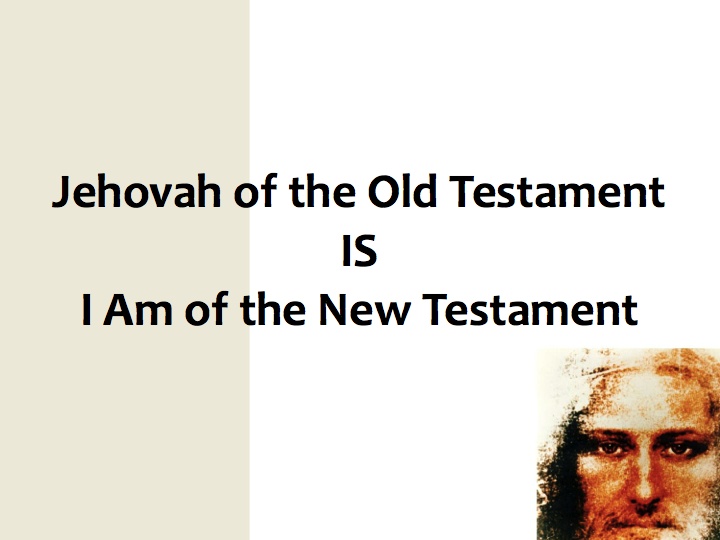
So notice how the “I Am” statements shine a bright light on the titles of “Jehovah”—
Jehovah Jireh (I Am Your Provider) → I am the Bread of Life (John 6:35)
Jehovah Rapha (I Am Your Healing) → I am the Resurrection and the Life (John 11:25-26)
Jehovah Nissi (I Am Your Source) → I am the Vine (John 15:5)
Jehovah Shalom (I Am Your Peace) → I am the Light of the world (John 8:12)
Jehovah Raah (I Am Your Shepherd) → I am the Good Shepherd (John 10:11)
Jehovah Sabaoth (I Am Your Wall Of Protection) → I am the Gate (John 10:9)
Jehovah Tsid-kenu (I Am Your Righteousness) → I am the Way, Truth, and Life (John 14:6)
Jehovah Shammah (I Am Here) → I am the Alpha and Omega (Revelation 1:8; 22:13).
In essence Jesus is saying “I Am Jehovah in all His fullness.” So what are we to make of that? What are we to make of Jesus Christ? Here’s how C.S. Lewis addressed that very question:
“This is a question which has, in a sense, a frantically comic side. For the real question is not what are we to make of Christ, but what is He to make of us? The picture of a fly sitting deciding what it is going to make of an elephant has comic elements about it. But perhaps the questioner meant what are we to make of Him in the sense of ‘How are we to solve the historical problem set us by the recorded sayings of this Man?’
“The problem is to reconcile two things. On the one hand you have got the almost generally admitted depth of sanity of His moral teaching, which is not very seriously questioned, even by those who are opposed to Christianity. In fact, I find when I am arguing with very anti-God people that they rather make a point of saying, ‘I am entirely in favor of the moral teaching of Christianity….’
“On the one side clear, definite moral teaching. On the other, claims which, if not true, are those of a megalomaniac, compared with whom Hitler was the most sane and humble of men. There is no halfway house and there is no parallel in other religions. If you had gone to Buddha and asked him, ‘Are you the son of Bramah?’ he would have said, ‘My son, you are still in the vale of illusion.’ If you had gone to Socrates and asked, ‘Are you Zeus?’ he would have laughed at you. If you had gone to Mohammed and asked, ‘Are you Allah?’ he would first have rent his clothes and then cut your head off. If you had asked Confucius, ‘Are you Heaven?’ I think he would have probably replied, ‘Remarks which are not in accordance with Nature are in bad taste.’
“The idea of a great moral teacher saying what Christ said is out of the question. In my opinion, the only person who can say that sort of thing is either God or a complete lunatic suffering from that form of delusion which undermines the whole mind of man.” (emphasis mine)
In this quote, C.S. Lewis gives us three choices about Jesus. We can either say (1) He is a liar, (2) He is a lunatic, or (3) He is who He says He is.
This morning I shared this quote from Leonard Sweet and Frank Viola’s book Jesus: A Theography—
“When Jesus said to satan, ‘Get behind Me,’ He was acknowledging that we all live with the devil. We cannot escape evil on this earth. But as long as we are in front and he is behind us, we are protected. The devil ought not be in our line of vision but in our shadow.”
It reminds me of the old song:
Turn your eyes upon Jesus
Look full in His wonderful face
And the things of earth will grow strangely dim
In the light of His glory and grace
Stop looking at that loser named satan! Stop listening to the one who’s been defeated and whose fate is already sealed! Keep your eyes fixed on Jesus! Keep your ears tuned into His voice!
“Where, O death, is your victory? Where, O death, is your sting?” (1 Corinthians 15:55)
Jesus says: I am the Living One; I was dead, and now look, I am alive for ever and ever! And I hold the keys of death and Hades. (Revelation 1:18)
And the devil, who deceived them, was thrown into the lake of burning sulfur, where the beast and the false prophet had been thrown. They will be tormented day and night for ever and ever. (Revelation 20:10)
Coaches and parents especially don’t encourage those under their care to taunt their opponents. But the Bible does!
Seriously!
As a part of our P119Spiritual Workout series, we looked at the section called Waw yesterday—
May Your unfailing love come to me, O Lord, Your salvation according to Your promise; then I will answer the one who taunts me, for I trust in Your Word. (Psalm 119:41-42)
“I will answer the one who taunts me.” How exactly do you answer the taunter? The word for answer here in Hebrew comes from the idea of “singing tunefully.”
You know how it feels when you have that perfect zinger—that great one-liner as a comeback to someone who’s tweaked you?
And you know how you don’t just say that zinger, but you add a musical note to it as well, just to add a little emphasis?
Well, this is what Christians can do to the devil when he taunts them! The book of Revelation tells us that satan is the accuser (the taunter) of the Christians, and that we overcome him by the blood of Jesus and the word of our testimony. But the psalmist says it’s not just plain old words, but the lilting sing-song, tuneful reply to his taunt.
We reply to our enemy’s taunts with a Scriptural-based tweak of our own. We can remind him of our total forgiveness in Christ. We can tell him how God loves us, and sent His Son to die for our sins, and how the Holy Spirit has been given to us as a deposit guaranteeing that we are now in Christ. We can use the Bible to tunefully taunt the taunter with the truth of God’s Word.
Don’t just silently take it when the enemy accuses you. Don’t get mad. But shut him up by answering him with a song right from God’s Word!
In answering questions that have been submitted for The Q Series, I noticed a recurring trend: How much of our “conventional thought” in church circles is not revelation, but speculation.
Yesterday I had some tough questions on Heaven, Hell, suicide, our resurrected bodies, the after-life, and so on. In answering these questions, I used many passages from the Bible, but I also quoted from Charles Spurgeon, Charles Dickens, and C.S. Lewis. There’s nothing wrong, per se, with quoting from extra-biblical sources, but we have to be very careful what we do with those.
I once heard renowned evangelist C.M. Ward say something like this:
“The Word of God is completely good; you can devour all of it. But reading anything else is like eating chicken. There is some meat that’s good, and there are some bones, and gristle, and fat that you should spit out. Be very careful of what you take in, unless it is the pure Word of God.”
The Bible reveals so much for our lives, and we put ourselves in a place God can bless us when we are obedient to the revelation of His Word. But we put ourselves on shaky ground when we live by speculation of what we think may be truth.
The Apostle Peter said it this way:
For no prophecy ever originated because some man willed it [to do so — it never came by human impulse], but men spoke from God who were borne along (moved and impelled) by the Holy Spirit. (2 Peter 1:21 AMP)
I love technology. But along with all of the technology comes a whole lot of noise. Not necessarily the noise that your ears pick up, but the noise in your mind.
We’ve got Facebook for the latest social updates
Twitter and blogs for the latest news and commentary
Flickr, Twitpic, and Intragram for the latest pictures
LinkedIn for the latest business interactions
Smart phones for instant messaging
And if we miss out on any of those things, we feel left behind.
Here’s the ironic thing about all of this social media. Trying to keep up with everything and everyone raises the level of cortisol (a stress hormone) in our bodies. And cortisol actuallyincreases anti-social behavior.
In the midst of trying to tune in and keep up with all of these other voices, we often miss out on the most important Voice.
Jesus says: Listen! I am standing and knocking at your door. If [not when] you hear My voice and open the door, I will come in and we will eat together. (I added the bracketed commentary.)
Today I’m trying to quiet all of the other voices and just listen to The Voice. So today is a media/technology fast.
No blogging (I wrote this post yesterday)
No Twitter or Facebook
No texting
No iPod or TV or computer time
I’m taking time to make sure I’m tuning into the most important Voice. I challenge you to try it too. Listen to see what Jesus has to say to you.



 “All that is necessary for the triumph of evil is that good men do nothing.” —Edmund Burke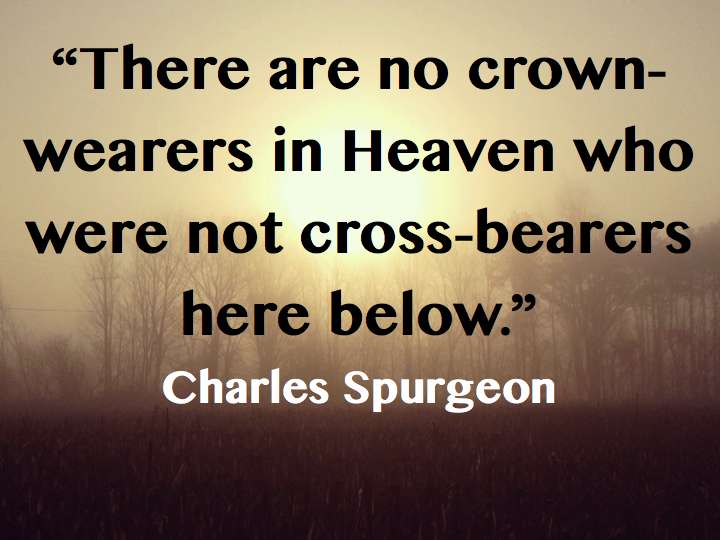

![The 7-Star Church [web]](https://craigtowens.com/wp-content/uploads/2013/09/the-7-star-church-web.jpg)