


Listen to the podcast of this post by clicking on the player below, and you can also subscribe on Apple, Spotify, or Audible.
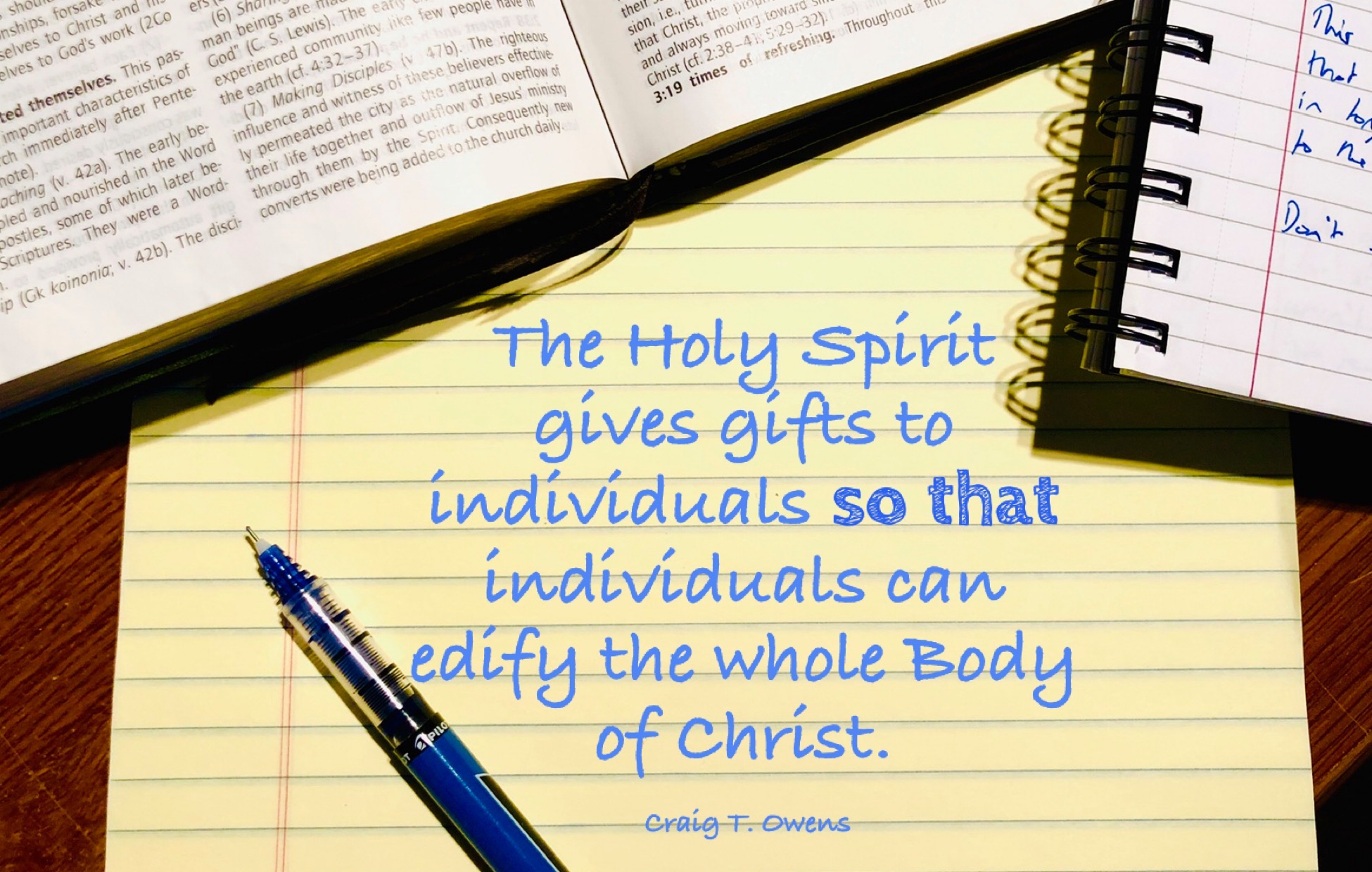 One of the miracles we talked about last week was the Holy Spirit giving gifts to people that evangelize the sinner and edify the saint. Let me be more specific: YOU are God’s gift to the world if you are using God’s gift to glorify God in the world.
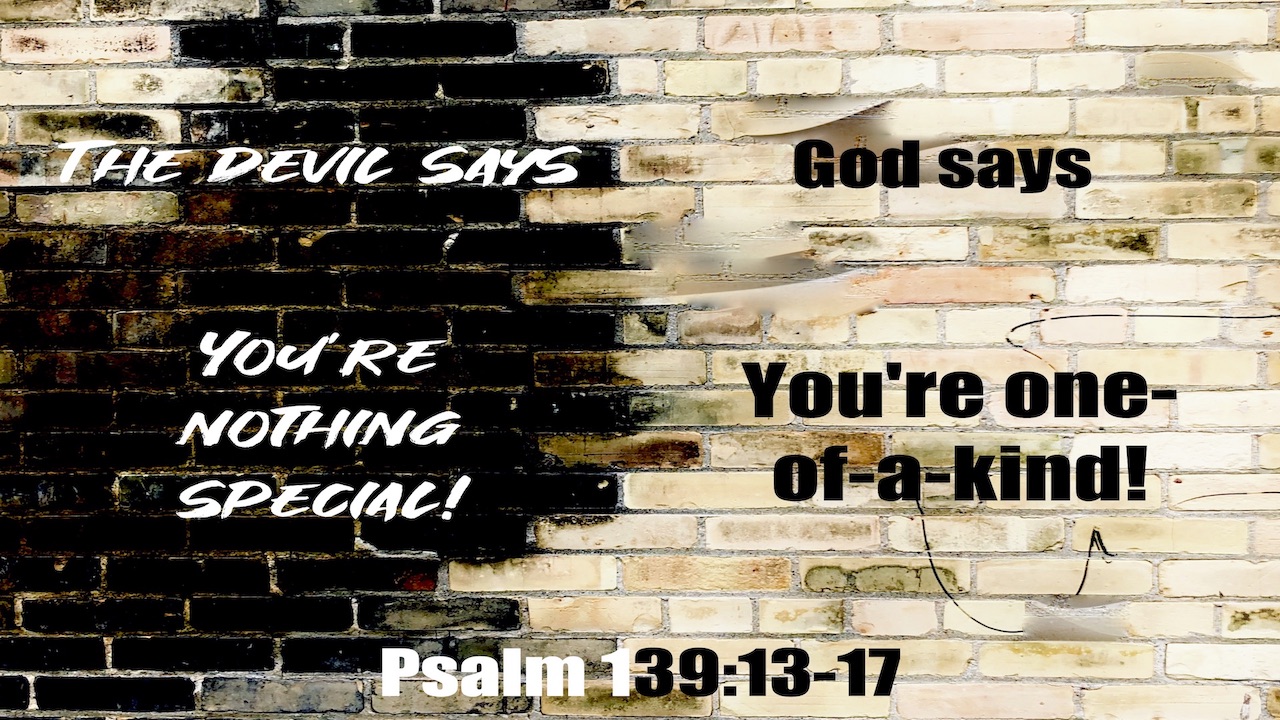
You are a one-of-a-kind creation. God is infinitely creative so He never has to duplicate any of His creative works. He saw your life and implanted in you what you need to glorify Him (Psalm 139:13-18). But we need to think about this uniqueness the right way.
Lucifer, an archangel, became satan, the Christian’s archenemy, because of his oversized pride. Pride is what turned Lucifer into satan, and it’s a tactic he still uses today on God’s creations. His other tactic is slander: attempting to get us to think we are insignificant and have no real purpose in the world.
Just like Jesus did, we overcome satan’s lies with the truth in God’s Word.
 In Romans 12, Paul talks about our lives being used as a living, breathing, God-honoring sacrifice. But Romans 12:1 begins with the word “therefore,” so we need to back up a few verses. The final four verses of chapter 11 are a beautiful doxology that is praising God for His wisdom and sovereignty. Paul then offers this conclusion: Therefore we need to think correctly about our place in the world, allowing the Holy Spirit to transform our thoughts.
Paul uses the word “think” twice in this passage. The root word is the same in each place (phroneo in Greek), but the prefix is what sets them apart from each other. The first has the prefix hyper-. That means it’s overly-analyzed thinking, overly self-concerned thinking, or self-focused.
The second time the prefix is soph- (which means “wise”). This is sound thinking, big-picture thinking, or others-focused. The Holy Spirit wants to give us sophroneo thinking to reveal our God-implanted gifts and talents that are to be used to benefit others—in fact, to benefit the whole Body of Christ.
In Romans 12, Paul uses the phrase “one body” twice as he talks about our spiritual gifts. He uses the same “one body” praise three times in 1 Corinthians 12 as he again talks about spiritual gifts (1 Corinthians 12:12-13, 20).
All of our spiritual gifts are to be used in love and to build up others (1 Corinthians 12:31—13:3; 14:1, 12, 26, 40).
The Holy Spirit gives gifts to individuals so that individuals can edify the whole Body of Christ. It’s not competing with one another but completing one another.
Remember: Saints is always plural in the New Testament! I need you to bring out the saintly qualities in my life, as much as you need me to bring out the saintly qualities in your life.
This summer I will be offering an in-depth teaching on the spiritual gifts listed in the New Testament. We’ll take some assessments and discuss how these gifts can best be invested in the Body of Christ. I hope you can join me for an hour of learning on Wednesdays.
If you’ve missed any of the messages in our series exploring our Pentecostal roots, you can find all of those messages by clicking here.
►► Would you please prayerfully consider supporting this ministry? My Patreon supporters get behind-the-scenes access to exclusive materials. ◀︎◀︎








 Craig T. Owens
Spurgeon And The Psalms (book review)
June 7, 2022 — Craig T. OwensListen to the podcast of this post by clicking on the player below, and you can also subscribe on Apple, Spotify, or Audible.
After I opened the cover, I was not disappointed. I love the format of each chapter. For each chapter your eyes go to Charles Spurgeon’s commentary first, and then you can read the chapter itself. The reason why I like this layout is because Spurgeon has a tendency to tell us not what the psalmist says, but what we should look for as we read that psalm. This remains true to what Spurgeon himself felt about biblical commentaries.
I always make my Bibles my own. By that I mean that I underline, highlight, circle, and write margin notes throughout my Bible. The wide margins in this book make it ideal to use as a prayer companion. I believe the Bible is not a Book to be read through, but a Book to be prayed through. Nowhere is that more true than in the Psalms, where such deep emotions are poured out in God’s presence, helping us give voice to our deepest prayers.
If you have never read anything from Charles Spurgeon, this is an excellent place to get started. After you have read his insights here, I’m confident that you will want to read more. Even if you are familiar with Spurgeon’s sermons and books, this book is going to be an excellent addition to your library.
I am a member of the Bible Gateway Blogger Grid and I reviewed this book at their invitation.
►► Would you please prayerfully consider supporting this ministry? My Patreon supporters get behind-the-scenes access to exclusive materials. ◀︎◀︎
Share this: