Links & Quotes

John Piper wrote to pastors, “That is the main task of preaching, and the main purpose of small groups and all the ministries of the church: helping people see the greatness of what Christ has purchased for everyone who will value it above the world. Helping people see it and savor it, so that God’s superior worth shines in their satisfaction and in the sacrifices that come from such a heart.”

“The gospel of Christ, what is it? We look at the last two words, ‘of Christ.’ Indeed, if you understand Christ, you understand the gospel. Christ is the Author of it. He, in the council chamber of eternity, proposed to become the Surety for poor fallen man! He, in the fullness of time, worked out eternal redemption for as many as His Father had given Him. He is the Author of it as its Architect and Builder. We see in Christ Jesus the Alpha and the Omega of the gospel. He has provided in the treasury of grace all that is necessary to make the gospel the gospel of our salvation. And as He is the Author of it, so He is the matter of it. It is impossible to preach the gospel without preaching the Person, the work, the office, and the character of Christ. If Christ is preached, the gospel is promulgated, and if Christ is put in the background, then there is no gospel declared.” —Charles Spurgeon

Would you prayerfully consider supporting my Patreon page at only $5 per month?

Josh McDowell addresses the question, “Did Jesus say He is God?

Marshall Seagal wrote an insightful article about patience. He notes, “Patience exists only in a world of disruption, delays, and disappointment. It grows only on the battlefield. We cannot practice patience unless our circumstances call for it—and the circumstances that call for it are the kinds of circumstances we wouldn’t choose for ourselves.”

The Biblical Archeological Report has a history of Egyptian Pharaoh Hophra that is quite fascinating. It’s always so interesting to me to watch how these archeological finds square with the historical records contained in the Bible.

11 Quotes From “Out Of The Depths”

John Newton’s autobiography Out Of The Depths contains a very interesting closing chapter. They are not the words written by John Newton, but the words spoken by him to his friends and parishioners. Here are a few that especially caught my attention. You can check out my full book review of Out Of The Depths by clicking here.  

“If two angels were sent from heaven to execute a divine command, one to conduct an empire and the other to sweep a street in it, they would feel no inclination to change employments.”

“A Christian should never plead spirituality for being a sloven. If he be but a shoe cleaner, he should be the best in the parish.” 

The remaining nine quotes are exclusive content for my Patreon supporters. In addition to book quotes, there are videos and behind-the-scenes views that only these supporters have access to. I would love it if you would prayerfully consider supporting my ministry for just $5 per month.

Links & Quotes

One of the last pictures I took with my Mom ♥

“Love of the Word appears preeminently in our Lord and Savior Jesus Christ. He read it publicly. He quoted it continually. He expounded it frequently. He advised the Jews to search it. He used it as His weapon to resist the devil. He repeatedly said, ‘The Scripture must be fulfilled.’ Almost the last thing He did was to ‘open their minds so they could understand the Scriptures’ (Luke 24:45). I am afraid that man cannot be a true servant of Christ, who has not something of his Master’s mind and feeling towards the Bible.” —J.C. Ryle, Bible Reading 

“The character of our praying will determine the character of our preaching. Light praying will make light preaching. …The preacher must be preeminently a man of prayer. His heart must graduate in the school of prayer. In the school of prayer only can the heart learn to preach.” —E.M. Bounds, Power Through Prayer 

I have blogged several thoughts about the historicity of the Bible. Here’s a post on Breakpoint about yet another archeological discovery that once again vindicates the Bible’s trustworthiness.

“Some pastors and preachers are lazy and no good. They do not pray; they do not read; they do not search the Scripture. … The call is: watch, study, attend to reading. In truth you cannot read too much in Scripture; and what you read you cannot read too carefully, and what you read carefully you cannot understand too well, and what you understand well you cannot teach too well, and what you teach well you cannot live too well. … The devil … the world … and our flesh are raging and raving against us. Therefore, dear sirs and brothers, pastors and preachers, pray, read, study, be diligent.” —Martin Luther

Looking at God’s awesomeness brings a peace that nothing else can.

A very thought-provoking Q&A with Sean McDowell and Dr. Stephen Meyer: Does Science Point to God?

Sermon Prep 101

Listen to the podcast of this post by clicking on the player below, and you can also subscribe on AppleSpotify, or Audible. 

Go down to the potter’s house, and there I will give you My message (God speaking to Jeremiah).

Jesus was masterful in using visual illustrations—common, everyday things—to illustrate the biblical truth He wanted to teach. God does the same thing with Jeremiah. 

God instructs Jeremiah to simply go to the potter’s house and watch. Jeremiah obeyed: “I went down to the potter’s house, and I saw him working” (v. 3). It was after taking in this scene that God could speak to Jeremiah a sermon illustration. Jeremiah says, “Then the word of the Lord came to me” (v. 5). 

Not only did God help Jeremiah prepare his sermon with a visual illustration, but God also prepared Jeremiah for the follow up conversation. God knew how the people would respond to Jeremiah’s message, and He again gave him the words to speak ahead of time (vv. 12-17). 

God knows His sheep better than we do. He knows what they need to hear, and how best to make His message stick. Jesus said, 

“I have never spoken on My own authority or of My own accord or as self-appointed, but the Father Who sent Me has Himself given Me orders concerning what to say and what to tell. And I know that His commandment means eternal life. So whatever I speak, I am saying exactly what My Father has told Me to say and in accordance with His instructions.” (John 12:49-50 AMP) 

We pastors and evangelists dare not try to prepare a message on our own! 

Samuel Johnson prayed something that I pray every time I sit down to prepare a sermon: “Almighty God, my Heavenly Father, without Whose help labor is useless, without Whose light search is in vain, invigorate my studies.” 

Seeking God’s help in our sermon preparation should be our very first action every single time. 

►► Would you please prayerfully consider supporting this ministry? ◀︎◀︎

An Appeal To Preachers

Listen to the podcast of this post by clicking on the player below, and you can also subscribe on AppleSpotify, or Audible. 

…They have turned their backs to Me and not their faces; yet when they are in trouble, they say, “Come and save us!” (God in Jeremiah 2:27) 

In so many ways the USA today resembles ancient Israel. Abortion, prostitution, idolatry, envy, greed, atheism, dirty politics, self-serving church leaders. Our culture calls itself “Christian” but we live anything but. 

God is not allowed to be mentioned in our schools, but the moment there is a school shooting, people cry, “Where was God?! Why didn’t He stop this?!” 

God is banished from the town square, but as soon as a tornado or hurricane or flood levels the town, the people yell, “How could God let this happen?!” 

This was exactly the same lifestyle and same response in Jeremiah’s day. 

When these painfully tragic things happen, there should be a different response: “Consider then and realize how evil and bitter it is for you when you have forsaken the Lord your God and have no awe of Me” (v. 19). 

Typically, this considering takes place post-tragedy. But it really should be considered before disasters strike. Four times in this chapter God calls us to consider “the word of the Lord” (vv. 1, 4, 5, 31). In order for that considering to take place, loving pastor-shepherds need to hold up the mirror of God’s Word to the ungodly lifestyles people are living.

To all of my fellow pastors, I appeal to you to boldly and lovingly proclaim the full counsel of God’s Word. Not just the “pleasant” parts that speak of God’s blessings, but also the calls to repentance that will allow your people to avoid God’s righteous judgment. And don’t wait to only speak about these topics post-tragedy, but make this message a consistent part of your teaching. 

Pastor, if you don’t speak these truths to your flock, how will they know how to live in the way that pleases God? I am praying that God will help you in this. 

►► Would you please prayerfully consider supporting this ministry? ◀︎◀︎

Thursdays With Spurgeon—A Word To Preachers

This is a weekly series with things I’m reading and pondering from Charles Spurgeon. You can read the original seed thought here, or type “Thursdays With Spurgeon” in the search box to read more entries.

Listen to the podcast of this post by clicking on the player below, and you can also subscribe on iTunes or Spotify.

A Word To Preachers

I planted, Apollos watered, but God gave the increase. So then neither he who plants is anything, nor he who waters, but God who gives the increase. Now he who plants and he who waters are one, and each one will receive his own reward according to his own labor. For we are God’s fellow workers; you are God’s field, you are God’s building. (1 Corinthians 3:6-9) 

     Paul is a laborer, Apollos is a laborer, Cephas is a laborer, but not so much as a foot of the farm is Paul’s, nor does a single parcel of land belong to Apollos, or the smallest allotment to Cephas. ‘You are Christ’s, and Christ is God’s’ (1 Corinthians 3:23). The fact is that in this case the laborers belong to the land and not the land to the laborers, ‘for all things are yours: whether Paul or Apollos or Cephas’ (3:21-22). … 

     Brothers, a laborer may work very hard at a whim of his own and waste his labor, but this is folly! Some discourses do a little more than show the difference between a Tweedledum and Tweedledee, and what is the use of that? … 

     All God’s laborers must go to Him for their seed, or else they will scatter tares. All good seed comes out of God’s granary. If we preach, it must be the true word of God or nothing can come of it. … A sermon is vain talk and dreary word spinning unless the Holy Spirit enlivens it. … 

     Here we have mention of a personal service and a personal reward: ‘Each one will receive his own reward according to his own labor.’ The reward is proportionate, not to the success, but to the labor! Many discouraged workers may be comforted with that expression. You are not to be paid by results, but by endeavors.

From Farm Laborers

My dear preacher friend, God sees you. He has placed you in the field where He needs you to be, and He has given you the skills you need to have to labor for Him. Never doubt that! 

You may be the one breaking up hard ground, or the one sowing seed, or the one watering, or the one bringing in the harvest. Wherever you are and whatever you are doing, rely on the strength God gives you. He will illuminate His Word to your heart first so that you can share a timely word with those under your care. Then He will send the Holy Spirit to enliven all that you preach. 

God has given you the tools and skills, now you must diligently supply the effort. Don’t become discouraged by what seems to be a lack of “success.” As God tells us through Paul, He will reward your faithful labor in His field. 

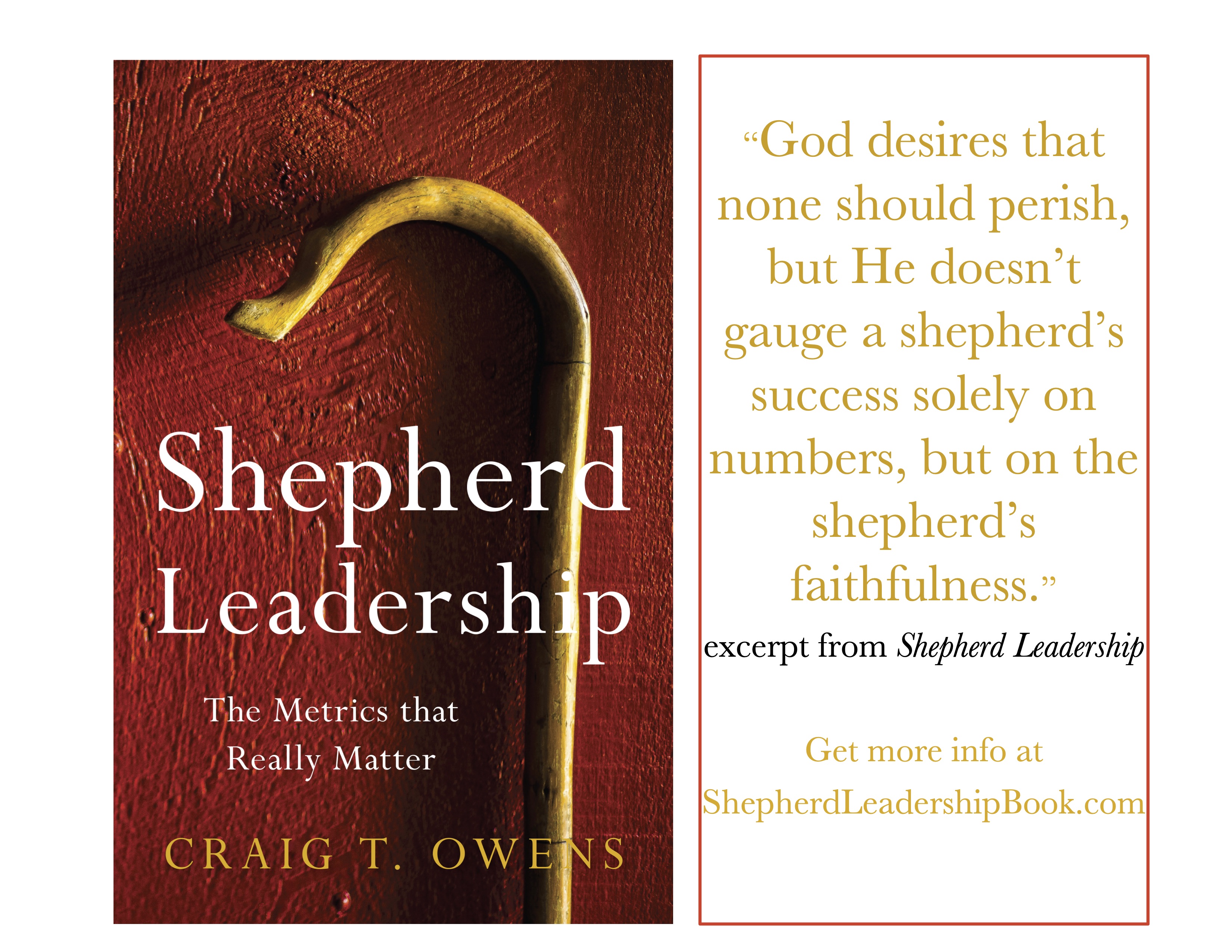
My book Shepherd Leadership: The Metrics That Really Matter elaborates on this point. The thoughts in this book will remove from you the burden of trying to live up to any unbiblical metric of “success” in your ministry. I hope you will get a copy of this book! Check out ShepherdLeadershipBook.com for more details.

►► Would you please prayerfully consider supporting this ministry? ◀︎◀︎

Poetry Saturday—Sunday Choice (Complaint #1)

Listen to the podcast of this post by clicking on the player below, and you can also subscribe on Apple or Spotify.

I’d shut down once the text is read,
and wish I’d just stayed home instead.
What do they teach these guys in school?
Must boredom be their guiding rule?
When insipid’s their claim
to weekly homiletic fame,
and sin can sit at ease, unfazed
with all the rest whose eyes are glazed,
while humor or some story take
the place of exposition—wake
me when it’s over, if you please.
The devil’s tools are such as these.
Before them lies the Word of Life:
It should dissect us like a knife
and cause our sin-sick souls to howl
to be exposed so dark and foul.
We should be ushered through the gate
of glory, crushed beneath its weight
and, listed by a skillful hand,
there made with joy to safely stand
before our Savior’s beaming face,
secure in His redeeming grace,
and all astounded to be seen
in His eyes loved, forgiven, clean,
and fitted to His bidding do.
Instead, we are subjected to
some moral exhortation in
the name of Him who died for sin,
which most accept too readily
since it requires no change, you see,
but serves to reassure them that
God’s fine with them right where they’re at.
The Church thus weekly sermonized
is steadily more marginalized.
The Kingdom’s coming waits until
those called to preach their calls fulfill
with courage and consistency,
to vaunt Christ, with humility. —T.M. Moore

►► Would you please prayerfully consider supporting this ministry? ◀︎◀︎

Seeing Beauty And Saying Beautifully (book review)

Listen to the podcast of this post by clicking on the player below, and you can also subscribe on Apple or Spotify.

Seeing Beauty And Saying Beautifully is, in my mind, a grand slam! It features one of my favorite poets (George Herbert), possibly the most prolific evangelist of history (George Whitefield), my all-time favorite author (C.S. Lewis), all tied together by my go-to theologian (John Piper). Seeing Beauty And Saying Beautifully is part 6 in Piper’s series called “The Swans Are Not Silent.” 

George Herbert was a pastor of a small country church and a prolific poet who wrote almost all of his poems uniquely. “Of the 167 poems in The Temple, 116 are written with meters that are not repeated,” which even modern poets find astounding. George Whitefield spent more hours of his life preaching than he did sleeping, and he spoke with such a captivating style that he was quite possibly the first celebrity of the American colonies. C.S. Lewis wrote everything from history to fantasy, autobiography to poetry, theology to children’s novels. Peter Kreeft says of him, he “was not a man: he was a world.” 

John Piper finds in all three of these men a common thread: They all were able to not only see the beauty of God in everything, but they were able to express it in a beautiful way that drew in others to see the beauty of God for themselves. Pastor John calls this “poetic effort.” 

Pastor John also wrestles with how the profound creativity and eloquence of his three subjects meshes with the apostle Paul’s admonition that human eloquence could drain the Cross of Jesus of its power (see 1 Corinthians 1:17-2:5). He concludes that poetic effort for the sake of exalting the speaker or poet does turn people’s eyes to man and away from God. But that poet, evangelist, or author that uses the beauty in God’s creation to point people to the Creator is doing so in a way in which God is supremely exalted. This, Pastor John says, is exactly what Herbert, Whitefield, and Lewis have done, and done so well that their poetic efforts are still fruitful and God-glorifying long after their deaths. 

Seeing Beauty And Saying Beautifully is a wonderful book for those who enjoy biographies, theology, or the craft of skilled artisans. If you don’t know about the poems of George Herbert, the preaching of George Whitefield, or the vast library of literature of C.S. Lewis, let this book be your doorway to a rich new world of discovery, enjoyment, and God-glorification. 

►► Would you please prayerfully consider supporting this ministry? ◀︎◀︎

Thursdays With Spurgeon—An Exhortation To Preachers

This is a weekly series with things I’m reading and pondering from Charles Spurgeon. You can read the original seed thought here, or type “Thursdays With Spurgeon” in the search box to read more entries.

An Exhortation To Preachers 

He will glorify Me, for He will take of what is Mine and declare it to you. All things that the Father has are Mine. Therefore I said that He will take of Mine and declare it to you. (John 16:14-15) 

     Ah, brothers, the Holy Spirit never comes to glorify us, or to glorify a denomination, or, I think, even to glorify a systematic arrangement of doctrines! He comes to glorify Christ! If we want to be in accord with Him, we must preach in order to glorify Christ. May we never have this thought: ‘I will put that bit in. It will sound well….’  No, no! 

     I would say, ‘Brother, though it is a very delightful piece, strike that out, because if you have had a thought of that kind about it, you had better not put yourself in the way of temptation by using it.’ … 

     Well then, it may be very admirable, and further, it might be a very right thing to give them that precious piece; but if you have that thought about it, strike it out! Strike it out ruthlessly! Say, ‘No, no, no! If it is not distinctly my aim to glorify Christ, I am not in accord with the aim of the Holy Spirit and I cannot expect His help!’ … 

     How then does the Holy Spirit glorify Christ? It is very beautiful to think that He glorifies Christ by showing Christ’s things. If you wanted to do a honor to a man, you would, perhaps, take him a present to decorate his house. But here, if you want to glorify Christ, you must go and take the things out of Christ’s house ‘the things of Christ.’ … 

     Again, I think that the blessed Spirit glorifies Christ by showing us the things of Christ as Christ’s. Oh, to be pardoned! Yes, it is a great thing, but to find that pardon in His wounds, that is a greater thing! Oh, to get peace! Yes, but to find that peace in the blood of His Cross! … That it came from Christ is the best thing about the best thing that ever came from Christ! …  

     He will glorify Me, for He will take of what is Mine and declare it to you.’ Yes, it does glorify Christ for the Holy Spirit to show Christ to us. … Since it is for the honor of Christ for His things to be shown to men, He will show them to us, that we may go and show them to other people.

From Honey In My Mouth

My fellow pastor, I cannot add anything to these wise words except this simple exhortation: Read these words again and ask the Holy Spirit to show you how you can more accurately live this out in your sermon preparation and preaching. 

God bless you, my friend!

Things That Diminish Pastoral Ministry

Horatius Bonar pulls no punches when he talks to pastors! Words To Winners Of Souls is a compilation of sermons Bonar preached to fellow pastors. 

These are a list of things that Bonar said would diminish a pastor’s ministry: 

“Seldom in secret prayer with God, except to fit for public performance; and even that much neglected, or gone about very superficially. 

“Glad to find excuses for the neglect of duties. 

“Neglecting the reading of Scriptures in secret, for edifying ourselves as Christians; only reading them in so far as may fit us for our duty as ministers, and oft-times neglecting that. 

“Not given to reflect upon our own ways, nor allowing conviction to have a thorough work upon us. …

“Not guarding nor wrestling against seen and known evils, especially our predominants. … 

“Not praying for men of a contrary judgment, but using reservedness and distance from them; being more ready to speak of them than to them or to God for them. …  

“The matter we bring forth is not seriously recommended to God by prayer, to be quickened to His people. 

“Neglect of prayer after the Word is preached, that it may receive the first and latter rain; and that the Lord would put in the hearts of his people what we speak to them in his name. … 

“Choosing texts whereon we have something to say, rather than those suited to the conditions of souls and times, and frequent preaching of the same things, that we may not be put to the pains of new study. … 

“Not making all the counsel of God known to His people. … 

“Continual employment in the most solemn duties of our office, such as dealing with souls in private about their immortal welfare, or guiding the meditations and devotions of God’s assembled people, or handling the sacramental symbols—this, gone about often with so little prayer and mixed with so little faith, has tended grievously to divest us of that profound reverence and godly fear which ever ought to possess and pervade us.” —Horatius Bonar 

To my fellow pastors, may we especially heed Bonar’s fourth warning and ask the Holy Spirit to help us “reflect upon our own ways” and if necessary to allow Him to bring a “conviction to have a thorough work upon us.”