Thursdays With Oswald—A Moral Lavatory

This is a weekly series with things I’m reading and pondering from Oswald Chambers. You can read the original seed thought here, or type “Thursdays With Oswald” in the search box to read more entries.

A Moral Lavatory

     The Bible does not deal with sin as a disease; it does not deal with the outcome of sin, it deals with the disposition of sin itself. … We have cheapened the doctrine of sin and made the Atonement a sort of moral ‘lavatory’ in which men can come and wash themselves from sin, and then go and sin again and come back for another washing. …

     All Heaven is interested in the Cross of Christ, all Hell terribly afraid of it, while men are the only beings who more or less ignore its meaning.

From Biblical Ethics

This hits me in two areas.

First, as a sinner saved by grace. I am so grateful for the gift of grace. I want to treat this gift with all of the gratitude I can. It was purchased for me with such a high price: The blood of the sinless King of kings. May my sin break my heart as much as it breaks my Heavenly Father’s heart. I’m grateful grace is there when I blow it, but I don’t want to blow it ever again.

Dietrich Bonhoeffer described cheap grace like this:

“Cheap grace is the preaching of forgiveness without requiring repentance, baptism without church discipline, Communion without confession, absolution without personal confession. Cheap grace is grace without discipleship, grace without the Cross, grace without Jesus Christ, living and incarnate. … Cheap grace is the grace we bestow on ourselves.”

Second, as a pastor who teaches about the atonement and grace. I know that I will have to give account before God if the people who hear me teach about these gifts are ones who “ignore its meaning.” I want to do everything I can to make sure everyone who listens to me understands the inestimable value of the Cross of Jesus Christ.

In his book Costly Grace, Jon Walker writes:

“Costly grace justifies the sinner: Go and sin no more. Cheap grace justifies the sin: Everything is forgiven, so you can stay as you are.”

Grace is powerful stuff. May we always treat it that way.
Thursdays With Oswald—How To Think About Sin

This is a weekly series with things I’m reading and pondering from Oswald Chambers. You can read the original seed thought here, or type “Thursdays With Oswald” in the search box to read more entries.

How To Think About Sin

     We have to face the problem that our hearts may be right with God while our heads have a startling affinity with a great deal that is antagonistic to the Bible teaching. What we need, and what we get if we go on with God, is an intellectual re-birth as well as a heart re-birth.

     The trouble with the modern statements regarding sin is that they make sin far too slight. Sin according to the modern view simply means selfishness, and preachers and teachers are as dead against selfishness as the New Testament is. Immediately we come to the Bible we find that sin is much deeper than that. According to the Bible, sin in its final analysis is not a defect but a defiance, a defiance that means death to the life of God in us. …

     According to the Bible, sin is doing without God. Sin is not wrong doing, it is wrong being, deliberate and emphatic independence of God.

From Biblical Ethics

Sometimes I just have to read Oswald Chambers, let it soak in, read it again, and then sit back and exhale deeply. His profound insights into how a Christian should live always seem to hit me right between the eyes.

Here’s what I’m pondering: “The trouble with the modern statements regarding sin is that they make sin far too slight.” Do I make excuses for sin? Do I say, “It’s not that big of a deal”?

And this: “Sin is not wrong doing, it is wrong being, deliberate and emphatic independence of God.” Am I living each and every moment totally dependent on God? It’s when I think I can do it on my own that I am the most vulnerable to sinning.

Thursdays With Oswald—The Realness Of The Holy Spirit

This is a weekly series with things I’m reading and pondering from Oswald Chambers. You can read the original seed thought here, or type “Thursdays With Oswald” in the search box to read more entries.

The Realness Of The Holy Spirit

     The Holy Spirit makes Jesus Christ both present and real. He is the most real Being on earth, ‘closer is He than breathing, and nearer than hands and feet.’ Simply receive the Holy Spirit, rely upon Him and obey Him and He will bring the realization of Christ….

     The Holy Spirit is seeking to awaken men out of lethargy; He is pleading, yearning, blessing, pouring benedictions on men, convicting and drawing them nearer, for one purpose only, that they may receive Him so that He may make them holy men and women exhibiting the life of Jesus Christ. How the devil does rob Christians who are not thinking on Pentecostal lines of the tremendous power of the Presence of Jesus made real by the Holy Spirit!

From Biblical Ethics

When Jesus said He would never leave us, He fulfilled this promise by sending the Holy Spirit. The Holy Spirit is our constant Guide, our wisest Counselor, our kindest Teacher, and the illuminating Spirit of Truth.

Think about this: The same Holy Spirit who inspired the writing of the Scriptures, is the same Holy Spirit Who will illuminate those Scriptures to you. How the devil does rob Christians who are not thinking on Pentecostal lines!

Holy Spirit, I willingly yield to Your illuminating and transforming presence in my life today!

Thursdays With Oswald—The New Thinking Of Pentecost

This is a weekly series with things I’m reading and pondering from Oswald Chambers. You can read the original seed thought here, or type “Thursdays With Oswald” in the search box to read more entries.

The New Thinking Of Pentecost

     Everywhere the charge is made against Christian people, not only the generality of Christians, but really spiritual people, that they think in a very slovenly manner. Very few of us in this present dispensation live up to the privilege of thinking spiritually as we ought. This present dispensation is the dispensation of the Holy Spirit. The majority of us do not think according to the tremendous meaning of that; we think ante-Pentecostal thoughts, the Holy Spirit is not a living factor in our thinking; we have only a vague impression that He is here. Many Christian workers would question the statement that we should ask for the Holy Spirit (Luke 11:13). The note struck in the New Testament is not ‘Believe in the Holy Spirit,’ but ‘Receive the Holy Spirit.’ That does not mean the Holy Spirit is not here; it means He is here in all His power, for one purpose, that men who believe in Him might receive Him. So the first thing we have to face is the reception of the Holy Spirit in a practical conscious manner. …

     So as Christians we have to ask ourselves, does our faith stand ‘in demonstration of the Spirit and of power’? Have we linked ourselves up with the power of the Holy Spirit, and are we letting Him have His way in our thinking?

From Biblical Ethics

There are two dangerous extremes: (1) We can become so intellectual, that we never ask for the Holy Spirit’s help, or (2) We can become so “spiritual” that we ignore the development of our intellect.

I believe the proper balance is a both-and approach.

  • In the Old Testament, David asked for the Holy Spirit to search his heart and thoughts (Psalm 139:23-24).
  • Jesus said that the Holy Spirit would guide us into all truth (John 16:13), and that He would help us to recall the things we have heard from Christ (John 14:26).
  • The apostle Paul talked about the Holy Spirit searching our mind and revealing God’s mind to us (1 Corinthians 2:10-16).

(check out all of the above Scriptures by clicking here.)

All of these speak of a partnership. We have to do our part AND we have to listen to the Holy Spirit’s voice. And from personal experience, I’ve found that I think much more clearly and thoroughly when I listen to the Holy Spirit!

Thursdays With Oswald—Not Self-Conscious, But God-Conscious

This is a weekly series with things I’m reading and pondering from Oswald Chambers. You can read the original seed thought here, or type “Thursdays With Oswald” in the search box to read more entries.

Not Self-Conscious, But God-Conscious

     When I am lifted by the Atonement into oneness with God I do not lose my personal identity, my identity becomes that of conscious union with God. Man’s relationship with God in the beginning was such that the consciousness of union with Him was a delight: as soon as sin entered that went and man became self-conscious: he realized he was no longer in union with God and tried to hide himself from His presence.

From Biblical Ethics

For to me, to live is Christ… I have been crucified with Christ and I no longer live, but Christ lives in me. The life I live in the body, I live by faith in the Son of God, Who loved me and gave Himself for me. (Philippians 1:21; Galatians 2:20)

A great way to remember the meaning of the word Atonement is like this: At one-ment. Jesus paid the price for me to be at one-ment with the Father. He did not die so I could become more aware of myself, but so I could become more aware of God.

Christ’s Atonement makes me dead to me, and alive to Him; dead to trying to figure out myself, and alive to learn more of Him; dead to self-consciousness, and alive to God-consciousness.

And I would much rather be more aware of Him than I am of me!

What’s Your Point?

As I am preparing my message for each Sunday, I have one point that I want everyone to have clear in their hearts and minds when they leave. It’s sort of my “finish line.” I say, “If they get only one thing from this message, what should it be?” This is the part where I spend quite a bit of time.

Then I read this from the Apostle Paul:

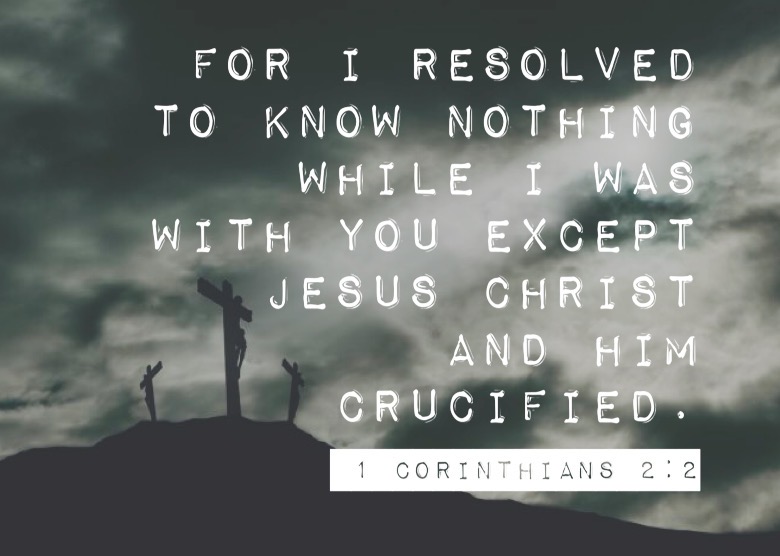
When I came to you, brothers, I did not come with eloquence or superior wisdom as I proclaimed to you the testimony about God. For I resolved to know nothing while I was with you except Jesus Christ and Him crucified. (1 Corinthians 2:1-2)

So what’s my point?

Something clever and witty?

Something that shows how eloquent I am?

Perhaps another rule to follow?

Or another application to make?

Oswald Chambers says, “To say that we are called to preach holiness or sanctification is to miss the main point. We are called to proclaim Jesus Christ….” (emphasis mine)

My point should be only this:

To help people see Jesus more clearly.

Anything less than this is to miss the point.

Anything more than this is attempting to make myself sound eloquent.

Thursdays With Oswald—Why Do I Go To God?

This is a weekly series with things I’m reading and pondering from Oswald Chambers. You can read the original seed thought here, or type “Thursdays With Oswald” in the search box to read more entries.

Why Do I Go To God?

     We have become so self-centered that we go to God only for something from Him, and not for God Himself. It is like saying, ‘No, Lord, I don’t want You; I want myself. But I do want You to clean me and fill me with Your Holy Spirit. I want to be on display in Your showcase so I can say, “This is what God has done for me.”’ Gaining heaven, being delivered from sin, and being made useful to God are things that should never even be a consideration in real surrender. Genuine total surrender is a personal sovereign preference for Jesus Christ Himself.

From My Utmost For His Highest

This quote smacked me right between the eyes: “We have become so self-centered that we go to God only for something from Him, and not for God Himself.”

This is one of those statements that caused me to put down my book, and take a hard look in my spiritual mirror. Why do I turn to God? Is it just so I can get something? When do I seek Him? Only when I’m in trouble?

The prayer that Jesus taught us to pray should be an everyday, heartfelt surrender: I surrender completely to You. Even Jesus Himself prayed: Not My will be done, but Yours.

My attitude as a disciple must be a daily decision to take my cross and follow Him.

How arrogant and self-centered of me to say, “God this is how I’m going to live today, and I want You to bless it. If things don’t go well, I will call on You for what I need.”

Instead I must pray: “Lord, I am totally surrendered to You today. Let me do only Your will. Let me walk more closely with You today. This is the only way I can be useful for You today.”

Why do I go to God: For His glory? Or for my comfort?

Pet (Pastoral) Peeve

One of my biggest pet peeves is hearing pastors say, “Ministry would be great if it weren’t for the people.”

Pastor: People ARE your ministry!

After Christ’s resurrection, He wanted to help restore Peter. Jesus asked Peter a simple question, “Do you love Me?” When Peter acknowledged that he did, Jesus gave Peter a way to show it: “Feed My sheep.” I believe this exchange is what Peter had in mind when he penned the words,

Be shepherds of God’s flock that is under your care, serving as overseers—not because you must, but because you are willing, as God wants you to be; not greedy for money, but eager to serve; not lording it over those entrusted to you, but being examples to the flock. (1 Peter 5:2-3)

Is it hard to be a shepherd? Yes.

Are some sheep difficult to shepherd? Yes.

Is it worth it to shepherd them? Yes, yes, YES!!

I love Oswald Chambers’ insight on this:

“Jesus has some extraordinarily peculiar sheep: some that are unkempt and dirty, some that are awkward or pushy, and some that have gone astray! But it is impossible to exhaust God’s love, and it is impossible to exhaust my love if it flows from the Spirit of God within me. The love of God pays no attention to my prejudices caused by my natural individuality. If I love my Lord, I have no business being guided by natural emotions—I have to feed His sheep.”

Jesus, increase my capacity to love Your sheep. All of Your sheep—the ones that bite; the ones that are nice; the ones that are untidy; the ones that are clean; the ones that are thankful; the ones that are ungrateful; the ones that “get it”; the ones that don’t. All of YOUR sheep. Thank You, Lord, for the supreme honor and heavy responsibility of serving as Your under-shepherd.

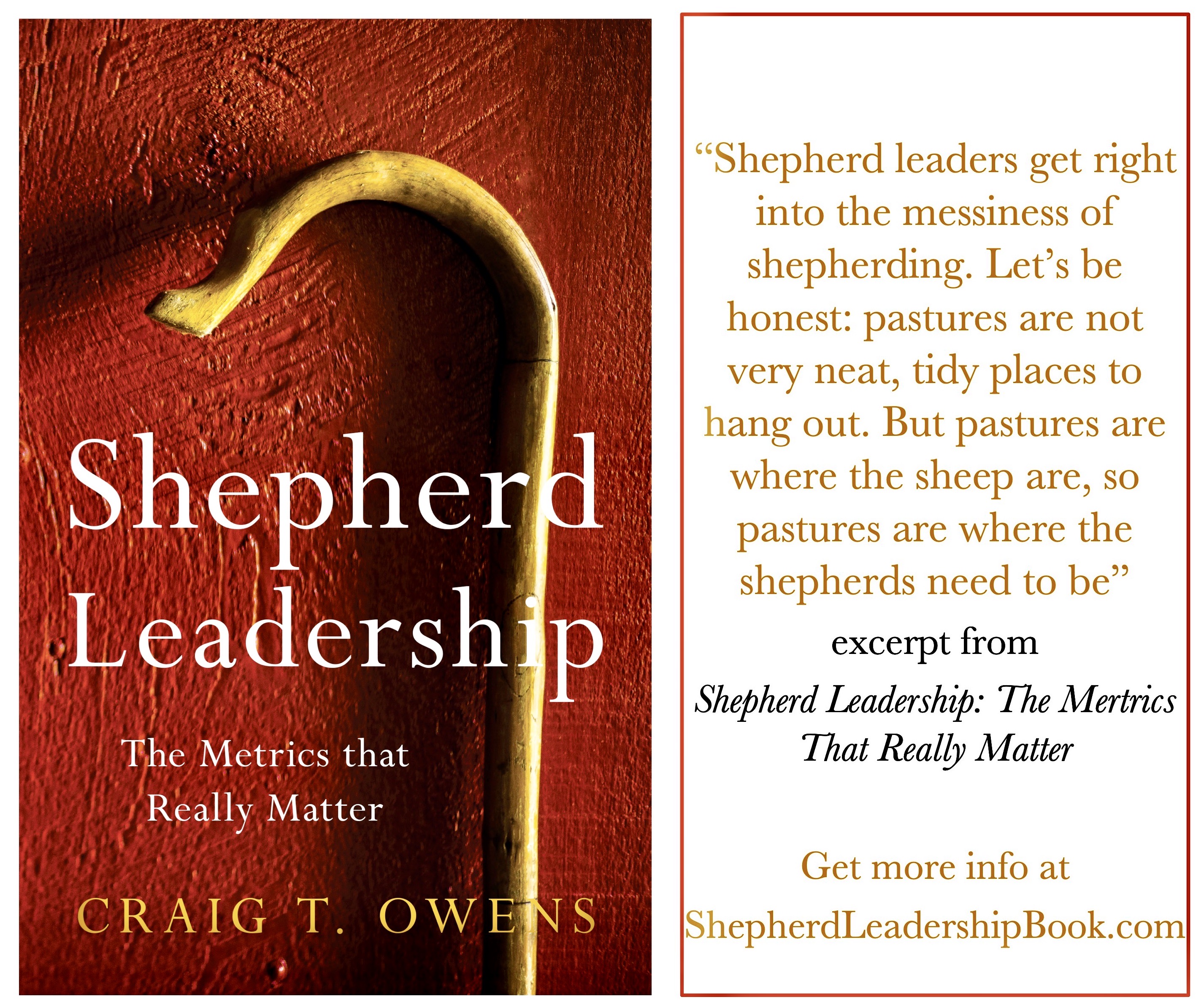
UPDATE: This idea of pastors as shepherds is what drove me to write my book Shepherd Leadership: The Metrics That Really Matter. I hope you will pick up a copy today!

Thursdays With Oswald—The Intimacy Of God

This is a weekly series with things I’m reading and pondering from Oswald Chambers. You can read the original seed thought here, or type “Thursdays With Oswald” in the search box to read more entries.

The Intimacy Of God

     The 139th Psalm ought to be the personal experience of every Christian. My own introspection, or exploration of myself, will lead me astray, but when I realize not only that God knows me, but that He is the only One who does, I see the vital importance of intercessory introspection. Every man is too big for himself, thank God for everyone who realizes it and, like the Psalmist, hands himself over to be searched out by God. We only know ourselves as God searches us. ‘God knows me’ is different from ‘God is omniscient’; the latter is a mere theological statement; the former is a child of God’s most precious possession—‘O Lord, Thou hast searched me, and known me.’

From Biblical Ethics

I love the line, “We only know ourselves as God searches us.”

He knows me better than I know myself. If I ever hope to mature, I can only do so as I make this my daily prayer:

Search me, O God, and know my heart; test me and know my anxious thoughts. Point out anything in me that offends You, and lead me along the path of everlasting life. (Psalm 139:23,24)

Thursdays With Oswald—Seeing Sin As Sin

This is a weekly series with things I’m reading and pondering from Oswald Chambers. You can read the original seed thought here, or type “Thursdays With Oswald” in the search box to read more entries.

Seeing Sin As Sin

     Knowledge of what sin is is in inverse ratio to its presence; only as sin goes do you realize what it is; when it is present you do not realize what it is because the nature of sin is that it destroys the capacity to know you sin. …

     To ‘crucify’ means to put to death, not counteract, not sit on, not whitewash, but kill. If I do not put to death the things in me which are not of God, they will put to death the things that are of God.

From Biblical Ethics

Romans 7 tells me that there are two forces at work in my life: God and sin. This is a battle to the death! So, if I think I am standing firm, that’s the exact time to watch out (see 1 Corinthians 10:12).

God never turns away the one who prays to Him, “Be merciful to me, a sinner.” But He turns a deaf ear to the one that claims, “I’m alright.”

May I always be VERY sensitive to even the hint of sin in my heart.