Links & Quotes

link quote

 [VIDEO] John Maxwell has a special message for veterans as he talks about heroism—

“God never says ‘no’ to us unless ‘no’ will make us ultimately happier.” —Jon Bloom

“You may remember the Old Testament story of the Israelite spies sent to scout out the Promised Land. They came back saying, ‘Yes, it’s a land flowing with milk and honey. But it’s also full of giants and walled-up cities. We’re not able to go up against these people. Compared to them, we’re mere grasshoppers’ (see Numbers 13). Now, these men didn’t accuse God. They never said, ‘God isn’t able. He isn’t strong enough.’ They dared not voice such unbelief. Instead, they focused on themselves, saying, ‘We’re not able. We’re like little bugs in our enemies’ sight.’ Yet that is not humility. And it isn’t innocent, harmless talk. Rather, it’s an affront to the One who is the Light of the world, who commands us to believe, ‘I can do all things through Christ which strengtheneth me’ (Philippians 4:13).” —David Wilkerson

“The voice of God indeed daily calls to us; calls to the world to abandon sins and seek the Kingdom of God wholeheartedly.” —C.S. Lewis

J. Warner Wallace uses his skill as a cold-case detective to examine the testimony of the New Testament Gospel writers. Here is his case for why the Gospels were written fairly soon after Christ’s ascension.

Unfortunately, this is true: The First Amendment Is Dying.

[VIDEO] Was Jesus a myth?—

Christians As Priests

Priesthood of ChristiansThere are some extraordinary pictures in the Old Testament that take on new life when viewed through the lens of Jesus Christ. One picture is how God chose the Jewish people out of all the people on earth, how He then chose the tribe of Levi to serve as His priests, and then how He chose Aaron from the Levites to be the high priest.

The Jewish people, the Levites, and then Aaron became God’s special possession because He chose them; it’s not that He chose them because they were special. God did this to give us a picture of what He wants to do with all of us.

Although the Levites were chosen as priests, God tells all of Israel—

You will be for Me a kingdom of priests and a holy nation. (Exodus 19:6)

For you are a people holy to the Lord your God. That the Lord your God has chosen you out of all the peoples on the face of the earth to be His people, His treasured possession. (Deuteronomy 7:6)

When the Apostle Peter is speaking to New Testament Christians, he uses the same type of language. He calls all Christians:

Christians are ‘a kingdom of priests and a holy nation’ that are to carry out their priestly roles while on Earth. 

Peter also talks about where Christian priests are to minister. In the Old Testament, the priests had a set location where ministry was done. But Peter says we are living stones built on the Living Stone (2:4). That means that the place of worship today is not brick and mortar, but flesh and blood.

Christian priesthood is mobile, adaptable, empathetic, and responsive to the the needs of the people.

If you are a Christian, here are some good questions to ask yourself:

We will be continuing our series about how citizens of Heaven should live on Earth this Sunday. If you don’t have a home church in the Cedar Springs area, please come join us. If you’ve missed any messages in this series, you may find the complete list by clicking here.

Links & Quotes

link quote

“The Kingdom of God, as Jesus envisioned it, was not simply for then and there. Jesus announced a Kingdom that had come. His preaching and teaching lead us to understand that the Kingdom is very much a ‘here and now’ reality [Matthew 4:17], that which is to be sought above, within, and through everything else in our lives.” —T.M. Moore

“Sexual sin is a symptom, not the disease. People give way to sexual sin because they don’t have the fullness of joy and gladness in Christ. Their spirits are not steadfast and firm and established. They waver. They are enticed, and they give way because God does not have the place in our feelings and thoughts that He should. David knew this about himself. It’s true about us too. David is showing us, by the way he prays [Psalm 51:8, 12], what the real need is for those who sin sexually—joy in God.” —John Piper

“For the day may come when false prophets shall arise, and delude the people, and by this shall we be able to discover them; if they claim anything beyond what Christ has revealed, put them aside, for they are false prophets, wolves in sheep’s clothing. The Spirit only teaches us that which Christ has taught beforehand either by Himself or by the inspired apostles.” —Charles Spurgeon

“From many modern sermons would you know that there was a Holy Spirit? If it were not for the benediction or the doxology you might go in and out of many churches and meeting-houses by the year together, and scarcely know that there was such a Person as that blessed, blessed Giver of all good, the Holy Spirit. Sometimes we hear a little about His influences, as if the Holy Spirit were not as truly a Person as even Jesus Christ Himself, Who in flesh and blood trod this earth. Oh, dear friends, I fear the first danger, that of running wild with whimsies and fancies about inner lights and new revelations; but I equally dread this last, this going forth to work with the sword, forgetting that it is the sword of the Spirit, and only mighty as the Holy Spirit makes it mighty ‘to the pulling down of strongholds.’” —Charles Spurgeon

No surprises here: Planned Parenthood spends a lot of money to buys votes from your U.S. Senator.

By the way, don’t buy into the lie that if Planned Parenthood is defunded women won’t have access to healthcare. First of all, PP makes way too much money from abortions already. Second, there are 20 comprehensive healthcare centers for every one PP office, so the options are plentiful.

[VIDEO] Jesus in the New Testament is the same as Jehovah in the Old Testament—

If you would like a written form of the charts he shares in this video, click here.

12 Quotes From “God-Breathed”

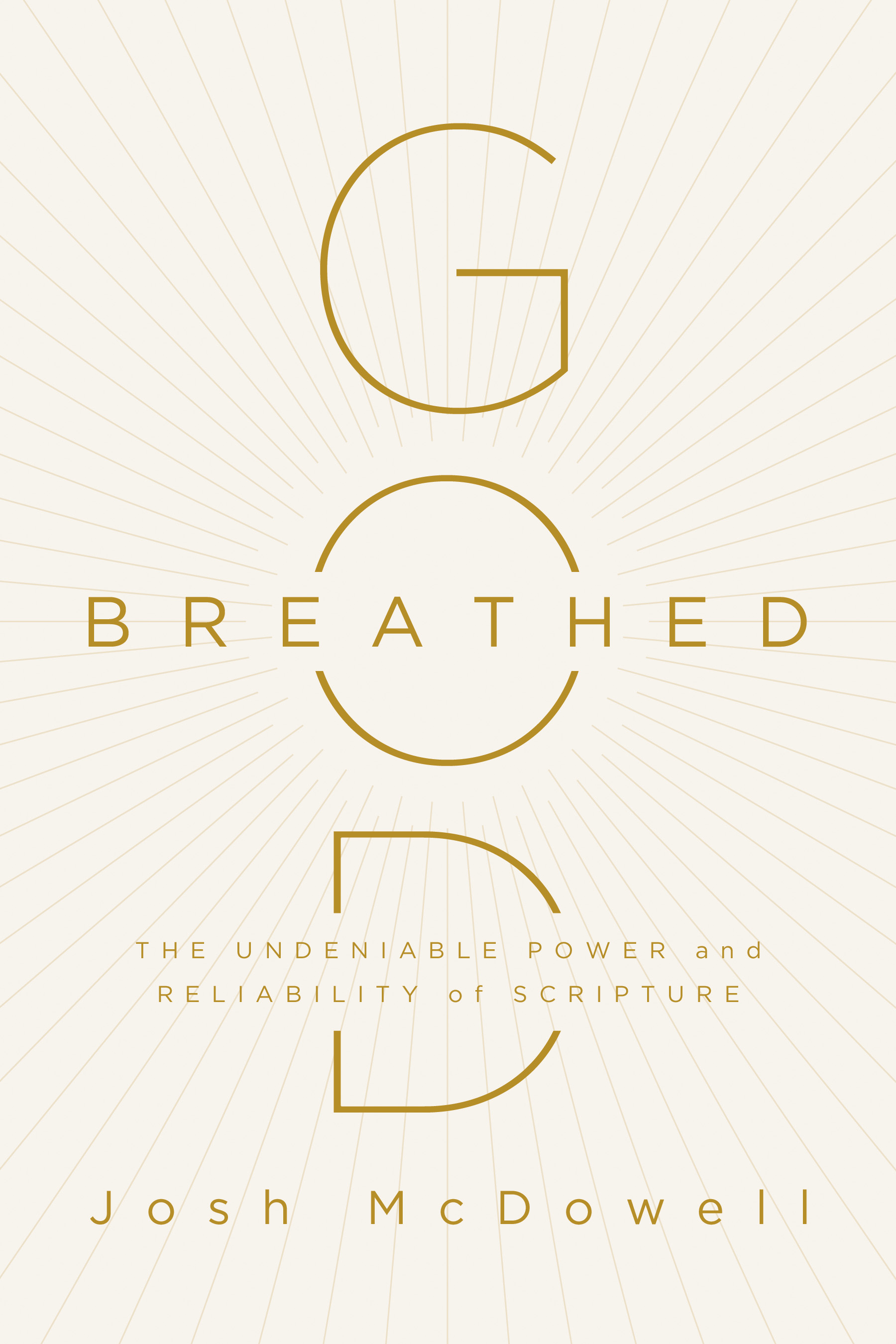
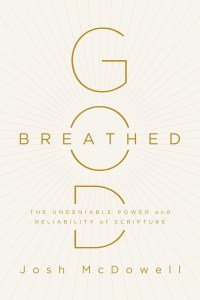
God-BreathedJosh McDowell has given us another outstanding Christian apologetic. In God-Breathed, Josh shares with us some astounding facts that show the amazing reliability of the Bible. You can read my book review of God-Breathed by clicking here. Below are some of the quotes I especially appreciated.

“The doctrines and commands of Scripture act as two guardrails to guide us down the right path of life. The teachings of Scripture (doctrine) keep us thinking and believing rightly. The instructions of Scripture (commands) keep us acting and living rightly. But without the proper context, we can miss the true purpose of Scripture, which is to guide us into keeping right thinking and right living in balance. … Scripture was given to lead us into a deeper love relationship with the One Who wrote the Book, and then also with everyone around us.” 

“The infinite God is personal. And because He is personal, we can love Him, worship Him, and please Him with our trust and obedience. Because He is personal, He can love us, rejoice with us, comfort us, and reveal Himself and His ways to us.”

“What is it that really parents our children? Is it the directives, instructions, and commands we give them? Those are behavioral guidelines, but they are not what raises our kids. It is not ‘parenting,’ as a concept, that brings up children; it is the parents themselves—relational human beings—who do the work and perform that role. That is the way God designed it. He wants kids to be brought up in loving relationships. Without relationship with another person, all attempts to instill right beliefs and right behavior will be ineffective, because they are detached from the necessary elements of personal love and care. … The Holy Spirit administers Scripture to us like a loving parent, in order to provide us with wisdom through its lessons (Proverbs 3:5), security through its boundaries (Exodus 20), caution through its warnings (Ephesians 4:17-22), and reproof through its discipline (Philippians 2:3-4).” 

“By AD 100, the apostles had died, but the Christian Church was still in its infancy, with fewer than twenty-five thousand proclaimed followers of Christ. But within the next two hundred years, the fledgling church experienced explosive multiplication of growth, to include as many as twenty million people. This means the church of Jesus Christ quadrupled every generation for five consecutive generations!”

“In AD 367, Athanasius of Alexandria compiled the first official list of books that we know today as the New Testament. There were twenty-seven books listed in all. These books were then canonized officially by the church at the councils of Hippo (AD 393) and Carthage (AD 397). Again, these councils didn’t authorize which writings were God-breathed works; rather, they recognized that these writings were authorized by God Himself.” 

“The Old Testament, comprised of thirty-nine books, was officially recognized as God-breathed Scripture as early as the fourth century BC and certainly no later than 150 BC.”

“The Bible is now the most translated book of all-time. The United Bible Society reports that, as of 2014, the Bible or portions of the Bible has been translated into 2,650 languages. Their Digital Bible Library now hosts more than 800 translations in 636 languages spoken by 4.3 billion people.” 

“Compared with other ancient writings, the Bible has more manuscript evidence to support it then the top ten pieces of classical literature combined.”

“No other work in all literature has been so carefully and accurately copied as the Old Testament.”

“Once archaeologists completed their search of the Qumran caves—eleven caves in all—almost 1,050 scrolls have been found in about 25,000 to 50,000 pieces (a number that varies depending on how the fragments are counted). Of these manuscripts, about 300 were texts from the Bible, and many of the rest had ‘direct relevance to early Judaism and emerging Christianity.’ Every book of the Old Testament was represented, except for the book of Esther, and the earliest copies dated from about 250 BC. … Once the Dead Sea Scrolls were translated and compared with modern versions of the Hebrew Bible, the text proved to be identical, word for word, in more than 95% of the cases. (The 5 percent deviation consists mainly of spelling variations. For example, of the 166 words and Isaiah 53, only seventeen letters are in question. Of those, ten are a matter of spelling, and four are stylistic differences; the remaining three letters comprise the word light, which was added to Isaiah 53:11.)”

“The writings of the most authoritative writers of the early church—the leaders scholars referred to collectively as the Apostolic Fathers—give overwhelming support to the existence of the twenty-seven authoritative books of the New Testament. Some Apostolic Fathers produced extensive, highly accurate quotes from the text of the New Testament. … Early church writers provide quotations so numerous and widespread that if no manuscripts of the New Testament were extant, ‘the New Testament could be reproduced from the writings of the early Fathers alone.’” —Norman Geisler and William Nix 

“The earliest preachers of the gospel knew the value of…first-hand testimony, and appealed to it time and again. ‘We are witnesses of these things,’ was there constant and confident assertion. And it can have been by no means so easy as some writers seem to think to invent words and deeds of Jesus in those early years, when so many of His disciples were about, who could remember what had and had not happened. … One of the strong points in the original apostolic preaching is the confident appeal to the knowledge of the hearers; they not only said, ‘We are witnesses of these things,’ but also, ‘As you yourselves also know’ (Acts 2:22). Had there been any tendency to depart from the facts in any material respect, the possible presence of hostile witnesses in the audience would have served as a further corrective.” —F.F. Bruce

The Fearful Privilege Of Being A Pastor

PreachingI was studying the life of the Old Testament prophet Ezekiel, and I jotted down some thoughts in my journal of what God was speaking to me. But I also felt like this was a message for my fellow pastors as well. So here are my unedited thoughts, just as I penned them in my journal. 

The Lord said to me, “Son of man, look carefully, listen closely and give attention to everything I tell you….” (Ezekiel 44:5).

I have to take personal responsibility for this. This is not something I can pass off to anyone else―“instead of carrying out your duty in regard to My holy things, you put others in charge of My sanctuary” (44:8). No, never!

I have been given the privilege and heavy responsibility for souls in this community. I must, therefore, hear what God has to tell me about this city and these people. He knows, and He wants to share with me. He calls me to look carefully, listen carefully, and give careful attention to what He’s saying. He is desirous that everyone in this community will see His radiant glory (43:2), and―wonders of wonders!―He has asked me to deliver His message of life to my community.

Who am I that You would choose me? But you have, and I am grateful. I am also filled with holy dread that I carry out my duties in a way that pleases and glorifies You, my King. I need Your help. I need to hear Your voice. I need Your Spirit to stamp the image of Christ ever more clearly in me.

May I only live to bring You praise!

10 Quotes From “Notes On Ezekiel”

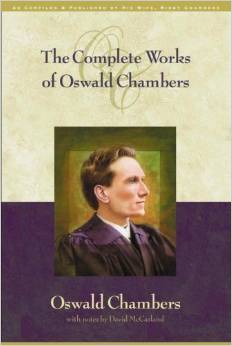
The Complete Works Of Oswald ChambersI loved reading Oswald Chambers’ insights on the book of Ezekiel as I read that book of the Bible side-by-side. Seeing what Chambers saw is astounding! You can read by book review of Notes On Ezekiel by clicking here. Below are a few quotes I especially appreciated.

“If you imagine you are called on to be isolated and aloof…you will be as free from sanity as from the Spirit of God.”

“We have to beware lest our impatience makes us infidel; impatience means unbelief in God’s providence, and is due to lack of right relationship of the personal life to God.”

“What is called practical work is the greatest hindrance in God’s dealing with souls. We rush through life and call ourselves practical, we mistake bustle for busyness, activity for real life, and when the activities stop we go out like vapor, our work is not based on the fundamental energy of God.” 

“We are not here to serve God, but for God; the self-consciousness of being a saint never enters in.”

“There is no call of God to be prosperous, but there is a call to be a proclaimer of God’s truth to the gates of death. It is the winsome note that men want today—‘I don’t mind listening as long as you talk about the kindness of God, but don’t tell me God damns sin, don’t tell me He allows no quarter for lying or for lust.’ The Gospel awakens an intense craving and an equally intense resentment. The snare of the devil, through God’s own servants, comes when they say ‘Now remember the people.’ Never water-down God’s Word to suit men’s experience. … Be possessed with unflinching courage in preaching the truth of God, but when you deal with sinners, remember who you are.”

“God must make His prophets vitally one with His voice—holy man and holy message, one.”

“Fanaticism comes in when we say, ‘I won’t appropriate the words of God, I don’t want to be limited to what Jesus Christ says, I must get other messages.’”

“Ezekiel had to receive what he heard before he repeated it; this is imperative in all spiritual development. Reception of God’s Word implies personal devotion to the One who speaks it. … Ezekiel, in common with all the Old Testament prophets, had not to generate his message out of his own individuality, he had simply to obey God.”

“Whenever in the prophets or in the New Testament we come to statements of the justice of God at work it is always the same—inescapably terrible and full of doom. Viewed apart from the interpretation of the Spirit of God, God’s dealings with men and with nations are perplexing. … The terrible side of God’s character is only realized by us when the truth dawns on us individually that God is no respecter of persons. Beware of tying God up in His own laws and saying He can’t do what He says He is going to do. The greatest ingredient in the sovereignty of God is the measure of free will He has given man; but be careful you don’t make the sovereignty of God the binding of Almighty God by human logic.”

3 Lessons From Obadiah

Obadiah

Photo (c) Laura Kranz at The Overview Bible Project (click on the photo for more info)

The prophet Obadiah wrote just 21 verses around 840 B.C. I know that the last 12 books of the Old Testament are referred to as “minor prophets” (not because of quality or validity, but because of length), but this prophet packs a major punch. Here are three lessons I learned from Obadiah―

[1] Pride is a killer.

The pride of your heart has deceived you (v. 3). Pride makes me believe the best about myself and the worst about everyone else; it’s unbalanced scales. Pride allows me to excuse my sins, even calling them “virtues,” while at the same time hypocritically judging the “sins” of others.

[2] It is God’s place to judge, not mine.

You should not look down on your brother in the day of his misfortune (v. 12). My place is to love God and love others—to help and not condemn—to extend mercy, not judgment. Even if my enemy stumbles I shouldn’t rejoice or gloat (Proverbs 24:17-18), how much less when it’s my brother who has stumbled!

[3] Live as if Judgment Day were tomorrow.

The day of the Lord is near for all nations. As you have done, it will be done to you; your deeds will return upon your own head (v. 15). Boom! The measure I use will be the measure I receive. The One Who neither sleeps nor slumbers sees all I do, and He will judge perfectly.

Don’t miss the major messages in the “minor” prophets!

The 10 Commandments In The New Testament

I have heard far too many people say, “The laws of the Old Testament were for ‘back then.’ We live in the New Testament era, so those laws don’t apply to us any longer.” This is a blatant disregard of facts.

Not only are every single one of the Ten Commandments reiterated in the New Testament, they are also amplified. Consider this example: Under the Old Testament law, as long as I hadn’t slept with someone other than my wife I hadn’t broken the 7th commandment (do not commit adultery). Jesus not only reiterated that 7th commandment, but He amplified it to say my lustful thoughts toward someone not my wife made me a violator of that commandment.

Here’s the list of the commandments reiterated and amplified—

10 Commandments In The New Testament

You may download a PDF version of this chart here → 10 Commandments In The New Testament


5 Quotes From Habakkuk

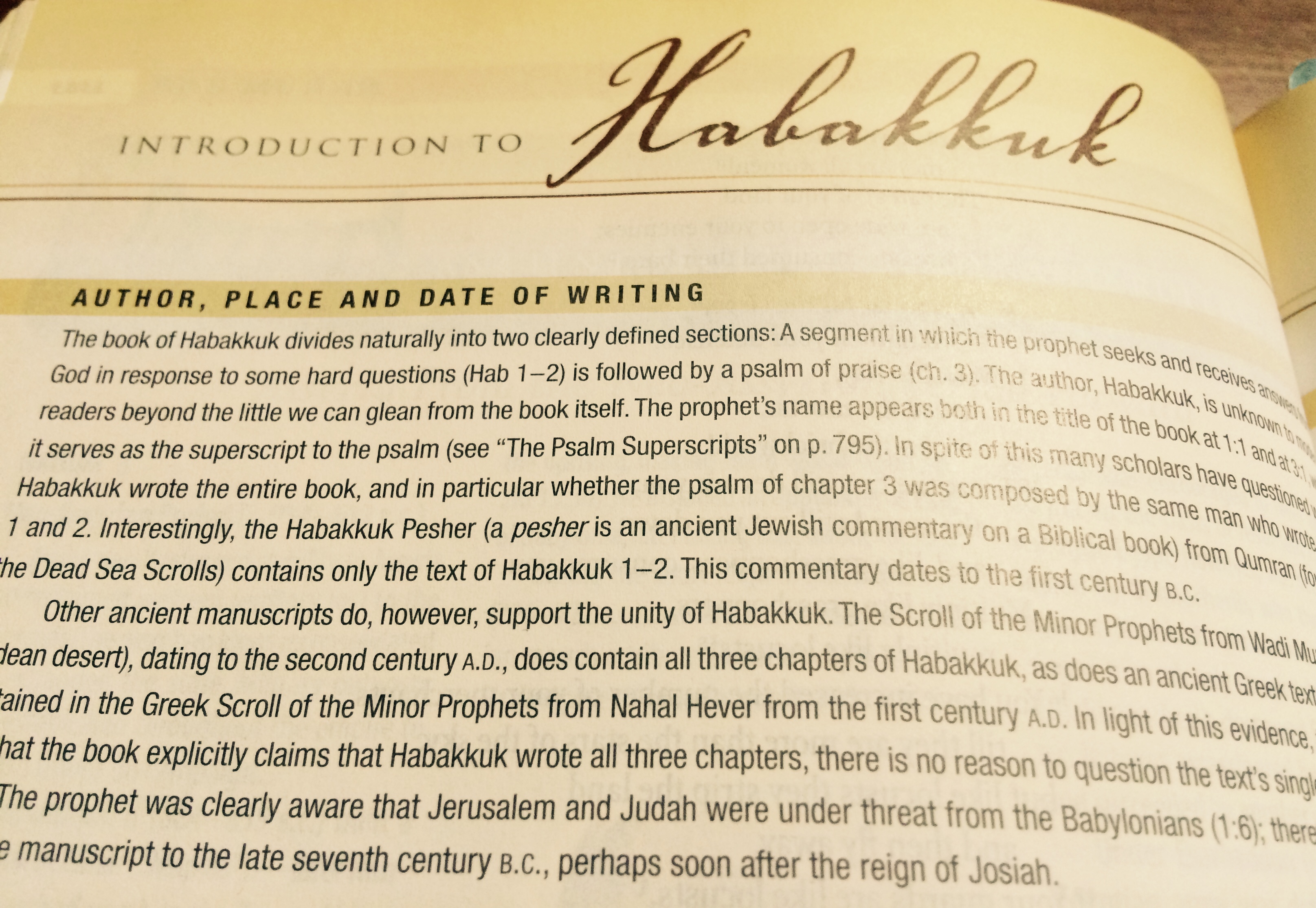
HabakkukNestled among the so-called minor prophets of the Old Testament, Habakkuk has some of my favorite verses. It’s only three chapters long, but it is packed with amazing promises!

“The uncompromisingly righteous man shall live by his faith and in his faithfulness” (2:4, AMP)

“For the earth will be filled with the knowledge of the glory of the Lord, as the waters cover the sea.” (2:14, NIV)

“I have heard all about You, Lord. I am filled with awe by Your amazing works. In this time of our deep need, help us again as You did in years gone by.” (3:2, NLT)

“Put it in writing, because it is not yet time for it to come true. But the time is coming quickly, and what I show you will come true. It may seem slow in coming, but wait for it; it will certainly take place, and it will not be delayed.” (2:3, GNB)

“Yet I will rejoice in the Lord; I will exult in the victorious God of my salvation!” (3:18, AMP)

Both Testaments

BibleThis past week I’ve had two conversations that seemed like contradicting thoughts about the Bible, but they’re really exactly the same.

Conversation #1—Since Jesus Christ set us free from the law, there is no longer any need for us to read or study the Old Testament.

Conversation #2—The New Testament is a perversion of the Old Testament, so we should ignore it and stick with the “original” Scripture.

One thing that has helped me see the Scripture in a more correct light is a thought I picked up from Leonard Sweet and Frank Viola in their book Jesus: A Theography. Instead of the titles we’ve given the two divisions of the Bible, it will be better to call them the First and Second Testaments. “Old” and “New” have a tendency to make us think out-dated and updated; First and Second remind us that they go together.

Hosea is one of the first prophets in the First Testament whose words were put into writing. It’s interesting to note how many of the themes from the Pentateuch, Joshua and Judges are linked to Israel’s condition in the last few years before the northern tribes went into exile.

“Hosea’s allusions to Genesis through Judges are highly significant. First, they help to establish the fact that these books had already been written by the time of Hosea, in the eighth century B.C. (Many scholars consider these books to be from the sixth century B.C. and even later.) Second, Hosea’s construal of these books helps us to understand early Biblical interpretation, which in turn gives us a better understanding of how the [Second] Testament interprets the [First].” —Archeological Study Bible

When we move into the Second Testament, we see over 850 First Testament passages are quoted, sometimes entire paragraphs. In every instance, the Second Testament authors see the fulfillment of the First Testament in the life of Jesus Christ.

In fact, Jesus Himself quoted from 22 books of the First Testament, even on the day of His resurrection He explained to them what was said in all the Scriptures concerning Himself (Luke 24:27), and He said He would open our minds so that we too could understand all the Scriptures (Luke 24:45-47).

Finally there is the issue of fulfilled prophesy. Not only were First Testament prophesies fulfilled during the First Testament time, but even more were fulfilled during the Second Testament. In Jesus Christ alone about 200 such prophesies were fulfilled.

Both Testaments are equally important, and equally valuable. In fact, either Testament without the other robs God of His glory and robs us of seeing His fullness.