Endless Noise

Listen to the podcast of this post by clicking on the player below, and you can also subscribe on AppleSpotify, or Audible.

The psalmist said it this way, “Be still, and know that I am God” (Psalm 46:10).

The apostle Paul said, “Study to be quiet” (1 Thessalonians 4:11).

And the prophet Elijah learned that God was not in the big crashing, jarring noises but in “a still small Voice” (1 Kings 19:12).

We are bombarded by noise. Are we missing God in all the noise? When was the last time I was quiet? Quiet enough to hear His still small Voice?

Nearly 80 years ago T.S. Eliot wrote a poem called Choruses From The Rock. Check out this passage—

The endless cycle of idea and action,
Endless invention, endless experiment,
Brings knowledge of motion, but not of stillness;
Knowledge of speech, but not of silence;
Knowledge of words, and ignorance of the Word.
All our knowledge brings us nearer to our ignorance,
All our ignorance brings us nearer to death,
But nearness to death no nearer to God.
Where is the Life we have lost in living?
Where is the wisdom we have lost in knowledge?
Where is the knowledge we have lost in information?
The cycles of Heaven in twenty centuries
Bring us farther from God and nearer to the Dust.

Jesus found time early in the silent morning to get alone with His Father. We would do well to follow this example. Let’s make some quiet time today to hear what God is saying to our hearts.

►► Would you please prayerfully consider supporting this ministry? My Patreon supporters get behind-the-scenes access to exclusive materials. ◀︎◀︎

“Prayer Is Irksome”

I shared this quote from C.S. Lewis this morning—

“Well, let’s now at any rate come clean. Prayer is irksome. An excuse to omit it is never unwelcome. When it is over, this casts a feeling of relief and holiday over the rest of the day. We are reluctant to begin. We are delighted to finish. While we are at prayer, but not while we are reading a novel or solving a crossword puzzle, any trifle is enough to distract us…. Now the disquieting thing is not simply that we skimp and begrudge the duty of prayer. The really disquieting thing is it should be numbered among duties at all. For we believe that we were created ‘to glorify God and enjoy Him forever.’ And if the few, the very few, minutes we now spend on intercourse with God are a burden to us rather than a delight, what then?… The painful effort which prayer involves is not proof that we are doing something we were not created to do. If we were perfected, prayer would not be a duty, it would be a delight. Someday, please God, it will be.”

Why don’t we pray more? Why does it seem like prayer is not a regular part of our lives?

Perhaps… We don’t know what to pray. The Bible is an amazing prayer book! Just use the words of Scripture to form your prayers. You can use the psalms, or go to the New Testament where Jesus or the other New Testament writers say something like, “This is my prayer….” Borrow their words, personalize them, and it will be an incredible prayer.

Maybe… We don’t have time to pray. We always have the Holy Spirit with us, and He reminds us of the Word and helps us pray. So we can pray anytime, anywhere, no matter what we are doing.

It could be… We run out of things to say. The Bible gives us so many things on which to meditate. This word means to mull over, or to even talk to ourselves. Combining Bible reading and prayer helps us continue to talk to God all throughout the day.

Try these simple steps and you will begin to realize, as C.S. Lewis said: “If we were perfected, prayer would not be a duty, it would be a delight. Someday, please God, it will be.”

Getting Back Up When Life Has Knocked You Down

The Bible never presents life as some sort of pie-in-the-sky, walk-in-the-park, everyday-is-always-rosy picture. If it did, we would reject the Bible because our experiences would immediately tell us otherwise. Instead, the Bible realistically portrays the challenges, and the pain, and the heartache, and the disappointments of life. But as it does so it also shows us that God’s way is the only way out of our sorrow and into His joy!

In our P119 Spiritual Workout series, we saw the bookends of the section daleth (Psalm 119:25-32) are:

I am laid low in the dust (v. 25) → You have set my heart free (v. 32).

How do we get this freedom when we are knocked down and laid low in the dust?

The Jews saw the Hebrew letter daleth as a door. Specifically, a door through which humble people stepped into a greater realization that He is God, and I’m not … that He has the answers, and I don’t … that He is in control, and I’m not. So part of going from down in the dust to a free heart is humbly acknowledging that you need God’s help!

In verses 26 and 27, the psalmist recalls his past history, and in so doing he is reminded that God has always been there. God has never left him nor forsaken him, so here’s what the psalmist resolves to do:

  • Teach me = I learned something before, so let me learn again.
  • Let me understand = help me to discern, distinguish; tell things apart. This word is used for things that are divinely disclosed; in other words, they’re things you and I cannot figure out on our own.
  • Meditate = talk with my soul about these new things the Holy Spirit has disclosed to me.

In verse 28, the psalmist says that his soul is weary with sorrow (or as the King James Version states it: my soul melteth for heaviness). The only way to overcome this is to ask for God’s help to energize us to go forward.

In the final four verses of this section you can sense the psalmist’s strength returning as he makes these bold statements:

  • keep me from deceitful ways (v. 29a) = keep me from lying to myself (NLT).
  • be gracious to me (v. 29b) = give me the privilege of knowing Your instructions (NLT).
  • I have chosen (v. 30a) = I have determined (NLT).
  • I have set (v. 30b) = I am long-sighted (on God), not short-sighted (on my problems).
  • I hold fast (v. 31) = the KJV says I have stuck to it!
  • I run (v. 32) = I will [not merely walk, but] run the way of Your commandments (AMP).

So when you are sad/disappointed/injured, run TO God. Don’t cling to your own (old) ways of thinking. Let Him take you from I am laid lowYou have set my heart free.

If you have missed any of the messages in our P119 series, you can access them all by clicking here.

Can You Hear Him Now?

Wow, my life is busy! Sometimes I feel like a starter’s pistol goes off first thing in the morning, and I’m on a dead sprint all day long.

<BANG!> Get everyone up … get dressed … make breakfast … feed the pets … pack lunches … get everyone out the door on time … work at the church … meetings … errands … En-Gedi Youth Center … after-school activities … grocery store … make dinner … clean up … more meetings … homework … <WHEW!>

That’s why I have made it a long-standing habit to spend some quality quiet time in the morning. It’s time well-spent reading my Bible, sipping some tea, and just listening for God’s unmistakable Voice.

The apostle Paul advised us to study to be quiet (1 Thessalonians 4:11). Make it a habit to tune out the noise and business.

Francois Fenelon said it this way—

“God does not cease to speak, but the noise of the creatures without, and of our passions within, confines us and prevents our hearing. We must silence every creature, including self, that in the deep stillness of the soul we may perceive the ineffable voice of the Bridegroom. We must lend an attentive ear, for His voice is soft and still, and is only heard of those who hear nothing else.”

I hope you will choose to make some time to hear His Voice today, and everyday.

Hmmm

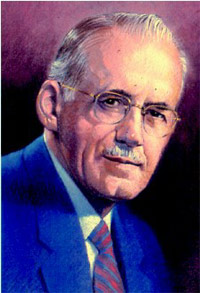
Feats of thinking may create reputation, but habits of thinking create character. —A.W. Tozer

If this is true, then I’ve got some questions to ask myself:

  • How do I think?
  • How am I processing the world around me?
  • Do I see the hand of God in daily events?
  • Can I find His truth at work?
  • Am I learning from what I experience each day?
  • Do I think positively or negatively?
  • Do difficulties cause faith or fear?
  • Am I thinking long enough?
  • Do my thoughts produce a Christ-like attitude?
  • Do I take time to think about my thoughts?

Two more thinking quotes for today:

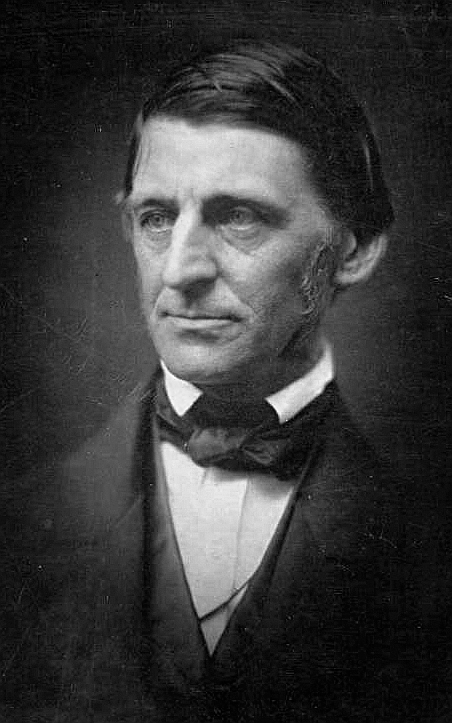
Life consists of what a man is thinking about all day. —Ralph Waldo Emerson

Summing it all up, friends, I’d say you’ll do best by filling your minds and meditating on things true, noble, reputable, authentic, compelling, gracious—the best, not the worst; the beautiful, not the ugly; things to praise, not things to curse.Philippians 4:8

4 Leadership Requirements

I love studying leadership—leadership principles, leadership practices, and leadership people. There’s a great leadership case study in the Bible in the life of Joshua that always intrigues me.

Joshua had been through extensive preparation to become Moses’ successor. He was a recognized leader in his tribe, the general of the army, and an aide-de-camp to Moses for a number of years. But his most important leadership qualification: He was called by God.

As the story of his leadership opens in the first chapter of the Book of Joshua, God gives four requirements for Joshua (and you and me) to be effective in our leadership roles.

1.  Be yourself. God didn’t say, “Be like Moses.” In fact, the only time God talks about Moses to Joshua is to reassure him, “I will be with you like I was with Moses.” But never once does God uses a “Moses Grading Scale” for Joshua. God simply says, “You will lead these people.”

2.  Have an objective measuring stick. Feelings may change, but God’s Word never does. So God counsels Joshua to always rely on the Book of the Law.

3.  Guard your thoughts. Leaders have so many people “in their ear” wanting to lobby for their way. So God tells Joshua to not only read the Bible but meditate on it as well. One definition of meditation is to hum God’s Word. In other words, humming God’s Word will help a leader know which lobbying voice is in harmony with God’s Voice, and which lobbying voice is off-key.

4.  Guard your attitude. God repeats this to Joshua, “Do not be afraid; do not be discouraged.” Even doing everything they are supposed to be doing, leaders can become afraid to make a change, or discouraged because people aren’t following along. These feelings must be driven out with one firm declaration: “I know the Lord has called to this leadership position, so I know the Lord is with me. He will enable me to complete what He has called me to do.”

God’s direction to Joshua is still great counsel for leaders today.

Hurrying To Wait

In Genesis 18 God comes to visit Abraham. It’s interesting to note how Abraham responds. In a word: quickly.

  • He hurried from where he was sitting to meet God.
  • He hurried back to his wife Sarah and said, “Quick, make some bread for our Guest.”
  • He ran to his herd to pick out a calf to serve.
  • His servant then hurried to prepare the calf.

Abraham hurried to get into God’s presence.

However, once he’s there everything slows down.

  • He stood nearby while the Lord and His angels ate the food.
  • He walked with God as He continued toward Sodom.

Abraham WASN’T quick to leave God’s presence.

At this point, the Bible gives us an important word: Then. After Abraham hurried to get into God’s presence and continued to linger there, THEN God took Abraham into His counsel.

Why is it that my natural tendency is to do just the opposite?

  • I delay going into God’s presence because I try to figure things out on my own.
  • Once I finally go into His presence, I share my need with Him and then hurry along my way.

Abraham was called God’s friend. Maybe because he hurried into God’s presence, and then stayed right there.

Today I’m going to try it Abraham’s way.

I Am What I Think I Am

Years ago I read a book that transformed the way I read and studied. This one book probably caused me to become a more discriminating reader than any other factor. Although it’s less than 50 pages long, As A Man Thinketh by James Allen revolutionized my thinking. Over the last couple of days, I’ve been listening to the audiobook as I have been driving around.

Here’s a quote from James Allen:

A man is literally what he thinks, his character being the complete sum of all his thoughts. … A noble and Godlike character is not a thing of favor or chance, but is the natural result of continued effort in right thinking, the effect of long-cherished association with Godlike thoughts.”

This is what the Bible says about the seeds of great thoughts:

“Finally, brethren, whatever things are true, whatever things are noble, whatever things are just, whatever things are pure, whatever things are lovely, whatever things are of good report, if there is any virtue and if there is anything praiseworthy—meditate on these things.”

What are you thinking about today? What’s going in? You are making yourself by what you are thinking, so choose those thought-stimulators wisely.

Be All There

Once a friend of mine (whom I happen to think is more tuned-in to people’s needs than almost anyone else I know) went on a first date. He said the evening was pleasant, but felt his date was a bit distant. At the end of the evening when he brought up the subject of possibly going out again she informed him, “No, I don’t think we can go out again. You’re just not emotionally available for me.”

I know this wasn’t true for my friend, but have you ever been there? Ever been with someone, but it was obvious that they weren’t really there with you in the room? Frustrating, isn’t it?

[Insert tongue firmly in cheek as you read this next paragraph.] Now I’m certain that none of the readers of my blog would ever be distracted like this. And I know I’ve never done this myself. Since you and I, dear reader, always are 100% attentive to the people in the room with us, these next two quotes probably won’t pertain to you, but here they are anyhow:

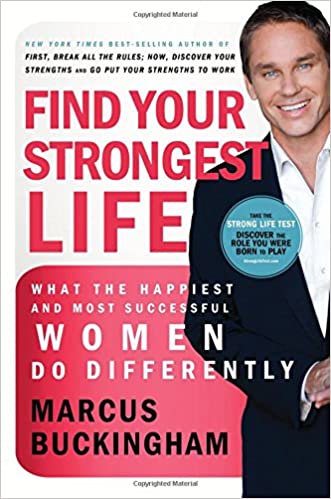
“The human brain is simply not designed to multitask. You can get by doing multiple things at once, but you can’t do them well. Your brain is physically unable to process more than one set of instructions at a time, so while you are juggling all of those actions at once, your brain is scrambling to keep up. Through a variety of experiments measuring brain activity, scientists have discovered that the constant switching back and forth from one activity to another energizes regions of the brain that specialize in visual processing and physical coordination, while simultaneously disrupting the brain regions related to memory and learning. According to the research, ‘we are using our mental energy to concentrate on concentrating at the expense of whatever it is that we’re supposed to be concentrating on.’ Got that?

“More simply: when we multitask we’re dumber. How much dumber? A recent study for Hewlett Packard exploring the impact of multitasking on performance revealed that the average worker’s functioning IQ drops ten points when multitasking…. (The analogy the researchers used is that a ten-point drop in IQ is equivalent to missing one night of sleep.)” —Marcus Buckingham, Find Your Strongest Life

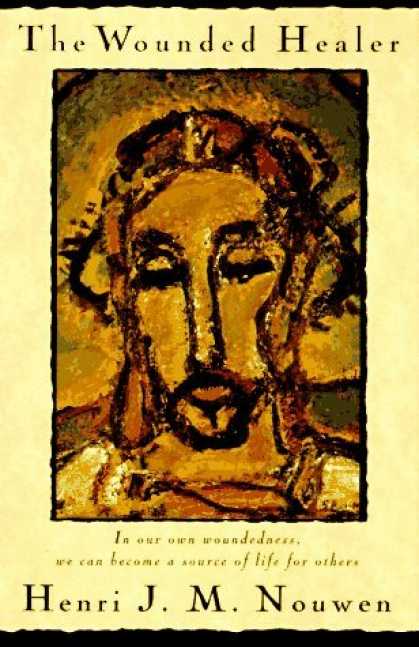
“Concentration, which leads to meditation and contemplation, is therefore the necessary precondition for true hospitality. When our souls are restless, when we are driven by thousands of different and often conflicting stimuli, when we are always ‘over there’ between people, ideas and the worries of this world, how can we possibly create the room and space where someone else can enter freely without feeling himself an unlawful intruder?” —Henri Nouwen, The Wounded Healer

This week I’m making it my goal to be all there for whomever is here with me. I’m going to try my best to eliminate multitasking and truly concentrate on the one spending time with me. Are you ready to try this with me? Let me know how it goes.

Doing Thinking Doing

To think or to act? That is the question. Or maybe the question should be, which comes first: the thinking or the acting? Do I think about something and then go do it? Or do I do something first and then think about what I’ve done and how I could do it better next time?

The answer, I believe, is yes.

You could be the most creative thinker in the world, your thoughts could be off on another plane, but if you do nothing with what you’re thinking, all of those great insights are wasted.

On the other hand, many people hold to the axiom that experience is the best teacher, so they just do and do and do. But experience is not the teacher; we only learn when we stop to think about what we’ve done.

William Wilberforce was already a rising star in British politics when he experienced a deeper understanding of his relationship to God. Suddenly this man of word and action wanted to do nothing more than meditate on the greatness of God. Wilberforce believed that he could best serve God by withdrawing from society and simply thinking about God.

His good friend and future prime minister William Pitt disagreed. Pitt wrote to Wilberforce, “Why then this preparation of solitude which can hardly avoid tincturing the mind either with melancholy or superstition? … Surely the principles as well as the practice of Christianity are simple and lead not to meditation but to action.” Or as the line from Amazing Grace has it, “We humbly suggest you can do both.”

I love Oswald Chambers’ counsel—

“God will never allow us to divide our lives into sacred and secular, into study and activity. We generally think of a student as one who shuts himself up and studies in a reflective way, but that is never revealed in God’s book. A Christian’s thinking ought to be done in activities, not in reflection, because we only come to right discernment in activities.”

Whether it starts with thinking or starts with action, successful thinking-doing must include both. Think about it → act on it → think about your results → do it again better than last time.

Paul wrote to the Romans how thinking and action work together when he said, “for their own conscience and thoughts either accuse them or tell them they are doing right” (Romans 2:5 NLT). The Amplified Bible renders this phrase, “their consciences (sense of right and wrong) also bear witness; and their decisions (their arguments of reason, their condemning or approving thoughts) will accuse or perhaps defend and excuse them.”

Think about it → do it → think about it → do it = the pattern for success.