The problem becomes very challenging when non-biblical issues are given biblical status, and as a result, people begin to respond in a decidedly unbiblical way.
In a recent talk that I gave to some ministry interns, I unpacked this idea in more depth.
Listen to the podcast of this post by clicking on the player below, and you can also subscribe on Apple, Spotify, or Audible.
God had a rather simple message for Ezekiel, “The word of the Lord came to me: ‘Son of man, speak to your people’” (Ezekiel 33:1–2).
I find that pronoun “your“ intriguing because you would think that God would say, “My people.” They are indeed God’s people, but God had set Ezekiel apart as His watchman (vv. 7–20), so Ezekiel had to take personal responsibility for the people. They were to be treated and spoken to as though they were indeed his people.
This idea of responsibility gets a little tricky for some leaders because, with the responsibility to their people, they usually feel they are accountable to their people as well.
But in the next few verses, God makes it clear that Ezekiel must be accountable to God alone.
Responsible to his people. Accountable to his God.
When we start feeling we are accountable to people, we can get distracted, discouraged, or derailed by their unpleasant responses.
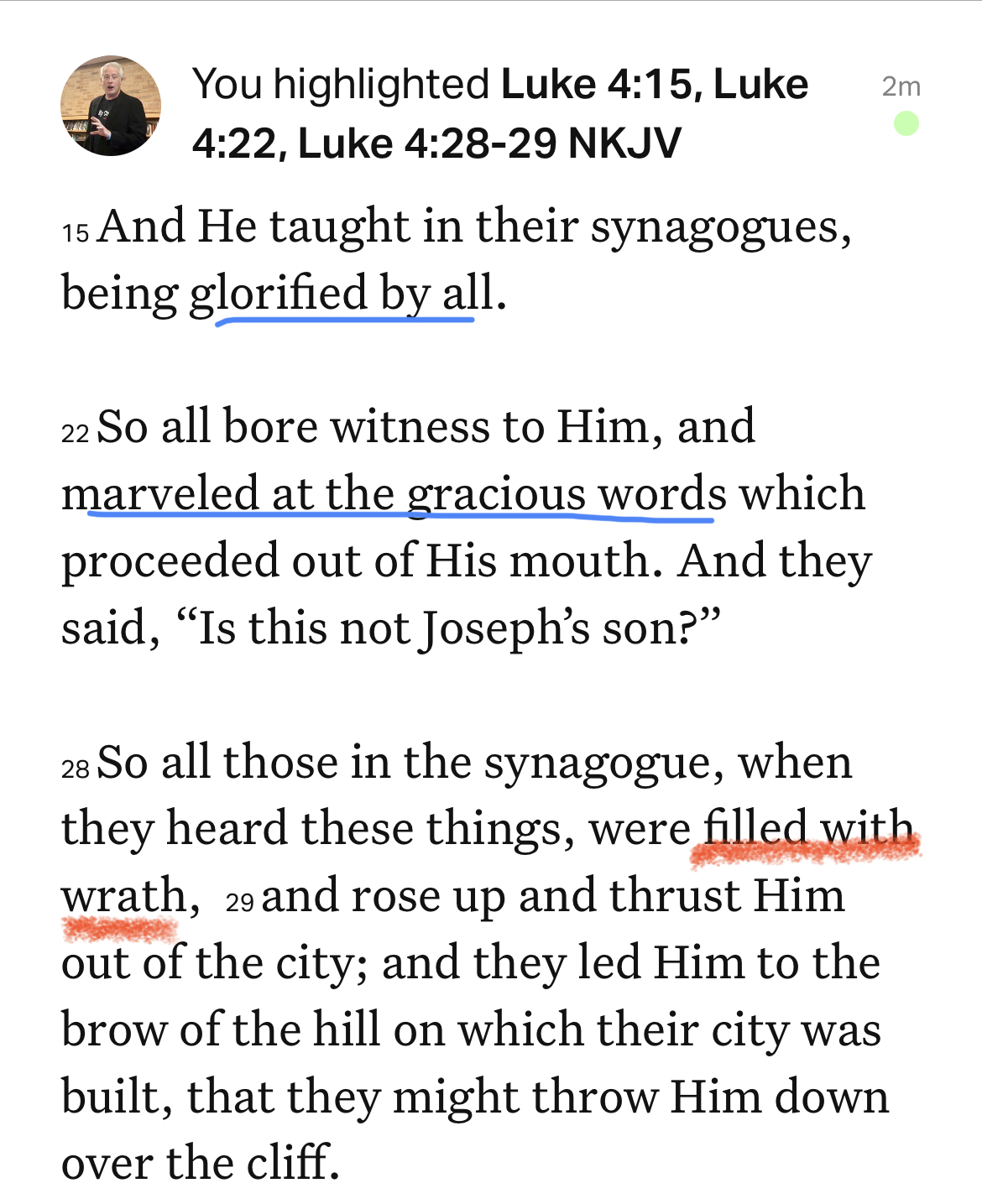
Notice that when Jesus spoke pleasing words to people, everyone spoke well of Him. But when He pointed out to them the words of God they were ignoring, they were ready to kill Him.
People are fickle—they sing praises when they hear those words they like, and they are ready to attack the messenger when the words are upsetting.
A mark of a godly leader is one who has a clear understanding of his responsibility and his accountability.
When you are God’s leader, He will entrust people to your care and He will entrust His message for those people to you. You are now responsible to deliver His message to your people. You are then accountable to God alone for delivering His message. Be responsible to people, accountable to God, and be careful not to mix the two.
This is part 66 in my series on godly leadership. You can check out all of my posts in this series by clicking here.
[3:20] Leaders look for ways to honor those around them
[3:48] Can you honor too much?
[4:29] How can we honor our parents and grandparents?
[5:13] Greg has a book releasing soon called Sage Advice
[9:44] Greg explains that application is the real compliment
[10:36] Honor starts with noticing others and then expressing what was noticed
[11:49] Honoring calls out great potential in others
[12:32] What does it mean to “trust the person with a limp”?
[14:15] Honor is for people who gave, not for people who received
[15:28] Why is hard for leaders to acknowledge the success of others?
[16:27] Leaders need to looking around for opportunities to honor others
[17:11] Hand out compliments publicly for maximum effect
[17:55] Leaders receive honor by first honoring others
[19:45] Our leadership challenge to you
Check out this episode and subscribe on YouTube so you can watch all of the upcoming episodes. You can also listen to our podcast on Spotify and Apple.
Listen to the podcast of this post by clicking on the player below, and you can also subscribe on Apple, Spotify, or Audible.
“When you become a leader, you lose the right to think about yourself.” —Gerald Brooks
Sadly, I encounter far too many “leaders” (at least they are leaders in title only) who think being a leader means they have more rights. It might be the right to a better parking place, or to be first in line, or to ignore some of the rules that others have to follow.
That certainly wasn’t the attitude of the apostle Paul in 1 Corinthians 9, a chapter which the NIV gives the heading ‘Paul Gives Up His Rights’:
Since we have planted spiritual seed among you, aren’t we entitled to a harvest of physical food and drink? If you support others who preach to you, shouldn’t we have an even greater right to be supported? But we have never used this right. We would rather put up with anything than be an obstacle to the Good News about Christ. (1 Corinthians 9:11-12 NLT)
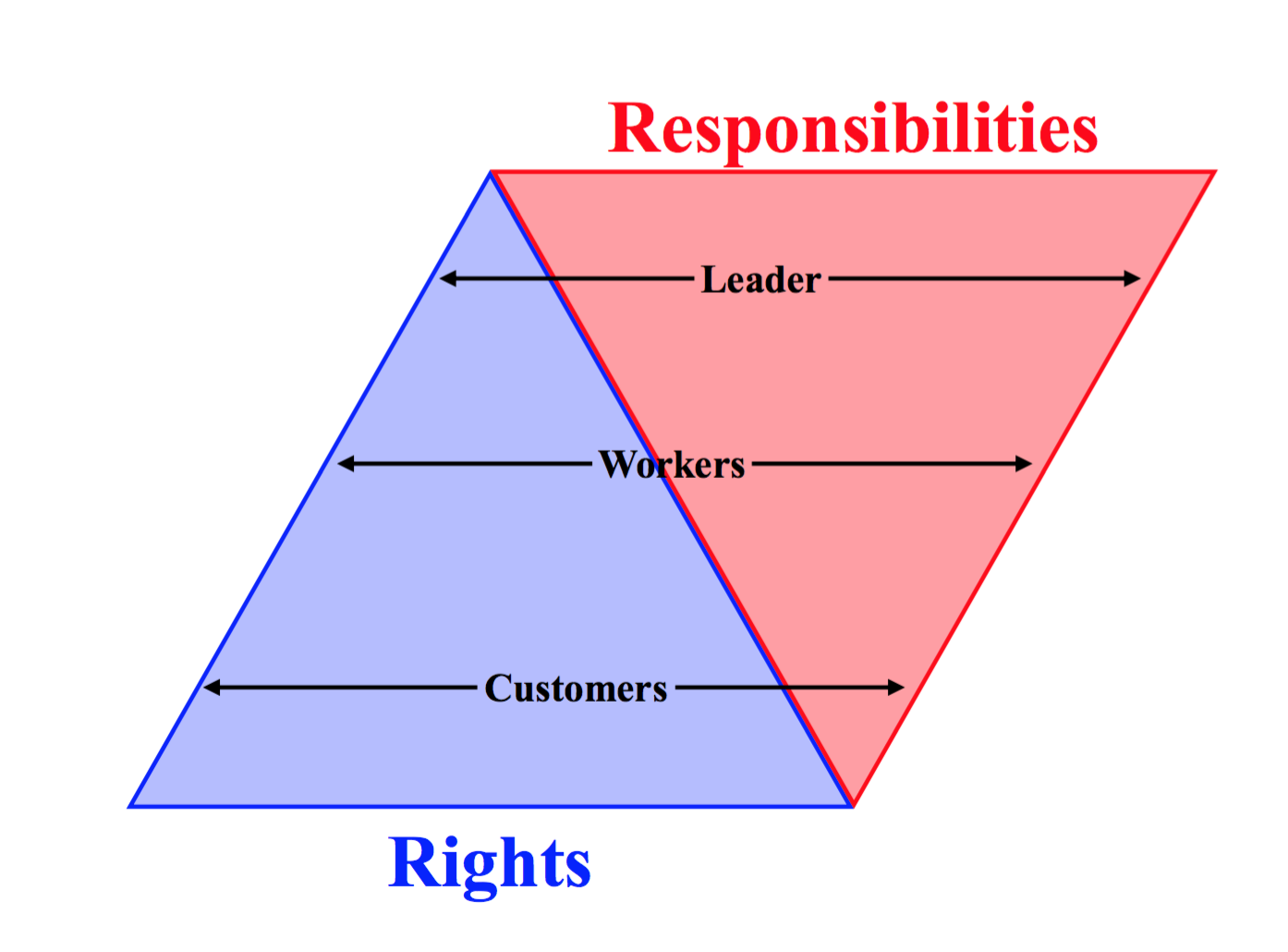
Paul said the natural thing was for those in leadership to feel entitled to certain rights, but the spiritual thing is to turn those rights into responsibilities toward the people around us.
Spiritual leadership is not about gaining more rights, it’s about fulfilling God-given responsibilities. In fact, the higher you progress in a leadership role, the fewer rights you have. Godly servant leaders gladly trade rights for responsibilities.
A mark of a godly leader is one who has stopped demanding his “rights.”
To trade our rights for responsibilities is a sacrifice. But I don’t mean a sacrifice that comes with a “Woe is me!” feeling. God will only ask us to sacrifice what is holding us back. God wants to use His leaders to minister to His people. He will not give us a larger position if we are only going to use that for our own benefit.
Consider the rights Jesus had because He was fully God. Yet He made the ultimate rights-for-responsibilities sacrifice by going to the Cross in our place. “The Son of Man did not come to be served, but to serve, and to give His life as a ransom for many” (Mark 10:45).
Leaders, I encourage you to ask the Holy Spirit to show you where you may be clinging to your rights, and how you can exchange those rights for responsibilities to the people God has placed under your care.
This is part 65 in my series on godly leadership. You can check out all of my posts in this series by clicking here.
Scott Klusendorf wrote, “If Roe and Casey are struck, it will be a truly historical moment, and pro-lifers should indeed celebrate. Nine unelected judges on the Supreme Court will no longer have sole legal authority to determine abortion policy. Rather, the legislative and executive branches of the federal government, along with those in the individual states, will now decide how the practice is governed. Put simply, the American people—your friends, your classmates, your coworkers, and your family members—will now determine if unborn humans enjoy the same legal protections as you and I, or get relegated to the dumpster.” This is a fascinating article about how pro-life Christians should prepare for a post-Roe America.
Even the pro-abortion research firm The Guttmacher Institute reports “an estimated 100,000 children are killed after the first trimester of pregnancy each.” Let that sink in: 300 lives are snuffed out every day by burtual, inhumane abortion techniques!
Dr. Tim Clarey at the Institue for Creation Research explains how the dinosaurs in the Juassic Park series are “imaginary dinosaur science.” He then lays out the facts.
J. Warner Wallace is a cold-case detective. His investigation into the biblical claims of the death and resurrection of Jesus led him to become a Christian. In this video he explains his thought process as an atheist—
[5:40] Greg reminds leaders that there isn’t an award for not taking a vacation
[6:46] Greg has seen the fallout from overly-tired leaders, and I share some ideas for leaders to help themselves and their teammates de-stress
[9:31] How do leaders build playtime into their regular work schedule?
[11:10] Share your ideas with us!
[11:34] Greg shared some playtime activities he used in his organizations
[12:27] Why do leaders think they have to be so serious?
[15:15] Some thoughts for leaders to help their teams
[16:51] Greg emphasizes again the importance of self-care and they guys talk about how we can help other leaders practice self-care
[19:03] Our coaching huddles can help you grow your leadership
[20:02] Is it possible to find work-life balance?
Check out this episode and subscribe on YouTube so you can watch all of the upcoming episodes. You can also listen to our podcast on Spotify and Apple.
Listen to the podcast of this post by clicking on the player below, and you can also subscribe on Apple, Spotify, or Audible.
John Maxwell was right: “Everything rises and falls on leadership.”
As the leader goes, so goes the family, the neighborhood, the business, the church, the country. Just as Israel’s leaders fell into sin and took the people down with them, so too the religious and political leaders in America are leading people to sin.
God told Ezekiel, “See how each of the princes of Israel who are in you uses his power to shed blood” (Ezekiel 22:6). These ungodly leaders were described as:
The bottom line: God says, “You have forgotten Me” (v. 12).
This kind of evil must be punished by an All-Righteous God.
But God is still merciful. He is still looking for just one who will turn away from the sins of the culture and live righteously. He is looking “for someone among them who would build up the wall and stand before Me in the gap on behalf of the land so I would not have to destroy it” (v. 30).
God is looking for just one leader who will seek God’s glory and not personal gain, who will stand for righteousness even if he has to stand alone.
Will you be that one?
I pray I may be that one!
I pray for godly leaders to stand up! “Holy God, may we stand for You in this evil culture. May Your Holy Spirit strengthen us to stand unmoved against the onslaught of depravity. Strengthen us against the evil one and against evil people, knowing that greater are You in us than the evil that is in the world. May we be the ones that refuse to bend our knee to anyone or anything but You. In the powerful name of Jesus, I pray this. Amen!”
Ken Blanchard shared a blog post based on one of the chapters in his book Simple Truths Of Leadership (which I highly recommend to leaders!). He wrote, “When you catch yourself doing things right, everything in your life will improve—especially your relationships. Why? Because it’s fun to be around people who like themselves. After all, if you’re not your own best friend, who will be? And as my dad used to say, ‘If you don’t toot your own horn, others might use it as a spittoon!’”
Listen to the podcast of this post by clicking on the player below, and you can also subscribe on Apple, Spotify, or Audible.
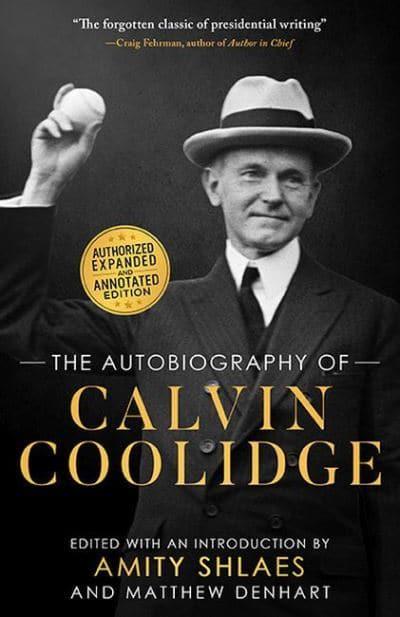
Calvin Coolidge is the only US president to have been born on July 4, which I think is very fitting for him, since his political philosophy found its firm foundation in our nation’s remarkable founding. In a very modest fashion, President Coolidge relates his amazing career in his autobiography.
I’m not sure how the title “Silent Cal” ever stuck to this president. Throughout his legal and political career, his speeches—almost all of which he wrote himself—are some of the most thoughtful and enduring speeches in our nation’s history. His voice seemed to resonate across the political aisle too, because at each subsequent election, Coolidge would be elected by larger margins than before, with more Democrats crossing over to vote for him each time.
Coolidge stood strong during a potentially disastrous Boston police strike while he was governor of Massachusetts, and he transitioned our government’s activities and expenditures from the wartime outlay of Word War I back into the peacetime activities after the war. He never wavered from his adherence to the principles in our founding documents, remaining a strong proponent of states’ rights and a smaller federal budget.
He was quite progressive, utilizing the new media of radio to get his thoughts out to as many people as possible while championing topics like women’s suffrage, lower taxes, and a stronger working class.
And then at the height of his political career, he chose not to run for reelection to the presidency, walking away from an almost guaranteed victory to a second term.
Calvin Coolidge was a fascinating leader, one which both those in and out of politics should strive to emulate. As a student of leadership myself, I highly recommend this book to both American history buffs and those desiring to increase their leadership acumen.
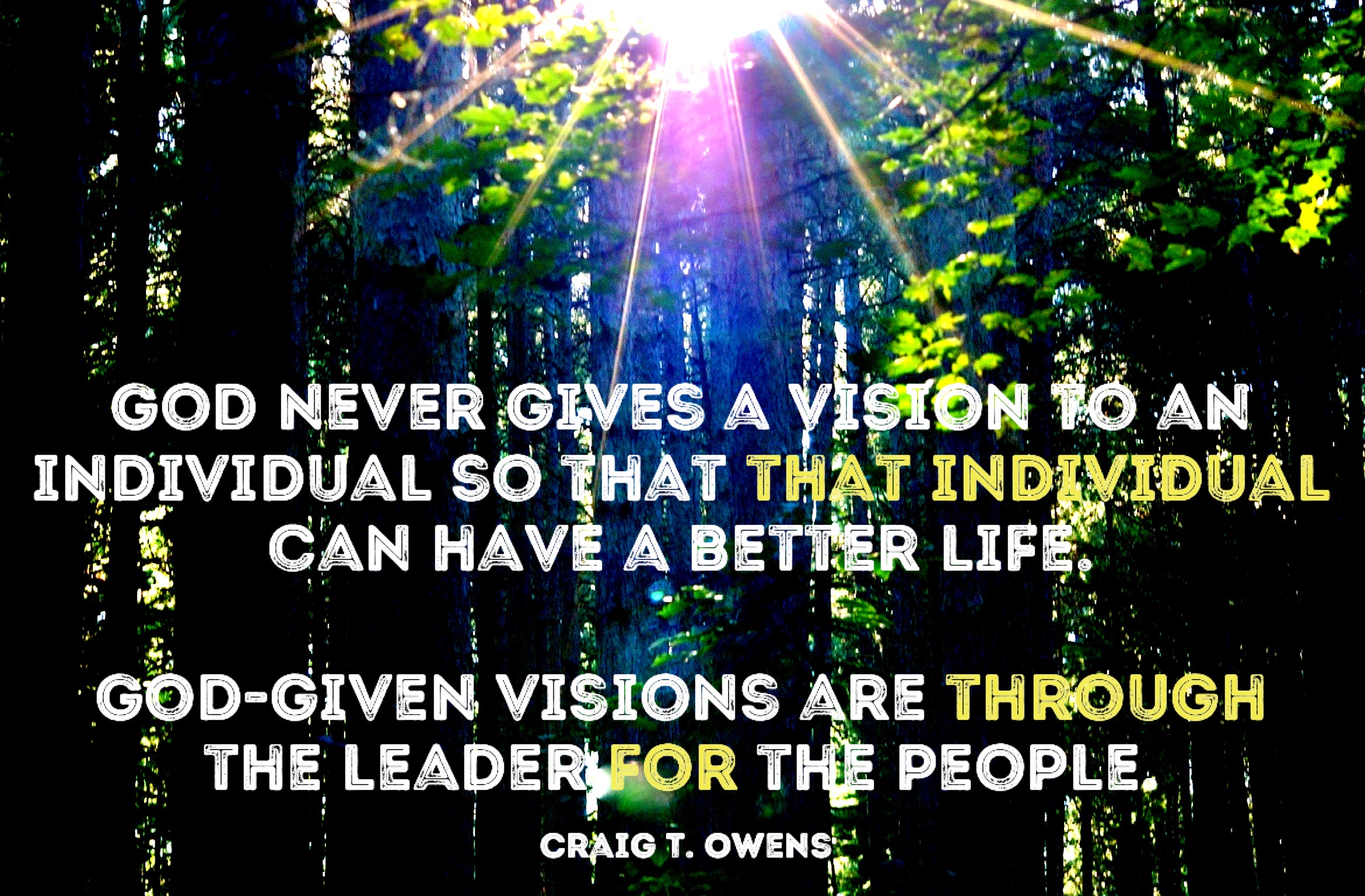
God doesn’t give a vision to a leader so that a leader can have a better life, but so that the leader can help the people get to a better place. Vision is always through the leader to the people.
Daniel exhibits this in his life.
This video is a short clip from a longer video that is exclusive content for my Patreon supporters.



 I have written before about the difference between terms that are biblical, unbiblical, and non-biblical. It is very important for us to keep these terms straight, especially so for those in leadership positions.







 Craig T. Owens