Sword-dropping Trust

Listen to the podcast of this post by clicking on the player below, and you can also subscribe on AppleSpotify, or Audible. 

God called Gideon to lead Israel to victory over the oppressive Midianites. He told Gideon, “Go in the strength you have and save Israel” (Judges 6:14). When Gideon hesitated because he didn’t think he had much strength nor influence to raise an army, God assured him of two things: “I am sending you” and “I will be with you” (vv. 14, 16). 

Gideon’s initial recruitment netted him 32,000 soldiers from four tribes: “And he sent messengers throughout all Manasseh, and the Manassites were called to follow him; and he sent messengers to Asher, to Zebulun, and to Naphtali, and they came up to meet them” (v. 35). 

God said this large army would be tempted to take the credit for themselves for defeating the Midianites, so God pared down the army to 10,000 men and then to 300 men (7:3, 6).

When God said He would deliver Midian into Gideon’s hands (v. 7), He meant it! HE would do the delivering, with Gideon’s 300 men merely being the instruments He would use. These men would defeat the invaders simply with trumpets and torches. 

When these 300 men surrounded the Midianite forces during the night, I want you to notice the bracketed phrase in the AMPC: 

And the three companies blew the trumpets and shattered the pitchers, holding the torches in their left hands, and in their right hands the trumpets to blow [leaving no chance to use swords], and they cried, “The sword for the Lord and Gideon!” (v. 20 AMPC) 

The Israelites had to leave their swords hanging on their belts to fully obey God! 

It was only this posture of full obedience that brought the victory. “They stood every man in his place round about the camp, and all the Midianite army ran—they cried out and fled. When Gideon’s men blew the 300 trumpets, the Lord set every Midianite’s sword against his comrade and against all the army” (vv. 21-22).

Those who weren’t in the 300 were still needed to finalize the pursuit, as they were called up to complete the victory (v. 23). 

Perhaps only the 300 had enough faith to not drop their torch and their trumpet and grab their sword. 

If it seems like God has stripped you of what you considered your source of security—like the swords that hung unused on the belts of Gideon’s 300—perhaps that is because He is getting ready to do something that only He can do! Whether you feel well armed or simply left holding something as simple as a trumpet and a torch, trust God’s strength. He can deliver you far better than you can deliver yourself. 

►► Would you please prayerfully consider supporting this ministry? My Patreon supporters get behind-the-scenes access to exclusive materials. ◀︎◀︎
God’s Loving “Stop!”

Listen to the podcast of this post by clicking on the player below, and you can also subscribe on AppleSpotify, or Audible. 

Does it sound loving when the Bible says that God’s hand was against His people to defeat them when they went out to battle? It’s actually one of the most loving things God could do for them. 

Check out the full message from which I took this clip. 

Not only does Judges 2:15 say, “Whenever Israel went out to fight, the hand of the Lord was against them to defeat them,” but these words from Isaiah 63 are just as startling—

In all their distress [God] too was distressed, and the angel of His presence saved them. In His love and mercy He redeemed them; He lifted them up and carried them all the days of old. Yet they rebelled and grieved His Holy Spirit. So He turned and became their enemy and He Himself fought against them. (Isaiah 63:9-10) 

But this got their attention: “Then His people recalled the days of old” (v. 11), repented of their evil ways, and turned wholeheartedly back to God. 

Remember that the opposite of love is not hate, but the opposite of love is apathy. If God simply ignored their sin, He would not be loving them. It is God’s love that causes His loving hand to be against us in our sinful ways so that we will recall, repent, and return. 

►► Would you please prayerfully consider supporting this ministry? My Patreon supporters get behind-the-scenes access to exclusive materials. ◀︎◀︎
Know, Go, Show

Listen to the podcast of this post by clicking on the player below, and you can also subscribe on AppleSpotify, or Audible. 

There is a recurring theme throughout the Book of Judges and then later is repeated in the years leading up to Israel’s exile: A godly leader passes off the scene and the people return to their old selfish, godless lifestyle. This sinful life brings God’s punishment, which causes the people to cry out to God for help. God raises up a leader who leads the people in repentance and a return to God. As a result, God’s blessings again flow to His people. Then that leader passes off the scene and the cycle repeats. 

This recurring thought is in the middle of a particularly dark time for Israel: “In those days there was no king in Israel; every man did what was right in his own eyes” (Judges 17:6; see also 18:1). 

The entire 17th and 18th chapters of Judges is a sickening story of the Israelites utterly turning their back on God so they could go do whatever they want. And worst of all, we see godless leaders taking advantage of the situation to line their pockets with worldly riches. 

Just because there is a God-fearing leader on the scene doesn’t guarantee that the people will follow his or her lead and devote themselves to God. But a godless leader almost always results in people debasing themselves by thumbing their nose at God’s laws. 

God raises up leaders and holds them accountable for their actions. He told Ezekiel that there would be consequences for both boldly speaking God’s message or for keeping silent (see Ezekiel 3:16-21). 

God calls His leaders to know His ways, to walk in integrity in that way, and then to call others to walk in that way too. 

A mark of a godly leader is one who knows the way, goes the way, and shows the way.

This is part 84 in my series on godly leadership. You can check out all of my posts in this series by clicking here.

►► Would you please prayerfully consider supporting this ministry? My Patreon supporters get behind-the-scenes access to exclusive materials. ◀︎◀︎
Grief From God

Listen to the podcast of this post by clicking on the player below, and you can also subscribe on AppleSpotify, or Audible. 

The insidious thing about leprosy is that it kills the body’s pain receptors. Lepers may walk on a broken ankle, utterly mangling their foot. Or they may stick their hand in the first without realizing it.  

Pain is important to us—it tells us that something isn’t right and that we should seek help. Just as there is a danger if we ignore physical pain, there is a greater danger if we ignore spiritual pain. It’s a greater danger because eternal separation from God is far more deadly than mere physical death. 

Moses warned the Israelites of the danger of spiritual complacency, or we could call it spiritual leprosy. Check out the warning in Deuteronomy 8:10-14, 17. It didn’t take too long for this spiritual numbness to set it (see the fulfillment of Moses’ words in Judges 2:10-15). 

(Check out all of the Scriptures in this post by clicking here.) 

When we read in Judges 2, “The hand of the Lord was against them,” this is actually a very loving statement. Think about it: What would happen if God continued to give them success in their sinful endeavors? 

We can see this a little more clearly in Isaiah 63:7-10 where we see that God’s love is both redemptive and corrective. His fighting against His people caused them to recall God’s ways and wait on Him once again (63:11; 64:4-5). Notice the last question of verse 5, “How can we be saved?” 

It starts with remembering—that’s what Moses said at the beginning of this journey, and it’s also what Jesus says at the end (Revelation 2:5). 

We have to meditate on God’s Word because it…

  • …is a mirror (James 1:22-25) 
  • …is a bright, revealing light (Psalm 90:8 AMPC) 
  • …surgically brings healing (Hebrews 4:12-13; Psalm 119:67, 70) 
  • …prompts godly sorrow without condemnation (Romans 8:1-2; 2 Corinthians 7:8-9) 

Only when this grief is turned to joy again can God use us to minister to others. We are able to comfort and redirect others because God has comforted and redirected us back onto His path. 

David became enamored with his spiritual success and forgot God’s laws. His sin caused God to turn and fight against him. In his deep grief, David cried out to God (Psalm 51:7-13). It was only after David repented that his grief was lifted and he was able to teach others about our loving God. 

Let’s not ignore our grief, but instead let’s ask God what He is trying to tell us through that grief. Remember, in our distress He is distressed and will carry us. But if our spiritual leprosy has taken us away from God, He will lovingly fight against us to get us to return to Him! 

You can check out all of the other messages in this series by clicking here. 

►► Would you please prayerfully consider supporting this ministry? My Patreon supporters get behind-the-scenes access to exclusive materials. ◀︎◀︎

Empowered For Obedience

Listen to the podcast of this post by clicking on the player below, and you can also subscribe on AppleSpotify, or Audible. 

In the 40 days between His resurrection and His ascension, we read that Jesus was with His disciples “giving instructions through the Holy Spirit” (Acts 1:2). 

I think this word “instructions” in the NIV is too soft. The other translations say things like:

  • commandments (NKJV) 
  • orders (NASB & NET) 
  • instructed and commanded (AMPC) 

The Greek word Luke uses in Acts 1:2 is entellomai and it is a word that carries weight. Throughout the New Testament this word is used to identify…

  • …the words of God (Matthew 4:6, 15:4; Luke 4:10; Acts 13:47; Hebrews 9:20) 
  • …the words of Moses (Matthew 19:7; Mark 10:3; John 8:5) 
  • …the words of Jesus (Matthew 17:9, 28:20; Mark 11:6; John 14:31; 15:14, 17; Acts 1:2, 13:47) 
  • …the words of recognized leaders (Mark 13:34; Hebrews 11:22) 

(Check out all of the above Scriptures by clicking here.)

In the Septuagint (the Greek translation of the Old Testament) this word is used seven times. Five of these times link together the words “command” and “covenant” (Deuteronomy 4:13; Joshua 23:16; Judges 2:20; Psalm 111:9–10; Jeremiah 11:3–4). The other two times express God’s strong promise-keeping power that is awe-inspiring (Psalm 90:11, 91:11). 

In other words, these aren’t just any words, but they carry an awesome authority with them. These are binding commands. They are not merely wise counsel or suggestions for godly living. They are indispensable to the Christian life. 

Luke points out that Jesus gave these commands “through the Holy Spirit” because it is only through the Holy Spirit that you and I can understand them, apply them, and be empowered to obey them. 

Jesus uses the same word entellomai in the Great Commission (Matthew 28:20) as well as in Acts 1:2. Clearly, the Scripture is telling us that we are powerless to understand and powerless to obey without the Holy Spirit’s daily empowerment. Jesus would never give us commands that we were unable to carry out, which is why He gives us instructions through the Spirit, and then the Spirit gives us the power to joyfully obey those commands. 

Don’t ever think that you are on your own in trying to figure out what Jesus said, and how you are going to live it out.

I discuss the role of the Holy Spirit in a Christian’s life in much greater detail in my series called We Are: Pentecostal. 

►► Would you please prayerfully consider supporting this ministry? My Patreon supporters get behind-the-scenes access to exclusive materials. ◀︎◀︎

A Godly Woman’s Superpower

Listen to the podcast of this post by clicking on the player below, and you can also subscribe on AppleSpotify, or Audible.

Mother’s Day messages seem to set a lofty expectation for women. When a pastor flips to Proverbs 31 and begins to read the description of the noble wife, I’m afraid many women—both moms and not-yet-moms—wonder how they could measure up to this list! The proverb itself really starts out with a question, “Who could find such a woman?!” (Proverbs 31:10).  

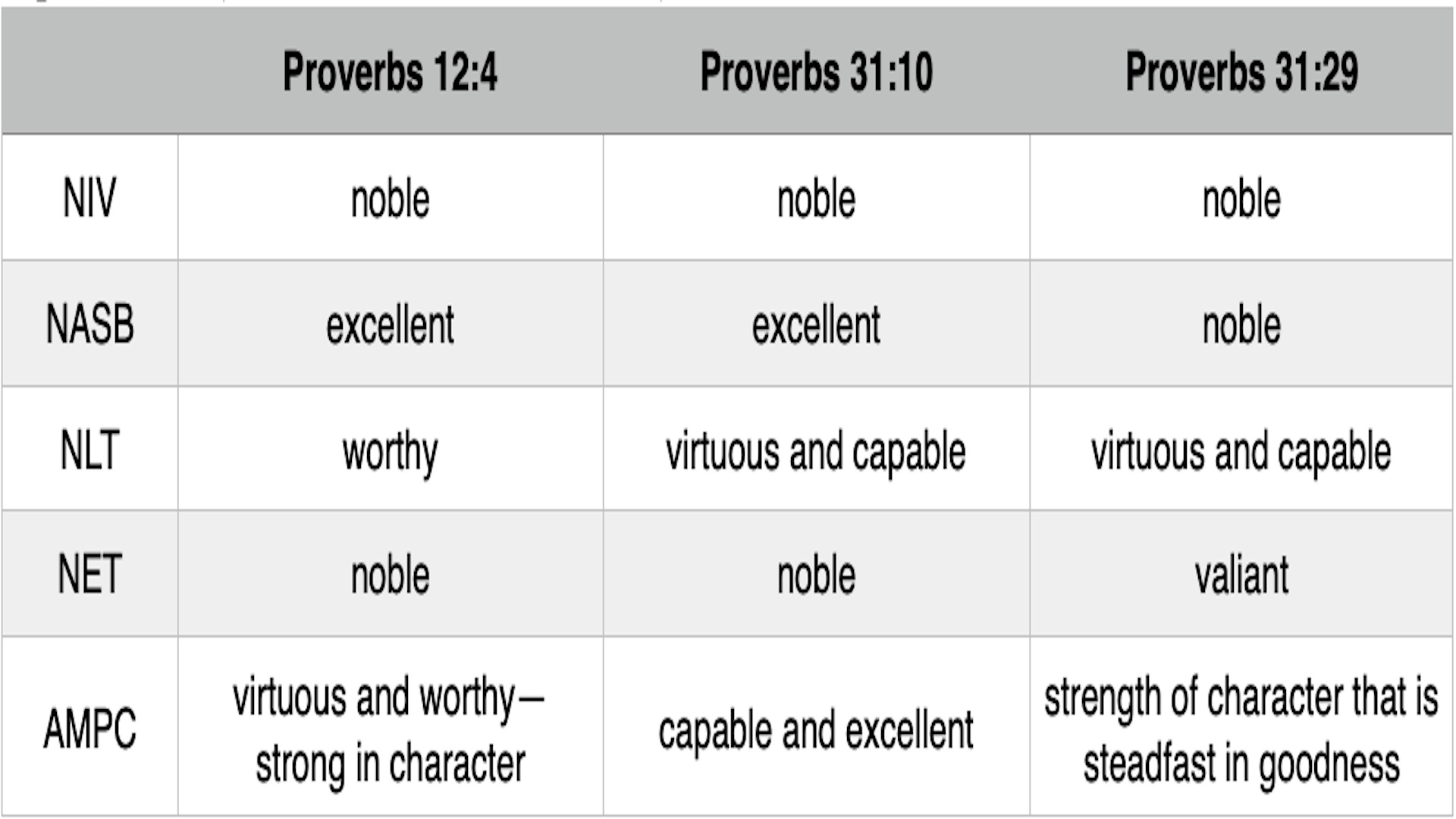
The Hebrew word for noble is used five times in Proverbs. Three of those are for this kind of superwoman (Proverbs 12:4, 31:10, 31:29).

This same word is also used twice for men in Proverbs—A good man leaves an inheritance to his children’s children (13:22); do not spend your strength on women, your vigor on those who ruin kings (31:3). 

(You can read all of the verses I’ve mentioned in this post by clicking here.)

A woman’s nobility and virtue either unleashes strength OR her vices deplete strength and bring ruin. In the language of Proverbs 31:3, she is either a king-maker or a king-breaker. 

This picture of empowerment is seen in the very first couple (Genesis 2:18-24). In the King James Version language, the word for helper is help meet. This means that Eve is the key that unlocks Adam’s potential. The godly woman makes possible what the godly man cannot do on his own. 

For a negative example of this, look at how Delilah sapped Samson of his strength and potential (Judges 16:6, 16, 19). On the flip side, we see a positive example in Ruth who unleashed the king-making power of her husband Boaz (Ruth 3:11, 4:11). 

As a kid, I always suspected my Mom had superpowers. I remember digging through the hair on the back of her head to find “the eyes” she said she had in the back of her head! She could kiss my boo-boo and instantly I was better, and she could help me understand the things that perplexed me the most. 

As I got older, I realized that my Mom actually did have superpowers:

  • She faithfully loved her God—Proverbs 31:30  
  • She diligently served her husband—31:11-12, 23 
  • She consistently cared for her children—31:27-28 

Ladies, that is the superpower that you have—you complete us, you elevate us, you unlock our potential! This brings both elevation for your family and honor for yourself (see Proverbs 31:29-31, and notice the phrase “city gate” in vv. 23 & 31 which symbolizes a leadership position). 

Women who ignore their God-given superpower of nobility unleash the vicious cycle of king-breakers. 

Women who use their God-given superpower of nobility unlock a virtuous cycle of king-makers. 

Ladies, be encouraged today that all that is required for this Proverbs 31 list to be an accurate description of you is faithfully loving your God and faithfully serving your family in the consistent, little things day after day after day. God sees this, He is pleased by it, and He is rewarding it! 

Guys, you have a part to play in this too. What you do with the potential that your mother and your wife have unlocked for you also plays a vital role in your family and in your community. I talked about this on Father’s Day, which you can check out here.

►► Would you please prayerfully consider supporting this ministry? My Patreon supporters get behind-the-scenes access to exclusive materials. ◀︎◀︎
Obedience Helps Obedience

Listen to the podcast of this post by clicking on the player below, and you can also subscribe on AppleSpotify, or Audible. 

The book of Judges in the Bible records a dark time in Israel’s history. There is a phrase that is repeated multiple times in that book, “In those days Israel had no king; everyone did as they saw fit” (Judges 17:6, 18:1, 19:1, 21:25). The absence of godly leaders setting a God-honoring example for the people led to some ugly behaviors! 

The Book of Ruth (which is set during this same time period) opens with the words, “In the days when the judges ruled, there was a famine in the land” (Ruth 1:1). This famine of both godly leadership and good harvests led Elimelech to leave Israel and allow his sons to marry women they shouldn’t have married. It also prompted opportunity seekers to seize Elimelech’s land, so that when his widow Naomi returned with her daughter-in-law Ruth, there was no source of income for them. 

One godly leader, a prophetess named Deborah, held firmly to God’s word. Her unwavering devotion to God was an encouragement to Barak to lead his armies to victory over their oppressors. In her song after the victory was secured, Deborah sang—

When leaders lead in Israel, when the people willingly offer themselves, bless the Lord! … My heart is with the rulers of Israel who offered themselves willingly with the people. Bless the Lord! (Judges 5:2, 9 NKJV)

Notice this vital principle: 

A mark of a godly leader is one whose obedience toward God helps others obey God.

Deborah’s obedience helped Barak obey God. 

We see this again in the Book of Ruth when Boaz obeys God’s command to fulfill his responsibility as Naomi and Ruth’s kinsman-redeemer. His obedience helped Ruth also obey God. 

Even in the New Testament, Joseph is a phenomenal example of this principle. Every single time the angel of God speaks to him about what he should do, Joseph’s immediate response is obedience. And then Matthew records that Joseph’s obedience is directly tied to prophecies about Jesus being fulfilled (Matthew 1:20-24; 2:13-15, 19-23). 

Godly leaders must go first! When we are the first in obedience—no matter how difficult it may seem in the moment—we make it possible for others to obey God themselves. 

This is part 75 in my series on godly leadership. You can check out all of my posts in this series by clicking here.

►► Would you please prayerfully consider supporting this ministry? My Patreon supporters get behind-the-scenes access to exclusive materials. Like this video where I talk about the logic in Psalm 119. ◀︎◀︎

In, On, And Through

Listen to the podcast of this post by clicking on the player below, and you can also subscribe on AppleSpotify, or Audible. 

I’ve talked before about the benefits of calling the Old and New Testaments the First and Second Testaments. This helps me not to subconsciously slip into the thought that “old” means outdated or that “new” means a replacement of what came before it. When I say First and Second I remember that there cannot be a Second without a First, that the First anticipates the Second and the Second fulfills the First. 

The people of the First Testament experienced the Spirit of God in an often-repeated phrase: “the Spirit of the Lord came on” someone. It usually came on them for a specific task or season. For instance…

  • 70 leaders to help Moses (Numbers 11:25)
  • the judges that delivered Israel from their enemies (Judges 3:10, 6:34, 11:29, 14:6, 15:14)
  • the anointing for Israel’s king (1 Samuel 16:13)
  • empowerment for prophets to prophesy (Ezekiel 11:5)

(Check out all of the above references by clicking here.)

When the Holy Spirit came on these men, there was a noticeable supernatural anointing and empowerment, but more times than not these men also had visible and sometimes crippling stumbles. 

What happens on the outside often stays on the outside. Sort of like the little boy whose mom brought him to church one Sunday. The little boy was constantly standing up on his chair and disturbing everyone around him. Finally, the exasperated mother whispered, “If you don’t sit down I’m going to take you to the restroom and spank you.” The little boy immediately sat down with his arms tightly crossed. He looked at his mom and said, “Outside I may be sitting down but inside I’m standing up!” 

God looks at the heart. He told the Israelites that their inward defiance didn’t outweigh their outward religious practices. And Jesus said that people who prophesied, cast out demons, and performed miracles, but still had an unrepentant heart, would hear Him say, “I never knew you” (Isaiah 1:12-13; Matthew 7:21-23). 

In the First Testament, we see a desire for the Holy Spirit to be more than on—a desire for Him to come in. David prayed, “Create in me a pure heart, O God, and renew a steadfast spirit within me” (Psalm 51:10). And God promised His people, “I will give them an undivided heart and put a new spirit in them … And I will put My Spirit in you and move you to follow my decrees and be careful to keep My laws” (Ezekiel 11:19, 36:27). 

That is exactly what happened on that Pentecost Sunday immediately following Christ’s resurrection and ascension. The Christians were baptized in the Holy Spirit. He came in them and brought them into the Godhead (John 14:20). 

Jesus described this “in-ness” in the picturesque language of a branch joined to the vine. The branch cannot produce any fruit on its own, but it abides in the vine so that the fruit-producing power can flow into the branch (see John 15:1-5). 

Paul identified this fruit of the Spirit as “love, joy, peace, forbearance, kindness, goodness, faithfulness, gentleness and self-control,” and he concluded with the phrase, “against such things there is no law” (Galatians 5:22-23). The law always sets limits, but when the Holy Spirit abides in us, the production of fruit is limitless! 

Being baptized in the Holy Spirit means that we allow Him to come in us and then to work on us. It’s only when the Holy Spirit has worked in us that can He flow through us to others. Jesus said that we would receive the Spirit’s empowerment to be witnesses—that’s an inward change that produces an outward fruit.

The Holy Spirit works in us to work on us so that He can work through us. So don’t stop at just salvation, but be baptized in the Holy Spirit! 

If you’ve missed any of the messages in our series on the Pentecostal experience, you can find all of those messages by clicking here. 

►► Would you please prayerfully consider supporting this ministry? My Patreon supporters get behind-the-scenes access to exclusive materials. ◀︎◀︎

Anointed To Minister

Listen to the podcast of this post by clicking on the player below, and you can also subscribe on AppleSpotify, or Audible. 

Last week I shared this key thought: The Holy Spirit’s empowerment ignites and then alines our light-bearing to a disaster-prone world. 

Despite what some people try to say, this empowerment from the Holy Spirit isn’t just for a select few. Jesus not only prayed for all of His followers to know this, but Peter also brought this out in his Pentecost Day sermon (John 17:20-23; Acts 2:21, 38-39). 

So why are some people not baptized in the Holy Spirit? I think there are numerable reasons, but allow me to share four broad headings: 

  1. They have impenetrable hearts to the Holy Spirit’s wooing (Acts 7:51)
  2. They are ignorant of the fact that this baptism is available to them (Acts 19:1-2) 
  3. They have impure motives regarding the baptism in the Holy Spirit (Acts 8:9-19) 
  4. They are too impatient (Luke 11:9-13)  

(Check out all of the above passages by clicking here.)

The bottom line: God wants to baptize you in His Spirit, Jesus wants you to be anointed with the same power He used, and the Spirit wants to bring out greater Jesus-exalting fruitfulness from your life. 

Two years ago in this series, I said that when it comes to the Holy Spirit’s involvement in a Christian’s life: In > On. 

In the Old Testament, Samson had the Spirit of God ON him, but he never allowed the Holy Spirit to come IN him and make important changes. Three times we read that “the Spirit of the Lord came upon him” (Judges 14:6, 19; 15:14), but after every one of these times we see Samson reverting to his childish, selfish, pouting ways again. 

By contrast, consider the life of Jesus. After He was baptized by John we read that Jesus was “full of the Holy Spirit” and “led by the Spirit.” That word for “full” means complete or lacking nothing. Jesus yielded to the Holy Spirit and allowed Him to lead and direct, as well as supply everything that was needed for ministry. Just a few verses later we read that “Jesus returned to Galilee, in the power of the Spirit.” And in His first recorded sermon, Jesus read from the prophet Isaiah about the Holy Spirit anointing Him for ministry (Luke 4:1, 14, 18). 

That word for “anointed” is chiro, from which we get the word Christ. That is the same root word in us as CHRISTians. 

We see this in Peter, Stephen, Barnabas, and Paul (Acts 4:8; 6:3, 5; 7:55; 11:24; 13:9). And then Paul writes that this anointing is for all Christians—“Now it is God who makes both us and you stand firm in Christ. He anointed us [that’s the word chiro again], set His seal of ownership on us, and put His Spirit in our hearts as a deposit, guaranteeing what is to come” (2 Corinthians 1:21-22). 

The anointing that characterized the life of Jesus in Acts 10:38—“How God anointed Jesus of Nazareth with the Holy Spirit and power, and how He went around doing good and healing all who were under the power of the devil, because God was with Him”—is the same anointing for ministry for all CHRISTians today! 

So…

Don’t dabble—dive in! 

Don’t settle for on—allow the Holy Spirit fully in! 

When we are yielded and baptized in the Holy Spirit, we have the anointing to shine brightly for Jesus in our generation. 

If you’ve missed any of the messages in our series We Are: Pentecostal, you can check them all out by clicking here. 

►► Would you please prayerfully consider supporting this ministry? My Patreon supporters get behind-the-scenes access to exclusive materials. ◀︎◀︎

The End Of Our Struggle

Listen to the podcast of this post by clicking on the player below, and you can also subscribe on AppleSpotify, or Audible. 

Christmas time finds me sampling a whole lot of delicious treats, and I’m not complaining at all! But I’m a pretty simple guy, so one of my favorite treats is just plain old peanut butter. I love it! Sometimes I stick my spoon right in the jar and eat a big spoonful. 

But then there’s the age-old problem: How do you get peanut butter off the roof of your mouth? You can use your tongue or try blowing on it. Or you can use your finger! 

But then there’s another problem: How do you get peanut butter off your finger? Blow it? Shake it? Or eat it! 

Hmm, now I seem to be back to the original problem: How do you get peanut butter off the roof of your mouth? 

Maybe you’ve tried to solve one problem, only to create another problem. And then when you solve that problem you find yourself right back where you started! Round and round it goes! 

The Israelites were facing much the same situation. They sinned, God punished them through King Nebuchadnezzar, they tried to rebel, they were taken into captivity, and then they were finally allowed to return to Jerusalem after 70 years. But they still weren’t in charge of their own fate. First it was the Babylonians calling the shots, then the Medians, then the Persians, and then the Romans. Luke begins the birth story of Jesus with the words “in the days of Caesar Augustus” (Luke 2:1). 

The Israelites were waiting for God to restore their Promised Land to them. Some people believed a miraculous champion was going to come on the scene (much like Samson of old), and some thought a new anointed king from King David’s line would appear and rally an army to himself. 

We can understand this because of one of the prophecies from Isaiah 9 that talks about a warrior and God’s zeal. 

That word “warrior” got people pumped up! As did the promise that “the zeal of the LORD Almighty will accomplish this”! For many, this was their proof that God wanted His people to rule this Promised Land for themselves 

We’ve been going through a series called People Will Talk, and these voices of a miraculous champion or a new king from David’s line were loud voices to be sure. But interestingly, the Bible doesn’t record much of what these loud voices were saying. 

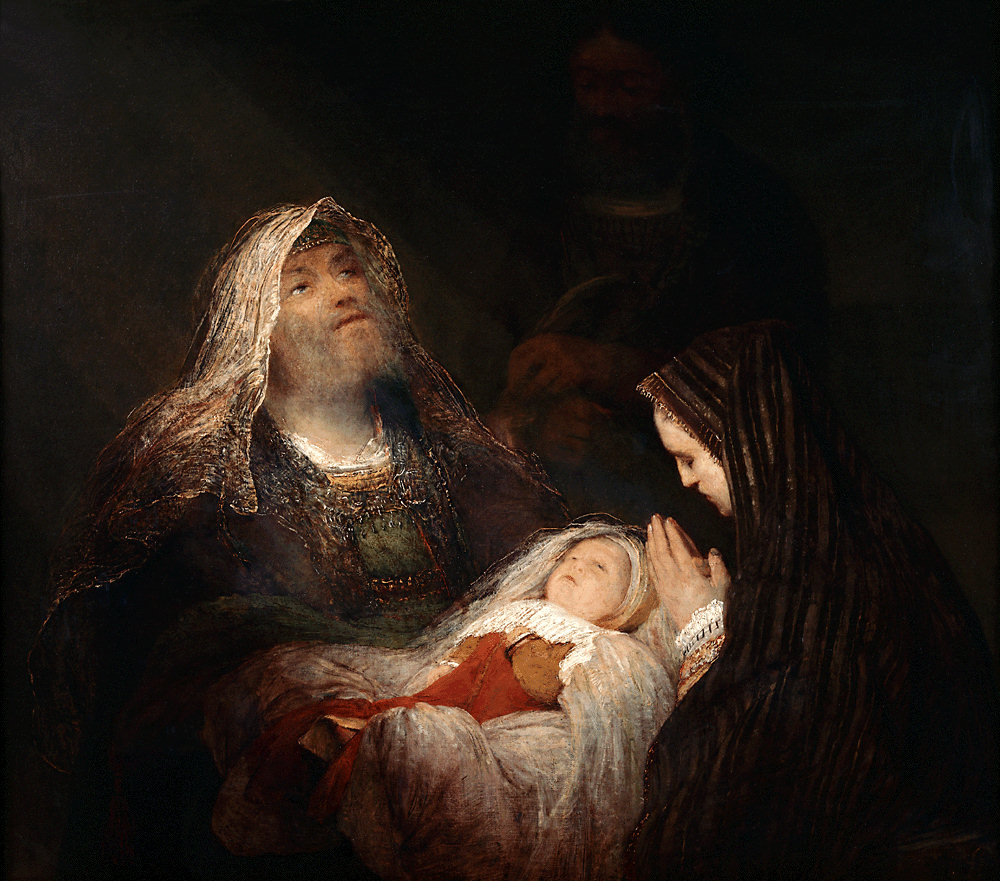
Also among the people of this time there was another group that were called “the Quiet in the Land.” These were people who didn’t talk very much, but instead they clung to the promise spoken by God Himself of the Messiah. One of these quiet ones was a man named Simeon.

He was called “righteous and devout” and someone “waiting for the consolation of Israel.” Which meant he carefully attended to the prophecies of Scripture. The Amplified Bible says that Simeon “lived in prayerful expectancy [of] the Lord’s Christ. 

I left out an important part of that prophecy in Isaiah 9—something that I think the loud ones overlooked or downplayed too. In between those words about “warrior” and “God’s zeal” we read this: “For to us a Child is born, to us a Son is given. The government will be upon His shoulders. And He will be called Wonderful Counselor, Mighty God, Everlasting Father, Prince of Peace” (Isaiah 9:6). 

What does the “Prince of Peace” have to do with a warrior? Quite simply, when Jesus the Messiah came, the struggle was over. Jesus was the Warrior King who defeated the enemy of sin that kept us out of God’s presence. 

The loud Israelites believed God wanted His people to rule their Promised Land for themselves. But God wanted a people exclusively for Himself. ALL people—Jews and Gentiles alike—regardless of where or when they lived! 

Jesus is the way into God’s presence. He told us, “I am the way, the truth, and the life” (John 14:6). 

You can try to solve your own problems, but only Jesus can bring the ultimate salvation. In the Christmas carol Come, Thou Long-Expected Jesus, check out the lyrics of the second stanza:

Born Thy people to deliver, 
Born a child and yet a King, 
Born to reign in us for ever, 
Now Thy gracious kingdom bring. 
By Thine own eternal Spirit, 
Rule in all our hearts alone; 
By Thine all sufficient merit, 
Raise us to Thy glorious throne.

A relationship with Jesus means there is no more struggle of trying to solve our own problems, or figure out how things are supposed to work, or pushing down one problem only to have another one pop up. We come to the One and Only One who can raise us to His glorious throne forever and ever! 

Advent is a celebration of the end of our struggle because Jesus has made the way for us to have peace with God. 

And that means a very Merry Christmas indeed! 

If you’ve missed any of the messages in our Advent series People Will Talk, you can find links to all of them by clicking here. 

►► Would you please prayerfully consider supporting this ministry? ◀︎◀︎