The Approachable Jesus

Listen to the podcast of this post by clicking on the player below, and you can also subscribe on AppleSpotify, or Audible. 

A friend of mine who was in a position of leadership in the Assemblies of God used to joke with people, “Since you’re bowing and walking backwards out of my office, would you like to kiss my ring too?” There are some people that we feel are in a special class so that we have to approach them differently. 

If we feel that way about certain people, what might we be thinking when we consider approaching the supreme, awesome, preeminent, incomparable Jesus?! It’s very likely that we could feel Him to be unapproachable, as though we aren’t worthy of His attention. 

But when Jesus Himself told us, “When [not ‘if’] you pray,” He is assuming that we will pray. And then He adds this amazing thought: “And I will do whatever you ask in My name, so that the Father may be glorified in the Son” (John 14:13)! 

Jesus loves to help us. He died a cruel death on the Cross so that He could help us! Jesus ties our trusting prayer with His willingness to serve us (Luke 12:22-37). Note this last line from our approachable Savior: 

It will be good for those servants whose Master finds them watching when He comes. Truly I tell you, He will dress Himself to serve, will have them recline at the table and will come and wait on them. (v. 37) 

Jesus serves us?! What an amazing thought! But does this make Jesus somehow less majestic? I like what John Piper has to say about this: “Does this belittle the risen Christ—to say that He was and is and will ever be the servant of His people? It would, if ‘servant’ meant ‘one who takes orders,’ or if we thought we were His masters. Yes, that would dishonor Him. But it does not dishonor Him to say that we are weak and need His help.” 

How do we not treat Jesus as an order-taking servant? First, we have to remember that approachable doesn’t mean something we do casually. I think this is discovered in our attitude—it’s the difference between being childlike and being childish. 

The childlike attitude is one of wonder and trust. One that calls God, “Daddy.” One that is lovingly dependent on Him. One that says, “I don’t understand what I’m going through right now, but I trust Your wisdom.” 

The childish attitude is one who treats majestic things flippantly. Perhaps the childish one talks about God as “the Big Guy upstairs.” Or one who remains selfishly independent, or who says, “Do it my way—now!”

The childlike attitude glorifies Jesus as our approachable Servant Savior. 

The childlike attitude also recognizes that there are more dimensions of the majesty of God to be discovered in an abiding relationship with Jesus. Our approachable Savior wants us to come to Him, to call to Him for help, and to know Him more intimately (Jeremiah 29:13-14; Matthew 11:28-30; Hebrews 4:16; 10:19, 22). 

Prayer not only unlocks deeper, proper intimacy with Jesus, but it conforms our heart more and more to His heart. As we are conformed to Him, we reflect His approachable glory to others (2 Corinthians 4:6, 3:18). 

We approach the awesome Jesus reverently in childlike faith. It’s in God’s presence that the Holy Spirit matures our faith so that we become glory-reflectors that point others to Jesus. 

If you’ve missed any of the eight messages in our series Awesome: Learning to pray in the awesome name of Jesus, you can find the list of all of the messages by clicking here. 

►► Would you please prayerfully consider supporting this ministry? My Patreon supporters get behind-the-scenes access to exclusive materials. ◀︎◀︎
A Leadership Lesson From Baruch

Listen to the podcast of this post by clicking on the player below, and you can also subscribe on AppleSpotify, or Audible. 

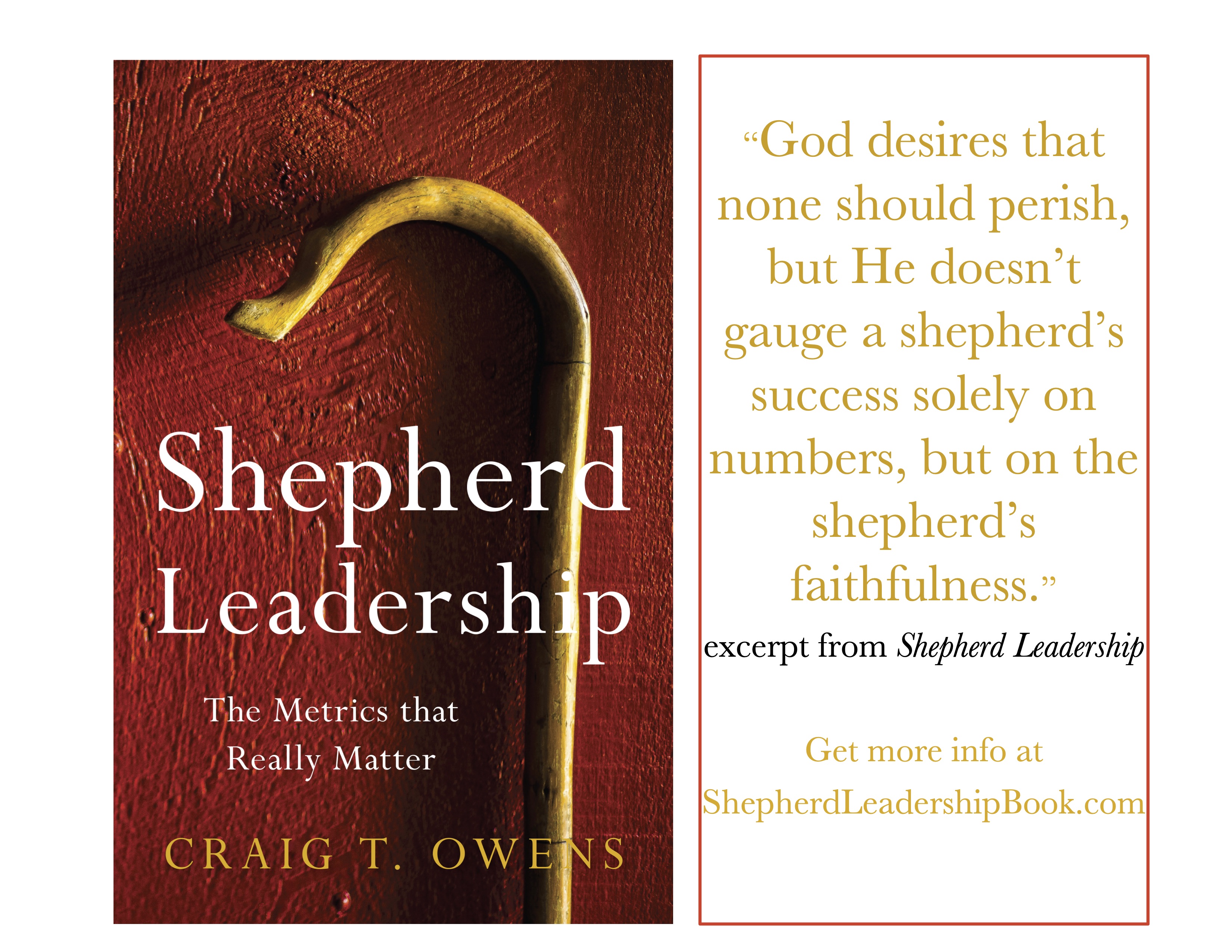
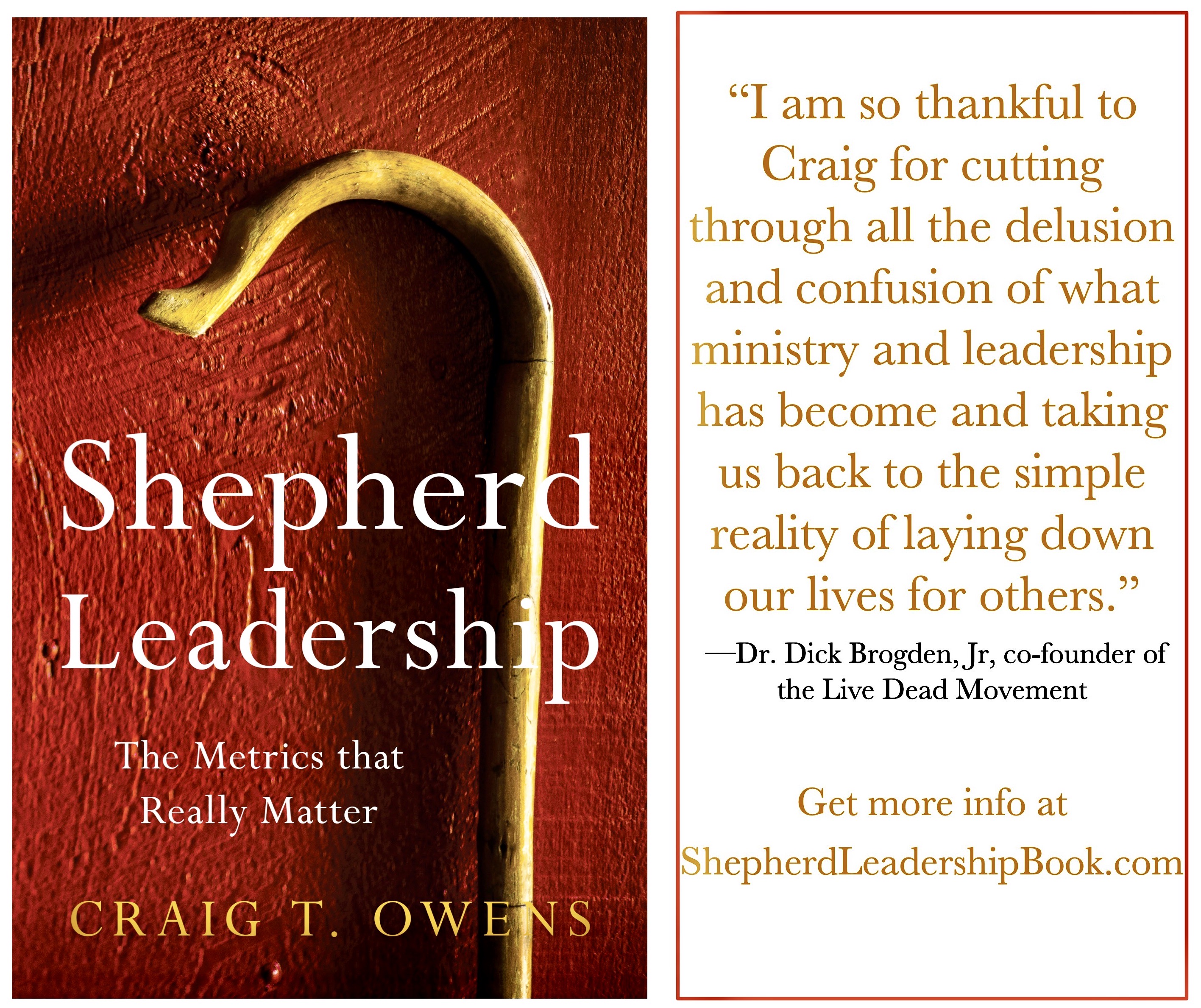
In my book Shepherd Leadership: The Metrics That Really Matter I talk about a man named Baruch. You can check out his story in Jeremiah 45 (it’s just five verses long). 

Baruch was a faithful scribe and friend to Jeremiah. Not only did he transcribe all of Jeremiah’s dictation (twice!), but he also read all of Jeremiah’s words at the temple when the prophet was under house arrest. By identifying with Jeremiah, Baruch became the target of the false prophets’ vitriol. 

Perhaps Baruch had big plans for his life, but those plans seemed thwarted because he was obedient to Jeremiah and to God. He was having a bit of a pity party which seemed to stem from his unrealized plans for himself. 

I love the juxtaposition between two phrases in this chapter: 

  • “You [Baruch] have said…” (v. 3) 
  • “The Lord says…” (v. 4) 

Baruch said, “My plans are failed.” God said, “My plans always prevail.” 

Baruch said, “I’m done for.” God said, “Wherever you go, you will live.” 

I have to stop listening to me. When I listen to me, my thwarted plans bring about a pity party. I have to keep listening to God. When I do, He brings life wherever He sends me. 

I believe that shepherd leaders can learn a valuable lesson from Baruch’s life. In fact, in my book I talk about a time that God and my wife had to deal with me about my own pity party. 

Shepherd Leadership: The Metrics That Really Matter is available in print or ebook, and in audiobook through either Audible or Apple.

►► Would you please prayerfully consider supporting this ministry? My Patreon supporters get behind-the-scenes access to exclusive materials. ◀︎◀︎

No Contradictions

Listen to the podcast of this post by clicking on the player below, and you can also subscribe on AppleSpotify, or Audible. 

…I will hide My face from this city because of all its wickedness. Nevertheless, I will bring health and healing to it… (Jeremiah 33:5-6) 

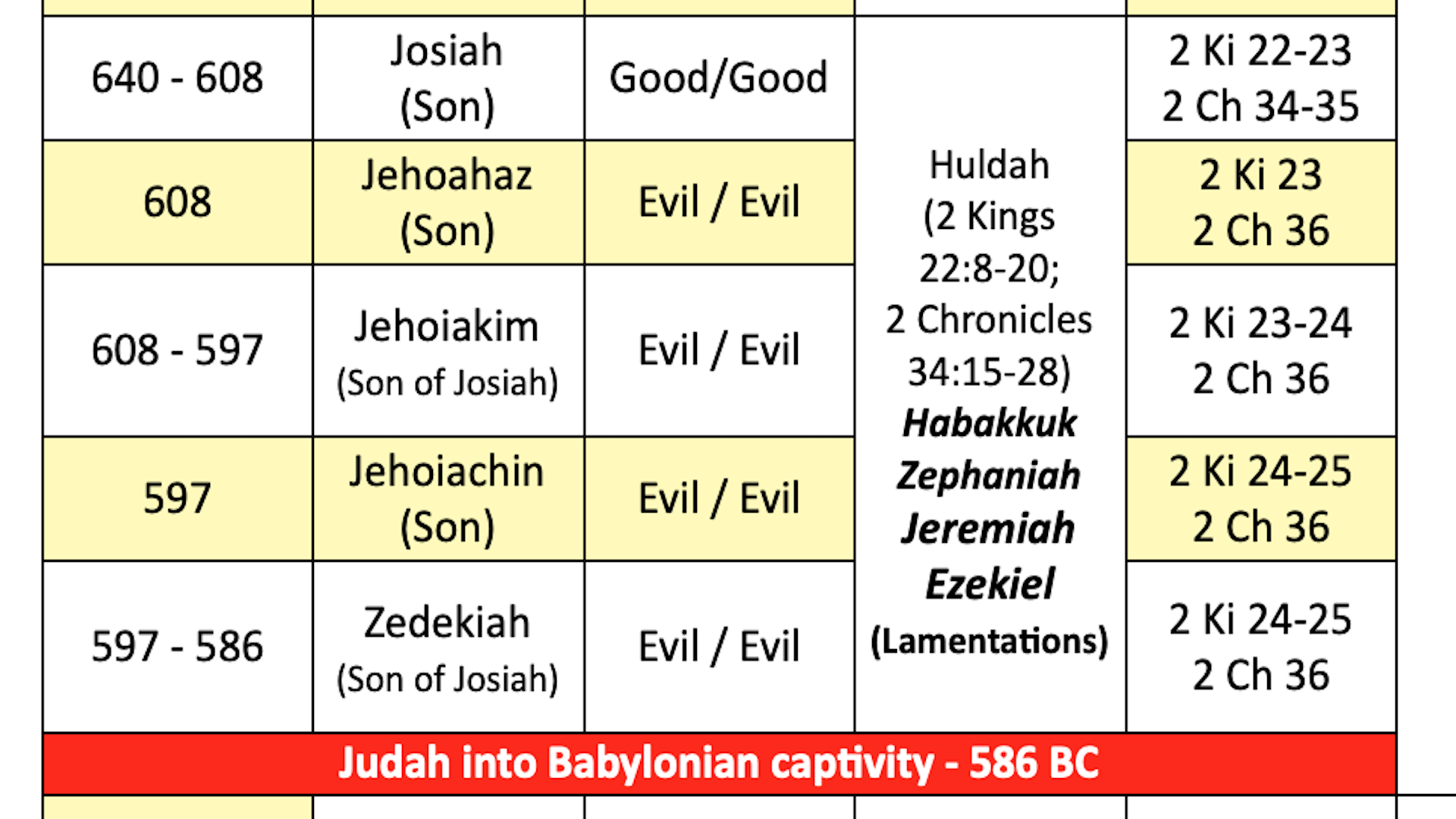
God’s anger at Judah’s sin is blazing hot! And rightly so: Dr. Henry Halley points out, “Most of the 20 Davidic kings who reigned over Judah during the 400 years between David and the Babylonian exile were very bad. Only a few were worthy of the name of David.” So it is understandable that God would need to punish that sinful nation. 

Then comes that word “nevertheless.” In spite of the rampant sin, God’s promise of restoration is even greater than the pain of His punishment. 

God promises healing, restoration, complete cleansing from sin, and more descendants of David and Levi than can be counted. And He promises this to the exact same people that He promised to punish. 

I don’t know about you, but to me this almost seems like a contradiction. Does God want to punish them or does He want to bless them? 

The apparent contradiction is hard for our finite brains to comprehend. That’s why God makes an important statement to Jeremiah before He begins describing the punishment and the blessings: “Call to Me and I will answer you and tell you great and unsearchable things you do not know” (v. 3). 

Aha! When we call on God to help us with unsearchable things, we find there are no contradictions in God nor in the Bible itself. 

If you feel stumped on a text of Scripture, I have previously shared how I handle the tough texts, but step number one is always calling on God to help. 

C.S. Lewis wrote, “Heaven will solve our problems, but not, I think, by showing us subtle reconciliations between all our apparently contradictory notions. The notions will all be knocked from under our feet. We shall see that there never was any problem”—or any contradiction at all. 

►► Would you please prayerfully consider supporting this ministry? ◀︎◀︎

A Step Backwards?

Listen to the podcast of this post by clicking on the player below, and you can also subscribe on AppleSpotify, or Audible. 

God needed to use Philip to steer a God-seeking government official to Jesus Christ. After this brief one-on-one encounter, God removed Philip from the scene and almost entirely from the pages of history.

Philip had just been leading a huge revival in Samaria, but he didn’t count success by the nickels-and-noses metrics of the world. He obeyed God even to the point of “taking a step backwards” in the world’s eyes, but in God’s eyes it was the most successful of moves.

In one of the chapter of Shepherd Leadership: The Metrics That Really Matter I wrote—

     Don’t try to grow your ministry. First, because it’s not yours, it’s His; and second, because your measure of success is probably more slanted toward quantitative measurements than qualitative. Jesus wasn’t concerned about bigger numbers: “What do you think?” He asked, “If a man has a hundred sheep, and one of them goes astray, does he not leave the ninety-nine and go to the mountains to seek the one that is straying?” (Matthew 18:12). … 

     What’s the value of one government official’s life? God says that his value is incalculable. Apparently, God knew that Philip was the perfect shepherd to lead this Ethiopian to the pasture where he would accept Jesus as his Savior. Philip was obedient, a sheep was saved, and God was pleased. … 

     The Chief Shepherd made this commitment to His sheep: “And I will give you shepherds according to My heart, who will feed you with knowledge and understanding” (Jeremiah 3:15). My prayer is that we would much rather feed a few sheep where God has directed us and given us His heart than for us to try to manufacture success that is measured by how many nickels and noses we can count. 

I’ll be sharing more clips from this book signing event soon, so please stay tuned. Shepherd Leadership: The Metrics That Really Matter is available in print or ebook, and in audiobook through either Audible or Apple.

►► Would you please prayerfully consider supporting this ministry? ◀︎◀︎

Sermon Prep 101

Listen to the podcast of this post by clicking on the player below, and you can also subscribe on AppleSpotify, or Audible. 

Go down to the potter’s house, and there I will give you My message (God speaking to Jeremiah).

Jesus was masterful in using visual illustrations—common, everyday things—to illustrate the biblical truth He wanted to teach. God does the same thing with Jeremiah. 

God instructs Jeremiah to simply go to the potter’s house and watch. Jeremiah obeyed: “I went down to the potter’s house, and I saw him working” (v. 3). It was after taking in this scene that God could speak to Jeremiah a sermon illustration. Jeremiah says, “Then the word of the Lord came to me” (v. 5). 

Not only did God help Jeremiah prepare his sermon with a visual illustration, but God also prepared Jeremiah for the follow up conversation. God knew how the people would respond to Jeremiah’s message, and He again gave him the words to speak ahead of time (vv. 12-17). 

God knows His sheep better than we do. He knows what they need to hear, and how best to make His message stick. Jesus said, 

“I have never spoken on My own authority or of My own accord or as self-appointed, but the Father Who sent Me has Himself given Me orders concerning what to say and what to tell. And I know that His commandment means eternal life. So whatever I speak, I am saying exactly what My Father has told Me to say and in accordance with His instructions.” (John 12:49-50 AMP) 

We pastors and evangelists dare not try to prepare a message on our own! 

Samuel Johnson prayed something that I pray every time I sit down to prepare a sermon: “Almighty God, my Heavenly Father, without Whose help labor is useless, without Whose light search is in vain, invigorate my studies.” 

Seeking God’s help in our sermon preparation should be our very first action every single time. 

►► Would you please prayerfully consider supporting this ministry? ◀︎◀︎

An Appeal To Preachers

Listen to the podcast of this post by clicking on the player below, and you can also subscribe on AppleSpotify, or Audible. 

…They have turned their backs to Me and not their faces; yet when they are in trouble, they say, “Come and save us!” (God in Jeremiah 2:27) 

In so many ways the USA today resembles ancient Israel. Abortion, prostitution, idolatry, envy, greed, atheism, dirty politics, self-serving church leaders. Our culture calls itself “Christian” but we live anything but. 

God is not allowed to be mentioned in our schools, but the moment there is a school shooting, people cry, “Where was God?! Why didn’t He stop this?!” 

God is banished from the town square, but as soon as a tornado or hurricane or flood levels the town, the people yell, “How could God let this happen?!” 

This was exactly the same lifestyle and same response in Jeremiah’s day. 

When these painfully tragic things happen, there should be a different response: “Consider then and realize how evil and bitter it is for you when you have forsaken the Lord your God and have no awe of Me” (v. 19). 

Typically, this considering takes place post-tragedy. But it really should be considered before disasters strike. Four times in this chapter God calls us to consider “the word of the Lord” (vv. 1, 4, 5, 31). In order for that considering to take place, loving pastor-shepherds need to hold up the mirror of God’s Word to the ungodly lifestyles people are living.

To all of my fellow pastors, I appeal to you to boldly and lovingly proclaim the full counsel of God’s Word. Not just the “pleasant” parts that speak of God’s blessings, but also the calls to repentance that will allow your people to avoid God’s righteous judgment. And don’t wait to only speak about these topics post-tragedy, but make this message a consistent part of your teaching. 

Pastor, if you don’t speak these truths to your flock, how will they know how to live in the way that pleases God? I am praying that God will help you in this. 

►► Would you please prayerfully consider supporting this ministry? ◀︎◀︎

God’s Precision

Listen to the podcast of this post by clicking on the player below, and you can also subscribe on AppleSpotify, or Audible.

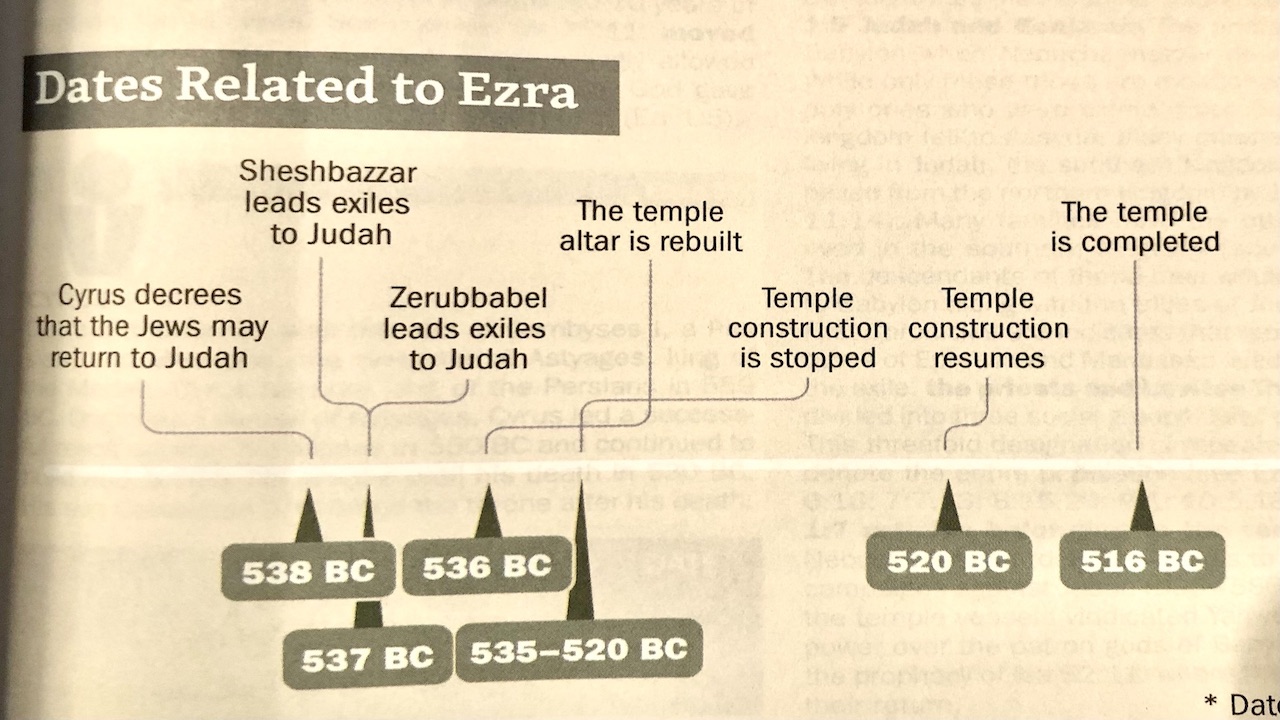
I love how often archeological discoveries absolutely verify biblical accounts. Haggai is a great example of this: He so precisely dates his prophecies, which are then corroborated by extra-biblical records from the Medes and Persians.  

For instance, check out these specific dates:

  • 538 BC—Cyrus issues a decree allowing the Jews to return to Israel (Isaiah 45:1-3) 
  • 537 BC—exiles return and in 536 BC they lay the foundation of the temple (Ezra 3:8)
  • 536 BC—opposition arises and the work stops (Ezra 4:1-6) 
  • 520 BC—Haggai and Zechariah arrive and begin ministering (Ezra 5:1-2; Haggai 1:1-15) 
  • 520 BC—opposition arises again and Haggai speaks a word of encouragement (Ezra 5:3-5; Haggai 2:1-9)
  • 516 BC—after receiving a favorable reply from King Darius, the temple is completed (Ezra 6:13-15)

(You can check out all of the above referenced verses by clicking here.) 

The reason these dates are so important is that they precisely align with the prophecy spoken by Jeremiah BEFORE the Israelites were even taken into exile. God said that they would return to worship in Jerusalem 70 years after their exile (Jeremiah 29:10-14; Daniel 9:1-2). Which is exactly what happened: They were taken into captivity in 586 BC, and the temple was completed in 516 BC! 

Haggai’s final prophecy (Haggai 2:20-23) has an unusual ending. It’s unusual in that it doesn’t sound like “The End” that usually ends a book of the Bible. That is precisely because it’s not the end. 

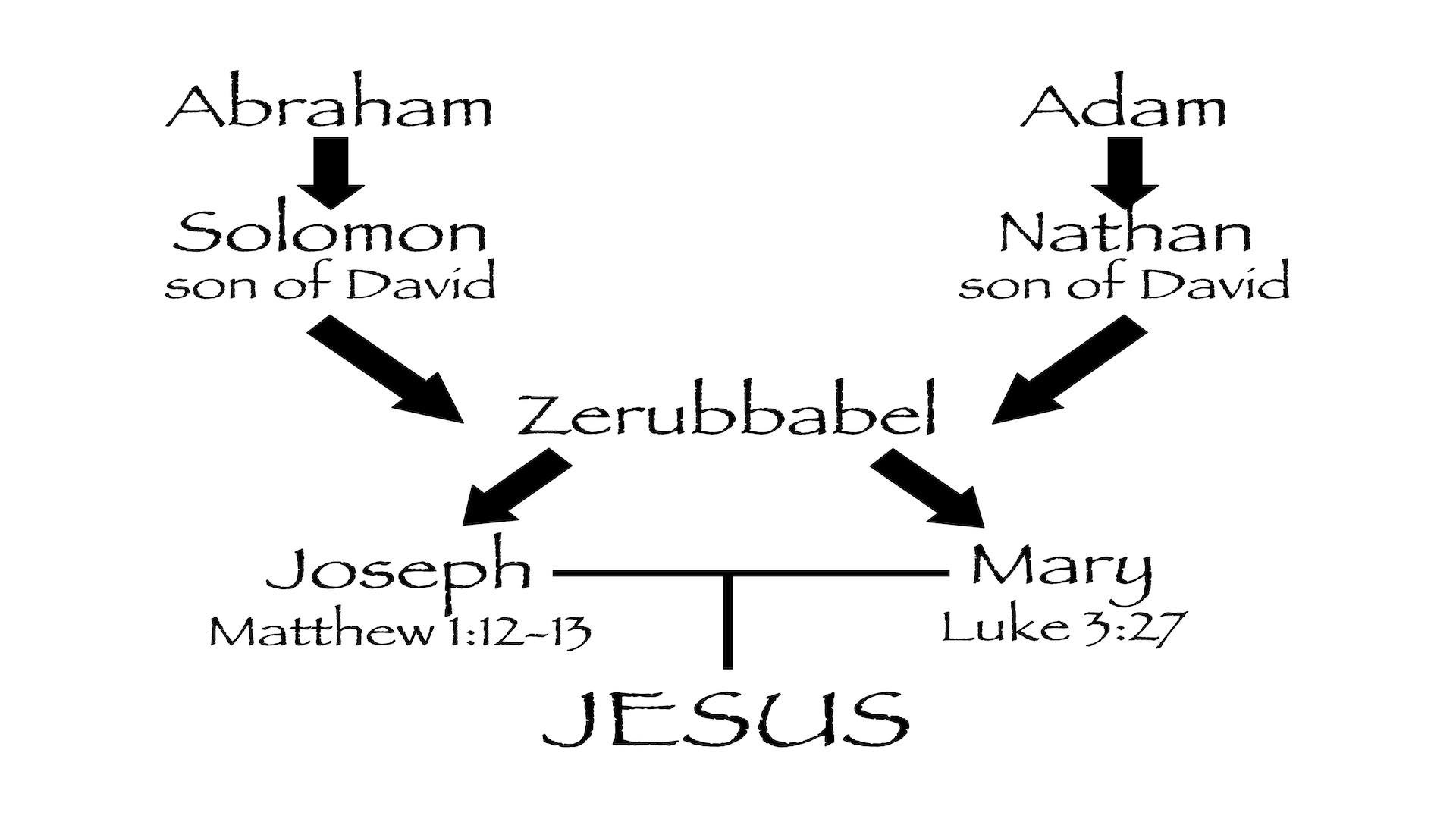
God tells Zerubbabel that he is God’s “signet ring,” a mark of God’s supreme authority. Zerubbabel was not the signet ring, but he was a forerunner—a type—of Jesus. 

So when we trace the genealogies of Jesus in the New Testament, we see that Zerubbabel appears in the family line of both Joseph and Mary—both the family line from Abraham who received God’s covenant, and the family line of Adam who heard God promise that a human offspring would crush satan’s head. 

These genealogies are as precise and exacting as the dates for the return of the exiles. God does everything exactly according to plan. He speaks His promises to us, and we can stand on those promises. Jesus is THE Signet Ring that stamps His “Amen” to every promise of God on which we stand.  

God is not vague; He is precise. He has a plan for all of history—which is His story—and He has a precise plan for your life too!  

So in building on our list from last week, let’s add one more item: 

  1. Hear the Word of God
  2. Consider the Word of God
  3. Obey the Word of God
  4. Stand assured, encouraged, and unmovable on the Word of God.

What God says He will do, He will do! 

If you’ve missed any of the messages in our series looking at the major lessons from the minor prophets, you can access the full list by clicking here. 

►► Would you please prayerfully consider supporting this ministry? ◀︎◀︎

Complaining To God

Listen to the podcast of this post by clicking on the player below, and you can also subscribe on AppleSpotify, or Audible.

One of the things I love about the minor prophets is the reminder of the historicity of the Bible. Habakkuk, and the other prophets, lived in an actual moment of history. Check out some of the key dates during the ministry of Habakkuk: 

  • 605 BC—Nebuchadnezzar invades Judah and carries off Daniel and his friends 
  • 597 BC—the Babylonians attack Judah again and take 10,000 exiles back to Babylon, including the prophet Ezekiel 
  • 586 BC—Judah is besieged and defeated, and all remaining residents are exiled to Babylon 

Jeremiah, a contemporary of Habakkuk, preached to faithless Israelites, imploring them to return to God, while Habakkuk attempted to encourage faithful Israelites to continue to trust Jehovah. 

Habakkuk recognized that he was delivering a heavy word. When he opens this book by saying this is “the oracle” that he received from God, that word is better translated “burden.” Part of this burden may have been due to the fact that Habakkuk had something on his heart that we often have: a complaint. 

Can we complain to God? 

Habakkuk complained to God—twice!—and God doesn’t reprimand him, so there must be a right way to vent about our frustrations and confusions. Here’s what we can learn from Habakkuk’s two complaints: 

  1. Instead of making accusations, ask questions. Habakkuk asks God eight questions in his two complaints. I think this is an attitude issue. Complaints are saying, “God I disagree with what You’re doing,” while questions seem to be more like, “God, I don’t understand what You’re doing.” 
  2. Desire God’s glory to be seen. At the conclusion of both of Habakkuk’s complaints he uses the word “therefore” (1:4, 16). His conclusion is something along the lines of, “God, if You let this continue, it appears that Your glory is being obscured by the activities of wicked people.” 
  3. After your complaint, close your mouth and open your eyes and ears. After Habakkuk’s first complaint, God tells him to “look” at all He is going to do. And after the second complaint, God tells him to “write down the revelation” God gives him and then “wait for it” to be fulfilled” (2:2, 3). 

Then Habakkuk does something that isn’t seen anywhere else in the Bible outside of the book of Psalms: he calls for us to Selah pause three times! 

Habakkuk shows us that our best response to what God reveals to us should be worship: 

  • Selah (3:3)—pause to consider what God has done 
  • Selah (3:9)—pause to stand in awe of His very present glory 
  • Selah (3:13)—pause in anticipation of His righteous justice and awesome glory that will be revealed 

Key phrases from Habakkuk are quoted in the New Testament, and at least three of them are directly tied to these Selah pauses:

  • The earth WILL be filled with the knowledge of the glory of the Lord” (2:14), is echoed in the way all of humanity will see the glory of the risen Jesus.  
  • The righteous WILL live by his faith” (2:4), is quoted as a Christian’s ongoing interaction with the indwelling Holy Spirit. 
  • I WILL rejoice in the Lord my God … I WILL be joyful in God my Savior” (3:17-18) figures prominently in Mary’s song after she realizes that she is pregnant with the soon-to-be-born Savior. 

(Check out all of the above biblical references: Habakkuk 2:14, 2:4, 3:17-18; Revelation 1:5-8; Romans 1:17; Galatians 3:11; Hebrews 10:37-39; Luke 1:46-47, 54-55) 

Can you air your complaints to God? Yes, but do it the right way. Then silently listen, patiently wait, and then eagerly tell others about the coming judgment that they can avoid by having their sins forgiven through faith in Jesus our Savior. Only then can we also echo the “I will” statements of Habakkuk that are echoed in the New Testament—I will live by faith, I will look forward to the glory of God being fully revealed, I will continue to rejoice in God my Savior every day, and I will tell others how they, too, can live this way themselves! 

If you’ve missed any of the messages in our series looking at the major lessons we find in the minor prophets, you can find the complete list by clicking here. 

►► Would you please prayerfully consider supporting this ministry? ◀︎◀︎

Shadows And Light

Have you ever been afraid? Even scared half to death? Once there was the biggest, lumpiest, scariest monster hunched in my room just waiting to pounce on me! My mouth was so dry that I couldn’t even call out for help. Finally, I got enough moisture in my mouth to be able to yell out, “DAD!!” When my Dad came into my room and turned on the light, the monster disappeared. But right where he had been waiting to pounce on me was my desk chair with a hoodie hanging on the back. 

Sometimes we’re scared because of what we don’t see clearly or can’t fully understand because there’s not enough light for us to make out the details. 

On the night Jesus was born, an angel announced the news of His birth to some nearby shepherds. The angel was coming with good news, but Luke writes that the shepherds were terrified! I like the picturesque language of the King James Version that says they were “sore afraid,” as if they shook so much it made them sore!  

Why were they so terrified? I think it’s because they knew that when angels show up that means God Himself is close by! In fact, Luke emphasized that it was an angel of the Lord who shone with the glory of the Lord. 

For their entire lives, these shepherds had been trying to live by the law. They had been told that this is what would make them acceptable to God. The law told them how to live, and how to make things right with God if they broke a law. If they didn’t make things right, God would punish them. So perhaps they were sore afraid because they weren’t ready to meet God. 

But the angel told them something unexpected: Today your Savior has been born! A Savior, not a Judge! 

This is what God promised through one of His prophets: “The days are coming,” declares the Lord, “when I will make a new covenant with the people of Israel. I will put My law in their minds and write it on their hearts. I will forgive their wickedness and will remember their sins no more.”  

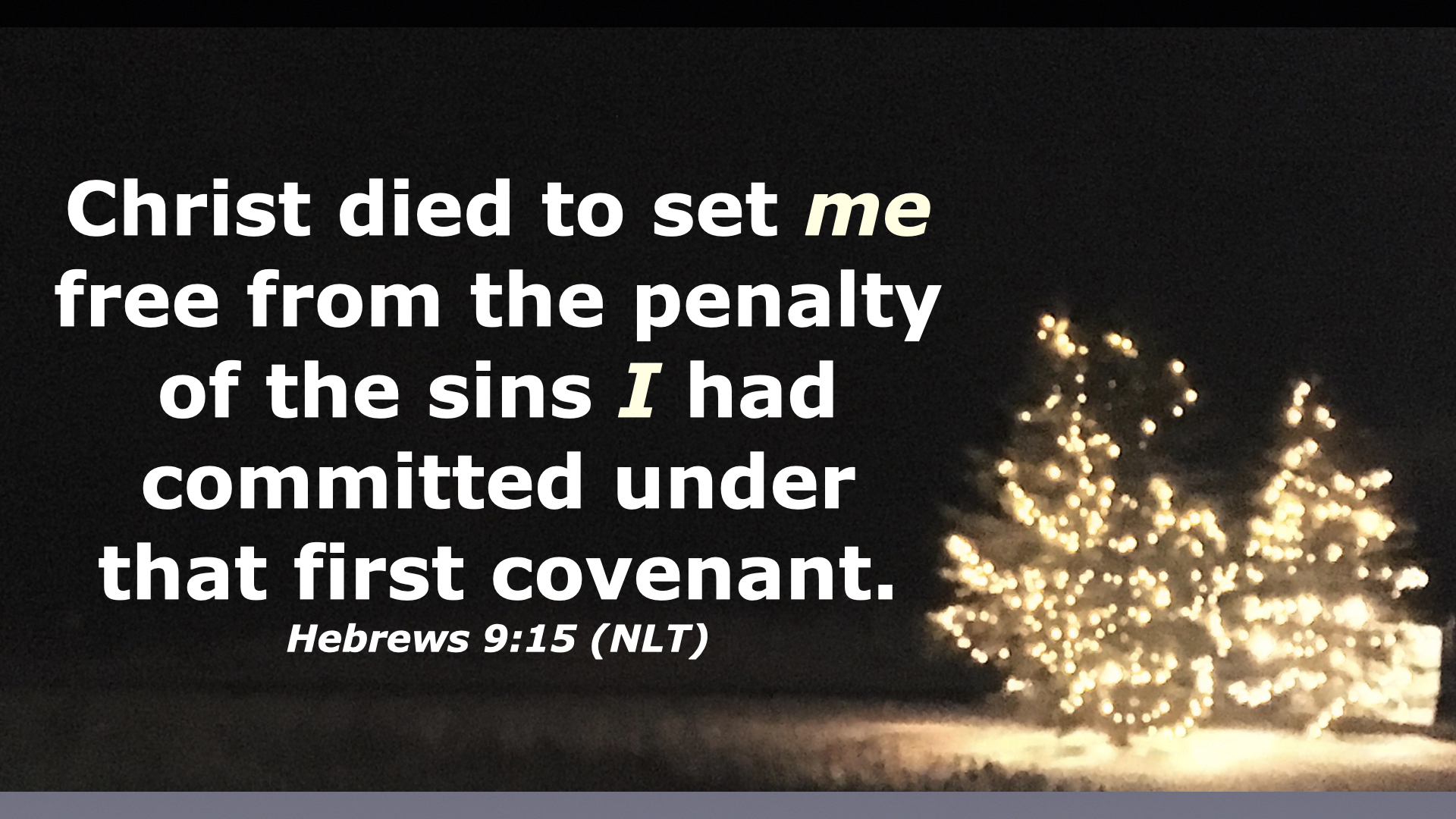
The writer of Hebrews said all of the laws were just a “shadow of what is in heaven” (Hebrews 8:5). This shadow was the source of fear, but now Jesus had come as the Light of the world and as our Savior. Jesus came to take away the penalty of sin: Christ died to set them free from the penalty of the sins they had committed under that first covenant (Hebrews 9:15). 

In The Pilgrim’s Progress, Faithful told how a man came and beat him because he had broken the law. Even when Faithful begged for mercy the man said, “I don’t know how to show mercy to anyone.” This man was Moses the Lawgiver. 

Faithful explained what finally gave him relief: “He would have finished me off, but then one came by, and told him to stop. I did not know Him at first, but as He went by, I saw the holes in His hands and in His side and I concluded that He was Jesus.” 

The Advent of Jesus was to let the punishment for breaking the law fall on Him instead of us! 

The Law says, “Clean yourself up first and then you can come to God. But if you miss anything, God will bring down the hammer of His judgment!” Jesus says, “Come to Me just as you are. If you ask Me, I will forgive your sins. I’ll clothe you in My robe of righteousness so you can stand faultless and unafraid before God” (see Romans 8:1; Galatians 3:26-27).  

This is very Good News indeed! It means we can join in the song of the angels: Glory to God in the highest heaven, and on earth peace to those on whom His favor rests. 

Solving The Unsolvable Dilemma

When Gabriel told Mary that she would be the mother of Jesus, he said that “the Lord God will give Him the throne of His father David.” Just before the angel showed up Luke noted that Mary was “pledged to be married to a man named Joseph, a descendant of David (Luke 1:27, 32).

At this time in history marriages were often arranged to preserve and strengthen family lines. Both Joseph and Mary could trace their family lineage through the royal line of Israel’s King David. 

Mary is betrothed to Joseph. Betrothal was considered as strong as a marriage with the only exception being that the couple didn’t yet live together nor sleep together. Betrothal usually lasted a year and would require a divorce to cancel it. 

Mary tells Joseph what Gabriel said to her and then she leaves to visit Elizabeth for the next three months! Joseph is left alone to consider his options. 

The word Luke uses for “consider” is not even close to what’s happening in Joseph’s mind. The word means to revolve around and around in your mind, like trying to solve a Rubik’s Cube. 

Consider Joseph’s options. If he divorces Mary—which was apparently his first reaction—Mary would be publicly embarrassed. Not to mention that Joseph knew that God hated divorce. 

If Joseph decided to proceed with the marriage, he would either have to confess he was the father of her child—which could result in both of them being stoned—or admit that she was pregnant by another man—which would be a permanent disgrace for Mary’s family. 

In either case, both families would be shamed! 

While Joseph was still considering all these unsavory options an angel says to him, “Joseph, son of David, do not be afraid.” By calling him by that title he is really saying, “I know how important your family heritage is to you. I know how important Mary’s family heritage is to her. But do not be afraid to take Mary home as your wife because this all fits into God’s plan. 

Would it have been easier on Joseph and Mary and their families if God could have waited until after they were married? Of course! But then it wouldn’t fit into God’s miraculous plan, because 700 years earlier God promised that Jesus would be born of an unmarried virgin. 

Fearing what’s coming in the future means we have forgotten Who already knows the future. 

God knows YOUR future too! It’s a future He already saw as good and fruitful, if you will put your trust in Him (Psalm 139:16; Jeremiah 29:11; John 15:16).

If you seem paralyzed by a no-win dilemma like Joseph was, first DON’T do what Joseph did: pray! Then DO what Joseph did after hearing the angel: obey. 

Remember Who knows you and Who knows your future, and then take each step on your journey as God directs you. 

If you’ve missed any of the other messages in our series called Do Not Be Afraid, you can access the full list by clicking here.