Uh Oh! God’s Calling Me

Back in the pre-cell phone days, my parents had to develop another system to communicate with me. Many times it was simply an agreement before I left the house like, “Be home at 6 o’clock for dinner.” Or maybe something like, “Come inside when the streetlight turns on.”

I was usually pretty good about following through on this. But occasionally I would get so caught up in what I was doing with my friends that time just sort of got away from me. That’s when I would hear the distinct voice of my Mom calling me. Not on the phone, but with her hands cupped to her mouth, yelling, “Craaaiiig! Time to come home!”

If she was calling me, that meant I missed the deadline. I wasn’t where I was supposed to be.

Uh oh!

I spoke to them, but they did not listen; I called to them, but they did not answer. (Jeremiah 35:17)

God spoke to His people at first because they were close to Him. But then He had to call to them because they had gotten farther away from Him.

If God is calling me, perhaps it’s because I’ve gotten too far away. Maybe not on purpose. Maybe I just got caught up in what I was doing. Maybe I allowed something else to capture my attention.

I don’t want God to have to call me. I don’t even want to be close enough that He has to speak to me. I want to be so close to Him that just His whisper gets my undivided attention.

What about you: How close do you want to be?

Leadership Is & Isn’t

“Does it make you a king to have more and more cedar? … [Your father] defended the cause of the poor and needy, and so all went well. Is that not what it means to know Me?” declares the Lord. (Jeremiah 22:15-16)

Leadership has both an IS and ISN’T component.

Leadership isn’t about me.
Leadership isn’t about getting comfortable.
Leadership isn’t about getting.
Leadership isn’t about a title or perks.
 
Leadership is about others.
Leadership is about being uncomfortable with the discomfort of others.
Leadership is about giving.
Leadership is about serving.

True leaders know God and show God to others.

UPDATE: So many of these thoughts were the seed thoughts for topics I elaborate on in my book Shepherd Leadership: The Metrics That Really Matter.

The Pastor And The Holy Spirit

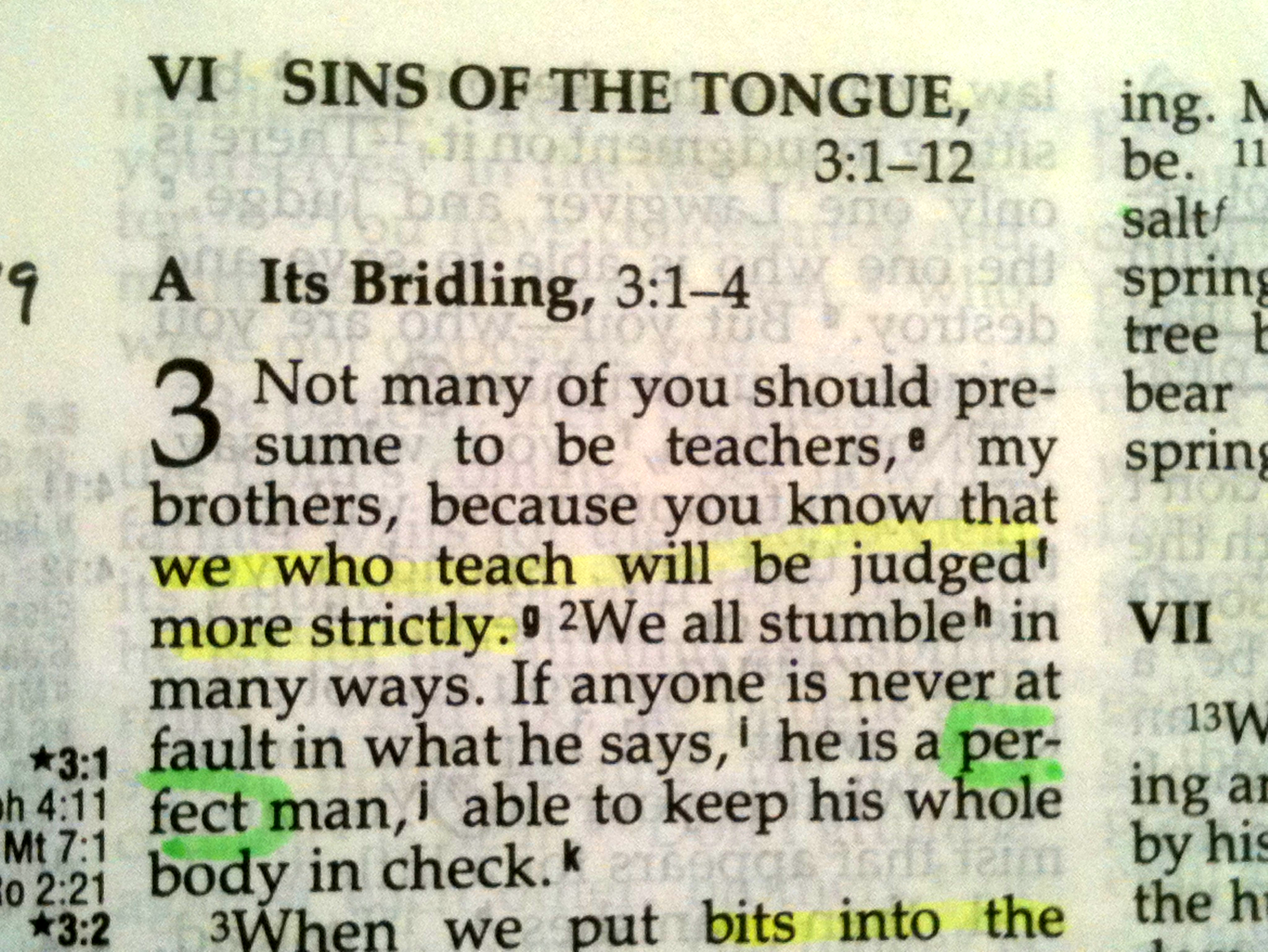
I’m sure I’m not the only pastor that feels occasionally (all right: frequently) overwhelmed by the heavy responsibility of sharing God’s Word with others. After all, the Apostle James said it pretty clearly: Not many of you should presume to be teachers, my brothers, because you know that we who teach will be judged more strictly (James 3:1).

“Judged more strictly”? Yikes!

But I take great consolation in knowing that if God called me, He will equip me. Just as He did with Jeremiah—The Lord reached out His hand, then He touched my mouth and said, “I am giving you the words to say” (Jeremiah 1:8)—I know He will do for me.

I also draw great confidence in knowing the Holy Spirit is helping me. Check out these words from Francois Fénelon:

“Of what efficacy would be the exterior word of pastors, or even the Scriptures themselves, if we had not within the word of the Holy Spirit giving to others all their vitality? The outward word, even of the Gospel, without the fecundating, vivifying, interior word would be but an empty sound. It is the letter that alone kills (2 Corinthians 3:6), and the Spirit alone can give us life.”

Then A.B. Simpson shares this encouraging story of the Holy Spirit’s help:

“They that possess this power will not always be popular preachers, but they will always be effectual workers. Sometimes the hearer will almost think that they are personal, and that someone has disclosed to them his secret sins. Speaking of such a sermon, one of our most honored evangelists said that he felt so indignant with the preacher under whom he was converted that he waited for some time near the door for the purpose of giving him a trashing for daring to expose him in the way he had done, thinking that someone had informed on him. Let us covet this power. It is the very stamp and seal of the Holy Spirit on a faithful minister.”

YES! I do covet this power of the Holy Spirit in my life. Without His help, I would be fearful to ever open my mouth to speak to others about the things of God.

(Dis)Approval

Have you ever been doing or saying something, and then “the look” on someone’s face caused you to stop or change what you were saying/doing? We often look to certain people for their (dis)approval to gauge how we’re doing.

But what if we’re looking at the wrong faces?

God called Jeremiah to be a prophet while he was still fairly young. So when this young man starts saying, “This is what God says,” can you imagine the looks he’s going to get?!

So right out of the gate, God says two things to Jeremiah: Do not be afraid of them … Do not be terrified by them (Jeremiah 1:8, 17). I like how the King James Version renders these verses: Do not be afraid of their faces … Do not be dismayed by their faces.

  • Afraid means to look at faces for approval.
  • Dismayed or terrified means to look at faces for disapproval.

But people’s faces aren’t the faces Jeremiah—or you or I—should be looking at. The only face that matters is God’s! Look how many “I” statements God makes about Himself in this chapter:

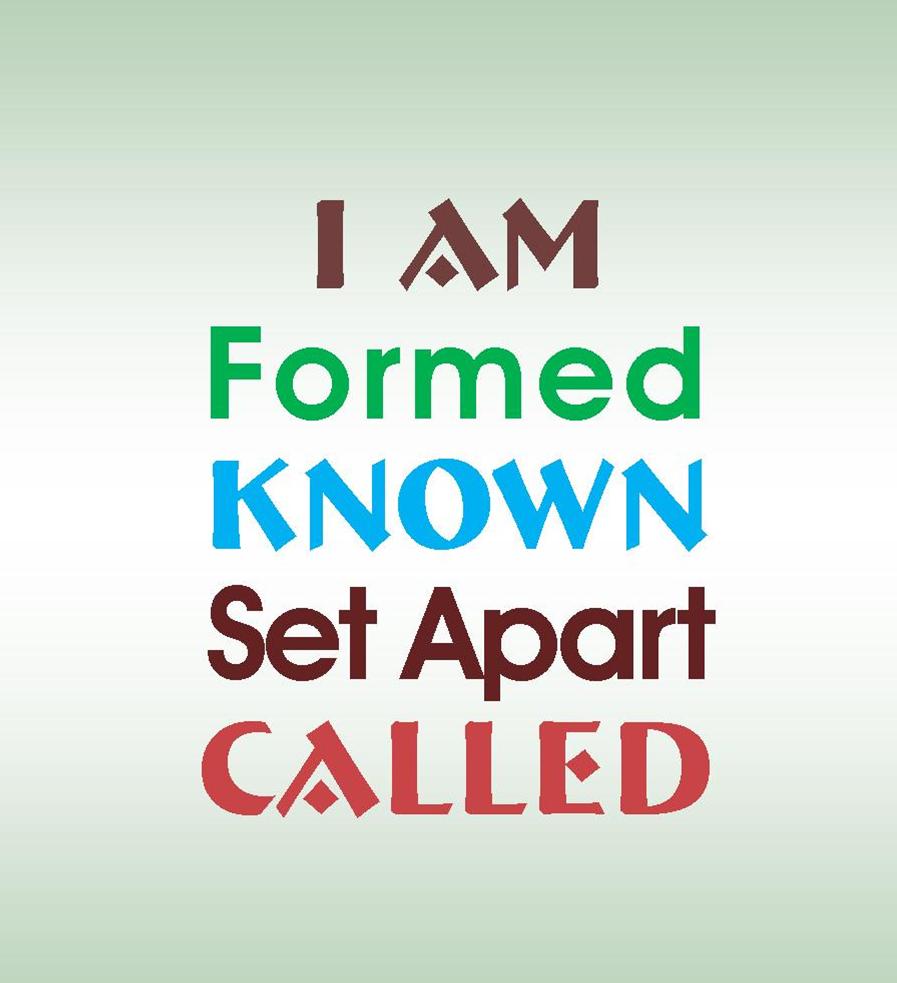
  • I formed you (v. 5a)
  • I knew you in advance (v. 5b)
  • I set you apart (v. 5c)
  • I appointed you (v. 5d, 10)
  • I am sending you (v. 7a)
  • I give you the words to say (v. 7b, 17)
  • I am with you (v. 8a, 19a)
  • I will rescue you (v. 8b, 19b)
  • I will put my words in your mouth (v. 9)
  • I am watching over you (v. 12)
  • I am making you strong (v. 18)

The faces of people are not how you and I should gauge (dis)approval.

How sad to look at other faces for approval, only to hear God say, “Depart from Me. I never knew you!

How liberating to know that even though other faces may disapprove me, I can still hear my Master say, “Well done, good and faithful servant!

Whose face are you looking at today?

Leadership Tension

Along time ago I was studying the virtues that the Greek philosophers taught. To the Greeks, the virtue was considered the “golden mean” between two opposite extremes. It was the ability to balance the tensions that produced the virtue.

In areas where I have leadership responsibilities, I try to find the virtue of leadership as the balance between these two tensions:

  • Here is a trustworthy saying: Whoever aspires to be an overseer desires a noble task. (1 Timothy 3:1)
  • Should you then seek great things for yourself? Do not seek them. (Jeremiah 45:5)

On the one side: desire leadership. On the other side: don’t desire leadership. Do your best at it, but be ready to give it up.

I love this statement on leadership from John Maxwell—

Leadership is the willingness to put oneself at risk.
Leadership is the passion to make a difference with others.
Leadership is being dissatisfied with the current reality.
Leadership is taking responsibility while others are making excuses.
Leadership is seeing the possibilities while others are seeing the limitations.
Leadership is the readiness to stand out in a crowd.
Leadership is an open mind and an open heart.
Leadership is the ability to submerge your ego for the sake of what is best.
Leadership is evoking in other the capacity to dream.
Leadership is inspiring others with a vision of what they can contribute.
Leadership is the power of one harnessing the power of many.
Leadership is your heart speaking to the hearts of others.
Leadership is the integration of heart, head, and soul.
Leadership is the capacity to care, and in caring, to liberate the ideas, energy and capacity of others.
Leadership is the dream made reality.
Leadership is, above all, courageous.

I am trying to balance the pulls of leadership, but while I do I’m loving the leadership tension!

UPDATE: This idea of leadership tension became one of the key seed thoughts for my book Shepherd Leadership: The Metrics That Really Matter

God Summons You

I needed this today. Maybe you do too.

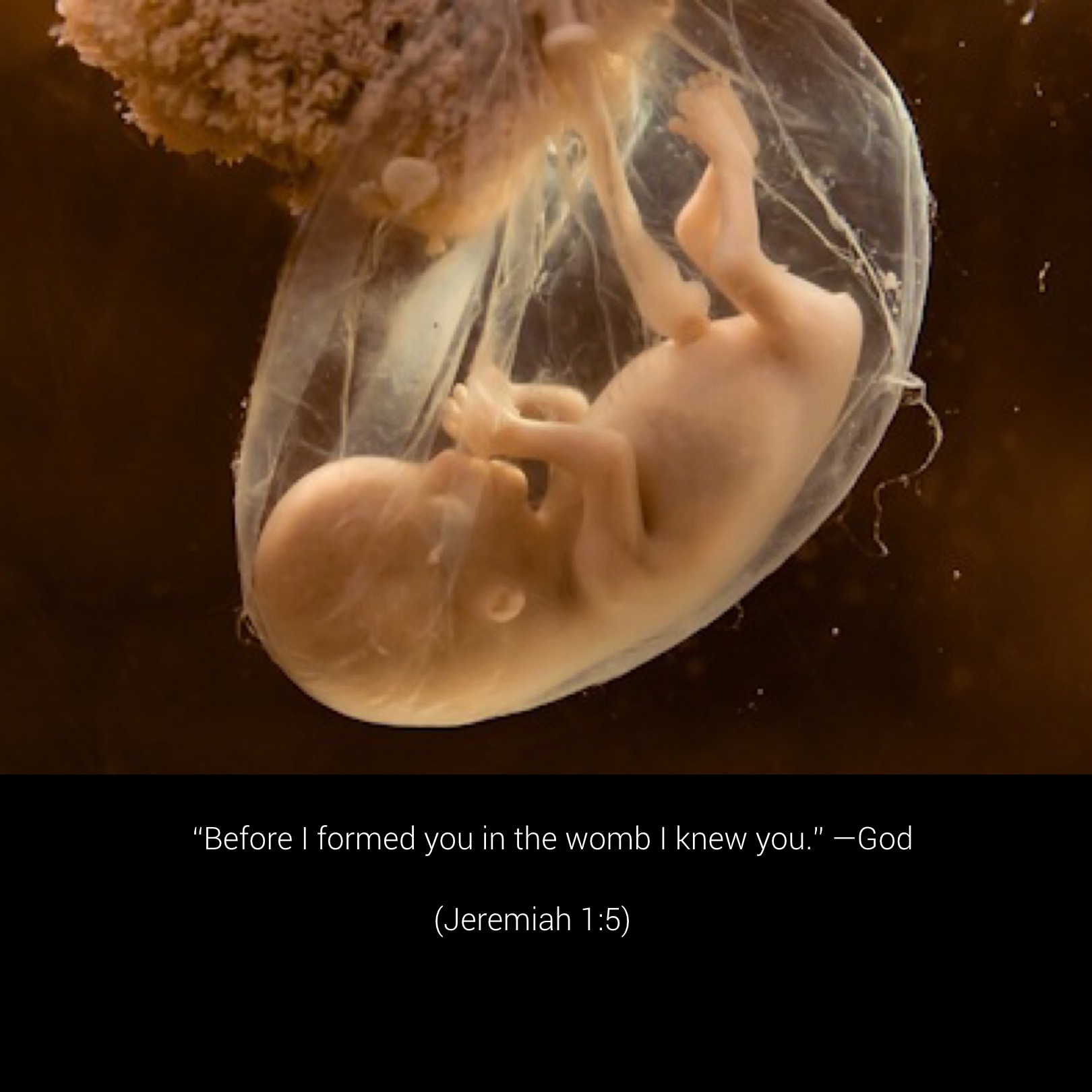
Before I formed you in the womb I knew you, before you were born I set you apart. (Jeremiah 1:5)

I am the Lord, the God of Israel, who summons you by name. (Isaiah 45:3)

God, I know You have summoned me. You created me to bring You glory. You created me to be a part of Your story. And so I respond,

“Here I am, my King. Use me today as You will.”

You, my friend, have also been set apart by God and summoned by Him. How will you respond?

Take It Up A Notch

Listen to the podcast of this post by clicking on the player below, and you can also subscribe on AppleSpotify, or Audible.

King Josiah is widely regarded as one of the greatest reformers of Judah. He led a revival in Israel that led to the people cleaning out their idols and worshipping God in ways that hadn’t been seen since the time of King David.

This whole revival started with a Book. Not just any book, but the Book of the Law (the Bible).

When the king heard what was written in the book, God’s Revelation, he ripped his robes in dismay. And then he called for Hilkiah the priest, Ahikam son of Shaphan, Acbor son of Micaiah, Shaphan the royal secretary, and Asaiah the king’s personal aide. He ordered them all: “Go and pray to God for me and for this people—for all Judah! Find out what we must do in response to what is written in this Book that has just been found! God’s anger must be burning furiously against us—our ancestors haven’t obeyed a thing written in this book, followed none of the instructions directed to us.”

Josiah’s leadership was already stellar. The Bible describes Josiah this way: “He did what was right in the eyes of the Lord.” But 18 years into his reign as king, the Scriptures were rediscovered and his leadership went up a notch.

Reading the Scripture and living by the Scripture makes a good life a better life!

At the end of Josiah’s life, something is recorded about him that isn’t mentioned about any other king:

The prophet Jeremiah composed funeral songs for Josiah, and to this day choirs still sing these sad songs about his death. These songs of sorrow have become a tradition and are recorded in The Book of Laments.

Do you want to take your life up a notch? Get into God’s Word and let it get into you and change the way you think and live.

►► Would you please prayerfully consider supporting this ministry? My Patreon supporters get behind-the-scenes access to exclusive materials. ◀︎◀︎

Worry Unlearned

We started a new series yesterday called The Stranglehold Of Worry. The word worry originated with shepherds. When a wild dog or a wolf had killed a sheep by grabbing it by its throat and choking it to death, the shepherds said that sheep had been worried to death.

In modern times, researchers at Purdue University found that worrying can chop 16 years off of someone’s life. Not only does worry rob your life of years, but it can also rob your years of life.

What exactly is worry? Fear is our natural response to real threats, like a car heading toward you in your lane of traffic. Worry is our response to perceived threats (to unseen things), like the car that may head toward your kids’ car when they are driving.

Get this clear: worry is being fearful of the unseen.

Compare that to the Bible’s definition of faithNow faith is being sure of what we hope for and certain of what we do not see. Worry and faith both operate in the unseen dimension.

Fear is innate, but worry is learned.

Faith is worry unlearned.

Worry tells your brain a story about bad things that may happen.

Faith tells your brain a story about good things that should happen. Based on what you’ve already experienced of God’s power, what you’ve already seen in God’s provision, or what you already know of God’s promises, your faith in God can help you unlearn your worry.

The prophet Jeremiah tended to be a worrywart. Maybe that’s why he’s been called the “weeping prophet.” But in the middle of his worrying, he unlearns his worry by using his faith to tell a different story about God’s provision, power, and promises:

I well remember [the bad things], and my soul is downcast within me. Yet this I call to mind and therefore I have hope: Because of the LORD’s great love we are not consumed, for His compassions never fail. They are new every morning; great is Your faithfulness. I say to myself, “The LORD is my portion; therefore I will wait for Him.”

Did you notice that Jeremiah talked to himself? He wrote, “I say to myself.” If you have a tendency to worry, it’s time to start talking to yourself and telling yourself a different story. Instead of being fearful of the bad things you cannot see, why not be hopeful of the good things of God you can see?

Let your faith in God help you unlearn your worry. You can overcome worry and anxiety by telling yourself a new faith-filled, hope-oriented story. You can recall God’s faithfulness in the past, and apply it to your current circumstance.

What stories are you telling yourself today? Share with others how you overcame, or are in the process of overcoming worry now. Your faith story will help others overcome and unlearn their worry too.

A Man Named Jonadab

What an incredible family line! Moses’ father-in-law Jethro was the ancestor of the Kenite family line, and from this family tree came a man named Recab.

The Recabite family was of immense help to the Israelites. They served as scouts for them, and they joined in the battle to defeat the Canaanites in Gaza, Ashkelon, and Ekron. Years later a Recabite named Jonadab was with King Jehu when he rid Israel of King Ahab’s evil influence of Baal worship.

Jonadab called the Recabite family to follow him in living a holy lifestyle. He set some incredibly high standards for them, but for the next 200+ years the Recabite family held to these standards. Even as the nation of Judah was carried into captivity because of their gross sin against God, the Recabite family stood solidly for God, never getting caught up in society’s pull toward sin.

Their fidelity toward God wasn’t without notice. Here’s an incredibly powerful statement: God said, “Jonadab son of Recab will never fail to have a man serve Me.”

Think about that. A family line that is always serving God for generation after generation after generation. That’s what I want. It took Jonadab making a dramatic counter-cultural stand for his faith in God and then passing that on to his family. Wow!

For the sake of never failing to have my descendants serve God, I am willing to make a stand. I am ready to live counter-culturally. I’m going to stand strong. What about you?

Living Sculptures

Last night in our Impact! youth service we played a fun game called “Living Sculptures” (pictures are here). It was a whole lot of fun watching the groups invent and then reinvent one another within their group.

Sculptures are works of art. A person or a point in history captured in solid three dimensions for all time. The sculpture doesn’t change. At least it doesn’t usually change in a positive, beautifying way. The sculpture may erode or be broken or crumble, but that’s not a good change. The sculpture ceases to be what the artist intended it to be.

However, our lives are living, breathing sculptures. We change, or rather The Artist changes us. And the change is good when we are in the hands of the right Artist: our Creator.

Michelangelo’s famous David sculpture came about because Michelangelo said he saw David in the marble and just released him. So too with God, the Artist of our lives: He sees what we can become and is in the process of releasing our beauty, our potential.

God began sculpting your life even before you were born

Oh yes, You shaped me first inside, then out;
You formed me in my mother’s womb.
I thank You, High God—You’re breathtaking!
Body and soul, I am marvelously made!
I worship in adoration—what a creation!
You know me inside and out,
You know every bone in my body;
You know exactly how I was made, bit by bit,
how I was sculpted from nothing into something.
Like an open book, You watched me grow from conception to birth;
all the stages of my life were spread out before You,
The days of my life all prepared
before I’d even lived one day.

…and He is continuing to form you into something beautiful

As the clay is in the potter’s hand, so are you in My hand.

…until you become the masterpiece that He saw in you all along…

For we are God’s masterpiece. He has created us anew in Christ Jesus, so we can do the good things He planned for us long ago.

God is the perfect Artist. Let Him work on you today to make you into His masterpiece: a one-of-a-kind creation that brings glory to the Artist.