Immersed

What happens when we truly let the Holy Spirit have His way in our lives?

Could we experience today the things that are recorded in the Book of Acts?

Is it possible that God wants to do so much more through our lives than we are allowing Him to do now?

That last question, I believe is the most important one. One of the apostle Paul’s prayers went like this:

And I pray that you, being rooted and established in love, may have power, together with all the saints, to grasp how wide and long and high and deep is the love of Christ, and to know this love that surpasses knowledge — that you may be filled to the measure of all the fullness of God. Now to Him who is able to do immeasurably more than all we ask or imagine, according to His power that is at work within us, to Him be glory in the church and in Christ Jesus throughout all generations, for ever and ever! Amen. (Ephesians 3:17-21)

This is an expansive prayer … a mind-blowing prayer … a prayer that is asking God to go beyond our ability to contain all that He has for us.

The only way we can get to this place (and I want all of us to get to this place) is if we let go. In other words, if we will let the Holy Spirit totally immerse us in His presence, if we will not try to box Him up, or shut Him out of any area of our lives.

We’ll be learning more about Immersed this Sunday at Calvary Assembly of God. If you’ve missed any of the messages in this series, you can check them out here:

A Warning To Shepherds

If you are a pastor, God sees you as a shepherd (see John 21:15-17; 1 Peter 5:1-4).

If you are a shepherd, there is a heavy responsibility on you to lovingly, attentively care for God’s precious sheep. We cannot shirk this responsibility for even a moment.

God loves His sheep so much that He gave His sheep YOU!

God loves His sheep so much that He will remove you, if He has to.

Consider this:

“What sorrow awaits the leaders of My people—the shepherds of My sheep—for they have destroyed and scattered the very ones they were expected to care for,” says the Lord. Therefore, this is what the Lord, the God of Israel, says to these shepherds: “Instead of caring for My flock and leading them to safety, you have deserted them and driven them to destruction. Now I will pour out judgment on you for the evil you have done to them. …Then I will appoint responsible shepherds who will care for them, and they will never be afraid again. Not a single one will be lost or missing. I, the Lord have spoken!” (Jeremiah 23:1, 2, 4)

This is a HEAVY word, and should not be taken lightly.

Pastor, never assume you are leading God’s sheep in the right paths. Ask the Holy Spirit to tell you if you are leading God’s sheep in the right paths!

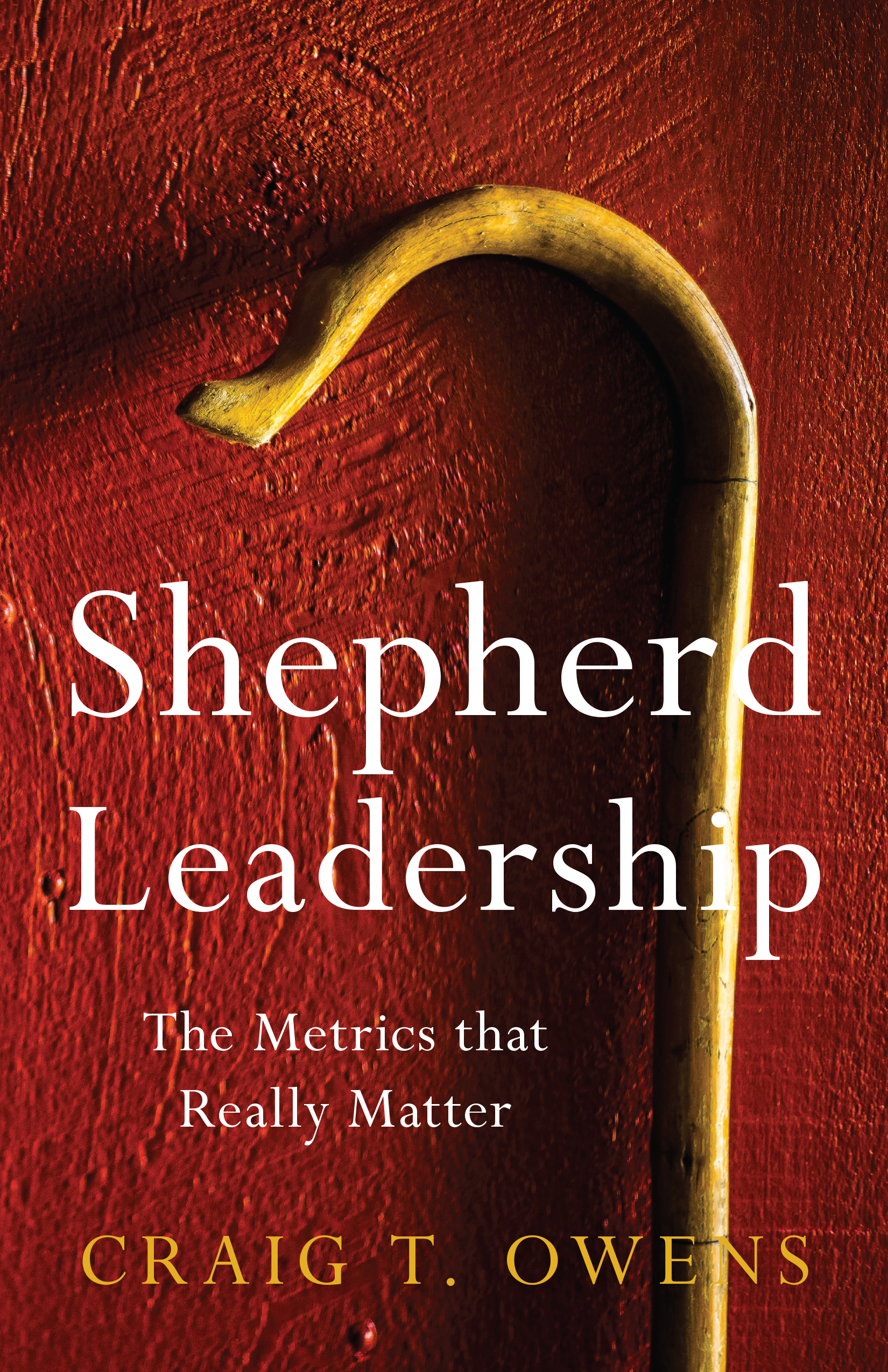
UPDATE: This post was one of the seed thoughts that went into fashioning my book Shepherd Leadership: The Metrics That Really Matter.

Thursdays With Oswald—Me, Me, Me

This is a weekly series with things I’m reading and pondering from Oswald Chambers. You can read the original seed thought here, or type “Thursdays With Oswald” in the search box to read more entries.

Me, Me, Me

     The greatest peril is the peril within, which men never think of as a peril. My right to myself, self-pity, self-conceit, consideration for my progress, my ways of looking at things, those things are the satanic perils which will keep us in perfect sympathy with satan…. 

     In all probability satan is as much upset as the Holy Spirit is when men fall in external sin, but for a different reason. When men go into external sin and upset their lives, satan knows perfectly well that they will want another Ruler, a Savior and Deliverer; as long as satan can keep men in peace and unity and harmony apart from God, he will do so (see Luke 11:21-22). Remember, then, satan’s sin is dethroning God. 

From Biblical Psychology

My natural bent is to internalize. In other words, I want to ponder my circumstances, think about solutions myself, and reach my own conclusion. This, Oswald Chambers says, is dangerous.

When I’m thinking subjectively, everything runs through the filter of me, me, me. But when I verbalize—when I get my thoughts out in the open—the Holy Spirit can use God’s Word to help me think objectively.

I need an objective, external standard to keep me on the right path. If I keep it all inside, my natural subjective bent (that all of us humans have) will lead me down the path of quietly dethroning God and enthroning myself.

God Is For You!

I cross paths with far too many people who think God is unapproachable, distant, or—perhaps worst of all—angry with them.

But listen to this good news: God is for you! 

God created you to be in relationship with Him.

When Paul writes in Romans 8:31, “If God is for us, who can be against us,” it’s not a wondering, uncertain “if” (as in, “I wonder if this is true?”). No! What Paul is saying is, “If you already know that God is for you, why are you wondering about who or what is against you?”

Here are the facts (all from Romans 8):

  • The Holy Spirit is interceding for you (vv. 26, 27)
  • God is working out all things for your good (v. 28)
  • God justifies you (vv. 30, 33)
  • God will give you everything He gave Jesus (v. 32)
  • Jesus is interceding for you (v. 34)
  • Nothing and no one can ever separate you from God’s love (vv. 35-39)

Let me state it again—

God is for you!

Nothing can stand between you and God!

Forgotten God (book review)

I grew up in a Pentecostal family (in fact, I’m a third-generation Pentecostal), so talk about the Holy Spirit was almost second nature to me. But even with my background, sometimes it’s easier to have discussions about God the Father or God the Son, than it is God the Spirit. The Holy Spirit has, in many circles, become the “forgotten God.” That’s why Forgotten God: Reversing Our Tragic Neglect of the Holy Spirit by Francis Chan is such a timely book.

“If I were satan and my ultimate goal was to thwart God’s kingdom and purposes, one of my main strategies would be to get churchgoers to ignore the Holy Spirit.” (Francis Chan)

I think part of our forgetfulness is that it’s hard to know where to put the Holy Spirit cognitively. We can understand the concepts of the Father and the Son, but it’s hard to have a mental “place” for the Spirit. And since we can find places for the Father and the Son, we can keep them in their places. But the Holy Spirit doesn’t have a “box,” and so we cannot contain Him.

Nor should we try. But, sadly, far too many people do. Again, Francis Chan writes:

“The reality is that the early church knew less about the Holy Spirit than most of us in the church today, at least in the intellectual sense. But they came to know the Spirit intimately and powerfully as He worked in and through their lives. All throughout the New Testament, we read of the apostles whose lives were led by the Spirit and lived out by His power.”

When I read what happened in the Book of Acts, my cry is always, “Do it again! Do it today!” I believe the Holy Spirit is also desirous of operating in us and through us, just as He did in the First Century Church. The question is: Will we let Him?

Forgotten God is a great introduction course for those curious about Who the Holy Spirit is, or what His role is in our lives today. This book is also a great reminder course for those of us who have grown up with the theology, but perhaps are lacking the full operational force of the Spirit in our lives. In either case, Forgotten God is an eye-opening book.

Keep On Asking

We finished The Q Series yesterday morning, but I hope the questions keep on coming. I always love answering questions, and doing it in the open forum like we did was both challenging and fun (at least I had a good time!).

But I also encouraged the Calvary Assembly of God family to keep on asking questions. It’s fine if the questions are directed to me, but the most important questions are the ones we ask of ourselves.

The Holy Spirit makes all of our lives a work-in-progress. This is what is called sanctification. That word really means to make a saint out of us (think of it as saint-ification).

That means He will constantly challenge us with questions that we are wise to answer. Things like:

  • Why are you thinking that?
  • What does the Bible say about that?
  • Is doing that for your comfort or for God’s glory?
  • Is that the wise thing to do?
  • How would Jesus handle that situation?

Over time the answers to these questions will change, as we should all be growing up in our relationship with God (1 Corinthians 13:11; Ephesians 4:15).

The Apostle Paul tells us that we should take every thought captive (2 Corinthians 10:5), because our minds will either be set on natural desires or set on spiritual truths (Romans 8:5).

So don’t tune out the Holy Spirit. Don’t stop asking those maturing questions. Don’t stop growing in your relationship with your Heavenly Father.

Keep on asking, and you’ll keep on growing!

Church-In-A-Box

Did you ever play with a Jack-in-a-box? You turned the crank, listened to the song, and waited for the funny-looking Jack to pop out of the box. Then you stuffed Jack back in the box and did it again.

And again, and again!

It was predictable.

It happened like clockwork. After awhile, though, the predictability became boring, and the Jack-in-a-box ended up collecting dust on the shelf.

Sometimes I’m concerned that our churches are becoming like a church-in-a-box. Like the predictable Jack-in-a-box, we turn the crank of showing up on Sunday, going through the same routine, waiting for God to show up, and then stuffing it all back into the box, only to repeat it all again the next Sunday.

And the next Sunday, and the next Sunday!

It’s predictable. It happens like clockwork. After awhile, though, the predictability can become boring, and our church-in-a-box ends up collecting dust on the shelf.

Here’s what I’m pondering:

  • Why do we meet on Sunday mornings?

There are as many mentions in the Bible about Christians meeting on other days as there are mentions about the first day of the week.

  • Why do we get so hung up on the “order of service”?

None of the New Testament writers taught about that. Yet if you want to anger some folks, just change up the Sunday routine.

  • Why do we dress a certain way to go to church?

Jesus had only one set of clothes, which means He wore the same thing to the synagogue as He wore the rest of the week. Yet we expect people to “dress correctly” for church.

  • Why do we call what happens on Sunday “worship,” and what happens the rest of the week “work”?

Shouldn’t everything we do bring glory to God? Shouldn’t all of our lives be worship?

  • Why do we complain about a church service not “moving us,” when we don’t feel the Holy Spirit moving the other six days of the week?

I’m not trying to pick a fight. Really.

I’m just wondering if perhaps we’ve gotten used to church-in-a-box. And if we have, perhaps we’ve also put God in a box too. Maybe we’ve become so accustomed to showing up on Sunday, dressing a certain way, following a certain routine, singing certain songs, and then expecting God to pop out and thrill us.

And then we put it all away until the next Sunday.

Wouldn’t God be more glorified if we didn’t put Him in a box? If we worshiped Him every day, not just Sunday? If we felt His Spirit animating us in everything we do, not just in the churchy things we do? If He popped up all throughout the week, in all sorts of places (like work, school, the grocery store, home)?

What do you think? Have we put church (and God) in a box? If so, how should we change?

What Are You Exchanging?

Listen to the podcast of this post by clicking on the player below, and you can also subscribe on AppleSpotify, or Audible.

In Romans 1, the word exchanged shows up three times in just one passage (Romans 1:22-32). Quite simply, this means every encounter with God’s presence requires me to make a choice, to exchange something.

I cannot remain neutral. The interaction with God is not static, but dynamic.

There are two forces at work in my life: sin and the Holy Spirit.

Sin wants me to exchange…

  • …the creation for the Creator (Romans 1:23)
  • …lies for truth (v. 25)
  • …pleasure for purity (v. 26)
  • …depravity for holiness (v. 28)

One exchange toward sin makes the next one that much easier. Soon the downward spiral can be pulling me faster and faster until: it’s not as if they don’t know better. They know perfectly well they’re spitting in God’s face. And they don’t care—worse, they hand out prizes to those who do the worst things best! (v. 32, The Message)

C.S. Lewis said it this way:

Good and evil both increase at compound interest. That is why the little decisions you and I make every day are of such infinite importance. The smallest good act today is the capture of a strategic point from which, a few months later, you may be able to go on to victories you never dreamed of. An apparently trivial indulgence in lust or anger today is the loss of a ridge or railway line or bridgehead from which the enemy may launch an attack otherwise impossible.”

The Holy Spirit also asks for an exchange. He wants me to exchange…

  • …the momentary for the eternal
  • …self-gratification for God’s glory
  • …my desire for God’s will

You will encounter God today. The choice is yours: What exchange will you make?

►► Would you please prayerfully consider supporting this ministry? My Patreon supporters get behind-the-scenes access to exclusive materials. ◀︎◀︎

How Much Do I Have To Do?

I had a couple of questions along the line of “How much do I have to do” in The Q Series yesterday morning. We all have a tendency to want to know how to fill in the blanks of questions like:

  • How much time do I have to spend with God to make Him happy?
  • How holy do I have to be for God to accept me?
  • What do I have to do for God to love me more?
  • How much do I have to do to make it to Heaven?

But all of these questions start with a wrong premise. These questions all assume I can do something. If the history of mankind shows us anything, it’s that all of our attempts to build a bridge up to God always falls short.

So—wonder of wonders!—God reached down to us! Jesus gave all so that we could be restored to a relationship with God. And what does He want in return? He wants you! I love this thought from C.S. Lewis:

“For it is not so much of our time and so much of our attention that God demands; it is not even all our time and all our attention; it is ourselves.”

Sometimes we look at ourselves and think, “God wants this?! God wants me?!” In fact, I received another question yesterday that simply asked, “Why does God love us?”

God wants you because He made you to be in relationship with Him. He loves you as if you were the only person on earth to love. Again, consider these wise words from C.S. Lewis—

“We were made not primarily that we may love God (though we were made for that too) but that God may love us, that we may become objects in which the Divine love may rest ‘well pleased.’ …Because He already loves us He must labor to make us lovable.”

How much do you have to do to receive that love? Just believe that fact that God loves you, that He sent Jesus to pay the price for your forgiveness, and that the Holy Spirit is right now working to draw you into that ‘Divine love’ relationship.

Let me state it simply: God loves you. Will you let His love fill your life?

Check out other questions in our Q Series by clicking here.

Thursdays With Oswald—The Realness Of The Holy Spirit

This is a weekly series with things I’m reading and pondering from Oswald Chambers. You can read the original seed thought here, or type “Thursdays With Oswald” in the search box to read more entries.

The Realness Of The Holy Spirit

     The Holy Spirit makes Jesus Christ both present and real. He is the most real Being on earth, ‘closer is He than breathing, and nearer than hands and feet.’ Simply receive the Holy Spirit, rely upon Him and obey Him and He will bring the realization of Christ….

     The Holy Spirit is seeking to awaken men out of lethargy; He is pleading, yearning, blessing, pouring benedictions on men, convicting and drawing them nearer, for one purpose only, that they may receive Him so that He may make them holy men and women exhibiting the life of Jesus Christ. How the devil does rob Christians who are not thinking on Pentecostal lines of the tremendous power of the Presence of Jesus made real by the Holy Spirit!

From Biblical Ethics

When Jesus said He would never leave us, He fulfilled this promise by sending the Holy Spirit. The Holy Spirit is our constant Guide, our wisest Counselor, our kindest Teacher, and the illuminating Spirit of Truth.

Think about this: The same Holy Spirit who inspired the writing of the Scriptures, is the same Holy Spirit Who will illuminate those Scriptures to you. How the devil does rob Christians who are not thinking on Pentecostal lines!

Holy Spirit, I willingly yield to Your illuminating and transforming presence in my life today!