Listen to the podcast of this post by clicking on the player below, and you can also subscribe on Apple, Spotify, or Audible.
A well-known passage in Proverbs tells us, “Trust in the Lord with all your heart and lean not on your own understanding;in all your ways submit to Him, and He will make your paths straight” (Proverbs 3:5-6).
Listen to the podcast of this post by clicking on the player below, and you can also subscribe on Apple, Spotify, or Audible.
…Peter took [Jesus] aside and began to rebuke Him (Mark 8:32).
Can you imagine someone rebuking Jesus?!
It’s even harder to comprehend when we realize that just three verses earlier Peter made such a bold declaration about Jesus more explicitly than anyone else ever had: “You are the Messiah!”
This is similar to what happened when Jesus preached His first public sermon in Luke 4:16-30. Luke tells us that the people went from speaking well of Jesus to wanting to kill Him in just a matter of a couple of minutes.
Why? How could this happen so quickly?
In his Gospel, Matthew records Peter’s rebuke this way: “Never, Lord! This shall never happen to You!” (Matthew 16:22). This was Peter’s response to Jesus predicting His cruel mistreatment at the hands of the religious leaders, and His impending crucifixion.
In the sermon in Luke 4, the people wanted their Messiah to only focus on the Jews and let the rest of the world burn. When Jesus said He was on-mission to save all people everywhere, they were furious with Him. They were angry because He wasn’t going to do things their way. “After all,” they probably thought, “our way is the most logical way.”
You and I are also in danger of going from praising to rebuking in just a matter of minutes. It can happen so naturally. By naturally I mean that our sinful nature must not be allowed to get its own way.
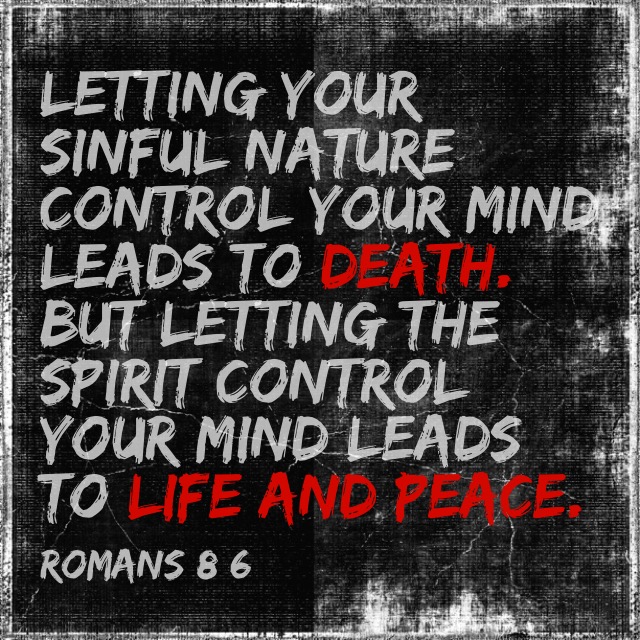
After Peter rebuked Jesus, He told him, “You do not have in mind the concerns of God, but merely human concerns” (Mark 8:33). Our mind of flesh is hostile to the mind controlled by the Holy Spirit.
There are things that may seem unpleasant or illogical to my natural mind, but I must not be controlled by that mind. I must listen to, and obey, what the Holy Spirit reveals to me. That means I must allow my mind to be transformed to “the concerns of God.”
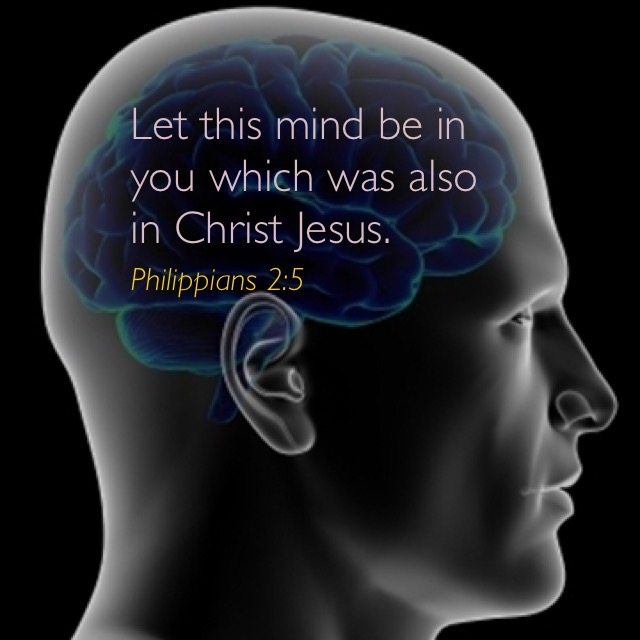
Our daily prayer must be like the prayer Jesus prayed just moments before His arrest: Father, not My will, but Your will be done. If I continue to do things my way, my natural mind will naturally rebuke Jesus, and I can go from praise to rebuke in a matter of moments. I don’t ever want to be guilty of rebuking Jesus, so I desire to “have the same mindset as Christ Jesus” (Philippians 2:5). I hope you will join me in this prayer.
The first mental health strategy we learned was asking the Holy Spirit to help us see a new path. Instead of thoughtlessly, automatically allowing our minds to go down the well-worn paths they have always gone down before, the Spirit of Truth can help us see a new path. Let me share our second strategy with you.
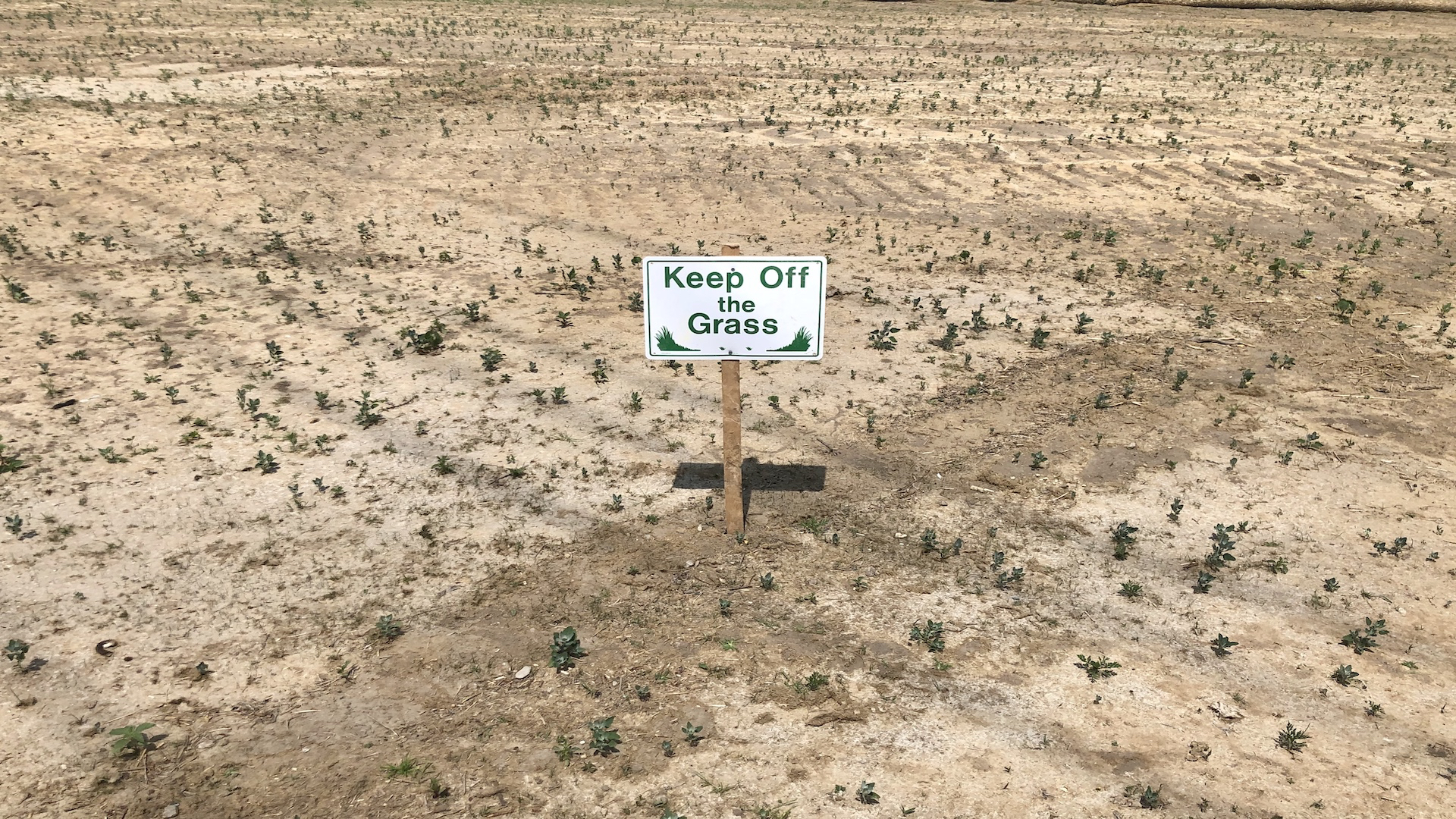
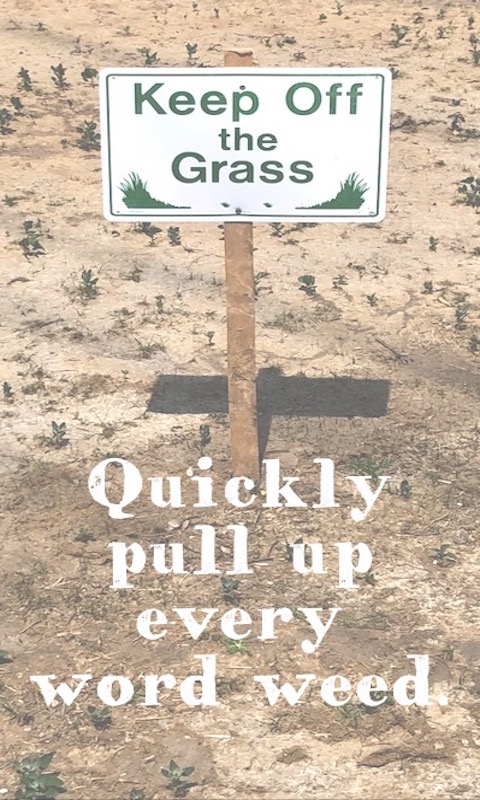
My wife and I had traveled to a neighboring community and when we got out of our car we saw an unusual sight. First of all, there was dirt and a few weeds where there used to be grass, and then there was this sign in the middle of that dirt field: Keep off the grass. That seemed like really wishful thinking to me! I may not have a green thumb—truthfully I probably have a “black thumb” when it comes to keeping plants alive—but I know enough to say that their grass wasn’t going to grow without a lot of effort.
Weeds grow by apathy, they are removed with continual effort. Fruit-bearing plants grow by careful attention, fertilization, and pruning. So if we don’t put in any effort at all, it’s the same thing as fertilizing the weeds.
Solomon made this observation: I went past the field of a sluggard, past the vineyard of someone who has no sense; thorns had come up everywhere, the ground was covered with weeds and the stone wall was in ruins (Proverbs 24:30-31).
Without effort on our part, weeds take over, sap the nutrients, and take up the space that could be used for fruit-bearing plants.
A farmer went out to sow his seed. As he was scattering the seed, some fell along the path, and the birds came and ate it up. Some fell on rocky places, where it did not have much soil. It sprang up quickly, because the soil was shallow. But when the sun came up, the plants were scorched, and they withered because they had no root. Other seed fell among thorns, which grew up and choked the plants. Still other seed fell on good soil, where it produced a crop—a hundred, sixty or thirty times what was sown. (Matthew 13:3-8)
When Jesus says that the thorns grew up and choked the plants, He uses a Greek word that means overwhelmed or suffocated. It’s the same word that is translated as drowning (see Luke 8:33). What weeds do to our gardens, weed thoughts do to our minds.
We all know that when we see a weed pop up above the ground, there is a root below the ground that is supporting it. The sooner we pull that weed, the more likely we are to remove the troublesome root as well.
What about our minds? What are the roots? Jesus identified the roots this way: For out of the heart come evil thoughts—murder, adultery, sexual immorality, theft, false testimony, slander (Matthew 15:19). Jesus taught that we murder, commit adultery, lust, and slander in our hearts long before it ever happens in our words or physical actions.
So when a “weed word” pops out, what do we do? If we do nothing, we fertilize that weed. If we ignore it, we allow that weed to strengthen its hold and begin to choke out the fruitful plants. If we simply say, “Oops, that was a slip of the tongue; I’ll do better to control it next time,” we haven’t pulled the weed, but we’ve fertilized it.
Remember that weeds flourish by apathy, but fruitfulness requires effort.
Back in the parable of the sower, what is the difference between the seed among weeds and the seed in fertile soil? It’s simply the presence of weeds or thorns! If we allow the Holy Spirit to help us pull the weeds, we’ve increased the amount of ground that can be fruitful and produce a crop—a hundred, sixty or thirty times what was sown.
Jesus concludes by reminding us that our ears need to hear—we need to hear His words, and we need to hear our own weed words that don’t align with His words. Then we have a choice: apathetically let the weeds remain, or allow them to be pulled up.
Allow me to share my paraphrase of a passage in Hebrews 12—
My son, do not make light of the Lord’s pruning, and do not lose heart when He weeds your mind, because the Lord prunes the one He loves, and He weeds the garden of everyone He accepts as His son so they can be more fruitful. (my paraphrase of Hebrews 12:5-6)
Our mental health matures when we acknowledge the word weeds we are shown, and then quickly allow the Father to prune those. The Holy Spirit can continue to help us weed the soil of our minds so that it remains a fertile growing place for the seed of God’s Word. By doing this, we will grow in God-pleasing fruitfulness.
If you would like to download the graphic of this reminder for your phone, simply leave me a comment with the model of the phone, and I’ll get the right-sized graphic right out to you. And if you missed the first message in this series, you can review that lesson by clicking here.
Listen to the podcast of this post by clicking on the player below, and you can also subscribe on Apple, Spotify, or Audible.
The disciples of Jesus heard His story and asked Him to explain to them what the parable meant. He said, “Don’t you understand this parable? How then will you understand any parable?” (Luke 8:9; Mark 4:13).
The parable in question was the one we refer to as the parable of the sower. According to Christ’s own words, this is the most basic and understandable of all of His parables. If this was a college class, this would be Parables 101.
The kingdom of heaven is so otherworldly, infinite, and utterly beyond a succinct description that even Jesus asked out loud, “What shall we say the kingdom of God is like, or what parable shall we use to describe it?” (Mark 4:30). Then time and time again, Jesus continued to reveal His kingdom with the phrase, “The kingdom of God is like….”
Before we move on to Parables 201 or Parables 301, let’s make sure we know this most basic parable intimately. According to Jesus, this parable is the key to unlocking the meaning of all of His other parables. Approach this one again as you ask the Holy Spirit to reveal something new to your heart.
For instance, as I read through this parable again this week I was captivated by those whom Jesus said had shallow roots. It reminded me that I need to temper my teaching with gentleness. If I’m too aggressive or too theologically deep, I may do damage these tender plants. On the other hand, if I’m too timid, I may leave these plants vulnerable to the ravages of disease or the scorching of the sun. Here again, I must rely on the Holy Spirit’s help. The message may be the same, but perhaps my delivery needs to be more appropriate to my audience.
Let me leave you with this challenge: When was the last time you saw something for the first time in this simplest of parables? If it’s been a while, it may be time for a quick refresher in Parables 101, then you will have the key to go deeper into the other parables. Try it and let me know how it works for you.
Listen to the podcast of this post by clicking on the player below, and you can also subscribe on Apple, Spotify, or Audible.
I don’t think there’s any arguing that Jesus must have been the healthiest Person to ever live. Dr. Luke records His growth in just one succinct verse: “And Jesus grew in wisdom and stature, and in favor with God and man” (Luke 2:52). Every word of Scripture is inspired, right down to the order the words are penned. So when Luke says first that “Jesus grew in wisdom,” that is our indication that a healthy mind is the foundation for every other aspect of health.
I recently received an email from a Christian brother asking for prayer and counseling in overcoming lust and pornography. I naturally agreed to pray with him, but I also said, “Before I offer you any strategies to try, let me ask you a quick question: What have you already tried to get victory over this?”
He replied, “I’ve tried praying, watching videos on it, and basically saying no to the devil. But the temptation comes when I am weak and I think, ‘I can just try again tomorrow!’ And then I fall into it. I am just tempted at times throughout the day, and sometimes I fight it with prayer, but other times I just fall right into it basically without even trying.”
What my friend is dealing with here is a natural, unconscious response. Our brains like well-worn paths because it’s very easy and comfortable for our minds to automatically respond as they have responded before. As in the case of my friend, it may be heading down a path of lust that leads to pornography. For others, it may be unhealthy choices made in response to certain triggers, or it may be the anger that flares up into biting words when a certain someone pushes your buttons.
We head down that well-worn path unconsciously and automatically. Our immediate response might bring some temporary relief, but usually, we’re not very happy with where we’ve ended up once again.
If we are going to make a new path—or a new, healthier response—we first need to become aware of the well-worn path we automatically go to. So my counsel to my friend who emailed me for help was to start keeping a journal. I wrote back:
Your willpower alone isn’t going to cut it (as you’ve probably realized). Here’s the first step I would suggest: keep a journal of every time you are tempted to lust or porn. Write down what you were feeling, was it day or evening, what was happening just before that, did you have time in prayer and Bible reading that day or not, how did you fight the temptation, were you successful or not? I think as you keep track of these things you will begin to see some triggers and some patterns. Maybe you were physically tired, or lonely, or hungry. Maybe it was a certain person you talked with or a show you watched. Maybe it was after checking your social medias or after a super-hard day at work. When you start to see patterns of what is causing you to go to porn for relief, you can recognize them earlier and head them off before they grip your mind so strongly.
Psychologists call it metacognition when we think about what we’re thinking about—when we think about why we are taking a certain well-worn path again.
We don’t think about our thinking very frequently. We keep thinking along those well-worn paths out of habit, not because we want to go down those paths. This is where the Holy Spirit is invaluable: He helps us see those well-worn paths, identify which paths are unhealthy or unproductive, and then help us begin to carve out a new path.
It’s not just thinking about right things, but thinking rightly about all things—even the painful things or the triggering things.
In Ephesians 4:22-25, Paul counsels us to take off the “old self” and “put on the new self, created to be like God in true righteousness and holiness. Therefore” (and this is an important conclusion) “each of you must put off falsehood and speak truthfully to his neighbor.”
Do you remember that Jesus taught us to love our neighbor as ourselves (Mark 12:28-31)? Paul says we are to speak truthfully to our neighbor, so doesn’t that mean that we have to first speak truthfully to ourselves? Yes, we do! If we are going to make new paths for our mind, we are going to have to talk to ourselves differently.
My cousin Dick Brogden wrote, “A primary theater of spiritual warfare is in our heads and thoughts. The primary weapon of the enemy is deceit. He starts with attractive little lies and half-truths, and works his way up to blatant, ridiculous, perverted nonsense. Winning the battle for truth in the mind is critical to winning the war. If we lose enough of the little skirmishes, we can believe and do any wicked thing. If we daily combat lies with light and truth, we will stand firm.”
The “little lies and half-truths” will keep us trapped on our old, well-worn paths. But identifying those lies, and speaking the truth to them, will help us travel down new paths that lead to health and freedom.
Let the Holy Spirit be your Counselor. Let the Holy Spirit help you think about what you’re thinking about when you’re triggered to unconsciously head down the unhealthy well-worn path. Let the Holy Spirit help you see a new path. And then let the Holy Spirit empower you to stick with it—to keep doing the hard work of blazing a new path.
I am going to build on this series of messages about a Christian’s mental health, but let’s start with this simple prayer:
Holy Spirit, help me make new paths.
As you pray this, listen to how the Holy Spirit will guide you away from the unhealthy, unconscious, well-worn paths, and will then lead you into the new, healthy path that brings you freedom.
Listen to the podcast of this post by clicking on the player below, and you can also subscribe on Apple, Spotify, or Audible.
I’ll bet you have “go-to” people in your life. The ones you immediately call when you need computer help, relationship insights, household or car repairs, Bible questions, or even cooking instructions.
We love having these go-to people in our lives, but I’m also going to guess that none of us has someone who possesses all of these go-to skills. After all, all of us are only human, with limitations and deficiencies.
We’ve learned that in prayer we can come to God as a Father—calling Him our Abba Father.We can also come to God as a Brother—knowing that Jesus has walked every path we will ever walk, and He intercedes to the Father on our behalf.
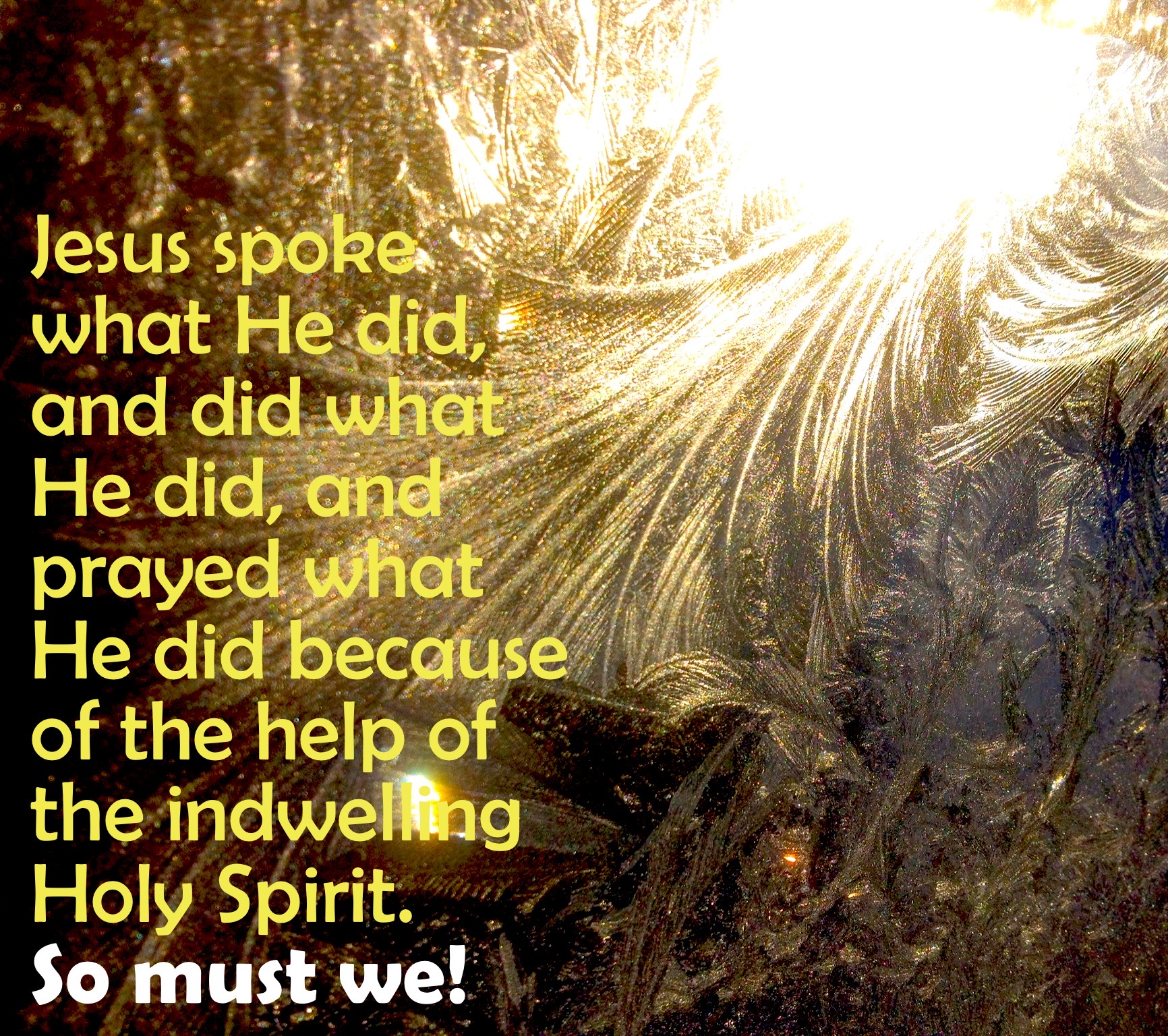
In fact, we saw last week that Jesus was never at a loss of what to say, what path to take, or what prayer to pray. He spoke what He did, and did what He did, and prayed what He did because of the help of the indwelling Holy Spirit.
This is the same Holy Spirit that is in us as Christians. It’s because of this that we can come to God as a Counselor. The Holy Spirit is THE Go-To Resource for everything!
Andrew Murray wrote, “Prayer is simply the breathing of the Spirit in us; power in prayer comes from the power of the Spirit in us as we wait on Him. Failure in prayer is the result of a spirit that is not yielded to the Spirit of God.”
What does it mean to yield to the Holy Spirit? It means that we don’t look for other go-to people for certain situations, but we trust the Spirit to be the Go-To Resource for everything. This is what Jesus did.
As Jesus relied on the Counselor, so must we. As the Counselor helped Jesus, so He will help us.
Second, Jesus was never at a loss of what path to take, and neither do we have to experience any confusion about what to do and when to do it (Matthew 4:1; Luke 2:27; Acts 16:6-10).
In addition, there is not one issue we will ever face that God hasn’t already addressed for us in Scripture (Ephesians 3:4-5). We see Jesus being totally reliant on Scripture (Luke 4:4, 8, 12). In an identical way, the Holy Spirit will help illuminate and apply the Scripture to our lives (John 14:26; 1 Corinthians 2:13).
Let me repeat this vital truth: The Holy Spirit is THE Go-To Resource for everything!
We are vulnerable to temptation without the help of our Go-To Counselor.
We are limited in our understanding of Scripture without the help of our Go-To Counselor.
We have a shallow prayer life without the help of our Go-To Counselor.
We will be frequently confused about words to use or paths to take without the help of our Go-To Counselor.
Let us learn to rely on our Counselor, as we keep our eyes on our Brother, and as we go together to our Father in childlike prayer. This is what leads to true intimate conversation!
If you’ve missed any of the other messages in our prayer series Intimate Conversation, please click here.
Listen to the podcast of this post by clicking on the player below, and you can also subscribe on Apple, Spotify, or Audible.
Jesus told us numerous times that we can come to God as our Father.
Have you ever played a word association game? For instance, if I said “winter” you might say “shoveling” (or kids might say “sledding”). If I said “summer” you might say “vacation.” But I think the word “father” may bring up a lot of very different feelings or images. Some may have fond memories of the word “father” while others may think:
playful but not a good provider
disciplinarian
hard to please
absent
unavailable
Even if our human fathers were good, they were still flawed. Jesus said this about us, “If you parents, that even know how to give good things to your kids are evil, how much more amazing is the goodness and love of God” (Matthew 7:11). But Jesus had something entirely different in mind for us when He told us we could come to God as our Father. And, sadly, it’s a level of intimacy that many have never known.
All of us could only experience limited intimacy with our earthly fathers, but with our Heavenly Father we can have unlimited and unimaginable intimacy!
When Jesus was teaching us to pray in Matthew 6:6-9, there are two thoughts that stand out to me about coming to God as our Father. First, Jesus tells us that we don’t have to use any special language. When He said some people babble in prayer, Jesus was saying they were using a language that was unnatural to them—they weren’t being themselves.
Our Heavenly Father wants us to come to Him as children: full of innocence, and wonder, and expectation, and imagination!
Second, I notice that three times Jesus calls God “your Father,” but when He begins His model prayer He says, “Our Father.” Think of that: Jesus is saying we can approach God the same way He approached His Father!
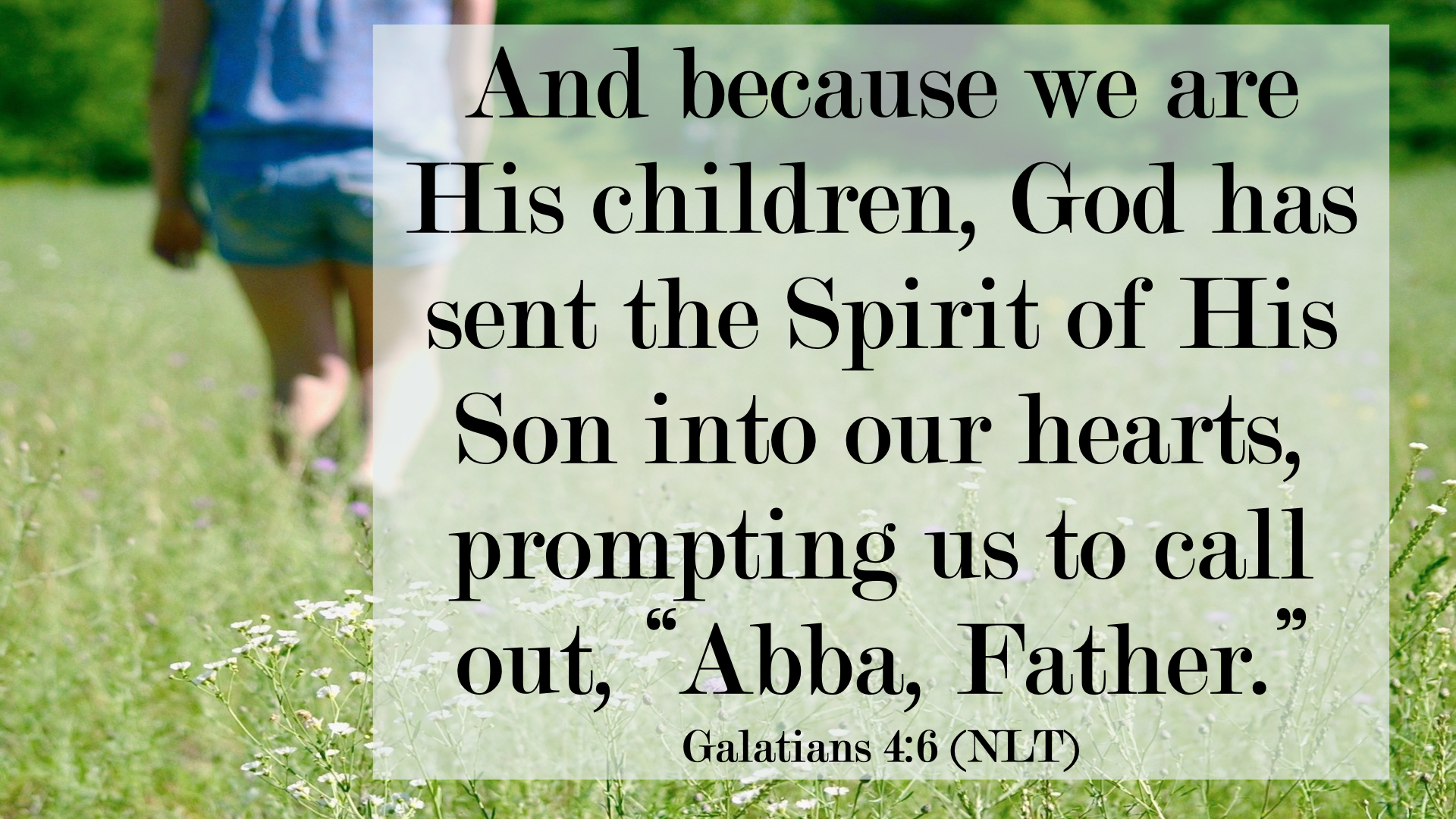
In His intense prayer time just before His crucifixion, Jesus used the phrase “Abba Father” to express His intimacy. This phrase is used two other times in the New Testament. Both of these times it’s telling us that we can approach our Heavenly Father the same way Jesus did (see Mark 14:36; Galatians 4:6; Romans 8:15).
The Romans understood the weight that was associated with the practice of adoption. They knew that a father chose that child to be a part of his family, giving that child full acceptance into the family. Marvin Vincent noted,
“We have but a faint conception of the force with which such an illustration would speak to one familiar with the Roman practice; how it would serve to impress upon him the assurance that the adopted son of God becomes, in a peculiar and intimate sense, one with the heavenly Father.”
In writing to the Romans, Paul reminds them that for those who are in Christ Jesus, there is no condemnation—nothing holding them back from God’s presence. He also said that God has fully adopted us into His family, and that the Holy Spirit was now in us, encouraging us to call God “Abba Father” just as Jesus did (Romans 8:1, 14-16).
Check out these two final thoughts from Jesus: He encourages us to approach God as innocent children, and He praises Our Father for then intimately confiding in His children—
“Truly I tell you, unless you change and become like little children, you will never enter the kingdom of heaven. … I praise You, Father, Lord of heaven and earth, because You have hidden these things from the wise and learned, and revealed them to little children.” (Matthew 18:3, 11:25)
No matter what your relationship was with your earthly father, Jesus encourages us to approach our Heavenly Father in innocence, wonder, expectation, imagination, and intimacy. This is what God desires in His relationship with you!
Listen to the podcast of this post by clicking on the player below, and you can also subscribe on Apple, Spotify, or Audible.
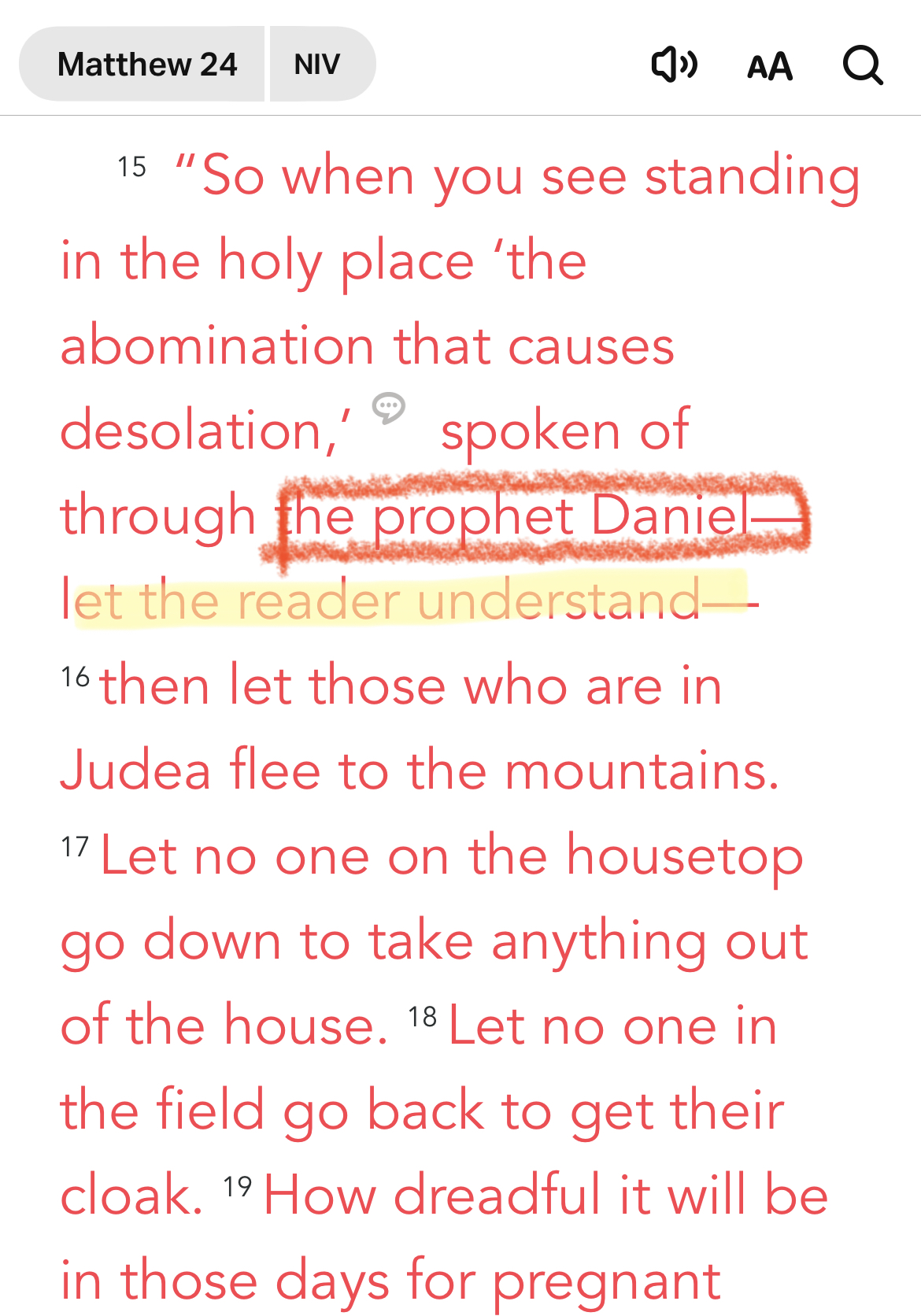
When Jesus said, “Let the reader understand,” He was saying He wants us to be able to understand and apply every Scripture we read. Check out this teaching video—
And although I didn’t mention it in the video, you can check out five different kinds of Bible studies I have shared here and here.
I’m excited to hear about your Bible study journey. If you have questions or other resources to share, please get in touch with me or leave a comment below.
Listen to the podcast of this post by clicking on the player below, and you can also subscribe on Apple, Spotify, or Audible.
The apostle Peter said he wrote two letters to the church “as reminders to stimulate you to wholesome thinking” (2 Peter 3:1). And Paul reminded his young friend Timothy to “keep reminding [your congregation] of these things” (2 Timothy 2:14).
In the spirit of those great apostles, I have made it a practice to take time at the end of each year to look back on all that we have learned in the previous year, and then to look forward to where God may be leading Calvary Assembly of God in this upcoming year.
Clicking on each series title will take you to a list of all of the sermons in that series.
Awesome—Jesus told us that we could pray in His name and expect amazing things (see John 14:13-14, 15:16, 16:23-24). This does not mean that simply adding the phrase “in Jesus’ name, Amen” to the end of a prayer unlocks a secret code. Rather, it means that the more we understand just how awesome our Savior is, and that He is the Key to God’s storeroom, the more we will being to align our prayers with the will of God. Jesus desires for His Father’s glory to be seen on earth through the answers to our prayers. The writer of Hebrews opens his letter by reminding us that Jesus is “the radiance of God’s glory and the exact representation of His being, sustaining all things by His powerful word” (Hebrews 1:3).
Is That In The Bible? (part 1 and part 2)—A meme that makes me chuckle every time I see it is a “quote” attributed to Abraham Lincoln in which he says, “The problem with quotes found on the internet is that they are often not true.” (Not to spoil the joke for you, but unless Lincoln knew how to time travel to the future, I don’t think he knew about the modern internet! ). I love this meme because it captures something that so many people fall into: a quick acceptance of a statement without verifying its source or thinking through the implications of the statement’s truthfulness. I think you may be surprised to discover just how many phrases we call biblical aren’t, and how many phrases there are that we never realized are actually in the Bible.
Christmas Unwrapped At Easter—Remember as a kid when you would unwrap a gift and discover it wasn’t something you really wanted, but then your parents explained that it was something you needed? The birth of Jesus in Bethlehem was a little like that—it wasn’t exactly what people were hoping for, but it was exactly what they needed. The real meaning of that Christmas gift wasn’t realized until after Jesus was crucified and resurrected back to life.
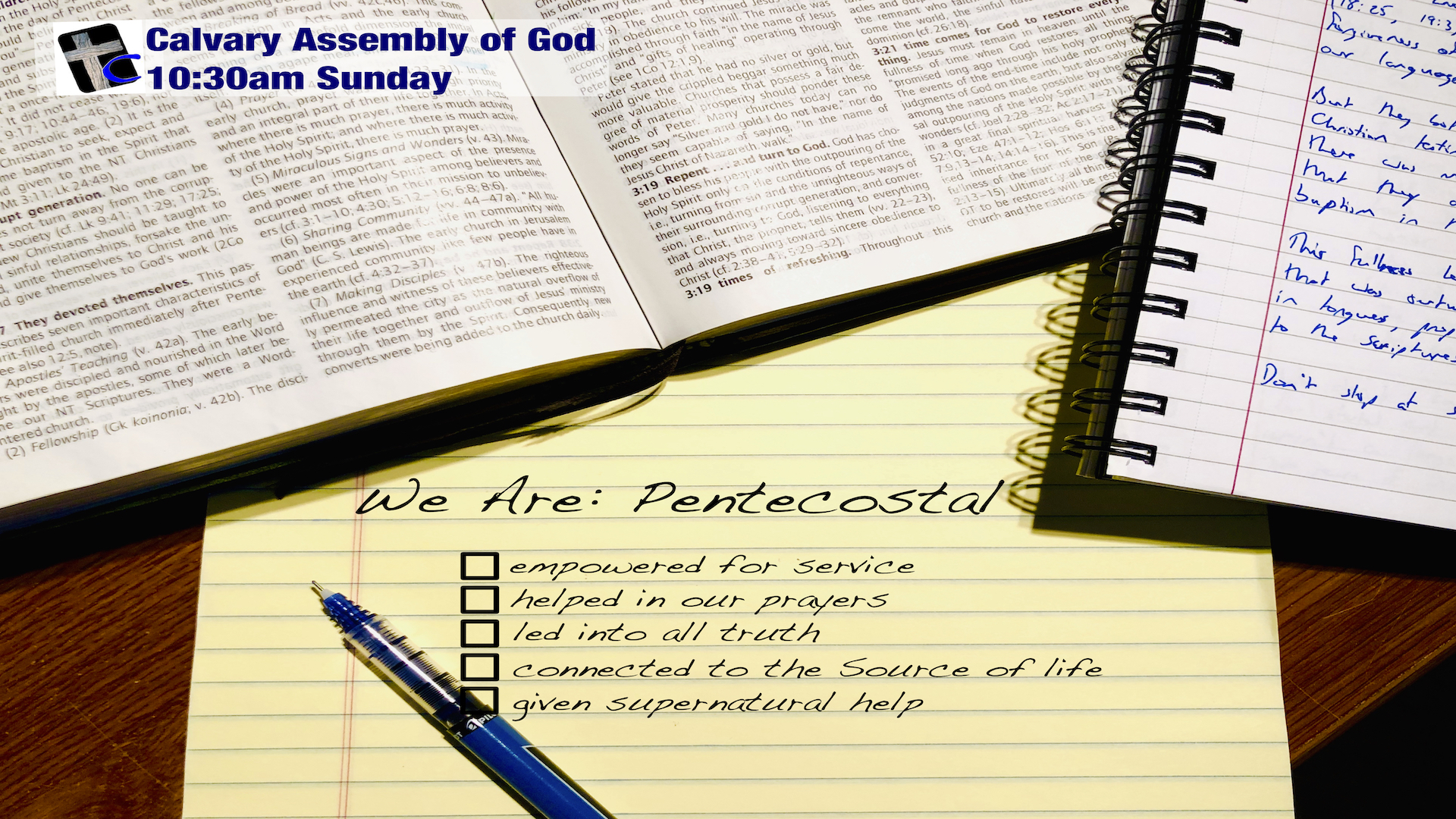
We Are: Pentecostal—Pentecost for over 1500 years was a celebration in Jerusalem that brought in Jews from all over the world. But on the Day of Pentecost that came just ten days after Jesus ascended back into heaven, the meaning of Pentecost was forever changed! Followers of Jesus—now empowered by an infilling of the Holy Spirit—began to take the good news of Jesus all over the world. These Spirit-filled Christians preached the Gospel and won converts to Christ even among hostile crowds, performed miracles and wonders, stood up to pagan priests and persecuting governmental leaders, and established a whole new way of living as Christ-followers. We, too, can be Pentecostal followers of Jesus Christ today.
Selah—The word Selah appears nearly 70 times in the Bible, almost exclusively in the Psalms. Although it is primarily a musical term, it applies beautifully to our summer series. It means a pause. Throughout the Psalms, Selah appears at the end of a verse, at the end of the psalm, or sometimes even mid-sentence. But each one of them is perfectly placed by the Spirit-inspired authors to get us to take a breath and deeply contemplate what we just read or sang.
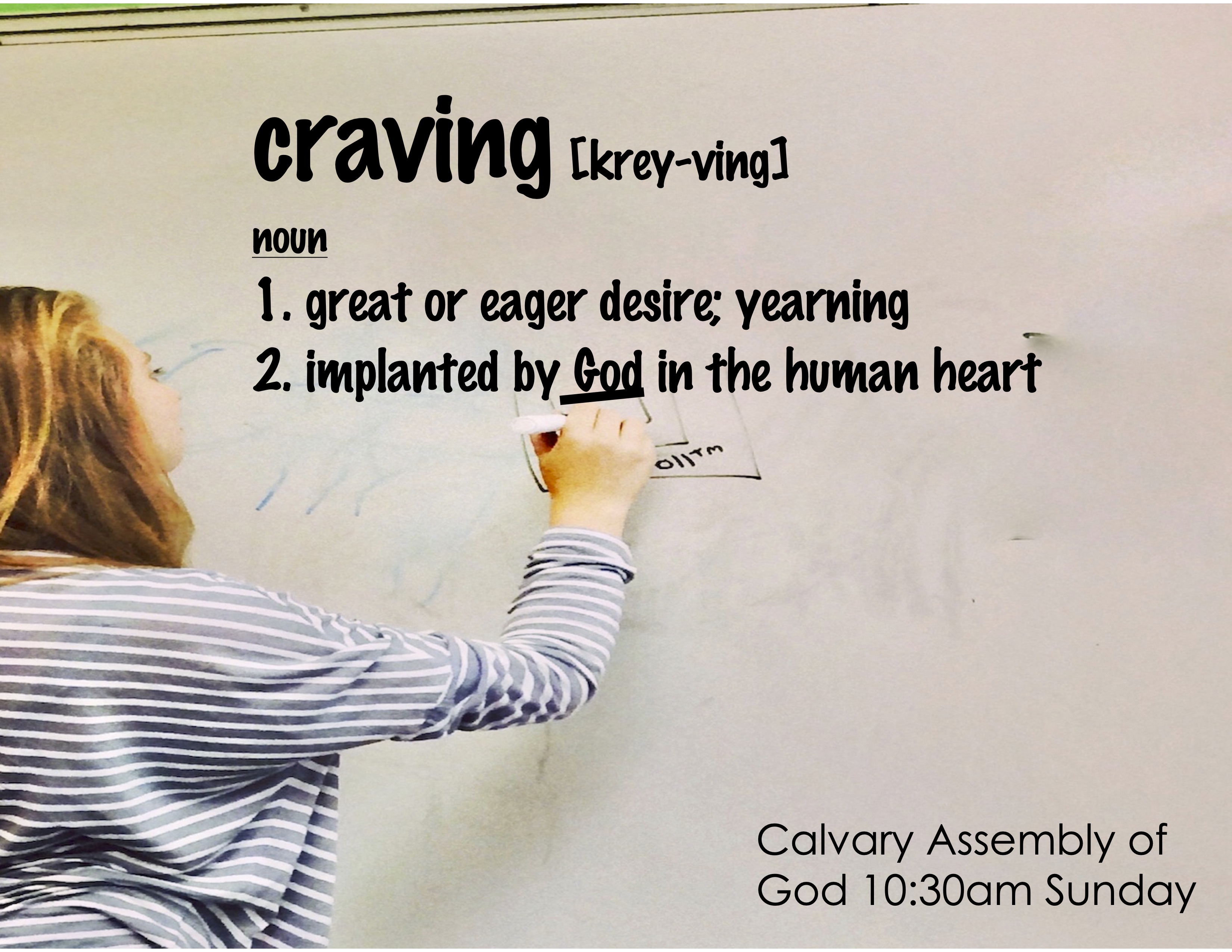
Craving—Doesn’t it seem like far too many Christians think of their relationship with Jesus as bland? After all, we’ve been told that any cravings we have should be quickly downplayed so that they don’t carry “good Christians” away. But what we discover in the Bible is that God made us to be craving creatures—He wants us to long deeply and find ultimate satisfaction for those longings. In short, God created us to long after the things that only He can fulfill. As we dive into this new series, I think you will find it quite eye-opening and heart-lifting.
The Great Attitude Of Gratitude—There’s something about gratitude that distinguishes people. Think about it: would you rather hang around with grumblers or grateful people? The gratitude of Paul and Silas certainly made them stand out from the crowd when they were in Philippi. Wrongly accused, beaten, and thrown in prison, but instead of bellyaching, they were praising God. Later on, when Paul wrote his letter to the Christians in Philippi, the theme of gratefulness permeates his letter. The distinguishing mark is actually in the title: The GReat ATTITUDE spells out GRATITUDE!
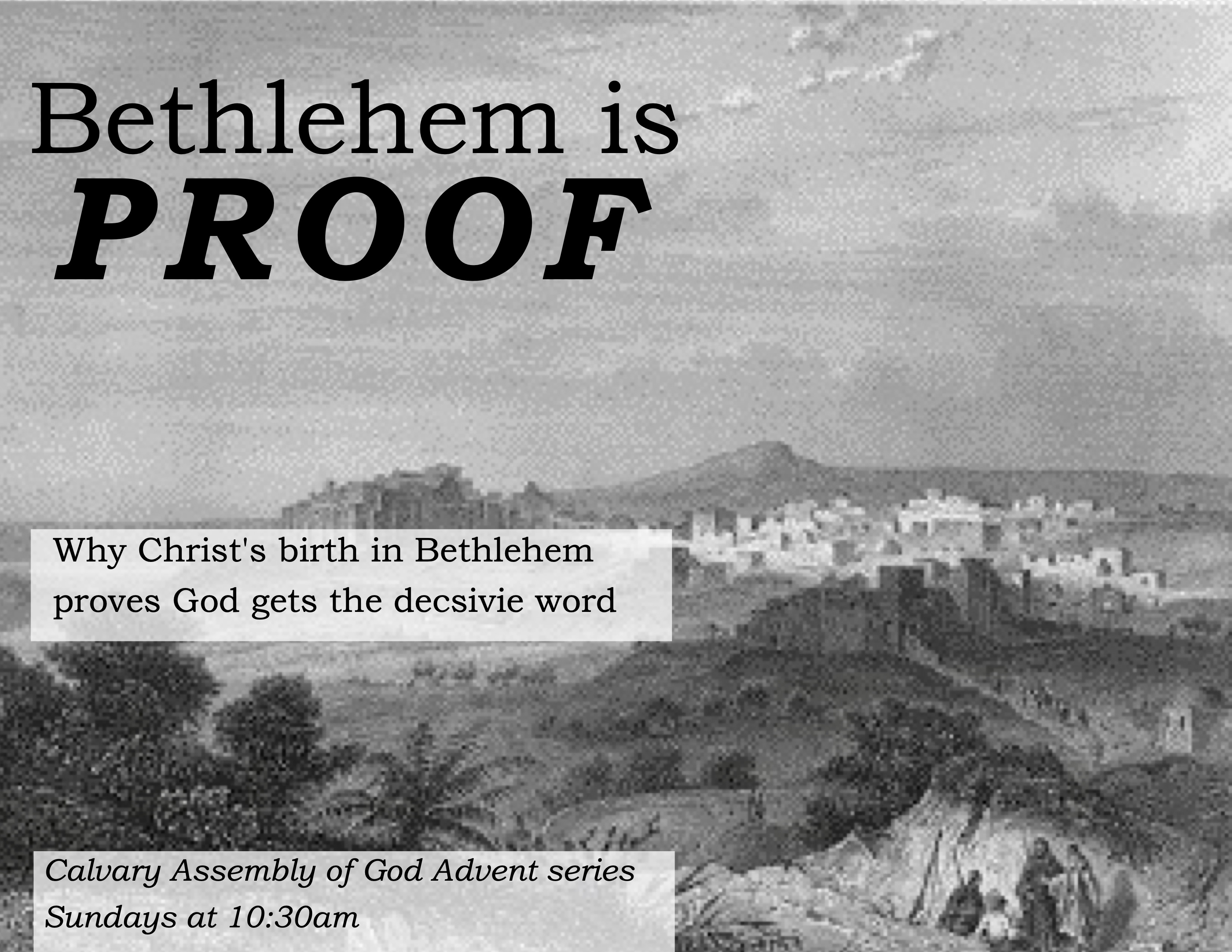
Bethlehem Is Proof—The prophet Micah foretells that the Messiah will arrive in dark times. Enemies will surround Israel, and Israel’s ruler will receive a nasty punch to the jaw. Demonic strongholds, witchcraft, and idolatry will appear to be gaining the upper hand. And then Micah turns his attention to a small village just south of Jerusalem—a village so small that it is often overlooked—a village from which no one would expect Israel’s Deliverer. And yet, Micah writes, “But you, Bethlehem Ephrathah, though you are small among the clans of Judah, out of you will come for Me One who will be Ruler over Israel, Whose origins are from of old, from ancient times” (Micah 5:2). Jesus the Deliverer was born in the little town of Bethlehem, and His birth there 700 years after Micah foretold it is our proof that God always gets the last word, the decisive word, and the best word!
We will be returning to a couple of these series in 2023, and we’ll be launching some brand-new ones as well. If you don’t have a home church in the northern Kent County area, I would love to have you join us!
This is a weekly series with things I’m reading and pondering from Charles Spurgeon. You can read the original seed thought here, or type “Thursdays With Spurgeon” in the search box to read more entries.
Listen to the podcast of this post by clicking on the player below, and you can also subscribe on Apple, Spotify, or Audible.
Judging By First Appearances
A good horse cannot be a bad color, and a really good preacher can wear what he likes, and none will care much about it; but though you cannot know wine by the barrel, a good appearance is a letter of recommendation even to a plowman. Wise men neither fall in love or take a dislike at first sight, but still the first impression is always a great thing even with them; and as to those weaker brethren who are not wise, a good appearance is half the battle.
What is a good appearance? Well, it’s not being pompous and starchy and making oneself high and mighty among the people, for proud looks lose hearts, and gentle words win them. … When a man is as proud as a peacock, all strut and show, he needs converting himself before he sets up to preach to others. The preacher who measures himself by his mirror may please a few silly girls, but neither God nor man will long put up with him. The man who owes his greatness to his tailor will find that needle and thread cannot long hold a fool in a pulpit. …
At the same time, the preacher should endeavor, according to his means, to dress himself respectably; and, as to neatness, he should be without spot, for kings should not have dirty footmen to wait at their table, and they who teach godliness should practice cleanliness. … A worn coat is no discredit, but the poorest may be neat, and the men should be scholars rather than teachers till they are so.
From John Ploughman’s Talks of Plain Advice For Plain People
Like it or not, people do form first impressions on external appearances, and all leaders (and especially pastors) would do well to measure these words from Charles Spurgeon.
I think Spurgeon is talking about honesty here. I need to be honest with who I am, while at the same time being honest about the office that I hold. I’m not playing dress-up, but I also need to be aware that I am representing the King of kings so an appropriate dress and lifestyle are required.
I also need to be honest that people are forming first impressions the moment they see me, but also that I cannot try to dress or act in a way to please or attract people.
I remember meeting a group of “seasoned saints” who all showed up at our church one morning. When I engaged them in conversation, they told me that their new pastor appeared to be too young for their style. They formed an opinion about him before ever giving him a chance. I told them that I knew their pastor and that I liked him a lot. I directed them to return to their home church and give their best support to their pastor for at least six months before they made any decisions. Thankfully, during that time they got to know this pastor and remained in that church with him.
I am in the position I am in because God placed me there. I am working to hear Him say, “Well done, good and faithful servant.” I don’t want my appearance to get in the way of people hearing the message. I don’t want to try to be someone I’m not. I need to remain sensitive to the Holy Spirit’s direction in how I should dress, talk, and live. If my conscience is clear before God, then I won’t have to pay attention to the opinions of others.



 A well-known passage in Proverbs tells us, “Trust in the Lord with all your heart and lean not on your own understanding; in all your ways submit to Him, and He will make your paths straight” (Proverbs 3:5-6).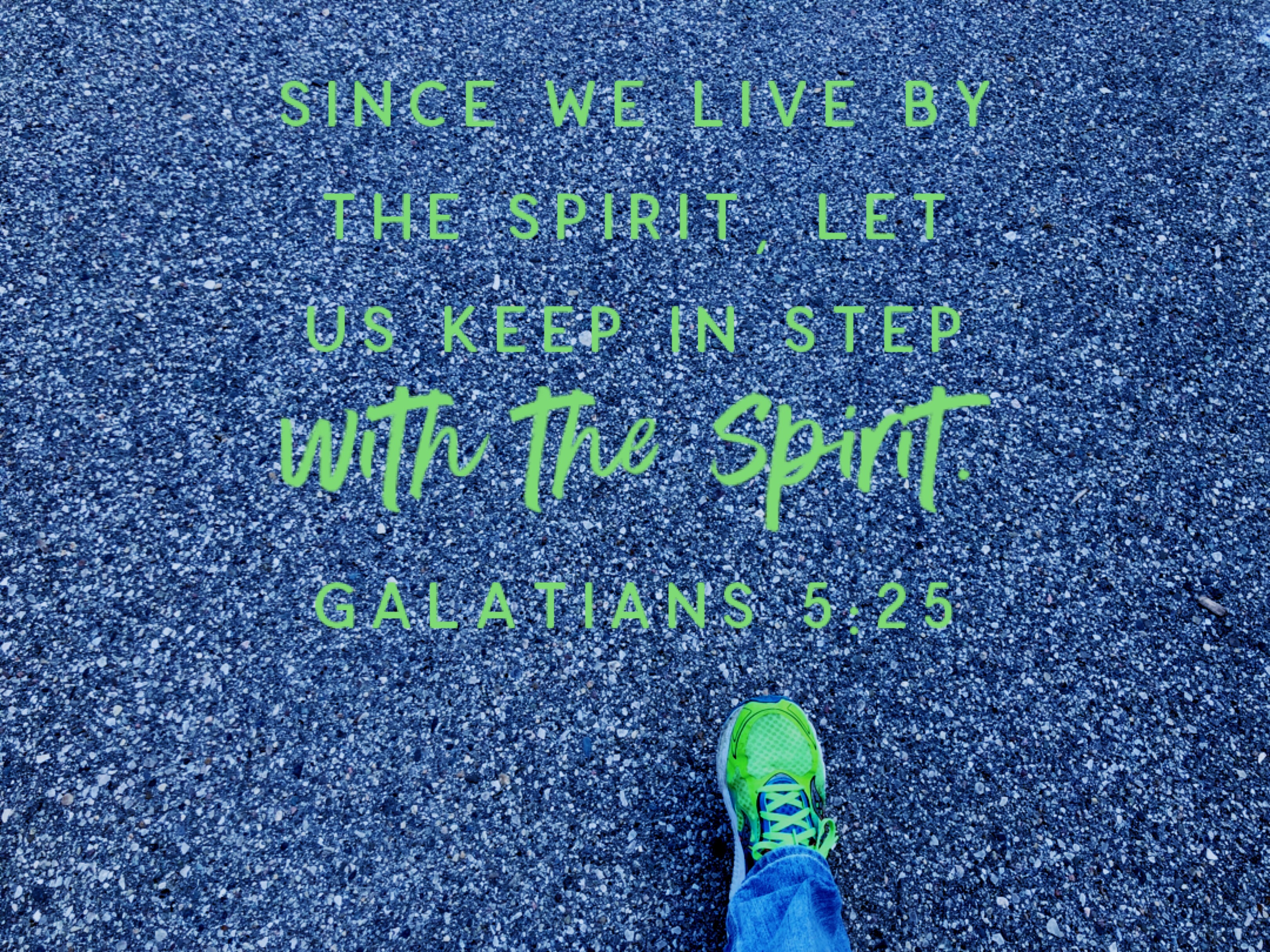





 ). I love this meme because it captures something that so many people fall into: a quick acceptance of a statement without verifying its source or thinking through the implications of the statement’s truthfulness. I think you may be surprised to discover just how many phrases we call biblical aren’t, and how many phrases there are that we never realized are actually in the Bible.