Poetry Saturday—Sacred Bond

‘Twixt Jesus and the chosen race, 
Subsists a bond of sovereign grace. 
That hell, with its infernal train. 
Shall ne’er dissolve, or rend in twain. 

This sacred bond shall never break, 
Though earth should to her centre shake ; 
Rest, doubting saint, assured of this, 
For God has pledged His holiness. 

He swore but once, the deed was done; 
‘Twas settled by the great Three One; 
Christ was appointed to r’deem 
All that the Father loved in Him. 

Hail sacred union, firm and strong! 
How great the grace, how sweet the song! 
That worms of earth should ever be 
One with incarnate Deity! 

One in the tomb, one when He rose, 
One when He triumph’d o’er His foes. 
One when in heaven He took His seat. 
While seraph’s sung all hell’s defeat. 

This sacred tie forbids their fears, 
For all He is, or has, is theirs; 
With Him their head, they stand or fall, 
Their life, their surety, and their all. —Anonymous

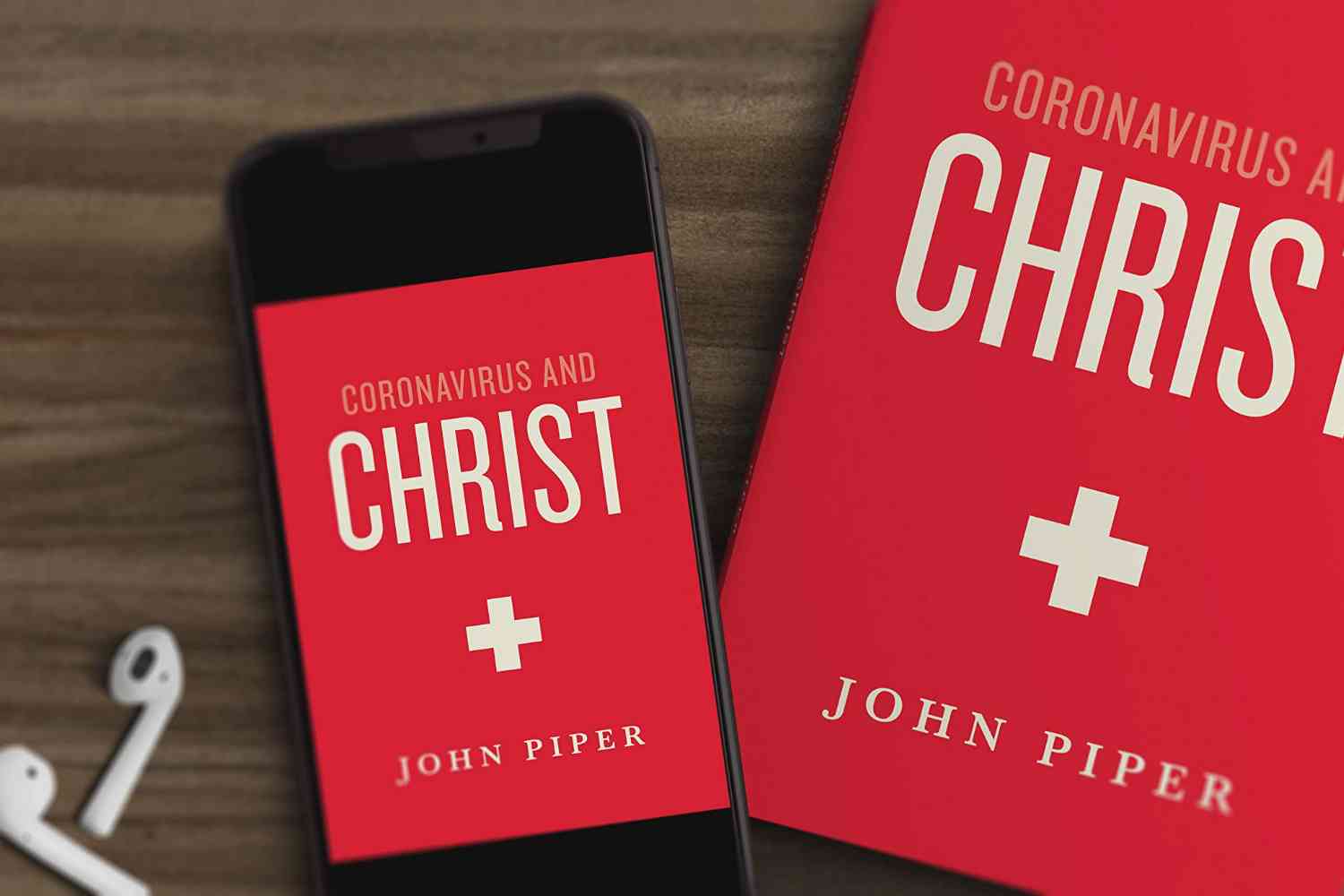
10 Quotes From “Coronavirus And Christ”

John Piper has given us a book that is so spot-on timely for this unusual time we are going through. Check out my full book review by clicking here. 

“I am a sinner. I have never lived a day of my life—not one—without falling short of God’s standards of love and holiness. So how can this be? How can God say, ‘You, John Piper, will be with Me—live or die’ [1 Thessalonians 5:9-10]? God didn’t even wait for the question before He answered. It’s because of Jesus.” 

“To be God is to cause His own counsel to stand—always. God does not just declare which future events will happen; He makes them happen. He speaks His word, and then He adds, ‘I am watching over My word to perform it’ (Jeremiah 1:12).” 

“Jesus expresses the sweetness of God’s sovereignty for His disciples as beautifully as anyone: ‘Are not two sparrows sold for a penny? And not one of them will fall to the ground apart from your Father. But even the hairs of your head are all numbered. Fear not, therefore; you are of more value than many sparrows’ (Matthew 10: 29–31). Not one sparrow falls but by God’s plan. Not one virus moves but by God’s plan. This is meticulous sovereignty. And what does Jesus say next? Three things: you are of more value than many sparrows; the hairs of your head are all numbered; fear not.” 

“Christians get swept away in tsunamis. Christians are killed in terrorist attacks. Christians get the coronavirus. The difference for Christians—those who embrace Christ as their supreme treasure—is that our experience of this corruption is not condemnation.” 

“God put the physical world under a curse so that the physical horrors we see around us in disease and calamities would become a vivid picture of how horrible sin is. In other words, physical evil is a parable, a drama, a signpost pointing to the moral outrage of rebellion against God.” 

Physical pain is God’s trumpet blast to tell us that something is dreadfully wrong in the world. Disease and deformity are God’s pictures in the physical realm of what sin is like in the spiritual realm.” 

“Jesus wants us to see the birth pains (including the coronavirus) as reminders and alerts that He is coming and that we need to be ready [Matthew 24:44].” 

“What God is doing in the coronavirus is showing us—graphically, painfully—that nothing in this world gives the security and satisfaction that we find in the infinite greatness and worth of Jesus.” 

“Paul does not view this experience of desperation as satanic or random [2 Corinthians 1:8-9]. It is purposeful. And God is the One whose purpose is mentioned: this life-threatening experience ‘was to make us rely not on ourselves but on God who raises the dead.’” 

“Jesus taught His followers to ‘let your light shine before others, so that they may see your good works and give glory to your Father who is in heaven’ (Matthew 5:16). What is often not noticed is that being the salt of the earth and the light of the world in this way was the more salty and the more bright because the good deeds were to be done even in the midst of suffering. …

“It is nor mere good deeds that give Christianity its tang and luster. It is good deeds in spite of danger.”

Poetry Saturday—One God

One God! one Majesty! 
There is no God but Thee! 
Unbounded, unextended Unity! 

Awful in unity,
O God! we worship Thee,
More simply one, because supremely Three!

Dread, unbeginning One! 
Single, yet not alone, 
Creation hath not set Thee on a higher throne. 

Unfathomable Sea!
All life is out of Thee,
And Thy life is Thy blissful Unity.

All things that from Thee run, 
All works that Thou hast done, 
Thou didst in honor of Thy being One. 

And by Thy being One, 
Ever by that alone, 
Couldst Thou do, and doest, what Thou hast done. 

We from Thy oneness come, 
Beyond it cannot roam, 
And in Thy oneness find our one eternal home. 

Blest be Thy Unity! 
All joys are one to me— 
The joy that there can be no other God than Thee! —Frederick Faber

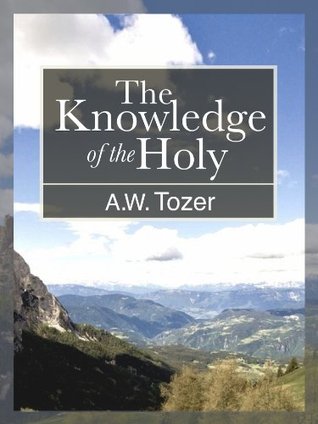
The Knowledge Of The Holy (book review)

One definition of a Christian mystic is someone who engages in deep, prayerful pondering of the nature of God, as He is revealed in the Scriptures, and then emerges from those intimate encounters to share with us what he or she has learned. I would put A.W. Tozer in this category, especially in his book The Knowledge Of The Holy—The Attributes of God: Their Meaning in the Christian Life. 

Tozer himself described the Christian mystic more fully than I could in his book The Christian Book Of Mystical Verse. In that book, Tozer shared some poetic verses from some of his favorite mystical thinkers. He noted, “The hymns and poems found here are mystical in that they are God-oriented; they begin with God, embrace the worshipping soul, and return to God again.” 

In The Knowledge Of The Holy, Tozer takes us on his own personal journey into the immeasurable depths of God’s greatness. Whereas many theologians tend to focus on one attribute of God at a time, Tozer has a God-given ability to help us see all of God’s attributes operating in their infinite fullness. 

Even as Tozer plunges deep into the attributes of God’s self-existence, self-sufficiency, omniscience, omnipotence, omnipresence, love, mercy, justice, grace, and sovereignty, he reminds us, “Because God is immutable He always acts like Himself, and because He is a unity He never suspends one of His attributes in order to exercise another.” 

This is not a book you can ready lightly or casually, or even quickly. This is a book that invites you to read slowly and reverently each of the short chapters, and then to meditate long on the immenseness of an All-Powerful, All-Loving God who wants to reveal Himself to you. 

The Knowledge Of The Holy is a soul-expanding book!

Poetry Saturday—Of Hidden Uses

All things being are essential to the vast ubiquity of God;
Neither is there one thing overmuch, nor freed from honorable servitude.
Were there not a need be of wisdom, nothing would be as it is;
For essence without necessity argueth a moral weakness.
We look through a glass darkly, we catch but glimpses of truth;
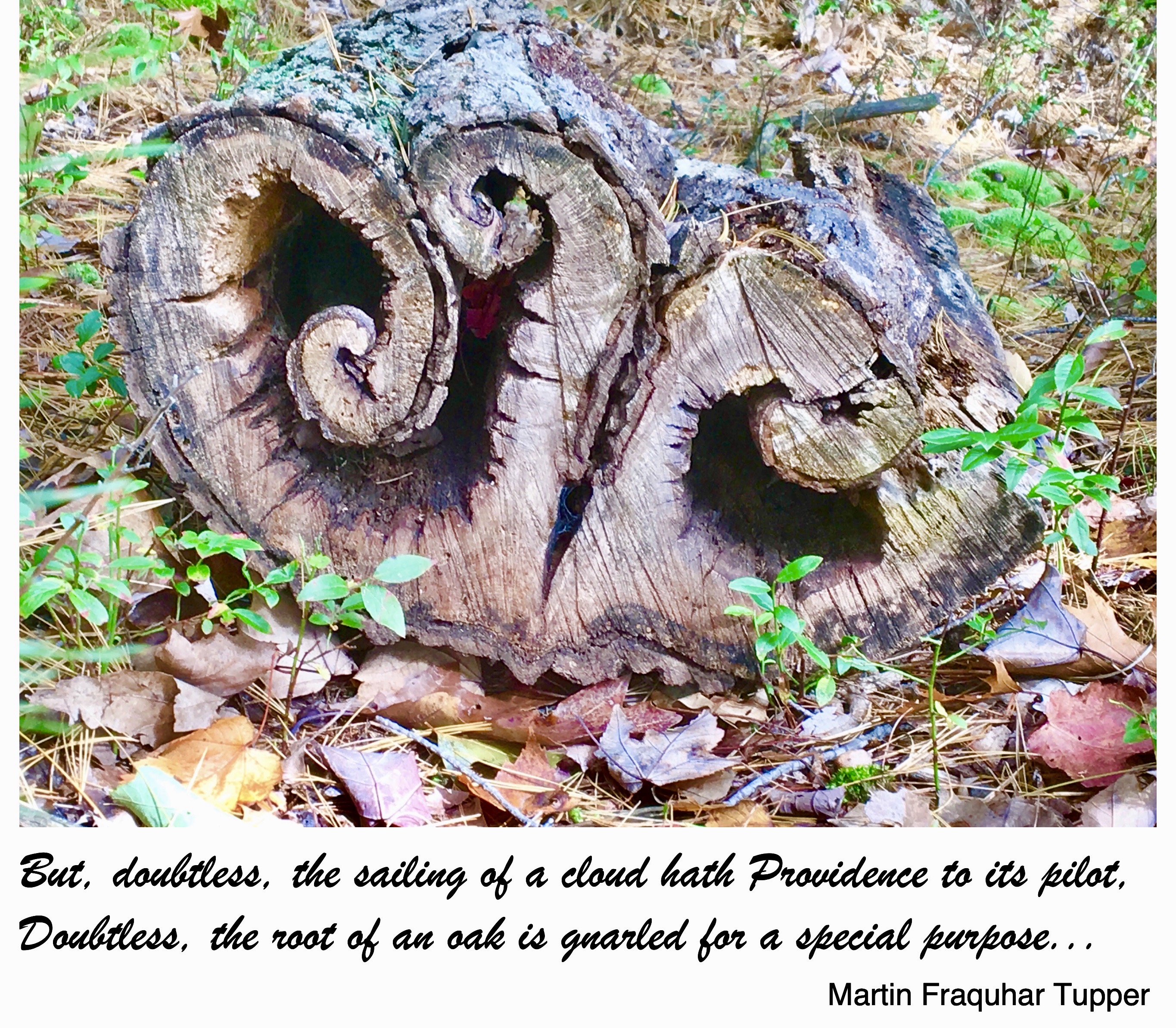
But, doubtless, the sailing of a cloud hath Providence to its pilot,
Doubtless, the root of an oak is gnarled for a special purpose,
The foreknown station of a rush is as fixed as the station of a king,
And chaff from the hand of a winnower, steered as the stars in their courses.
Man liveth only in himself, but the Lord liveth in all things;
And His pervading unity quickeneth the whole creation.
Man doeth one thing at once, nor can he think two thoughts together;
But God compasseth all things, mantling the globe like air;
And we render homage to His wisdom, seeing use in all His creatures,
For, perchance, the universe would die, were not all things as they are. —Martin Fraquhar Tupper

Poetry Saturday—Give To The Winds Thy Fears

Give to the winds thy fears,
hope and be undismayed;
God hears thy sighs and counts thy tears;
God shall lift up thy head.

Through waves and clouds and storms,
He gently clears the way;
wait thou His time, so shall this night
soon end in joyous day.

Still heavy is thy heart,
still sink thy spirits down?
Cast off the weight, let fear depart,
and ev’ry care be gone.

What though thou rulest not,
yet heav’n, and earth, and hell
proclaim, God sitteth on the throne,
and ruleth all things well.

Leave to His sov’reign sway
to choose and to command.
so shalt thou wond’ring own His way,
how wise, how strong His hand!

Far, far above thy thought
His counsel shall appear,
when fully He the work hath wrought,
that caused thy needless fear.

Thou seest our weakness, Lord,
our hearts are known to Thee;
O lift Thou up the sinking heart,
confirm the feeble knee.

Let us in life, in death, 
Thy steadfast truth declare,
and publish with our latest breath
Thy love and guardian care. —Paul Gerhardt (translated by John Wesley)

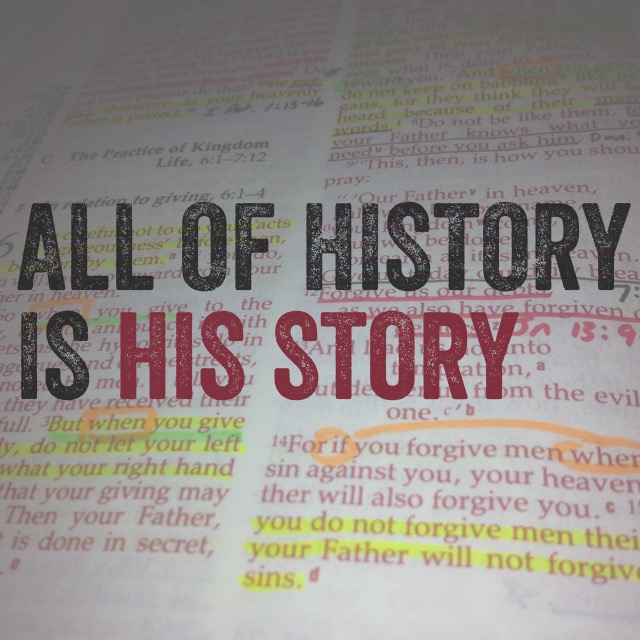
All Of HIStory Is His Story

There were the kings who reigned in Edom before any Israelite king reigned (Genesis 36:31). 

When Rebecca was pregnant with twins, they jostled each other in her womb. God said this was an indication of what was to come of the two nations that would arise from her sons. God also said that the older son would serve the younger son (25:23).

The nation of Edom was a fierce but unstable people. Just take a look at the succession of their kings to see the power struggles at every transition. But eventually, King Saul would war against Edom, and King David would subjugate them—making the prophecy true that the older son served the younger son.

What went into the fulfillment of this prophecy?

  • Esau (also known as Edom) short-sightedly sold his birthright
  • Jacob and Rebecca conspired to get Isaac to bless Jacob instead of Esau
  • Esau married Canaanite wives, which disappointed his parents and strained relations with them
  • God blessed both Esau and Jacob so that Esau had to move to the region that would eventually bear his name: Edom

Along the way, Esau had a son with his Canaanite wife named Eliphaz. Eliphaz had a child with a concubine named Timna—a son that grew into one of Israel’s most deadly foes: the Amalekites!

Yet all of this was foreseen by God and fulfilled His pre-ordained plan. Once again: All of History is His story. There is never any need for us to worry about turmoil—political or otherwise—because God is in sovereign control… always! 

(By the way, this is not an isolated incident. There are countless examples in the Bible of how God’s sovereign plan is fulfilled, despite man’s best efforts to derail it. Check out another example here.) 

Thursdays With Spurgeon—“Got To” To “Get To”

This is a weekly series with things I’m reading and pondering from Charles Spurgeon. You can read the original seed thought here, or type “Thursdays With Spurgeon” in the search box to read more entries.

“Got To” To “Get To” 

     What a glorious covenant the second covenant is! Well might it be called “a better covenant, which was established on better promises” (Hebrews 8:6). … 

     It is better, for it is founded upon a better principle. The old covenant was founded on the principle of merit. It was “Serve God and you will be rewarded for it. If you walk perfectly in the fear of the Lord, God will walk well toward you and all the blessings of Mount Gerizim will come upon you and you will be exceedingly blessed in this world and the world that is to come.” But that covenant fell to the ground, because, although it was just that man should be rewarded for his good works, or punished for his evil ones, yet man being sure to sin and since the fall infallibly tending toward iniquity, the covenant was not suitable for his happiness, nor could it promote his eternal welfare.

     But the new covenant is not founded on works at all. It is a covenant of pure unmingled grace. You may read it from its first word to its last, and there is not a solitary syllable as to anything to be done by us. The whole covenant is a covenant, not so much between man and his Maker, as between Jehovah and man’s representative, the Lord Jesus Christ. The human side of the covenant has been already fulfilled by Jesus, and there remains nothing now but for the covenant of giving, not the covenant of requirements.

From God In The Covenant 

The old covenant was—you’ve got to do this. The new covenant is—you get to do this! 

The old covenant made requirements. The new covenant invites joyful participation. 

The old covenant needed men to do rituals of sacrifice. The new covenant was done once for all when Jesus said, “It is finished!” 

Under the new covenant, we are free to worship God and enjoy His blessings without having to complete a checklist of religious duties. Have you traded GOT TO for GET TO?

Thursdays With Spurgeon—Not Puffed Up, Not Despised

This is a weekly series with things I’m reading and pondering from Charles Spurgeon. You can read the original seed thought here, or type “Thursdays With Spurgeon” in the search box to read more entries.

Not Puffed Up, Not Despised 

     We magnify our office, though we would not magnify ourselves. We hold that nothing can dignify a man more than being appointed to an office in a Christian church. I would rather be a deacon of the church than lord mayor of London. A minister of Christ is, in my estimation, an infinitely higher honor than the world can bestow. My pulpit is to me more desirable than a throne, and my congregation is an empire more than large enough. An empire before which the empires of the earth dwindle into nothing in everlasting importance.

     Why does God give to one man a special call by the Holy Spirit to be a minister and pass by another? There is another man more gifted, perhaps, but we dare not put him in a pulpit because he has not had a special call. … The man whom some would perhaps think most suitable for the office is passed by and another chosen. There is a manifestation of God’s sovereignty in the appointment to office in putting David on a throne, and making Moses the leader of the children of Israel through the wilderness, in choosing Daniel to stand among princes, in electing Paul to be the minister to the Gentiles and Peter to be the apostle of the circumcision. And you who have not the gift of honorable office must learn the great truth contained in the question of the Master, “Is it not lawful for Me to do what I wish with My own things?” [Matthew 20:15]

     We say again, the sovereignty of God is here displayed in the distribution of gifts honorable. Learn here, O Christian man, if you have gifts, to cast the honor of them at the Savior’s feet, and if you possess them not, learn not to murmur. Remember that God is equally as kind when He keeps back as when He distributes His favors. If any among you is exalted, let him not be puffed up. If any is lowly, let him not be despised. For God gives to every vessel His measure of grace. Serve Him after your measure and adore the King of heaven who does as He pleases.

From Divine Sovereignty

  • Why does one person have one gift, and not another gift? 
  • Why does one Christian have one gift and another Christian many gifts? 
  • Why does one person rise to notoriety and another remains anonymous? 
  • Why did God choose David? Or Moses? Or Joshua? Or Saul/Paul? 

God is sovereign and He knows what He is doing! 

This should awaken in us a humble confidence. We are humbled that God would choose us for anything, but we are also confident that since He did choose us and place us where we needed to be that nothing can remove us or diminish what God is doing through us. 

Don’t get puffed up. Don’t feel despised. God knows exactly what He is doing! 

Thursdays With Spurgeon—God Sovereignly Gives Gifts

This is a weekly series with things I’m reading and pondering from Charles Spurgeon. You can read the original seed thought here, or type “Thursdays With Spurgeon” in the search box to read more entries.

God Sovereignly Gives Gifts

…Am I not permitted to do what I choose with what is mine? (Matthew 20:15) 

     There is no attribute of God more comforting to His children than the doctrine of divine sovereignty. Under the most adverse circumstances, in the most severe troubles, they believe that sovereignty has ordained their afflictions, and that sovereignty overrules them and that sovereignty will sanctify them all. … 

     On the other hand, there is no doctrine more hated by worldlings, no truth of which they have made such a football, as the great, stupendous, but yet most certain doctrine of the sovereignty of the infinite Jehovah. Men will allow God to be everywhere except on His throne. … When God ascends His throne, His creatures then gnash their teeth. And when we proclaim an enthroned God and His right to do as He wills with His own, to dispose of His creatures as He thinks well, without consulting them in the matter, then it is that we are hissed and execrated. … 

     O you who are gifted with a noble frame, a comely body—boast not yourself therein, for your gifts come from God. Oh, glory not, for if you glory you become uncomely in a moment. The flowers boast not of their beauty, nor do the birds sing of their plumage. Be not vain, you daughters of beauty. Be not exalted, you sons of comeliness. And, all you men of might and intellect, remember that a sovereign Lord bestows all you have. … 

     Therefore I say do not exalt yourself above measure, but use what God has given you, for it is a royal gift and you should not lay it aside. But if the sovereign Lord has given you one talent and no more, lay it not up in a napkin, but use it well. … Bless God that you have more than others and thank Him also that He has given you less than others, for you have less to carry on your shoulders. And the lighter your burden, the less cause you will have to groan as you travel on toward the better land. Bless God, then, if you possess less than your fellows, and see His goodness in withholding as well as in giving.

From Divine Sovereignty

God does all that He does on purpose. Just because you or I cannot perceive His purpose doesn’t mean that there is no purpose. There is! 

God is sovereign. We can fight against this, or we can see it as the amazing comfort that God intends for it to be. Since God is sovereign, I can rest assured that I am where He needs me to be, equipped with all He has given me to bring Him glory in that place!