10 Quotes For Pastors From “Living A Prayerful Life”

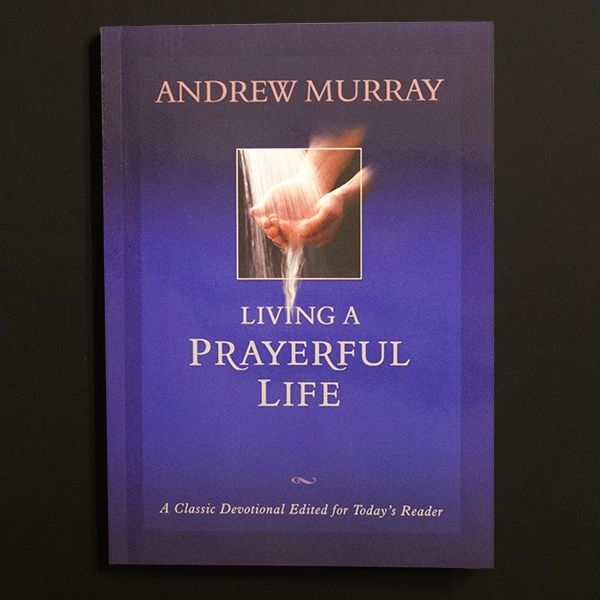
Living A Prayerful LifeAs I mentioned in my book review of Andrew Murray’s A Prayerful Life, this book was written as a response to pastors who were concerned about the lack of effectiveness in their ministry. Pastor Murray called out the sin of prayerlessness as the main factor in their struggles. Here are some quotes from this book specifically to pastors.

“The enemy uses all his power to lead the Christian—and above all, the minister—to neglect prayer. satan knows that however admirable the sermon may be, however attractive the service, however faithful the pastoral visitation, none of these things can damage him or his kingdom if prayer is neglected.”

“The pastor’s highest calling is not preaching, or speaking, or church visitation, but it is to cultivate the life of God in himself daily, and to be a witness of what the Lord teaches him and accomplishes in him.”

“Here on earth I may expend my time in exchange for money or learning. The minister exchanges his time for divine power and the spiritual blessings to be obtained from heaven. That, and nothing else, makes him a man of God and ensures that his preaching will be in the demonstration of the Spirit and power.”

“Many pray for the Spirit that they may make use of Him and His power for their work. This is an entirely wrong concept. It is He Who must use you. Your relationship toward Him must be one of deep dependence and utter submission. The Spirit must have you completely and always and in all things under His power.”

“When the Lord promised the apostles that they would receive power when the Holy Spirit came upon them, and commanded them to wait for Him, it was as though He said: ‘Do not dare to preach without this power. It is the indispensable preparation for your work. Everything depends on it.’”

“Little time in the Word together with little prayer is death to the spiritual life. Much of the Word but little prayer yields a less than healthy spiritual life. Time spent in prayer with little time in the Word yields life, but without steadfastness. A full measure of the Word and much prayer each day produces a healthy and powerful life.”

“The preacher must come to see that his preaching is comparatively powerless to bring new life until he begins to take time for prayer.”

“All you who long for blessing in your ministry, He calls you to abide in Him. Let it be the greatest delight of your life to spend time with God; it will be the surest preparation for fruitful service.”

“As a minister of the gospel, have you ever considered why you have a salary and a place to live, and so are freed from the need of holding a regular job? The reason is so that you can continue in prayer and the ministry of the Word. These will give you the necessary wisdom and anointing for your work. And that is the secret of a fruitful ministry. No wonder there are often complaints about the ineffective spiritual life of a minister and his congregation. That which is of prime importance—perseverance in prayer—does not occupy its rightful place.”

“The great question is: Shall we earnestly set ourselves to win back again the weapon of believing prayer that satan has, at least in a measure, taken away from us? Let us set before ourselves the serious importance of this conflict. As far as each minister is concerned, everything depends on whether or not he is a man of prayer—one who in the inner room is clothed each day with power from on high.”

To read some of the other quotes I shared from this book, please click here. And to read my full book review of Living A Prayerful Life, click here.


14 Quotes From “Living A Prayerful Life”

Living A Prayerful LifeAndrew Murray’s book Living A Prayerful Life is a timeless call to all Christians to value prayer more highly. You can read my book review by clicking here. Below are a few of the quotes I especially appreciated.

“How many of us admit to taking a mere five minutes for prayer! The claim is that there is no time. The reality is that a heart desire for prayer is lacking. … Prayerlessness is proof that for the most part our life is still under the power of the flesh. Prayer is the pulse of life; by it the doctor can diagnose the condition of the heart.” 

“God’s child can conquer anything and everything by prayer. Is it any wonder that satan does his utmost to snatch that weapon from the Christian or hinder him in the use of it?”

“Think about our Lord’s words: ‘Believe Me when I say that I am in the Father and the Father is in Me. [And] you know Him, for He lives with you and will be in you’ (John 14:11, 17). Those words are the secret of the life of prayer. Take time in your place of prayer to bow down and worship. Wait on Him until He reveals Himself, takes possession of you, and goes with you to show you how a person may live and walk in abiding fellowship with Him.”

“I know all too well what weak concepts we have concerning the promises and the power of God. I see how prone we are to backsliding, to limiting God’s power, and to deeming it impossible for Him to do greater things than we have seen. It is a glorious thing to get to know God in a new way in our prayer time. That, however, is only the beginning. It is something still greater and more glorious to know God as the All-Sufficient One and to wait on His Spirit to open our hearts and minds to receive the great things, the new things that He longs to bestow on those who wait for Him.”

“Does it not become even more clear that what God wills to accomplish on earth needs prayer as its indispensable condition? There was only one way for Christ and so for believers: a heart and mouth open toward heaven in believing prayer will certainly not be put to shame.” 

“God has done His utmost to make prayer as natural and effectual as the cry of a child to an earthly father when he says, ‘Abba, Father.’”

“Our first work, therefore, ought to be to come into God’s presence not with our ignorant prayers, not with many words and thoughts, but in the confidence that the divine work of the Holy Spirit is being carried out within us. This confidence will encourage reverence and quietness and will also enable us, in dependence on the help that the Spirit gives, to lay our desires and deepest needs before God. The supreme lesson for every prayer is first of all to commit to the leading of the Holy Spirit and in total dependence on Him to give Him first place. Through Him your prayer will have value you cannot imagine. Through Him also you will learn to express your desires in the name of Christ.”

“If we remain prayerless, let our hearts be deeply ashamed. By so doing we make it impossible for God to impart His holiness to us. Let us ask God to forgive us this sin and to draw us to Himself by His heavenly grace and to strengthen us to have fellowship with Him, the One Who is holy.”

“As you enter a time of private prayer, let your first focus be to give thanks to God for the unspeakable love that invites you to come to Him and to converse freely with Him.”

“Prayer is not a soliloquy, where everything comes from one side; it is a dialogue, where God’s child listens to what the Father says, replies to it, and then makes his requests known.”

“Prayerful study of the Bible is indispensable for powerful prayer.”

“Do not forget the close bond between the inner room and the outside world. The attitude of the inner prayer room must remain with us all day. The object of secret prayer is to unite us to God that we may know His abiding presence with us.”

“The Word supplies us with material for prayer and encourages us to expect everything from God. … It is only by prayer that we may live such a life that every word of God might be fulfilled in us.” 

“Our daily life has a tremendous influence on our prayers, just as our prayers influence our daily life. In fact, our life is a continuous prayer. We are continually praising or thanking God by our actions and by the manner in which we treat others. This natural prayer and desire for God can be so strong in a man (who also prays to God) that the words of prayer that he actually utters cannot be heard. At times God cannot hear the prayer of your lips, because the worldly desires of your heart cry out to Him much more strongly and loudly.”

Living A Prayerful Life (book review)

Living A Prayerful LifeAndrew Murray is fast becoming a beloved pastor/author to me. He writes so humbly, and yet so confidently, of the walk that every Christian should have. In Living A Prayerful Life, Pastor Murray turns his attention to the indispensable role of prayer.

To be a little more specific, this book was written to a conference of pastors who were sensing a lack of power and effectiveness in their ministry. Andrew Murray quickly diagnosed the main culprit for these pastors: the sin of prayerlessness. Pastor Murray opens his book with this thought: “Early copies of the book were sent out with the thought that if the leaders of the church could see that in spiritual work everything depends upon prayer, and that God Himself helps those who wait on Him, it could truly be a day of hope for our church.”

And then he ends his book with this challenge―

“In a book such as this, dealing with the life of prayer and intimate fellowship with God, it is indispensable that we should be prepared to receive and obey all that we see to be according to the Word and will of God. Where this disposition to receive and obey is lacking, knowledge only serves to make the heart less capable of receiving a fuller life. satan endeavors to become the master of the Christian’s prayer time. This is because he knows that the testimony of the one who has been unfaithful in prayer will cause little damage to his kingdom. …

The great question is: Shall we earnestly set ourselves to win back again the weapon of believing prayer that satan has, at least in a measure, taken away from us? Let us set before ourselves the serious importance of this conflict. As far as each minister is concerned, everything depends on whether or not he is a man of prayer—one who in the inner room is clothed each day with power from on high.” (emphasis added)

Whether you are a pastor or not, this book is a true eye-opener to the value of prayer in every Christian’s life.

Links & Quotes

link quote

“We find the deepest meaning in life when our hearts freely go out to admire God’s power, rather than turning inward to boast in our own—or even think about our own. We discover something overwhelming: It is profoundly satisfying not to be God, but to give up all thoughts or desires to be God.” —John Piper

“Of course, what these people mean when they say that God is love is often something quite different: they really mean ‘Love is God.’ They really mean that our feelings of love, however and wherever they arise, and whatever results they produce, are to be treated with great respect. Perhaps they are: but that is something quite different from what Christians mean by the statement ‘God is love.’ They believe that the living, dynamic activity of love has been going on in God forever and has created everything else.” —C.S. Lewis

“Holiness is the architectural plan upon which God builds up His living temple. … I pray you who profess to be followers of Christ, set a high value upon purity of life and godliness of conversation.” —Charles Spurgeon

This is a great inside-the-huddle conversation with Tom Brady and Josh McDaniels on the final two touchdown drives of Super Bowl XLIX.

Poetry Saturday—Soldiers Of Christ, Arise

Charles WesleyTo keep your armor bright,
Attend with constant care,
Still walking in your Captain’s sight,
And watching unto prayer.
Ready for all alarms,
Steadfastly set your face,
And always exercise your arms,
And use your every grace.

Pray without ceasing, pray,
Your Captain gives the word;
His summons cheerfully obey
And call upon the Lord;
To God your every want
In instant prayer display,
Pray always; pray and never faint,
Pray, without ceasing, pray!

In fellowship; alone,
To God with faith draw near;
Approach His courts, besiege His throne
With all the powers of prayer:
Go to His temple, go,
Nor from His altar move;
Let every house His worship know,
And every heart His love.

To God your spirits dart,
Your souls in words declare,
Or groan, to Him who reads the heart,
The unutterable prayer.
His mercy now implore,
And now show forth His praise,
In shouts, or silent awe, adore
His miracles of grace.

Pour out your souls to God,
And bow them with your knees,
And spread your hearts and hands abroad,
And pray for Sion’s peace;
Your guides, and brethren, bear
For ever on your mind;
Extend the arms of mighty prayer,
In grasping all mankind.
From strength to strength go on,
Wrestle, and fight, and pray,
Tread all the powers of darkness down,
And win the well-fought day;
Still let the Spirit cry
In all His soldiers, “Come!”
Till Christ the Lord descends from high
And takes the conquerors home. —Charles Wesley

Pray Like Jesus

Private prayerThere’s a really interesting story recorded in the gospels of Matthew, Mark and Luke. It’s the one where a father brings his demon-possessed boy to nine of Jesus’ disciples to ask for their help. But the father sadly reports back to Jesus, “But they could not help.”

Jesus calls His disciples out. He says that their faith is lacking. Even the boy’s father is short on faith. He says to Jesus, “If you can do anything, please help us.” To which Jesus says, “‘If you can’? Anything is possible if you believe.” Jesus rebukes the demon, which immediately comes out of the boy.

Now here’s the interesting part: His disciples asked Him, “Why couldn’t we do that?” Jesus says, “This kind comes out only by prayer.” Let’s review all the words Jesus said to the father and his boy:

  • “How long has he been like this?”
  • “‘If you can’? Anything is possible if you believe.”
  • “Demon, come out of him and never enter again.”

So here’s my question―Jesus said the demon was cast out by prayer. So when did Jesus pray? Look at those words He said again … which of those was His prayer?

Actually, if you look through all four gospels you won’t find Jesus laying His hands on people and saying, “Heavenly Father, will You please heal this leprosy?” Or, “Please bring life back into this little girl.” Instead He says, “Be clean” or “Little girl, get up.

So I ask again: When did Jesus pray? The answer is―He prayed all the time.

  • Very early in the morning, while it was still dark, Jesus got up, left the house and went off to a solitary place, where He prayed. (Mark 1:35)
  • After He had dismissed them, He went up on a mountainside by Himself to pray. When evening came, He was there alone. (Matthew 14:23)
  • But Jesus often withdrew to lonely places and prayed. (Luke 5:16)

Do you want to pray like Jesus? He prayed all the time. He had times of prayer with His Heavenly Father, but He was in unbroken communication with Him.

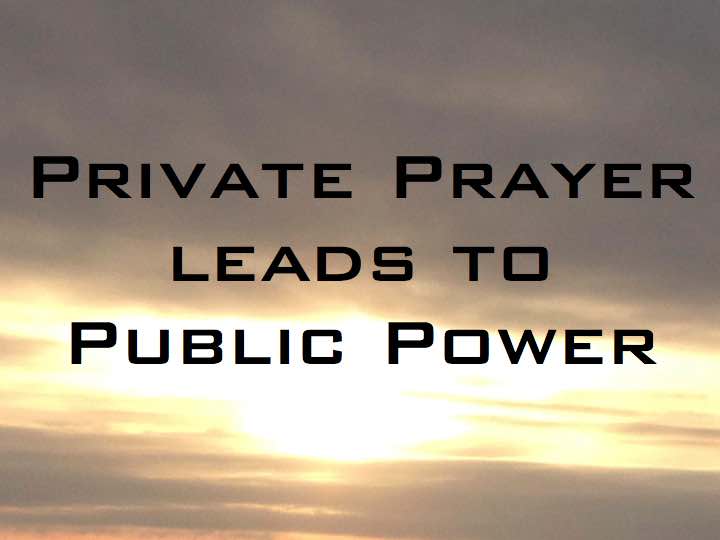
Private prayer leads to public power! 

That’s how we can pray like Jesus!

We will be learning more about prayer in our series The Prayers Of Elisha next Sunday. Please join us!

Dwight Moody On Prayer

D.L. MoodySome powerful quotes from D.L. Moody on prayer—

“I firmly believe a great many prayers are not answered because we are not willing to forgive someone.”

“Use me, my Savior, for whatever purpose and in whatever way You may require. Here is my poor heart, an empty vessel: fill it with Your grace. Here is my sinful and troubled soul; quicken it and refresh it with Your love. Take my heart for Your abode; my mouth to spread abroad the glory of Your name; my love and all my powers for the advancement of Your believing people; and never allow the steadfastness and confidence of my faith to abate.”

“If we do not love one another, we certainly shall not have much power with God in prayer.”

Social Justice

Scales of social justiceThere is a lot of talk about “social justice”—speaking out and acting on behalf of those who are oppressed, marginalized and disenfranchised. This is close to God’s heart, too, as He describes “pure religion” in terms of caring for orphans and looking after widows (see James 1:27).

But we hinder our attempts at social justice if it’s not tied to God’s righteousness. Because without righteousness, we don’t have God’s unlimited help and are simply operating under our own limited power.

Surely the arm of the Lord is not too short to save, nor His ear too dull to hear. But your iniquities have separated you from your God; your sins have hidden His face from you, so that He will not hear. (Isaiah 59:1-2, emphasis added)

Justice is mentioned four times in this 59th chapter of Isaiah, but always in close proximity to righteousness

The opening verse is the perfect conclusion: God has the ability to help us (justice), but our lack of righteousness prevents Him from hearing our pleas and moving to action.

The single-best way to make social justice maximally effective is for each of us to pursue God’s righteousness. 

All efforts at social justice apart from God’s help will bring small, temporary gains at best. But even our smallest attempts at social justice with God’s help will bring lasting results for the greatest number of people.

8 Quotes From “The Christian’s Secret Of A Happy Life”

The Christian's SecretSometimes people slap the label “timeless classic” on a book just because it’s old. But in the case of The Christian’s Secret Of A Happy Life by Hannah Whitall Smith, the label is well-deserved. The thoughts she shares are so biblically-grounded that they truly are timeless. You can read my full book review by clicking here. I highlighted way too many things to share them all, but here are a few quotes that I especially liked.

“You have been forced to settle down to the conviction, that the best you can expect from your religion is a life of alternate failure and victory, one hour sinning, and the next repenting, and then beginning again, only to fail again, and again to repent. … Can we dream that the Savior, who was wounded for our transgressions and bruised for our iniquities, could possibly see of the travail of His soul and be satisfied in such Christian lives as fill the Church today? … Can we, for a moment, suppose that the holy God, who hates sin in the sinner, is willing to tolerate it in the Christian, and that He has even arranged the plan of salvation in such a way as to make it impossible for those who are saved from the guilt of sin to find deliverance from its power?” 

“Positive transformation is to take place. So at least the Bible teaches. Now, somebody must do this. Either we must do it for ourselves, or another must do it for us. We have most of us tried to do it for ourselves at first, and have grievously failed; then we discover, from the Scriptures and from our own experience, that it is something we are unable to do, but that the Lord Jesus Christ has come on purpose to do it, and that He will do it for all who put themselves wholly into His hands and trust Him without reserve. … The Lord’s part is to do the thing entrusted to Him. He disciplines and trains by inward exercises and outward providences. He brings to bear upon us all the refining and purifying resources of His wisdom and His love. He makes everything in our lives and circumstances subservient to the one great purpose of causing us to grow in grace, and of conforming us, day by day and hour by hour, to the image of Christ.”

“Sanctification is both a step of faith, and a process of works. It is a step of surrender and trust on our part, and it is a process of development on God’s part. By a step of faith we get into Christ; by a process we are made to ‘grow up into Him in all things.’ By a step of faith we put ourselves into the hands of the Divine Potter; by a gradual process He makes us into a vessel unto His own honor, meet for His use, and prepared to every good work. … The maturity of a Christian experience cannot be reached in a moment, but is the result of the work of God’s Holy Spirit, who, by His energizing and transforming power, causes us to grow up into Christ in all things. And we cannot hope to reach this maturity in any way other than by yielding ourselves up, utterly and willingly, to His mighty working.” 

“Just as we reconcile the statements concerning a saw in a carpenter’s shop when we say, at one moment, that the saw has sawn asunder a log, and the next moment declare that the carpenter has done it. The saw is the instrument used; the power that uses it is the carpenter’s. And so we, yielding ourselves unto God, and our members as instruments of righteousness unto Him, find that He works in us to will and to do of His good pleasure, and we can say with Paul, ‘I labored; yet not I, but the grace of God which was with me.’ … Just as the potter, however skillful, cannot make a beautiful vessel out of a lump of clay that is never put into his hands, so neither can God make out of me a vessel unto His honor unless I put myself into His hands.”:

“Most Christians are like a man who was toiling along the road, bending under a heavy burden, when a wagon overtook him, and the driver kindly offered to help him on his journey. He joyfully accepted the offer but when seated in the wagon, continued to bend beneath his burden, which he still kept on his shoulders. ‘Why do you not lay down your burden?’ asked the kind-hearted driver. ‘Oh!’ replied the man, ‘I feel that it is almost too much to ask you to carry me, and I could not think of letting you carry my burden too.’ And so Christians, who have given themselves into the care and keeping of the Lord Jesus still continue to bend beneath the weight of their burdens, and often go weary and heavy-laden throughout the whole length of their journey. … It is generally much less difficult for us to commit the keeping of our future to the Lord than it is to commit our present. We know we are helpless as regards the future, but we feel as if the present is in our own hands, and must be carried on our own shoulders; and most of us have an unconfessed idea that it is a great deal to ask the Lord to carry ourselves, and that we cannot think of asking Him to carry our burdens too.”

“He is our Father, and He loves us, and He knows just what is best, and therefore, of course, His will is the very most blessed thing that can come to us under any circumstances. I do not understand how it is that the eyes of so many Christians have been blinded to this fact. But it really would seem as if God’s own children were more afraid of His will than of anything else in life—His lovely, lovable will, which only means loving-kindnesses and tender mercies, and blessings unspeakable to their souls!”

“You have trusted Him as your dying Savior; now trust Him as your living Savior. Just as much as He came to deliver you from future punishment did He also come to deliver you from present bondage. Just as truly as He came to bear your stripes for you has He come to live your life for you.” 

“The one chief temptation that meets the soul at this juncture is the same that assaults it all along the pathway, at every step of its progress; namely, the question as to feelings. We cannot believe we are consecrated until we feel that we are: and because we do not feel that God has taken us in hand, we cannot believe that He has. As usual, we put feeling first, and faith second, and the fact last of all. No, God’s invariable rule in everything is, fact first, faith second, and feeling last of all; and it is striving against the inevitable when we seek to change this order.”

13 Quotes From “Yawning At Tigers”

Yawning At TigersYawning At Tigers by Drew Dyck is a wake-up call to any who view God as tame or Christianity as boring. As I read this book I found myself frequently saying, “Yes!” out loud to the truths Drew has shared. I loved this book! You can read my full book review by clicking here. Below are a few of the quotes I highlighted (unless otherwise noted, the quotes are from the author).

“We can’t truly appreciate God’s grace until we glimpse His greatness. We won’t be lifted by His love until we are humbled by His holiness.” 

“Here, the contrast between God and an idol couldn’t be clearer. We are told that after offering sacrifices to the golden calf, the Israelites ‘sat down to eat and drink and got up to indulge in revelry’ (Exodus 32:6). But when God descended on Mount Sinai, ‘everyone in the camp trembled’ (Exodus 19:16). You don’t tremble before an idol. … An idol is safe. It never challenges you. It isn’t threatening. It doesn’t judge sin or demand loyalty. But the Holy One of Israel is a jealous God—passionate and loving, yes, but unspeakably dangerous too.”

“The language we use reveals an awful lot about how we think about God. A cursory examination of the way we speak exposes how pervasive this Jesus-as-my-nonjudgmental-buddy attitude is in the church.” 

“While we know enough about God to receive salvation and enter into a relationship with Him, our knowledge of Him is still far from complete. Our intelligence is too small, our languages too limited. When it comes to God, we are all beginners.”

“So soon as we become satisfied with any picture of God, we are in danger of idolatry.” —Victor White 

“Unfortunately, in our efforts to make the Bible interesting and relevant, we try to normalize God. We become experts at taking something lofty, so unfathomable and incomprehensible, and dragging it down to the lowest shelf. We failed to account for the fact that God is neither completely knowable nor remotely manageable.”

“We lack a practice of personal holiness because we’ve lost a theology of divine holiness. When we neglect a part of God’s nature, we shouldn’t be surprised when that same attribute goes missing in our lives. … The Bible repeatedly makes explicit the connection between God’s holiness and ours. ‘Be holy,’ God says, ‘because I… am holy’ (Leviticus 19:2). The New Testament echoes this theme. ‘Just as He who called you is holy, so be holy in all you do’ (1 Peter 1:15).” 

“Only a God who punishes evil and rights wrongs is ultimately a God of love. … To fear the Lord is not to suggest God is callous or cool. Just the opposite, in fact. It is God’s consuming love that makes Him so dangerous. Because He cares deeply for His creation, He will not tolerate evil and injustice forever.”

“The evidence of the Christian’s zeal and piety was made clear to all the pagans. For example, they alone in such a catastrophic state of affairs gave practical evidence of their sympathy and philanthropy works. All day long some of them would diligently persevere in performing the last offices for the dying and burying them (for there were countless numbers, and no one to look after them). While others gathered together in a single assemblage all who were afflicted by famine throughout the whole city, and would distribute bread to them all. When this became known, people glorified the God of the Christians, and, convinced by the deeds themselves, confessed the Christians alone were truly pious and God-fearing.” —Eusebius

“When we root our sense of identity in God, everything changes. Once our vertical connection is healthy, the horizontal ones tend to thrive. However, a cruel irony comes into play when we seek validation from others that only God can provide. When we lean too heavily on human relationships, we actually end up sabotaging them. We become clingy, controlling. We find ourselves piling expectations on people they were never meant to bear.”

“This doesn’t mean the New Testament is solely about God’s intimacy. Nor does the Old Testament speak strictly about God’s transcendence. The entire Bible speaks of both. All through Scripture we are reminded that God is both great and near.” 

“For people in the throes of suffering, the Bible offers something much different than an answer—it offers a Person.”

“We shall never succeed in knowing ourselves unless we seek to know God.” —Teresa of Avila