10 Quotes From “The Furious Longing Of God”

Furious Longing Of GodI love the way Brennan Manning writes! It’s so gut-level real. His words both convict me and encourage me to go deeper into God’s love. You can read my full book review of The Furious Longing Of God by clicking here. Below are some of the quotes I especially appreciated.

“The God I’ve come to know by sheer grace, the Jesus I met in the grounds of my own self, has furiously loved me regardless of my state—grace or disgrace. And why? For His love is never, never, never based on our performance, never conditioned by our moods—of elation or depression. The furious love of God knows no shadow of alteration or change. It is reliable. And always tender.”

“The foundation of the furious longing of God is the Father who is the originating Lover, the Son who is the full self-expression of that Love, and the Spirit who is the original and inexhaustible activity of that Love, drawing the created universe into itself.”

“Pagan philosophers such as Aristotle arrived at the existence of God via human reason and referred to Him in vague, impersonal terms: the uncaused cause, the immovable mover. The prophets of Israel revealed the God of Abraham, Isaac, and Jacob in a warmer, more compassionate manner. But only Jesus revealed to an astonished Jewish community that God is truly Father.” 

“The degree of Abba’s love for me is in direct proportion to His love for Jesus. For example, I can love the mailman with twenty percent and my best friend with ninety percent. But with God, there is no division, no more and no less. God loves me as much as He loves Jesus. Wow!”

“First, if we continue to picture God as a small-minded bookkeeper, a niggling customs officer rifling through our moral suitcase, as a policeman with a club who is going to bat us over the head every time we stumble and fall, or as a whimsical, capricious, and cantankerous thief who delights in raining on our parade and stealing our joy, we flatly deny what John writes in his first letter (4:16)—‘God is love.’ In human beings, love is a quality, a high-prized virtue; in God, love is His identity. Secondly, if we continue to view ourselves as moral lepers and spiritual failures, if our lives are shadowed by low self-esteem, shame, remorse, unhealthy guilt, and self-hatred, we reject the teaching of Jesus and cling to our negative self-image.”

“Healing becomes the opportunity to pass off to another human being what I have received from the Lord Jesus; namely His unconditional acceptance of me as I am, not as I should be. He loves me whether in a state of grace or disgrace, whether I live up to the lofty expectations of His gospel or I don’t. He comes to me where I live and loves me as I am.”

“To affirm a person is to see the good in them that they cannot see in themselves and to repeat it in spite of appearances to the contrary.”

“Jesus said the world is going to recognize you as His by only one sign: the way you are with one another on the street every day. You are going to leave people feeling a little better or a little worse. You’re going to affirm them or deprive them, but there’ll be no neutral exchange.”

“The question is not can we heal? The question, the only question, is will we let the healing power of the risen Jesus flow through us to reach and touch others, so that they may dream and fight and bear and run where the brave dare not go?” 

“How is it then that we’ve come to imagine that Christianity consists primarily in what we do for God? How has this come to be the good news of Jesus? Is the kingdom that He proclaimed to be nothing more than a community of men and women who go to church on Sunday, take an annual spiritual retreat, read their Bibles every now and then, vigorously oppose abortion, don’t watch x-rated movies, never use vulgar language, smile a lot, hold doors open for people, root for the favorite team, and get along with everybody? Is that why Jesus went through the bleak and bloody horror of Calvary? Is that why He emerged in shattering glory from the tomb? Is that why He poured out His Holy Spirit on the church? To make nicer men and women with better morals? The gospel is absurd and the life of Jesus is meaningless unless we believe that He lived, died, and rose again with but one purpose in mind: to make brand-new creations. Not to make people with better morals, but to create a community of prophets and professional lovers, men and women who would surrender to the mystery of the fire of the Spirit that burns within, who would live in ever greater fidelity to the omnipresent Word of God, who would enter into the center of it all, the very heart and mystery of Christ, into the center of the flame that consumes, purifies, and sets everything aglow with peace, joy, boldness, and extravagant, furious love.”

Links & Quotes

link quote

Some good reading from today…

A good laugh— Al and Lois go to a counselor after fifteen years of marriage. The counselor asks them what the problem is. Lois goes into a tirade, listing every problem they’ve ever had in their years of marriage. She goes on and on and on. Finally, the counselor gets up, embraces the surprised Lois, and kisses her passionately. Lois shuts up and sits quietly in a daze. The counselor turns to Al and says, “That is what your wife needs at least three times a week. Can you do that?” Al thinks for a moment and replies, “Well, I can get her here Mondays and Wednesdays, but Fridays I play golf.”

“It becomes every man who purposes to give himself to the care of others, seriously to consider the four following things: First, that he must one day give an account to the Supreme Judge of all the lives entrusted to his care. Secondly, that all his skill, and knowledge, and energy as they have been given him by God, so they should be exercised for his glory, and the good of mankind, and not for mere gain or ambition. Thirdly, and not more beautifully than truly, let him reflect that he has undertaken the care of no mean creature, for, in order that he may estimate the value, the greatness of the human race, the only begotten Son of God became himself a man, and thus ennobled it with his divine dignity, and far more than this, died to redeem it. And fourthly, that the doctor being himself a mortal man, should be diligent and tender in relieving his suffering patients, inasmuch as he himself must one day be a like sufferer.” —Dr. Thomas Sydenham, known as the father of English medicine

“It is a poor thing to strike our colors to God when the ship is going down under us; a poor thing to come to Him as a last resort, to offer up ‘our own’ when it is no longer worth keeping. If God were proud He would hardly have us on such terms: but He is not proud, He stoops to conquer, He will have us even though we have shown that we prefer everything else to Him.” —C.S. Lewis

“Prayer is never an acceptable substitute for obedience. The sovereign Lord accepts no offering from His creatures that is not accompanied by obedience. To pray for revival while ignoring or actually flouting the plain precept laid down in the Scriptures is to waste a lot of words and get nothing for our trouble.” —A.W. Tozer

These articles aren’t just for coaches, but for anyone who works with youth: Jameis Winston & The Fine Art Of Enabling from Mark Atteberry, and The Secret To Hard Conversations With Today’s Athletes by Tim Elmore.

A great question: Where Do Others Fit In Your Schedule?

Not A Glory-Stealer

Not A Glory-StealerNot to us, Lord, not to us but to Your name be the glory, because of Your love and faithfulness. (Psalm 115:1)

  • You are Love; I struggle with selfishness.
  • You are Faithful; I can be fickle.
  • You are Just; I am short-sighted.
  • You are Mercy; I can be petty.
  • You are Grace; I keep score.
  • You are Forgiveness; I remember hurts.
  • You are Perfection; I am flawed.
  • You are the Potter; I am a pot.
  • You are God; I am man.

Not to me—not ever to me—be any glory, but all to You. I extol You both now and forever more. Despite my flaws, may no one ever be able to say of me that I tried to steal Your glory.

The Furious Longing Of God (book review)

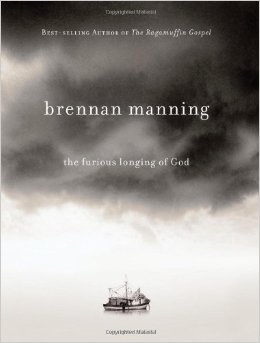
Furious Longing Of GodBrennan Manning at times seems to tap into dimensions of our relationship with God that I had never considered before, and his book The Furious Longing Of God is a great example of this.

It is almost foreign in a Christian’s vocabulary, or even understanding of Scripture, to think of God furiously longing for a relationship with the people He has created. But God does long for this, and Manning pulls out those biblical passages and weaves them together with his own life story to create a hunger in us for more of God.

Each chapter builds on the previous chapter, creating in me a longing to experience God’s longing. This book is not difficult to read, but it is confronting. I doubt you can read Manning’s words are remain unmoved by God’s passionate, relentless, furious longing for you.

If you too long for a deeper relationship with your Creator, this is a great book to help you on that journey.

Loving Obedience

Love and obeySuppose you had to do a secret project on a remote island. In fact, the island is so remote that it doesn’t even have a name or show up on a map. I am your only point of contact, and the only one with the latitude and longitude coordinates to come get you. You have a satellite phone to use. If I truly cared about you, I would give you the precise sequence of digits to reach me. If I didn’t care about you, I’d let you call any number you wanted to call: perhaps you would eventually reach someone who could help you.

The most loving thing I could do for you is to make sure you knew the one number to call in order to get the help you needed. 

This is exactly how God starts the Ten CommandmentsAnd God spoke all these words: “I am the LORD your God, who brought you out of Egypt, out of the land of slavery. You shall have no other gods before Me.”

How confusing and utterly unloving it would be if God said, “Call any number you want to see if you can find the help you need.” Instead, in His great love for us God says, “I am the only One you will ever need!”

Notice the wording here: “…I am the LORD your God…”

  • I AM—all that you need.
  • the—not one among many, but the One and Only.
  • LORD—God’s covenant name: Jehovah, His name of personal relationship.
  • your—this is a you-Me relationship, not a you-it relationship.
  • God—the All-Powerful, All-Loving One.

This First Commandment is the orientating commandment. When we see all of God’s commandments are rooted in His love (by the way, God uses the phrase the LORD your God five times in the Ten Commandments), everything else in our lives and attitudes is properly aligned.

Jesus demonstrated this for us. He said He loved His Father and therefore obeyed all of His commands (John 14:31). Christ’s obedience was motivated and aligned by love. The Apostle John said this loving obedience is to be the distinguishing characteristic for us too:

This is love for God: to keep His commands. And His commands are not burdensome. (1 John 5:3)

We honor God and obey the First Commandment best when we know He is the One Who loves us enough to say, “I am the only One you need. Don’t look to anyone or anything else, but just come to Me!”

If you have missed any of the messages in our series The Love In The Law, you can find them all by clicking here.

Links & Quotes

link quote

Some good reading & watching from today…

[VIDEO] John Maxwell has a good reminder about envy.

Watch human nature; we are so built that if we do not get thrilled in the right way, we will get thrilled in the wrong. If we are without the thrill of communion with God, we will try to get thrilled by the devil, or by some concoction of human ingenuity.” —Oswald Chambers

The study ‘provides the best evidence to date that fMRI can be used to identify consciousness in vegetative patients,’ says Russell Poldrack, a cognitive neuroscientist at Stanford University.” An amazing study that proves that vegetative patients are fully aware of their surroundings.

I am a big fan of The Overview Bible Project’s work. This is a great case study on Melchizedek.

Monergism has lots of free ebooks for you… go get ’em!

“The Gospel can be summed up by saying that it is the tremendous, tender, compassionate, gentle, extraordinary, explosive, revolutionary revelation of Christ’s love.” —Catherine de Hueck Doherty

Links & Quotes

link quote

Some good reading & watching from today…

“The true measure of ministry effectiveness is the extent to which we are able to lead God’s people into greater love for Him and His Kingdom.” —T.M. Moore

“Tragedy is that our attention centers on what people are not, rather than on what they are and who they might become.” —Brennan Manning

“The most terrible poverty is loneliness and the feeling of being unloved.” —Mother Teresa

“Holiness is not the luxury of the few; it is a simple duty, for you and for me.” —Mother Teresa

The devil does not need to bother about us as long as we remain ignorant of the way God has made us and refuse to discipline ourselves; inattention and our own slovenliness will soon run away with every power we have.” —Oswald Chambers 

“There is something which we can do which God does. He does good to all His creatures, and we can do good also. He bears witness to His Son Jesus, and we can bear witness too.” —Charles Spurgeon

[VIDEO] Ken Davis always cracks me up. Check out this clip Arm Vs. Airbag.

Why do people get so annoyed over anything that looks “religious” to them. For people who claim God doesn’t exist, atheists get awfully mad at Him!

Guardrails

GuardrailWe need a different way of thinking about God’s laws. We can’t think of them as a bunch of Thou-shalt-nots, because—as I blogged last week—that would mean we would have to look at The Lawgiver in an unbiblical way.

So let’s try this…

Suppose you are out for a drive on a crisp fall afternoon in a brand new sports car. You are really excited to see what this car can do! I’ll bet as you drive along the straight stretches of road, you will see very few guardrails along the sides. The guardrails you do see on the straight stretches usually protect us from things like rivers, roads passing underneath us, or perhaps a steep drop-off.

When you come into a tight turn, in addition to seeing a curved-arrow sign and perhaps a sign cautioning you to reduce speed, you are very likely to see guardrails along the turns.

Do those guardrails make you feel ripped off? Do they rob you of driving enjoyment? Have you ever felt like, “I really wish those guardrails were gone, because I’d love to get a couple of my tires off the side of the road”? Of course not!

We all know that those guardrails are there to protect us. In fact, the guardrails actually increase our driving enjoyment, because the dangerous places have been identified, and the metal guardrails will keep us from going somewhere that could be fatal.

This is a good way to think of God’s laws.

Abundant lifeJesus told us that He had come not to remove the guardrails, but to fulfill them through His life, death and resurrection (see Matthew 5:17-20 and Luke 22:20). Jesus didn’t come to rob us of life!

So if the Son sets you free, you will be free indeed. (John 8:36)

I am come that they might have life, and that they might have it more abundantly. (John 10:10).

Far from ripping us off and saying “No!” to us, Jesus came to show us that God’s laws were rooted in God’s love. He came for us to see that God’s laws are His guardrails to keep us away from the places that are dangerous, and perhaps even fatal.

If God didn’t love us, He would let us do whatever we wanted to do. But He does love us, and so He gives us His guardrails to keep us safe. Instead of looking at His laws as something which is robbing you of life, see them as protections that are giving you more abundant life!

If you have missed any of the messages in our series The Love In The Law, you can find them all by clicking here.

The Love In The Law

Love In The LawWhen I say “Law” what sort of words come to your mind. Do you think of words like: restrictive? killjoy? barriers? hindrances? no fun?

If you’re a Christian, perhaps the same descriptive words come to mind when you think of biblical commandments. Maybe you think, “Don’t do that” (or for those of you who think in King James English: Thou shalt not).

But if we think of the law/commandments that way, that also means we have to think of the Lawgiver that way. In other words, God becomes a Policeman. He is closely watching to see who will break His laws so that He can dispense the appropriate punishment. After all, if the laws are a bunch of no-nos, then Someone has to be watching for law-breakers and handing out the penalties.

If that’s the case, what do we do with the Bible’s description of God that says “God is love”? If the Lawgiver is Love, how does that change our view of the laws themselves?

It must mean that God’s laws are an expression of His love. It must mean that His love is in the laws He has given us.

It must mean that God’s laws are NOT no-nos, BUT yes-yeses. 

Join us this Sunday at Calvary Assembly of God as we talk about The Love In The Law. We’ll be working our way through the Ten Commandments, especially looking at God’s love that make each commandment a giant YES for our lives. Prayerfully, this series will completely change how we view God’s laws and commands.

If you have missed any of the messages in this series, check them out here:

Inconceivable

InconceivableThe “therefores” in Scripture always intrigue me. They are a signal that there is a natural conclusion to the words that just came before the therefore, so it’s important to look at both sides.

The prophet Hosea opens his book with these words: “…the land is guilty of the vilest adultery in departing from the Lord” (Hosea 1:2). The picture is painted of God’s people acting like a wife that has not only abandoned her husband, but turned to prostitution as well. So the list of things that follow God’s therefore are what we might expect—

  • I will block your path
  • I will take away My grain
  • I will take back My wool
  • I will expose your lewdness
  • I will stop your celebrations
  • I will ruin your vineyards
  • I will punish you (Hosea 2:6-13)

Then here is what I find almost inconceivable: the very next word of the very next verse is therefore again, and God says things that, in my mind, are completely unexpected—

  • I will allure you and speak tenderly to you
  • I will restore our marriage
  • I will remove your stains
  • I will obliterate the past
  • I will betroth you to Me forever
  • I will answer your prayers
  • I will restore your crops
  • I will establish you forever
  • I will cancel your divorce
  • I will call you Mine (2:14-23)

This kind of love is mind-blowingly incomprehensible to me. It is so unexpected, so lavish, so overwhelming! This is absolutely the last thing I would have expected God to say, and yet His love is furious and relentless and boundless!

How could I ever slight such a love?!