Guardrails

GuardrailWe need a different way of thinking about God’s laws. We can’t think of them as a bunch of Thou-shalt-nots, because—as I blogged last week—that would mean we would have to look at The Lawgiver in an unbiblical way.

So let’s try this…

Suppose you are out for a drive on a crisp fall afternoon in a brand new sports car. You are really excited to see what this car can do! I’ll bet as you drive along the straight stretches of road, you will see very few guardrails along the sides. The guardrails you do see on the straight stretches usually protect us from things like rivers, roads passing underneath us, or perhaps a steep drop-off.

When you come into a tight turn, in addition to seeing a curved-arrow sign and perhaps a sign cautioning you to reduce speed, you are very likely to see guardrails along the turns.

Do those guardrails make you feel ripped off? Do they rob you of driving enjoyment? Have you ever felt like, “I really wish those guardrails were gone, because I’d love to get a couple of my tires off the side of the road”? Of course not!

We all know that those guardrails are there to protect us. In fact, the guardrails actually increase our driving enjoyment, because the dangerous places have been identified, and the metal guardrails will keep us from going somewhere that could be fatal.

This is a good way to think of God’s laws.

Abundant lifeJesus told us that He had come not to remove the guardrails, but to fulfill them through His life, death and resurrection (see Matthew 5:17-20 and Luke 22:20). Jesus didn’t come to rob us of life!

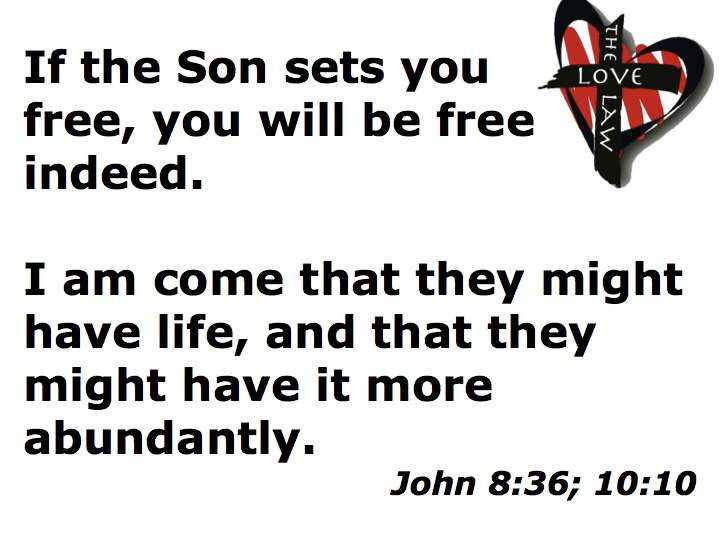
So if the Son sets you free, you will be free indeed. (John 8:36)

I am come that they might have life, and that they might have it more abundantly. (John 10:10).

Far from ripping us off and saying “No!” to us, Jesus came to show us that God’s laws were rooted in God’s love. He came for us to see that God’s laws are His guardrails to keep us away from the places that are dangerous, and perhaps even fatal.

If God didn’t love us, He would let us do whatever we wanted to do. But He does love us, and so He gives us His guardrails to keep us safe. Instead of looking at His laws as something which is robbing you of life, see them as protections that are giving you more abundant life!

If you have missed any of the messages in our series The Love In The Law, you can find them all by clicking here.

The Love In The Law

Love In The LawWhen I say “Law” what sort of words come to your mind. Do you think of words like: restrictive? killjoy? barriers? hindrances? no fun?

If you’re a Christian, perhaps the same descriptive words come to mind when you think of biblical commandments. Maybe you think, “Don’t do that” (or for those of you who think in King James English: Thou shalt not).

But if we think of the law/commandments that way, that also means we have to think of the Lawgiver that way. In other words, God becomes a Policeman. He is closely watching to see who will break His laws so that He can dispense the appropriate punishment. After all, if the laws are a bunch of no-nos, then Someone has to be watching for law-breakers and handing out the penalties.

If that’s the case, what do we do with the Bible’s description of God that says “God is love”? If the Lawgiver is Love, how does that change our view of the laws themselves?

It must mean that God’s laws are an expression of His love. It must mean that His love is in the laws He has given us.

It must mean that God’s laws are NOT no-nos, BUT yes-yeses. 

Join us this Sunday at Calvary Assembly of God as we talk about The Love In The Law. We’ll be working our way through the Ten Commandments, especially looking at God’s love that make each commandment a giant YES for our lives. Prayerfully, this series will completely change how we view God’s laws and commands.

If you have missed any of the messages in this series, check them out here:

Inconceivable

InconceivableThe “therefores” in Scripture always intrigue me. They are a signal that there is a natural conclusion to the words that just came before the therefore, so it’s important to look at both sides.

The prophet Hosea opens his book with these words: “…the land is guilty of the vilest adultery in departing from the Lord” (Hosea 1:2). The picture is painted of God’s people acting like a wife that has not only abandoned her husband, but turned to prostitution as well. So the list of things that follow God’s therefore are what we might expect—

  • I will block your path
  • I will take away My grain
  • I will take back My wool
  • I will expose your lewdness
  • I will stop your celebrations
  • I will ruin your vineyards
  • I will punish you (Hosea 2:6-13)

Then here is what I find almost inconceivable: the very next word of the very next verse is therefore again, and God says things that, in my mind, are completely unexpected—

  • I will allure you and speak tenderly to you
  • I will restore our marriage
  • I will remove your stains
  • I will obliterate the past
  • I will betroth you to Me forever
  • I will answer your prayers
  • I will restore your crops
  • I will establish you forever
  • I will cancel your divorce
  • I will call you Mine (2:14-23)

This kind of love is mind-blowingly incomprehensible to me. It is so unexpected, so lavish, so overwhelming! This is absolutely the last thing I would have expected God to say, and yet His love is furious and relentless and boundless!

How could I ever slight such a love?!

The Great Physician

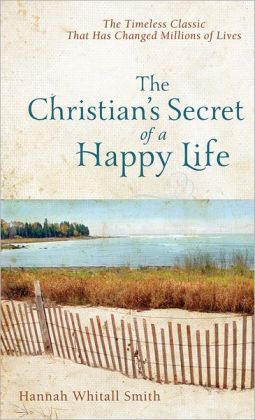
The Christian's Secret“If our Father permits a trial to come, it must be because the trial is the sweetest and best thing that could happen to us, and we must accept it with thanks from His dear hand.

“… A very good illustration of this may be found in the familiar fact of a mother giving medicine to her dearly loved child. The bottle holds the medicine, but the mother gives it; and the bottle is not responsible, but the mother. No matter how full her closet may be of bottles of medicine, the mother will not allow one drop to be given to the child unless she believes it will be good for it; but when she does believe it will be good for her darling, the very depth of her love compels her to force it on the child, no matter how bitter may be its taste. The human beings around us are often the bottles that hold our medicine, but it is our Father’s hand of love that pours out the medicine, and compels us to drink it. The human bottle is the ‘second cause’ of our trial; but it has no real agency in it, for the medicine that these human ‘bottles’ hold is prescribed for us and given to us by the Great Physician of our souls, who is seeking thereby to heal all our spiritual diseases.” —Hannah Whitall Smith, The Christian’s Secret Of A Happy Life

Links & Quotes

link quote

Some good reading from today…

“There are no unsacred places; there are only sacred places and desecrated places.” —Wendell Berry

“It may be that when we no longer know which way to go that we have come to our real journey. The mind that is not baffled is not employed. The impeded stream is the one that sings.” —Wendell Berry

“Wherefore seeing that all Christians know that the death of the religious beggar amongst the dogs, licking his sores, was better than the death of the wicked rich man in all his silks and purples, what power hath the horror of any kind of death to affright their souls that have led a virtuous life?” —Augustine

Parents & teachers should especially check out Tim Elmore’s post: 5 Ways To Cure The “Cool Kid” Curse. In this post he mentions his book Artificial Maturity; click here to read my review of this outstanding resource.

“We have thus plainly before us the principle, that our Lord in His infinite wisdom and superabundant love, sets so high a value upon His people’s faith, that He will not screen them from those trials by which faith is strengthened.” —Charles Spurgeon

8 Quotes From “The Christian’s Secret Of A Happy Life”

The Christian's SecretSometimes people slap the label “timeless classic” on a book just because it’s old. But in the case of The Christian’s Secret Of A Happy Life by Hannah Whitall Smith, the label is well-deserved. The thoughts she shares are so biblically-grounded that they truly are timeless. You can read my full book review by clicking here. I highlighted way too many things to share them all, but here are a few quotes that I especially liked.

“You have been forced to settle down to the conviction, that the best you can expect from your religion is a life of alternate failure and victory, one hour sinning, and the next repenting, and then beginning again, only to fail again, and again to repent. … Can we dream that the Savior, who was wounded for our transgressions and bruised for our iniquities, could possibly see of the travail of His soul and be satisfied in such Christian lives as fill the Church today? … Can we, for a moment, suppose that the holy God, who hates sin in the sinner, is willing to tolerate it in the Christian, and that He has even arranged the plan of salvation in such a way as to make it impossible for those who are saved from the guilt of sin to find deliverance from its power?” 

“Positive transformation is to take place. So at least the Bible teaches. Now, somebody must do this. Either we must do it for ourselves, or another must do it for us. We have most of us tried to do it for ourselves at first, and have grievously failed; then we discover, from the Scriptures and from our own experience, that it is something we are unable to do, but that the Lord Jesus Christ has come on purpose to do it, and that He will do it for all who put themselves wholly into His hands and trust Him without reserve. … The Lord’s part is to do the thing entrusted to Him. He disciplines and trains by inward exercises and outward providences. He brings to bear upon us all the refining and purifying resources of His wisdom and His love. He makes everything in our lives and circumstances subservient to the one great purpose of causing us to grow in grace, and of conforming us, day by day and hour by hour, to the image of Christ.”

“Sanctification is both a step of faith, and a process of works. It is a step of surrender and trust on our part, and it is a process of development on God’s part. By a step of faith we get into Christ; by a process we are made to ‘grow up into Him in all things.’ By a step of faith we put ourselves into the hands of the Divine Potter; by a gradual process He makes us into a vessel unto His own honor, meet for His use, and prepared to every good work. … The maturity of a Christian experience cannot be reached in a moment, but is the result of the work of God’s Holy Spirit, who, by His energizing and transforming power, causes us to grow up into Christ in all things. And we cannot hope to reach this maturity in any way other than by yielding ourselves up, utterly and willingly, to His mighty working.” 

“Just as we reconcile the statements concerning a saw in a carpenter’s shop when we say, at one moment, that the saw has sawn asunder a log, and the next moment declare that the carpenter has done it. The saw is the instrument used; the power that uses it is the carpenter’s. And so we, yielding ourselves unto God, and our members as instruments of righteousness unto Him, find that He works in us to will and to do of His good pleasure, and we can say with Paul, ‘I labored; yet not I, but the grace of God which was with me.’ … Just as the potter, however skillful, cannot make a beautiful vessel out of a lump of clay that is never put into his hands, so neither can God make out of me a vessel unto His honor unless I put myself into His hands.”:

“Most Christians are like a man who was toiling along the road, bending under a heavy burden, when a wagon overtook him, and the driver kindly offered to help him on his journey. He joyfully accepted the offer but when seated in the wagon, continued to bend beneath his burden, which he still kept on his shoulders. ‘Why do you not lay down your burden?’ asked the kind-hearted driver. ‘Oh!’ replied the man, ‘I feel that it is almost too much to ask you to carry me, and I could not think of letting you carry my burden too.’ And so Christians, who have given themselves into the care and keeping of the Lord Jesus still continue to bend beneath the weight of their burdens, and often go weary and heavy-laden throughout the whole length of their journey. … It is generally much less difficult for us to commit the keeping of our future to the Lord than it is to commit our present. We know we are helpless as regards the future, but we feel as if the present is in our own hands, and must be carried on our own shoulders; and most of us have an unconfessed idea that it is a great deal to ask the Lord to carry ourselves, and that we cannot think of asking Him to carry our burdens too.”

“He is our Father, and He loves us, and He knows just what is best, and therefore, of course, His will is the very most blessed thing that can come to us under any circumstances. I do not understand how it is that the eyes of so many Christians have been blinded to this fact. But it really would seem as if God’s own children were more afraid of His will than of anything else in life—His lovely, lovable will, which only means loving-kindnesses and tender mercies, and blessings unspeakable to their souls!”

“You have trusted Him as your dying Savior; now trust Him as your living Savior. Just as much as He came to deliver you from future punishment did He also come to deliver you from present bondage. Just as truly as He came to bear your stripes for you has He come to live your life for you.” 

“The one chief temptation that meets the soul at this juncture is the same that assaults it all along the pathway, at every step of its progress; namely, the question as to feelings. We cannot believe we are consecrated until we feel that we are: and because we do not feel that God has taken us in hand, we cannot believe that He has. As usual, we put feeling first, and faith second, and the fact last of all. No, God’s invariable rule in everything is, fact first, faith second, and feeling last of all; and it is striving against the inevitable when we seek to change this order.”

Links & Quotes

link quote

Some interesting reading from today…

“A gracious Hand leads us in ways we know not, and blesses us not only without, but even against, our plans and inclinations.” —William Wilberforce

A cool article about George MacDonald’s influence on C.S. Lewis.

Ken Davis uses an optical illusion to make a fantastic point in his post Perception Or Reality?

The son of a Hamas founder confirms that this terrorist group targets civilians.

[INFOGRAPHIC] This is a win-win: Benaiah featured on The Overview Bible Project.

Praise God!! Millions of Muslims converting to Jesus Christ!

“Commend me to the Christian who says, ‘I bless God I am saved; now what can I do for others?’ The first thing in the morning he prays, ‘God help me to say a word to some soul this day.’ During the day, wherever he may be, he is watching his opportunity, and will do good if he can.” —Charles Spurgeon

“There’s a great deal of trust in the love of God, and a great deal of love in the trust of God.” —John Piper

13 Quotes From “Yawning At Tigers”

Yawning At TigersYawning At Tigers by Drew Dyck is a wake-up call to any who view God as tame or Christianity as boring. As I read this book I found myself frequently saying, “Yes!” out loud to the truths Drew has shared. I loved this book! You can read my full book review by clicking here. Below are a few of the quotes I highlighted (unless otherwise noted, the quotes are from the author).

“We can’t truly appreciate God’s grace until we glimpse His greatness. We won’t be lifted by His love until we are humbled by His holiness.” 

“Here, the contrast between God and an idol couldn’t be clearer. We are told that after offering sacrifices to the golden calf, the Israelites ‘sat down to eat and drink and got up to indulge in revelry’ (Exodus 32:6). But when God descended on Mount Sinai, ‘everyone in the camp trembled’ (Exodus 19:16). You don’t tremble before an idol. … An idol is safe. It never challenges you. It isn’t threatening. It doesn’t judge sin or demand loyalty. But the Holy One of Israel is a jealous God—passionate and loving, yes, but unspeakably dangerous too.”

“The language we use reveals an awful lot about how we think about God. A cursory examination of the way we speak exposes how pervasive this Jesus-as-my-nonjudgmental-buddy attitude is in the church.” 

“While we know enough about God to receive salvation and enter into a relationship with Him, our knowledge of Him is still far from complete. Our intelligence is too small, our languages too limited. When it comes to God, we are all beginners.”

“So soon as we become satisfied with any picture of God, we are in danger of idolatry.” —Victor White 

“Unfortunately, in our efforts to make the Bible interesting and relevant, we try to normalize God. We become experts at taking something lofty, so unfathomable and incomprehensible, and dragging it down to the lowest shelf. We failed to account for the fact that God is neither completely knowable nor remotely manageable.”

“We lack a practice of personal holiness because we’ve lost a theology of divine holiness. When we neglect a part of God’s nature, we shouldn’t be surprised when that same attribute goes missing in our lives. … The Bible repeatedly makes explicit the connection between God’s holiness and ours. ‘Be holy,’ God says, ‘because I… am holy’ (Leviticus 19:2). The New Testament echoes this theme. ‘Just as He who called you is holy, so be holy in all you do’ (1 Peter 1:15).” 

“Only a God who punishes evil and rights wrongs is ultimately a God of love. … To fear the Lord is not to suggest God is callous or cool. Just the opposite, in fact. It is God’s consuming love that makes Him so dangerous. Because He cares deeply for His creation, He will not tolerate evil and injustice forever.”

“The evidence of the Christian’s zeal and piety was made clear to all the pagans. For example, they alone in such a catastrophic state of affairs gave practical evidence of their sympathy and philanthropy works. All day long some of them would diligently persevere in performing the last offices for the dying and burying them (for there were countless numbers, and no one to look after them). While others gathered together in a single assemblage all who were afflicted by famine throughout the whole city, and would distribute bread to them all. When this became known, people glorified the God of the Christians, and, convinced by the deeds themselves, confessed the Christians alone were truly pious and God-fearing.” —Eusebius

“When we root our sense of identity in God, everything changes. Once our vertical connection is healthy, the horizontal ones tend to thrive. However, a cruel irony comes into play when we seek validation from others that only God can provide. When we lean too heavily on human relationships, we actually end up sabotaging them. We become clingy, controlling. We find ourselves piling expectations on people they were never meant to bear.”

“This doesn’t mean the New Testament is solely about God’s intimacy. Nor does the Old Testament speak strictly about God’s transcendence. The entire Bible speaks of both. All through Scripture we are reminded that God is both great and near.” 

“For people in the throes of suffering, the Bible offers something much different than an answer—it offers a Person.”

“We shall never succeed in knowing ourselves unless we seek to know God.” —Teresa of Avila

Yawning At Tigers (book review)

Yawning At TigersI’ve been longing for a book like Yawning At Tigers to be published! For years I have been concerned with the “taming” of God that I see among so many in our culture, so the subtitle of Drew Dyck’s book nails it: You Can’t Tame God, So Stop Trying!

Drew opens with a real-life story of exotic animals which were set loose in a small town in the midwest. Where people had viewed the animals behind bars and plexiglass before and found them tame, their attitude was completely changed when those same animals were walking down their street! Drew uses this story to draw an analogy to the way people view a “tame God” contained behind stained glass windows, as opposed to the true God set loose in their neighborhoods.

Drew writes, “Even when we see evidence of God in our midst, when we glimpse His holiness, we’re more likely to yawn than yell. Somehow we’ve succeeded in making the strange ordinary.” It’s sad, but true in far too many settings.

Yawning At Tigers is an impassioned call to open the Scriptures up and really see God. He is awesome, He is ferocious, He is a warrior, He is white-hot love! Until we really see God, others will yawn at the thought of Christians or church. Again Drew gets it right when he says, “Only when we gain a proper understanding of God’s identity can we begin to appreciate the implications of His love.”

If you are desirous to see God revealed in all His fullness in your life, in your church, in your community, then you will resonate with the message of Yawning At Tigers.

I am a Thomas Nelson book reviewer.

The Love & Hate Of God

SamekhI don’t think there’s anyone reading this that hasn’t—at one time or another, or perhaps even right now—struggled with feeling distant from God’s love. Maybe you felt like you blew it, or gave in to temptation, or things aren’t going as you had hoped, and you thought, “Where are You, God? Do You still care about me?” This message is for you!

“God is closer to us than we are to ourselves and that is why we do not notice Him.” —Thomas Merton

The section of the 119th Psalm called samekh (see verses 113-120) is a helpful passage for reminding ourselves just how near God is to us. Some people get nervous thinking about God being close to them, to the point where they want to run away. But you must have this clear in your mind—

God is near me to help and support me, not to harass and condemn me! 

Samekh means...Samekh is the only Hebrew letter which is completely enclosed. And when you look at it, samekh looks like a shield. Indeed the word means more than God’s omnipresence. Samekh means…

  • God’s never-ending support
  • God’s never-failing love
  • God’s never-stale mercies
  • God’s undiminished faithfulness
  • God’s unfathomable grace
  • God’s unquenchable hate

Wait a minute! God’s unquenchable hate?!? Yes! God loves you so much, that He hates anything that would draw you away from Him. So this section of Psalm 119 is filled with words like love, hope, refuge, uphold, and sustain. But it also has words like hate, away from me, reject, and discard.

God wants you to know how close He is to you. God is FOR you and He is AGAINST anything that would pull you away. Read the words in Psalm 91 and see how God protects you and then attacks the enemies of your soul. In the NewTestament, feel God’s closeness as we are told that…

Oh, how God love you! He wants you to feel His closeness, so He loves you and He hates the enemies of your soul! Bask in that today.

If you have missed any of the messages in our P119 series, you can access them all by clicking here.