Should We Listen To Critics?

Listen to the podcast of this post by clicking on the player below, and you can also subscribe on AppleSpotify, or Audible. 

Do you know this pair of cantankerous men from the Muppets? Statler and Waldorf sit in the balcony of the theatre and criticize everything that is happening on the stage. I mean everything! They have a good laugh at their barbs, but no one on the stage seems to find it humorous. 

Have you ever met people like this? How do you typically respond to their criticism? 

Unfortunately, those who are trying to do the right thing are often the targets of almost constant criticism. Abraham Lincoln said, “If I were to attempt to answer all the criticisms and complaints I receive, I would have no time for any other business.” 

President Lincoln was a great leader but he wasn’t without fault, so to certain extent we could expect a little bit of criticism from people who didn’t like his policies. But what about Jesus? It was prophesied about Him that He would be the target of criticism (Isaiah 53:3). 

(Check out all of the Scriptures in this post by clicking here.) 

Those out to get Jesus even criticized those who attended to Him. In Mark 14:1-5, they are criticizing a woman who poured perfume on Jesus out of her sincere desire to honor Him. Yet they spoke about her and her actions “indignantly” (v. 4), and they rebuked and criticized her (v. 5). The Greek word in this verse literally means he snorting of horses! 

Jesus stepped in to protect this God-fearing woman, “Why are you bothering her? Why are you criticizing this beautiful thing she had done for Me?” 

Notice that Jesus responded to the critics, but the woman did not respond. Does that mean that we never answer critics? Are we supposed to ignore them? 

First, let’s go back in time to the origin of the words critic and criticism. These words originally meant someone capable of giving a meaningful—perhaps even constructive or helpful—judgment. Think of a trained and skilled chef critiquing your recipe, as opposed to someone who cannot tell the difference between nutmeg and ginger. 

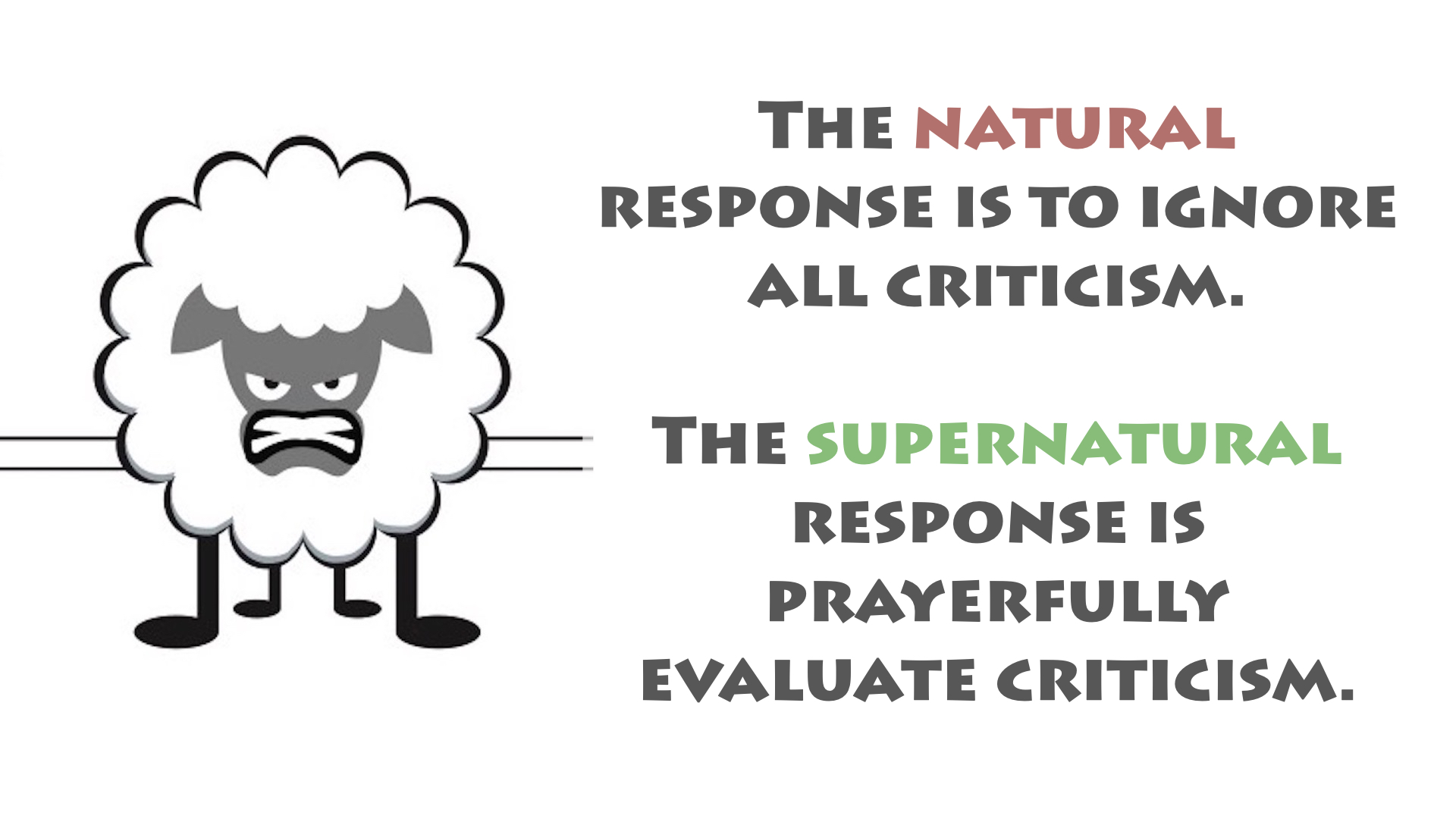
The natural response is to ignore all criticism. The supernatural response is prayerfully evaluate criticism. Solomon says there is such a thing as valid criticism (Proverbs 25:12). 

So who is a valid critic? 

(1) Someone who loves me (Proverbs 27:17; Ephesians 4:15). Paul loved Peter and respected his leadership role in the church, but he still criticized Peter when he messed up (Galatians 2:9, 11).  

(2) Someone who has experience or godly wisdom that we don’t yet have (Ecclesiastes 7:5). Micaiah had a word from God, even though King Ahab thought Micaiah simply didn’t like him (1 Kings 22:1-18). 

(3) Someone who wants to hurt me. Really!? Dick Brogden wrote, “The Lord uses critics to show us our own hearts, even if what they say is not fully true, informed, or even fair. There is almost always a germ of truth in what our critics (in their own pain and disappointment) shout at us. The wise [person] will humble himself and look for the truth embedded in every oppositional interaction.” As we saw previously from Psalm 26:2, when we hear words of criticism, we need to make it a matter of prayer. 

Jesus told the woman’s critics to “leave her alone” but He never defended Himself against the childish barbs (Isaiah 53:7; Matthew 27:13-14). I think we would do well to follow His example. So when criticized, take a deep breath, smile, hear them out, ask clarifying questions, and then say, “Thank you for sharing that with me. I’ll make this a matter of prayer.” 

They might accuse you, but you should turn it over to God (Psalm 109:4). 

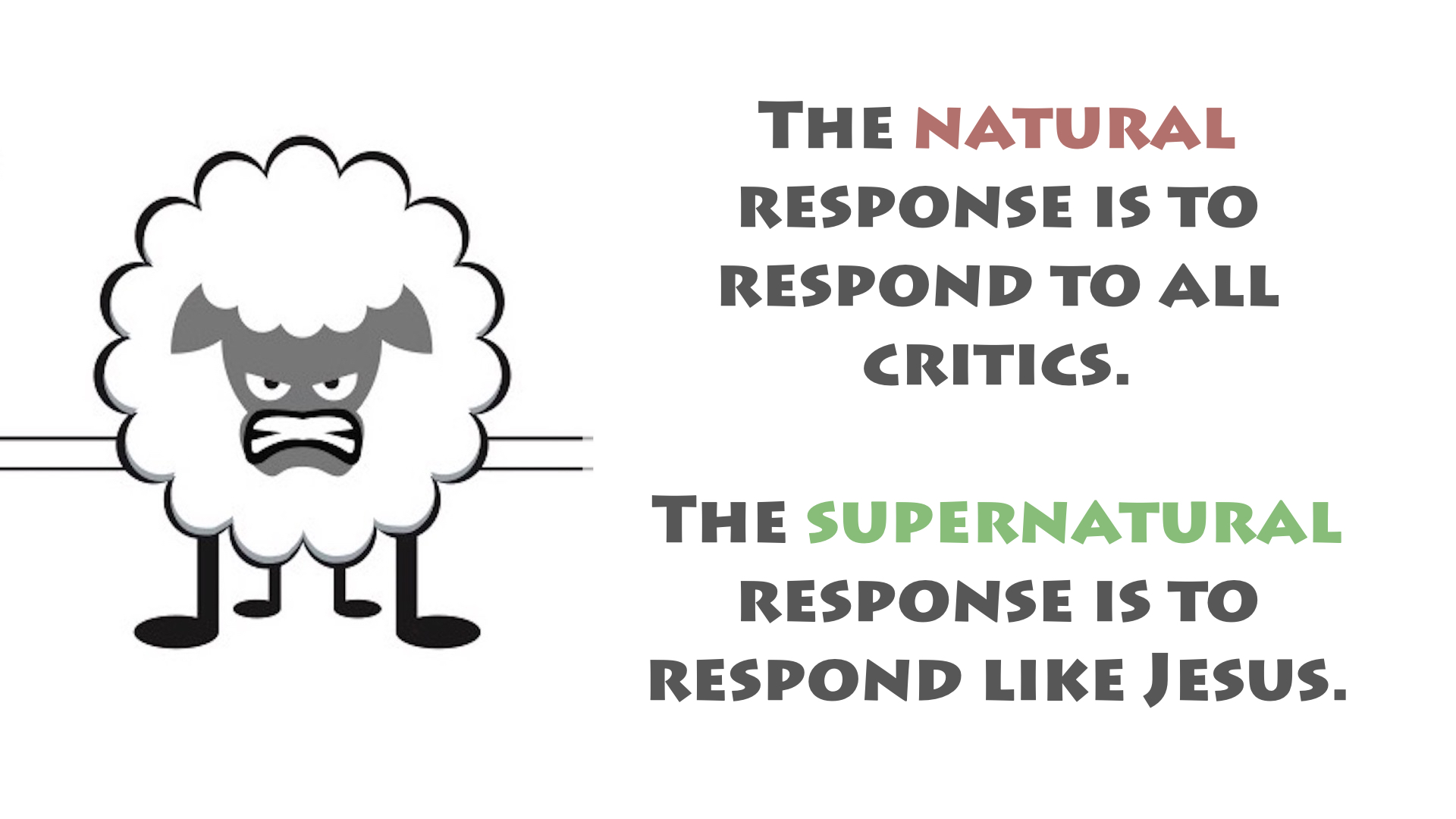
The natural response is to respond all critics. The supernatural response is to respond like Jesus (see 1 Peter 2:21-23). 

Remember that quote from Abraham Lincoln we saw earlier? Here’s the rest of his quote—

“From day to day I do the best I can and will continue to do so till the end. If in the end I come out all right, then the complaints and criticisms and what is said against me will make no difference. But, if the end brings me out wrong, then ten angels coming down from heaven to swear I was right would still make no difference.” 

Ultimately, we are longing to hear Jesus say, “Well done.” If He cannot say that to us, does it really matter if everyone else praised us? But if Jesus says, “Well cone,” does it really matter the criticism others said about us? 

Let’s ask the Holy Spirit to help us respond supernaturally to our critics—listen prayerfully to ever critic, but only respond to them as Jesus did. 

If you have missed any of the other messages in this series When Sheep Bite Sheep, you can find them all here. And if you’re a pastor, be sure to check out my book When Sheep Bite. 

►► Would you please prayerfully consider supporting this ministry? My Patreon supporters get behind-the-scenes access to exclusive materials. ◀︎◀︎

How Do We Wait Expectantly?

Listen to the podcast of this post by clicking on the player below, and you can also subscribe on AppleSpotify, or Audible. 

Last week I asked, “How long do we keep praying?” Answer: Until God answers or until He lifts our burden. In the meantime, the Bible encourages us to…

  1. Keep asking with full confidence that God hears you 
  2. Keep expecting an answer 
  3. Keep worshiping God for Who He is 
  4. Keep trusting that your Heavenly Father wants to give you the very best! 

With that in mind, let me ask you another question: What does this look like? How do we wait expectantly for God to answer? I’ve got three thoughts from the Scripture.

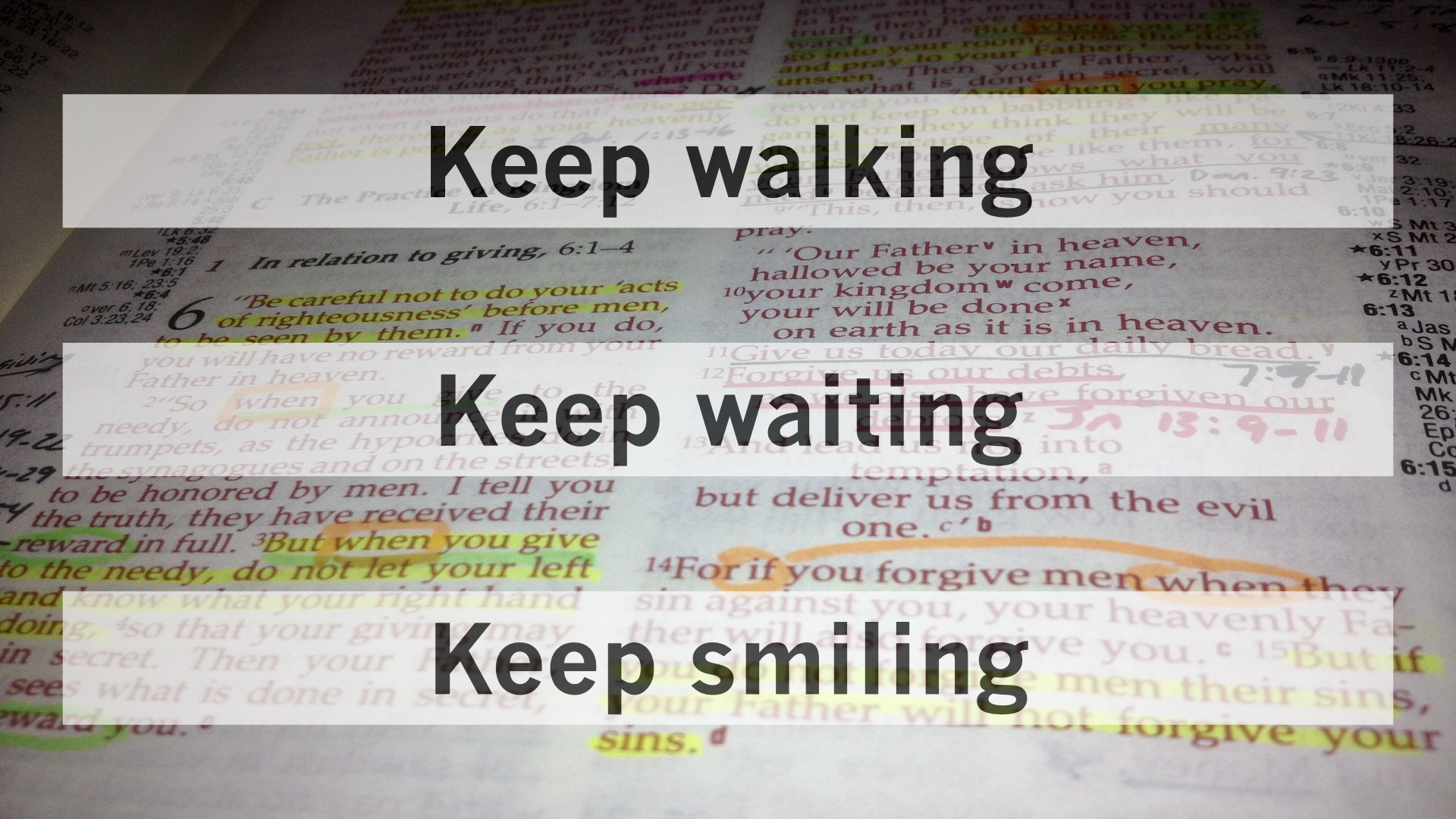
(1) Keep walking

Eliezer had a 300-mile journey which would have taken him about 10 days. Abraham prayed for him before he left and Eliezer prayed when he arrived (Genesis 24:7, 12, 15). His expectation that God would answer him kept him walking. The answer came after 10 days—before he even finished praying! 

(Check out all of the Scriptures in this post by clicking here.)

Nehemiah prayed for God’s favor with King Artaxerxes (Nehemiah 1:11) but then he had to keep walking to work every single day for at least 4 months (2:4). All the while he was praying, expecting, and planning, so when the king asked him what he wanted, Nehemiah was ready to answer. 

A royal official met Jesus in Cana and asked Him to heal his son who was was sick in Capernaum. Jesus said, “Go! Your son will live,” and that father began walking his 20-mile journey home. Along the way, his servants met him to deliver the good news of the boy’s full recovery. When the father asked, he found out it was at the very moment Jesus had said, “Go” (John 4:46-53). 

Faith takes Jesus at His word and starts walking toward the approaching miracle! 

(2) Keep waiting

There are two Hebrew words in the Old Testament that frequently are translated “wait”: 

  • qava = expecting in hope 
  • yahal = guarding that hope    

Check out how one psalmist linked hoping and waiting—

Out of the depths I cry to You, LORD; Lord, hear my voice. Let Your ears be attentive to my cry for mercy. … I wait for the LORD, my whole being waits, and in His Word I put my hope. I wait for the Lord more than watchmen wait for the morning, more than watchmen wait for the morning. (Psalm 130:1-2, 5-6) 

And David wrote how he had learned to quiet himself in God’s loving presence: But I have calmed and quieted myself, I am like a weaned child with its mother; like a weaned child I am content (Psalm 131:2). 

Then listen to the wait-hope-quiet link in Jeremiah’s prayer—

I say to myself, “The LORD is my portion; therefore I will wait for Him.” The LORD is good to those whose hope is in Him, to the one who seeks Him; it is good to wait quietly for the salvation of the LORD. (Lamentation 3:24-26) 

In the New Testament, the idea is patience for an expected result is like a farmer who had prepared his field, planted good seed, watered it with his prayers, and is now assured of an abundant harvest (James 5:7-8; Galatians 6:9). 

(3) Keep smiling

We put on a smile, not a show! 

Contrast what Jesus said about the wrong way to pray and fast…

And when you pray, do not be like the hypocrites, for they love to pray standing in the synagogues and on the street corners to be seen by others. … And when you pray, do not keep on babbling like pagans … When you fast, do not look somber as the hypocrites do, for they disfigure their faces to show others they are fasting… (Matthew 6:5, 7, 16) 

…with the God-honoring, God-trusting way—

But when you pray, go into your room, close the door and pray to your Father, who is unseen … But when you fast, put oil on your head and wash your face. (Matthew 6:6, 17) 

It’s not a fake smile, but a smile that comes from the joy in our rock-solid expectation in God’s reply to our prayer (Psalm 28:6-7; 38:15) 

Pray—then keep walking, keep waiting, and keep smiling in anticipation of what your Heavenly Father is doing on your behalf. 

If you want to check out the other messages in this prayer series, please click here. 

►► Would you please prayerfully consider supporting this ministry? My Patreon supporters get behind-the-scenes access to exclusive materials. ◀︎◀︎
The Unexpected Slap

Listen to the podcast of this post by clicking on the player below, and you can also subscribe on AppleSpotify, or Audible. 

Have you ever walked through a door that God so obviously opened just to get smacked by the people on the other side? Let’s talk about the lessons we can learn from that.

The biblical passages I reference in this video are Acts 16:6-40; Psalm 126:4-5; Hebrews 12:2-3; Galatians 6:9.

The blog post I mentioned in this video is The Value of Journaling.

Get more information on my book When Sheep Bite here.

►► Would you please prayerfully consider supporting this ministry? My Patreon supporters get behind-the-scenes access to exclusive materials. ◀︎◀︎
Am I On My Own?

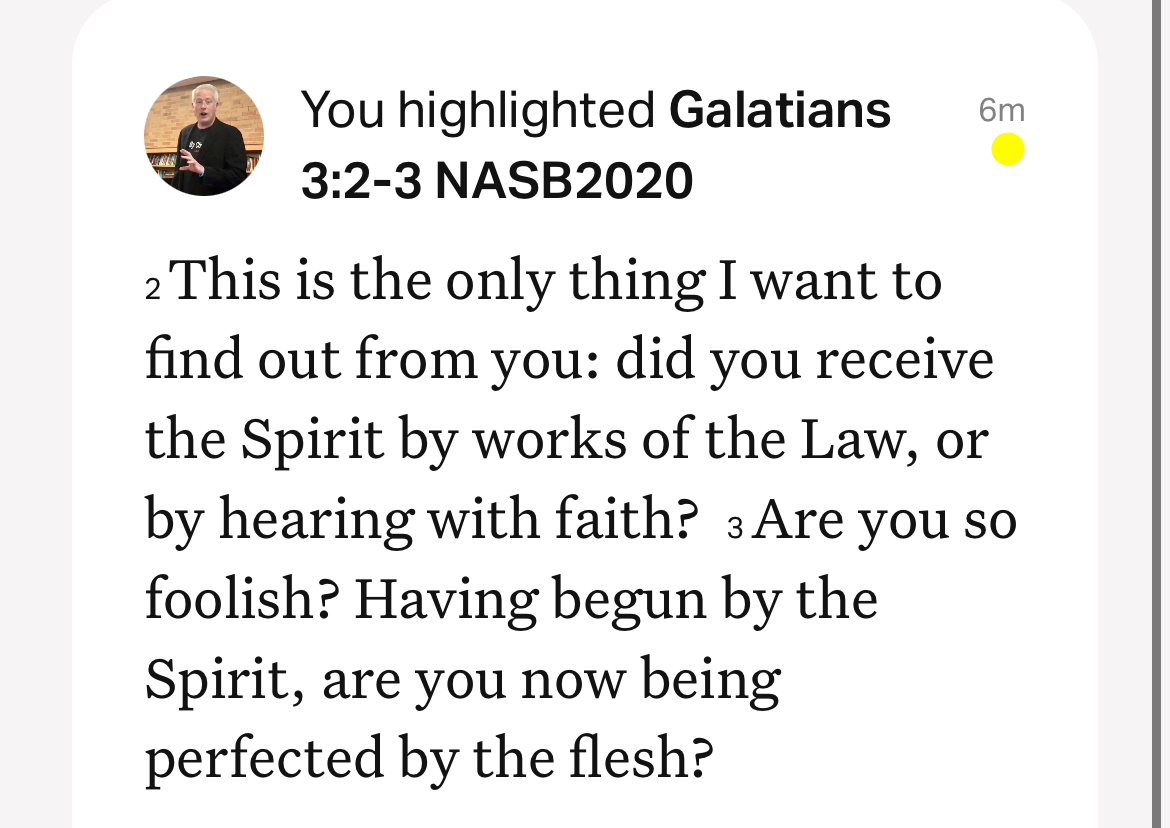
This is the only thing I want to find out from you: did you receive the Spirit by works of the Law, or by hearing with faith? Are you so foolish? Having begun by the Spirit, are you now being perfected by the flesh? (Galatians 2:2-3) 

Some people try to live as though the Bible says, “God helps those who help themselves.” This is exactly what Paul refutes.

In essence, Paul asks, “Does it make sense that after the Holy Spirit reconciled you to the Father through your faith in Jesus that then God would say, ‘You’re now on your own—figure it out yourself’?”

Of course not! 

When the Bible says that God opposes the proud, that means that He stands back from those who say, “I can do it by myself.” But the Scripture goes on to assure us that God gives more grace to the humble. That means that God is an ever-present help to those who say, “I cannot do this by myself.”

The Above-And-Beyond Disciple

Listen to the podcast of this post by clicking on the player below, and you can also subscribe on AppleSpotify, or Audible. 

It is nearly impossible to overstate how fearful Christians in the first century were of the Jewish zealot named Saul of Tarsus. Saul called himself “extremely zealous for the traditions of my fathers” (Galatians 1:14) as he sought to seek out and destroy all who were followers of The Way. 

(Check out all of the verses in this post by clicking here.)

Not only was he personally bent on his ruthless mission, but he had the full sanctioning of the Sanhedrin (Acts 8:3, 9:1-2). This was the religious body that had successfully goaded Pontius Pilate into crucifying Jesus. 

So you can imagine the apprehension in Ananias’ heart when Jesus calls him to visit with Saul after he had encountered Jesus for himself. Ananias said, “I’ve heard all about this man and the harm he has done. And I also know he has come to my city with the authority to drag Christians off to prison” (Acts 9:13-14). 

Ananias’ interaction with Jesus seems to me to echo the prayer that Jesus prayed in the Garden of Gethsemane. It is as if Ananias is praying, “Is there another way? But not my will but Yours be done, Lord” (see Luke 22:42). 

Ananias is called a disciple of Jesus (Acts 9:10), and Paul even refers to him later as “a devout observer of the law and highly respected by all the Jews” (22:12). In other words, Ananias is an early church leader. What he does or doesn’t do here will set the pace for other Christians. 

So I love the fact that Ananias didn’t just begrudgingly do only what Jesus instructed him, but he said and did only what Christ’s love could empower him to say and do. 

Jesus told Ananias to lay his hands on Saul and pray for the restoration of his sight (9:12). Ananias did more. He laid his hands on him in such a loving way (9:17), that Luke uses the same word as when Jesus laid His hands on people for their healing (c.f. Luke 13:13). Ananias even called him “brother Saul” (9:17). 

Jesus told Ananias to simply pray for Saul’s physical healing, but Ananias did more: he prayed for Saul to be baptized in the Holy Spirit as well (9:17, 22:13). 

Jesus told Ananias what His plan was for Saul’s ministry, but He didn’t tell Ananias that he had to repeat that to Saul. Ananias did more: He reaffirmed to Saul what Jesus had already said to him and encouraged him to get up, be baptized, and began to do what Jesus had told him to do (9:15-16, 22:14-16). 

When Ananias called Saul “brother,” he used the term that fellow Christians used for each other (Philippians 4:1; Hebrews 2:11; 1 John 3:14). That means that Ananias is the first one to recognize the genuine conversion of Saul the persecutor to Paul the Christian. 

When the love of Jesus is in us, we will not be looking for ways to begrudgingly obey what Jesus tells us, but we cannot wait to lavishly do more loving things out of the overflow of Christ’s love in us. What a fantastic example Ananias has give all of us who call ourselves Christians! 

►► Would you please prayerfully consider supporting this ministry? My Patreon supporters get behind-the-scenes access to exclusive materials. ◀︎◀︎

How Am I (Really) Doing?

Listen to the podcast of this post by clicking on the player below, and you can also subscribe on AppleSpotify, or Audible. 

I’d like to ask you a simple but important question, “How are you doing?” Let me also give you a better way of asking and answering this question.  

Check out this episode of The Podcast. 

The biblical passages I reference in this video—Luke 18:9-14; James 4:6; 1 Peter 5:5; Galatians 6:4-5; Galatians 5:22-23. 

I wrote more about the attitude of the pharisee and the tax collector in my post Prideful Prayer. 

And I blogged about friends who love us enough to tell us the truth in my posts That’s What Friends Are For and Sharper Thinking. 

►► Would you please prayerfully consider supporting this ministry? My Patreon supporters get behind-the-scenes access to exclusive materials. ◀︎◀︎
Stewarding Your Gifts Into Strengths

Listen to the podcast of this post by clicking on the player below, and you can also subscribe on AppleSpotify, or Audible. 

We have been learning about how God gifts us so that He can use us to build His kingdom. Discovering these gifts and then living in this gift zone is going to require us to stretch out of our comfort zone. So far, we’ve looked at two factors: 

  • Passion—what thrills you? 
  • Pain—what kills you? 

As you look back, the things that thrill you and kill you have probably remained consistent through your life. You may recall moments where implementing your gifts went very well and times when it didn’t go so well. The former makes us ready to try again and maybe expand a little further, but the latter tempts us to shrink back into our comfort zone. The key is to find out how we can be more consistent in using our gifts productively. 

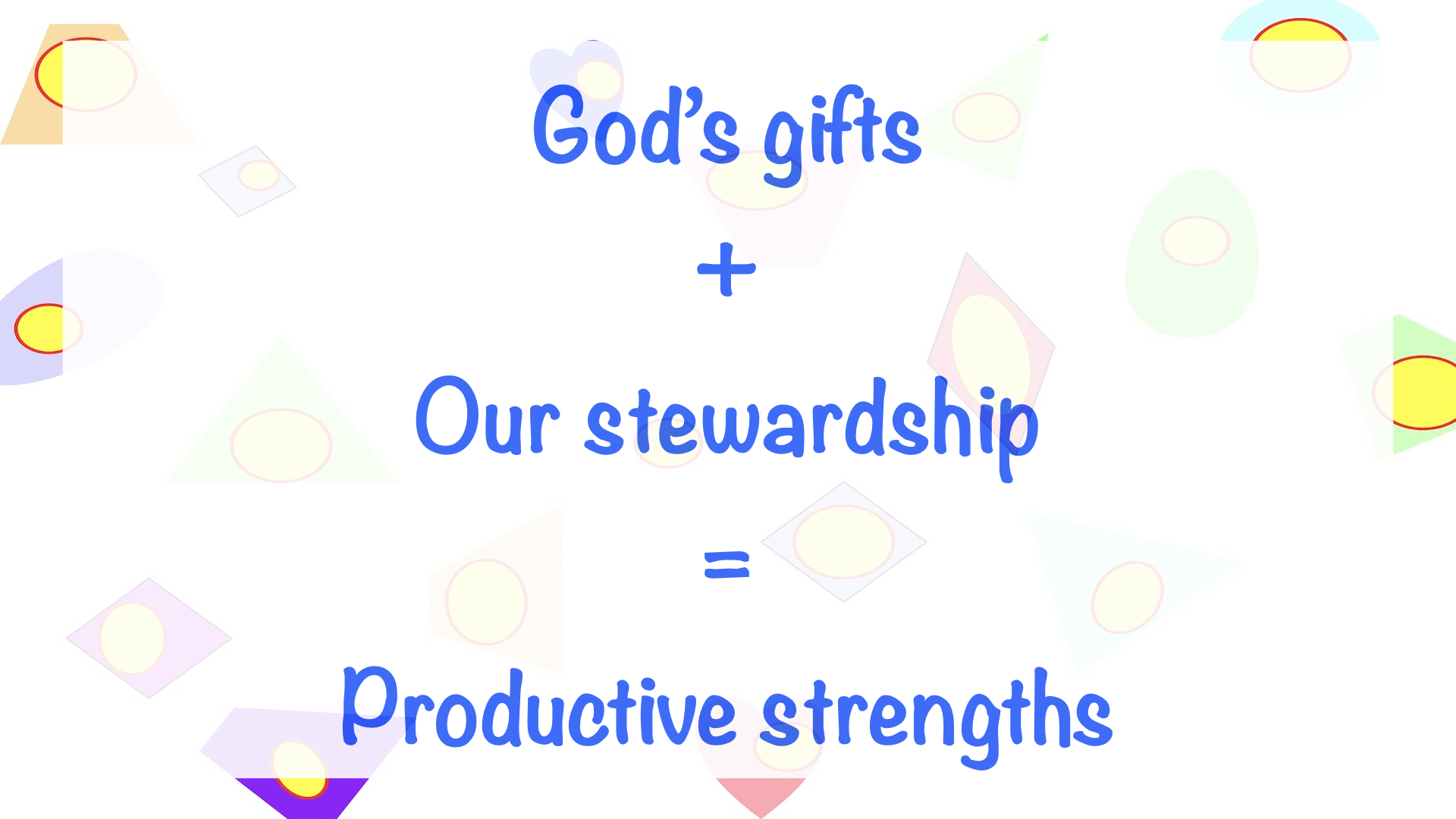
It looks like this: God’s gifts + Our stewardship = Productive strengths. 

God gives the gifts as only He knows best (Psalm 139:16; Romans 12:6; 1 Corinthians 12:11) and then we steward these gifts into productive strengths. 

(Check out all of the Scriptures in this post by clicking here.) 

What does stewardship mean? 

  • The dictionary defines it as the responsible overseeing and protection of something considered worth caring for and preserving. 
  • The Bible always portrays a steward as the one in charge of the precious things in a household—in our case, the Church. 

Jesus makes the role of a steward very clear in his parable found in Matthew 25:14-27. Notice three important things:  

  1. The master gave gifts to everyone of his servants, but he gave “each according to his ability” (vv. 14-15). 
  2. The wise servants stewarded the master’s gift by that way they “put his money to work” (vv. 16-18) 
  3. The master demanded accountability of all of his servants. Two servants acknowledged “you entrusted me” with these gifts (vv. 19-23), while one said, “I was afraid” (vv. 24-27). 

God created each of us on purpose and for a purpose. He gave us the gifts we need to accomplish that purpose. We will only find our fulfillment in life in stewarding those God-given gifts and opportunities in ways that glorify Him. Not only fulfillment here, but then eternal satisfaction when we hear our Savior say, “Well done, good and faithful servant! Enter into your Master’s happiness!” 

The only servants that heard the “well done” from their master were those who realized it was “your money…entrusted” to me. I like how Eugene Peterson brings this out in his paraphrase: 

Make a careful exploration of who you are and the work you have been given, and then sink yourself into that. Don’t be impressed with yourself. Don’t compare yourself with others. Each of you must take responsibility for doing the creative best you can with your own life. (Galatians 6:4-5 MSG) 

So let’s add one more circle to the passion and pain circles, and that is the circle of proficiency. This is what fulfills us because we can do it so well; it feels so natural for us to be doing this. Proficiency is what really brings together the passion and the pain, and it helps us find the sweet spot. 

Let me give you a couple of examples—one from the Old Testament and one from the New Testament. 

Nehemiah was killed that Jerusalem was in shambles and the people were disgraced (Nehemiah 1:3-4)—that’s what killed him. Nehemiah didn’t go to wall-building school, but he effortlessly strategized, cast vision, organized, planned, procured, and adapted—that’s his proficiency. The wall was built in 52 days, Israel’s enemies were disgraced, and the people had a place to worship again (Nehemiah 6:15-16, 9:1-3)—that’s what thrilled him. 

The apostles and the first deacons in the New Testament church saw that some of the widows were being overlooked in the food distribution (Acts 6:1)—this is what killed them. These new leaders didn’t go to food-distribution school, but they effectively strategized, cast vision, organized, planned, procured, and adapted (v. 3)—this is their proficiency. The widows were cared for, the Word of God spread, and more people became Christians (v. 7)—that’s what thrilled them. 

God gives gifts—we feel that in what thrills us and what kills us. We steward those gifts into productive strengths—we stick with what we fulfilled in doing. Our productive strengths then glorify God as we strengthen and grow the Body of Christ. 

Let me give you four things to consider about your area of proficiency:

  1. What comes easily to me? 
  2. Where do I see both the steps and the completion before others do? 
  3. Where do I experience the greatest ROI of my time and efforts? 
  4. What do I do that thrills me because I ran to because it was killing me, and now it fulfills me to keep doing it? 

With all three of these circles, please take some time to ponder what your sweet spot is. And if you’ve missed any of the messages in this series, you can find them all here. 

►► Would you please prayerfully consider supporting this ministry? My Patreon supporters get behind-the-scenes access to exclusive materials. ◀︎◀︎
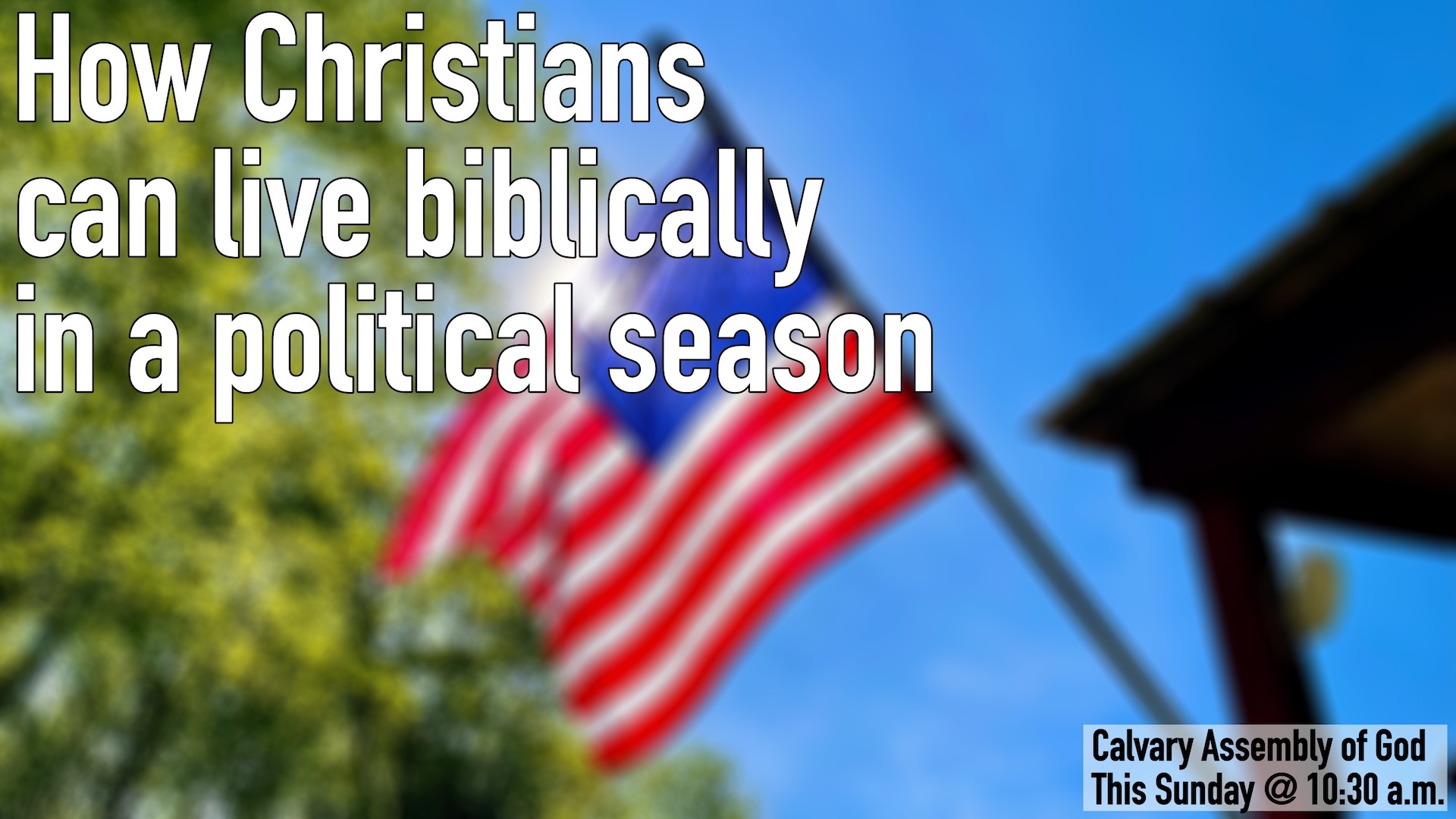
How Christians Can Live Biblically In An Election Season

Listen to the podcast of this post by clicking on the player below, and you can also subscribe on AppleSpotify, or Audible. 

Much like Jude who had a message he wanted to deliver to the saints, but was compelled by the Holy Spirit to address something concerning him (Jude 3-4), I, too, was excited to deliver the next message in our series on discovering your gifts and then living in your gift zone. But I am deeply concerned about the words and actions of Christian saints during these past election cycles. 

(Check out all of the Scriptures I reference in this post by clicking here.)

I recently heard John Stonestreet say, “Currently, politics is carrying far more cultural weight than it is able to bear.” I agree: Christians are putting far too much emphasis on political candidates than the Bible would suggest. 

I frequently quote something from Charles Colson that always makes people smile. He said, “Salvation will never arrive in Air Force One.” The flip side is true as well: Neither will the Apocalypse arrive on Air Force One. 

We have to remember that the Most High is sovereign over all the nations of the earth, and He gives them to whom He choose (Daniel 4:25, 32). When we think that our candidate or our party is the only way our nation can be saved, aren’t we elevating the political process above God’s plan? 

I hope this doesn’t come as a shock to anyone, but there are no perfect candidates, perfect political parties, nor perfect party platforms. We can study our Bibles, pray, study the candidates’ lifestyle and policies, but ultimately we will have to cast a ballot for an imperfect candidate. 

God doesn’t have an “R” or “D” next to His name. He has not endorsed a political candidate. You may be sitting next to someone right now that is going to vote for the opposite political party that you will be voting for. And the way we interact with those people—whether they are fellow Christians or not—is deeply concerning to me. 

Moses saw a couple of fellow Israelites fighting each other, and he asked them, “Why are you hitting your fellow Hebrew” (Exodus 2:13). The Hebrew word rea means a friend who is also a fellow citizen. These Hebrews were citizens of Zion, but they were living in Egypt, and they definitely weren’t treating each other in a way that would be a testimony to the Egyptians. 

When Stephen retold this portion of the story in his sermon, he phrased it this way, “Men, you are brothers” (Acts 7:25-26). Stephen used the Greek word adelphos which literally means “from the same womb.” But the Christians used this word to mean brothers and sister in Christ—people with whom we will spend eternity. 

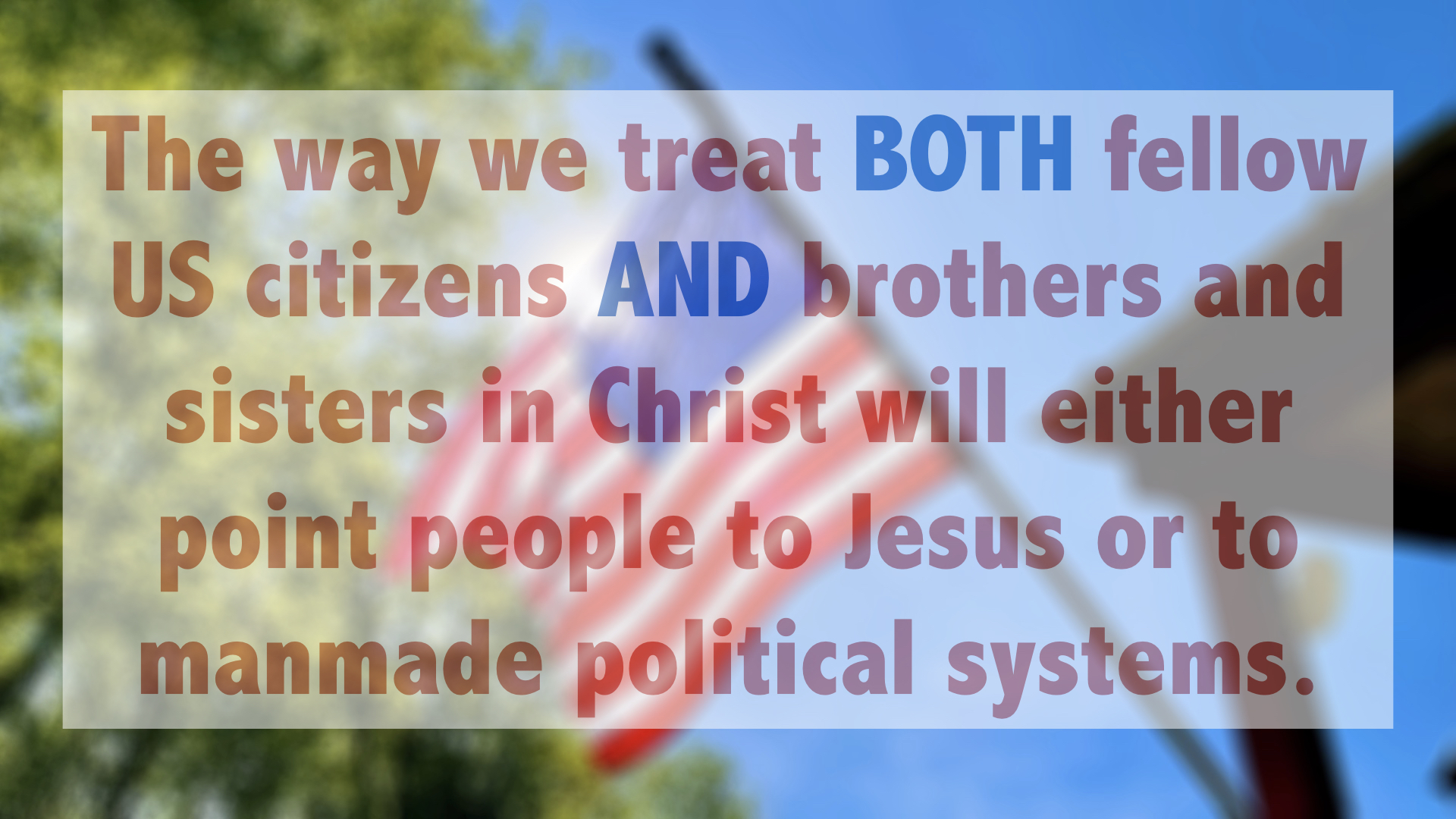
Let us always remember that others who are participating in the American political process are BOTH fellow US citizens AND brothers and sisters in Christ. 

In J.R.R. Tolkien’s Return of the King, when Gandalf sees fellow citizens and friends at each other’s throats, he exclaims, “Work of the enemy! Such deeds he loves: friend at war with friend, loyalty divided, and confusion of hearts.” Indeed, the enemy of our souls would love to see the chaos of a nation at war with itself; especially to see Christians at odds with each other. 

Paul said, “Therefore, as we have opportunity, let us do good to all people, especially to those who belong to the family of believers” (Galatians 6:10). On the flip side, Jesus said that when we think or speak poorly of a fellow human, we are in danger of judgment (Matthew 5:22). 

Listen to Paul’s appeal to his friends at Philippi—

Therefore if you have any encouragement from being united with Christ, if any comfort from His love, if any common sharing in the Spirit, if any tenderness and compassion, then make my joy complete by being like-minded, having the same love, being one in spirit and of one mind.

And then he specifically addressed a couple of sisters in Christ who were ad odds with each other

I plead with Euodia and I plead with Syntyche to be of the same mind in the Lord. Yes, and I ask you, my true companion, help these women since they have contended at my side in the cause of the gospel, along with Clement and the rest of my co-workers, whose names are in the book of life. (Philippians 2:1-2, 4:2-3) 

The politicians we have are always downstream from culture, which means we have allowed those sorts of politicians to be in place. 

John Stonestreet used a phrase I hadn’t heard before, but I think it’s appropriate: “Christian political engagement should hit its fever pitch not during elections. The only way to relieve the political pressures of our day is to build up the pre-political aspects of our life together, especially the family and the Church. When we care well for our children, our neighbors, and our communities, the state doesn’t have to.”  How true this is! 

I wrote something this summer based on Isaiah 3:4-5. In essence, I wrote that God gives nations the “leaders” they deserve. They are leaders in that they occupy an office, but they don’t lead people nor care for the citizens—they don’t have wisdom to lead nor do they care about anyone but themselves. This is the inevitable result for a nation that turns its back on God! So if we think our political and civic leaders are self-focused, unskilled, and childish, we should look in the mirror. It’s not “them,” it’s us. We have to change—turning wholeheartedly to God—and only then God can change our leadership. 

We need to be praying for our governmental leaders, not vilifying them. We need to be speaking well of our fellow US citizens. We need to be especially treating our fellow brothers and sisters in Christ well. 

Our hope is not in the results of an election. Our hope is in Jesus. The way we treat BOTH fellow US citizens AND brothers and sisters in Christ will either point people to Jesus or to manmade political systems. 

I pray we can do better at pointing people to Jesus! I pray I can do better! 

►► Would you please prayerfully consider supporting this ministry? My Patreon supporters get behind-the-scenes access to exclusive materials. ◀︎◀︎

Are You Full Of It?

Listen to the podcast of this post by clicking on the player below, and you can also subscribe on AppleSpotify, or Audible. 

Would you like to be known as somebody who’s “full of it”? I know that phrase usually has a negative connotation, but I would like to make the case that this is actually a really good thing. 

Check out this episode of The Podcast. 

The Scriptures I reference in this episode are found in Acts 6:3, 8, 10; 7:54-60; Galatians 5:22-23. We also see this same Greek word for “fullness” used for other New Testament leaders like Peter, Barnabas, and Paul (Acts 4:8; 11:24; 13:9).

I have blogged and talked and written quite a bit about a godly leader’s reactions being a strong indication of what a leader is truly full of. Three notable leadership posts are: 

A godly leader’s reactions is a major theme in both of my books—Shepherd Leadership and When Sheep Bite.

You may also be interested in a post in my series about the life-transforming power of the Holy Spirit in a Christian’s life entitled In > On. 

►► Would you please prayerfully consider supporting this ministry? My Patreon supporters get behind-the-scenes access to exclusive materials. ◀︎◀︎

The Serenity Prayer

Listen to the podcast of this post by clicking on the player below, and you can also subscribe on AppleSpotify, or Audible. 

I am a big fan of Alcoholics Anonymous (AA). They are founded on biblical principles. I would paraphrase two of the most important ones as: (1) We need a Savior to set us free and (2) We need friends to lean on. James 5:16 says this as succinctly as any verse: “Therefore confess your sins to each other and pray for each other so that you may be healed. The prayer of a righteous person is powerful and effective.” 

(Check out all of the Scriptures in this blog post by clicking here.) 

AA says: “Often times, a person with substance use disorder may have a need for control that can prevent them from achieving peace of mind. They may feel frustrated that they cannot control the actions of other people and turn to substances like alcohol to control their feelings, even though the control that alcohol provides is a farce. The Serenity Prayer is a gentle reminder that letting go and accepting a loss of control can help put an end to the substance abuse cycle.” 

In light of our series called Is That in the Bible? let’s ask, is the serenity prayer in the Bible. 

No, it’s not, but still there are some very important principles we shouldn’t miss from this prayer. 

The full prayer is—

God grant me the serenity to accept the things I cannot change; courage to change the things I can; and wisdom to know the difference. 
Living one day at a time; enjoying one moment at a time; accepting hardships as the pathway to peace;
Taking, as He did, this sinful world as it is, not as I would have it; trusting that He will make all things right if I surrender to His will;
That I may be reasonably happy in this life and supremely happy with Him forever and ever in the next. Amen.


Should Christians pray a prayer like this? Biblically, there is nothing wrong with Christians praying prayers that have been written by men or women, provided that they don’t contradict the words God has spoken to us. 

Remember James 5:16 that we looked at earlier? The Personalized Promise Bible has a prayer for that verse: 

If I have stumbled in any way, I do not need to fret over it—I can rest in full confidence that the Lord loves me and forgives all of my shortcomings. I also know that sin is a hindrance to my healing. Therefore, if there is any sin in my life I repent of it. I confess my sins to trusted brothers and sisters in Christ, gaining strength and praying in agreement with them so that I will be healed. 

And then they cross-reference about 10 more biblical passages that support this prayer—Psalm 103:1-5; Isaiah 53:4-5; 1 Peter 2:24; Matthew 9:22, 29; 18:19, 20; Mark 11:22-26; 16:18; Hebrews 12:1-3; Galatians 6:1-2. 

In a similar fashion, I see several passages of Scripture that are woven into the serenity prayer. 

“God grant me the serenity to accept the things I cannot change; courage to change the things I can; and wisdom to know the difference.” Proverbs 1:2-3 describes the help God’s wisdom gives us for daily living. 

“Living one day at a time; enjoying one moment at a time.” Jesus taught us to pray each day for our daily bread (Matthew 6:8, 11). 

“Accepting hardships as the pathway to peace.” Jesus also taught us to pray, “Your will be done on earth as it is in Heaven” (Matthew 6:10), and He also prayed a very similar prayer Himself when He was in the Garden of Gethsemane, “Yet not as I will, but as You will” (Matthew 26:39). 

“Taking, as He did, this sinful world as it is, not as I would have it; trusting that He will make all things right if I surrender to His will.” Jesus promised us both trouble in this world and His overcoming power to stand strong in that trouble (John 16:33). 

“That I may be reasonably happy in this life and supremely happy with Him forever and ever in the next. Amen.” Jesus promises eternal rewards that vastly outweigh the trouble we may face in this life (Luke 12:32; Matthew 25:21, 34). 

The bottom line: The Bible is not just a Book to read through but a Book to pray through. ALL Scripture is for ALL servants of God. ALL Scripture is applicable to ALL the circumstances we will ever face in life.  

If something like the serenity prayer—or any other man-made prayer—is based on Scripture and helps give voice to your prayers, use them! But use them as guides to help you begin to form your own prayers from biblical passages you are reading for yourself.

Check out some of the other topics we have covered in this Is That in the Bible? series here.  

►► Would you please prayerfully consider supporting this ministry? My Patreon supporters get behind-the-scenes access to exclusive materials. ◀︎◀︎