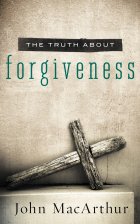
5 Quotes From “The Truth About Forgiveness”

Yesterday I reviewed John MacArthur’s book The Truth About Forgiveness. Here are five of my favorite quotes from this book.

“These days everything wrong with humanity is likely to be explained as an illness. What we used to call sin is more easily diagnosed as a whole array of disabilities. All kinds of immorality and evil conduct are now identified as symptoms of this or that psychological illness. Criminal behavior, various perverse passions, and every imaginable addiction have all been made excusable by the crusade to label them medical afflictions. Even commonplace problems, such as emotional weakness, depression, and anxiety, are also almost universally defined as quasi-medical, rather than spiritual, afflictions. …In place of evil, therapeutic society has substituted ‘illness’; in place of consequences, it urges therapy and understanding; in place of responsibility, it argues for a personality driven by impulses. The illness excuse has become almost routine in cases of public misconduct.”

“The world’s wisdom: Guilt is a virtual mental defect. Don’t let it ruin your self-image. …Guilt functions in the spiritual realm like pain in the material realm. Pain tells us there is a physical problem that must be dealt with or the body will suffer harm. Guilt is a spiritual pain in the soul that tells us something is evil and needs to be confronted and cleansed.” 

“God does not love us ‘for what we are.’ He loves us in spite of what we are. … God loves us because He is love; love is essential to who He is. Rather than viewing His love as proof of something worthy in us, we ought to be humbled by it.”

“There can be no salvation for those who aren’t convinced of the seriousness of their sin. There can be no word of reconciliation for sinners who remain oblivious to their estrangement from God. True fear of God cannot grip those who are blind to the depth of their sinfulness. And no mercy is available for those who do not tremble at God’s holy threats. In other words, to attempt to eradicate the human conscience is one of the most spiritually destructive pursuits any individual or society can engage in.”

“You need to forsake your sin regularly, seeking not the pardon of an angry Judge but the forgiveness of your loving Father—displeased and grieved, yet loving all the same.”

The Truth About Forgiveness (book review)

One of my favorite quotes about forgiveness comes from the pen of C.S. Lewis. He wrote: “We all agree that forgiveness is a beautiful idea until we have to practice it.” How true that is! In this short, but power-packed book, The Truth About Forgiveness, John MacArthur shares how beautiful and freeing true forgiveness is.

You may know John MacArthur as a preeminent Bible teacher. If so, you will not be disappointed in the content of this amazing book. Pastor MacArthur eloquently explains the need for forgiveness, how unworthy we are of God’s forgiveness, how unthinkable it is that God forgives us anyway, and how we should now live as people who regularly ask for forgiveness.

Pastor MacArthur’s Bible teaching skills are on full display as he digs deeply into well-known scriptural stories, and places us squarely in the middle of the character’s lives. In fact, one story he so beautifully portrays through the lens of forgiveness, but I had never seen it that way before!

This is not a long treatise on forgiveness, but it is a easy-to-read guide into new thinking about forgiveness. Trust me, after reading The Truth About Forgiveness, you will never look at forgiveness the same way again.

I am a Thomas Nelson book reviewer.

Getting Out Of The Hole

Yesterday in part two of our Immersed series, we looked at how helpless we are in trying to break free from sin’s pull on our lives. That is, we are helpless to help ourselves.

But with the Holy Spirit’s help, we go from helpless to hopeful!

In Romans 8, there are all of these contrasting statements about the sinful life versus the Spirit-led life. Our hope to move into the Spirit-led life turns on this phrase in verse 15: but by the Spirit. It is only by God’s Spirit that we can break free. To help illustrate this point, I read a rather long passage from C.S. Lewis’ Mere Christianity. Several people have asked to see this, so here it is—

“Now what was the sort of ‘hole’ man had got himself into? He had tried to set up on his own, to behave as if he belonged to himself. In other words, fallen man is not simply an imperfect creature who need improvement: he is a rebel who must lay down his arms. Laying down your arms, surrendering, saying you are sorry, realizing that you have been on the wrong track and getting ready to start life over again from the ground floor—that is the only way out of a ‘hole.’ This process of surrender—this movement full speed astern—is what Christians call repentance. Now repentance is no fun at all. It is something much harder than merely eating humble pie. It mean unlearning all the self-conceit and self-will that we have been training ourselves into for thousands of years. It means killing a part of yourself, undergoing a kind of death. In fact, it needs a good man to repent. And here comes the catch. Only a bad needs to repent: only a good man can repent perfectly. The worse you are the more you need it and the less you can do it. The only person who could do it perfectly would be a perfect person—and he would not need it.

“Remember, this repentance, this willing submission to humiliation and a kind of death, is not something God demands of you before He will take you back and which He could let you off is He chose: it is simply a description of what going back to Him is like. If you ask God to take you back without it, you are really asking Him to let you go back without going back. It cannot happen. Very well, then, we must go through with it. But the same badness which makes us need it, makes us unable to do it. Can we do it if God helps us? Yes, but what do we mean when we talk of God helping us? We mean God putting into us a bit of Himself.

When we invite Christ into our lives, He places “a bit of Himself” in us: the Holy Spirit. That enables us to be perfectly forgiven.

But then when we allow the Holy Spirit to immerse us in Himself, it’s not just “a bit of Himself” we get, but all of Him. This opens the door to deeper intimacy, greater closeness, and a more God-glorifying life!

I want to live immersed!

If you’ve missed any of the messages in the Immersed series, you can find them all here.

Thoughts From C.S. Lewis

I’ve been re-reading some of my notes that I made on a collection of essays from C.S. Lewis. He is one of my favorite authors, always helping me to see the spiritual realm in a whole new light.

These are just a few quotes that have me thinking…

“A live body is not one that never gets hurt, but one that can to some extent repair itself. In the same way a Christian is not a man who never goes wrong, but a man who is enabled to repent and pick himself up and begin over again after each stumble—because the Christ-life is inside him, repairing him all the time, enabling him to repeat (in some degree) the kind of voluntary death which Christ Himself carried out.”

“There are two ways in which the human machine goes wrong. One is when human individuals drift apart from one another, or else collide with one another and do one another damage. The other is when things go wrong inside the individual—when the different parts of him either drift apart or interfere with one another.”

“Those cautions which the tempter whispers in our ears are all plausible…. That is the truth in the temptation. The lie consists in the suggestion that our best protection is a prudent regard for the safety of our pocket, our habitual indulgences, and our ambitions.”

“When a man is getting better he understands more and more clearly the evil that is still left in him. When a man is getting worse he understands his own badness less and less. … Good people know about both good and evil: bad people do not know about either.”

If you haven’t read C.S. Lewis for yourself, he writes in so many different genres that you can find something for almost any taste: science fiction, children’s fairy tales, theology, apologetics, and on and on. He was truly gifted by God to see our world in a different light, and you will be greatly enriched by reading as much as you can from this master author.

Set Them Free!

Jesus has some pointed words for us in Matthew 5—

Therefore, if you are offering your gift at the altar and there remember that your brother has something against you, leave your gift there in front of the altar. First go and be reconciled to your brother; then come and offer your gift. (vv. 23-24)

Notice that Jesus says that your brother has something against you. Since the first word of this verse is therefore, we have to back up a couple of verses to get the context. In the preceding two verses Jesus talks to us about our anger, our harsh words, and our rash judgments leveled at others. In other words, things we have done to others which has made them upset at us.

In our prayer time, the Holy Spirit will help us remember what we have done. Now what are you going to do about it? Excuse it? Justify it? Or will you rectify it? Will you be obedient to go and make it right?

Until we do, we’re keeping our offended brother or sister in bondage to us. But as soon as we ask forgiveness, we set them free.

I love what C.S. Lewis said about recognizing where we may have offended someone—

“When I come to my evening prayers and try to reckon up the sins of the day, nine times out of ten the most obvious one is some sin against charity; I have sulked or snapped or sneered or snubbed or stormed. And the excuse that immediately springs to mind is that the provocation was so sudden or unexpected. I was caught off my guard, I had not time to collect myself…. Surely what a man does when he is taken off guard is the best evidence of what sort of man he is. Surely what pops out before the man has time to put on a disguise is the truth. If there are rats in the cellar you are most likely to see them if you go in very suddenly. But the suddenness did not create the rats; it only prevents them from hiding. In the same way the suddenness of the provocation does not make me an ill-tempered man: it only shows what an ill-tempered man I am.

When the Holy Spirit shows you the rats in your cellar—when He helps you remember how your ratty words or behavior hurt someone else—take care of it immediately! It’s the fastest way to freedom!

I will be speaking on The Danger Of Prayerlessness again next Sunday. I hope you can join me.

Thursdays With Oswald—Love Comes With Hatred

This is a weekly series with things I’m reading and pondering from Oswald Chambers. You can read the original seed thought here, or type “Thursdays With Oswald” in the search box to read more entries.

Love Comes With Hatred

     Love to be anything at all must be personal; to love without hating is an impossibility, and the stronger and more emphatic the love, the more intense its obverse, hatred. God loves the world so much that He hates with a perfect hatred the thing that switched men wrong; and Calvary is the measure of His hatred. The natural heart of man would have argued—“God loves the world that of course He will forgive its sin”: God loved the world that He could not forgive its sin.

From Biblical Ethics

God had to allow Jesus to become all of your sins and my sins, so that those sins which He hates so much could be nailed once for all to the Cross. Without the Cross, there could be no forgiveness.

Because He hated sin so much, Jesus chose to personally identify with us, and carry our sins away from us. God could not merely look away from our sin, so He allowed Jesus to take away our sin.

Such perfect hatred … such wondrous love!

Love For A Traitor

Listen to the podcast of this post by clicking on the player below, and you can also subscribe on AppleSpotify, or Audible.

Just a couple of hours before He would be arrested and so cruelly mistreated, Jesus had one last meal with His disciples. The meal began after Jesus had assumed the lowest of all positions, and washed all of His disciples’ feet.

Then He took the cup, gave thanks and offered it to them, saying, “Drink from it, all of you.” (Matthew 26:27)

Do you realize that this “all of you” included Judas the traitor?

Judas, the betrayer of Jesus, was there. He ate the bread and drank the wine of the first Communion. Jesus washed Judas’ feet. The traitor was right there when Jesus said, “This is My Body broken for you. This is My blood spilled for you.”

But it’s even heavier to think that He also said to me, “Drink of this cup, Craig.”

For Jesus surely saw my sin and my betrayal before He went to the Cross. I was the traitor, and He washed my feet. I betrayed Him by my sin, and He told me to eat and drink the reminders of His suffering for me.

How can I ignore such wondrous love?

How could I ever treat lightly such a sacrifice?

How could I ever hang on to my betraying sins in light of the forgiveness He purchased for me?

Jesus loved me—the traitor, the betrayer—and died for me. What a beautiful Savior!

My friend Dilip has released his debut album The Great Reversal (I hope you will buy this amazing CD), but I love the words of his song Beautiful Jesus:

All my words cannot describe just how beautiful You are
Earthly love cannot compare to the Perfect Love that bled and died
Beautiful Jesus, I stand in awe of You
Beautiful Jesus, I’m captivated by Your wondrous love
So I bow my knee, humbled by this mystery
How can it be? King of Majesty, You rescued me
You gave it all for me
More than I could ask for
All I ever need is You, Jesus, Lover of my soul
 
►► Would you please prayerfully consider supporting this ministry? ◀︎◀︎

(Un)Forgiveness

Charles II had a slight problem with unforgiveness

A couple of weeks ago I asked our church a simple question. So let me ask you the same thing: Anyone ever not been burned by someone, taken advantage of, or hurt by somebody else? Anyone? I didn’t think so. We’ve all been hurt, but the real issue is what we do with those hurts.

In January 1647, Oliver Cromwell captured King Charles I during the British Revolution. But a few months later, Charles escaped and managed to raise another army. In August 1648 Cromwell’s army defeated Charles’ army and once again Charles was taken prisoner. Cromwell had Charles tried for his crimes, and after the guilty verdict was issued, Charles I was executed. A total of 59 people signed his death warrant.

Eleven years later Cromwell’s son Richard had taken his place as Lord Protector of England, and there was great discontent with his leadership. As a result, the Loyalists were able to sweep Charles II into power. Charles II wanted the 59 death warrant signors put on trial, but 15 of them had already died. Charles II ordered their bodies exhumed, placed on trial, convicted, and then hung.

I’m no psychologist, but I think it’s safe to say that Charles II might have had a problem with unforgiveness!

It’s highly unlikely that you have dug up any dead bodies and put them on trial lately.

        Or maybe you have…

When someone has hurt us, we tend to keep the pain alive. Sometimes even after that person is long-gone from our life, we still exhume the corpse of their injury, put them on trial, convict them, and punish them all over again. But this process is actually punishing YOU. As long as you keep the hurt alive, you are trapped in the past.

The key to freedom is easy and yet hard: forgiveness.

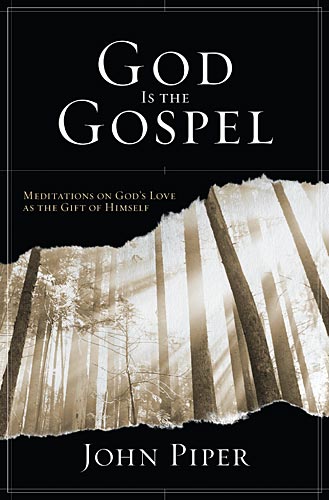
God Is The Gospel (book review)

John Piper is always a challenging read for me. He stretches my horizons, challenges my paradigms, and forces me to dig deeper into Scripture. In God Is The Gospel, I felt like he was writing to me specifically in my role as a pastor of a growing church.

The gospel is good news, right? But good news about what? Or more importantly: Who? Here’s how Pastor John himself describes why he wrote this book:

“The point of this book is that the Christian gospel is not merely that Jesus died and rose again; and not merely that these events appease God’s wrath, forgive sin, and justify sinners; and not merely that this redemption gets us out o Hell and into Heaven; but that they bring us to the glory of God in the face of Jesus Christ as our supreme, all-satisfying, and everlasting treasure. ‘Christ… suffered once for sins, the righteous for the unrighteous, that He might bring us to God’ (1 Peter 3:18).”

Too many times as a pastor I’m guilty of pointing people to the gifts of salvation, and not to the Giver of salvation. The gifts are wonderful, but the Giver of the gifts is supremely important!

This is a book about glorifying God. This is a book about worshiping God for Who He is, and not for what He gives.

Everyone will benefit from reading this book. But I would most recommend it to those who are called to preach the gospel of Jesus Christ.

Let It Go

In prayer there is a connection between what God does and what you do. You can’t get forgiveness from God, for instance, without also forgiving others. If you refuse to do your part, you cut yourself off from God’s part. (Matthew 6:14-15)

Have you ever had an “awkward” handshake with someone?

You try to grab their hand, but they’re going for the fist bump. Or you’re thinking fist bump and they’re going for a high five?

That’s sort of what’s happening in these verses…

God is extending an open hand of forgiveness to you, but your fist is tightly clenched as you hang on to a grudge.

If you want to grasp God’s hand in forgiveness, you must let go of the slights, wounds, hurts, insults, sins, and grievances you have against others. You probably have every right to hang on to those things.

Just as God has every right to hang on to your sins against Him…

…but He doesn’t.

SO LET IT GO!

It’s the only way to be able to hold onto those nail-scarred hands of Jesus that bring forgiveness.