Thursdays With Oswald—Love Comes With Hatred

This is a weekly series with things I’m reading and pondering from Oswald Chambers. You can read the original seed thought here, or type “Thursdays With Oswald” in the search box to read more entries.

Love Comes With Hatred

     Love to be anything at all must be personal; to love without hating is an impossibility, and the stronger and more emphatic the love, the more intense its obverse, hatred. God loves the world so much that He hates with a perfect hatred the thing that switched men wrong; and Calvary is the measure of His hatred. The natural heart of man would have argued—“God loves the world that of course He will forgive its sin”: God loved the world that He could not forgive its sin.

From Biblical Ethics

God had to allow Jesus to become all of your sins and my sins, so that those sins which He hates so much could be nailed once for all to the Cross. Without the Cross, there could be no forgiveness.

Because He hated sin so much, Jesus chose to personally identify with us, and carry our sins away from us. God could not merely look away from our sin, so He allowed Jesus to take away our sin.

Such perfect hatred … such wondrous love!

Love For A Traitor

Listen to the podcast of this post by clicking on the player below, and you can also subscribe on AppleSpotify, or Audible.

Just a couple of hours before He would be arrested and so cruelly mistreated, Jesus had one last meal with His disciples. The meal began after Jesus had assumed the lowest of all positions, and washed all of His disciples’ feet.

Then He took the cup, gave thanks and offered it to them, saying, “Drink from it, all of you.” (Matthew 26:27)

Do you realize that this “all of you” included Judas the traitor?

Judas, the betrayer of Jesus, was there. He ate the bread and drank the wine of the first Communion. Jesus washed Judas’ feet. The traitor was right there when Jesus said, “This is My Body broken for you. This is My blood spilled for you.”

But it’s even heavier to think that He also said to me, “Drink of this cup, Craig.”

For Jesus surely saw my sin and my betrayal before He went to the Cross. I was the traitor, and He washed my feet. I betrayed Him by my sin, and He told me to eat and drink the reminders of His suffering for me.

How can I ignore such wondrous love?

How could I ever treat lightly such a sacrifice?

How could I ever hang on to my betraying sins in light of the forgiveness He purchased for me?

Jesus loved me—the traitor, the betrayer—and died for me. What a beautiful Savior!

My friend Dilip has released his debut album The Great Reversal (I hope you will buy this amazing CD), but I love the words of his song Beautiful Jesus:

All my words cannot describe just how beautiful You are
Earthly love cannot compare to the Perfect Love that bled and died
Beautiful Jesus, I stand in awe of You
Beautiful Jesus, I’m captivated by Your wondrous love
So I bow my knee, humbled by this mystery
How can it be? King of Majesty, You rescued me
You gave it all for me
More than I could ask for
All I ever need is You, Jesus, Lover of my soul
 
►► Would you please prayerfully consider supporting this ministry? ◀︎◀︎

(Un)Forgiveness

Charles II had a slight problem with unforgiveness

A couple of weeks ago I asked our church a simple question. So let me ask you the same thing: Anyone ever not been burned by someone, taken advantage of, or hurt by somebody else? Anyone? I didn’t think so. We’ve all been hurt, but the real issue is what we do with those hurts.

In January 1647, Oliver Cromwell captured King Charles I during the British Revolution. But a few months later, Charles escaped and managed to raise another army. In August 1648 Cromwell’s army defeated Charles’ army and once again Charles was taken prisoner. Cromwell had Charles tried for his crimes, and after the guilty verdict was issued, Charles I was executed. A total of 59 people signed his death warrant.

Eleven years later Cromwell’s son Richard had taken his place as Lord Protector of England, and there was great discontent with his leadership. As a result, the Loyalists were able to sweep Charles II into power. Charles II wanted the 59 death warrant signors put on trial, but 15 of them had already died. Charles II ordered their bodies exhumed, placed on trial, convicted, and then hung.

I’m no psychologist, but I think it’s safe to say that Charles II might have had a problem with unforgiveness!

It’s highly unlikely that you have dug up any dead bodies and put them on trial lately.

        Or maybe you have…

When someone has hurt us, we tend to keep the pain alive. Sometimes even after that person is long-gone from our life, we still exhume the corpse of their injury, put them on trial, convict them, and punish them all over again. But this process is actually punishing YOU. As long as you keep the hurt alive, you are trapped in the past.

The key to freedom is easy and yet hard: forgiveness.

God Is The Gospel (book review)

John Piper is always a challenging read for me. He stretches my horizons, challenges my paradigms, and forces me to dig deeper into Scripture. In God Is The Gospel, I felt like he was writing to me specifically in my role as a pastor of a growing church.

The gospel is good news, right? But good news about what? Or more importantly: Who? Here’s how Pastor John himself describes why he wrote this book:

“The point of this book is that the Christian gospel is not merely that Jesus died and rose again; and not merely that these events appease God’s wrath, forgive sin, and justify sinners; and not merely that this redemption gets us out o Hell and into Heaven; but that they bring us to the glory of God in the face of Jesus Christ as our supreme, all-satisfying, and everlasting treasure. ‘Christ… suffered once for sins, the righteous for the unrighteous, that He might bring us to God’ (1 Peter 3:18).”

Too many times as a pastor I’m guilty of pointing people to the gifts of salvation, and not to the Giver of salvation. The gifts are wonderful, but the Giver of the gifts is supremely important!

This is a book about glorifying God. This is a book about worshiping God for Who He is, and not for what He gives.

Everyone will benefit from reading this book. But I would most recommend it to those who are called to preach the gospel of Jesus Christ.

Let It Go

In prayer there is a connection between what God does and what you do. You can’t get forgiveness from God, for instance, without also forgiving others. If you refuse to do your part, you cut yourself off from God’s part. (Matthew 6:14-15)

Have you ever had an “awkward” handshake with someone?

You try to grab their hand, but they’re going for the fist bump. Or you’re thinking fist bump and they’re going for a high five?

That’s sort of what’s happening in these verses…

God is extending an open hand of forgiveness to you, but your fist is tightly clenched as you hang on to a grudge.

If you want to grasp God’s hand in forgiveness, you must let go of the slights, wounds, hurts, insults, sins, and grievances you have against others. You probably have every right to hang on to those things.

Just as God has every right to hang on to your sins against Him…

…but He doesn’t.

SO LET IT GO!

It’s the only way to be able to hold onto those nail-scarred hands of Jesus that bring forgiveness.

White As Snow

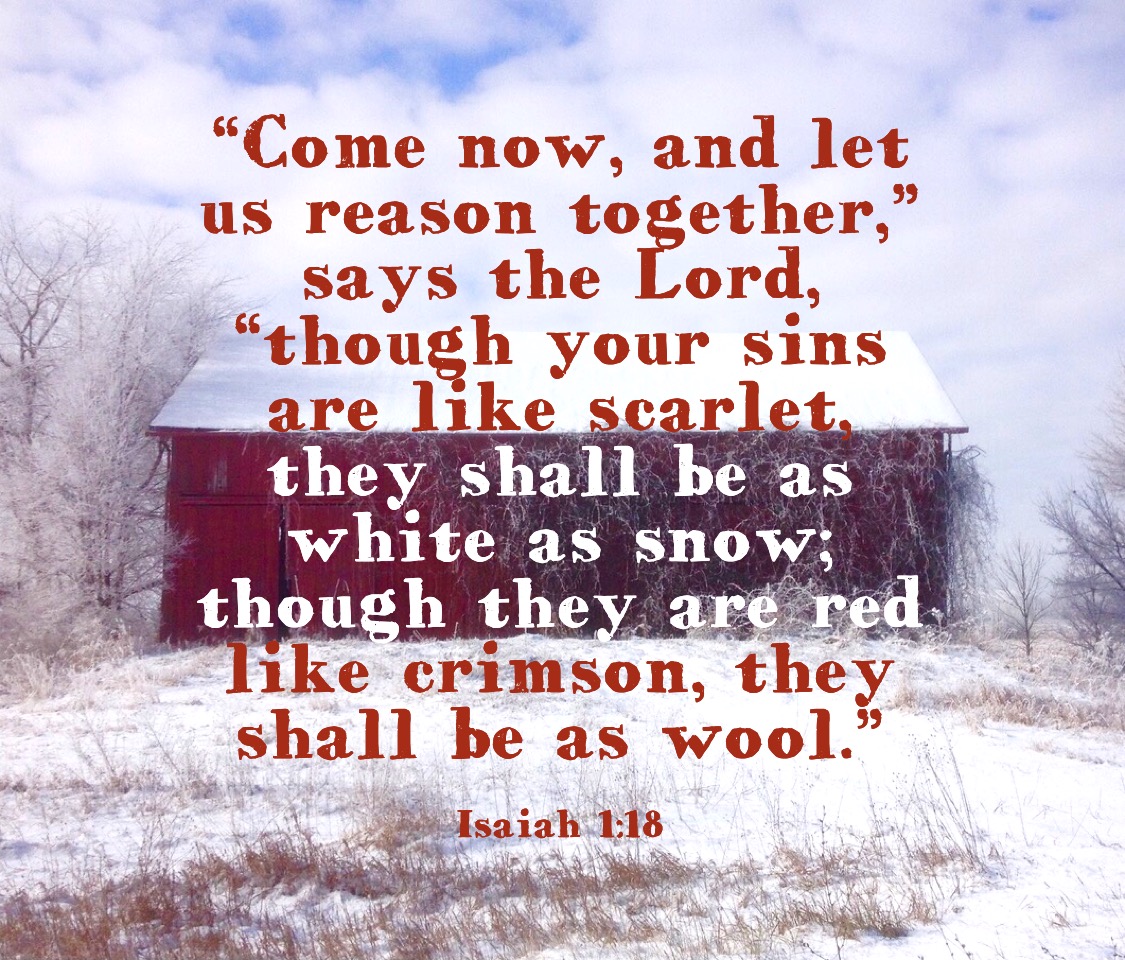
As I watch the snow falling outside today, slowly covering everything in a pure, unblemished whiteness, the same thought enters my mind every year at the first snowfall. God says,

Learn to do good. Seek justice. Help the oppressed. Defend the cause of orphans. Fight for the rights of widows. “Come now, let’s settle this,” says the Lord. “Though your sins are like scarlet, I will make them as white as snow. Though they are red like crimson, I will make them as white as wool.”

And this line from the great old hymn,

My sin, O the bliss of this glorious thought, my sin, not in part, but the whole, is nailed to the Cross and I bear it no more. Praise the Lord, praise the Lord, O my soul!

Doing good, seeking justice, helping the oppressed, defending orphans, and fighting for widows doesn’t cleanse my crimson sin, but when my sin has been covered I DESIRE TO do these things!

What do you think of the snow?

What do you think of God’s incredible whiteness applied to your life?

Permission To Speak Freely (book review)

I was first introduced to Anne Jackson’s writings through her blog. Something about the raw honesty in the way she wrote was instantly both compelling and confronting. When Mad Church Disease came out, I devoured it in a couple of days. With Permission To Speak Freely, I couldn’t put it down, finishing it the first day I received it.

I say that Anne’s writing is both compelling and confronting. Compelling because her words create in me a desire to want to be the kind of Christian that loves people and embraces them just as they are, just as Jesus showed us. And confronting because I know I am so far away from this.

Permission To Speak Freely addresses a real problem in the church: we don’t let people speak freely. At least, not people with “problems.” People who appear to have their act together, who know how to quote Scripture left and right, who never have a bad day, who always say and do the right things, those are the kind of people that can speak up in our churches. But those who are asking the tough questions, those who are hurting, those who aren’t sure Jesus is for them, those who don’t know how to “behave” in church, those are the kind of people who need to keep quiet. Tough words, I know; but sadly, they are true more times than not.

Anne goes first. She steps out from behind the I’ve-got-it-all-together façade and tells us what sort of struggles she had and has. She gives us “the Gift Of Going Second.” She breaks the ice, she pulls down the churchy barriers so that the rest of us can say, “Yeah, that’s me too.”

Part of this book reads like Anne’s memoirs. But then there’s the poetry, and the artwork, and the handwritten postcards with real people confessing real hurts and real questions. This book grabbed my heart and made me take a hard look at how I expect people to act in church. My kids are PK’s (preacher’s kids) just as Anne was, so I had to take a look at my expectations for them. I confronted my expectations for the families and individuals in our congregation.

I believe that is what this book will do most for you: cause you to confront the way you’ve always believed people should act in church. I looked at myself, and I found myself needing to extend more grace. Thanks, Anne, for being transparent enough to get me to take an honest look at my own life.

I highly, highly recommend this book to you.

I am a Thomas Nelson book reviewer.

Lamenting Over The Fallen

How The Mighty Have Fallen! Long before Jim Collins entitled his latest book with this phrase, David said this when King Saul and Prince Jonathan were killed in battle. In fact, he said it not once, but three times in just eight verses.

It is understandable that David would lament the death of his friend Jonathan. They were covenant brothers, they shared the same heartbeat for God and for Israel, and they stood by each other through thick and thin.

But Saul? Why would David lament the death of Saul? This is the man who was jealous of David. So jealous that he did everything he could to trip David up. Including trying to kill him. Saul chased David from his home, from his family, from his wife, even from his country.

Why would David lament Saul’s death? Wouldn’t it be more appropriate to rejoice over it?

But David still saw Saul as “the Lord’s anointed.” David recognized the good in Saul. He called him…

  • the glory of Israel
  • a successful warrior
  • gracious
  • lovable
  • strong
  • Israel’s provider

When David heard Saul had been killed, he lamented, Oh, how the mighty have fallen!

When I see the mighty, God-anointed leader fall, do I lament?

I may shake my head, I may feel vindicated, I may be disgusted, but I don’t know that I have ever lamented or grieved when one of these mighty brothers has fallen. Or if I have, my lament has been short-circuited by other less appropriate emotions.

Despite their sin, they are still God’s anointed.

Who am I to sit in judgment? Who am I to do anything but lament their fall?

Lord, forgive me! Father, help me to see Your anointed ones in the proper perspective: as Your anointed. Holy Spirit, remind me of the tragedy of even one mighty one who falls. May my response be one of lament, and mercy, and prayer.

Judge Or Father?

I’m still thinking about the powerful worship time we had in our Impact youth service on Wednesday night. I can’t think of another way to describe it, except to say that it was intimate.

We sang a song written by Michael Gungor called Wrap Me In Your Arms. The lyrics are simple:

There is a God who loves me
Who wraps me in His arms
And that is the place where I’m changed
And that’s where I belong

Take me to that place, Lord,
To that secret place where
I can be with You
You can make me like You
Wrap me in Your arms

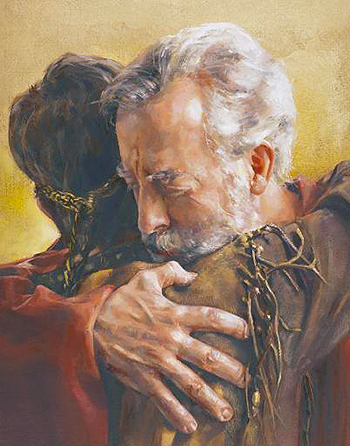
Far too many people view God as a Judge. Make no mistake, God will judge all of humanity at the end of the age, but in the meantime, Scripture portrays God as a loving Father who wants to wrap us in His arms.

I love the picture in the story Jesus tells of the prodigal son: The young man who ran away from his father and squandered all of the wealth he had taken with him. When he reached the end of his rope, the wayward son turned toward home. If you were thinking of returning home after embarrassing your father and throwing away his money, would you want to return to a judge or a father?

The young man did turn toward home, and his father ran to him and wrapped him in his arms! How amazing!

On Wednesday night I encouraged our youth group to simply stretch their arms out toward their Heavenly Father and feel Him wrap them in His arms. It was so special to see tear-streaked cheeks and outstretched arms in the loving embrace of a God who loves anyone who turns to Him. Awesome!

I encourage you to do the same.

If you’ve blown it … if you feel distant from God … if you feel like you’ve let Him down … if you feel like you’ve embarrassed Him … see Him as a Father who is longing for you to return to Him. He will not judge you, but He will wrap you in His arms and make everything new.

If you wait until your life here is over without ever turning to God, then you will have to face God the Judge. Don’t wait! Embrace God your Father today.

Is Today Your Last Day With Us?

Okay, this seems a bit bizarre: God tells Moses, “Get Aaron and his son Eleazar and bring them with you up to Mount Hor. I want you to transfer the office of high priest from Aaron to Eleazer. And then Aaron is going to die on the mountain.”

Seriously!

Anyone reading this post knows their birth date, but none of us knows his or her death date.

Aaron did.

What do you think he did with his last few hours?

  • Did he need to apologize to someone? Ask their forgiveness?
  • Did he need to make amends?
  • Pass along some vital information to Eleazer?
  • Say “I love you” to someone dear to him?
  • Give one last kiss? One last embrace?

James wrote, “How do you know what your life will be like tomorrow? Your life is like the morning fog—it’s here a little while, then it’s gone” (James 4:14).

You and I don’t know what our death date will be, so our best bet is to live today like it’s our last day. What do you need to do with your last few hours?

  • Are you ready to meet God?
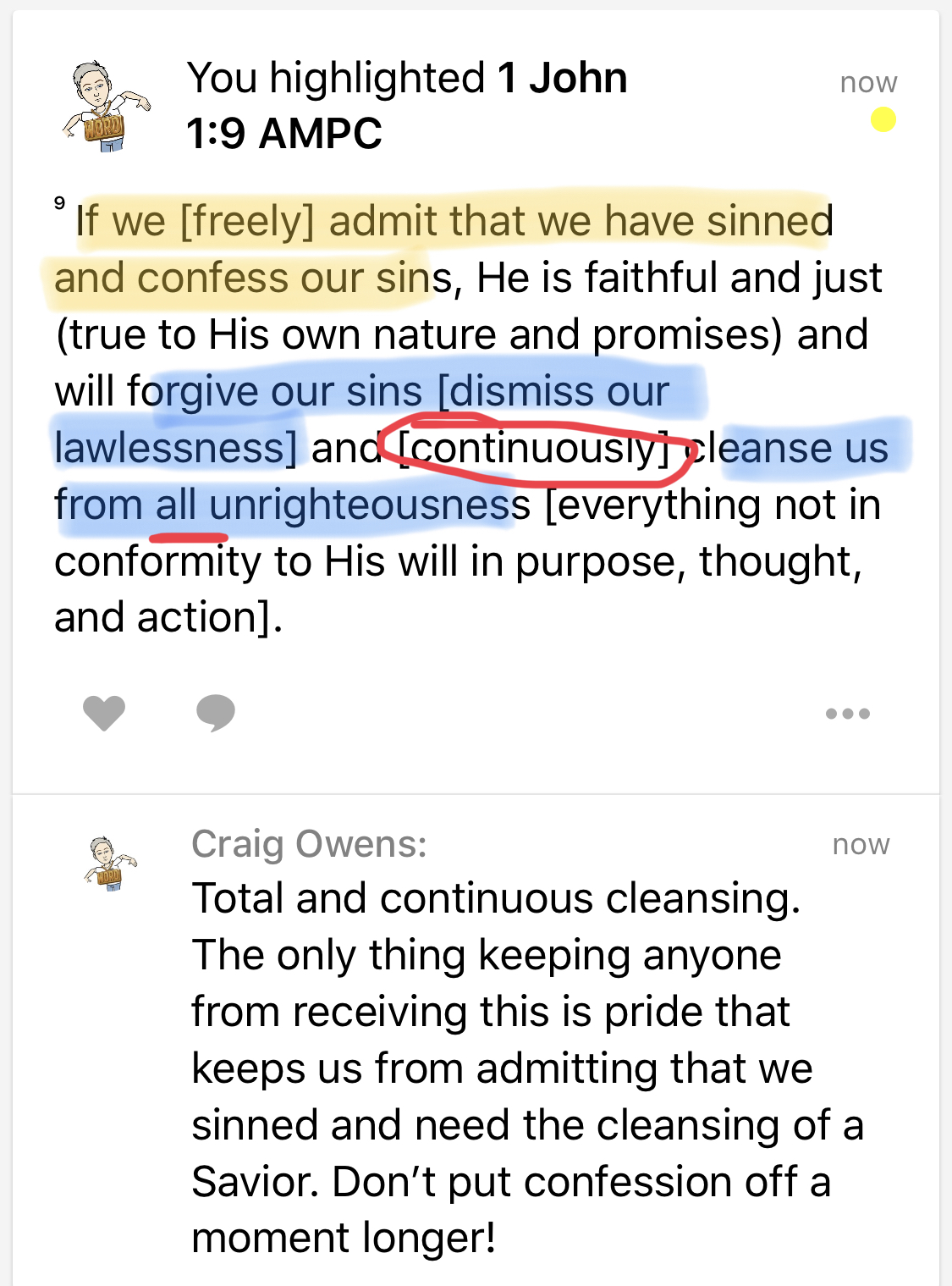
  • Do you need to ask Christ to forgive your sins?
  • Is there someone who needs your forgiveness?
  • Do you need to make something right somewhere?
  • Is there vital information you need to share?
  • Does someone need to hear “I love you”?
  • Who do you need to hug or kiss?

Don’t wait for tomorrow, because tomorrow may never arrive. Live today like it’s your last day. Because it may very well be your last day with us.