Don’t Undo The Good

Just one moment of indulgence…

Just one small compromise in values…

Just a little bit of childish folly…

…and you undo all that you had done so well. 

Dead flies cause the ointment of the perfumer to putrefy and send forth a vile odor; so does a little folly in him who is valued for wisdom outweigh wisdom and honor. (Ecclesiastes 10:1 AMPC) 

You can go a bit deeper on this in my posts Don’t Putrefy Your Leadership

Poetry Saturday—Hasty Foolishness

Listen to the podcast of this post by clicking on the player below, and you can also subscribe on AppleSpotify, or Audible.

This is a poem I wrote for my congregation after we talked about the eloquent silence of Jesus as His response to foolish heckling.

Learn a lesson from our Lord
Often silence cuts like a sword
When we stand upon the Rock
We needn’t bother when fools mock
Bantering with fools just won’t do
Unless you want to be foolish too
To the wisest words they won’t listen
But joy in airing their own opinion
Our Lord knew just what to do
When mockers hurled words untrue
He entrusted things to the King
Who perfectly records everything
Help us follow the example You gave
To not engage with those who rave
May not our hasty words undo
The loving way we shine for You —Craig T. Owens

►► Would you please prayerfully consider supporting this ministry? My Patreon supporters get behind-the-scenes access to exclusive materials. ◀︎◀︎

Eloquent Silence

Listen to the podcast of this post by clicking on the player below, and you can also subscribe on AppleSpotify, or Audible. 

We’ve just looked at two back-to-back bold statements of Jesus. To the Sanhedrin, He said, “I am the I AM,”  and to Pontius Pilate, He said, “I am a king.” Christ’s third bold claim essentially amounts to, “And I don’t have to prove either of these to you; I don’t have to argue with you about it.” 

After He was arrested, there was a back-and-forth shuttling of Jesus from the Sanhedrin to Pilate, then from Pilate to King Herod, and then back to Pilate again. Pilate told the Sanhedrin, “I find no basis for a charge against Him.” But the Sanhedrin countered, “But He is stirring up trouble all the way from Galilee to here in Jerusalem!” (see Luke 22:67-23:11).

Pilate was looking for “an out”—a way he could safely discharge or punish Jesus that would keep both the Sanhedrin and his Roman superiors happy. So when Pilate heard that Jesus was from Galilee, he was more than happy to pass this “hot potato” to King Herod. When Jesus was hauled before Herod, we read that he was greatly pleased to see Jesus. 

Why was that? To answer that question, we need to understand who Herod was. His name is Herod Antipas, and he was the son of Herod the Great. Herod the Great was king when Jesus was born, and he was the one who attempted to kill Jesus. 

Herod Antipas was infamous for having seduced his sister-in-law Herodias, whom he married after divorcing his wife. Shortly after this, Herod arrested John the Baptist for calling out this marriage as sinful. Herodias especially was embarrassed by this and wanted John killed, but Herod feared the backlash from the people if he did this. Eventually Herodias got her way and Herod was forced to have John beheaded (Matthew 14:5; Mark 6:17-28).

When news about Jesus began to reach his ears, Herod thought that Jesus was John reincarnated and he wanted to see him (Luke 9:9). So now when Jesus is brought before him, Herod is looking for a magic trick—Jesus remains silent. Then the religious leaders resume their accusations against Jesus, and still He remains silent. Then Herod and his soldiers began mocking and ridiculing Jesus, and amazingly, He still doesn’t say a word. 

Jesus knew the Scriptures that make it clear that there is nothing to be gained by bantering with fools. For instance, Solomon wrote, 

Do not answer a fool according to his folly, or you yourself will be just like him. … Don’t waste your breath on fools, for they will despise the wisest advice. (Proverbs 26:4, 23:9). 

So here is the next bold claim from Jesus: {Eloquent silence.}

Even in the face of accusation, ridicule, and mocking, Jesus refused to engage in meaningless arguing with Herod or the Sanhedrin’s false witnesses. His silence was so eloquent that it got the attention of Governor Pilate:  

“Then Pilate asked [Jesus], ‘Don’t You hear the testimony they are bringing against You?’ But Jesus made no reply, not even to a single charge—to the great amazement of the governor.” (Matthew 27:13-14) 

Let’s learn from Jesus: Sometimes the best thing to say is NO thing! 

Peter pointed Christians to this example of Jesus when he wrote—

To this you were called, because Christ suffered for you, leaving you an example, that you should follow in His steps. “He committed no sin, and no deceit was found in His mouth.” When they hurled their insults at Him, He did not retaliate; when He suffered, He made no threats. Instead, He entrusted Himself to Him who judges justly. (1 Peter 2:21-23)

Jesus called us to let our good deeds shine brightly to bring glory to God. Fools will ridicule and mock and accuse us, just as the religious crowd did to Jesus. Let’s not let our bantering with fools put out the light of our testimony. 

When I was a little kid in Sunday School, we used to sing a song called This Little Light Of Mine. We would hold up our pointer finger like a candle as we sang. But holding up our pointer finger across our lips is also a way to let our light shine too. Your silence in the face of foolish ridicule will speak so eloquently!

Let’s learn this lesson from Jesus. Instead of bantering with fools, entrust yourself to the perfect Judge who is perfectly keeping track of every word. He is the One who can add eloquence to your silence as you shine brightly for Him. 

If you’ve missed any of the other messages in our series of Bold Claims, you can find them all by clicking here. 

►► Would you please prayerfully consider supporting this ministry? My Patreon supporters get behind-the-scenes access to exclusive materials. ◀︎◀︎

Links & Quotes

When you say, “I don’t know how to do this,” your mind stops looking for answers. But if we simply add one word—“I don’t know how to do this yet”—your mind will stay active. Adding this one word will unleash the creative, solution-finding part of your mind.

“Our preaching ought to have a voice for all classes, and all should have an ear for it. To suit our word to the rich alone is wicked sycophancy, and to aim only at pleasing the poor is to act the part of a demagogue. Truth may be so spoken as to commend the ear of all, and wise teachers seek to learn that acceptable style.” —Charles Spurgeon, Spurgeon And The Psalms

“How did Jesus live among us? He was different things to different people. See if you find yourself on this list.
To the victim, Jesus defended.
To the rebel, He held out mercy.
To the brutalized, Jesus comforted with kindness.
To the questioning, He spoke truth.
To the fearful, Jesus stood beside.
To the lonely, He nodded, ‘I’ve been there.’
To the sick, Jesus revitalized.
To the outlier, He welcomed in.
To the forgotten, Jesus remembered in detail.
To the filthy, He washed clean.
To the broken, Jesus empathized.
To the doubting, He listened.
To the isolated, Jesus joined company.
To the discouraged, He drew near.
To the cynic, Jesus answered.
To the rejected, He restored.
To the anxious, Jesus calmed.
To the betrayed, He identified.
To the betrayer, Jesus forgave.
To the wounded, He sympathized.
To the wanderer, Jesus pointed the way.
To the shattered, He rebuilt dreams.
To the lost, Jesus led home.
To the abandoned, He was home.
To the destitute, Jesus deepened.
To the single again, He completed.
To the tempted, Jesus was available.
To the courageous, He gave purpose.
To the one in trouble, Jesus led out.
To the exhausted, He was wholeness.
To the hurried, Jesus patiently waited.
To the over-committed, He built margin.
To the weak, Jesus fortified.
To the one in debt, He released.
To the searching, Jesus satisfied.
To the foolish, He said, ‘Turn around.’
To the pure in heart, Jesus blessed.
To the one who keeps on going, He rewarded.” —He Gets Us (part 2) reading plan on YouVersion

This is a pretty long article, but it’s quite fascinating to see the engineering behind the artificial intelligence (AI) of ChatGPT.

“God is not afraid of my questions. Am I afraid of His answers?” —Betsy Owens

C.M. Ward was the speaker for the Revivaltime radio broadcast for a quarter of a century. Dan Betzer, who was also involved in these broadcasts, once said that he heard Rev. Ward preach on the story of the prodigal son in Luke 15 more than a dozen times without ever repeating himself. Here is a quick biographical sketch of this influential man’s ministry. I have also shared before my brief encounter with Rev. Ward when I was a young man.

A bonus quote from Charles Spurgeon: “‘No God’ means no law, no order, no restraint to lust, no limit to passion. Who but a fool would be of this mind? What a bedlam, or rather what a battleground, would the world become, if such lawless principles came to be universal!” —Charles Spurgeon, commenting on Psalm 53:1

A reminder of just how amazing our Sun is! Our Creator perfectly fashioned our Sun and Earth and solar system to sustain the life we enjoy. Check out this amazing article from The Institute for Creation Research.

Thursdays With Spurgeon—The Plan Of The Cross

This is a weekly series with things I’m reading and pondering from Charles Spurgeon. You can read the original seed thought here, or type “Thursdays With Spurgeon” in the search box to read more entries.

The Plan Of The Cross

What we have received is not the spirit of the world, but the Spirit who is from God, so that we may understand what God has freely given us. (1 Corinthians 2:12) 

     The course of our fallen race has been a succession of failures. Whenever there has been an apparent rise, it has been followed by a real fall. Into ever-increasing darkness the human mind seems resolved to plunge itself in its struggles after a false light. When men have been fools, they have danced in a delirium of sin. When they have been sober, they have given themselves up to a phantom wisdom of their own that has revealed their folly more than ever. It is a sad story, the story of mankind! Read it in the light of God’s Word and it will bring tears from your very heart.

     The only hope for man was that God should interpose. And He has interposed, as though He began a new creation or worked a resurrection out of the kingdom of death. God has come into human history and here the bright lights begin. … See yonder avalanche rushing down the steep mountainside? Such is humanity left to itself. Lo, God in Christ Jesus throws Himself in the way. He so interposes as to be crushed beneath the descending rocks. But beloved, He rises from the dreadful burial. He stops the avalanche in its terrible path. He hurls back the tremendous mass and changes the whole aspect of history. … 

     The plan of the Cross is to conquer death by death, to remove sin by the endurance of the penalty, to work mightily by suffering terribly, and to glorify Christ by shame.

From Grace For Grace

This sermon reminds me of the poignant words from Isaac Watts—

When I survey the wondrous Cross 
On which the Prince of Glory died, 
My richest gain I count but loss, 
And pour contempt on all my pride. 
Forbid it, Lord, that I should boast, 
Save in the death of Christ my God! 
All the vain things that charm me most, 
I sacrifice them to His blood.
 

All of man’s attempts to control his universe, or determine his fate, or even make himself acceptable to God have been an abysmal failure. So God Himself stepped in, but He came in a way that no one could have imagined and no one could claim as their idea. The prophet Isaiah said it this way, “The Lord looked and was displeased that there was no justice. He saw that there was no one, He was appalled that there was no one to intervene; so His own arm achieved salvation for Him, and His own righteousness sustained Him” (Isaiah 59:15-16). 

It is by grace alone, through faith alone, in Christ alone that we have hope of our salvation. And for that we give all glory to God alone. Sola Deo gloria!


Think On This…

Here’s the seed thought for this episode of Think On This

Do not answer a fool according to his folly, or you yourself will be just like him. Answer a fool according to his folly, or he will be wise in his own eyes. (Proverbs 26:4-5)

Think on this:

  1. Do I have a solid relationship with this person? 
  2. Do I need to respond for their benefit? 
  3. Can I ask any clarifying questions before I speak? 
  4. Can I respond in love?

Walk This Way

In his letter to the Christians in Ephesus, Paul uses the word “walk” seven times to instruct them how to follow the path Jesus laid down for us. 

In Greek, the word for “walks” (peripatēo) means something that regulates my life, or something that keeps me on the right path. It’s my lifestyle that is kept in proper boundaries by something outside of me. 

First of all, notice how Paul tells Christians how not to walk. DON’T WALK THIS WAY…

…following pop culture (2:2)—Living a certain lifestyle because “everyone” is doing it, or because some popular people are living that way. 

…without thinking about why you’re walking the way you are (4:17)

…without comparing your walk to truth (5:8)—Living a life because it feels good to me is a dangerous way to live. I must make sure there is an objective truth that is keeping me on a proper path.

…foolishly (5:15)—To be foolish is either (a) not knowing the truth, (b) not applying the truth I have been shown, or (c) choosing to disregard the truth I’ve been given. 

Instead, Paul tells Christians to WALK THIS WAY

…knowing I am God’s workmanship, created for a great purpose (2:10)—It may take me some time to discover my purpose and my talents, but I keep at it. 

…worthy of my vocation (4:1)—Once I have discovered my talents, I develop them into strengths that will benefit others. 

…lovingly (5:2)—Just as Jesus did! 

…in the light of God’s truth (5:8)—This is the exact opposite of foolishly walking. It means I seek the truth and I apply the truth to my life. 

…circumspectly (5:15)—Not wasting my moments, but making sure I am giving 100 percent every single day.

When I WALK THIS WAY people will inevitably notice that I’m motivated not by popularity with people, but by intimacy with God (5:2-7). They will see that my path is bordered by the principles in God’s Word (5:8-14; Psalm 119:105). And they will notice that my life has purpose and is productive (5:15-20). 

All Christians should ask themselves:

  • Is Jesus pleased with the path I’m on today?
  • Can others follow my footsteps toward their own relationship with Christ? 

If you can answer “yes” to those questions, then Jesus will be pleased that you WALK THIS WAY! 

[You can check out the Scriptures I referenced in this post by clicking on DON’T WALK THIS WAY and WALK THIS WAY above.]

Saturday In The Proverbs—Relationship Builders And Killers (Proverbs 27)

[Each chapter in the Book of Proverbs contains thoughts that fit into a theme; they are not just random thoughts gathered together. In this “Saturday In The Proverbs” series, I will share a theme that I see in each chapter. But the cool thing about God’s Word is that you may see an entirely different theme. That’s great! If you do, I would love for you to share it in the comments below.]

Do not boast… (Proverbs 27:1).

This proverbs has some noteworthy relationship builders and relationship killers. 

Relationship Builders

  • Humility (v. 2) 
  • Confronting in love (vv. 5a, 6a)
  • Contentment (v. 7)
  • Minding your own business (v. 8)
  • Giving good advice (v. 9)
  • Investing in family friendships (v. 10)
  • Exercising wisdom (v. 11)
  • Using foresight (v. 12a)
  • Investing in yourself so that you can invest in others (v. 17)
  • Serving others (v. 18)
  • Honest self-assessment (v. 19)
  • Good work ethic (vv. 23-27) 

Relationship Killers

  • Boasting (vv. 1, 2)
  • Provoking a foolish argument (v. 3)
  • Jealousy (v. 4)
  • Unexpressed love (v. 5b)
  • Insincere flattery (vv. 6b, 14)
  • Ignoring the signs of impending trouble (v. 12b)
  • Cosigning a loan (v. 13)
  • Arguing (vv. 15, 16)
  • Envy (v. 20)
  • Not handling praise humbly (v. 21) 
  • Not listening to correction (v. 22)

To keep our relationships strong and vibrant, let’s kill the killers and build the builders! 

Saturday In The Proverbs—Backfire! (Proverbs 26)

[Each chapter in the Book of Proverbs contains thoughts that fit into a theme; they are not just random thoughts gathered together. In this “Saturday In The Proverbs” series, I will share a theme that I see in each chapter. But the cool thing about God’s Word is that you may see an entirely different theme. That’s great! If you do, I would love for you to share it in the comments below.]

…honor is not fitting for a fool (Proverbs 26:1).

However well-intentioned, there are some things guaranteed to backfire. Things like…

… honoring a fool (vv. 1, 8)

… trying to curse or bring down a good man (v. 2)

… letting a fool roam without restraint (v. 3)

… trying to reason with a fool (vv. 4, 5)

… trusting an untrustworthy man to deliver a message accurately (v. 6)

… allowing a fool to teach others (vv. 7, 9)

… not letting a fool learn from the consequences of his foolishness (vv. 10-12)

… entrusting a lazy man with an important task (vv. 13-16)

… meddling in someone else’s quarrel (v. 17)

… inappropriate joking (vv. 18, 19)

… gossiping (vv. 20-22)

… judging by outward appearances (vv. 23-26)

… trying to entrap someone (v. 27)

… lying and flattery (v. 28)

Stay clear of these guaranteed-to-backfire traps! 

Avoiding Worthless Pursuits

“Human society is built on the errors of fools. This sounds brutal, but in the context of the Scriptures it is very kind. I say this because a fool acts without regard to future consequences—as though there were not another world besides this one and he was not intending to die. The strange thing is, he lives this way only in his moral life. Intellectually, he knows he’s not going to be here always, and he makes sure his insurance is in place and writes a will and arranges for his family after he is gone. However, morally he lives as if he were going to be here forever, as if there were no death and no future life. That is what a fool is, and again, a philosophy upon which our whole society is built. …

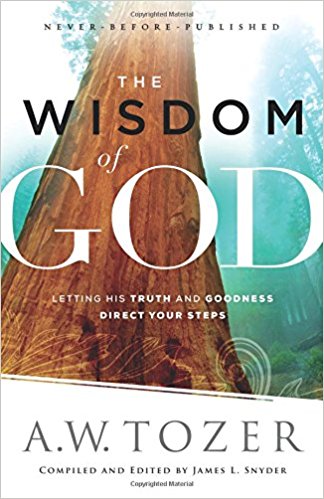
“Look at the many who are seeking direction for their lives. The trouble is, a great deal of this seeking is simply a desire to have a guide that will help him get what he wants, get all the fun he can out of life and not have to pay the consequences. Many counselors today are doing that very thing. They meet with young people, instructing them in a manner that will enable them to have their own way, miss the Cross, miss the dying to self, miss repentance, and ultimately miss the will of God. But the wisdom of God imparts discernment that will save you from the wrong choice and the false counselor. Divine wisdom can also save us from worthless pursuits—those that are not God’s will for us.” —A.W. Tozer, in The Wisdom Of God

You can read my review of The Wisdom Of God here, and check out some other quotes from this powerful book here.