A Godly Man’s Superpower

Listen to the podcast of this post by clicking on the player below, and you can also subscribe on AppleSpotify, or Audible. 

On Mother’s Day, I mentioned that Proverbs 31 might be an intimidating description for Moms, but it doesn’t need to be that way. This chapter lists what is possible when a woman is fully committed to God, her husband, and her children.  

Her faithfulness is her superpower which unleashes so many good things for those around her. Or as we said it: Her nobility helps her be a king maker. 

I concluded by saying that men have an important role to play in order to honor the king-making power which the godly women in his life have unlocked. This is a man’s superpower! Together, God-fearing men and women can create a legacy of king makers. But separated or self-focused men and women can create a legacy of king breakers. 

(Check out all of the Scriptures I mention in this post here.) 

The Hebrew word for noble is used five times in Proverbs: three times for the godly superwoman (Proverbs 12:4, 31:10, 31:29), and twice for the godly superman (13:22, 31:3). 

Remember that this word is also translated in different versions of the Bible as excellent, virtuous, and strong in character. 

In Proverbs 31:3 the word vigor for men is attached to that same Hebrew word. In this context, the word can be defined as strength, efficiency, ability, or wealth. 

On Mother’s Day, we said that Eve is the “help meet” (as the old King James Version says), which means that she is the key that unlocks Adam’s potential. The teaching throughout Proverbs says that men can squander this unlocked potential by…

  • …forgetting God’s laws—Proverbs 31:4-5 
  • …not stewarding the unlocked leadership opportunities in our marriage, parenting, work, or community involvement (Proverbs 5:15-20; 2:1-5, 12-17; 22:29; 31:23). 

In essence, we cancel the definition of vigor that we saw above, changing strength to weakness, efficiency to inefficiency, ability to inability, and wealth to poverty. 

On Mother’s Day we looked at virtuous Ruth who used her godly superpower to unlock the potential for Boaz, the man who would become her husband. Let’s look at his example: 

  • he was called a man of standing because his righteousness was well known in Bethlehem—Ruth 2:1 
  • he was obedient to the smallest details of the law—Ruth 2:3; Leviticus 19:9-10  
  • he honored his father by following his example—Matthew 1:5; Joshua 2:1-24, 6:23 
  • he was an honored employer—Ruth 2:4 
  • he was also (just like Ruth) called a man of noble character—Ruth 3:7-11, 14 

A Dad’s superpower looks very similar to a Mom’s superpower. The godly woman unlocks the potential, and when the godly man carefully stewards that potential, he is also using his godly superpower (Luke 12:42-43, 48)! 

Guys, when we use our God-given superpower, we honor Him and the godly women in our lives who have made this possible for us. We do this by…

  • …faithfully loving God with all our heart, soul, mind, and strength—Proverbs 31:4-5; Mark 12:28-31 
  • …caring for our bride like Jesus cares for His bride—Ephesians 5:25 
  • …honoring the legacy of our parents—Ephesians 6:2-3 
  • …passing on a godly heritage to our children—Ruth 4:21-22 

This is God’s design. And it is God’s delight when we live this way. So we must make the choice to either carry on the godly heritage that was handed down to us, or reverse the ungodly heritage that we may have inherited. 

Godly men and women unlock and perpetuate their God-given superpower by giving their heart, soul, mind, and strength to God. And then God will continue to empower us as the spouses, parents, and leaders in our community that He desires for us to be! 

►► Would you please prayerfully consider supporting this ministry? My Patreon supporters get behind-the-scenes access to exclusive materials. ◀︎◀︎

Faith Starts Walking

Listen to the podcast of this post by clicking on the player below, and you can also subscribe on AppleSpotify, or Audible. 

Sometimes the way that we show our faith in Jesus is that we hit the road! Check out this important lesson in faith from a loving father.

Check out this episode of The Podcast.

This story of the faith-filled father is found in John 4:46-53, and the prayer that I shared from King David is in Psalm 5:3.

I wrote more about this prayer of David in Prayer Preparation and Prayer Expectation. And I wrote about another man’s faith-filled walking in When Your Walking is Your Praying.

Here are a bunch of ways to get in touch with me and follow along with other projects on which I am involved.

►► Would you please prayerfully consider supporting this ministry? My Patreon supporters get behind-the-scenes access to exclusive materials. ◀︎◀︎

The Courage Of A Spiritual Father

Listen to the podcast of this post by clicking on the player below, and you can also subscribe on AppleSpotify, or Audible. 

Father’s Day can bring up a lot of different emotions for folks. Growing up, you might not have had a very good experience with your father or perhaps you didn’t have a father involved with you at all. Maybe you look back on your own history as a Dad and have some regrets. Perhaps you’re an empty-nester now or maybe you’ve never had kids of your own. 

Regardless of your experience with your father or with your own circumstances, I think there are some things that we all naturally expect from our Dads. These are things that we should honor and things we as Dads should strive to demonstrate in our lives.  

Luke introduces us to a man in the Book of Acts named Joseph. We don’t know if he is a biological father or not, but he is presented to us as a spiritual father that we would do well to emulate. In fact, we only know his name is Joseph from our first introduction to him. This man was such an inspiration to so many people that he was given the nickname Barnabas—the name that is used everywhere else in the New Testament. 

When we think of our list of attributes of an ideal father, I think we all look to our fathers for these five things.

(1) Be there when we are getting started. Barnabas was there when Saul (later named Paul) first became a Christian and when the first Gentiles became Christians (Acts 9:26-28; 11:19-23). 

(2) Provide for us financially. Barnabas is the first person mentioned by name that gave a significant and much-needed financial donation to the Church (Acts 4:34-37).  

(3) Help us learn to leave our nest and fly on our own. Barnabas gave Paul his first leadership role in the Church (Acts 11:25-26). 

(4) Step back as we learn to soar on our own. Barnabas took the lead in the first commissioned missionary journey, but then we see him stepping aside for Paul to take the lead (Acts 13:1-2, 13). 

(5) Continue to “be there” for us even after we’ve left the nest. Barnabas also picked John Mark to accompany him and Paul on that first missionary endeavor, but when Barnabas stepped aside for Paul, Mark headed home instead of continuing on their trip. Later on, Barnabas wanted to give Mark another shot, but Paul was strongly against that. As a result, Paul and Barnabas parted company, with Barnabas taking Mark with him. From this point on, Luke doesn’t tell us anything else about Barnabas, but we know that Mark became the first one to write his Gospel account of the life of Jesus and that he became reconciled to both Paul and Peter, becoming an invaluable help to both of them. Although we don’t read what happened, I think it’s a good bet that all of this came about through the encouragement of Barnabas (Acts 13:13, 15:36-40; 2 Timothy 4:11; 1 Peter 5:13). 

(Check out all of the above Scriptures by clicking here.)

The name Joseph means “exalted.” Joseph was born into the tribe of Levi, placing him at the heart of the Jewish faith, yet he risked it all to not only acknowledge Jesus as the Messiah but to be so invested in the Christian Church that they called him Barnabas. Luke tells that his name means Son of Encouragement. 

The word “encourage” literally comes from in + courage—to put courage into someone, to inspire others with the courage or confidence they need to do something great. 

The word “encouragement” in Acts 4:26 in Greek is paraklesis: the same word used for the Holy Spirit. 

Fathers can only put in others what is already in themselves.

Acts 11:24 tells us that Barnabas was “a good man, full of the Holy Spirit and faith.” Because He was full of the Spirit of God, he could put that courage and security in others around him. 

Guys, it’s the same for us today. We have to be filled with the security, the joy, and the courage that springs eternally from the Holy Spirit. Only when we are filled with the Spirit can we put something truly impactful into the lives of our kids—both our biological and spiritual children. 

We don’t know how old Barnabas was. We don’t know if he had children of his own or not. All we know is that he was a good man that was full of the Holy Spirit, and that gave him the courage to put into others. 

What a great example for all of us to follow! 

If you’ve missed any of the other messages in our series We Are: Pentecostal, where we’ve been learning about the blessings that come to those who are baptized in the Holy Spirit, you can find all of those messages here. 

►► Would you please prayerfully consider supporting this ministry? My Patreon supporters get behind-the-scenes access to exclusive materials. ◀︎◀︎
Come To God As A Father

Listen to the podcast of this post by clicking on the player below, and you can also subscribe on AppleSpotify, or Audible. 

Jesus told us numerous times that we can come to God as our Father. 

Have you ever played a word association game? For instance, if I said “winter” you might say “shoveling” (or kids might say “sledding”). If I said “summer” you might say “vacation.” But I think the word “father” may bring up a lot of very different feelings or images. Some may have fond memories of the word “father” while others may think:

  • playful but not a good provider 
  • disciplinarian 
  • hard to please 
  • absent
  • unavailable 

Even if our human fathers were good, they were still flawed. Jesus said this about us, “If you parents, that even know how to give good things to your kids are evil, how much more amazing is the goodness and love of God” (Matthew 7:11). But Jesus had something entirely different in mind for us when He told us we could come to God as our Father. And, sadly, it’s a level of intimacy that many have never known. 

All of us could only experience limited intimacy with our earthly fathers, but with our Heavenly Father we can have unlimited and unimaginable intimacy! 

When Jesus was teaching us to pray in Matthew 6:6-9, there are two thoughts that stand out to me about coming to God as our Father. First, Jesus tells us that we don’t have to use any special language. When He said some people babble in prayer, Jesus was saying they were using a language that was unnatural to them—they weren’t being themselves. 

Our Heavenly Father wants us to come to Him as children: full of innocence, and wonder, and expectation, and imagination!

Second, I notice that three times Jesus calls God “your Father,” but when He begins His model prayer He says, “Our Father.” Think of that: Jesus is saying we can approach God the same way He approached His Father! 

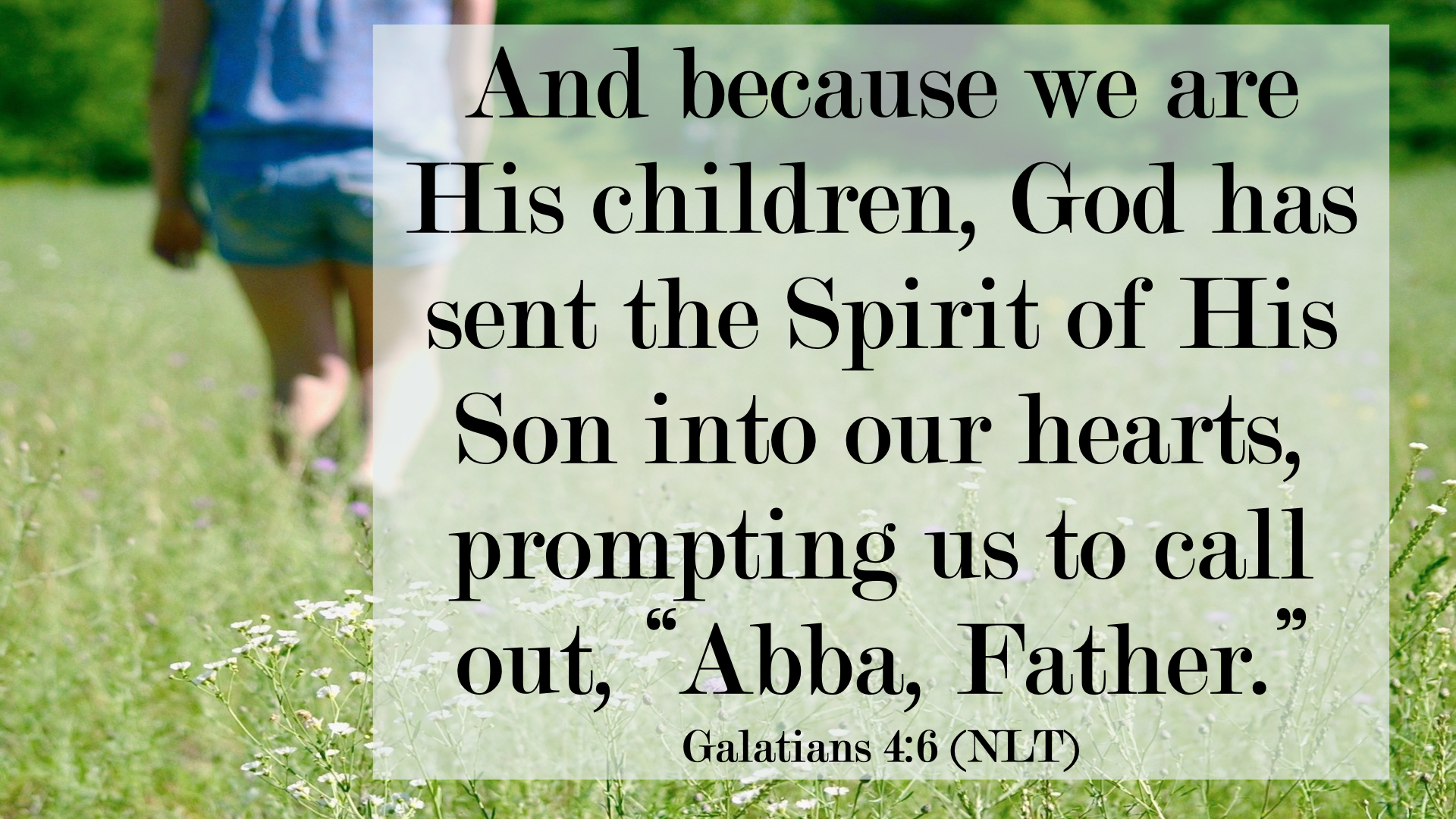
In His intense prayer time just before His crucifixion, Jesus used the phrase “Abba Father” to express His intimacy. This phrase is used two other times in the New Testament. Both of these times it’s telling us that we can approach our Heavenly Father the same way Jesus did (see Mark 14:36; Galatians 4:6; Romans 8:15). 

The Romans understood the weight that was associated with the practice of adoption. They knew that a father chose that child to be a part of his family, giving that child full acceptance into the family. Marvin Vincent noted,

“We have but a faint conception of the force with which such an illustration would speak to one familiar with the Roman practice; how it would serve to impress upon him the assurance that the adopted son of God becomes, in a peculiar and intimate sense, one with the heavenly Father.”

In writing to the Romans, Paul reminds them that for those who are in Christ Jesus, there is no condemnation—nothing holding them back from God’s presence. He also said that God has fully adopted us into His family, and that the Holy Spirit was now in us, encouraging us to call God “Abba Father” just as Jesus did (Romans 8:1, 14-16). 

Check out these two final thoughts from Jesus: He encourages us to approach God as innocent children, and He praises Our Father for then intimately confiding in His children—

“Truly I tell you, unless you change and become like little children, you will never enter the kingdom of heaven. … I praise You, Father, Lord of heaven and earth, because You have hidden these things from the wise and learned, and revealed them to little children.” (Matthew 18:3, 11:25) 

No matter what your relationship was with your earthly father, Jesus encourages us to approach our Heavenly Father in innocence, wonder, expectation, imagination, and intimacy. This is what God desires in His relationship with you! 

If you’ve missed any of the messages in our series Intimate Conversation, you can find them all by clicking here. 

►► Would you please prayerfully consider supporting this ministry? My Patreon supporters get behind-the-scenes access to exclusive materials. ◀︎◀︎
Poetry Saturday—The Children’s Hour

Between the dark and the daylight,
      When the night is beginning to lower,
Comes a pause in the day’s occupations,
      That is known as the Children’s Hour.

I hear in the chamber above me
      The patter of little feet,
The sound of a door that is opened,
      And voices soft and sweet.

From my study I see in the lamplight,
      Descending the broad hall stair,
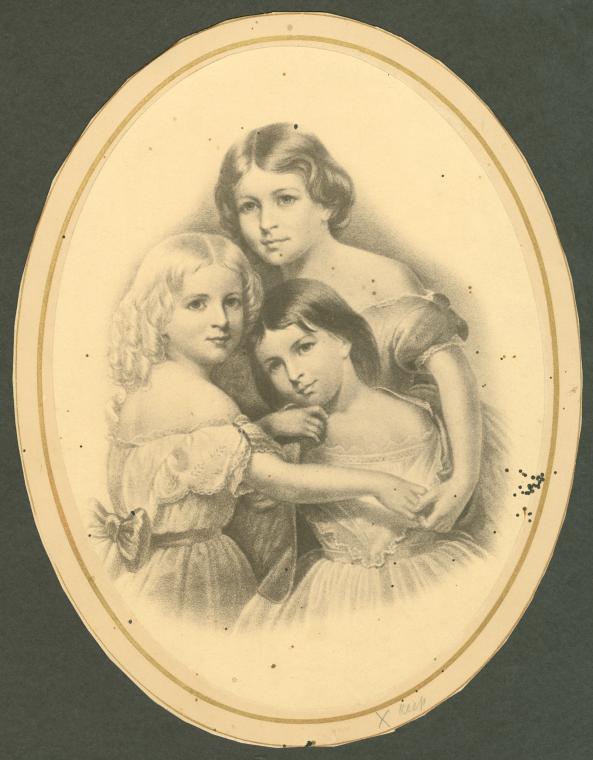
Grave Alice, and laughing Allegra,
      And Edith with golden hair.

A whisper, and then a silence:
      Yet I know by their merry eyes
They are plotting and planning together
      To take me by surprise.

A sudden rush from the stairway,
      A sudden raid from the hall!
By three doors left unguarded
      They enter my castle wall!

They climb up into my turret
      O’er the arms and back of my chair;
If I try to escape, they surround me;
      They seem to be everywhere.

They almost devour me with kisses,
      Their arms about me entwine,
Till I think of the Bishop of Bingen
      In his Mouse-Tower on the Rhine!

Do you think, O blue-eyed banditti,
      Because you have scaled the wall,
Such an old mustache as I am
      Is not a match for you all!

I have you fast in my fortress,
      And will not let you depart,
But put you down into the dungeon
      In the round-tower of my heart.

And there will I keep you forever,
      Yes, forever and a day,
Till the walls shall crumble to ruin,
      And moulder in dust away! —Henry Wadsworth Longfellow

8 Quotes From Josh McDowell On God’s Ideal For Sex

All of these quotes are taken from Josh McDowell’s book 10 Commitments For Dads

“Our desire and need for intimacy and relationship is rooted in the image of God as One (see Deuteronomy 6:4). Marriage and marital sex between a man and woman reflects His nature of oneness and unity.”

“Human sexuality involves every aspect of a person’s being—and sex is meant to connect us on every level.”

“Respecting the boundaries of sexual morality and the ‘stop’ signs for extramarital and premarital sex does bring protection and provision. Protection from: guilt, unplanned pregnancy, sexually transmitted diseases, sexual insecurity, emotional distress. Provision for: spiritual rewards, optimum atmosphere for child-raising, peace of mind, trust, true intimacy.”

“Sex as God designed it was meant to be lived within the context of healthy boundaries…. Following God’s design then allows a couple to experience the beauty of sex as it was meant to be experienced.”

“Purity is God’s boundary that provides for a maximum sex life and protects us from the negative consequences of sexual immorality [1 Thessalonians 4:3-5, 7].”

“Where did sexual purity come from? From the very character of God Himself. God says, ‘Be holy, for I am holy’ (1 Peter 1:16). ‘All who have this I hope [of being like Christ when He returns] in Him purify themselves, just as [God] is pure’ (1 John 3:3).”

“We were created by God with the desire and longing to be that ‘one and only’ to someone else. That desire came directly from the very nature of God Himself … ‘He is the faithful God…’ (Deuteronomy 7:9).”

“Because true love’s priority is to protect and provide for the one being loved, God’s kind of love will not do things that are harmful to the security, happiness, and welfare of another person.”

You can check out my review of 10 Commitments For Dads here. I also shared some other quotes from this helpful book here.

How Guys Unintentionally Sabotage Their Relationships

There is a relationship killer that seems to be particularly hard for men. It’s hard because men’s brains are designed in a way that sometimes prohibits them from even seeing this issue.

Bill & Pam Farrel wrote a book called Men Are Like Waffles, Women Are Like Spaghetti. The Farrels identify how men tend to compartmentalize their lives. That is, guys can be so absorbed in one “box” in their life that they are completely oblivious to the other boxes. For instance, when a man is at work he seldom thinks about the other areas of his life (his wife, his kids, the bills that need to be paid, what he’s going to have for lunch).

In addition, men’s brains are also designed to stay in those boxes where things can be quickly fixed. A guy likes fixing things, so the boxes where he can do something and see an immediate result is a box he’s going to keep going back to again and again.

Here’s the trouble… Relationships don’t fit in nice, neat boxes. Neither are relationships something that can be “fixed.” And relationships are never, ever fixed or improved quickly.

So if a guy isn’t aware of these things, he can be unintentionally sabotaging the relationships around him.

King David illustrated this in his unintentional lack of involvement in three of his sons’ lives—

  • Amnon pursued an unhealthy relationship with his step-sister. David got mad but never did anything about it (2 Samuel 13:21).
  • Absalom got revenge for what Amnon did and then fled the country. When David finally allowed him to return to Israel, they never met to resolve what went wrong (2 Samuel 14:28).
  • Adonijah wanted to be king after David, but the Bible says, “His father had never interfered with him by asking, ‘Why do you behave as you do?’” (1 Kings 1:6).

Dave Wills wrote, “We all tend to craft a self-focused view of the world where we emerge as either a hero or a victim in every scene. We’re never the villains in the story. The truth is, though, that we’ve all been the bad guy more often than we’d like to admit. A life of love requires that we look in the mirror and give an honest and humble self-assessment.”

The way to defeat this relationship killer is to become aware of it through humble self-assessment. David learned this truth and shared his prayer with us: “Search me, O God. Show me any areas in my life where I am off-track” (Psalm 139:23-24).

In response to this prayer, the Holy Spirit must have showed David how he had unintentionally starved his relationships with Amnon, Absalom, and Adonijah, because he became highly involved in his son Solomon’s life.

So much so that as Solomon talked to his children about how they should live, he also told them where he had learned how to do this—his father taught him (Proverbs 4:1-4).

Guys, it doesn’t matter how long you’ve been unintentionally in another box. It doesn’t matter how strained the relationship may have become. If you will humbly ask God to search you, reveal to you where you’ve messed up, and ask Him to help you get better … your relationships WILL begin to improve!

Don’t wait another day to pray that “Search me” prayer!

Poetry Saturday—A Man

Edgar A. GuestA man doesn’t whine at his losses,
A man doesn’t whimper and fret,
Or rail at the weight of his crosses
And ask life to rear him a pet.
A man doesn’t grudgingly labor
Or look upon toil as a blight;
A man doesn’t sneer at his neighbor
Or sneak from a cause that is right.

A man doesn’t sulk when another
Succeeds where his efforts have failed;
Doesn’t keep all his praise for the brother
Whose glory is publicly hailed;
And pass by the weak and the humble
As though they were not of his clay;
A man doesn’t ceaselessly grumble
When things are not going his way.

A man looks on woman as tender
And gentle, and stands at her side
At all times to guard and defend her,
And never to scorn or deride.
A man looks on life as a mission.
To serve, just so far as he can;
A man holds his noblest ambition
On earth is to live as a man. —Edgar A. Guest

Josh McDowell On Appreciating Our Kids

“Unconditionally accepting your kids tells them that being matters. Expressing your appreciation to them says that their doing matters too. …

“Unless your kids are absolutely convinced that you accept them for who they are, your praise and appreciation can become manipulative. Appreciation without acceptance may prompt your child to relate to you on a performance basis, thinking, ‘If I do a good job … if I get A’s … if I score a goal … then my dad will love me.’ Living on a performance basis will tend to produce feelings of false guilt in your kids. That’s why you need to be sure your kids first feel accepted then appreciated. …

“Appreciate your child’s efforts more than your child’s accomplishments, and appreciate your kid’s worth as God’s creation even more than your kid’s efforts.” —Josh McDowell, in 10 Commitments For Dads

If you are interested in more quotes from 10 Commitments For Dads, you can click here.

8 Quotes From “10 Commitments For Dads”

Dad, your involvement in the life of your kids and grandkids is vital! Please check out my review of 10 Commitments For Dads and then get a copy for yourself.

“Studies show that even until your child reaches 25 years of age, the greatest influence on his or her behavior will be the loving, close relationship with you, the father.”

“What our kids need to see is that our rules are out of a heart of love and are actually good for them, just as the instructions and commands that come from God. We as dads need to learn how to place God’s truth and family rules squarely within the context of our loving relationships. … The truth is, God designed us to follow the rules because of the relationship. There are do’s and don’ts in life, but they are there to provide for our well-being and protect us from harm. That’s what a person within a loving relationship wants to do—protect those they love and provide for their best.”

“God disciplines us with a purpose—it is to lead us to become more like Him. … When we hold our kids accountable for their benefit, not ours, it too fulfills their sense of purpose and reinforces their sense of responsibility.”

“Tell your kids repeatedly that because God’s nature is holy He will never asked them to do anything that would not be right and good for them. It is out of this pure goodness that He wants to protect them from those things that would harm them and provide for their very best. It is from His holy nature of goodness that He gives unselfishly and makes the security, happiness, and welfare of your kids as important as His own.”

“God has uniquely shaped and molded you and your kids to bring honor to Him. It is only proper and right to love what He has done. Teaching your kids to love what He has uniquely designed isn’t being self-centered. We need to be proud of Him for what He has created and humbly celebrate our uniqueness for His glory, ‘For everything comes from Him and exists by His power and is intended for His glory. All glory to Him for ever! Amen’ (Romans 11:36).” 

“What our kids hear and see in today’s culture is rarely a representation of healthy love. Selfish, lustful, and even abusive behavior is passed off as a love relationship. That is why, in a real sense, we must redefine to our kids what such a relationship actually is from a biblical perspective.”

“The best sex education is 30 seconds here, one minute there, 10 seconds here, two minutes in 45 seconds there, and so on, starting as young as possible. When something comes up, step in, addressed it, and step back. Don’t make a big deal out of it.” 

“Because true love’s priority is to protect and provide for the one being loved, God’s kind of love will not do things that are harmful to the security, happiness, and welfare of another person.”

I will be sharing more quotes from 10 Commitments soon. You can subscribe to my blog to be notified as soon as they quotes are shared. You can also follow me on Twitter and Tumblr to see the healthy quotes I share every day.