Listen to the podcast of this post by clicking on the player below, and you can also subscribe on Apple, Spotify, or Audible.
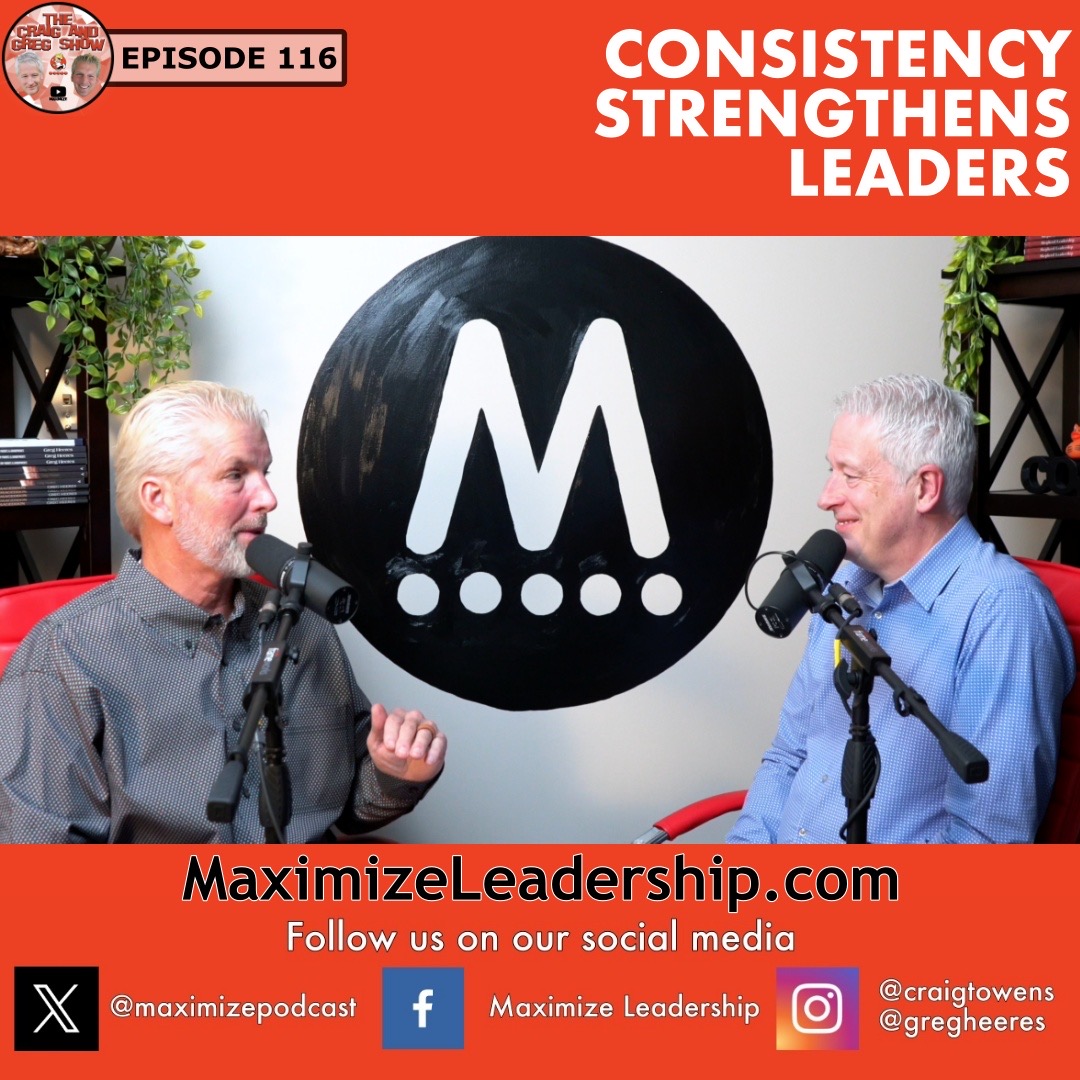
Like many popular phrases in the lexicon you’ve probably heard “consistency is key” thousands of times and rarely given it a second thought, but Greg and I want to challenge you to revisit this vital area. In today’s episode we discuss how an intentional focus on consistency will make you a better leader—which in turn will make your team more effective and productive.
[0:00] Intro
[0:30] People naturally gravitate towards certainty.
[1:20] One of a leader’s biggest goals should be to be consistent for their team.
[2:29] Greg discusses how an inconsistent leader can derail an organization.
[3:50] What is the message to your team when you’re not consistent?
[5:05] We use non-business examples to highlight the importance of consistency.
[6:44] Consistency takes effort and intentionality.
[9:03] What are people looking for from their leader to be consistent?
[10:53] Greg shares a quote from Aristotle.
[12:46] Excellence isn’t just “a habit,” it is an intentional choice of habits.
[17:42] Protect your spirit.
[18:26] I reveal what has made me the most consistent.
[22:41] Greg and I want you to be more successfully consistent as well!
Listen to the podcast of this post by clicking on the player below, and you can also subscribe on Apple, Spotify, or Audible.
In John 10:1-18, Jesus calls Himself the Good Shepherd, and He refers to those who follow Him as His sheep.
Anyone who has ever seen a shepherd interact with his sheep knows that the sheep are listening for their shepherd’s voice to give them direction, but they will ignore or run away from a stranger’s voice.
This requires two-way communication. The shepherd must speak tenderly and convincingly, and the sheep must remain tuned in to their shepherd’s voice with an ear to follow.
This requires proximity. The shepherd cannot speak from a distance without raising his voice, and sheep will never be attracted to someone who yells at them.
This requires consistency. The shepherd needs to continually speak life-giving words, and the sheep need to consistently obey the shepherd’s words in order to reap the benefits.
This requires discernment. The sheep have to be able to know the difference between their shepherd’s voice and a stranger’s voice. The shepherd needs to speak “words of eternal life” (see John 6:68-69).
This requires patience. A shepherd’s directions really “get through” the first time, so the message needs to be patiently, lovingly, and creatively repeated.
This requires abiding. The shepherd needs to show himself trustworthy, and the sheep need to show themselves faithful in their abiding with their shepherd.
Jesus is the good and perfect Shepherd. There is no one else to whom I should be trusting, abiding with, listening to, and obeying.
The Good Shepherd will call some of His sheep to serve as His under-shepherds for other sheep. Those under-shepherds bring the Good Shepherd glory by shepherding just as Jesus models for them.
When shepherds and sheep remain in constant communication, there is a vitality and maturity that is readily apparent. And when the communication breaks down, the health of the sheep quickly deteriorates.
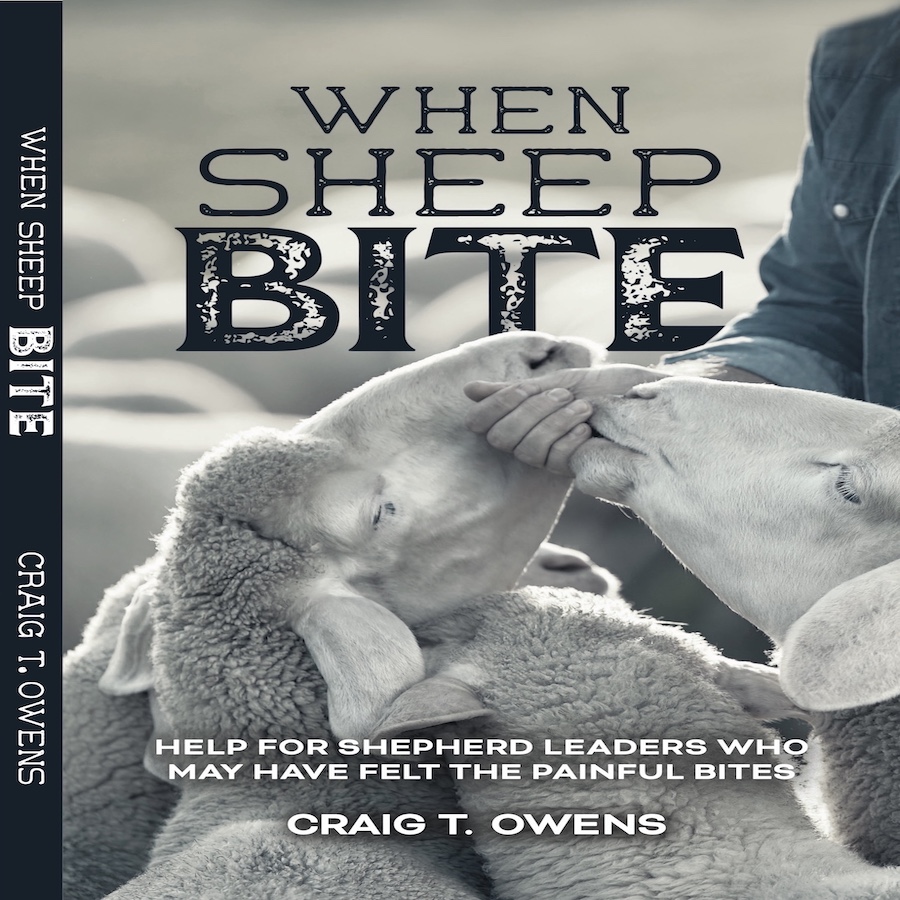
If you have been called to be an under-shepherd, please check out my books Shepherd Leadership and When Sheep Bite that will give you practical, biblical guidelines for you to thrive in this beautiful ministry.
Listen to the audio-only version of this podcast by clicking on the player below, or scroll down to watch the video.
As leaders, we are called to set the example for our organization. As Greg and I discuss in this episode, the quickest way to make a positive change in your organization is to exhibit the traits you want to see. Do that with consistency, and your team will begin to reflect those traits back to you.
[0:00] Welcome to our new studio!
[1:06] The way a leader leads influences the way the team follows.
[3:03] A leaders team will reflect the attitude they exhibit.
[5:53] Leaders need to constantly be interacting with their team to “check the pulse.”
[7:13] Recognizing innovation in your team is a compliment to your leadership.
[9:10] If there’s a trait we want our team to embody we must exhibit it first.
[10:20] If you don’t recognize potential in teammates you will always hire low-potential individuals.
[13:04] Consistency is important to how a leader reflects values.
[15:13] Leadership vs Bossing
[17:10] Jesus set an example for us of servant leadership.
[18:26] At some point your team will test you to see if what you’re saying is real.
[22:06] If you’re going through a difficult time, a coach can help you navigate. We would love to help you!
Check out this episode and subscribe on YouTube so you can watch all of the upcoming episodes. You can also listen to our podcast on Spotify and Apple.
Greg confesses a leadership mistake he had to correct in himself [9:20]
character is vital in emerging leaders [10:59]
compassion is valuable in emerging leaders [11:44]
consistency helps emerging leaders develop into solid leaders, and it helps the team leader to excel … great insight from Patrick Lencioni about being present [12:15]
teams must embrace diversity and find commonality [13:08]
I elaborate on Greg’s point about a leader’s presence and consistency [14:10]
the team leader has to take the initiative in identifying and raising up new leaders [15:47]
leaders need to continue to replenish themselves [17:22]
Check out this episode and subscribe on YouTube so you can watch all of the upcoming episodes. You can also listen to our podcast on Spotify and Apple.
Listen to the podcast of this post by clicking on the player below, and you can also subscribe on Apple or Spotify.
Amaziah did what was right in the eyes of the Lord, but not wholeheartedly (2 Chronicles 25:2).
Notice the contradictions in Amaziah’s life and leadership:
✅obeyed God’s law (v. 4)
🚫disobeyed God’s law (v. 14)
✅trusted that God would give success to the army of Judah (v. 5)
🚫supplemented his army with mercenaries from Israel (v. 6)
✅listened to the prophet God sent to him (vv. 7-10)
🚫ignored the prophet God sent to him (vv. 15-16)
✅trusted God (vv. 9-10)
🚫turned to idols (v. 14)
Sadly, the “not wholeheartedly” leader usually ends up just like other leaders that God calls “evil” (vv. 22-24, 27).
Bottom line: there is no such thing as a halfway leader in God’s eyes. There is only following God or rebelling against God—all leaders must choose one or the other.
A mark of a godly leader is one who consistently chooses to follow God wholeheartedly.
This is part 55 in my series on godly leadership. You can check out all of my posts in this series by clicking here.
…Josiah read in their hearing all the words of the book of the covenant… (2 Kings 23:2).
The leader must go first.
The leader must go big.
The leader must be visible.
The leader must be consistent.
This is the only way to affect real change.
Josiah did this extremely well. In fact, he did it better than any other king!
Josiah called all the people together and read “in their hearing” God’s word. Then he made it his own and took a public stand to confirm it (v. 3). Josiah went first, and “then all the people pledged themselves to the covenant.”
The rest of Josiah’s reign is punctuated by telltale phrases like:
in accordance with the Word of the Lord
as it is written in this book of the covenant
fulfilled the requirements of the law
Here’s one of the most amazing things to me: Josiah’s wholehearted obedience to God ends up fulfilling perfectly a 300-year-old prophecy that God gave through a prophet of Judah (v. 16; 1 Kings 13:1-3).
A mark of a godly leader is his public alignment with God’s Word.
When the leader goes public and then wholeheartedly follows through on his commitment to God, others will follow his lead. May all of us be that kind of pacesetting leader.
This is part 51 in my series on godly leadership. You can check out all of my posts in this series by clicking here.
The skeptics were always watching Jesus. As with our Master, so with us.
They wanted to find an inconsistency with which they could discount all that Jesus stood for. Thankfully, they found none! May the same be said of you and me.
May our lives and speech (or silence) never cause skeptics to discount the Gospel or—even worse—blaspheme God, nor may our lives cause a weak Christian to doubt or stumble.
This requires from us—
Self-awareness … I have to know my tendencies and avoid those things that cause offense.
Boldness … to speak the truth in love.
Knowledge of the Scripture … and its correct application.
God-confidence … so that we’re not intimidated by man’s disapproval.
Humility … to not seek things for our own benefit.
Charity … as we demonstrate our faith in loving action.
Focus … on eternity and on the greater treasure in Heaven.
Holy Spirit, empower us to live like our Master every day. “Adam’s likeness now efface, stamp Thine image in its place.” May people see and hear Jesus in us. No matter how closely they watch us, may they see no inconsistencies.
The vision of Isaiah…in the days of Uzziah, Jotham, Ahaz, and Hezekiah, kings of Judah (Isaiah 1:1).
Israel (the 10 northern tribes) was in the final stages of collapse, with kings only serving short spans, idolatry running rampant, and enemies closing in on every side. Isaiah boldly proclaimed that Judah was on the same path unless she repented and turned wholly to God.
Uzziah—who started off well, but fell away from God
Jotham—who faithfully served God
Ahaz—who never wanted to serve God
Hezekiah—who led a powerful revival in the return to worshiping God alone
Isaiah’s message never waivers. Through 66 chapters, 4 monarchs, and 60 years of ministry, Isaiah never compromises, waters down, nor alters the message God has given him.
But he does use different methods to deliver God’s consistent message—sometimes he thunders, sometimes he weeps, sometimes he uses illustrated messages, sometimes he speaks plainly, and sometimes he uses word pictures.
A mark of a godly leader is one who is both immovable and flexible.
Immovable on God’s principles; flexible on his delivery.
Can that be said of you and me?
This is part 21 in my series on godly leadership. You can check out all of my posts on this topic by clicking here.
Kenneth Blanchard has delivered to us some game-changing books over his years of writing. He has challenged us to do business in a different way, he has coached us on how to take control of our lives, and he has equipped us to better invest in the lives of the people around us. But ultimately he tells us that leadership is an issue of the heart. The Heart Of A Leader is a collection of quotes and insights from Ken Blanchard which go right to the heart of a leader.
Time and time again Blanchard uses the phrase “an effective leader.” He is not primarily concerned with leaders being efficient, and he certainly doesn’t define leadership success by an organization’s financial wellbeing. In his mind, an effective leader engages his heart first to serve those whom he leads.
Throughout his career, Blanchard has partnered with some amazingly insightful co-authors to bring a fresh perspective on how leaders can lead best from the heart. Many of these co-authors are featured in The Heart Of A Leader, which will help you see new paradigms of leadership acumen.
If you’ve never read anything from Ken Blanchard before, this book is a good sampler that will help you choose a book to read in its entirety. If you are already a fan of Blanchard’s writings, this book will help you see the consistency of his work. In either case, you cannot go wrong in reading these helpful words!
Job is described by the author of this book like this: “that man was blameless and upright, and one who feared God and shunned evil. … This man was the greatest of all the people of the East” (vv. 1, 3).
God Himself described Job like this: “There is none like him on the earth, a blameless and upright man, one who fears God and shuns evil” (1:8). Even after Job’s calamities, God repeats this description and adds, “and still he holds fast to his integrity” (2:3).
satan acknowledged that Job feared God (1:9). But that slanderer accused Job of being a mercenary—that is, he said Job only feared and obeyed God because of what he got out of the bargain (1:10). But the liar missed something: Job’s obedience came before God’s blessing, and Job’s worship came after Job lost all his earthly possessions.
“In all this Job did not sin nor charge God with wrong” (1:22), and “in all this Job did not sin with his lips” (2:10).
A mark of a godly leader is one who acts consistently in good times and bad times.
It’s a good question for godly leaders to ask: why do I obey God? why do I trust Him? why do I fear Him? is it so that I can get something out of it? is it because I’ve already received something? is it so that I can avoid punishment?
Or do I obey, trust, and fear God because He is worthy of all that—and more!—regardless of anything else? Godly leaders consistently ask both sets of questions and answer an assured “Yes” to the last question.
This is Part 14 in my series on godly leadership. You can check out all of my posts on this topic by clicking here.



 Like many popular phrases in the lexicon you’ve probably heard “consistency is key” thousands of times and rarely given it a second thought, but Greg and I want to challenge you to revisit this vital area. In today’s episode we discuss how an intentional focus on consistency will make you a better leader—which in turn will make your team more effective and productive.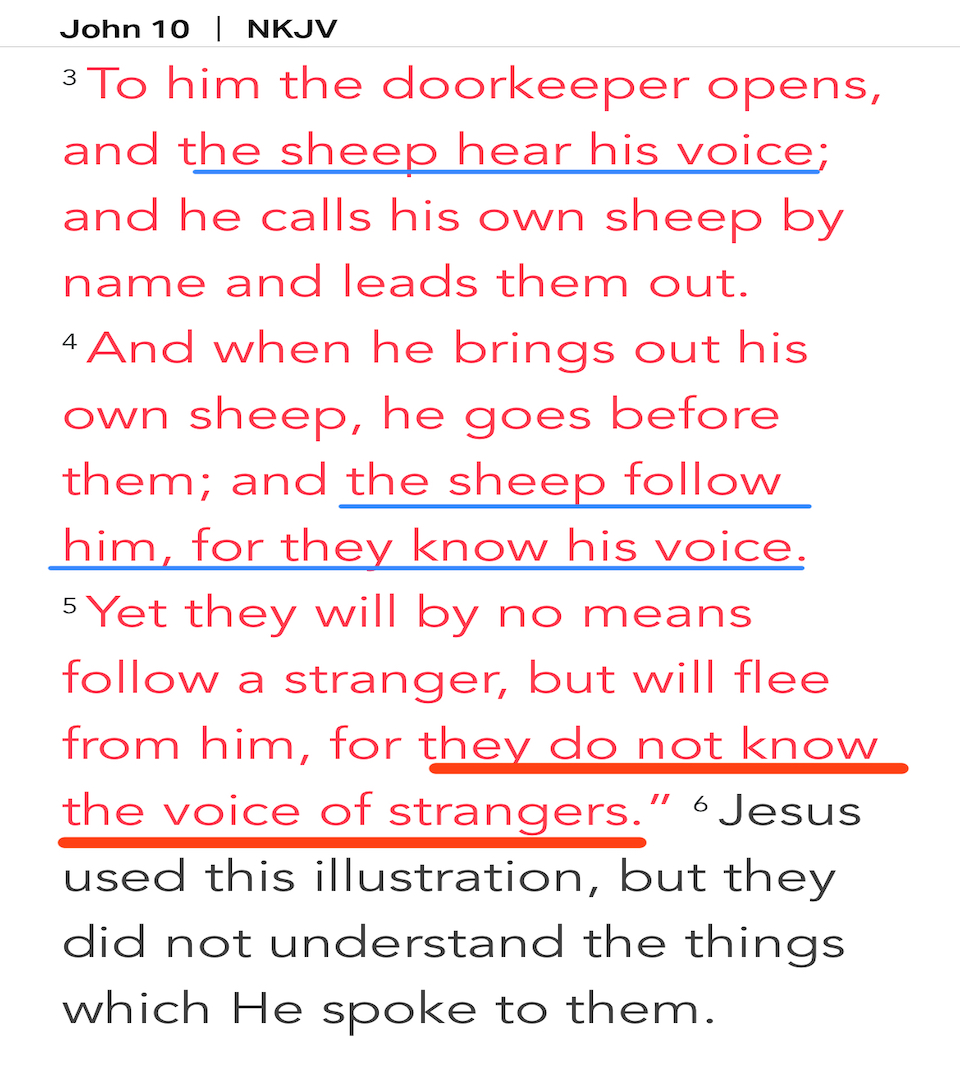





 Craig T. Owens