The Hidden Smile Of God (book review)

Listen to the podcast of this post by clicking on the player below, and you can also subscribe on AppleSpotify, or Audible. 

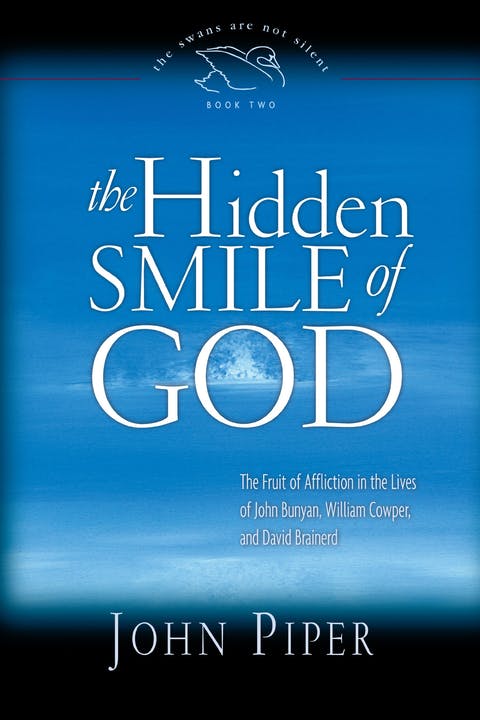
It’s one thing for someone to dispense sound advice, but it’s an entirely different thing for that advice to come from hard-won life experiences. The Hidden Smile Of God is the second book in John Piper’s excellent series of biographies called “The Swans are Not Silent.” 

Each book in this series features biographies and life lessons of three notable saints. Pastor John weaves these character studies together around a common theme. In this book, the lives of John Bunyan, William Cowper, and David Brainerd are examined to see the fruitful ministry that can emerge from a life plagued by affliction. 

John Bunyan, well-known author of The Pilgrim’s Progress, spent over a decade in prison, as well as the balance of his life under severely pressing circumstances. David Brainerd was a missionary to several American Indian tribes, while struggling with failing health and crushing loneliness. And William Cowper was suicidally depressed through nearly all of his life, and yet wrote some of the most intimate and moving poems. 

In fact, it is a line in one of Cowper’s poems from which the title of this John Piper book emerges—

Judge not the Lord by feeble sense, 
But trust Him for His grace; 
Behind a frowning providence 
He hides a smiling face.

Pastor John does more than merely share memorable biographies of these three men, but he extracts insights about suffering and affliction that will enable others to have a new biblical paradigm about their own suffering. Such amazing lessons for any of us struggling through dark times.

Even if you don’t personally struggle with affliction or anxiety or depression, chances are very good that someone around you does. Perhaps you could read this book and share some of these helpful insights with your friends or family members who are struggling. 

If you would like to check out my review of another book in this series—Seeing Beauty and Saying Beautifullyplease click here. 

►► Would you please prayerfully consider supporting this ministry? ◀︎◀︎
24 (book review)

Listen to the podcast of this post by clicking on the player below, and you can also subscribe on AppleSpotify, or Audible. 

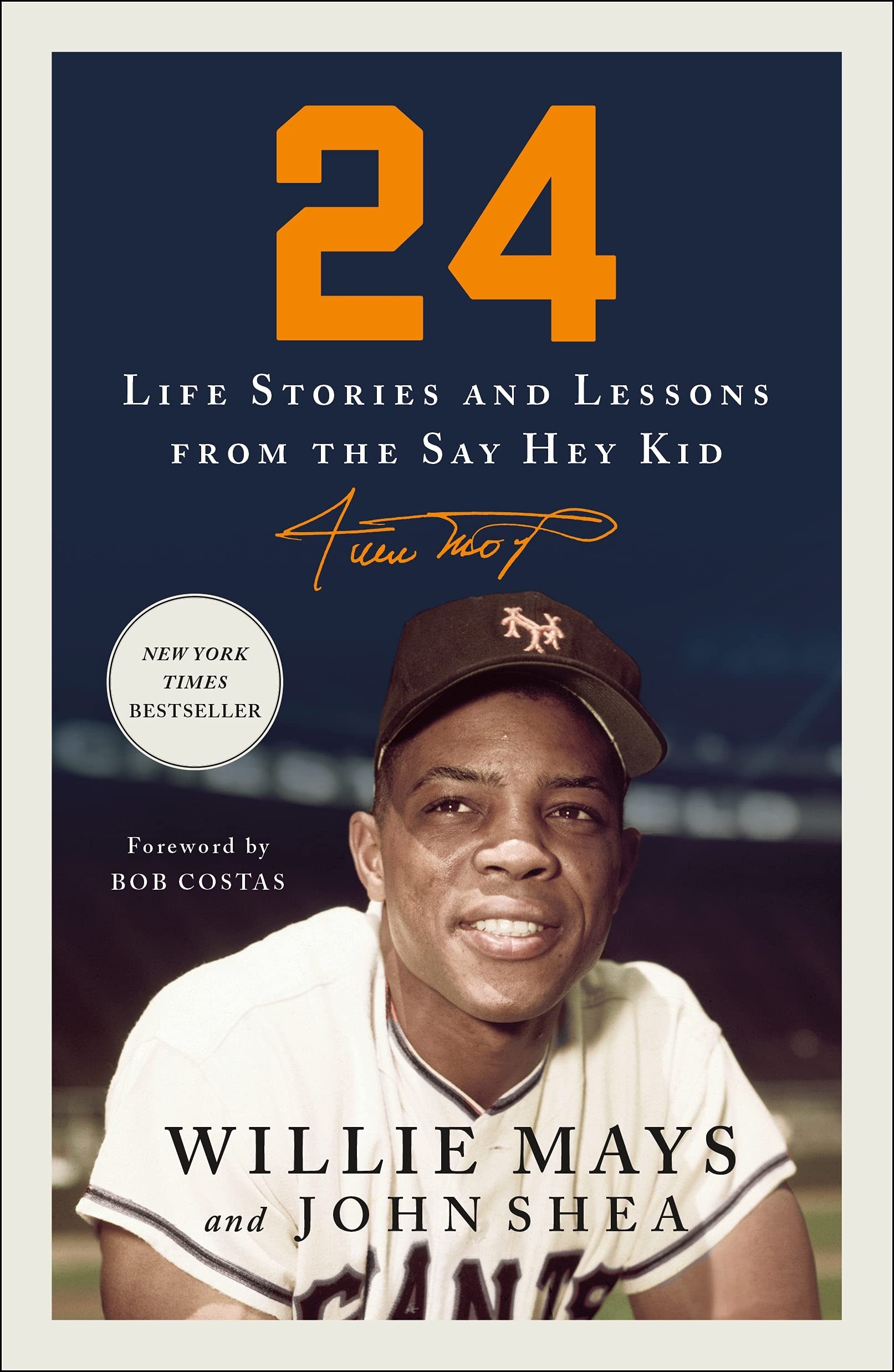
Whether you are a Major League baseball fan or not, there is so much to love about 24: Life Stories and Lessons from the Say Hey Kid by John Shey. 

Willie Mays is arguably the best all-around player in baseball history. There’s only a few that surpass him in individual statistics like home runs, stolen bases, and fielding prowess, but combining all of his stats puts the Say Hey Kid into a rarefied category! 

Willie overcame such huge obstacles and racism, took time away from baseball to serve his country during the Korean War and still racked up mind-boggling statistics, and exhibited a loyalty to both teammates and opposing players that make hardly anyone a comparable peer. He played the game competitively, seldom took a day off, always had time for the fans (especially the kids), and has remained an integral part of his beloved San Francisco Giants for more years in retirement than he even did as a player. 

He accomplished all of this with class and professionalism. 

John Shey compiled twenty-four life lessons from Willie Mays’ life, to match his iconic jersey number. Each chapter tells the story of his life before, during, and after baseball while elaborating on that particular leadership lesson. This book is extremely well written. 

Both baseball fans and students of leadership will find many rich lessons in 24, all presented in a very enjoyable format. 

►► Would you please prayerfully consider supporting this ministry? ◀︎◀︎
George Whitefield (book review)

Listen to the podcast of this post by clicking on the player below, and you can also subscribe on AppleSpotify, or Audible. 

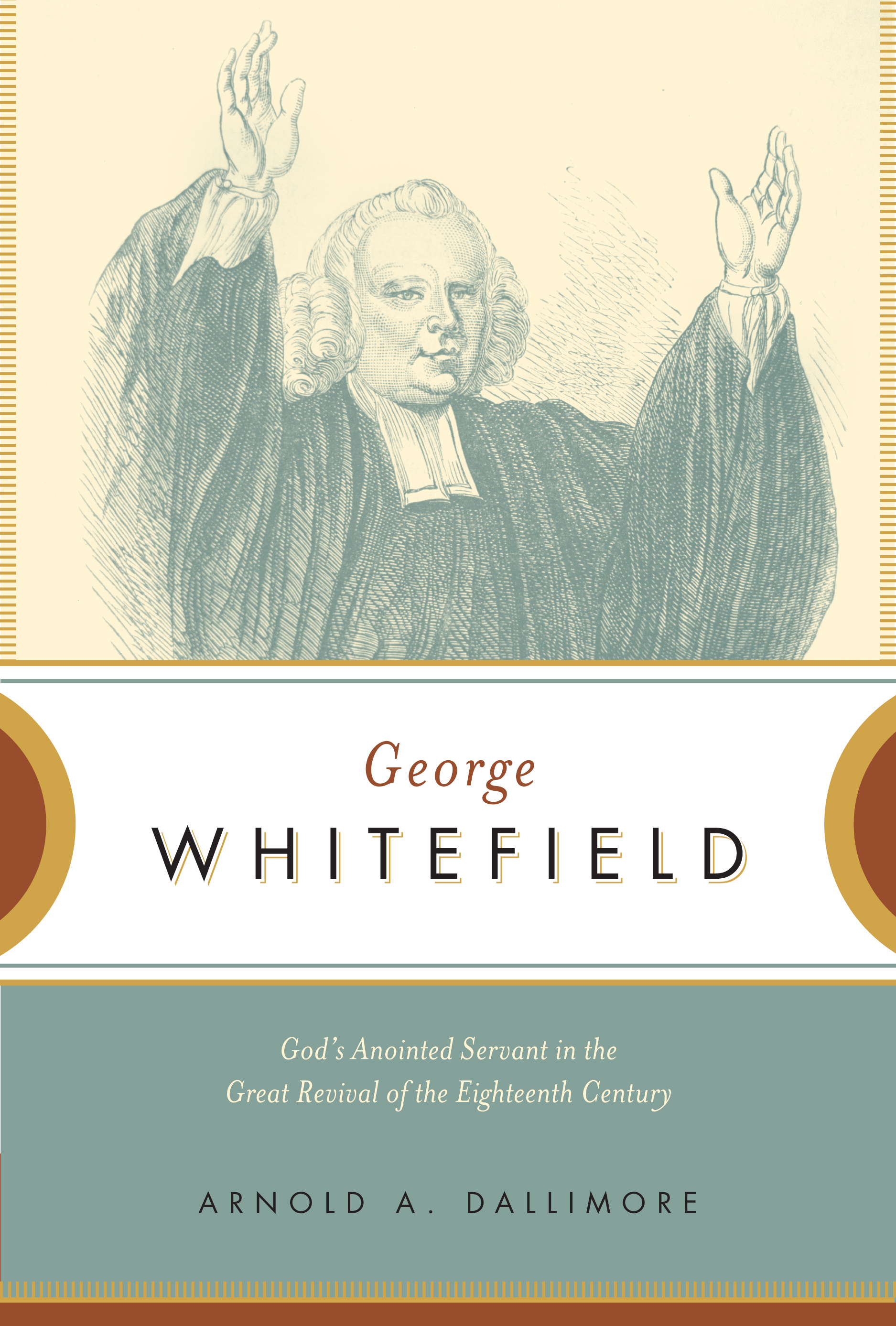
The ministry of George Whitefield in both the British Isles and the American colonies is still unequaled today. Of very few men could it be said that they both initiated a revival and put mechanisms in place for the long-range growth of the church in two entirely different cultures. Arnold Dallimore captures this well in his biography George Whitefield: God’s Anointed Servant in the Great Revival of the Eighteenth Century. 

Previously, I read and reviewed J.C. Ryle’s biography of George Whitefield. Bishop Ryle wrote this book to correct some of the maliciously untrue reports that were circulating about Whitefield. Rev. Dallimore’s book has the benefit of more years of history in which to test the assertions of Bishop Ryle. The result is a well-rounded work that takes us through the beginning of Whitefield’s ministry, his maturing thoughts and practices, and the lasting legacy that is still being felt today. 

Rev. Dallimore does address some of the same falsehoods that Bishop Ryle sought to debunk, but he goes farther to give us a sweeping overview of the tireless and highly effective ministry Whitefield undertook for nearly all of his life. Students of church history will definitely want to add this excellent book to their library. 

►► Would you please prayerfully consider supporting this ministry? ◀︎◀︎
Seeing Beauty And Saying Beautifully (book review)

Listen to the podcast of this post by clicking on the player below, and you can also subscribe on Apple or Spotify.

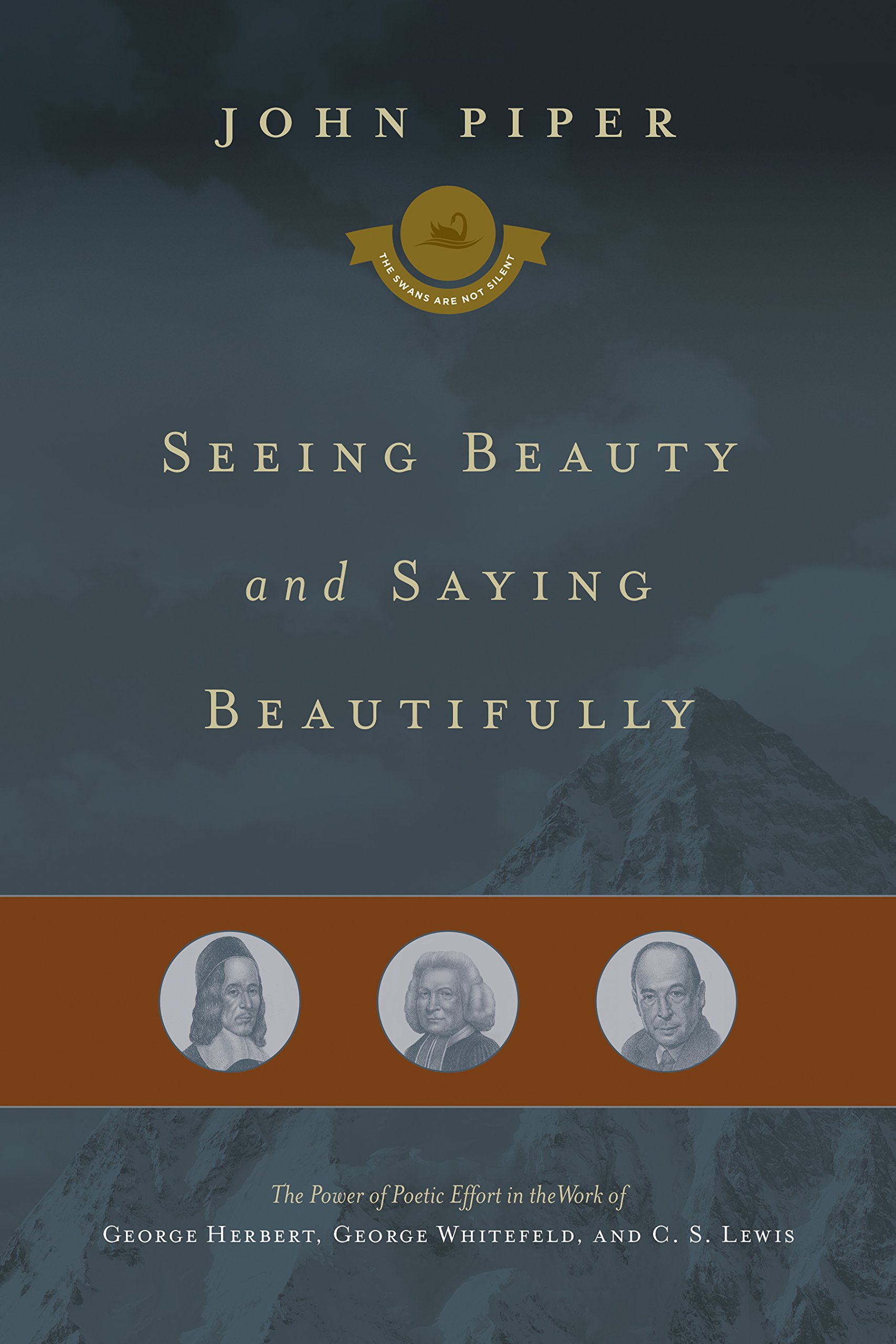
Seeing Beauty And Saying Beautifully is, in my mind, a grand slam! It features one of my favorite poets (George Herbert), possibly the most prolific evangelist of history (George Whitefield), my all-time favorite author (C.S. Lewis), all tied together by my go-to theologian (John Piper). Seeing Beauty And Saying Beautifully is part 6 in Piper’s series called “The Swans Are Not Silent.” 

George Herbert was a pastor of a small country church and a prolific poet who wrote almost all of his poems uniquely. “Of the 167 poems in The Temple, 116 are written with meters that are not repeated,” which even modern poets find astounding. George Whitefield spent more hours of his life preaching than he did sleeping, and he spoke with such a captivating style that he was quite possibly the first celebrity of the American colonies. C.S. Lewis wrote everything from history to fantasy, autobiography to poetry, theology to children’s novels. Peter Kreeft says of him, he “was not a man: he was a world.” 

John Piper finds in all three of these men a common thread: They all were able to not only see the beauty of God in everything, but they were able to express it in a beautiful way that drew in others to see the beauty of God for themselves. Pastor John calls this “poetic effort.” 

Pastor John also wrestles with how the profound creativity and eloquence of his three subjects meshes with the apostle Paul’s admonition that human eloquence could drain the Cross of Jesus of its power (see 1 Corinthians 1:17-2:5). He concludes that poetic effort for the sake of exalting the speaker or poet does turn people’s eyes to man and away from God. But that poet, evangelist, or author that uses the beauty in God’s creation to point people to the Creator is doing so in a way in which God is supremely exalted. This, Pastor John says, is exactly what Herbert, Whitefield, and Lewis have done, and done so well that their poetic efforts are still fruitful and God-glorifying long after their deaths. 

Seeing Beauty And Saying Beautifully is a wonderful book for those who enjoy biographies, theology, or the craft of skilled artisans. If you don’t know about the poems of George Herbert, the preaching of George Whitefield, or the vast library of literature of C.S. Lewis, let this book be your doorway to a rich new world of discovery, enjoyment, and God-glorification. 

►► Would you please prayerfully consider supporting this ministry? ◀︎◀︎
John Adams (book review)

Listen to the podcast of this post by clicking on the player below, and you can also subscribe on Apple or Spotify.

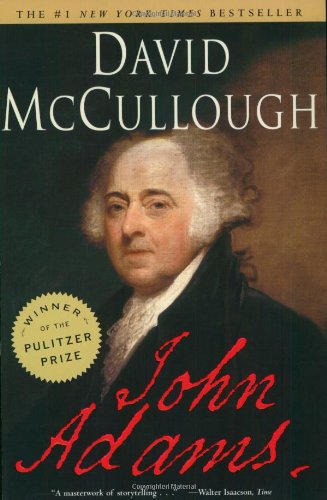
I find David McCullough to be one of the most thorough, impartial, comprehensive, and engaging historians that I have read. These attributes—and many others—are on full display in his biography of our second president John Adams. 

Many have rightly called Thomas Jefferson the pen of the Declaration of Independence and John Adams the voice of the Declaration. But it’s not just this historic document for which Adams should be remembered, but the very form of government which we enjoy right now is a living tribute to his forceful and persuasive genius. 

This biography is brilliantly told by McCullough through the first-person accounts of Adams’ vast quantity of letters, as well as the letters written to and about him, and the contemporary newspapers of the day. McCullough takes us back to Adams’ boyhood home to give us a good understanding of the upbringing and family heritage that fueled his quest for learning and leading. From his first elected office, through his time in Europe advocating for the newly created United States of America, into his presidency, and then through his long retirement, Adams was tireless in his efforts to make this country the best it could be. 

For students of history or leadership, this is a remarkably insightful look into a man that was at the heart of so much of what characterizes our great nation today. I have other books about John Adams in my library, but David McCullough’s lengthy work is, in my opinion, the definitive source. 

►► Would you please prayerfully consider supporting this ministry? ◀︎◀︎
Book Reviews From 2020

Five Presidents (book review)

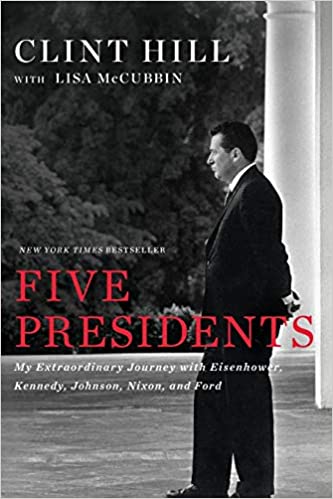
Some of my favorite books to read are in the categories of history and leadership. Five Presidents by Clint Hill is a treasure-trove of both history and leadership, giving us a front-row seat to the leadership styles of five United States presidents. 

Mr. Hill was on the presidential protection detail for Presidents Dwight Eisenhower, John Kennedy, Lyndon Johnson, Richard Nixon, and Gerald Ford. During his time, America experienced several “firsts” and Mr. Hill was right there to see them firsthand. During this time in our country’s history, only one of these presidents was elected, reelected, and finished both of his terms as president: Dwight Eisenhower. President Kennedy was assassinated, President Johnson finished JFK’s term but withdrew from running for reelection, President Nixon resigned during his second term, and President Ford became the only president to serve as both president and vice president without being elected to either office and then was defeated in his reelection bid. 

Five Presidents is not only an eye-opening, behind-the-scenes look at key historical events during the 1960s and ’70s, but it is also an informative study on the different leadership styles of these five unique men. Eisenhower ran the executive branch like a general, Kennedy was an idealist, Johnson used brute force, Nixon started off well and allowed his own insecurities to derail him, and Ford served as the “ordinary man” trying to clean up the mess left by his predecessor. 

Mr. Hill also documents the changes in the operations of the Secret Service. When he began his assignment, there were no bullet-proof presidential vehicles, no protection for presidential candidates (only elected officials), no permanent residence for the vice president, and no Air Force Two. By the time he retired, all of these things—and many more—had been implemented. 

Whether you enjoy history, leadership, or presidential biographies, Five Presidents will be a highly enjoyable and informative book for you. 

The Daring Heart Of David Livingstone (book review)

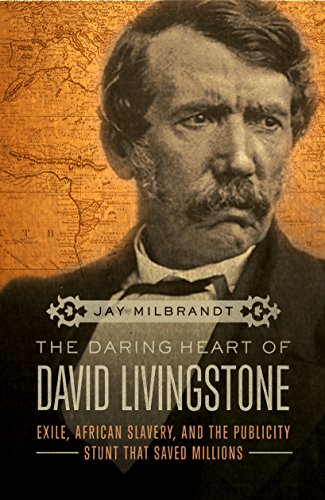
I’ll be honest: I only knew one small story about David Livingstone prior to reading The Daring Heart Of David Livingstone by Jay Milbrandt, and now I’m kicking myself that I didn’t learn more about this amazing man much earlier! 

Dr. Livingstone was a missionary, a world-renown explorer, and an avid abolitionist. Very rarely have I come across a biography that reads like a novel, but this book is just that! Milbrandt is a brilliant storyteller, and he makes the biography of Livingstone so intriguing that I could scarcely put it down. I love how many of Livingstone’s personal letters and diary entries are included in this book, as it almost makes it feel more like a memoir or autobiography. 

Dr. Livingstone first went to Africa as a missionary but then gained fame as an explorer, becoming the first man to traversing Africa on foot—from the Atlantic coast to the Indian Ocean. He wrote a book about these travels (including the people he met, the animal and plant life he observed, and the stories of the dangers he faced), which gave him celebrity status in England. So much so that when he wanted to return to Africa, both the London Missionary Society and the Royal Geographical Society wanted to be his sending agency. 

Livingstone desperately wanted to see the end of slavery on the African continent, and returned to Africa with that sole focus burning in his heart. Along the way, he met with massive struggles—some self-imposed and some unavoidable in the harsh environment of interior Africa. Yet through all of these hardships, Livingstone repulsed at the idea that anything he ever went through could be called a sacrifice, stating emphatically: “I never made a sacrifice!” 

Milbrandt writes, “Livingstone died perhaps believing he had failed in every aspect. Yet, in the few short years after his death, everything Livingstone had worked for had come to fruition.” Including the complete eradication of the foul slave trade across the African continent. 

What an amazing example for leaders to aspire to follow today! 

(Tomorrow I will share some quotes from David Livingstone that you won’t want to miss!) 

Book Reviews From 2019

The Essential Jonathan Edwards (book review)

Some have called Jonathan Edwards the greatest American theologian, and I think it would be very hard to dispute that. Not only was he a brilliant thinker, but Edwards was also a prolific speaker and writer. So Owen Strachan and Douglas Sweeney have taken on a monumental challenge in attempting to give us an accurate glimpse of this important man in their book The Essential Jonathan Edwards. 

The first part of the book is a short biography of Edwards’ life. The biography is told alternating between the biography of Strachan and Sweeney and the words Edwards recounted in his sermons and memoirs. 

The remainder of the book attempts to give the reader a sense of Edwards’ thoughts on topics such as the beauty of God’s creation, the joy of experiencing God’s pleasure, the essential nature of the Christian life, and the after-life. These topics are covered in the same way as the biographical portion—alternating between the actual words of Jonathan Edwards and the summation of Strachan and Sweeney. 

I found this book a bit frustrating. I would have preferred a more traditional biography of this great man or a collection of Edwards’ sermons verbatim. But the alternation between Edwards’ words and Strachan and Sweeney’s thoughts didn’t flow very well for me. 

My recommendation would be to either read George Marsden’s full or shortened biographies of Edwards, or simply read a collection of Edwards’ sermons. 

I am a Moody Press book reviewer.