Bible Reading (book review)

BibleJ.C. Ryle wrote 100+ years ago, but his words still resonate with me as though they were written yesterday. In his book Bible Reading, J.C. Ryle makes a strong case for a renewed passion for every one to step up their time in reading, meditating upon, and living out Scripture.

Chapter after chapter Ryle asks, “I charge you, I entreat you to give me an honest answer. What are you doing with the Bible? Do you read it? How do you read it?” And chapter after chapter he continues to give us fewer excuses for not reading the Bible, and more persuasion to read Scripture in a more meaningful way.

The opening words of this book are about as simple and as profound as anything any one could say about God’s Word: “Next to praying there is nothing so important in practical religion as Bible reading.”

What are you doing with the Bible? Do you read it? How do you read it? This book will help you answer these vital questions.

Links & Quotes

link quote

Some good reading from today…

I was totally blown away when I saw this morning that BibleGateway featured my chart The Kings & Prophets Of Judah & Israel!

[INFOGRAPHIC] 22 Surprising Facts About Sleep from the Cleveland Clinic. Here’s a great book resource: Sleep: It Does A Family Good.

Very powerful: An open letter to my friends struggling with eating disorders.

“In times of extraordinary crisis ordinary measures will not suffice. The world lives in such a time of crisis. Christians alone are in a position to rescue the perishing. We dare not settle down to try to live as if things were ‘normal.’ Nothing is normal while sin and lust and death roam the world, pouncing upon one and another till the whole population has been destroyed.” —A.W. Tozer

“I want you to know how to study theology in the right way. I have practiced this method myself. … The method of which I am speaking is the one which the holy king David teaches in Psalm 119. … Here you will find three rules. They are frequently proposed throughout the psalm and run thus: Oratio, meditatio, tentatio [prayer, meditation, trial]. …

“You should completely despair of your own sense and reason, for by these you will not attain the goal. … Rather kneel down in your private little room and with sincere humility and earnestness pray God through His dear son, graciously to grant you His Holy Spirit to enlighten and guide you and give you understanding. [Psalm 119:18, 27, 33, 34-37]. …

“Second, you should meditate. This means that not only in your heart but also externally you should constantly handle and compare, read and reread the Word as preached and the very words as written in Scripture, diligently noting and meditating on what the Holy Spirit means. … Therefore, you observe how in this psalm David always says that he will speak, think, talk, hear, read, day and night and constantly—but about nothing else than God’s Word and Commandments. For God wants to give you His Spirit only through the external Word. [119:11, 15, 48, 24, 47, 93, 97] …

“Third, there is the tentatio, the trial. This is the touchstone. It teaches you not only to know and understand, but also to experience how right, how true, how sweet, how lovely, how mighty, how comforting God’s Word is: it is wisdom supreme. This is why you observe that, in the psalm indicated, David so often complains of all sorts of enemies. … For as soon as God’s Word becomes known through you, the devil will afflict you, will make a real [theologian] of you.” [119: 67-68, 71] —Martin Luther, on the 119th Psalm

Links & Quotes

link quote

Some great reading & watching from this weekend…

What it means to fight like a man.

[INFOGRAPHIC] The most popular Book of all time.

“Christians are priests, but how priests if they offer no sacrifice? Christians are lights, but how are they lights unless they shine for others? Christians are sent into the world, even as Christ was sent into the world, but how are they sent unless they are sent to pray? Christians are meant not only to be blessed themselves, but in them shall all the nations of the earth be blessed, but how if you refuse to pray?” —Charles Spurgeon

“Reason does not know that salvation must come down from above; we want to work up from below so that the satisfaction is rendered by us.” —Martin Luther

“No matter the society or culture, the city or town, God has never lacked the power to work through available people to glorify His name.” —Jim Cymbala

Chilly Chilton has a very timely message: My Take On Mark Driscoll & Acts 29.

[FREE EBOOK] I love the graphics and Bible study tools from The Overview Bible Project. Check out the free ebook they are offering on the apostles.

[VIDEO] John Maxwell says, “You cannot be full of yourself and focused on others.” Check out his video on humility.

The Christian’s Secret Of A Happy Life (book review)

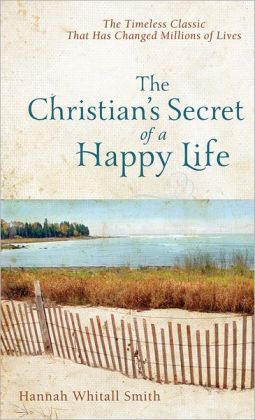
The Christian's SecretAlthough originally written in 1875, The Christian’s Secret Of A Happy Life by Hannah Whitall Smith is as relevant today as it was 140 years ago.

Hannah is quick to point out that happiness is not the goal for a Christian, but a closer walk with Jesus Christ is. When we are walking close with Him, happiness that comes from peace, security, and consistent growth in faith is the natural byproduct.

Hannah is a Quaker and she wrote nearly two centuries ago, so some language differences are to be expected. But I found that when the “old English” began to show up more liberally in certain passages, it was the author’s way of really getting excited about what she had to say! Other than that, the principles and the examples she uses to make her points are fairly timeless.

The book is divided into three sections, and the middle section—called Difficulties—was one of my favorites. What made it so intriguing was the practical and biblical way Hannah explained the difficulties Christians face, and the God-honoring way out of those problems.

This is an excellent devotional-style book for both new and experienced Christians.

“The Lord’s part is to do the thing entrusted to Him. He disciplines and trains by inward exercises and outward providences. He brings to bear upon us all the refining and purifying resources of His wisdom and His love. He makes everything in our lives and circumstances subservient to the one great purpose of causing us to grow in grace, and of conforming us, day by day and hour by hour, to the image of Christ.” —Hannah Whitall Smith

Links & Quotes

link quote

Some interesting reading from today…

“A gracious Hand leads us in ways we know not, and blesses us not only without, but even against, our plans and inclinations.” —William Wilberforce

A cool article about George MacDonald’s influence on C.S. Lewis.

Ken Davis uses an optical illusion to make a fantastic point in his post Perception Or Reality?

The son of a Hamas founder confirms that this terrorist group targets civilians.

[INFOGRAPHIC] This is a win-win: Benaiah featured on The Overview Bible Project.

Praise God!! Millions of Muslims converting to Jesus Christ!

“Commend me to the Christian who says, ‘I bless God I am saved; now what can I do for others?’ The first thing in the morning he prays, ‘God help me to say a word to some soul this day.’ During the day, wherever he may be, he is watching his opportunity, and will do good if he can.” —Charles Spurgeon

“There’s a great deal of trust in the love of God, and a great deal of love in the trust of God.” —John Piper

13 Quotes From “Yawning At Tigers”

Yawning At TigersYawning At Tigers by Drew Dyck is a wake-up call to any who view God as tame or Christianity as boring. As I read this book I found myself frequently saying, “Yes!” out loud to the truths Drew has shared. I loved this book! You can read my full book review by clicking here. Below are a few of the quotes I highlighted (unless otherwise noted, the quotes are from the author).

“We can’t truly appreciate God’s grace until we glimpse His greatness. We won’t be lifted by His love until we are humbled by His holiness.” 

“Here, the contrast between God and an idol couldn’t be clearer. We are told that after offering sacrifices to the golden calf, the Israelites ‘sat down to eat and drink and got up to indulge in revelry’ (Exodus 32:6). But when God descended on Mount Sinai, ‘everyone in the camp trembled’ (Exodus 19:16). You don’t tremble before an idol. … An idol is safe. It never challenges you. It isn’t threatening. It doesn’t judge sin or demand loyalty. But the Holy One of Israel is a jealous God—passionate and loving, yes, but unspeakably dangerous too.”

“The language we use reveals an awful lot about how we think about God. A cursory examination of the way we speak exposes how pervasive this Jesus-as-my-nonjudgmental-buddy attitude is in the church.” 

“While we know enough about God to receive salvation and enter into a relationship with Him, our knowledge of Him is still far from complete. Our intelligence is too small, our languages too limited. When it comes to God, we are all beginners.”

“So soon as we become satisfied with any picture of God, we are in danger of idolatry.” —Victor White 

“Unfortunately, in our efforts to make the Bible interesting and relevant, we try to normalize God. We become experts at taking something lofty, so unfathomable and incomprehensible, and dragging it down to the lowest shelf. We failed to account for the fact that God is neither completely knowable nor remotely manageable.”

“We lack a practice of personal holiness because we’ve lost a theology of divine holiness. When we neglect a part of God’s nature, we shouldn’t be surprised when that same attribute goes missing in our lives. … The Bible repeatedly makes explicit the connection between God’s holiness and ours. ‘Be holy,’ God says, ‘because I… am holy’ (Leviticus 19:2). The New Testament echoes this theme. ‘Just as He who called you is holy, so be holy in all you do’ (1 Peter 1:15).” 

“Only a God who punishes evil and rights wrongs is ultimately a God of love. … To fear the Lord is not to suggest God is callous or cool. Just the opposite, in fact. It is God’s consuming love that makes Him so dangerous. Because He cares deeply for His creation, He will not tolerate evil and injustice forever.”

“The evidence of the Christian’s zeal and piety was made clear to all the pagans. For example, they alone in such a catastrophic state of affairs gave practical evidence of their sympathy and philanthropy works. All day long some of them would diligently persevere in performing the last offices for the dying and burying them (for there were countless numbers, and no one to look after them). While others gathered together in a single assemblage all who were afflicted by famine throughout the whole city, and would distribute bread to them all. When this became known, people glorified the God of the Christians, and, convinced by the deeds themselves, confessed the Christians alone were truly pious and God-fearing.” —Eusebius

“When we root our sense of identity in God, everything changes. Once our vertical connection is healthy, the horizontal ones tend to thrive. However, a cruel irony comes into play when we seek validation from others that only God can provide. When we lean too heavily on human relationships, we actually end up sabotaging them. We become clingy, controlling. We find ourselves piling expectations on people they were never meant to bear.”

“This doesn’t mean the New Testament is solely about God’s intimacy. Nor does the Old Testament speak strictly about God’s transcendence. The entire Bible speaks of both. All through Scripture we are reminded that God is both great and near.” 

“For people in the throes of suffering, the Bible offers something much different than an answer—it offers a Person.”

“We shall never succeed in knowing ourselves unless we seek to know God.” —Teresa of Avila

No Kindas

no kindasAmaziah could have been one of Judah’s great kings. His father had cleaned up the Temple and had begun a revival of worship of God. When he came to the throne, Amaziah quickly led his army to an impressive victory over the Edomites.

That’s when things started to unravel.

Actually, things were beginning to come apart right from the start of Amaziah’s reign, but no one seemed to notice.

We get the clues in the language the biblical writers use. Amaziah frequently had a “but” or a “however” attached to what he did. Notice—

  • Amaziah “did what was right in the eyes of the Lord, BUT not as his father David had done” (2 Kings 14:3).
  • He worshiped God “HOWEVER the high places [of pagan worship] were not removed” (14:4).
  • He rallied his fighting men for battle BUT “he also hired a hundred thousand [mercenary] fighting men from Israel” (2 Chronicles 25:6).
  • Amaziah led his army to victory over the Edomites with God’s help BUT “he brought back the gods of the people of [Edom] … bowed down to them and burned sacrifices to them” (25:14).
  • The king of Israel warned Amaziah not to attack Israel “HOWEVER Amaziah would not listen” (25:20).

Not only did these BUTS and HOWEVERS take Amaziah farther away from God, they took him farther away from his people too: “From the time Amaziah turned away from following the Lord, they conspired against him in Jerusalem (25:27).

There is no “kinda” following God. It’s all-in or nothing. My heart is either fully devoted to God with no BUTS or HOWEVERS, or am I moving away from God and from others around me.

It should be a huge warning sign when I hear myself say “but” or “however” in regard to anything involved with following my God.

Links & Quotes

link quote

Some good reading from today…

“The upright man must never think of depriving another of anything, nor must he ever wish to increase his own advantage to the disadvantage of another. This rule the Apostle gives thee, saying: ‘All things are lawful, all things are not expedient; all things are lawful, but all things edify not. Let no man seek his own, but each another’s.’ That is: Let no man seek his own advantage, but another’s; let no man seek his own honor, but another’s.” —Ambrose

Frank Viola has a challenging word to Christians in the quote he shares from A.W. Tozer: Recovering The Departed Glory.

Claiming Jesus is not what many think it is, says Chilly Chilton in his post: Name It, Claim It, Proclaim It!

When we don’t know that life is a war and satan is the enemy, or forget when we need to know it most, we can’t make sense of our struggles, suffering, and strife.” Read more of Mark Driscoll’s post Spiritual Warfare: Who, What & Why.

The Overview Bible Project always uncovers some cool things in Scripture. Like this post about what Beelzebul really means.

Why is it organizations are not allowed to hire a Christian, but at that same time are encouraged (forced?) to hire homosexuals? The story of David Tyree is a case-in-point.

The fact is, that the same moment which brings the consciousness of sin ought to bring also the confession and the consciousness of forgiveness.” —Hannah Whitall Smith

Both Testaments

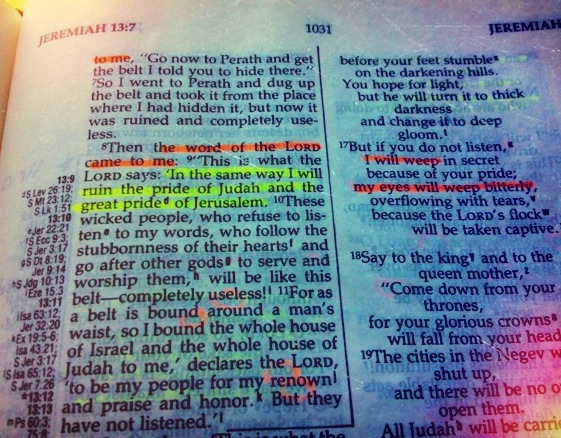
BibleThis past week I’ve had two conversations that seemed like contradicting thoughts about the Bible, but they’re really exactly the same.

Conversation #1—Since Jesus Christ set us free from the law, there is no longer any need for us to read or study the Old Testament.

Conversation #2—The New Testament is a perversion of the Old Testament, so we should ignore it and stick with the “original” Scripture.

One thing that has helped me see the Scripture in a more correct light is a thought I picked up from Leonard Sweet and Frank Viola in their book Jesus: A Theography. Instead of the titles we’ve given the two divisions of the Bible, it will be better to call them the First and Second Testaments. “Old” and “New” have a tendency to make us think out-dated and updated; First and Second remind us that they go together.

Hosea is one of the first prophets in the First Testament whose words were put into writing. It’s interesting to note how many of the themes from the Pentateuch, Joshua and Judges are linked to Israel’s condition in the last few years before the northern tribes went into exile.

“Hosea’s allusions to Genesis through Judges are highly significant. First, they help to establish the fact that these books had already been written by the time of Hosea, in the eighth century B.C. (Many scholars consider these books to be from the sixth century B.C. and even later.) Second, Hosea’s construal of these books helps us to understand early Biblical interpretation, which in turn gives us a better understanding of how the [Second] Testament interprets the [First].” —Archeological Study Bible

When we move into the Second Testament, we see over 850 First Testament passages are quoted, sometimes entire paragraphs. In every instance, the Second Testament authors see the fulfillment of the First Testament in the life of Jesus Christ.

In fact, Jesus Himself quoted from 22 books of the First Testament, even on the day of His resurrection He explained to them what was said in all the Scriptures concerning Himself (Luke 24:27), and He said He would open our minds so that we too could understand all the Scriptures (Luke 24:45-47).

Finally there is the issue of fulfilled prophesy. Not only were First Testament prophesies fulfilled during the First Testament time, but even more were fulfilled during the Second Testament. In Jesus Christ alone about 200 such prophesies were fulfilled.

Both Testaments are equally important, and equally valuable. In fact, either Testament without the other robs God of His glory and robs us of seeing His fullness.

Links & Quotes

link quote

Some interesting reading and watching from today…

An open letter that needs to be read: What’s The Big Deal With Pornography?

All doubts are an attack of the enemy; the Holy Spirit never suggests them, never. He is the Comforter, not the accuser; and He never shows us our need without at the same time revealing the Divine supply.” —Hannah Whitall Smith

“The only way to have a fulfilling life is to stop relying on your own savvy and start relying on God to provide the necessary turn of affairs.” —John Piper


[VIDEO] Speaking of John Piper, I am so excited about his new project called Look At The Book! Check out this preview.

President Obama unleashes another assault on our religious liberties.

Dr. Tim Elmore gives parents and teachers Five Words Every Child Needs To Hear.