Are You Available?

Have you ever had someone walk into your life—even if it was just for a moment—and say something you needed to hear? You might not have liked what they had to say, but it was definitely something you needed to hear. 

My hunch is that those timely messengers were not necessarily “experts” in the area in which they talked to you. They may have been a doctor talking about a medical need, or it may have been a friend talking about some health issues. Most of the time our valuable messengers are just everyday people. 

God loves using “everyday people”! 

  • You don’t have to be a trained pastor to minister to people. 
  • You don’t have to be a trained theologian to tell people what you believe about God.
  • You don’t have to be a trained counselor to encourage someone.

You just have to be who God created you to be. And you have to be available. Like Amos. 

Amos was simply taking care of his farm and his herds when God called him to deliver a timely message to His people.

Amos introduces himself as just one of the shepherds of Tekoa (1:1) and tells another priest that he was simply minding his own business when God said, “Go, prophesy to My people” (7:10-15). 

Amos’ name means burden-bearer—he had a burden for his kinsmen. He saw their sin and knew what defiance of God would mean for them. This burden made him available to hear God’s voice say, “Go.” 

“But I’m not a trained prophet,” Amos could have said. “You are telling me to ‘prophesy’ but all I really know is farming and shepherding.” 

God said, “Say what you know.” 

What did Amos know?

  1. Amos knew God’s voice—In this short book, 43 times(!) Amos uses phrases like says the Lord, declares the Lord, or hear the word of the Lord. 
  2. Amos knew his business—This book is filled with language about sheep and shepherds, farmers and farm equipment, gardens and vineyards. 
  3. Amos knew God had told him “Go and speak” so Amos had boldness. 

You can put your name in all three of those places that say Amos. You can know God’s voice through the Bible, you know your “business” (whether it’s parenting, or coaching, or your own profession), and you can hear God saying, “Go, tell people about Me.” 

God wants to use you for His glory. He just needs your availability. Will you be open to being that person? 

Join me next week as we continue to learn the major lessons from that the minor prophets teach us. 
The Day Of The Lord

All we know about the prophet Joel is that he is the son of Pethuel, and his name means Jehovah is God. He appears to be addressing the southern part of Israel (Judah/Jerusalem). 

What is interesting to note about Joel’s writing is a recurring theme that goes something like this: 

Foreshadowing (or prophetic foretelling) → Calling for a godly response → God’s blessing on a right response or God’s punishment on a wrong response → An outcome which foreshadows or foretells another more dire event → repeat…

For instance, in Joel’s prophesy the massive invasion of locusts was intended to get the Israelites to pay attention to their sins. Joel calls for fasting and repentance and warns (foreshadows/foretells) that an invading army at a later date would do even greater damage (1:2-14). 

Likewise, the invading army—which would do more damage than the invading locusts—should also call the Israelites to repentance and imploring God for His help. 

Jesus, just like Joel, taught that whether it was an evil man, an accident, or even a natural disaster, painful things should cause us to consider the state of our eternal soul (see Luke 13:1-5). And Jesus and Joel both foretell of the Day of the Lord when there will be no more opportunities for repentance. 

To prepare God-fearing people for this dreadful day of the Lord, Joel foretells if the outpouring of the Holy Spirit. This is the same empowering Spirit that Jesus said would equip His followers to take the message of salvation to all four points of the compass (Acts 1:4-8). And just as Joel foretold 800 years earlier, on the first Pentecost Sunday after Christ’s ascension back into heaven, the Christians were baptized in the Holy Spirit, prompting Peter to quote an extension passage from Joel (compare Joel 2:28-32 with Acts 2:14-21).

Joel’s final chapter talks about Judgment Day, and about the multitudes, multitudes in the valley of decision. Peter confronted his audience as well about the decision they should make to turn to Jesus as their Savior and Lord. 

The Day of the Lord could come at any moment and millions around the world are still in the valley of decision. I find these words quite sobering—

“Someone asked, ‘Will the heathen who have never heard the Gospel be saved?’ It is more a question with me whether we—who have the Gospel and fail to give it to those who have not—can be saved.” —Charles Spurgeon 

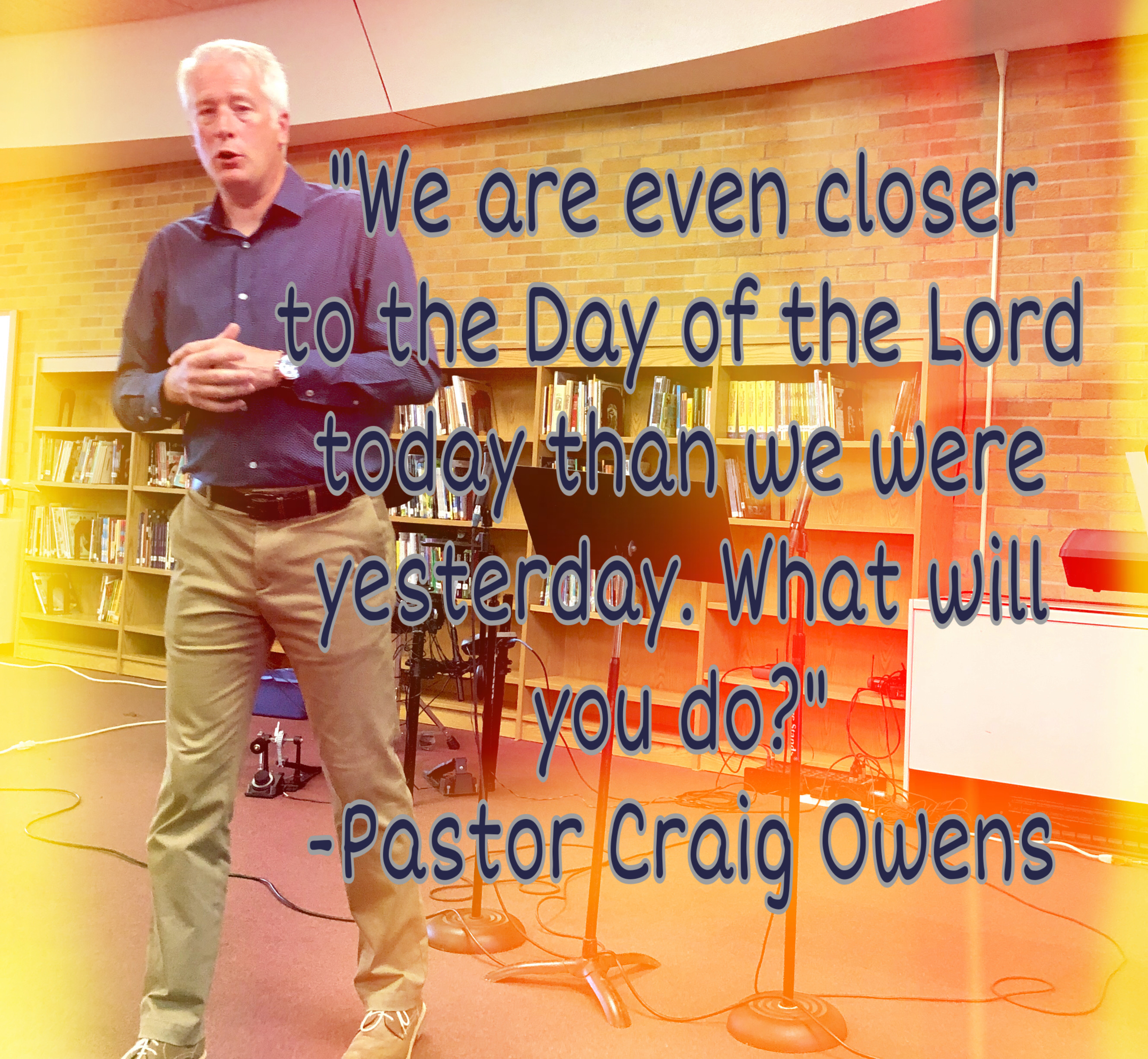
We are even closer to the Day of the Lord today than we were yesterday. What will you do?

Please join me this Sunday as we continue our series learning the major lessons from the minor prophets.

8 Quotes From “Jesus In Me”

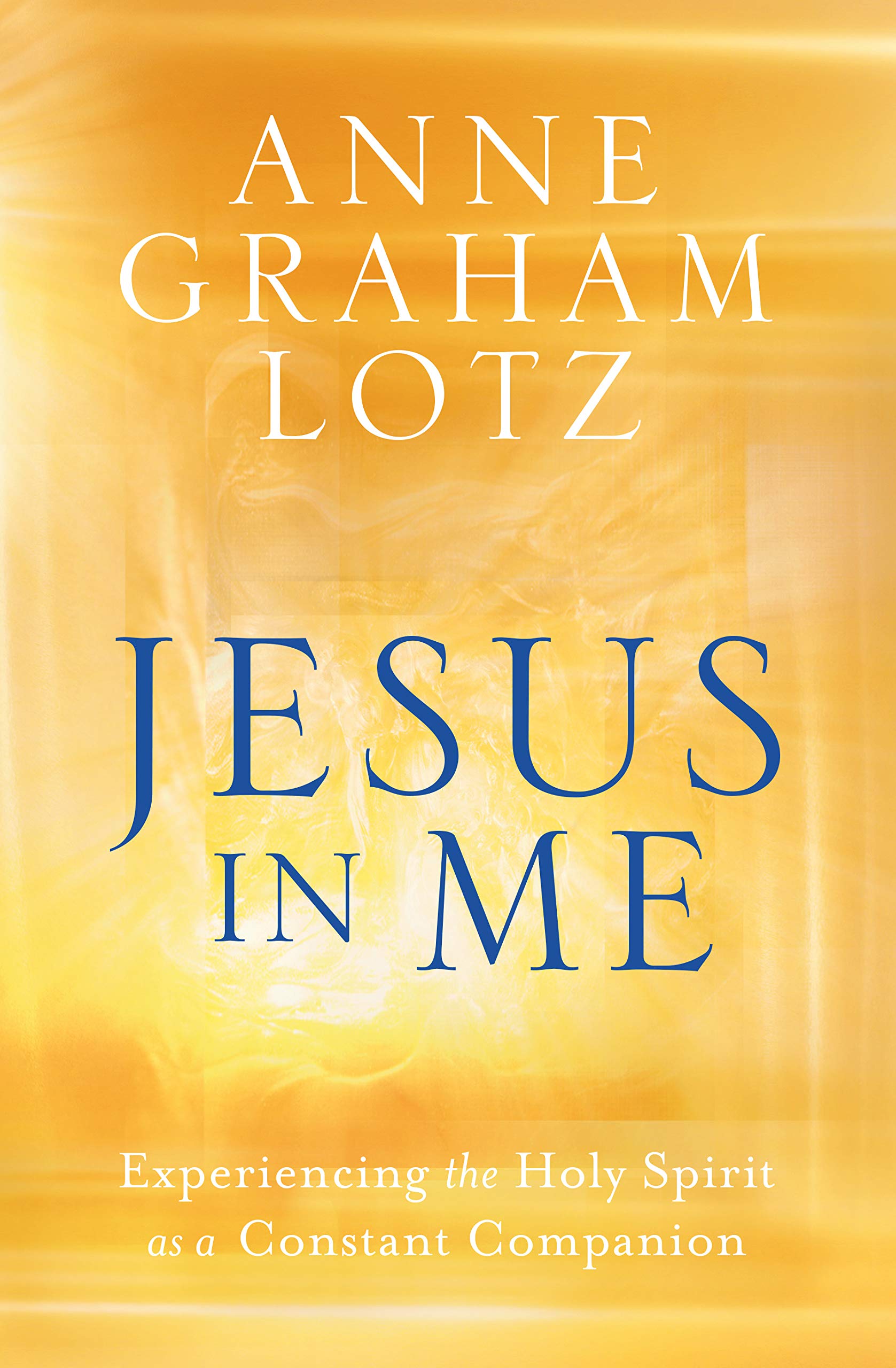
Anne Graham Lotz has given us a delightful book that feels like a living room chat with a friend as we discuss how the Holy Spirit operates in our lives. Check out my full book review of Jesus In Me by clicking here. 

“The Holy Spirit is not a thing but a Person. His personhood is emphasized in John 16, when eleven times in eight verses, He is referred to by the personal, masculine pronouns He, Him, or His.” 

“Could it be that you have missed the comfort of the Comforter because it has come indirectly through someone or something else? Like Mary Magdalene at the empty tomb, are your tears blinding you to the presence of Jesus right there beside you? Right there within you? My prayer is that He will use these words to comfort you as you experience the constant companionship of the Holy Spirit. Ask Him to open your eyes to the nearness of the One who is, in fact, Jesus in you.” 

“Whether your situation involves a misunderstanding with your neighbors, or a disagreement within your church, or tension in your home, or slander in your school, or gossip in your office, the Holy Spirit is able to defend you and plead your cause. Always. Ask Him. He’s never lost a case.” 

“Multiple times God has told me He would strengthen me through the howling winds of hardship. In Jeremiah He clearly warned me that people would fight against me but that He would make me an iron pillar. Through Isaiah He told me that people would rage against me and oppose me but that I was not to be afraid because He would strengthen me. He encouraged me from Revelation that if I would endure patiently and with humility, He would make me ‘a pillar in the temple of my God.’” 

“It’s a huge relief to know that it’s not my job to convict anyone else of sin. That’s the Holy Spirit’s job. Which leaves me free to love people just as they are. Yes, I can counsel and advise if they are open to it. Yes, I can speak the truth in love. Yes, I can point out the potential consequences of their sin. But in the end the most effective thing I can do is to pray for them with a heart full of love. Because the power to transform is His alone.” 

“As we choose to fix our eyes on Jesus, pursue righteousness, live by the truth, and fulfill God’s purpose for our lives, the Holy Spirit will guide us, sharpening our focus in the midst of life’s distractions and confusion.” 

“Maintaining the fire requires intentionally establishing some common spiritual disciplines. They are simple choices but not always easy. They include daily prayer, daily Bible reading, sharing the gospel, continuous obedience as you live out what God says in His Word, continuous trust as you relinquish your expectations and let Him have His way, deepening surrender to His authority—especially during times of pain and suffering.” 

“He uses all things without exception, not just some things, for my ultimate good. And my ultimate good is not health, wealth, prosperity, happiness, or sometimes the things we associate with ‘good.’ My ultimate good is to fulfill God’s purpose of shaping me into the image of Jesus Christ so I bring glory to Him.” 

Quest Study Bible (book review)

I was excited to get my copy of The Quest Study Bible. As I began to leaf through it and notice its unique format, I was suddenly transported back more than 20 years into my past…

“Daddy, what are you doing,” my young son asked, as I bent over some forms spread across my desk. 

“I’m filling out these tax forms,” I explained.

“Why?”

“So that I make sure I’m sending the right amount of tax money in to our government.”

“Why?”

“Because I don’t want to have to pay any late fees.” 

“Why?” 

“So we can keep more of my hard-earned money.” 

“Why?” 

“Go ask your mother….”

Any parent or grandparent knows that the incessant questions of kids is how they learn. Our youngsters are processing the world around them, asking questions, trying to make sense of how everything fits together. As our Heavenly Father’s children, we still learn about His world in much the same way. 

Some of the best-known catechisms of history have been handed down to us in a question-and-answer format like the Westminster Catechism—Q: What is the chief end of man? A: Man’s chief end is to glorify God, and to enjoy Him forever. 

The Quest Study Bible preserves this Q&A learning format for those of us that are (hopefully) lifelong learners of God’s Word. Each book starts off with the basic Who, Why, When, and To Whom questions that many of us are asking. Then every single page contains the catechism-like Q&As that query the text you’re reading. For example, in the first chapter of Matthew’s Gospel we are treated to questions like: “Why give the genealogy of Jesus the Messiah?” and “What’s the significance of calling Jesus the Messiah?” 

To help you more quickly find some of the answers you may be seeking, I also appreciate the quite extensive “Index to Subjects” at the back of this Bible.

If you are looking for a unique way to engage with Scripture—especially if you have an eager-to-learn mind—you will really enjoy The Quest Study Bible. 

I am a Zondervan book reviewer. 

Jesus In Me (book review)

When Jesus was about to ascend back into heaven, His disciples were understandably anxious. But Jesus spoke these reassuring words to them, “I will not leave you alone. I will ask the Father to send the Comforter to you.” And true to His word, the Holy Spirit was made available to all Christians. This is what Anne Graham Lotz explores in Jesus In Me.

In the opening pages, Anne explains that an important verse to help us understand the Holy Spirit is found in John 16:7. Anne and I both like the Amplified Bible’s rendering of this verse—However, I am telling you nothing but the truth when I say it is profitable (good, expedient, advantageous) for you that I go away. Because if I do not go away, the Comforter (Counselor, Helper, Advocate, Intercessor, Strengthener, Standby) will not come to you [into close fellowship with you]; but if I go away, I will send Him to you [to be in close fellowship with you].

Using the multiple names of the Holy Spirit captured in this verse—Helper, Advocate, Intercessor, Strengthener, Standby—Anne begins to dive deeper into what the Spirit of God does in these various roles.

This is not a heavy theological dissertation, nor does this book wade deeply into complex doctrines. Jesus In Me feels like Anne is your friend, and she is just sharing with you what the Bible has said to her about the Holy Spirit and how she has experienced Him for herself. The Scripture references are there for you to read on your own, and Anne shares her personal stories, but both of these simply invite you and me to experience more of the Holy Spirit for ourselves. I really like this book! 

I am a Multnomah book reviewer. 

P.S. There are some special pre-order offers available from Anne Graham Lotz’s website which you may want to check out.

Symbolic Hebrew Names In The Old Testament

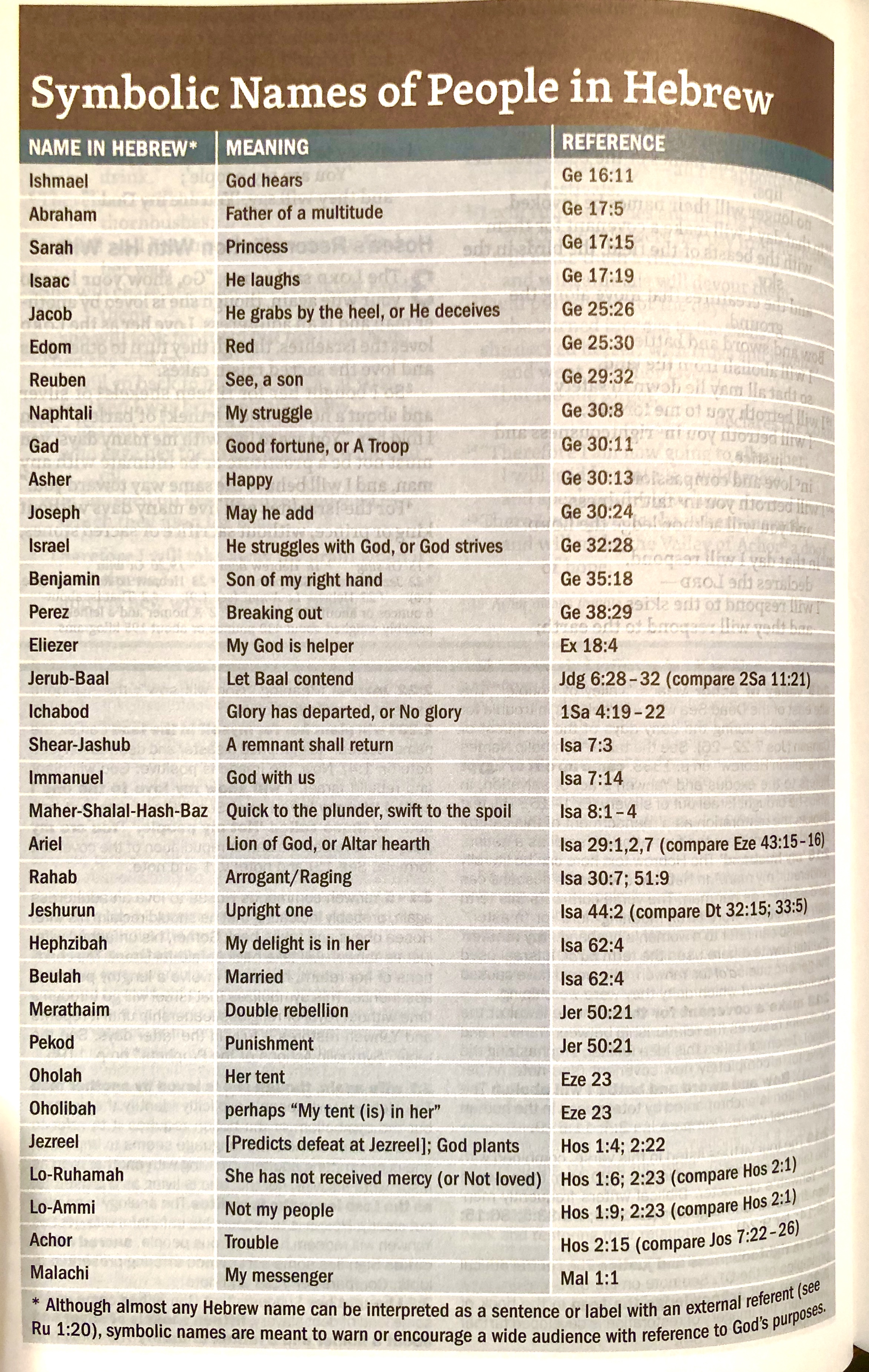
In studying for our ongoing series Major Lessons From Minor Prophets, I came across this chart in my Faithlife Illustrated Study Bible. This isn’t an exhaustive list by any means, but it is a good list to get you started on your own Bible study. 

I always find it fascinating when God names something, or instructs parents to name their children, or especially when a name gets changed. Many study Bibles contain a footnote by these names to give you the Hebrew or Greek definition, so don’t breeze by those too quickly! 

You can also find this list from the Faithlife Bible by clicking here. 

Happy studying! 

P.S. I also invite you to check out this name change which all of us can relate to!

A Minor Introduction

The minor prophets in the Bible are pretty cool! But we have to be careful with man-made titles. For example, the “old” in Old Testament doesn’t mean outdated; nor does the “new” in New Testament mean something updated to modern times. 

In the same way, the minor prophets are only called “minor” because of the volume of their writing, not the quality of their message. In fact, their messages are actually quite major! 

The minor prophets cover a span of about 300 years, from 760 BC (Amos) to 450 BC (Malachi). You can check out this side-by-side chart to see where these prophets fit in the history of Judah and Israel. 

Here are some interesting tidbits about the minor prophets:

  • In the Hebrew Bible, these books are referred to simply as “The Twelve.” 
  • All of these prophets identify themselves in the first verse of their writing except Jonah, but he is identified in 2 Kings 14:23-25. 
  • The only others of the Twelve that are mentioned elsewhere in the Old Testament are Micah, Zephaniah, Haggai, and Zechariah (see Jeremiah 26:16-19; 2 Kings 25:18-21; Ezra 5:1). 
  • The prophets consistently give us some historical context in their writings to help us place when, where, and to whom their ministry took place. 

The Twelve also show up quite liberally in the New Testament. Every one of them has either direct quotations or has their writings implicitly referred to throughout the New Testament. Here’s just a small sampling… 

  • Micah 5:2 tells us where Jesus would be born (Matthew 2:6)
  • Hosea 11:1 says Jesus would spend time in Egypt (Matthew 2:15)
  • Malachi 4:5 says an “Elijah” would precede Jesus (Matthew 17:10-11)
  • Zechariah 9:9 foretells Christ’s triumphal entry into Jerusalem (Mark 11:1-10)
  • Jonah 1:17 was used by Jesus to predict His own resurrection (Matthew 12:39-42)
  • Joel 2:28-32 was quoted by Peter on the Day of Pentecost (Acts 2:16-21)
  • Amos 9:11-12 foretold all peoples coming to Jesus (Acts 15:16-17)
  • Hosea 13:14 was quoted by Paul to show how death was defeated (1 Corinthians 15:53-57)
  • Habakkuk 2:4 was also quoted by Paul to tell how righteous people live (Galatians 3:11)
  • Haggai 2:6 foretells the end times (Hebrews 12:26-29)

I look forward to diving deep into the major lessons in the minor prophets over the next several weeks, but in preparation for that let me give you 3 overarching lessons for all Bible studies:

  1. Christianity is rooted in history. The Bible is a historical record of real people, saying and doing real things in real places in the world. It’s not a collection of fables, myths, or legends. 
  2. We need to study the whole counsel of God’s Word. All of Scripture is interdependent on all the other parts of Scripture, and every part reinforces and amplifies every other part. Don’t limit your Bible reading to just one or two parts.
  3. Looking back in wonder and gratitude builds faith for today and hope for tomorrow. When we see what God has done in the past, and we realize that He is still the same God today, it builds our faith for today. And when our faith today is strengthened, it gives us a bright hope for tomorrow. 

I look forward to having you join me on this journey of discovery through the minor prophets! 

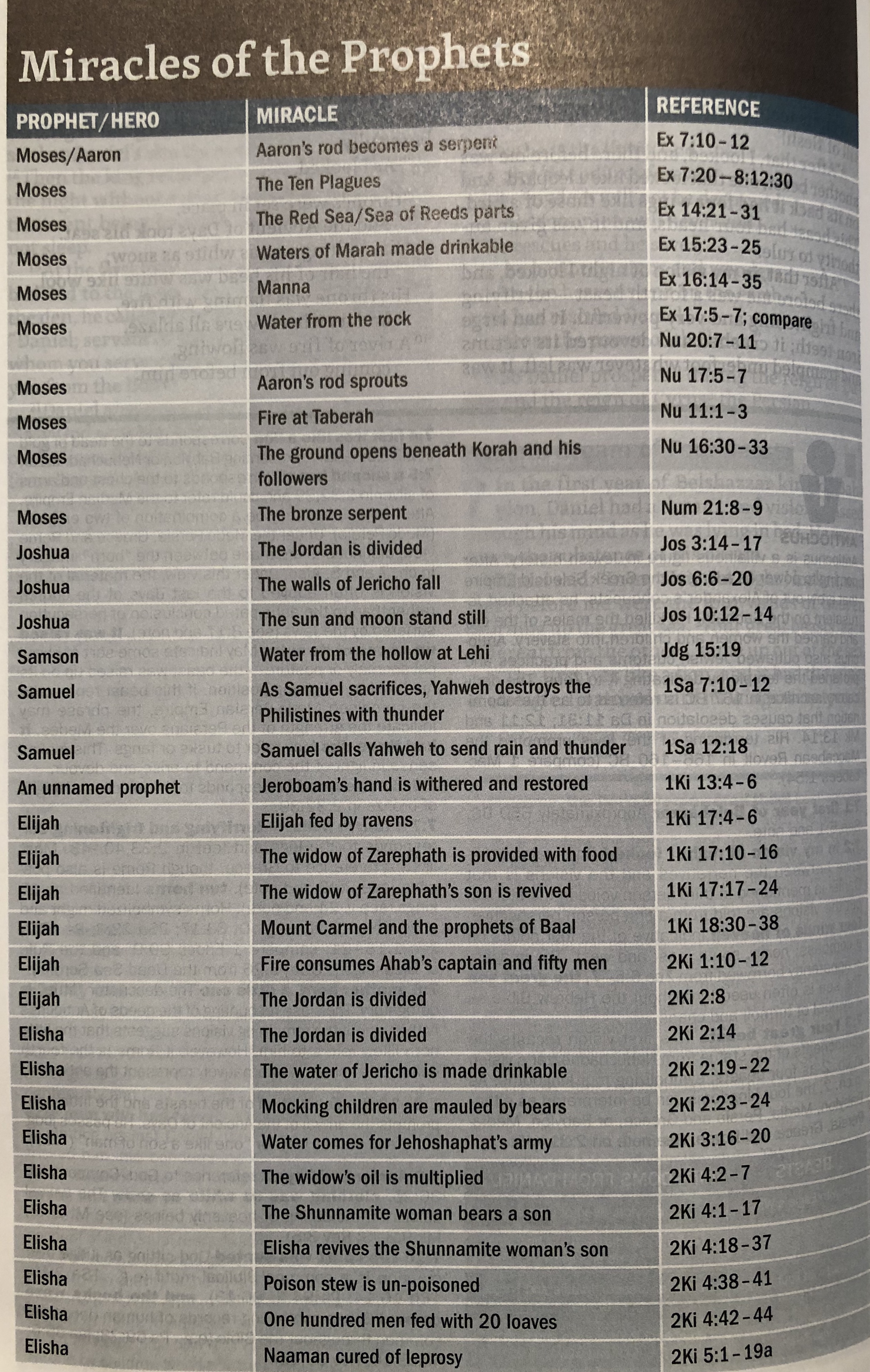
Miracles Of The Prophets

Major Lessons From Minor Prophets

Sometimes the naming of things gives us an inaccurate picture of the thing being named. For instance, many people think the “old” in Old Testament means outdated or perhaps updated by the “new” in the New Testament. When in fact, both Testaments are needed to give us the full picture of God’s love and glory. 

A similar thing happens with the headings “major prophets” and “minor prophets.” It makes it sound like the major prophets have something major to say to us, while we could take or leave the minor messages of the minor prophets. 

In reality, they were given these headings simply because of the volume of writing—the five major prophets consist of 182 chapters, whereas the 12 minor prophets only have 67 chapters. The volume of their writing may be minor, but their content carries major messages of meteoric power! 

If you missed any of the messages in this series, you can find them here:

Favorable Influence

Listen to the podcast of this post by clicking on the player below, and you can also subscribe on AppleSpotify, or Audible. 

Twice the 80th psalm declares—Restore us, O Lord God Almighty; make Your face shine upon us, that we may be saved (Psalm 80:19). 

But if we are already a Christian that has been saved from the penalty of our sin and saved to an eternal reward, then that also means that God’s face IS already shining on us, He HAS already restored us, and He HAS already given us His favor. 

I like how the Amplified Bible renders this verse: Restore us, O Lord God of hosts; cause Your face to shine in pleasure, approval, and favor on us, and we shall be saved! 

What we have received is too wonderful for us to keep to ourselves, so we must let His pleasure, approval, and favor now shine out of us! 

“If the result of our experience of God does not compel and propel us into global mission, it is doubtful whether we have really encountered the God of the Bible.” —Dick Brogden 

Jesus stated His mission simply and then sent us out on the exact same mission (Luke 4:18-19; John 20:21). We do this best by living closely among people so they can also see us shine with God’s favor.

Paul called us to shine as well: Live clean, innocent lives as children of God, shining like bright lights in a world full of crooked and perverse people (Philippians 2:15). I believe this is a perfect definition of the word influence. The origin of the word meant the supposed flowing of ethereal fluid from the stars thought to affect the actions of men. Christians that let their good deeds shine in the darkness can influence the entire culture around them!

“Radical Christianity is not going on a missions trip or a big conference. Radical Christianity is staying steady for decades.” —Mike Bickle 

Being a person that shines with favorable influence requires staying involved for the long haul so that you can build trustworthiness. It’s being in visible places not to get glory, but to let people see God’s glory. When they see His glory shine on you and out of you, they will want what you have too!

Solomon said, By the blessing of the influence of the upright and God’s favor—because of them the city is exalted (Proverbs 11:11). So, my fellow Christian, let me ask you: 

  • Has God shined on you?
  • Are you letting Him shine out of you? 
  • Are you living a noteworthy, trustworthy, visible life in your dark community? 

“It’s your choice: You can be a part of your city’s elevation or its deterioration.”

—Craig T. Owens

►► Would you please prayerfully consider supporting this ministry? My Patreon supporters get behind-the-scenes access to exclusive materials. ◀︎◀︎