The Mind Of God

Listen to the podcast of this post by clicking on the player below, and you can also subscribe on AppleSpotify, or Audible. 

Last week we talked about the Voice of the Holy Spirit. I love the phrase from 1 Samuel 9:15 where God “told Samuel in his ear” about Saul’s arrival and what he should say to Saul. Then the Holy Spirit’s Voice for all of us is foretold in Isaiah 30:21. 

It’s great hearing the Spirit’s Voice, but He also empowers us to know the Mind of God. 

This is not something that automatically comes to every Christian at the moment they invite Jesus to be their Lord and Savior, as we see mention of immature Christians throughout the New Testament. 

Even after Jesus is resurrected from the dead, we see His followers as unsure, troubled men. We meet their…

  • lack of faith—Luke 24:11; Mark 16:14 
  • wonderment—Luke 24:12 
  • troubled minds—Luke 24:37; John 20:19 
  • lack of understanding of Scripture—Luke 24:44 

(Check out all of the Scriptures in this post by clicking here.)

This is all post-resurrection but pre-conversion, but look at what happens next. After Jesus breathes on them (John 20:22), they are peaceful (vv. 19, 21, 26) and they can now understand the Scriptures (Luke 24:45-48). 

As we’ve said, we shouldn’t stop at salvation. Certainly, Jesus wanted more for His followers than merely salvation. He wants His disciples empowered for witnessing and disciple-making (Luke 24:48; Acts 1:4-5, 8). 

Check out these examples of the Holy Spirit sharing with us the mind of God:

  • Joseph—Genesis 41:16, 38-40 
  • Daniel—Daniel 2:19-23, 27-28, 47 
  • Peter—Acts 2:14f; 3:17-26; 4:8-12 
  • Stephen—Acts 7 
  • Philip—Acts 8:30-35 

And just in case you think this is just for “super spiritual” people, look how the Holy Spirit helps the whole Church share the Gospel—

After they prayed, the place where they were meeting was shaken. And they were all filled with the Holy Spirit and spoke the Word of God boldly. … Those who had been scattered preached the word wherever they went. (Acts 4:31, 8:4).

This was always God’s plan! Paul harkens back to prophecies like Isaiah 55:8-9, Isaiah 40:13, and Jeremiah 31:33 when he writes about Christians having “the mind of God” in 1 Corinthians 2:6-16. 

He says, “These are the things revealed to us by His Spirit” (v. 10). 

What things? “Things God has prepared for those who love Him”—things which human eyes haven’t seen, human ears haven’t heard, human minds haven’t conceived (v. 9). These are the the very thoughts of God Himself! 

Just as my spirit is the only one that knows what’s really in my mind, the Holy Spirit is the only One Who knows the mind of the Father and Son (v. 11). We have been given the Holy Spirit “so that we may understand what God has freely given us” (v. 12). Contrast this with the dull, unfruitful minds of both unbelievers (2 Corinthians 4:4) and carnal Christians (Philippians 3:18-19). 

This mind of God is given to us for our edification so that we can be empowered witnesses and disciple-makers. So don’t stop at salvation, but be baptized in the Holy Spirit, and then keep on being filled with the Spirit. 

If you’ve missed any of the messages in this series, you can check them all out here. 

►► Would you please prayerfully consider supporting this ministry? My Patreon supporters get behind-the-scenes access to exclusive materials. ◀︎◀︎
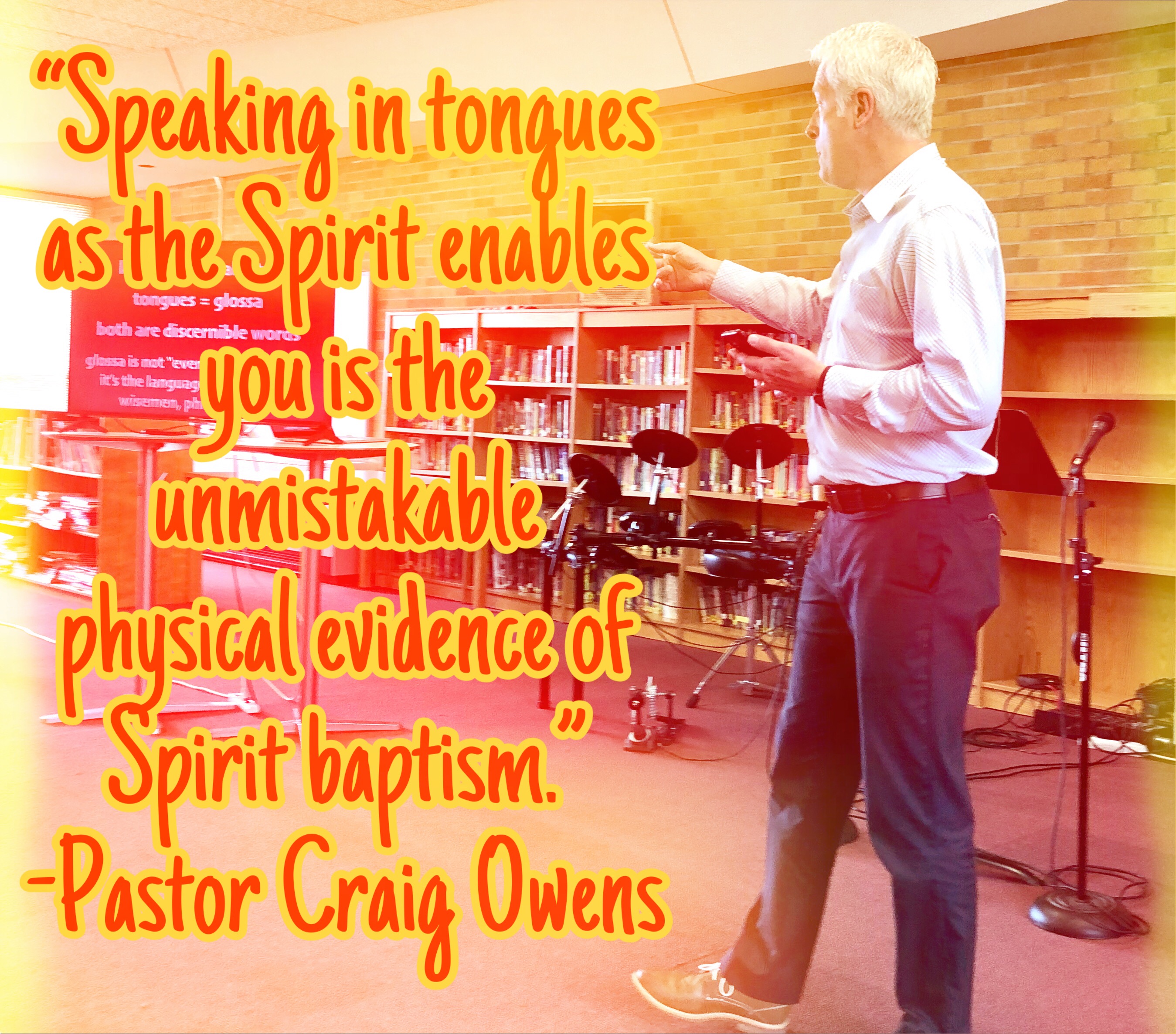
The Unmistakable Evidence

That Pentecost Sunday immediately following Christ’s resurrection forever changed what Pentecost stood for. From this point forward, Christians who have encountered the Holy Spirit as those 120 followers of Jesus did now call themselves Pentecostal. (Check out Acts 2:1-12, 16, 22-24, 37-39.)

If you had been present on that day, there were three pieces of evidence you would have noticed:

  1. Wind—this is the Greek word pneuma, which is the same as the Hebrew word ruach. This is the impartation of the Spirit that brings a true life connection to the Trinity (Genesis 2:7). This power was foretold by Jesus when He promised, “you will receive power when the Holy Spirit comes on you…” (Acts 1:8a). 
  1. Fire—this was foretold by John (Luke 3:16). This fire was to light up our witness to a dark world (Matthew 5:14-16). Again Jesus promised, “you will receive power to be My witnesses…” (Acts 1:8b). 
  1. Tongues—this fulfilled the promise of Jesus, “to be My witnesses…to the ends of the earth” (Acts 1:8c). 

Some have tried to call this speaking in tongues an “ecstatic utterance,” or just nonsensical gibberish. But notice the descriptions Luke gives: each one heard them speaking in his own language (v. 6), each of us hears them in his own native language (v. 8), and declaring the wonders of God in our own tongues (v. 11). Luke lists visitors from over 15 different places around the world that heard their native tongue being spoken by these native Galileans. Luke pointed out that these Spirit-baptized Christians spoke like this as the Spirit enabled them (v. 4b). 

Two types of vocabulary are happening here—language (vv. 6, 8), which is the Greek word dialektos, and tongues (vv. 4, 11), which is the Greek word glossa. 

Dialektos is a learned language. Glossa can also be learned, but it’s not something that one just casually picks up. The Greeks said glossa is “not a word of everyday speech but one belonging to dignified and elevated discourse.” The Greeks called glossa the language of prophets, wisemen, and philosophers.

“But,” you might say, “speaking in tongues sounds weird!” Yes, it does. As N.T. Wright said:

“God acts completely unexpectedly—as He always said He would.” 

Remember this—God is God. He is uncontainable, indefinable. If we can define Him, He is not God, but we are. He always does things “out of the box”—at least out of our box, not His! Like sending His Son born of a virgin, and empowering Jesus to restore sight to one born blind, and enabling Jesus to cure someone who contracted leprosy, and even reversing the laws of biology to bring Jesus back to life! 

So it’s not unexpected that the baptism of the Holy Spirit is accompanied by someone praising God in a dialect they have never learned. Speaking in tongues as the Spirit enables you is the unmistakable, objective, outward, initial physical evidence of the baptism in the Holy Spirit. 

Jesus wants us to have rivers of living water flowing—bursting!—out of us. This living water can flow out of anyone who has the Spirit IN them! Don’t wait another day: be baptized in the Holy Spirit.

If you missed any of the messages in this series, you can access the full list of messages by clicking here.

What’s Behind A Church’s ♥able Reputation?

Last week I said if people are going to say “I ♥ That Church!” it has to be a ♥able church. A ♥able church has a ♥able reputation that compromises what Luke captured about the very first Church—internal unity, sincere piety, supernatural results, and practical help.

Once a church has this kind of reputation, how is it sustained? 

First, let me tell you how it’s NOT sustained: A church’s ♥able reputation isn’t sustained by that church focusing on it’s ♥able reputation. 

A ♥able reputation must flow from the constant development of godly character. Otherwise, we substitute what sounds good with what is actually sound, and we substitute what looks good with what is actually good. 

That’s what the Pharisees did—they were more concerned about how their religion looked to others, and not how it aligned with God’s heart. In fact, Jesus told two stories about people that thought they were “in” with God because of their reputation, but God actually says to them, “I don’t know who you are” (see Matthew 7:21-23; 25:1-12). 

Matthew Henry reminded us, “Men may go to hell with a good reputation!” 

But D.L. Moody got the order right when he said, “If I take care of my character, my reputation will take care of itself.”

I believe the first Church shows us three components of a maturing godly character. 

  1. Our source must be pure. The Christians devoted themselves to the apostles’ teaching. In other words, they grew with sound doctrine, not with things that sounded like doctrine (2 Timothy 4:3; Acts 17:11). 
  1. Our daily disciplines must be productive. The Christians saw “church” as an every day thing. They didn’t view studying the Scriptures, prayer, fellowship, and other maturing activities a merely something to be checked off their To Do list. 
  1. Our accountability must be in our fellowship. The Greek word for fellowship (koinonia) means an active involvement with the “one anothers” in the Church. What’s especially important is maintaining the highest levels of accountability with each other so that the growth of godly character can continue (see especially Hebrews 10:24-25; James 5:16). 

“When wealth is lost, nothing is lost. When health is lost, something is lost. When character is lost, everything is lost.” —Billy Graham 

My church’s ♥able reputation will be sustained as I am committed to growing in godly character. 

So… are you committed to that continual growth? 

A Church With A ♥able Reputation

Demographers report that there are upwards of 70 million people in America that are unchurched. In my own experience, I have found that the unchurched people I have met are really dechurched people. At one time they were a part of a church community, but finding nothing of value there, they left. 

The way the first-century community responded to the Church—the historian Luke says “everyone was filled with awe and enjoying the favor of all the people”—is how people will still respond today to the extent that we resemble that first Church. 

If people are going to say “I That Church!” we have to be a able church!

Here are four qualities that I see in the first Church that gave it such a able reputation— 

  1. Internal unity

Luke uses the word fellowship (Greek: koinonia) which means an intimate, personal involvement in each other’s lives. The historical account lists phrases like devoted, breaking of bread and prayer, together, together with glad and sincere hearts, and one in heart and mind. 

  1. Sincere piety

Church for these first Christians wasn’t a place they went to on a certain day of the week; it wasn’t a set of religious rules they rigorously followed. They didn’t do church because they had to, but because they loved to! Luke says all the believers were together, and every day they continued to meet…with glad and sincere hearts.

  1. Supernatural results

Luke says wonders and miracles, signs, and great power accompanied the Church’s activity. Interestingly, the order is fellowship → awe → miracles, NOT what I would have expected, which is fellowship → miracles → awe. The awe came from the Church’s unified, sincere fellowship, and then the miracles simply confirmed God was there (cf. Mark 16:20). 

  1. Practical helps

Henry Ford said, “You can’t build a reputation on what you’re going to do.” The first Christians saw people in need and they helped: they gave to anyone as he had need and they shared everything they had so that there were no needy persons among them. This is exactly what Jesus told us to do (see Matthew 25:34-40). 

People will the Church when they see real among church people! 

If we want to see dechurched people become rechurched people, we need to return to our Christian roots—we need to make sure we are lovingly unified in heart and mind, allowing God to perform the miraculous among us, and then practically meeting the needs of everyone around us. 

Join me this Sunday as we learn more lessons from this first-century Church. You can join me in person or on Facebook Live.

No, Virginia, Pentecostals Do Not Swing From Chandeliers

Pastor Bill LeachWow! We had an absolutely amazing service yesterday morning at Calvary Assembly of God! All throughout the service we could feel that the Holy Spirit was moving, and we were all blessed by His presence.

Pastor Bill Leach was our guest speaker, and he used Acts 2 as his text to talk about some of the misconceptions people have about the baptism in the Holy Spirit, and the correct biblical perspective of this empowerment for a Christian’s life. I tried to take notes as fast as I could, so below are the thoughts which especially caught my attention. Pastor Leach’s message was entitled “No, Virginia, Pentecostals Do Not Swing From Chandeliers.”

Our Pentecostal experience must be firmly established in the Word of God. Peter made this clear in his Day of Pentecost sermon (Acts 2:16, 25, 30, 34). This experience is not a fad, but we are involved in the eternal plan of God. So it is an important movement for us to be a part of (Acts 2:39).

When Jesus said “stay in the city until you have been clothed with power from on high” (Luke 24:49; Acts 1:4), He said it in the form of a command. Our Savior commands us to receive this Holy Spirit empowerment.

Luke describes the followers of Jesus as being “all together in one place” (Acts 2:1). In other words they were together together. This is a characteristic of followers of Jesus.

God’s temple is not a house, but people. Just as the fire was to be kept burning in King Solomon’s temple, God’s eternal fire fell on His followers on the day of Pentecost (Acts 2:3), symbolizing His abiding presence in Christians.

The whole Godhead continually points to and glorifies the other aspects of the Godhead—“This is My Son in Whom I am well pleased”; “The Holy Spirit will testify about Me; and “I have come to glorify the Father.” When man was created God said, “Let Us make man in Our image—worshiping along side Us and enjoying Us!” The baptism in the Holy Spirit empowers us to do this!

Impossible obstacles must give way to the Spirit-anointed trod of the Spirit-baptized Church.

Pentecostals do not swing from chandeliers, but they have yielded their lives to the Holy Spirit’s empowerment, to be Christ’s witnesses and to display God’s glory throughout His creation.

This coming Sunday (May 24) is Pentecost Sunday, and I will be launching a new series about the Holy Spirit called simply The Counselor. Check back on my blog later this week for more details.

Be A Witness

Good newsJesus said we have some really, really, REALLY good news to share! It’s news about how much God loves us and wants us to know Him personally.

Jesus wanted us to spread the word far and wide about this really, really, REALLY good news, but He didn’t want us to try to do it in our own power. In fact, the last words He spoke to His disciples before ascending into Heaven were—

But you will receive power when the Holy Spirit comes on you; and you will be My witnesses in Jerusalem, and in all Judea and Samaria, and to the ends of the earth. (Acts 1:8)

Did you catch those words: power TO BE witnesses. The Holy Spirit provides us with the resident, miracle-working, moral, influential, and enabling power not to do witnessing, but to be witnesses.

“The Pentecostal believer is to be something, not just experience something. He or she must become a living witness of Christ on earth.” —Charles Crabtree

There are really two ways that we are witnesses for Him. Our witness is:

(1) Strategic

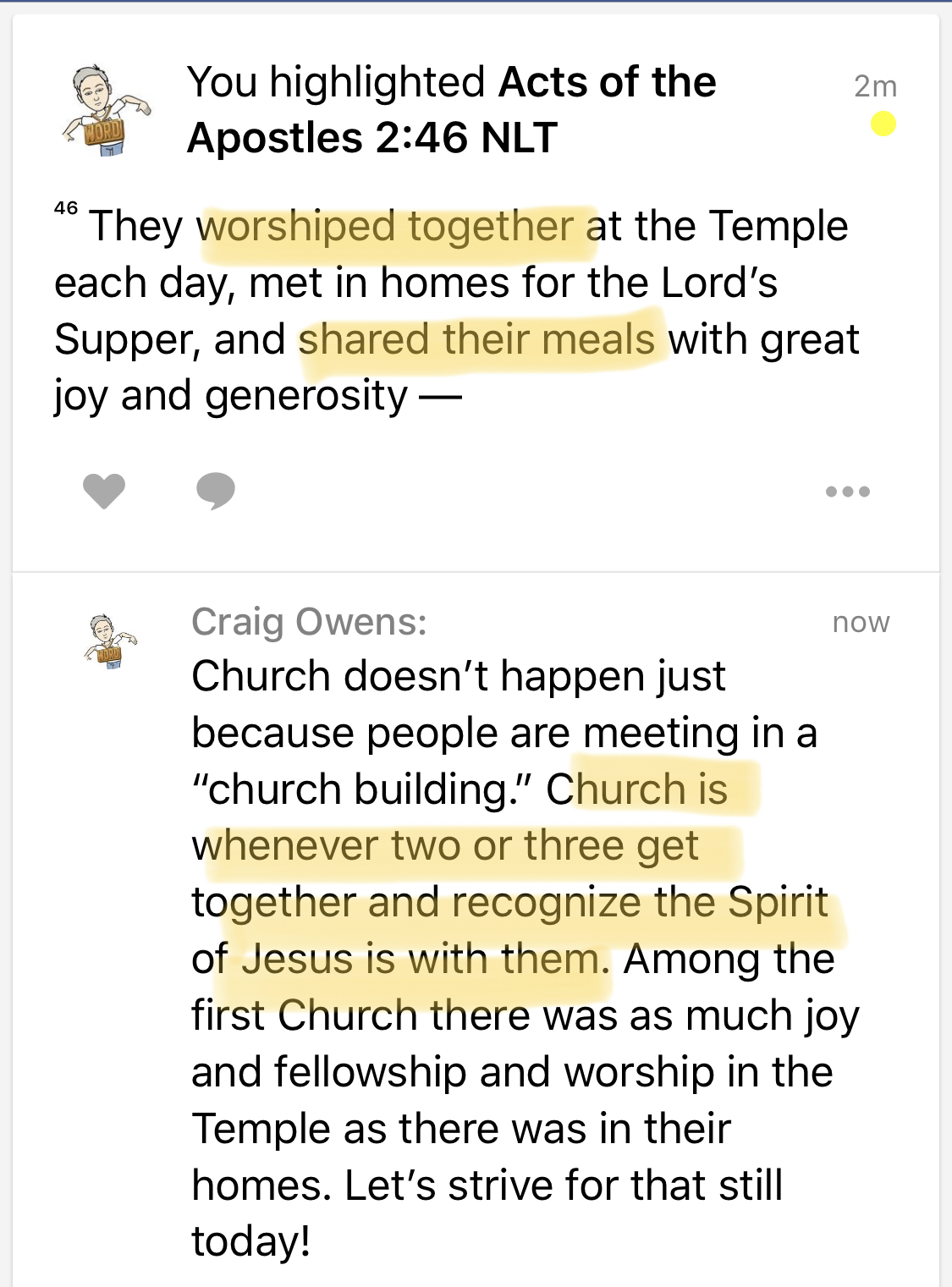
  • The New Testament believers strategically met house-to-house and in the Temple (Acts 2:46).
  • The church strategically picked leaders to help them be effective in their witness (Acts 6:2-3).
  • The Holy Spirit strategically picked missionaries to be witnesses in far-off lands (Acts 13:2-3).
  • Those missionaries were strategic in following up on their witnessing work (Acts 15:36).

(2) Spontaneous

  • The newly Spirit-baptized believers were able to spontaneously worship God (Acts 2:4) and testify of His power to others (Acts 2:14).
  • Peter could spontaneously respond to the crowd’s question after Peter had finished his sermon (Acts 2:37-39).
  • Peter and John had a spontaneous reply when the Sanhedrin called them in to testify (Acts 4:8).
  • This spontaneous witnessing power was available to them through the Holy Spirit just as Jesus had promised (Matthew 10:17-20).

If we try to just do witnessing, our strategy will be lacking and we’ll quite possibly be caught off-guard in a spontaneous setting. But when we allow the Holy Spirit’s power to transform us TO BE witnesses, our strategies are more effective and our spontaneous moments are too! The Holy Spirit helps us share the really, really, REALLY good news!

What’s Your Take On “Church”?

Here’s what I want to see…

From the book of Acts:

All the believers devoted themselves to the apostles’ teaching, and to fellowship, and to sharing in meals (including the Lord’s Supper), and to prayer. A deep sense of awe came over them all, and the apostles performed many miraculous signs and wonders. And all the believers met together in one place and shared everything they had. They sold their property and possessions and shared the money with those in need. They worshiped together at the Temple each day, met in homes for the Lord’s Supper, and shared their meals with great joy and generosity—all the while praising God and enjoying the goodwill of all the people. And each day the Lord added to their fellowship those who were being saved. (Acts 2:42-47, New Living Translation)

Here’s how N.T. Wright puts it:

“The life of believers, individually and collectively, is intended to incarnate the biblical reality of human dignity. The church is called to be an alternative society, living in contrasting style in the midst of the world. Its members are, in God’s design, not self-promoting, as the world is; they are not competitive, as the world is; they do not advance at the expense of others, as the world does; they do not take advantage of the weakness of others, as the world does. They love one another and do good to and for one another. Failing that, there is no compelling reason for the world to pay attention. Which is to say that the only means by which Christians can commend a truly godly vision of human rights is to incarnate them in their individual and collective lives, to announce God’s actions and intentions that constitute the Gospel, and to act justly in the name of God.”

And Rubel Shelly’s take:

“It is a mistake of monumental proportions to think that the priestly ministry of the church is a Sunday-focused event. It is the whole life of the whole church that is our living-body sacrifice to the Lord. Sunday praise is to be joined with Tuesday work and Thursday golf, Wednesday family life and Saturday yard work. Everything in the life of a Christian is to be seamless in terms of its appropriateness for displaying the excellence of God’s heart and character.”

What’s your take?

The Compliment Of Application

As a pastor, sometimes I wonder if all of the time and effort I put into prayer, study, message prep, and message delivery are effective. How do I gauge my effectiveness?

One word: application.

I love seeing people not just listening, but doing. Applying what they’ve heard and what’s been revealed to them by the Holy Spirit is the greatest compliment a congregation could give a pastor.Sophie

So I am absolutely thrilled to see the incredible folks from Calvary Assembly of God so quickly applying what we’ve been discussing!

My inaugural series was called “I My Church.” We looked at the practical ways the Acts 2 Church turned dechurched people—those who knew about God but didn’t have a personal relationship with Him—into those who ’d their church. How exciting it is to see such immediate application in our community.

Just a couple of examples:

  • The message board in the lobby immediately sported the message “You are the church.”
  • Stephanie helped Sophie get into the act with her new t-shirt.
  • A group of our Impact! students volunteered their afternoon yesterday packing more food boxes than they could count for the needy.
  • Last week we cleaned the house of a woman recovering from hip surgery.
  • Tomorrow we’re helping a family move into their new house.

Wow, am I a proud pastor! I can’t wait to see how God is going to continue to use this group of committed people to change the world!