The Wait Of Parenting

Listen to the podcast of this post by clicking on the player below, and you can also subscribe on AppleSpotify, or Audible. 

I’ve been called to some challenging leadership roles in my life—many of which made me feel like I was in way over my head! But without a close second, the heaviest mantle I’ve ever felt is the one called “Father.” Holding my firstborn son in my arms was indescribable, and it didn’t feel any lighter or less daunting when our other children arrived.  

The rabbis saw something significant in the Ten Commandments. Some people have noted that the first four Commandments are about our vertical relationship with God, while the next six are about our horizontal relationships with people. But the rabbis saw the Fifth Commandment as the linchpin—with parents in a creator-like role and as the first leader our children will be exposed to, and parents taking on the role as the first and most significant instructor for our children to know God for themselves. 

God gives us the example to follow: He instructs us gently but firmly, anticipating our needs, and giving us exactly what we need (Psalm 103:13-14; Luke 6:36, 12:32; Matthew 6:8).  

And then Jesus tells us to follow this example: “Be perfect, therefore, as your heavenly Father is perfect” (Matthew 5:48). Yikes, talk about a heavy weight! 

In the only song of ascent attributed to King Solomon (Psalm 127) we read both a longing for our families to be with us at the end of our journey to Zion, but also a hint of the difficulty of this. 

In the middle verse of this song, we are assured that our children are given to specific parents by God on purpose. He knew what He was doing in giving them into our care. That means each parent is uniquely equipped for each child’s unique personality, temperament, and gift package. 

Twice in the opening verse, Solomon uses the word “unless.” Unless we seek God’s help in building our children and watching over them, our efforts on their own will be “in vain.” That phrase (“in vain”) is used three times in the opening two verses. Solomon wrote a lot about vanity in the Book of Ecclesiastes. But it’s important to note that Solomon always uses this word in association with the phrase “under the sun.” Unless we get help from God—unless we lift our eyes up higher than this earth—our efforts alone will be frustrating and anxiety-inducing. 

Remember that parents are the linchpin in the Ten Commandments? Those first four Commandments tell us to put God first, don’t create any idols to rival Him, don’t misuse His name, and trust Him enough to rest from your labors (Exodus 20:1-11). That means that we parents cannot put our kids ahead of God (Luke 14:26). Unless God is our first priority, we won’t have the spiritual, emotional, or mental stamina to parent well. Or, as C.S. Lewis noted,  “When I have learned to love God better than my earthly dearest, I shall love my earthly dearest better than I do now.” 

In his collection of proverbs, Solomon told us, “Start children off on the way they should go, and even when they are old they will not turn from it” (Proverbs 22:6). Jesus said there is only one sure foundation, and that is knowledge and obedience of God’s Word (Matthew 7:24-27). 

The final two verses of Psalm 127 assure parents that when we commit our children to God’s hands, He blesses them and uses them as His weapons, His leaders, and His culture changers. 

There is not only a weight in parenting, but there is also a wait in parenting. In the last song of ascent we studied, we learned that we have a promise two times that we will (not “might”) reap a harvest, even if we have to sow seeds in tears (Psalm 126:5-6). 

In the Bible, waiting is never passive. It’s an active watching to see how God will move. We see this in the story of the prodigal son (Luke 15:11-32) where the father waited expectantly for his wayward son to return. This Dad had given his son a firm foundation at the start of his life, and then he waited in prayer until his son “came to his senses”—until he realized that all other ways of living away from God were vanity. 

In the midst of her prayers for her own prodigal son, Monica shared her concerns with Ambrose, bishop of Milan, and he said, “It cannot be that the son of those tears be lost.” Monica continued to wait for her son Augustine, sowing her seeds in tears but fully expecting the song of joy that would come with the harvest. 

Years later, in his autobiography called Confessions, Augustine wrote of his mother, “My mother, Your faithful servant, wept to You for me, shedding more tears for my spiritual death than others shed for the bodily death of a son. You heard her.” 

Parents, as you call out to God on behalf of your children, shed those tears in the joy of the anticipated harvest, knowing that God hears you! 

If you’ve missed any of the other messages in our series looking at these songs of ascent in the Book of Psalms, you can find them all here.  

►► Would you please prayerfully consider supporting this ministry? My Patreon supporters get behind-the-scenes access to exclusive materials. ◀︎◀︎

Links & Quotes

If God seems distant, get your eyes off other things and put them back on Him. Check out the full sermon hereI have lots of new content every week, which you can check out on my YouTube channel.

T.M. Moore is in a series of posts about the Kingdom of God being revealed on earth. He wrote, “Jesus’ vision of the proximity of the Kingdom, therefore, was a threefold vision: The Kingdom is yet to come in all its fullness (there and then); nevertheless, at the same time, the Kingdom is unfolding in our midst (here and now); and thus every follower of Jesus Christ must make it their primary concern to seek and attain to more and more of the Kingdom of God every day of their lives. Then and there, here and now, more and more: This is how we must think about the Kingdom of God and our involvement in it.”

For many years, the theory of evolution has been unraveling. As more and more discoveries are being made, Darwin’s theory is becoming less tenable. John Stonestreet and Shane Morris wrote a recent blog post on this. Their article opens with this: “In 1973, evolutionary biologist Theodosius Dobzhansky wrote that “nothing in biology makes sense except in light of evolution.” Almost 50 years later, an increasing number of scientists are asking whether evolution makes any sense in light of what we now know from biology.”

The most effective leaders consistently see the world through their teammates’ eyes. Check out this full conversation on The Craig And Greg Show.

“Imagine yourself as a living house. God comes in to rebuild that house. At first, perhaps, you can understand what He is doing. He is getting the drains right and stopping the leaks in the roof and so on: you knew that those jobs needed doing and so you are not surprised. But presently He starts knocking the house about in a way that hurts abominably and does not seem to make sense. What on earth is He up to? The explanation is that He is building quite a different house from the one you thought of—throwing out a new wing here, putting on an extra floor there, running up towers, making courtyards. You thought you were going to be made into a decent little cottage: but He is building a palace. He intends to come and live in it Himself.“ —C.S. Lewis

“No prophet or priest, king or great leader has ever told us to dare to address God as our Father, except Jesus! He is the only One who has taught us to call God, our Maker and Creator, Father. In the Old Testament, that relationship is mentioned only a few times (for example, Exodus 4:22-23; 2 Samuel 7:14). But in the gospels, it is mentioned 165 times. Jesus wanted to instill in us how important God’s fatherhood is. It is not a mere creed. It is a relationship that is central to our new life in Christ and essential in our worship to Him.” —Sobhi Malek

The Craig And Greg Show: Ignorance And Arrogance

Listen to the audio-only version of this podcast by clicking on the player below, or scroll down to watch the video.

Periodically, Greg and I like to revisit the topic of leadership builders and killers. In this episode, you get two leadership killers, as we tackle the two-headed monster of ignorance and arrogance.

  • [0:25] The two-headed monster that kills leadership potential. 
  • [2:06] We are accepting bribes for our silence 😂
  • [2:23] Why are leaders held back by their ignorance?
  • [4:34] What happens when the followers sense that the leader above them is ignorant?
  • [6:22] What about when the leader admits a need for help?
  • [7:47] The toxicity of arrogance.
  • [9:32] Coachability is fed by humility. This is the leader’s litmus test.
  • [12:01] Our transparent leadership lessons are immensely helpful to our teammates.
  • [15:24] Greg shares a quote about this two-headed monster.
  • [17:35] We each share our personal examples of overcoming this monster.
  • [19:50] Sadly, many people who need the most help won’t seek it for themselves.
  • [21:07] If leaders are going to kill this two-headed monster, they have to stop talking and start listening.
  • [22:00] Know-it-alls are hard to cheer for, so successful leaders will have to eat some crow.

Check out this episode and subscribe on YouTube so you can watch all of the upcoming episodes. You can also listen to our podcast on Spotify and Apple.

Sin Is Never Manageable

Listen to the podcast of this post by clicking on the player below, and you can also subscribe on AppleSpotify, or Audible. 

King Herod Antipas was the son of King Herod the Great. Herod the Great is the one who tried to kill Jesus shortly after He was born, and in the process murdered numerous infant boys in and around Bethlehem (Matthew 2:16). 

Herod Antipas seduced his sister-in-law Herodias (who was married to his brother Philip), who then divorced her husband to marry Antipas, who had also divorced his own wife (Matthew 14:3). This is also the Herod who so desperately wanted to see Jesus perform a miracle (Luke 9:7-9, 23:6-10). 

Antipas was no choir boy! And yet he had a strange fascination with spiritual matters. Not only did he want to see Jesus, but he liked hearing John the Baptist preach. At the same time, he hated John’s message that said he was living in sin (Mark 6:17-18; Leviticus 20:21). Herod wanted John dead, but he also feared the backlash from the people who thought John was God’s prophet. Later on, he tried to protect John from death, but in trying to save face with his guests, he had to have John killed (Mark 6:26; Matthew 14:5). 

Herod Antipas continually flirted with sin—never killing it, never running away from it. And this eventually caught up with him.

The Gospel of Mark records, “Finally the opportunity came” (Mark 6:21). Herodias’ daughter performed a seductive dance for Herod on his birthday, which cause him to say in front of everyone, “I’ll give you whatever you want.” Prompted by her mother, this young lady seized the opportunity and said, “I want the head of John the Baptist on a platter!” Following in his father’s footsteps, Herod Antipas became a murderer. 

If sin is left close, it will kill you. The Bible tells us sin is crouching nearby, always looking for an opportunity, always a part of the devil’s scheming plan to destroy us (Genesis 4:7; Luke 4:13; Ephesians 6:11; 1 Peter 5:8). 

Sin is never manageable. The little compromises eventually strengthen and blossom, and we are undone by our sin. No matter how “little” we may think our sin is, “little sins” are anything but harmless indiscretions. That’s why as soon as any sin comes to light, it must be killed instantly!

Let us not make the same fatal mistake that Herod Antipas made by flirting with our sin instead of killing it. Paul wrote, “So put to death the sinful, earthly things lurking within you. Have nothing to do with sexual immorality, impurity, lust, and evil desires. … [N]ow is the time to get rid of anger, rage, malicious behavior, slander, and dirty language” (Colossians 3:5, 8).

Or, as John Owen put it, “Be killing sin, or it will be killing you.” 

►► Would you please prayerfully consider supporting this ministry? My Patreon supporters get behind-the-scenes access to exclusive materials, like this recent post about building trust. ◀︎◀︎

The Only Secure Foundation

Listen to the podcast of this post by clicking on the player below, and you can also subscribe on AppleSpotify, or Audible. 

My, my, my, how quickly things can change! Unfortunately, the constant changes usually lead to feelings of instability. Fortunately, Jesus told us the surefire way we could find the stability, security, and confidence we all crave.

Check out this episode of The Podcast.

Resources to go along with this podcast:

►► Would you please prayerfully consider supporting this ministry? My Patreon supporters get behind-the-scenes access to exclusive materials. ◀︎◀︎

Our Musical Testimony

Listen to the podcast of this post by clicking on the player below, and you can also subscribe on AppleSpotify, or Audible.  

As these songs of ascent are reminding us, we’re trying to ascend into God’s presence. But it seems like the forces pulling us back downward are so strong! The lyrics in the most popular songs are getting more and more raunchy, the blockbuster movies routinely celebrate sin, TV shows increasingly push a decidedly unbiblical agenda, government leaders are caught in scandals, and church leaders are “de-transitioning” from their Christian testimony. 

It doesn’t seem like there is much to celebrate. 

Just like the Jews who found themselves defeated and living in a foreign land, or fighting opposition to rebuild their way of life, or contending with occupying forces that were hostile to their religion, we, too, find ourselves in a very similar place—even in a country that was supposedly built on godly principles. 

The worldly-minded and irreligious have always tried to pull down the godly. When they do, it makes it hard to even worship God (Psalm 137:1-4). 

I’ve been reminding you that in Hebrew literature we can usually get our perspective from the middle of the story. So before we look at this next song of ascent, let’s look at the middle of the Jewish story—the middle of their time of exile, when things seemed darkest. 

Jeremiah wrote a book of Lamentations which was in the middle of the exile. In the middle of his tears and gall and bitterness he wrote this—

I remember my affliction and my wandering, the bitterness and the gall. I well remember them, and my soul is downcast within me. Yet this I call to mind and therefore I have hope: Because of the Lord’s great love we are not consumed, for His compassions never fail. They are new every morning; great is Your faithfulness. I say to myself, “The Lord is my portion; therefore I will wait for Him.” … I called on Your name, Lord, from the depths of the pit. You heard my plea: “Do not close your ears to my cry for relief.” You came near when I called You, and You said, “Do not fear.” (Lamentations 3:19-24, 55-57) 

Jeremiah said when he called God, He came near. He’s not saying that God had left him, but instead, Jeremiah is saying that he got his eyes off the ever-present God. As soon as he put his eyes back on God, he could feel His nearness. 

Our next song of ascent (Psalm 126) opens with the word “when.” This is a celebration of how God kept His word that the exiles would be released from Babylon and return to Jerusalem. As the Jews praised God for keeping His Word, then the surrounding nations saw and heard the testimony in the songs of joy that were being sung. 

God’s people were both singing for joy for God’s deliverance AND they were singing in joyful anticipation of what was still to come. 

They make a request in prayer for God to “restore our fortunes” (v. 4). This phrase always means that God is going to bring back everything that was taken away and then some. 

We have a promise two times in the next two verses that God will (not might) bring in these restored fortunes. In the midst of darkness or drought, it may seem hopeless to keep sowing seed. God sees your tears, and He will use your tears to water that seed and He will bring a harvest. 

The New Testament assures us of the same promise: “Let us not become weary in doing good, for at the proper time we will reap a harvest if we do not give up” (Galatians 6:9). 

We show our faith in God’s eternal victory by lifting up our voices in song today. That song is a testimony to the nations around us and an encouragement to other saints who may be struggling with weariness (see Ephesians 5:18-20). We keep on singing these songs of joy in anticipation of the final and eternal song we will sing in Heaven. 

God is near. He hears your sighs. He sees your tears. He is watering the seeds you are sowing, and He will bring a harvest. As you sow in tears, sow also with songs of joy! 

If you’ve missed any of the other messages in our Ascending series, you can find them all here. 

►► Would you please prayerfully consider supporting this ministry? My Patreon supporters get behind-the-scenes access to exclusive materials. ◀︎◀︎

Links & Quotes

Salvation doesn’t arrive on Air Force One. This simple but profound reminder from Chuck Colson should send Christians to prayer instead of seeking a merely political solution. Check out my full message about trusting God vs. trusting the government hereI have lots of new content every week, which you can check out on my YouTube channel.

Matthew Walker, director of the Center for Human Sleep Science, says, “Sleep is the universal health care provider: whatever the physical or mental ailment, sleep has a prescription it can dispense.” It’s not just medical science, but the Bible also talks about the value of sleep, as Scott Hubbard explains in this post. I’ve also shared some posts about sleep here, here, and here.

Don’t you love the beautiful melody of songbirds? Being a percussionist, I’m attracted to the woodpeckers. Scientists have found that woodpeckers are the only non-songbird that share an identical genetic marker in their brains with songbirds. That means that the drumming of woodpeckers is actually a song!  Check out some additional fascinating insights about our drumming friends in this post. 

I love this story from the early 1900s! Small prayer meetings began to converge to become a Pentecostal revival in the Pacific Northwest. 

“What is the best thing in the world? To please its Creator. What is His will? To fulfill what He commanded, that is, to live rightly and dutifully to seek the Eternal; for duty and justice are the will of Him Who is dutiful and right. How do we seek this goal? By application. Then we must apply ourselves in duty and justice. What helps to maintain this practice? Understanding, which, while it winnows the remainder and finds nothing solid to rest in amongst those things which the world possesses, turns in wisdom to the one thing which is eternal.” —Columbanus

“Jesus taught us to pray that the Kingdom would come on earth in the same way that it exists in heaven. … Jesus made praying for the Kingdom the highest priority in our prayers after praising and honoring God. The Kingdom is more important than our daily needs. The Kingdom is more to be desired than that our sins should be forgiven or that we should be rescued through temptation [Matthew 6:9-13].” —T. M. Moore

Stephen O. Presley wrote, “If our modern world resembles the ancient one, perhaps we could glean some wisdom from the ways the early church navigated these murky waters. As Polycarp testifies, the Scriptures were essential to the early Christian apologetic. Passages such as Romans 13:1 and Matthew 22:21, alongside the examples of Old Testament figures such as Joseph and Daniel, guided the church’s vision for engaging the unbelieving world.” His post especially caught my eye after I shared a very similar message to my flock this past Sunday.

Sean McDowell sits down with an Old Testament professor to discuss 10 of the most bizarre OT passages (as selected by Sean’s X followers).

Re-evaluating Fear

Listen to the podcast of this post by clicking on the player below, and you can also subscribe on AppleSpotify, or Audible.

On a recent episode of The Craig and Greg Show, Greg and I discussed the fears that can paralyze leaders. In this short clip, I talk about an acronym I learned years ago that has helped me tremendously in evaluating my fears.

Check out the full Craig And Greg Show episode on fear by clicking here.

►► Would you please prayerfully consider supporting this ministry? My Patreon supporters get behind-the-scenes access to exclusive materials. ◀︎◀︎

The Seed Of Revival

Listen to the podcast of this post by clicking on the player below, and you can also subscribe on AppleSpotify, or Audible.

The London Times asked, “What’s wrong with the world today?”

In his characteristic wit and candor, G.K. Chesterton responded with a letter:

“Dear Sir,

I am. 

Yours, G.K. Chesterton”

I hear the same humble honesty in Ezra’s prayer:

O my God, I am ashamed and embarrassed to lift up my face to You, my God, for our iniquities have risen above our heads and our guilt has grown even to the heavens. … Now, our God, what shall we say after this? For we have forsaken Your commandments (Ezra 9:6, 10). 

This isn’t a word for “back then” or exclusively for Israelites—this is still a word for all of us today. 

Several years ago I was asked to sign a joint letter from local pastors condemning a couple of headline-making heinous activities. In part of my response to these pastors, I wrote,

“I’m not sure if a letter to the editor is an appropriate response or not. But if this is the correct response for us, I am very hesitant to sign my name to a letter that calls out merely one of many sins. The problem we face is a singular one: sin. 

“The solution is also a singular one: Jesus. 

“A response that merely denounces evil acts is not, in my mind, effective. Such a letter is only highlighting sins, but not the solution.”

This, also, is what I see Ezra doing. It may have been one particular sin that got his attention (in this case, intermarriage with non-believers) but he then confesses their universal condition: the sin of departing from God’s commandments. 

It’s so easy to spot sins in society, shake our heads in disgust, and say, “They should know better! What’s wrong with the world today? Someone should do something about that!” 

Instead, any and every sinful expression we observe should send us to our knees saying, “But for the grace of God, I would be guilty of the same thing. God, be merciful to me, a sinner. I confess my sin and plead for Your mercy and forgiveness.” 

Revival will never be a widespread response until it is first an individual response.

When we began as individuals to confess “my sin,” others will soon join with us in confessing “our sin” (see Ezra 9:4). That attitude is the seed of revival.

If you are a pastor and would like to join other pastors in a weekly prayer time for revival, please email T.M. Moore to get plugged into this strategic online gathering.

Check out some other thoughts I have shared about revival here.

►► Would you please prayerfully consider supporting this ministry? My Patreon supporters get behind-the-scenes access to exclusive materials. ◀︎◀︎
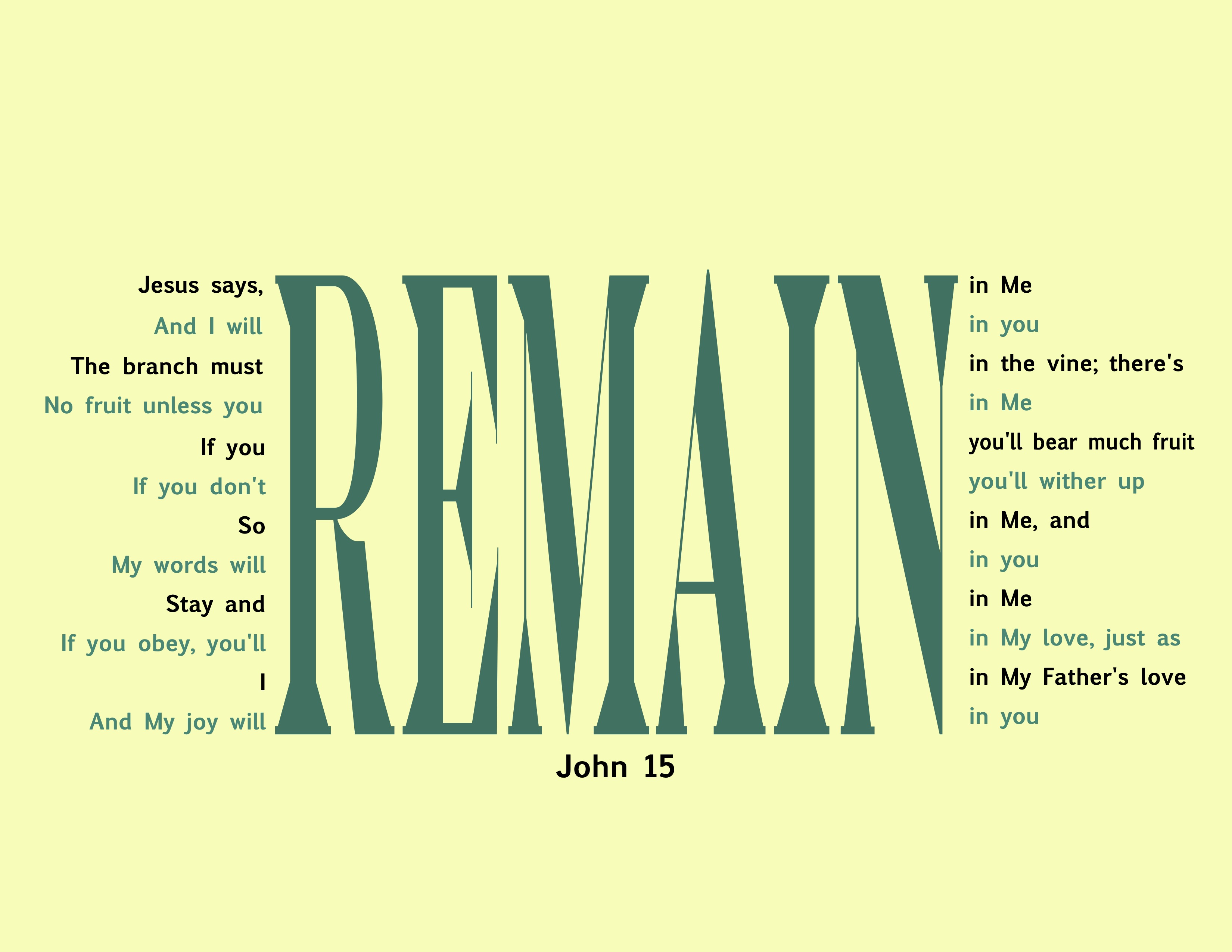
The Key To Staying Power

Listen to the podcast of this post by clicking on the player below, and you can also subscribe on AppleSpotify, or Audible. 

Staying power is something special. It especially stands out to us when someone holds their position for years and continues to remain one of the go-to people in the organization. For Christians, the key to staying power may not be as difficult to obtain as you may think. 

Check out this episode of The Podcast.

Resources to go along with this podcast:

  • The biblical passages I mentioned: Daniel 5-6; 2 Chronicles 36:22-24; Matthew 13:52
    • The timeline between Nebuchadnezzar and Belshazzar:
    • Nebuchadnezzar died in 562 and was succeeded by his son Amel-Marduk.
    • Amel-Marduk was assassinated by his brother-in-law, Nergal-Sharezer, two years later (560 BC), who then assumed the throne.
    • Four years later (556 BC) Nergal-Sharezer died, and he was succeeded by his son, Labashi-Marduk.
    • Before a year had passed, Labashi-Marduk was assassinated by a group of malcontents headed up by Nabonidus, who then assumed the throne.
    • Five years later (550 BC), Nabonidus died and was succeeded by his son, Belshazzar. 
  • Darius—a common name for Medo-Persian rulers. “Darius the Mede” (Daniel 5:31) is a more mysterious figure who, so far, appears only in the Bible. Historians think he may have been Gubaru, an officer in Cyrus’ army who became governor of the Persian province of northern Babylon. In this case, he’s the military leader who invaded Babylon, killed Belshazzar, and effectively ended the reign of Babylon. Persia was now the new world power. 
  • Darius I, called the Great, reorganized the government into satraps and extended the boundaries of the empire (Daniel 6:1-3). Daniel was appointed as one of three presidents over the 120 satraps but was being considered as the chief of the three. 
  • Cyrus the Great was king of Persia from 550-529 BC. When Cyrus became ruler of the Persian district of Anshan, the district was subject to the Medes; five years later he led a rebellion against the Medes that resulted in the capture of King Astyages and the overthrow of the Median Empire. Thereafter Cyrus called himself king of Persia. In 539 BC the kingdom of Babylon fell to Cyrus. 

►► Would you please prayerfully consider supporting this ministry? My Patreon supporters get behind-the-scenes access to exclusive materials. ◀︎◀︎