Living Sermon

Pastors, this is a timely word from Mark Batterson…

There is a world of difference between preaching a sermon and living a sermon.  No amount of study can compensate for deficiencies in your life. You can “study it” but if you aren’t “living it” it’ll ring hollow.  The opposite is true as well.  Jesus’ teaching was authoritative because it was backed up by his life.  You can’t back up your sermons with a seminary degree.  You’ve got to back it up with your life. My advice?  Don’t just get a sermon. Get a life.  Then you’ll get a sermon!

Let me be blunt: if your life is boring your sermons will be too.

If you have no life outside of church—no hobbies, no friends, no interests, no goals—your illustrations will feel canned, your applications will feel theoretical instead of practical, and your sermons will be lifeless instead of life-giving.

The greatest sermons are not fashioned in the study.  They are fleshed out in the laboratory of everyday life.  Now, please don’t misinterpret what I’m saying.  You need to study to show yourself approved and rightly divide the word.  So keep studying!  In fact, study more.  But you can’t just study the word.  You need to live it.  The most powerful sermons are well-studied and well-lived.

At the end of the day, God won’t say, “Well studied, good and faithful servant.”  He won’t say, “Well thought” or “Well said” either.  There is only one commendation: “Well done.”

Now let’s be brutally honest: most Christians are educated way beyond the level of their obedience already! We don’t need to know more, we need to do more.  That’s why I think sermons should focus on application more than interpretation.  Theological doesn’t mean theoretical.  In fact, as you get a life, your messages will be less theoretical and more experiential.  You won’t just preach your sermons. You’ll incarnate them!

Thursdays With Oswald—A Friend Of God And Enemy Of The World

This is a weekly series with things I’m reading and pondering from Oswald Chambers. You can read the original seed thought here, or type “Thursdays With Oswald” in the search box to read more entries.

A Friend Of God & Enemy Of The World 

     The Bible says that “God so loved the world, that He gave His only begotten Son…,” and yet it says that if we are friends of the world we are enemies of God. “Know ye not that the friendship of the world is enmity with God?” (James 4:4). The difference is that God loves the world so much that He goes to all lengths to remove the wrong from it, and we must have the same kind of love. Any other kind of love for the world simply means we take it as it is and are perfectly delighted with it. … It is that sentiment which is the enemy of God. Do we love the world in this sense sufficiently to spend and be spent so that God can manifest His grace through us until the wrong and the evil are removed? 

From Biblical Psychology

  • Do I love the world the way God so loves the world?
  • Am I willing to let Him use me to change the world?
  • Am I willing to spend and be spent for God’s glory?

Jesus said, “You are salt and light.” But my salt does the world no good at all unless I allow the Holy Spirit to shake it out of me. And the light doesn’t benefit anyone if my apathy is not allowing the love of God to shine brightly through my life.

I must be a friend of God and an enemy of the evil in the world which keeps anyone from coming into a relationship with Him.

This Moment Is A Mountain

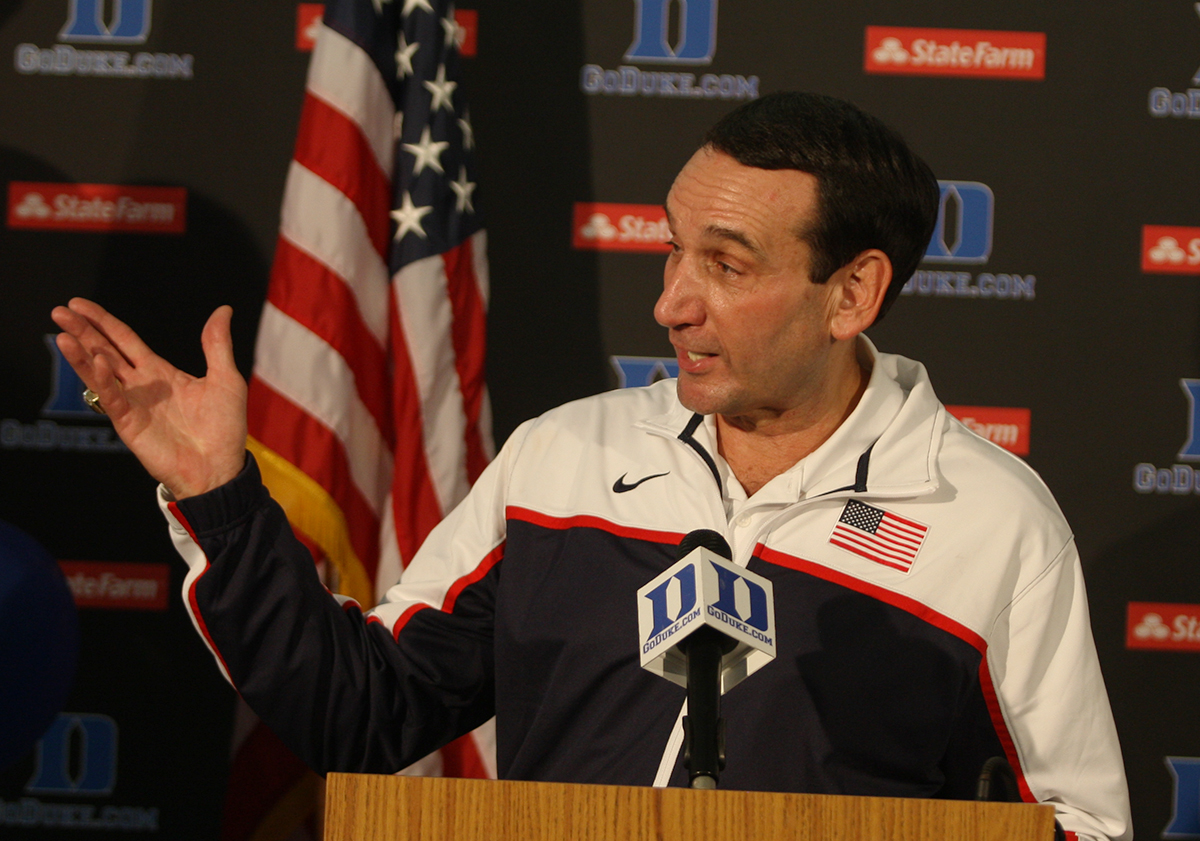
I was listening to Duke University’s Coach K (Mike Kryzewski) being interviewed on ESPN radio’s Mike & Mike this morning. (You can listen to the full interview here.)

Coach K’s list of accomplishments is impressive! Check out the full list by clicking here, but he has coached his NCAA men’s basketball teams to 900+ wins, won 4 NCAA championships, and now two Olympic gold medals.

So he was asked, “Is there another mountain for you to climb?”

Without hesitation Coach K answered, “Yeah, to coach this Duke team to a great season.”

He went on to add, “Numbers of championships happen if you look at each moment that you have as a mountain, and take advantage of the moment.

I love it! Treat every moment like it’s huge… because it is!

Praying With Imagination

Check out Paul’s prayer in Ephesians 3:14-21. Seriously, go ahead and read it, I’ll wait for you…

Paul’s desire is for us to follow his lead and pray with greater imagination. He doesn’t want shallow, status quo, static prayers. He wants us to go into something deeper, dynamic, unexperienced!

God has glorious riches without end…

…why would we simply ask for table scraps?

The Holy Spirit has unlimited power to pour through our lives…

…why would we try to box Him in? 

Jesus has a deeper faith to come alive in us…

…why are we only dabbling in it?

God has no limit to His depth…

…why are we content with a surface experience?

The Holy Spirit can give us power to operate in a new dimension…

…why are we happy with our ordinary three dimensions?

Christ dies to bring us into an unimaginable love relationship…

…why would we keep Him at arm’s length?

God has no limit to His height…

…why don’t we raise the bar?

God can do more than we can ask or imagine…

…why is our imagination so limited?

Holy Spirit, expand my holy imagination! 

Lord, help my prayer life to be worthy of Your greatness!

17 Quotes From “What Matters Most”

What Matters Most is sure to be a thought-provoking, conversation-starting, paradigm-challenging book. You can read my full review of Leonard Sweet’s book by clicking here. To help whet your appetite for this book (that you’re going to read very soon, right?), here are 17 quotes that especially caught my attention…

“To save the world we don’t need the courage of our convictions. We need the courage of our relationships… Especially the courage of our relationship with the Creator, the creation, and our fellow creatures. Our problem in reaching the world is that we’ve made rules more important than relationships.”

“Western Christianity is largely belief based and church focused. It is concerned with landing on the right theology and doctrine and making sure everyone else toes the line. The Jesus trimtab, in contrast, is relationship based and world focused. It is concerned not so much with what you believe as with Whom you are following.” 

“Relationship is one of the things that distinguishes Judaism and its radical Christian revision from other religions: God calls us into a relationship. Christianity is much more than a wisdom tradition or a moral system or a path leading to higher states of existence.”

“We don’t follow Jesus because we understand Him or because we know the truth about Him. We follow Jesus because He is the Truth, and He leads us into truth through our relationship with Him. …The Jesus call to discipleship is an invitation to enter a relationship with the person doing the teaching, not simply an intellectual encounter with the principles He taught.”

“The postmodern quest has been misunderstood as an abandonment of the quest for truth. It is far from an abandonment, but is rather a rerouting of the quest for truth along more relational and less rational paths.”

“If we shift our focus away from truth as right teaching and correct doctrine, and instead center our lives on truth as a Person and faith as a relationship with that Person, what does this do to evangelism? Evangelism shifts from an attempt to indoctrinate a skeptic into a new belief system and makes the gospel proclamation a process of inviting others into a relationship with God. Evangelism is as much invitation as it is proclamation. It is inviting others into a relationship with God so that the Holy Spirit can make Christ come alive in them and live in them and they can live in God’s fullness and providence. Evangelism is not leading people into right beliefs about Jesus. It is introducing people to a relationship with Jesus the Christ.” 

“Obedience, in the biblical sense, is not ‘doing what you are told.‘Obedience is living relationally, even ‘indivisibly,’ with the Holy One so that we honor, uphold, receive, and follow all that God is and all that God is calling us to become.”

“It’s time to end the theological error of talking about how to make the Scriptures ‘come alive.’ The Word of God is alive. It’s we who must ‘come alive’ to the Scriptures.

“I can either be right, or I can be in a relationship with my neighbor.”

“The Holy Spirit is not a gift to individuals. The Holy Spirit is a gift to the body of Christ.”

“Relationship, not numbers, show if growth is biblical, healthy, and truly fruitful. Perhaps it’s times to declare a moratorium on statistics in the church. What if the only thing we reported was the answer to this question: ‘Is spiritual fruit in evidence in your church? Give me the stories, not more statistics.’ My dream for the church? God’s people telling more God stories than golf stories. An authentic Great Awakening is when people can’t stop talking about what God is doing.”

“James Hillman defines deepening growth as ‘work in the dirt.’ Plants can’t grow heavenward without first growing downward. Colorful blossoms are the byproduct of bland, down-and-dirty roots. Relationships that blossom are knee-bending, hands-dirtying digs into the bedrock issues. …If our relationships are to bear fruit, they first must become rooted in the soil of the Spirit. …If you’re concerned about your dignity, think about this: Where’s the dignity in being hung naked on a tree? Where’s the dignity in kneeling down to wash the dirtiest parts of someone’s body? Where’s the dignity in being born in a manger?”

“Prayer doesn’t plunge us deeper into ourselves, but deeper into others. The early church looked at prayer as a conversation with God that brings us into greater intimacy with God and others. Prayer is not what you do to get God’s attention. Prayer is what you do to bring yourself to attend to God and to pay attention to others.”

“For Jesus it was not ‘Poor people and other outcasts, find yourself a church’; it was ‘Church people, find yourself the poor and the outcasts.’” 

“Sadly, the church is too busy connecting people with the memory of Jesus, the Jesus Who ‘once was’ or the promise of a returning Christ Who ‘is to come.’ Meanwhile, the church is neglecting the Jesus Who ‘is right now,’ the Jesus Who lives all around us in the lives of the poor, the sick, the disabled, the persecuted, and the dying.”

“Being a Christian is more about relationship with God than beliefs about God; more about the presence of God than the proofs of God; more about intimacy with truth than the tenets of truth; more about knowing God’s activities than knowing God’s attributes. It is time to move from a religion that seeks to comprehend God to a relationship that seeks to encounter and be a home for God.”

“God does not come to us offering rules; God comes offering relationship. Truth is not found in the solving of difficult theological riddles. Truth is found as we get lost in the mystery of faith. You can maintain your bearings while getting lost… if Jesus is leading the way.”

Negotiating Conflict

Last week I spent two jam-packed days at the Willow Creek Leadership Summit. As always, I was on information overload with the great content that is presented every year. So I’ve been taking some time to ponder what I learned.

There are a couple of past post on my blog that consistently rank near the top of the list of “most read”:

With that in mind, William Ury’s discussion on how to successfully negotiate conflict really caught my attention.

Ury pointed out that conflict isn’t bad; it’s natural. Therefore, we don’t need to eliminate conflict, but find ways to deal with it in constructive ways.

I’ve tried to learn to look at myself in the mirror before entering into discussions where the potential for conflict is high. This thought was reinforced when Ury said: The greatest obstacle to successful negotiation is: Me. Why? Because I tend to react. “When you’re angry, you’ll make the best speech you’ll ever regret,” he said.

The greatest power we have in negotiation is the power NOT to react. 

Here are some strategies William Ury shared for successful negotiations:

  • Separate people from the problem. Be soft with people and hard with the problem. Soft means listening, empathy, and respect. Change the game: instead of squaring-off against each other face-to-face, be side-by-side facing the problem.
  • Focus on interests not positions. Probe behind the position to find out what the underlying interest is. He gave a great example about two girls who each wanted the one remaining orange. Our natural instinct is to divide the orange so each girl gets one half. But in watching what happens next, we see one girl throw away the peel and eat the fruit; the other throws away the fruit and uses the peel to complete her cake recipe. If we had figured out the interests of each girl, both girls could have had a whole orange! 
  • Develop multiple options. Search for creative options that meet the needs of everyone. Ury shared an example of a successful solution to a problem in the Middle East. Egypt wanted the Sinai peninsula because it was their historic possession; Israel wanted the same piece of land as a security buffer. The solution: let Egypt have sovereign control of the Sinai peninsula, but make it a demilitarized zone. Both sides got what they wanted.
  • Expand the pie before we divide it up. Uses standards that are objectively fair to each side.

The final piece of advice William Ury shared was the concept of BATNA = best alternative to a negotiated agreement. I need to think this through before any negotiations start. This is what I have determined ahead of time that I will walk away with if the negotiation doesn’t go as planned. Ury pointed out that we can negotiate with more confidence if we have a BATNA.

I thought this was pretty good advice. What do you think?

The Greatest Thing In The World (book review)

If you’ve been around Christian circles for any length of time, you probably have heard people talk about the “love chapter” (1 Corinthians 13). And if you’ve heard anyone talk about this love chapter, you probably think you’ve heard all that there is to hear about it. But think again: The Greatest Thing In The World by Henry Drummond will open your eyes to new insights on love.

D.L. Moody heard Henry Drummond share these thoughts live in 1884, and said, “It seemed to me that I had never heard anything as beautiful.” Moody then asked Drummond to not only share this with his congregation but then requested that principals in his schools read this to the students every year.

There are some wonderful insights on love that I think you will thoroughly enjoy in this short book.

If you have a Kindle, you can download The Greatest Thing In The World for free by clicking here. If you don’t have  Kindle, you can read it online for free by clicking here. And be sure to check out some of the quotes I shared from this book by clicking here.

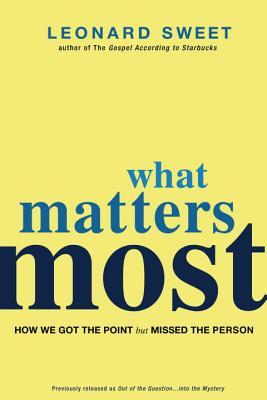
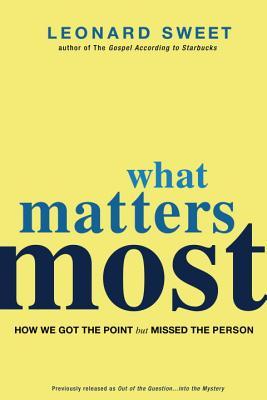
What Matters Most (book review)

The Old Testament prophet thundered out, “Thus saith the Lord!” and called the people back into a right relationship with God. The prophet’s words were not always well-received or well-liked, but they were always proved correct by God Himself. In many ways I felt like I was hearing a prophet’s voice in Leonard Sweet’s thundering words in What Matters Most, words calling us back into a right relationship with God.

The subtitle of the book is dead-on: How we got the point but missed the Person. Wow, how true that is! Christians and the Church today have so focused on getting the point of Christianity right, that we’ve missed the central point of CHRISTianity: Jesus Christ!

Leonard Sweet reminds us that we weren’t created to follow the rules of religion in isolated, solitary lives, but we were created to be in an intimate relationship with the Creator and with His creation. Sweet writes:

“What makes us human is the same thing that makes us created in the image of God. We are not isolated entities, self-contained, existing apart from God or from one another or even from God’s creation. We are made for “community” and “communion” and “ecology” …. We are judged by the world not on the basis of how “right” we’ve gotten what we believe but on how well we’re living it—on how we love God and people.”

So in What Matters Most Leonard Sweet focuses on those living relationships that should be the hallmark of Christians. Things like our relationship with…

  • our faith
  • our Creator
  • other people of faith
  • other people outside the faith
  • creation
  • arts
  • the unseen spiritual world

As I wrote earlier, often the prophet’s message was not received well initially. This is how you may feel when you first read What Matters Most. But if you will prayerfully read through this book, I think you will find (as I did) how these words resonate with the “Thus saith the Lord” tenor of Scripture and cause you to reevaluate your relationship with God and others.

I am a Waterbrook book reviewer. Check out some of the quotes I shared from this book by clicking here.

From A Frustrating Life To An Exciting Life

In our P119 Spiritual Workout series, we’ve looked at the similarities between an exercise program for our physical bodies, and spiritual growth for our souls. There are so many parallels for us to look at, but one of them that rings true for everyone is the up-and-down, on-and-off cycles that so many of us experience.

You know how it goes…

  • Your diet is going great and you are dropping some pounds (yea!), and then you go on vacation and all of your gains are lost (boo!).
  • You are doing really well at sticking with your new exercise routine (yea!), and then a head cold and some rainy weather knock you off your plan and it’s really hard to start back up again (boo!).
  • You are reading your Bible, and praying, and feeling so close to God (yea!), and then relationship issues, trouble at work, and a leaky hot water tank send you reeling (boo!).

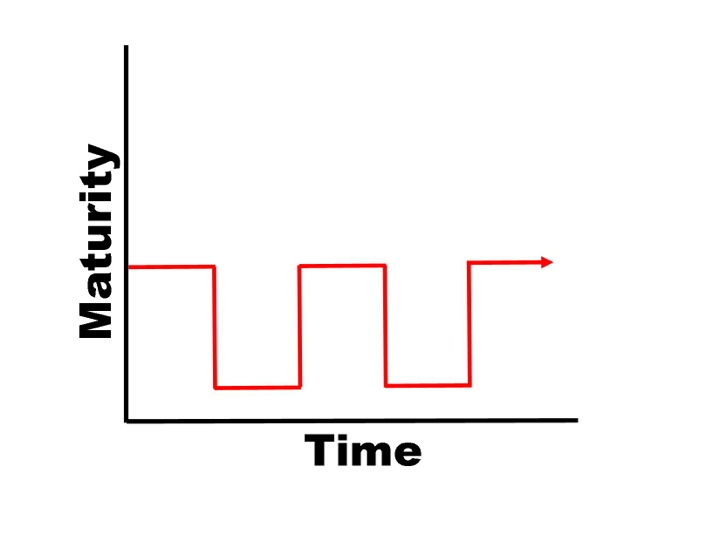
We all hope our spiritual growth (or diet or exercise routine) would take us to new heights, but this up-and-down again cycle makes it feel like we aren’t getting anywhere:

In Psalm 119:49-56 the psalmist experienced this exact same up-and-down cycle:

  • He’s tight with God (v. 49)
  • Then he experiences suffering (v. 50a)
  • Only to recall God’s promises (v. 50b)
  • And then he’s getting mocked for this faith (v. 51)
  • But he’s quick to remember God and find comfort in Him (v. 52)
  • Only to get his eyes off of God and onto the godless, which causes him trouble (v. 53)
  • But he remembers God’s ways again and is comforted by singing songs about God (vv. 54-55)

Sound familiar? Up-and-down. Close-to-God-and-far-away. On-and-off. Yea!-and-Boo!

HOW DO WE BREAK OUT OF THIS?!?

The key is found in the final verse—This has been my practice: I obey Your precepts (v. 56, NIV). Look how some other translations render this verse:

  • This I had, because I kept Thy precepts (KJV).
  • This is how I spend my life: obeying Your commandments (NLT).
  • This I have had [as the gift of Your grace and as my reward]: that I have kept Your precepts… (AMP).

When we put this all together we get the solution that helps us break free from the up-and-down again cycle—

It’s ONLY by focusing on God’s GRACE everyday!

When we focus on God and His gift of grace to us, we minimize the ups-and-downs. How? Because the focus is not on what I’m doing or what others aren’t doing, but on God, His faithfulness, and His grace to us.

When God’s grace becomes our focus, we can break free from the up-and-down cycle—

If you have missed any of the messages in our P119 series, you can access them all by clicking here.

Big Time!

The Bible tell us…

The Lord is near to all who call on Him, to all who call on Him in truth (Psalm 145:18).

I tweeted this early Sunday morning:

And guess what? I was right: He did show up! Big time!

I My Church (and their hunger for God)!!

If you are hungry to meet with God, please consider joining us next Sunday morning.