Pastor, Do You Enjoy Pastoring?

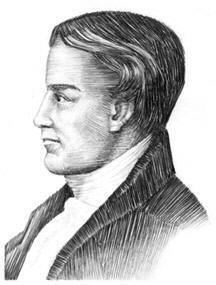
Phillips Brooks was a pastor, teacher, and songwriter. These words of his should be read very carefully and thoughtfully by every pastor…

     “I think, again, that it is essential to the preacher’s success that he should thoroughly enjoy his work. I mean in the actual doing of it, and not only in its idea. No man to whom the details of his task are repulsive can do his task well constantly, however full he may be of its spirit. He may make one bold dash at it and carry it over all his disgusts, but he cannot work on at it year after year, day after day. Therefore, count it not merely a perfectly legitimate pleasure, count it an essential element of your power, if you can feel a simple delight in what you have to do as a minister, in the fervor of writing, in the glow of speaking, in standing before men and moving them, in contact with the young. The more thoroughly you enjoy it, the better you will do it all. 

    “This is all true of preaching. Its highest joy is in the great ambition that is set before it, the glorifying of the Lord and the saving of the souls of men. No other joy on earth compares with that. The ministry that does not feel that joy is dead. But in behind that highest joy, beating in humble unison with it, as the healthy body thrills in sympathy with the deep thoughts and pure desires of the mind and soul, the best ministers have always been conscious of another pleasure which belonged to the very doing of the work itself. As we read the lives of all the most effective preachers of the past, or as we meet the men who are powerful preachers of the Word today, we feel how certainly and how deeply the very exercise of their ministry delights them.” (emphasis mine)

Pastor, what unspeakable joy should thrill us to know that God Himself called us to do what we do!!

I know that being in full-time ministry is tough. I know the demands on our time. I know that we are often targets for criticism. But still, this should never diminish our joy in being God’s ministers!

Heavenly Father, I thank You for the calling to be a pastor! Today I pray for pastors who don’t feel the joy they once felt. Holy God, will You reconfirm Your call on their lives. Reassure them that they are doing what they are doing because You called them to do it. And I ask that Your Holy Spirit would reinvigorate them with holy joy. Let the hands that hang low be lifted up in praise! Let mouths that have been tightly shut open wide in holy laughter! Let Your joy be their strength and encouragement. May You be glorified in joy-filled pastors!

Thursdays With Oswald—My Part And God’s Part

This is a weekly series with things I’m reading and pondering from Oswald Chambers. You can read the original seed thought here, or type “Thursdays With Oswald” in the search box to read more entries.

My Part And God’s Part 

     Beware of the tendency of trying to do what God alone can do, and of blaming God for not doing what we alone can do. We try to save ourselves, but God only can do that; and we try to sanctify ourselves, but only God can do that. …

     The love of God is the great mainspring, and by our voluntary choice we can have that love shed abroad in our hearts, then unless hindered by disobedience, it will go on to develop into the perfect love described in 1 Corinthians 13

     We have, then, to make the voluntary choice of receiving the Holy Spirit Who will shed abroad in our hearts the love of God [Romans 5:5], and when we have that wonderful love in our hearts, the sovereign preference for Jesus Christ, our love for others will be relative to this central love. 

From Biblical Psychology

I cannot save myself from an eternity apart from God.

I cannot make myself love someone.

I cannot force myself to give up a sinful habit.

But I can decide to let the Holy Spirit flood my heart with God’s love. And when this happens, I can give up anything that’s holding me back from enjoying an eternity in God’s presence.

My part: allow the Holy Spirit to bring God’s love into my heart, and then obey what God’s Word tells me to do.

God’s part: everything else.

9 Quotes from “Grant: Savior Of The Union”

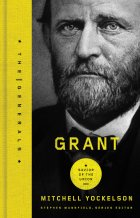
Grant: Savior Of The Union was a very eye-opening biography to read (you can read my full review by clicking here). Here are nine passages that especially caught my attention:

“This I don’t want you to read to others for I very much dislike speaking of myself.” —Grant, in a letter to his father about the accomplishments of his soldiers 

“The first day out the regiment made it five miles. However, the next morning at six o’clock when Grant resumed the March, his men were unprepared to move. He allowed them time to rise and eat breakfast this time, but the following morning when the men were again not ready to march, Grant left without them. It must have been a sight to see half-dressed soldiers running after their commander. The remainder of the trip to Quincy was conducted in relatively good order. Grant boasted to his father that ‘my men behaved admirably and the lesson has been a good one for them. They can now go into camp and after a day’s March and with as much promptness as veteran troops; they can strike their tents and be on the march with equal celerity.”  —Mitchell Yockelson

At one battle some officers advised retreat. Grant replied, “Retreat? No. I propose to attack at daylight and whip them.”

When some in Washington, D.C., wanted to replace Grant with someone more experienced, President Abraham Lincoln said, “I can’t spare this man; he fights.”

A friend observed that at a banquet where toasts and speeches were made to honor Grant, “his face never changed its unmoved expression. It never lit up with excitement. …His silence was a native endowment, nothing studied, nothing acquired. … His greatest enjoyment was manifestly with [his wife and children]. Their presence and happiness made his face beam as nothing else would.” 

When Grant was given the rank of Lt. General—a rank no one had held since George Washington—Grant’s acceptance speech was very gracious:

“I accept the commission with gratitude for the high honor conferred. With the aid of the noble armies that have fought on so many fields for our common country, it will be my earnest endeavor not to disappoint your expectations. I feel the full weight of the responsibilities now devolving on me and know that if they are net it will be due to those armies. And above all to the favor of that Providence which leads both Nations and men.”

After Robert E. Lee signed the surrender agreement for the armies of the South, word spread to the Union forces, and celebration erupted. “Grant ordered the cheering to stop. He did not want the Union army to gloat and in any way insult the defeated Confederates. ‘The war is over,’ Grant told a staff member. ‘The Rebels are our countrymen again.’”

“It will be a thousand years before Grant’s character is fully appreciated. Grant is the greatest soldier of our time if not all time… he fixes in his mind what is the true objective and abandons all minor ones. He dismisses all possibility of defeat. He believes in himself and in victory. If his plans go wrong he is never disconcerted but promptly devises a new one and is sure to win in the end. Grant more nearly impersonated the American character of 1861-65 than any other living man. Therefore he will stand as the typical hero of the great Civil War in America.” —William T. Sherman

“Of all the American generals of the nineteenth century, it seems to me that Ulysses S. Grant better understood the role of the military in democracy than any other.” —John S.D. Eisenhower, historian and son of Dwight D. Eisenhower

Praying For Your Healthy Friends

When do people typically ask you to pray for them? My guess it’s when things aren’t going so well for them.

How about you? When do you usually ask others to pray for you? When things are going well, or when you’re in a tough spot.

Why is it that we usually only think about prayer for sick friends or for friends in desperate need?

The apostle Paul wrote a letter to the Christians at Ephesus to encourage them. This church, as far as we know, wasn’t asking Paul for advice, and they weren’t facing intense persecution. They were mostly a spiritually healthy group.

So Paul wrote this to his healthy friends—

I have not stopped thanking God for you. I pray for you constantly. (Ephesians 1:16)

Paul went on to share with us his prayer for strong, spiritually healthy people (vv. 17-22). He asked God to make his healthy friends even stronger. He asked God to give them:

  • a super-abundance of the Holy Spirit
  • more wisdom and revelation
  • deeper intimacy with God
  • greater hope
  • greater power
  • and more strength

I’m not suggesting we stop praying for people in need. We definitely need to keep doing that. But perhaps it’s time to make a list of your healthy friends, and ask God to give them even more of Himself!

Stay Sharp (But Don’t Miss The Point)

Robert Murray McCheyne wrote this letter to his dear friend Daniel Edwards, who was leaving for missionary work in Germany, on October 2, 1840.

My dear friend,

I trust you will have a pleasant and profitable time in Germany. I know you will apply hard to German; but do not forget the culture of the inner man—I mean the heart. How diligently the cavalry officer keeps his saber clean and sharp; every stain he rubs off with the greatest care. Remember you are God’s sword—His instrument—I trust a chosen vessel unto Him to bear His name. In great measure, according to the purity and perfections of the instrument, will be the success. It is not great talents God blesses so much as great likeness to Jesus. A holy minister is an awful weapon in the hand of God.

My takeaways:

  • Hard work is important…
  • …but the hard work on my inner man is more important.
  • There is no substitute for attention to detail…
  • …but I need to not lose sight of the example of my Savior.
  • I need to get the point…
  • …but it’s more powerful to reflect the Person.

Bottom line: My motivation for staying sharp is to be more useful for my Savior. 

Morning And Evening (book review)

Charles Spurgeon was called the Prince of Preachers for good reason. And with his amazing one-year devotional book Morning and Evening, I think he should be called the Prince of Authors as well.

Some people are powerful public speakers, but struggle to make the transition to the written word, but this is definitely not the case with Charles Haddon Spurgeon. This devotional book offers two devotional readings for each day (one for the morning and one for the evening), that are not lightweight, cotton candy thoughts. Each devotional is a thought-provoking mini-sermon that stuck with me throughout the day, and gave me a wonderful prayer point each evening.

If you haven’t read anything from Spurgeon yet, this is a great place to start. If you are familiar with Spurgeon, this is a great place to continue your discovery. If you are looking for a soul-enriching devotional, you can’t go wrong with Morning and Evening.

What a great year-long journey I had with this masterpiece!

Grant: Savior Of The Union (book review)

I love to read the biographies of history-making people, so I have thoroughly enjoyed “The Generals” series that Thomas Nelson has produced. Almost every child in a US school has learned about the Civil War, and the two generals which stand at the forefront: Robert E. Lee and Ulysses S. Grant. But in Grant: Savior Of The Union, Mitchell Yockelson presents a picture of U.S. Grant that most have not seen.

If you recall what you learned about the Civil War in school, what sort of image comes to mind about General Grant? My textbooks presented a man who was a hard-charging, iron-willed general, who didn’t care how many soldiers he lost to win his battles. With this image in my mind, I could just imagine how distant he must have been as a husband, and how strict he probably was with his children.

Yockelson’s amazing biography of Grant shows nothing of the kind. Instead, we see Grant as a master tactician who thoroughly researched troop strengths and geography prior to the battle, to maximize his chances of success. He was a man who lived among his troops in the same housing they had, and who led from the front lines instead of from a safe distance away. He was a man who wanted his wife and children to be with him whenever it was possible, and was described by others as one of the most loving fathers they had ever seen.

And he was a man who loved the men under his care. After one notable victory, the northern newspapers praised Grant and his success. But Grant wrote home to his wife Julia: “These terrible battles are very good things to read about for a person who lost no friends, but I am decidedly in favor of having as little of them as possible.”

Our country owes a deep debt of gratitude to Ulysses Grant for his unshakable courage, deep compassion for his country and its citizens, and for his skills as a military leader. As Frederick Douglass said, “May we not justly say, will it not be the unquestioned sentiment of history that the liberty Mr. Lincoln declared with his pen General Grant made effectual with his sword—by his skill in leading the Union armies to final victory.”

A wonderful read for military history buffs and students of leadership. (By the way, I also reviewed the Thomas Nelson biography of Robert E. Lee here.)

I am a Thomas Nelson book reviewer.

I have also shared some quotes from this biography here.

Taunting

Coaches and parents especially don’t encourage those under their care to taunt their opponents. But the Bible does!

Seriously!

As a part of our P119 Spiritual Workout series, we looked at the section called Waw yesterday—

May Your unfailing love come to me, O Lord, Your salvation according to Your promise; then I will answer the one who taunts me, for I trust in Your Word. (Psalm 119:41-42)

“I will answer the one who taunts me.” How exactly do you answer the taunter? The word for answer here in Hebrew comes from the idea of “singing tunefully.”

You know how it feels when you have that perfect zinger—that great one-liner as a comeback to someone who’s tweaked you?

And you know how you don’t just say that zinger, but you add a musical note to it as well, just to add a little emphasis?

Well, this is what Christians can do to the devil when he taunts them! The book of Revelation tells us that satan is the accuser (the taunter) of the Christians, and that we overcome him by the blood of Jesus and the word of our testimony. But the psalmist says it’s not just plain old words, but the lilting sing-song, tuneful reply to his taunt.

We reply to our enemy’s taunts with a Scriptural-based tweak of our own. We can remind him of our total forgiveness in Christ. We can tell him how God loves us, and sent His Son to die for our sins, and how the Holy Spirit has been given to us as a deposit guaranteeing that we are now in Christ. We can use the Bible to tunefully taunt the taunter with the truth of God’s Word.

Don’t just silently take it when the enemy accuses you. Don’t get mad. But shut him up by answering him with a song right from God’s Word!

If you have missed any of the messages in our P119 series, you can access them all by clicking here.

More Glory For God

You may be aware of this statement from the Westminster Catechism: The chief end of man is to glorify God and enjoy Him forever.

I love how John Piper elaborates on this in his book Desiring God

“In view of God’s infinite power and wisdom and beauty, what would His love to a human being involve? Or, to put it another way: What could God give us to enjoy that would prove Him the most loving? There is only one possible answer: Himself! … So if God loves us enough to make our joy full, He must not only give us Himself; He must also win from us the praise of our hearts—not because He needs to shore up some weakness in Himself or compensate for some deficiency, but because He loves us and seeks the fullness of our joy that can be found only in knowing and praising Him, the most magnificent of all Beings.”

The cycle here is similar to the cycle I talked about last week, but it looks something like this: Glorifying God helps us enjoy Him, and enjoying Him helps us glorify Him.

God is delighted when we’re delighted in Him.

Why? If we are enthralled with Him, why would seek enjoyment in anything else? So as we glorify Him, He shows us more of Himself for us to delight in. And as we delight in the newly-revealed view of Himself—as we are more and more captivated by His greatness—we glorify Him even more.

Which starts the glorifying God and enjoying Him forever cycle all over again. I LOVE IT!! 

My Best Friend

I am so blessed to have a best friend. 

Someone who has helped me grow and mature.

Someone who helps me dream bigger,

persevere longer,

act more kindly,

live more transparently,

love more empathically,

encourage more frequently,

lead more gently,

serve more Christ-like,

and glorify God more highly.

My best friend is my confidant, my playmate, my cheerleader, my counselor, my wife of 22 years.

I love you, Betsy! I cannot imagine a better friend. I cannot imagine how much of life I would have missed if you hadn’t been by my side, opening my eyes.

The first 22 years have been amazing. I cannot wait to see what God has in store for us for the next 22 years! 

Happy anniversary!

(We love working with Michelle Wise for our photographs. Check out her amazing work here.)