Sometimes God Fights Me

Sometimes God Fights MeSometimes life is hard, and God is walking right alongside me. Sometimes life is hard, and God is the One creating my difficulties.

Why? Because He loves me too much to allow me to head down a dangerous path.

Once a man named Balaam was heading to a meeting that he shouldn’t have been going to. As he trotted along on the back of his donkey, suddenly the donkey pulled up, dug on her hooves and would not move. Balaam beat her and still she wouldn’t budge. This next part is amazing to me: the donkey turned and talked to Balaam! She said, “Why are you beating me? Haven’t I always been faithful to take you where you needed to go?”

But Balaam was so intent on getting to his ill-advised meeting that the fact that his donkey was talking didn’t even phase him! What did get his attention, though, is when he saw what his donkey had seen all along. Jesus was standing in the middle of the road with a drawn sword.

Jesus said to Balaam, “I have come here to oppose you because your path is a reckless one before Me” (Numbers 22:32).

You and I should count it as a blessing when God opposes us—when He makes our path difficult—because we are heading somewhere reckless.

When life is hard, when things aren’t going as you had hoped, when your donkey suddenly stops carrying you along, you should ask a question: Why is this happening? Sometimes it just may be that life is hard, but God is still with you. Or it just might be that God is opposing you because your path is a reckless one. Don’t keep beating trying to get your donkey to move, but pause and ask why your donkey has stopped.

God’s opposition to your reckless path is a blessing!

21 Quotes From “Sometimes You Win, Sometimes You Learn”

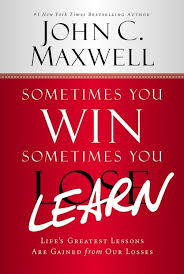
Sometimes You WinAs I mentioned in my book review (which you can read by clicking here), John Maxwell always expands my horizons with his writings. I appreciate his ability to use his own life experiences as well as historical and contemporary examples and writings. So some of my favorite quotes from Sometimes You Win, Sometimes You Learn are from Dr. Maxwell, and some are from others that he quotes. Enjoy!

“I sometimes react to making a mistake as if I have betrayed myself. My fear of making a mistake seems to be based on the hidden assumption that I am potentially perfect and that if I can just be very careful, I will not fall from heaven. But a mistake is a declaration of the way I am, a jolt to the way I intend, a reminder that I am not dealing with facts. When I have listened to my mistakes, I have grown.” —Hugh Prather

“Those who profit from adversity possess a spirit of humility and are therefore inclined to make the necessary changes needed to learn from their mistakes, failures, and losses. … When we are focused too much on ourselves, we lose perspective. Humility allows us to regain perspective and see the big picture. … Humility allows us to let go of perfection and keep trying.” —John Maxwell

“Most people spend their entire lives in a fantasy Island called ‘Someday I’ll.’” —Denis Waitley 

“An idealist believes the short-run doesn’t count. A cynic believes the long run doesn’t matter. A realist believes that what is done or left undone in the short-run determines the long run.” —Sydney J. Harris

“Those things that hurt, instruct.” —Benjamin Franklin

“You can’t grow and learn if your focus is on finding someone else to blame instead of looking at your own shortcomings.” —John Maxwell

“The highest reward for our toil is not what we get for it but what we become by it. … Mistakes are not failures. They are proof that we are making an effort. When we understand that, we can more easily move out of our comfort zone, try something new, and improve. … Improvement demands a commitment to grow long after the mood in which it was made has passed.” —John Maxwell 

“Success in most things comes not from some gigantic stroke of fate, but from simple, incremental progress.” —Andrew Wood

“The main trouble with despair is that it is self-fulfilling. People who fear the worst tend to invite it. Heads that are down can’t scan the horizon for new openings. Bursts of energy do not spring from a spirit of defeat. Ultimately, helplessness leads to hopelessness.” —Norman Cousins

“Positive thinking must be followed by positive doing.” —John Maxwell

“When you are influential and highly respected, people tend to tell you what you want to hear, not what you need to hear. They are seeking your approval, or they flatter you. Unfortunately, this creates a gap between what you hear and reality. If you find yourself in that situation, you will need to work extra hard to get the people close to you to speak honestly into your life. And you will have to become highly intentional in observing and listening.” —John Maxwell 

“Wisdom is the reward you get for a lifetime of listening when you would have preferred to talk.” —Doug Larson

“Circumstances are the rulers of the weak; but they are the instruments of the wise.” —Samuel Lover 

“Mistakes are painful when they happen, but years later a collection of mistakes is what is called experience.” —Denis Waitley

“Ninety percent of those who fail are not actually defeated; they simply quit. … As you face bad experiences, it’s important for you to remember that you can rarely see the benefits while you’re in the midst of them. You usually gain perspective on the other side of it.” —John Maxwell 

“Most people would rather change their circumstances to improve their lives when instead they need to change themselves to improve their circumstances. They put in just enough effort to distance themselves from their problems without ever trying to go after the root, which can often be found in themselves. Because they don’t try to change the source of their problems, their problems keep coming back at them.” —John Maxwell

“To grow, you must be willing to let your present and future be totally unlike your past. Your history is not your destiny.” —Alan Cohen

“If I had my life to live over again, I’d make the same mistakes, only sooner.” —Tallulah Bankhead

“Maturity is doing what you are supposed to be doing, when you’re supposed to be doing it, no matter how you feel.” —Dom Capers 

“Have you not succeeded? Continue! Have you succeeded? Continue!” —Fridtjof Nansen, Nobel Peace Prize winner

“How we think when we lose determines how long it will be until we win.” —G.K. Chesterton

Is Confrontation A Dirty Word?

ConfrontationJesus takes the church of Thyatira to task because they are tolerating someone with a Jezebel spirit to remain in a position of leadership and influence (Revelation 2:18-29). This is still a message to the church today!

However, for some reason Christians have made “confrontation” a dirty word. We don’t confront people in error, especially those who are in leadership positions within their church. Perhaps equally as wrong: when we do confront, we do it in a way that is destructive.

The goal of confrontation is restoration, not destruction!

In Revelation 2, Jesus gives us five steps toward healthy, biblical, God-honoring confrontation:

  1. Don’t tolerate a Jezebel spirit by remaining silent (v. 20). Instead we need to follow the principles in Matthew 18:15-17 and 1 Timothy 5:19.
  2. Allow the one whom you’ve confronted time to repent (v. 21a).
  3. If they don’t repent, don’t rescue them from God-inflicted punishment (vv. 21b-23).
  4. Run away from secrets (v. 24). If something more than Scripture is required by the Jezebel leader, reject it.
  5. Don’t run away from the situation, but hold on to Jesus until Jesus returns (vv. 25-28).

Not one human is infallible, but Jezebel not only claims infallibility, but also demands blind allegiance to her teachings. But it is just as wrong to tolerate Jezebel as it is to confront her unbiblically; Jesus opposed both.

One way for us to always avoid these two extremes: Try to out-serve one another, just as Jesus directed us—

“You know that the rulers of the Gentiles lord it over them, and their high officials exercise authority over them. Not so with you. Instead, whoever wants to become great among you must be your servant, and whoever wants to be first must be your slave—just as the Son of Man did not come to be served, but to serve, and to give His life as a ransom for many.” (Matthew 20:25-28)

If you are near Cedar Springs next Sunday, please join me as we continue our series on The 7-Star Church.

Check out this clip about confrontation—

God-Pleasing Sermons

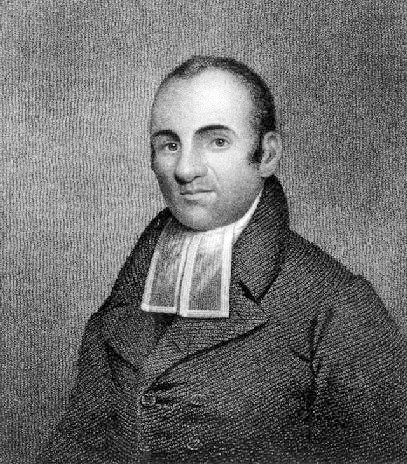
Lemuel Haynes

Lemuel Haynes

Sadly, I talk to far too many pastors who tell me their sermon topics have been selected by others. They don’t say this exactly in those words, but they talk about needing to prompt someone to do something differently, or of a parent who thinks the youth need some correction, or a board member who says the giving needs to be increased.

Sometimes it’s the opposite: pastors will say they won’t preach on a certain topic because it’s too sensitive, or it might make some people upset, or it might be offensive to some with an opposing viewpoint.

Whatever happened to preaching the Word as the Holy Spirit directs?

“A minister who watches for souls as one who expects to give account will have none to please but God. When he studies his sermons, this will not be the enquiry, ‘How shall I form my discourse so as to please and gratify the humors of men and get their applause?’ but ‘How shall I preach so as to do honor to God and meet with the approbation of my Judge?’” —Lemuel Haynes (emphasis added)

Thursdays With Oswald—Confident Access

This is a weekly series with things I’m reading and pondering from Oswald Chambers. You can read the original seed thought here, or type “Thursdays With Oswald” in the search box to read more entries.

Oswald Chambers

Confident Access

     It is not our earnestness that brings us into touch with God, nor our devotedness, nor our times of prayer, but our Lord Jesus Christ’s vitalizing death; and our times of prayer are evidences of reaction on the reality of Redemption, so we have confidence and boldness of access into the holiest. 

     What an unspeakable joy it is to know that we each have the right of approach to God in confidence, that the place of the Ark is our place, “Having therefore, brethren, boldness.” What an awe and what a wonder of privilege, “to enter into the holiest,” in the perfectness of the Atonement, “by the blood of Jesus.” 

From Christian Disciplines

It’s not what I do that gives me access to God, but what Jesus already did! He paid the price that was beyond my reach so that I can now come directly into God’s presence in full confidence that He will receive me.

Amazing love!

Hope All Day Long

Psalm 25-5

Show me Your ways, O Lord, teach me Your paths; guide me in Your truth and teach me, for you are God my Savior, and my hope is in You all day long. (Psalm 25:4-5)

Sometimes You Win—Sometimes You Learn (book review)

Sometimes You WinIf you’re like me, you grew up being able to quickly finish the phrase, “Sometimes you win, sometimes you… lose.” But John Maxwell gives us a far better way to finish this well-worn phrase in his latest book Sometimes You Win—Sometimes You Learn: Life’s Greatest Lessons Are Learned From Our Losses.

As in his other books, Dr. Maxwell shares very candidly about his own missteps, and the lessons he learned from them. He also brings in the insight from other friends and authors who have also learned the value of making mistakes and learning the hard lessons from them.

What always amazes about John Maxwell’s writing is the depth of insight. On the surface you would think there wouldn’t be much to say about learning from our losses except another well-worn cliche, “If at first you don’t succeed, try, try again.” But that try-again spirit is only one part of the learning process. John shows us the value of:

  • Humility
  • Reality
  • Responsibility
  • Improvement
  • Hope
  • Teachability
  • Adversity
  • Problems
  • Bad experiences
  • Change

Following through on all of these aspects leads to the most important step in the learning process: Maturity.

The insight, historical stories, personal anecdotes, and wisdom of other been-there-done-that people are woven together with John’s unique teaching style to give us a book that is highly beneficial. I’d especially recommend this book to parents, coaches and mentors.

I am a Center Street book reviewer.

The Sin Of Silence

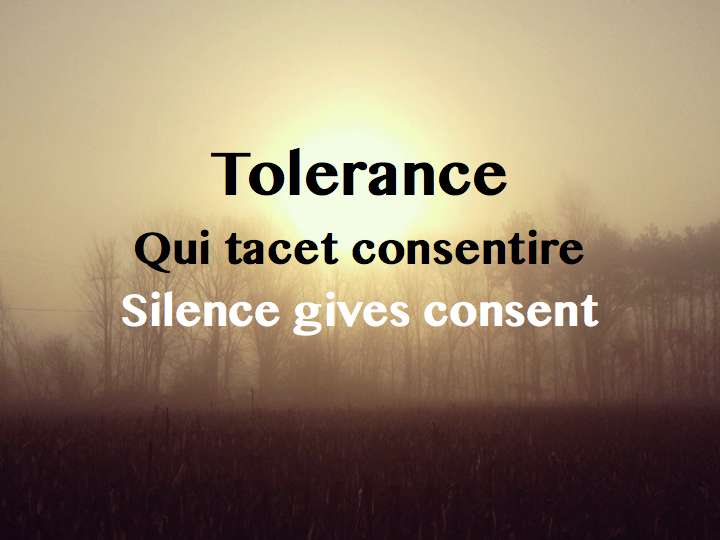
Qui tacet consentire“All that is necessary for the triumph of evil is that good men do nothing.” —Edmund Burke

This is as true for Christians as it is for anyone else.

In addressing the church at Pergamum (see Revelation 2:12-17), Jesus calls the Christians out for their silence. He tells them that what He has against them is their close relationship with those who hold to unbiblical ideas.

Pergamum’s sin is our sin in the USA today: tolerance. We let things slide, hoping to get along with others, trying not to rock the boat, trying to avoid being labeled a “hater,” and finding ways to be everyone’s friend.

There is a Latin phrase used in legal circles that says: Qui tacet consentire, which means Silence gives consent. If you don’t speak up to challenge what is stated, it is assumed that you believe it.

Jesus calls the church at Pergamum to repent for their tolerance. He calls for them to speak the truth of God’s Word. Twice the phrase is used to remind us of God’s Word being sharper than a double-edged sword.

Our job as Christians is not to win an argument, bring conviction, or become the sin police. Our job is to speak God’s truth in love.

True friends speak out when someone they care about is making a foolish choice. True Christians loving speak The Truth when the world around them is selling out to a convenient lie.

“In keeping silent about evil, in burying it so deep within us that no sign of it appears on the surface, we are implanting it, and it will rise up a thousandfold in the future. When we neither punish nor reproach evildoers … we are ripping the foundations of justice from beneath new generations.” —Alexander Solzhenitsyn

I will be continuing our series The 7-Star Church: Becoming The Church That Pleases Christ next Sunday. If you are in the area, I would love to have you join me.

Bible-Taught Or Spirit-Taught

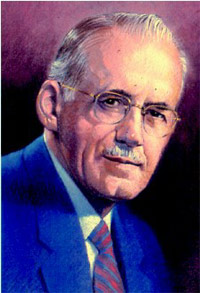
A.W. Tozer“We must be willing to obey if we would know the true inner meaning of the teachings of Christ and the apostles. I believe this view prevailed in every revival that ever came to the church during her long history. Indeed a revived church may be distinguished from a dead one by the attitude of its members toward the truth. The dead church holds to the shell of truth without surrendering the will to it, while the church that wills to do God’s will is immediately blessed with a visitation of spiritual powers. Theological facts are like the altar of Elijah on Carmel before the fire came, correct, properly laid out, but altogether cold. When the heart makes the ultimate surrender, the fire falls and true facts are transmuted into spiritual truth that transforms, enlightens, sanctifies. The church or the individual that is Bible taught without being Spirit taught (and there are many of them) has simply failed to see that truth lies deeper than the theological statement of it.” —A.W. Tozer

What do you think, pastor? Is your church Bible taught, or Spirit taught? Is there a difference? If so, how can you move your church into this deeper place?

Thursdays With Oswald—The Vocation Of A Saint

This is a weekly series with things I’m reading and pondering from Oswald Chambers. You can read the original seed thought here, or type “Thursdays With Oswald” in the search box to read more entries.

Oswald Chambers

The Vocation Of A Saint 

     The vocation of a saint is to be in the thick of it “for His sake.” Whenever Jesus Christ refers to discipleship or to suffering, it is always, “for My sake.” The deep relationship of a saint is a personal one, and the reason a saint can be radiant is that he has lost interest in his own individuality and has become absolutely devoted to the Person of the Lord Jesus Christ.

From Christian Disciplines

As the Westminster Catechism states: The chief end of man is to glorify God and to enjoy Him forever.

It is in this glorifying of God and the enjoyment of Him that the saint becomes radiant. And this radiance continues even through suffering or persecution. Am I willing to step into this discipleship relationship, and stay in it? YES!!