We walk by faith, not by appearance (2 Corinthians 5:7).
“By faith, not appearance; God never wants us to look at our feelings. Self may want us to; and satan may want us to. But God wants us to face facts, not feelings; the facts of Christ and of His finished and perfect work for us.
“When we face these precious facts, and believe them because God says they are facts, God will take care of our feelings.
“God never gives feeling to enable us to trust Him; God never gives feeling to encourage us to trust Him; God never gives feeling to show that we have already and utterly trusted Him. God gives feeling only when He sees that we trust Him apart from all feeling, resting on His own Word, and on His own faithfulness to His promise. Never until then can the feeling (which is from God) possibly come; and God will give the feeling in such a measure and at such a time as His love sees best for the individual case.
“We must choose between facing toward our feelings and facing toward God’s facts. Our feelings may be as uncertain as the sea or the shifting sands. God’s facts are as certain as the Rock of Ages, even Christ Himself, who is the same yesterday, today and forever.” —Lettie Cowman
Pastor Josh Schram shared with us the lessons he’s appreciated about receiving wise counsel from those around him. One of Josh’s opening remarks really hit home with me, because it’s something I still struggle with at times: I have to get beyond thinking that those who are trying to speak into my life are somehow trying to meddle in my life!
A couple of other thoughts that really made me pause and reflect were—
“Ignorance may be bliss, but it won’t last.” How true! I may cover my eyes and ears to the truth, but my ignorance will ultimately lead to my downfall.
“People who will speak truth into my life care more about me than about my feelings.” As Proverbs says, “Wounds from a friend can be trusted, but an enemy multiplies kisses” (27:6).
Josh closed with these challenging questions:
Am I open to correction from wise counsel?
When I am corrected, do I feel like I must defend myself?
This is a weekly series with things I’m reading and pondering from Oswald Chambers. You can read the original seed thought here, or type “Thursdays With Oswald” in the search box to read more entries.
Happiness Or Holiness?
“Beauty” means the perfectly ordered completeness of man’s whole nature. When once a man’s mind is upset, that beauty begins to go, the equilibrium is upset. This accounts for the characteristic tendency abroad today: ignore sin, deny it ever was; if you make mistakes, forget them, live the healthy minded, open-hearted, sunshiny life, don’t allow yourself to be convicted of sin. …
Happiness means we select only those things out of our circumstances that will keep us happy. It is the great basis of false Christianity. The Bible nowhere speaks about a “happy” Christian; it talks plentifully of joy. … Happiness would be alright if things were reasonable; it would be ideal if there were no self-interest, but everyone of us is cunning enough to take advantage somewhere, and after a while my inclination is to get my happiness at your cost. …
What kind of peace had Jesus Christ? A peace that kept Him for thirty years at home with brothers and sisters who did not believe in Him; a peace that kept Him through three years of popularity, hatred, and scandal; and He says, “My peace I give unto you”; “let not your heart be troubled,” i.e., “see that your heart does not get disturbed out of its relationship to Me.”
But remember Jesus Christ has to upset the old equilibrium first. When a man is probed into by the Spirit of God, the waters of his conscious life get troubled and other ideas emerge. If I am going to follow the dictates of the Spirit of God and take up the attitude of Jesus Christ to things, it will produce an earthquake in my outlook. … “If you would be My disciple, says Jesus that is the cost.” …
Take up any attitude of Jesus Christ’s and let it work, and the first thing that happens is that the old order and the old peace go. You cannot get back peace on the same level. If once you have allowed Jesus Christ to upset the equilibrium, holiness is the inevitable result, or no peace forever (Matthew 10:34).
From The Shadow Of An Agony
Quite simply: I can live for my own happiness, or I can allow my “happiness” to be momentarily upset by allowing the holiness of God to reign in my heart.
Happiness eventually comes to an end, but holiness ultimately leads to the enjoyment of God forever!
The choice is yours: “IF you would be My disciple….”
There is perhaps nothing more heart-wrenching for a Christian parent than to see their son or daughter living a life differently than how they were raised.
One biblical promise these parents can claim in prayer is—Train up a child in the way he should go: and when he is old, he will not depart from it (Proverbs 22:6).
He was born in 354 in a North African town set among the woods near the Mediterranean. His father was a pagan, but his mother, Monica, was of devout Christian stock.
Augustine was an undisciplined child, idle and truant despite frequent beatings. He loved sports and pranks and soon discovered a host of adolescent pleasures. … Augustine was also brilliant, and he soon moved to Carthage to further both his studies and his fun. Monica warned him against fornication, but ‘I ran headlong with blindness.’
At about 18 he found himself the father of a son. At the same time he joined a cult. Years passed, and Monica, praying ceaselessly, heard that Augustine was planning to leave Africa for Rome. She begged him not to go. When he refused, she determined to go with him. Using deception, he left her praying in a chapel and sailed without her; but she took a later boat and intercepted him. They traveled to Milan where she persuaded him to listen to the great Bishop Ambrose. The bishop’s razor-sharp sermons penetrated Augustine’s head, if not yet his heart. Monica continued praying, confiding her struggles to Ambrose. He told her not to worry: ‘It isn’t possible for the son of such prayers to be lost.’
One day as Augustine sat in a friend’s garden he heard a child singing, ‘Take up and read!’ He opened the Bible near him and read from Romans 13: ‘Don’t go to wild parties or get drunk or be vulgar or indecent.… Let the Lord Jesus Christ be as near to you as the clothes you wear.’ By the time he finished the sentence, he later said, he was converted. On the eve of Easter, April 24, 387, Augustine and his son Adeodatus were baptized by Ambrose as Monica watched. Her lifetime of prayer was answered, and a church father was born.
Years later as Augustine shared about his conversion in his book Confessions, he wrote out this prayer to God: “My mother, Your faithful servant, wept to You for me, shedding more tears for my spiritual death than others shed for the bodily death of a son. You heard her.”
If you want to get more out of your book reading time, I’d highly recommend How To Read A Book to you. Check out my review here, and then check out some of the quotes I especially appreciated.
“We do not have to know everything about something in order to understand it; too many facts are often as much of an obstacle to understanding as to few. There is a sense in which we moderns are inundated with facts to the detriment of our understanding.”
“Good books are over your head; they would not be good for you if they were not. And the books that are over your head weary you unless you can reach up to them and pull yourself up to their level. It is not the stretching that tires you, but the frustration of stretching unsuccessfully because you lack the skill to stretch effectively. To keep on reading actively, you must have not only the will to do so, but also the skill—the art that enables you to elevate yourself by mastering what at first sight seems to be beyond you.”
“Perhaps you were beginning to see how essential a part of reading it is to be perplexed and know it. Wonder is the beginning of wisdom in learning from books as well as from nature. If you never ask yourself any questions about the meaning of a passage, you cannot expect the book to give you any insight you do not already possess.”
“Many persons believe that they know how to read because they read at different speeds. But they pause and go slow over the wrong sentences. They pause over the sentences that interest them rather than the ones that puzzle them. Indeed, this is one of the greatest obstacles to reading a book that is not completely contemporary.”
“‘State in your own words!’ That suggests the best test we know for telling whether you have understood the proposition or propositions in the sentence. If, when you are asked to explain what the author means by a particular sentence, all you can do is repeat his very words, with some minor alterations in their order, you had better suspect that you do not know what he means. Ideally, you should be able to say the same thing in totally different words. The idea can, of course, be approximated in varying degrees. But if you cannot get away at all from the author’s words, it shows that only words have passed from him to you, not thought or knowledge. You know his words, not his mind. He was trying to communicate knowledge, and all you received was words.”
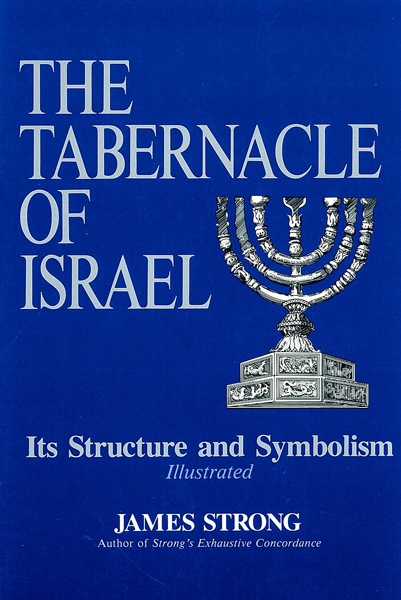
If you have ever used the Strong’s Exhaustive ConcordanceOf The Bible, you are probably familiar with the work of Dr. James Strong. By the way, if you haven’t used this concordance, it is 1500+ pages listing every word in the Bible and their Hebrew or Greek word and definition. By contrast, Dr. Strong’s book on The Tabernacle Of Israel is only 170 pages, but it’s just as jam-packed with helpful information.
I was recently reading through the books of the Bible where God gives Moses highly specific instructions for the portable Tabernacle that is to be used for the Hebrews to conduct their worship services. This temporary Tabernacle not only served them while they sojourned in the wilderness for 40 years, but it became the pattern for the brick-and-mortar Temple that King Solomon built years later, and its pattern is referred to again in the New Testament book of Hebrews as being a pattern of the worship in heaven. Obviously this is a significant thing!
Dr. Strong uses his extraordinary skills to compile an easy-to-follow study of the design guidelines, building materials, and exact layout of this Tabernacle. He uses not only the biblical accounts, but also augments his work with extensive archeological discoveries.
Then to wrap up the book, Dr. Strong talks about the significance of the layout, colors, materials, and even mathematical significance of the Tabernacle’s design, showing how it still impacts the New Testament Christian to this day.
This is an academic book, but it is well worth your time if you would like to get a more in-depth knowledge of the Tabernacle which God commanded Moses to build.
King David of Israel was a stud! Outstanding song writer, professional shepherd, bear killer, lion killer, giant killer, decorated army general, and ultimately king of Israel.
Near the end of his life we read an extensive list of Mighty Men that supported David. Some of these guys were also giant killers. One guy singlehandedly defeated 300 enemies, another guy defeated 800 bad guys, one guy killed a lion, and on and on the list goes.
I believe it is clear that David wouldn’t have become king without the support of his Mighty Men, and these guys probably wouldn’t have been recognized as “Mighty Men” without David’s support.
This is a classic definition of synergy. Synergy is when the outcome is so much greater than just the addition of the parts. Sort of like 1 + 1 = 5.
All of us can be a part of synergistic relationships, if we will include these five key parts.
[1] Humility
Without humility, you will never let anyone else into your life, and it’s doubtful they will let you in. Humility says, “I don’t have all the answers. I need some help in fulfilling my God-given dream. I have some areas of weakness where you are strong.”
[2] Confidence
Just like humility, without confidence it’s doubtful others would allow you access to their lives. Confidence says, “I have some something I am willing to offer you. I have a God-given strength in an area where you may be struggling.” The Apostle Paul said, all of us have strengths that God has given us that are to be used to help others (1 Corinthians 12:7; Ephesians 4:7).
[3] Collaboration
Quite simply, in order for synergy to work, the people in the relationship have to be willing to labor together. Paul used the example of one person planting the seed and another person watering the seed. Both laborers are necessary if there is going to be a harvest.
[4] Patience
The journey with others may be slower and messier than traveling solo, but it’s so much more rewarding (see Ecclesiastes 4:9-12).
[5] Investment
Synergy is really about there being a return on investment. But if you’re not willing to invest your time, your learning, your love, can you really expect there to be a synergistic return?
I just wrapped up a year-long investment with a group of guys from my church. What an amazing time! I am definitely better for having been involved with this synergy group, and I believe all of the other guys would tell you the same thing. You, too, can experience this same joy by investing in a synergy group of your own!



 “By faith, not appearance; God never wants us to look at our feelings. Self may want us to; and satan may want us to. But God wants us to face facts, not feelings; the facts of Christ and of His finished and perfect work for us.






 Craig T. Owens