Sometimes the naming of things gives us an inaccurate picture of the thing being named. For instance, many people think the “old” in Old Testament means outdated or perhaps updated by the “new” in the New Testament. When in fact, both Testaments are needed to give us the full picture of God’s love and glory.
A similar thing happens with the headings “major prophets” and “minor prophets.” It makes it sound like the major prophets have something major to say to us, while we could take or leave the minor messages of the minor prophets.
In reality, they were given these headings simply because of the volume of writing—the five major prophets consist of 182 chapters, whereas the 12 minor prophets only have 67 chapters. The volume of their writing may be minor, but their content carries major messages of meteoric power!
If you missed any of the messages in this series, you can find them here:
Dr. Kathy Koch has parenting insights that are unlike few others. Her ministry is called Celebrate Kids, and that’s exactly what she teaches parents and teachers to do in her book Start With The Heart.
Not only does Dr. Kathy lean into her formal training in education—as an elementary teacher, a middle school coach, and a university professor—but she supports all of her instructional insights with an unabashed reliance on the wisdom found in the Bible. This is a winning combination!
Dr. Kathy explains the rationale behind the title and message of her latest book, “Capturing your child’s heart and parenting to keep it may be more important than anything else you do. Your love for your children and your desire for them to trust Christ for their salvation matters greatly. For you to have motivational power to help them make that commitment, mature in their faith, and love God more fully, you must start with their heart.”
Start With The Heart isn’t about manipulating children or coercing them into a more desirable behavior. The focus is on your child’s heart so that he or she will be internally motivated to make good choices even when you aren’t around.
Every chapter introduces a new concept which is built on the chapter before it. As the book progresses, you will begin to see how each parenting principle is interdependent and reinforcing with all the other principles. The close of each chapter turns the mirror back on us parents as Dr. Kathy asks, “What about you?” She also shares some helpful “Things To Do” and “Things To Think About” bullet points to wrap up each chapter.
I would recommend Start With The Heart for parents and teachers of younger children. And not just the book, but check out the Celebrate Kids website for ongoing insights from Dr. Kathy.
Listen to the podcast of this post by clicking on the player below, and you can also subscribe on Apple, Spotify, or Audible.
Twice the 80th psalm declares—Restore us, O Lord God Almighty; make Your face shineupon us, that we may be saved (Psalm 80:19).
But if we are already a Christian that has been saved from the penalty of our sin and saved to an eternal reward, then that also means that God’s face IS already shining on us, He HAS already restored us, and He HAS already given us His favor.
I like how the Amplified Bible renders this verse: Restore us, O Lord God of hosts; cause Your face to shine in pleasure, approval, and favor on us, and we shall be saved!
What we have received is too wonderful for us to keep to ourselves, so we must let His pleasure, approval, and favor now shine out of us!
“If the result of our experience of God does not compel and propel us into global mission, it is doubtful whether we have really encountered the God of the Bible.” —Dick Brogden
Jesus stated His mission simply and then sent us out on the exact same mission (Luke 4:18-19; John 20:21). We do this best by living closely among people so they can also see us shine with God’s favor.
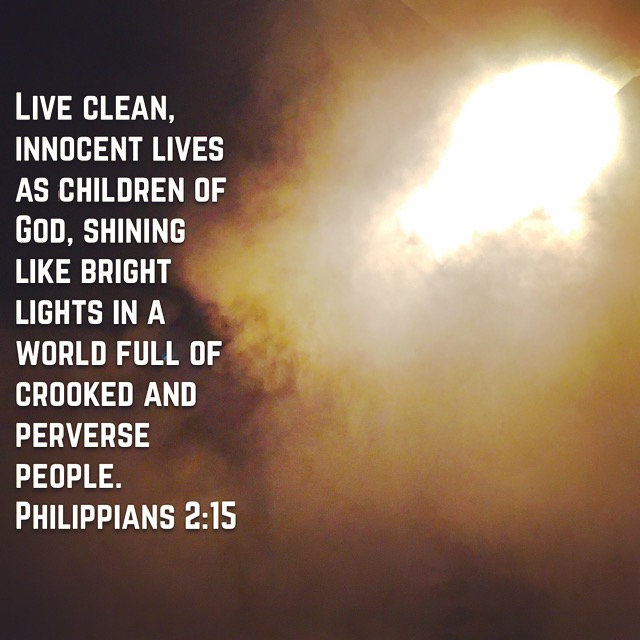
Paul called us to shine as well: Live clean, innocent lives as children of God, shining like bright lights in a world full of crooked and perverse people (Philippians 2:15). I believe this is a perfect definition of the word influence.The origin of the word meant the supposed flowing of ethereal fluid from the stars thought to affect the actions of men.Christians that let their good deeds shine in the darkness can influence the entire culture around them!
“Radical Christianity is not going on a missions trip or a big conference. Radical Christianity is staying steady for decades.” —Mike Bickle
Being a person that shines with favorable influence requires staying involved for the long haul so that you can build trustworthiness. It’s being in visible places not to get glory, but to let people see God’s glory. When they see His glory shine on you and out of you, they will want what you have too!
Solomon said, By the blessing of the influence of the upright and God’s favor—because of them the city is exalted (Proverbs 11:11). So, my fellow Christian, let me ask you:
Has God shined on you?
Are you letting Him shine out of you?
Are you living a noteworthy, trustworthy, visible life in your dark community?
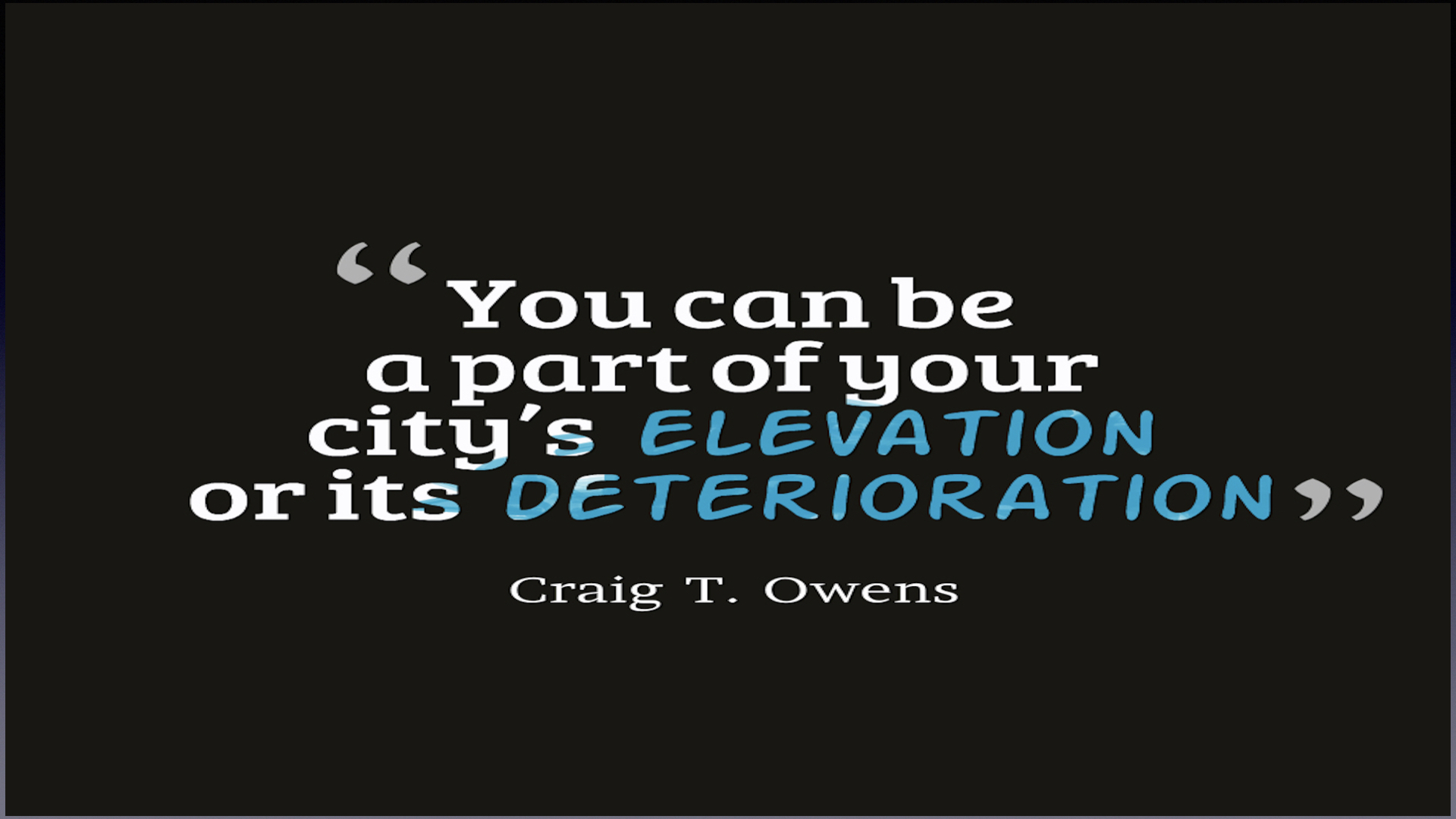
“It’s your choice: You can be a part of your city’s elevation or its deterioration.”
This is a weekly series with things I’m reading and pondering from Charles Spurgeon. You can read the original seed thought here, or type “Thursdays With Spurgeon” in the search box to read more entries.
Study The Right Things
It is very advantageous to the Christian mind frequently to consider the deep and unsearchable attributes of God. … If we study man and make him the only object of our research, there will be a strong tendency in our minds to exaggerate his importance. We will think too much of the creature and too little of the Creator, preferring the knowledge that is to be found out by observation and reason to the divine truth that revelation alone could make known to us. …
The fleeting things of human life and the fickle thoughts and showy deeds of men are as movable and as changeable as the waters of the treacherous deep. But when we mount up, as it were, with eagles’ wings to Him Who sits upon the circle of the earth, before Whom all its inhabitants are as grasshoppers (Isaiah 40:22), we nestle in the Rock of Ages that from its eternal socket never starts and in its fixed immovability can never be disturbed.
From The Infallibility Of God’s Purpose
I read a lot of books. But in the hands-down, it’s-not-even-close category, I read the Bible more than anything else. It is the Book of books because it reveals the eternal Wisdom behind the earth’s wisdom.
Zig Ziglar used to say, “Every morning I read my Bible and I read the newspaper. That way, I know what both sides are up to.” That’s pretty good!
We read the Bible not just to know the Bible, but to know the One Who authored the Bible. Or, as I like to say it—
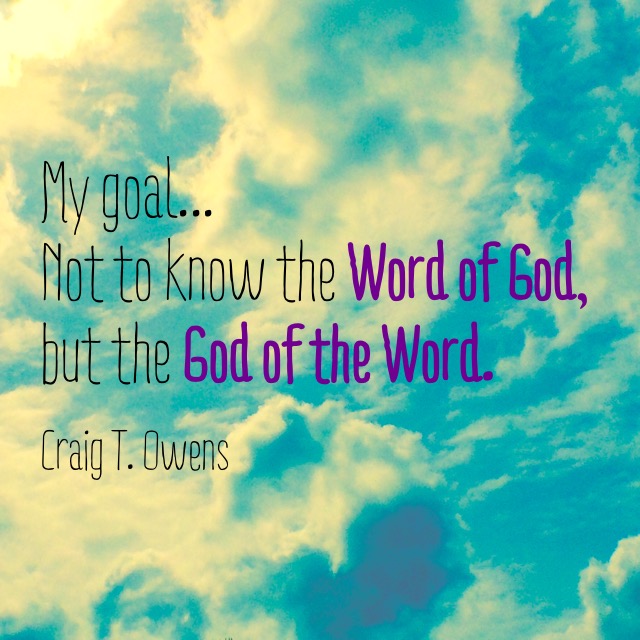
My goal in reading the Word God is to get to know the God of the Word better and better.
Charles Spurgeon would never say—nor do I—that you shouldn’t study a variety of topics. Just make sure that your priority is God’s Word. This will give you the greatest insight into other topics and will protect you from humanistic error.
“Read your Bible more and more every year. Read it whether you feel like reading it or not. And pray without ceasing that the joy return and pleasures increase.
“Three reasons this is not legalism:
You are confessing your lack of desire as sin, and pleading as a helpless child for the desire you long to have. Legalists don’t cry like that. They strut.
You are reading out of desperation for the effects of this heavenly medicine. Bible-reading is not a cure for a bad conscience; it’s chemo for your cancer. Legalists feel better because the box is checked. Saints feel better when their blindness lifts, and they see Jesus in the Word. Let’s get real. We are desperately sick with worldliness, and only the Holy Spirit, by the Word of God, can cure this terminal disease.
It is not legalism because only justified people can see the preciousness and power of the Word of God. Legalists trudge with their Bibles on the path toward justification. Saints sit down in the shade of the Cross and plead for the blood-bought pleasures.
“So let’s give heed to Mr. Ryle and never grow weary of the slow, steady, growth that comes from the daily, disciplined, increasing, love affair with reading the Bible.
‘Do not think you are getting no good from the Bible, merely because you do not see that good day by day. The greatest effects are by no means those which make the most noise, and are most easily observed. The greatest effects are often silent, quiet, and hard to detect at the time they are being produced. Think of the influence of the moon upon the earth, and of the air upon the human lungs. Remember how silently the dew falls, and how imperceptibly the grass grows. There may be far more doing than you think in your soul by your Bible-reading’ (J.C. Ryle, in Practical Religion).” —John Piper
“It is the personal element that Christian discipleship needs to emphasize. ‘The gift without the Giver is bare.’ The call of this age is a call for a new discipleship, a new following of Jesus, more like the early, simple, apostolic Christianity when the disciples left all and literally followed the Master. Nothing but a discipleship of this kind can face the destructive selfishness of the age, with any hope of overcoming it. … But if our definition of being a Christian is simply to enjoy the privileges of worship, be generous at no expense to ourselves, have a good, easy time surrounded by pleasant friends and by comfortable things, live respectably, and at the same time avoid the world’s great stress of sin and trouble because it is too painful—if this is our definition of Christianity, then surely we are a long way from following the steps of Him who trod the way with tears of anguish for a lost humanity.” —Rev. Maxwell in Charles Sheldon’s In His Steps (emphasis mine)
Only let your conduct be worthy of the gospel of Christ… (Philippians 1:27).
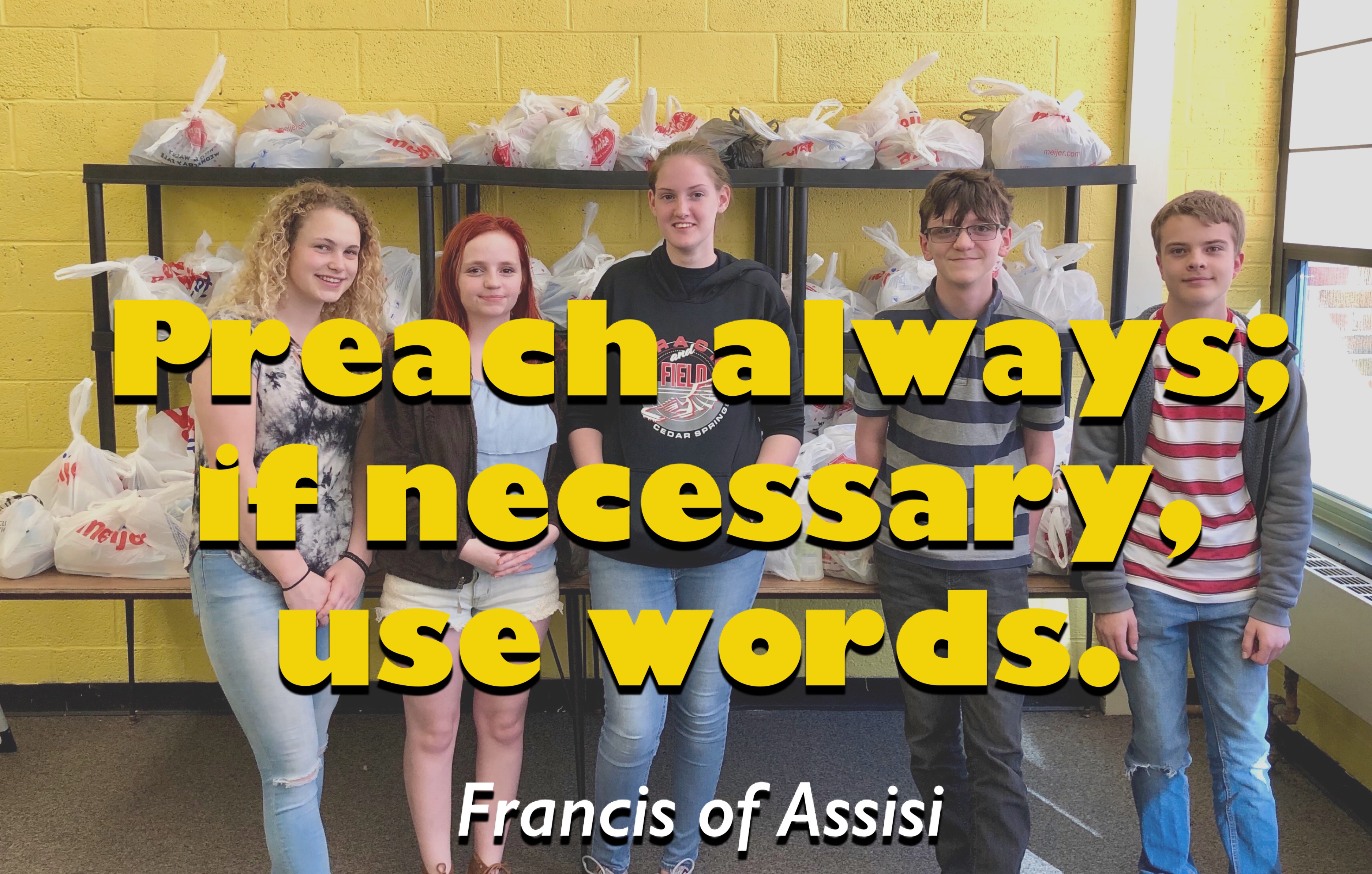
The apostle Paul wanted the Philippians’ living to be their preaching. Much like Francis of Assisi said years later: “Preach always; if necessary, use words.”
The big question is—what does conduct “worthy of the gospel of Christ” look like? I believe Paul identifies at least 15 characteristics in just the next 20 or so verses…
It is not a people-pleasing lifestyle. It is a God-honoring, Spirit-lead, Christ-glorifying lifestyle.
It is steadfast, which means it perseveres even through the trials and difficulties.
It is a heart and mind unified with other Christians.
It is bold—“without being frightened in any way by those who oppose you.”
It is strengthened in Christ and it is in constant fellowship with the Holy Spirit.
It overflows with loving comfort, affection, and mercy to those around it.
It humbly serves others while confidently refreshing itself in Christ.
It strives to live as Jesus did, seeking always for God to be glorified.
It is obedient to the conviction and direction of the Holy Spirit.
It finds pleasure in doing God’s will.
It doesn’t complain.
It is a blameless and harmless life.
It shines a light that attracts others to God’s love.
It holds fast to the Word of life for the long haul.
It is a rejoicing, contented lifestyle.
Heavenly Father, may it always be said of my life that it is one that is worthy of the gospel of Christ. May I always be sensitive to the nudges of the Holy Spirit to keep my life aligned in this way. In Jesus’ name I pray, Amen!
I’m sure if I asked for a show of hands, everyone of you would put up a hand (or maybe even two!) to the question, “Has someone done something bad to you?”
The real issue is not if we’ve been the victim of evildoers doing evil things; the real issue is how to respond to evildoers that do evil things.
In Psalm 52, David tells us that he wrote this prayer after a vile man named Doeg had done atrociously evil things to a whole town of innocent people. Worse yet: these people were simply trying to help David!
David was fleeing for his life from King Saul, forcing him to leave home with just the clothes on his back. He stopped at the village of Nob and asked Ahimelech the priest for food and a weapon. That act, in King Saul’s mind, was worthy of death. None of Saul’s soldiers would carry out his command to execute the priest, but Doeg quickly responded. Doeg not only killed Ahimelech, but he killed the 85 priests with him, and then he proceeded to annihilate everything and everyone left in the village of Nob. Only one man escaped to tell David what happened.
When David begins this psalm, he uses the words you or your 14 times in just the first five verses. David is addressing Doeg, almost holding up a mirror to his evil deeds. By contrast, the word I is used five times in just the last two verses of this prayer.
That tells me that we have to work on this problem of evil from two different directions. We need to see evildoers in their evil, and we need to see a godly response to evildoers. As with many Hebrew poems, the most important principle is in the middle—Surely God will bring evildoers down to destruction, but He will protect the righteous (v. 5).
In the opening words, David asks Doeg, “Why do you boast of evil?” The word for boast in Hebrew is halal—this is usually the word we translate Hallelujah! In other words, Doeg has put his evil on the throne of his life and is saying “Hallelujah!” to it. A downward slide of all sorts of evil words and evil deeds spiral out from this until the climax: Surely God will bring judgment.
Notice David says “God” (not you) “will” (not might) take care of this.
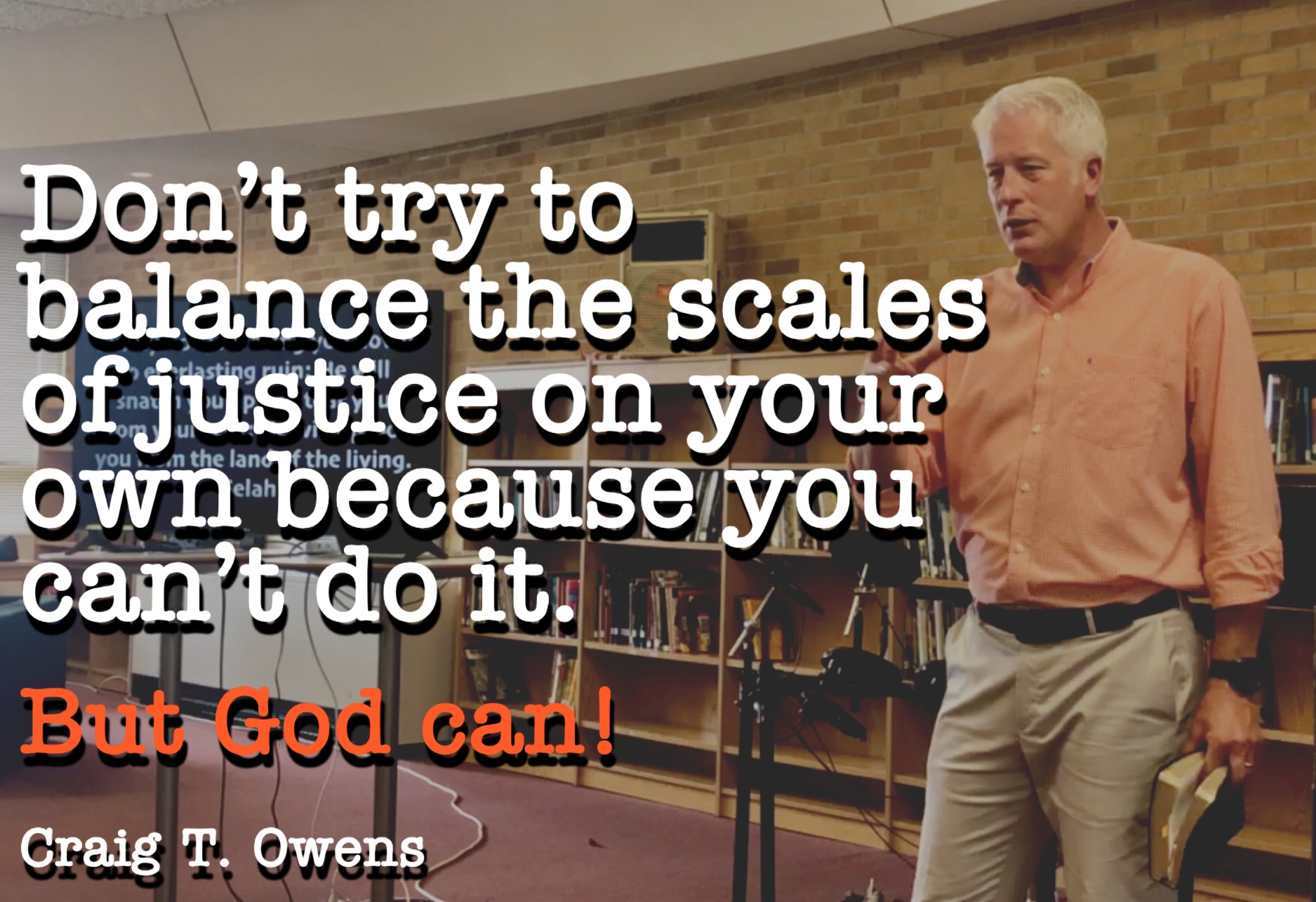
Now let’s look at it from a righteous perspective. Working backwards from verse 9 to verse 5, we see whereas Doeg was praising his evil deeds, David is praising God. David recognizes that it’s only in God’s presence that he can be free, and it’s only God that can ultimately balance the scales of justice.
▶️ My friend, you cannot make things right. Only God can do this. Please, please, take your eyes off the evildoer that did evil things to you, and put your eyes on the Perfect Judge. He alone can balance the scales of justice. ◀️
So here are four lessons for all of us to learn—
When evildoers do evil things to you, talk to God about them; don’t talk to your enemies and don’t even talk to your friends.
Continue to redirect your heart and thoughts to God’s unfailing love, and away from thoughts of retribution—even if you have to do this a hundred times a day.
When evildoers afflict you, look in the mirror of God’s Word to see if there is anything for which you need to repent and then ask forgiveness.
When judgment comes, don’t gloat. John Bradford, when he saw a cartful of men going off to be hanged said, “There goes John Bradford but for the grace of God.”



 Sometimes the naming of things gives us an inaccurate picture of the thing being named. For instance, many people think the “old” in Old Testament means outdated or perhaps updated by the “new” in the New Testament. When in fact, both Testaments are needed to give us the full picture of God’s love and glory.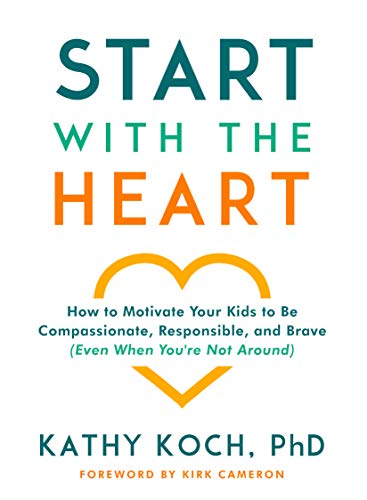



 Craig T. Owens