Links & Quotes

link quote

Some good reading & watching from today…

Stephen Miller reminds us that we don’t have to act differently when we pray: Be Yourself In Prayer.

Ken Davis is always hilarious. Check out The Confused Stage Of Life.

The American College of Pediatrics debunks the myth of “safe sex.”

Tim Dilena nails it: Why Worship Is Disappearing From Our Church Services.

“Christians have fallen into the habit of accepting the noisiest and most notorious among them as the best and the greatest. They too have learned to equate popularity with excellence, and in open defiance of the Sermon on the Mount they have given their approval not to the meek but to the self-assertive; not to the mourner but to the self-assured; not to the pure in heart who see God but to the publicity hunter who seeks headlines.” —A.W. Tozer

Parents and teachers, check out Tim Elmore’s post: How To Avoid Ruining A Kid’s Future.

As the Heritage Foundation’s Katrina Trinko says, “This isn’t okay”: States that voted against gay “marriage” now have it forced upon them.
Transforming Grace (book review)

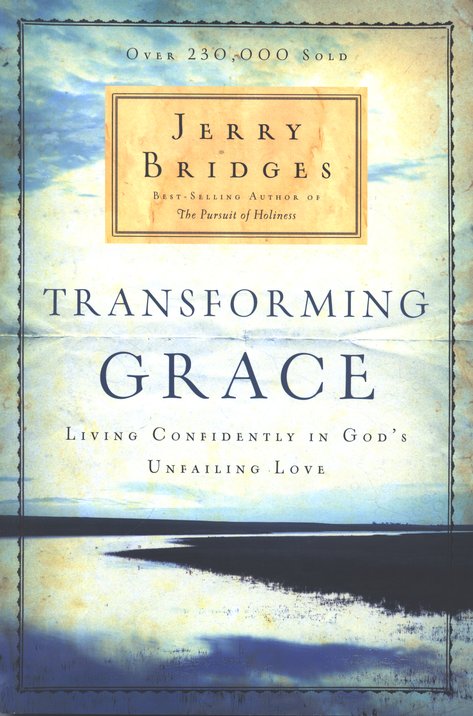
Transforming GraceWhen many people think of God’s grace, the most appropriate adjective they offer is amazing. I totally agree! And when I think of Jerry Bridges’ book Transforming Grace, the word amazing quickly comes to my mind again.

Truly this is one of the best books I have read addressing the topic of God’s grace. Bridges doesn’t range far and wide, but sticks to this one topic: when we truly begin to understand God’s grace, it will absolutely transform our lives.

Early in the book Bridges states the problematic paradigm many of us have about God’s grace—

“My observation of Christendom is that most of us tend to base our personal relationship with God on our performance instead of on His grace. If we’ve performed well—whatever ‘well’ is in our opinion—then we expect God to bless us. If we haven’t done so well, our expectations are reduced accordingly. In this sense, we live by works rather than by grace. We are saved by grace, but we are living by the ‘sweat’ of our own performance.” (emphasis added)

This book is jam-packed with so many paradigm-shifting thoughts, and is well grounded in the Scripture. Bridges transparently shares his own personal struggles with coming to grips with the true nature of God’s grace, and shares the quotes of many notable theologians as well. I loved this book!

If you want to live with a deeper understanding of how God’s grace can transform your life, I couldn’t recommend this book any more highly … this is a must read!

Links & Quotes

link quote

Some good reading from today…

“The mind may be compared to a garden, which it is as necessary to cultivate as any plot of earth, if order and beauty are to be manifested through it. … Ideas, as well as flowers, in order to attain their full beauty, must be kept free from encumbering influences, whatever tends to weaken or degrade or detract from planned perfection.” —Joyce Mayhew

“I thank my Master that He does not say to the sinner, ‘Come half way and meet Me,’ but He comes ‘where he is.’” —Charles Spurgeon

“On the basis of grace as taught in the Word of God, when God forgives a man, He trusts him as though he had never sinned. God did not have mental reservations about any of us when we became His children by faith. When God forgives a man, He doesn’t think, ‘I will have to watch this fellow because he has a bad record.’ No, He starts with him again as though he had just been created and as if there had been no past at all! That is the basis of our Christian assurance—and God wants us to be happy in it.” —A.W. Tozer

Always keep in contact with those books and those people that enlarge your horizon and make it possible for you to stretch yourself mentally.” —Oswald Chambers

Don’t Misuse God’s Name

Representing God's nameYou’ve heard the old nursery rhyme: Sticks and stones may break my bones but words will never hurt me. We all know this isn’t true: words do hurt, and names that people call us may leave lasting wounds.

Words and names are important to God. God used His word to create the universe (God said, “Let there by light”); Jesus was called The Word (see John 1:1); God has named people and even renamed them to reflect their character or destiny.

The most important name of all is God’s own name, so the Third Commandment says, “You shall not misuse the name of the LORD your God…” (Exodus 20:7). How can we misuse God’s name? There are five ways—

(1) As emptiness or nothingness

  • Are our words empty? Do we use filler phrases like “Oh my God!” that neither talk to Jehovah or about Jehovah? We shouldn’t use God’s name unless we’re talking to Him or about Him in a respectful way.

(2) In vanity

  • In reality this means calling ourselves a Christian, but speaking in an un-Christlike way.
  • “Giving God a ‘bad name’ might diminish or demolish people’s belief, respect, and awe for God, a tragedy for a world that needs holiness. … It is a major responsibility to represent God; one which should not be taken lightly.” —Dr. Laura Schlessinger

(3) Being insincere

  • Are our promises empty, or is our word our bond? If we have to use phrases like “I swear to God that I will…” then that means we cannot be trusted on our own merits. When we claim to be Christians but cannot be trusted, we undermine the trustworthiness of God in the minds of other people.
  • “The godly man, therefore, will make promises cautiously but keep them conscientiously once they are made, knowing that irresponsibility and unreliability here are great and grievous sins.” —J.I. Packer

(4) Having an unholy vocabulary

  • Holy means something set apart for a special use. Perhaps there are words we use to describe God that we are also using for lesser things. It might be good to listen to how the Holy Spirit would challenge us to have a unique vocabulary to talk to or about our unique God.

(5) Worthlessness of conduct

  • As the cliche goes, “What you do speaks so loudly that I cannot hear what you are saying.” So we need to make sure that we both talk like Jesus talked and live like Jesus lived.

Anything less than these standards just may be misusing God’s holy name and character by misrepresenting Him or giving Him a “bad name.” What do you think?

If you have missed any of the messages in our series The Love In The Law, you can find them all by clicking here.

Links & Quotes

link quote

Some good reading & watching from this weekend…

“A leader’s role is to raise people’s aspirations for what they can become and to release their energies so they will try to get there.” —David Gergen

A powerful reminder about noticing the overlooked people: My Grocery Store Stripper.

This is so repulsive! 10 quotes that reveal how profitable abortion is.

I am a big believer in studying history. Here are 7 ways Christian history benefits you.

A great post for married couples and parents from Pastor Dave Barringer—Too Busy: The Art Of Abusing With Neglect.

I love this life-affirming message in OneRepublic’s song I Lived

Poetry Saturday—World Of Wonders

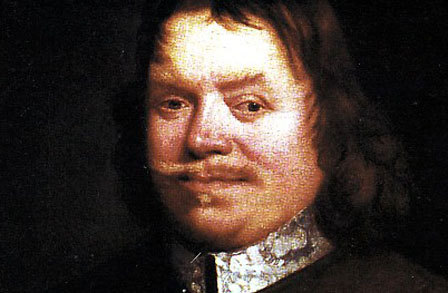
John BunyanO world of wonders (I can say no less),
That I should be preserved in that distress
That I have met with here! O blessed be
That hand that from it hath delivered me!
Dangers in darkness, devils, hell, and sin.
Did compass me, while I this vale was in;
Yea, snares, and pits, and traps, and nets did lie
My path about, that worthless, silly I
Might have been catched, entangled, and cast down:
But since I live, let JESUS wear the crown. —John Bunyan’s Christian in Pilgrim’s Progress, after he came through the Valley Of The Shadow Of Death


Links & Quotes

link quote

Some good reading from today…

“Are you allowing satan to magnify the memories of your spiritual failures? He will always keep them before you unless you take your stand and move up in faith. … Remember, the Bible does not teach that if a man falls down, he can never rise again. The fact that he falls is not the most important thing—but rather that he is forgiven and allows God to lift him up.” —A.W. Tozer

Christian leadership is not about being a lone ranger. Here are 12 benefits of team leadership.

Parents & grandparents, you should be aware of the sex education curriculum the US government has proposed.

George Whitfield was a very well-read, articulate preacher. Here are 13 powerful quotes from him.

“Away with tears and fears and troubles! United in wedlock with the eternal Godhead Itself, our nature ascends into the Heaven of Heavens. So it would be impious to call ourselves ‘miserable.’ On the contrary, Man is a creature whom the Angels—were they capable of envy—would envy. Let us lift up our hearts!” —C.S. Lewis

Pastor Saeed Abedini has been held in an Iranian prison for two years. This letter that he wrote to his daughter for her 8th birthday is both moving and convicting. I hope I could be as faith-filled as he is if I was in a similar situation.

Delightful Fear

Delightful FearThe 112th Psalm begins with an interesting idea that almost sounds like an oxymoron: delightful fear—

Blessed is the man who fears the Lord, who finds great delight in His commands. (v. 1)

  • Fear and delight
  • Worship and obedience
  • Reverence and action
  • Awe and love

These are not contrasting ideas, but two sides of the same coin. They are completions of each other, and they are essential to a healthy relationship with Jehovah. And then, oh!, the blessings that flow from God to me!

  • Mighty children (v. 2)
  • Abundant household (v. 3a)
  • Enduring righteousness (v. 3b)
  • Brightly shining life (v. 4)
  • Reciprocated generosity (v. 5)
  • Security in troubled times (v. 6a)
  • A lasting legacy (v. 6b)
  • No fear of calamity (v. 7)
  • Eternal life (v. 8)
  • Highly honored (v. 9)

After nine verses of these amazing blessings to the one who delightfully fears God, only one verse is left for the one who doesn’t—he is vexed, wasting away, and frustrated.

I don’t know about you, but I want to delightfully fear—worship, obey, revere and love—Jehovah my God!

Social Justice

Scales of social justiceThere is a lot of talk about “social justice”—speaking out and acting on behalf of those who are oppressed, marginalized and disenfranchised. This is close to God’s heart, too, as He describes “pure religion” in terms of caring for orphans and looking after widows (see James 1:27).

But we hinder our attempts at social justice if it’s not tied to God’s righteousness. Because without righteousness, we don’t have God’s unlimited help and are simply operating under our own limited power.

Surely the arm of the Lord is not too short to save, nor His ear too dull to hear. But your iniquities have separated you from your God; your sins have hidden His face from you, so that He will not hear. (Isaiah 59:1-2, emphasis added)

Justice is mentioned four times in this 59th chapter of Isaiah, but always in close proximity to righteousness

The opening verse is the perfect conclusion: God has the ability to help us (justice), but our lack of righteousness prevents Him from hearing our pleas and moving to action.

The single-best way to make social justice maximally effective is for each of us to pursue God’s righteousness. 

All efforts at social justice apart from God’s help will bring small, temporary gains at best. But even our smallest attempts at social justice with God’s help will bring lasting results for the greatest number of people.

“Mercy, King, Mercy!”

C.H. SpurgeonI love this passage from one of Charles Spurgeon’s sermons—

“Edward the Second, one of our kings, was exceedingly enraged against one of his courtiers; out hunting one day, he threatened the courtier with the severest punishment. There was a river between them at the time, and the courtier thinking that he was perfectly safe, ventured to offer some jeering remark against the king—telling him that at any rate he would not be likely to chastise him until he got at him. The king, feeling his anger hot within him, told him that the water should not long divide them, leaped into the middle of the stream, and with some difficulty gained the other side.

“The courtier in great alarm fled in terror, and the king pursued him with might and main, spurring his horse to the utmost. Nor did his anger cease; he carried his drawn sword in his hand with the intention of killing him. At last the courtier, seeing that there was no hope for any escape, knelt down upon the grass, and laying bare his neck, said, ‘I heartily deserve to die; mercy, King, mercy!’ The king sent back the sword into the scabbard in a moment, and said, ‘Whilst you sought to escape me I determined to destroy you, but when I see you humble at my feet I freely forgive you.’

“Even so it is with the King of heaven. Sinners, you say there is this life between you and God; but how soon will the white horse of Justice pass the stream, and then, flee as you may today, He will surely overtake you. He now is swift to destroy; let it be yours on your knees to make confession of your sin and say, ‘I deserve Thy wrath, great King;’ and if to this you are enabled to add the plea of the precious blood of Christ, the sword of justice will return into its scabbard, and He will say, ‘I am just, and yet the justifier of the ungodly.’”