When God Says “No”

Listen to the podcast of this post by clicking on the player below, and you can also subscribe on AppleSpotify, or Audible. 

Last week I asked you to recall a time that your children were asking you for something they really, really wanted. How many times did they ask? If you said, “No” to their first request, did they immediately stop asking? Probably not. And that’s good, because Jesus tells us to keep PUSHing (Luke 11:9-10).

(Check out all of the Scriptures in this post by clicking here.)

Let’s recall the story Jesus told to illustrate the kind of importunity that God responds to. Jesus used the example of a friend going to his neighbor’s house with a request for bread. No matter how many times the neighbor said, “No,” the man continued to ask and knock (vv. 5-8). Jesus concluded by saying that the neighbor would eventually get us and give his friend “as much as he needs.”

That is the key word: needs vs. wants. 

Jesus told us “your Father knows what you need, but He wants to give us so much more than what we are asking for—He wants to give us His Kingdom (Luke 12:30-32). A need is a necessity (Psalm 34:10 AMPC; Matthew 6:8), but wants are merely selfish desires (James 4:3). 

Loving parents know the difference between needs and wants and therefore they know how to respond to the requests from their children. Jesus pointed out that if we “evil” parents know this, how much more does our all-wise, all-loving, all-knowing Heavenly Father know this (Luke 11:11-13)! 

When my kids ask me for something—when they are asking, seeking, knocking—I want to give them the best. But sometimes the best thing means I have to say, “No.” I don’t give them candy for breakfast. I don’t let them drive a car when they’re 7 years old. I don’t give them responsibilities which they are unprepared to manage. They may want all of these things, and they may even enjoy these things for a fleeting moment. But they don’t need them and the end result could be dangerous or even disastrous! 

Jesus says that we human parents even in our very limited wisdom know that giving our children their immediate wants may prevent them from receiving what they really need. My “No” may really mean a better “Yes,” if they will trust me. 

Do you know a surefire way to determine if what you are PUSHing for is a want or a need? A temper tantrum! When we start throwing a fit, it probably means we are looking for a want to be supplied, not a need. Psalm 25:9 tells us that God loves to supply the needs of the humble who say, “Father, You know best.” 

What if I changed “suffering” with “God’s loving ‘no’” in this passage—

Not only so, but we also glory in God’s loving “No,” because we know that God’s loving “No” produces perseverance4 perseverance, character; and character, hope. And hope does not put us to shame, because God’s love has been poured out into our hearts through the Holy Spirit, who has been given to us. (Romans 5:3-5)

Our hope in our heavenly Father’s best “Yes” is vital for our ongoing prayer live (Isaiah 30:18)! 

Our all-wise, all-loving Father KNOWS what is best for us. But still, Jesus directs us to continue asking, seeking, and knocking. Keep PUSHing until His best “Yes” is given, found, and opened. 

God’s loving “No” is only so that He can give you His best “Yes”! 

If you’ve missed any of the other messages in this series, you can find them all here. 

►► Would you please prayerfully consider supporting this ministry? My Patreon supporters get behind-the-scenes access to exclusive materials. ◀︎◀︎

Links & Quotes

God gave us a Book (the Bible) that tells us all we need to know about praying.

I have a lot of new video content on my YouTube channel every week. Please check it out and subscribe so you don’t miss anything.

T.M. is beginning a series on the ministry of the apostle Paul. He writes, “Paul was able to accomplish great things against great odds not because he was such an enthralling preacher (he was not) or had so many resources to invest in his work (he did not), but because he had such great confidence in his message and his Lord.” Check out this series.

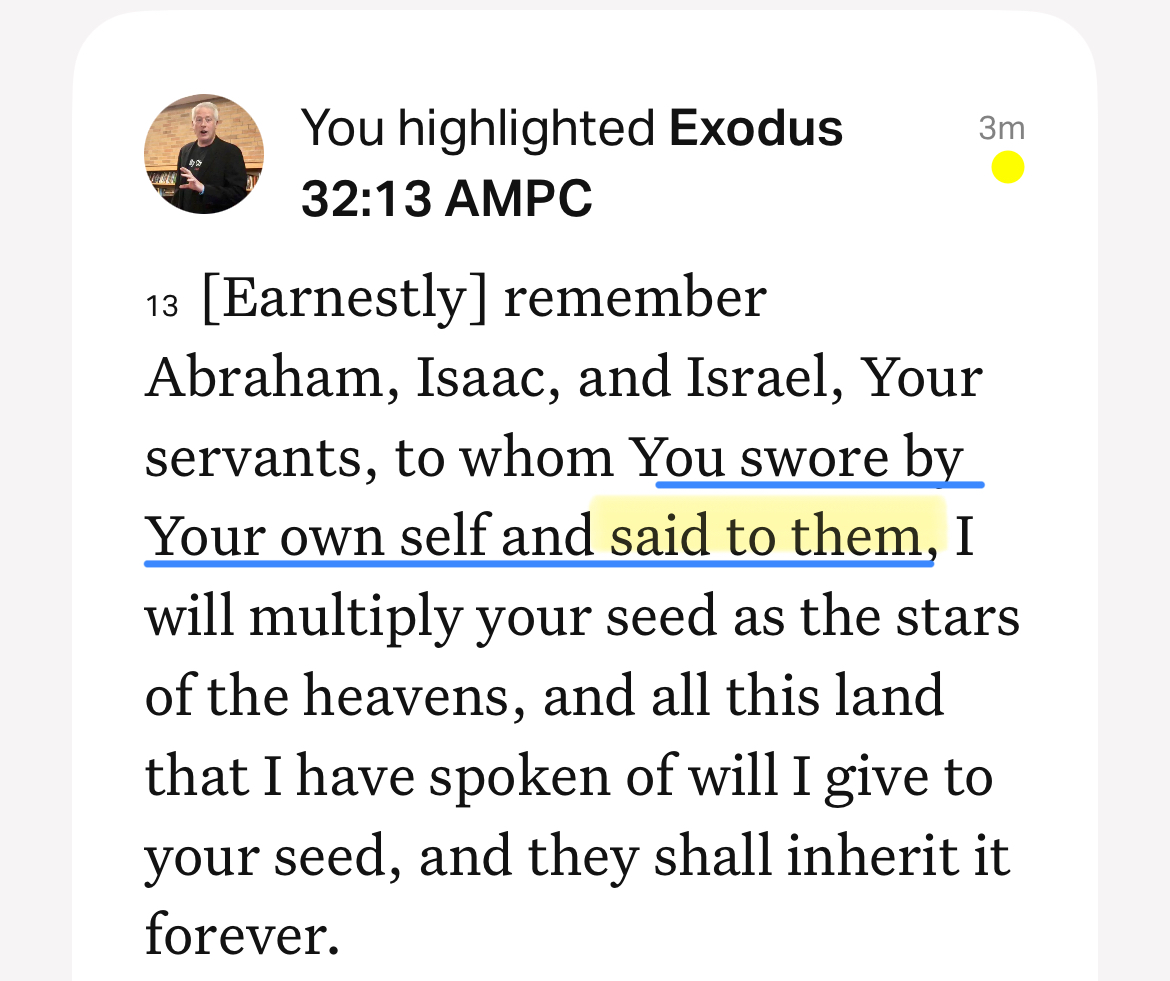
As a father, it always got my attention when my kids would remind me, “Dad, you said….” Not that God ever forgets anything He has promised, but when He hears Moses say, “You swore by Your own self and said to them,” He is pleased because this means that Moses is banking his faith on God’s unchangeable word. Let’s follow this example from Moses and use God’s Word to form our prayers to Him.

The ICR reports, “If the earth is 4.6 billion years old, virtually every square inch of the Earth’s surface would experience a host of erosive events.” But the fact that paleontologists have found so many well preserved foot tracks is a testament to both the Creation and Flood accounts recorded in biblical history.

“When ‘Aunt’ Fanny Lack, a 100-year-old Hoopa Indian woman, accepted Christ and was healed in 1920, she became a local sensation on the Hoopa Indian Reservation in northern California.” This is an amazing story!

“When you hate, the only person that is suffering is you because most of the people you hate don’t know it and the rest don’t care.” —Medgar Evers

AxisCulture Translator reported, “A study from World found that 26% of respondents admitted to flirting with a chatbot or AI, either for fun or unknowingly.” I love Axis’ conclusion: “Although social media was initially pitched as a supplement to real-life social interactions, the slope from supplement to replacement is steep. This Valentine’s Day, remind your teens that although real-life relationships can be difficult, we need both the affirmation and pushback that comes with them.”

Greg Morse shares the very real danger of shepherding God’s flock. He writes, “I enlisted to teach, preach, shepherd, and guide—but also to suffer, defend, and die, if the Lord should choose. As a son with his mother, a husband with his wife, a father with his children, so a pastor with his sheep. I am to defend them against all enemies foreign and domestic—spiritual and physical.” Pastors, I encourage you to read this article.

Keep Your Lamp Burning

     In the Tent of Meeting [of God with His people], outside the veil which sets apart the Testimony, Aaron and his sons shall keep it burning from evening to morning before the Lord…. (Exodus 27:21) 

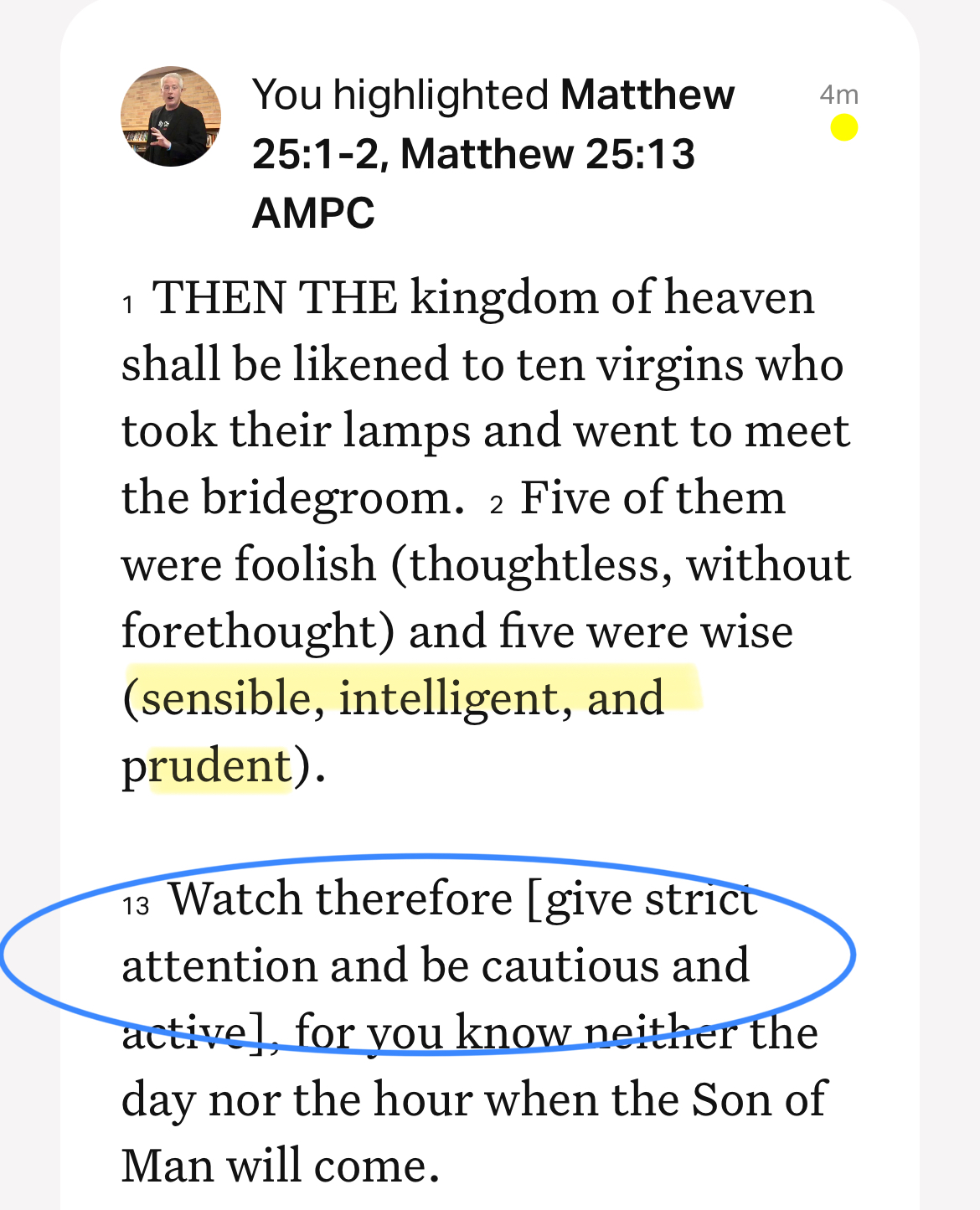
     Then the kingdom of heaven shall be likened to ten virgins who took their lamps and went to meet the bridegroom. Five of them were foolish (thoughtless, without forethought) and five were wise (sensible, intelligent, and prudent). … Watch therefore [give strict attention and be cautious and active], for you know neither the day nor the hour when the Son of Man will come. (Matthew 25:1-2, 13) 

Just as the lamps in the Tabernacle had to be continually supplied with oil so they never went out, we have to keep our lamps burning. We have the full supply of the Holy Spirit, but we have to make sure we don’t quench the Spirit. That means listening to His voice and responding in quick obedience. 

If we want to be shining brightly when Jesus returns, we must “give strict attention and be cautious and active” every single day. 

The Craig And Greg Show: Healthy Leaders

Listen to the podcast of this post by clicking on the player below, and you can also subscribe on AppleSpotify, or Audible.

In today’s episode, Greg and I discuss what it means to be a healthy leader. We break down the various facets of leadership health, and highlight why each piece is part of an essential structure that supports all of the other parts. This was a very important part in my book Shepherd Leadership.

  • [0:12] Greg and I are looking dapper today!
  • [1:26] We have both gone through the process of writing books.
  • [2:30] I reveal the section of my book Shepherd Leadership that has gotten the most attention.
  • [6:01] I highlight the development of Jesus as recorded in the Gospel of Luke.
  • [8:40] All aspects of health are important because they support each other.
  • [10:06] What happens when we get bumped?
  • [12:25] How do we maintain healthy relationships?
  • [15:11] Investing time into yourself gives you a greater capacity to serve others.
  • [16:50] What signs should we watch for that tell us a relationship is strained?
  • [17:52] Leaders should empower others to solve problems instead of always solving them on their own.
  • [18:54] It’s easier to avoid relational health in the short-term, but it will hurt you down the road.
  • [21:28] What’s the best way to improve a relationship?
  • [22:55] If we have a desire to improve a relationship, how can we get the other person to reciprocate?
  • [25:40] What was my “aha” moment when writing Shepherd Leadership?
  • [27:11] Maximize Leadership is a great coaching resource for you.

Check out this episode and subscribe on YouTube so you can watch all of the upcoming episodes. You can also listen to our podcast on Spotify and Apple.

The Best Sermons

Listen to the podcast of this post by clicking on the player below, and you can also subscribe on AppleSpotify, or Audible. 

This one is for my fellow pastors. I want to give you THE question to ask to help you in crafting the most applicable and memorable sermons. 

It’s a question that Paul asks in Romans 4: “What does the Scripture say?” (v. 3). Preachers must make sure they get their ideas from the text of the Bible, not just from their own good ideas. Look at this amazing example from Paul in just this one chapter of his letter to the saints at Rome. 

He starts off with a question: “What then shall we say?” (v. 1). 

Then he answers his question with another question: “What does the Scripture say?” and he proceeds to give his answer by quoting from the Book of Genesis. 

From this, Paul makes a conclusion in vv. 4-5 that is signaled by the word “Now…”. 

In order to support his conclusion, Paul then quotes from Psalm 32: “David says the same thing” (vv. 6-8).

Next Paul alternates between questions and answers in vv. 9-12, bringing this Q&A to a logical conclusion in vv. 13-16. 

He supports his conclusion with even more Scripture: “As it is written” (v. 17), and “Just as it had been said” (v. 18). 

Finally, Paul wraps up this part of his sermon by both quoting more Scripture (vv. 22-23) and then reminding his audience, “The words ‘it was credited to him’ were written not for him alone, but also for us” (vv. 23-24). This shows that God’s words weren’t just for Abraham, nor just for Paul’s audience, but for anyone reading the Scripture today.

This is a short, masterful, and powerful sermon! Why? Simply because it is totally banked on God’s timeless words. 

The way that preachers can design THE perfect sermon—that is both applicable and memorable—is to start with the same question Paul did: “What does the Scripture say?” 

►► Would you please prayerfully consider supporting this ministry? My Patreon supporters get behind-the-scenes access to exclusive materials. ◀︎◀︎
The People God Loves To Help

Listen to the podcast of this post by clicking on the player below, and you can also subscribe on AppleSpotify, or Audible. 

Who does God love to guide and teach? Check this out…

You may also want to check out two related blog posts:

►► Would you please prayerfully consider supporting this ministry? My Patreon supporters get behind-the-scenes access to exclusive materials. ◀︎◀︎
PUSHing For God’s “Yes

Listen to the podcast of this post by clicking on the player below, and you can also subscribe on AppleSpotify, or Audible. 

Parents, I want you to think back to your children asking you for something they really wanted. How many times did they ask? How many different ways did they ask? What sort of strategies did they use? Did you ever sense any hesitation in them coming to you to make their request? 

Do you have this firmly in mind? Good, because this is how Jesus explains prayer. 

Jesus called God His Father, and when His disciples asked Him how to pray, Jesus instructed them to address God as “Father” (Luke 11:1-2). 

(Check out all of the Scriptures in this post by clicking here.)

This is so remarkable! 

  • Hindus don’t call God “father” but they flip it around by saying, “Father is like God” to teach children to respect their earthly fathers. 
  • Buddhists don’t believe in a God that anyone can worship or even have a relationship. 
  • Islam gives Allah 99 names, but not one of the names is “Father.” 
  • Jewish rabbis don’t see how anyone other than Jewish people can even think of God as their Father, but even they don’t presume to address Him that way in their prayers. 

And yet Jesus tells us to come to prayer to the Almighty Creator and Sustainer of the universe with, “Father.” There is intimacy in that title. There is an understanding of knowingness and trustworthiness in that title. There is an implied belief of perfect provision in that title. 

We looked at Luke 11:9-10 previously, and we saw especially how the Amplified Bible brings out the idea of asking again and again and again. But is this what Jesus really meant for us to do? Don’t you feel a bit like a pest asking this way? 

The disciples asked Jesus to teach them to pray (Luke 11:1-4), but then Jesus gave them an un-asked-for illustration to make His point (vv. 5-8). 

The Greek word for “boldness” in v. 8 is translated “shameless persistence” or “sheer persistence” or “shameless audacity” in various biblical translations. In the Greek, it’s a unique word (anaideia) which means without shame. 

The sleeping friend—although he was tired and the request for bread came at an inconvenient time—still wanted to honor his friend. Or more precisely, he wanted to preserve the honor of his friend. 

There’s another Greek word (hypomone) that I would define as stick-to-it-iveness. Two great examples are Bartimaeus (Mark 10:46-52) and the Syrophoenician mother (Matthew 15:21-28). 

In light the the story of the Good Samaritan in the previous chapter of Luke, I think this friend was practicing the Golden Rule: he wouldn’t want to lose standing in the community or be embarrassed by being an ill-equipped host, so he helped supply his neighbor. 

Give us each day our daily bread” (Luke 11:3) hallows God as our Father. Our Father is the Bread Supplier and He never wants His children forsaken or embarrassed—

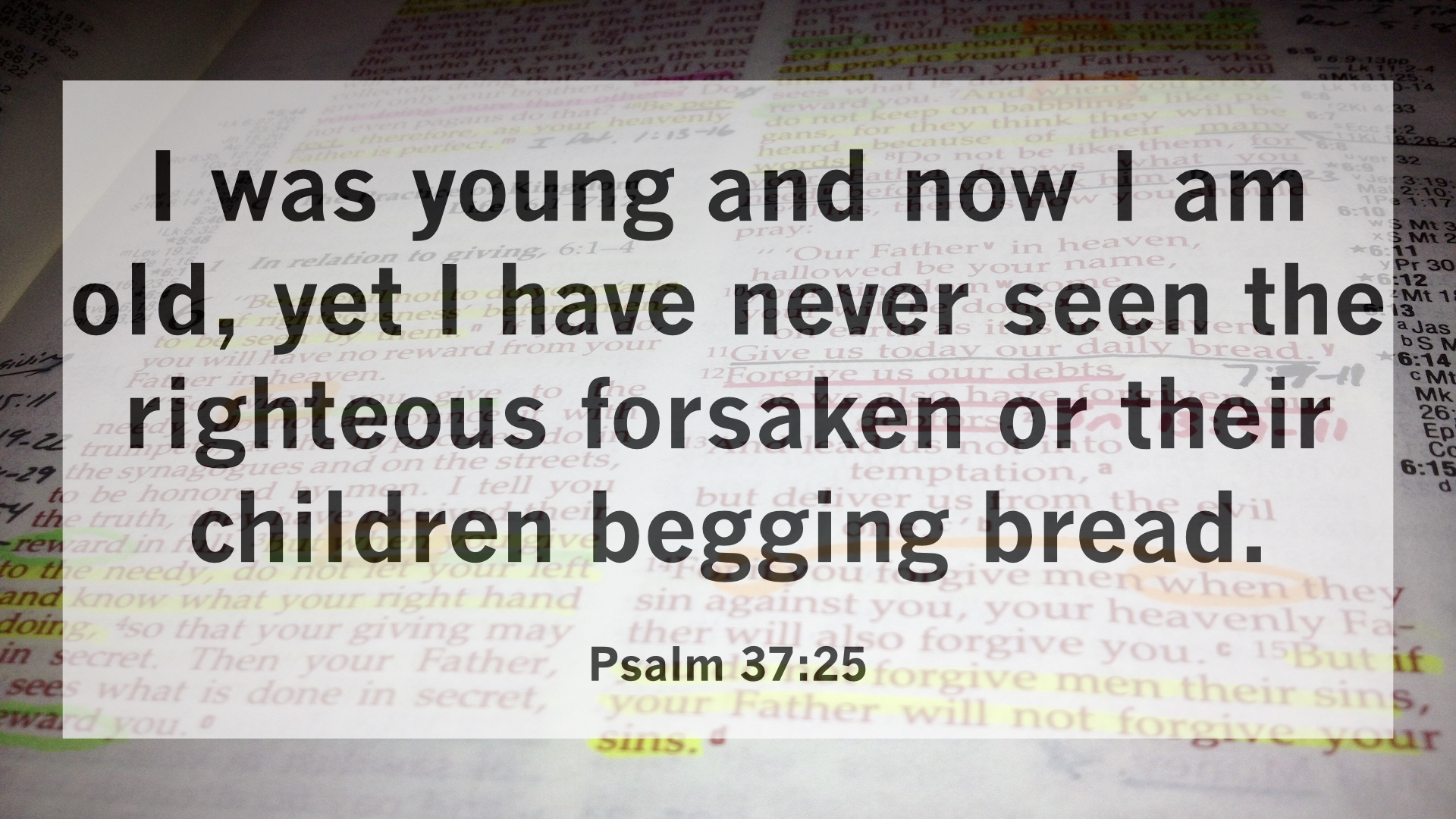
I was young and now I am old, yet I have never seen the righteous forsaken or their children begging bread. (Psalm 37:25) 

The conclusion to the instructions Jesus gives us about prayer are continual asking, persistent seeking, and audacious knocking! P.U.S.H. = pray until something happens! 

“Our giving depends much on the state of our minds at the moment. When depressed, we have no pleasure in giving; we either refuse, or we give merely to get quit of the applicant. Darkness of mind shrivels us up, makes us selfish, neglectful of others. When full of joy, giving seems our element—our joy overflows in this way; we cannot help giving; we delight in applications; we seek opportunities of giving. So with the blessed God. Being altogether happy, His delight is to give; His perfect blessedness flows out in giving. We can never come wrongly to such an infinitely happy Being.” —Horatius Bonar 

Our importunate requests are opportunities for God to show His unequaled supply to others—to exalt His name. For that request, God will “get up and give you as much as you need” (Luke 11:8). 

We are to keep on PUSHing for our Father’s “yes.” 

Check out all of the other messages in this prayer series by clicking here. 

►► Would you please prayerfully consider supporting this ministry? My Patreon supporters get behind-the-scenes access to exclusive materials. ◀︎◀︎

Links & Quotes

When we pray the closing words of the prayer Jesus gave us—“For Yours is the kingdom, and the power, and the glory forever. Amen!”—we are both acknowledging God’s awesomeness and we are asking for our lives to display this reality.

I have a lot of new video content on my YouTube channel every week. Please check it out and subscribe so you don’t miss anything.

“He who loves iniquity does not love his fellow man, for ‘he who loves iniquity does not love, but rather hates his own soul.’ And certainly he who does not love his own soul will in no way be capable of loving the soul of another.” —Aelred of Rievaulx (1109-1167) 

Steven Lee shows us the biblical principles that God forms us through failure. One passage especially stood out to me because it is a central thought to both of my books. Lee writes, “God measures success according to faithfulness: ‘One who is faithful in a very little is also faithful in much’ (Luke 16:10). Do we strive for success as defined by God? Are we seeking to be faithful with all that he has entrusted to us—time, talents, and treasure? Or have we adopted the lying weights and measures of our world? Will our labors result in hearing the words ‘Well done, good and faithful servant’ (Matthew 25:23)? Put aside striving for the world’s facade of perfection.”

“The measure of who we are is what we do with what we have.” —Vince Lombardi 

T.M. Moore teases us with this: “The most important question we can ask guides us in answering many other questions besides, questions such as, ‘Whom should I marry?’ and ‘How can I stop wasting time?’ and ‘What’s the best way to use my wealth?’’ Any question that helps us answer those and a myriad other questions that might arise during the day must be pretty important. Indeed, it must be the most important question any of us could ask.” What is that most important question? Check out his thought-provoking answer. 

“Life is not a spectator sport. If you’re going to spend your whole life in the grandstand just watching what goes on, you’re wasting your life.” —Jackie Robinson 

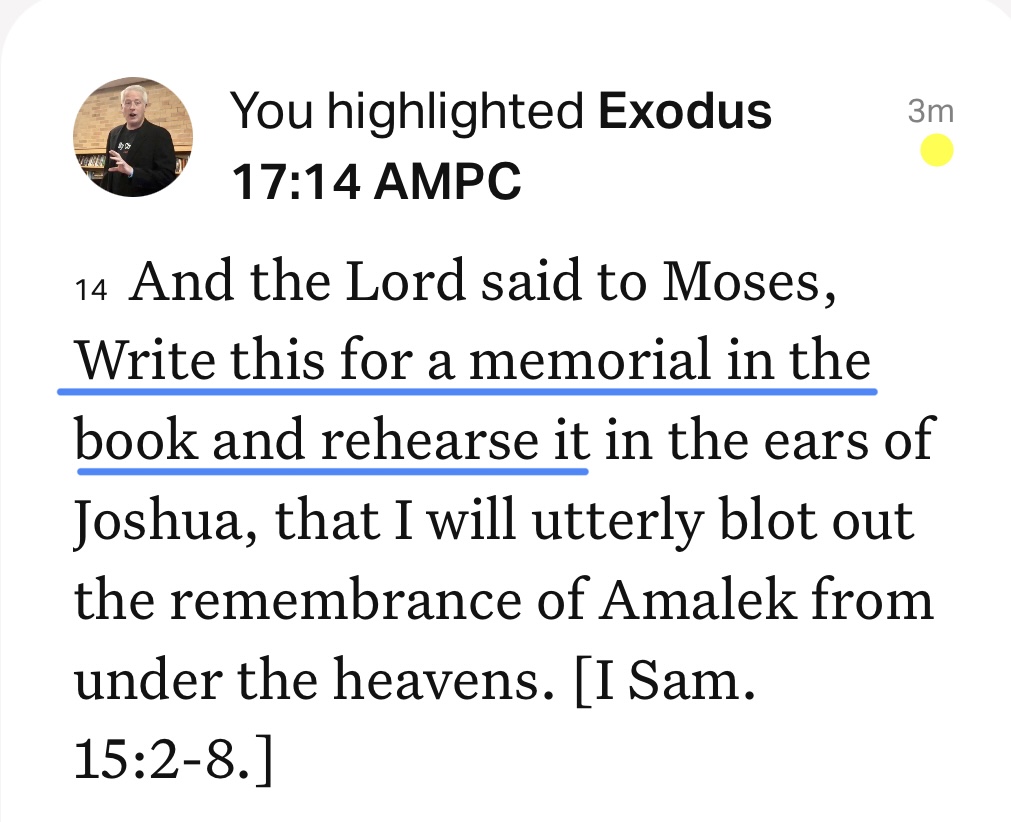
When God gives you a victory, write it down (see Exodus 17:14). When God gives you a promise, write it down. Then read it regularly so you don’t forget it. This will keep you grateful, it will keep you expectant, and it will keep you dependent on the victory-giving, promise-keeping God.

A Good Mentor

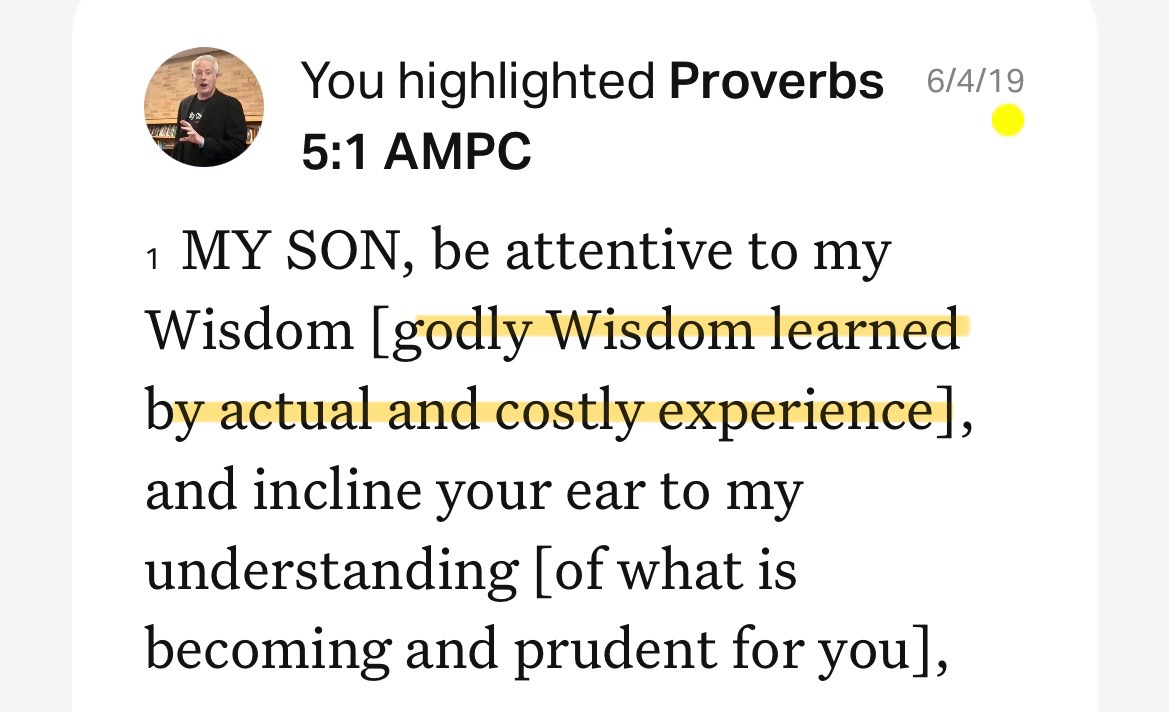
My son, be attentive to my Wisdom—godly Wisdom learned by actual and costly experience—and incline your ear to my understanding of what is becoming and prudent for you. (Proverbs 5:1) 

A checklist for a good mentor: 

✔️they are God-fearing 

✔️ they have learned good lessons in bad times 

✔️ they are willing to invest in you what they have learned 

You may also want to check out:

Don’t Confuse The Temporal With The Eternal

Listen to the podcast of this post by clicking on the player below, and you can also subscribe on AppleSpotify, or Audible. 

Politics are a reality for anyone who lives under a human government. But Christians need to be cautious that we don’t put more weight on temporal politics than we do on the eternal Kingdom of God. 

You can check out the full sermon that this clip came from here. 

And I’ve shared quite a bit about praying for those in governmental leadership positions:

►► Would you please prayerfully consider supporting this ministry? My Patreon supporters get behind-the-scenes access to exclusive materials. ◀︎◀︎