Listen to the podcast of this post by clicking on the player below, and you can also subscribe on Apple, Spotify, or Audible.
In the wise words of John C. Maxwell, “He who thinketh he leadeth and hath no one following him is only taking a walk.” As always Maxwell is right on the money. And the first step to getting others to follow you is trust. If you want to lead your team into uncharted territory they have to first trust that you’re not going to lead them off a cliff! In today’s episode Greg and I cover why trust is so vital and offer suggestions on how to build and maintain trust.
[0:42] People only listen to leaders that they can trust.
[2:03] Trust is an emotional glue between a leader and the team.
[3:03] Trust has to be built over time.
[6:07] Sometimes our teammates will test our trustworthiness.
[6:57] How leaders build trust.
[10:22] Phrases leaders should never use!
[12:07] Be careful of becoming defensive if someone questions your trustworthiness.
[13:26] Some people are unaware that they are not trustworthy.
[13:59] In building trust, be sure to extend grace to others.
[15:10] An external coach can help you spot the areas where you may be undermining your own foundation of trust.
[16:28] Trust builds culture and culture builds trust.
[18:04] Trusting cultures foster greater creativity and camaraderie.
Listen to the podcast of this post by clicking on the player below, and you can also subscribe on Apple, Spotify, or Audible.
God called Gideon to lead Israel to victory over the oppressive Midianites. He told Gideon, “Go in the strength you have and save Israel” (Judges 6:14). When Gideon hesitated because he didn’t think he had much strength nor influence to raise an army, God assured him of two things: “I am sending you” and “I will be with you” (vv. 14, 16).
Gideon’s initial recruitment netted him 32,000 soldiers from four tribes: “And he sent messengers throughout all Manasseh, and the Manassites were called to follow him; and he sent messengers to Asher, to Zebulun, and to Naphtali, and they came up to meet them” (v. 35).
God said this large army would be tempted to take the credit for themselves for defeating the Midianites, so God pared down the army to 10,000 men and then to 300 men (7:3, 6).
When God said He would deliver Midian into Gideon’s hands (v. 7), He meant it! HE would do the delivering, with Gideon’s 300 men merely being the instruments He would use. These men would defeat the invaders simply with trumpets and torches.
When these 300 men surrounded the Midianite forces during the night, I want you to notice the bracketed phrase in the AMPC:
And the three companies blew the trumpets and shattered the pitchers, holding the torches in their left hands, and in their right hands the trumpets to blow [leaving no chance to use swords], and they cried, “The sword for the Lord and Gideon!” (v. 20 AMPC)
The Israelites had to leave their swords hanging on their belts to fully obey God!
It was only this posture of full obedience that brought the victory. “They stood every man in his place round about the camp, and all the Midianite army ran—they cried out and fled. When Gideon’s men blew the 300 trumpets, the Lord set every Midianite’s sword against his comrade and against all the army” (vv. 21-22).
Those who weren’t in the 300 were still needed to finalize the pursuit, as they were called up to complete the victory (v. 23).
Perhaps only the 300 had enough faith to not drop their torch and their trumpet and grab their sword.
If it seems like God has stripped you of what you considered your source of security—like the swords that hung unused on the belts of Gideon’s 300—perhaps that is because He is getting ready to do something that only He can do! Whether you feel well armed or simply left holding something as simple as a trumpet and a torch, trust God’s strength. He can deliver you far better than you can deliver yourself.
Listen to the podcast of this post by clicking on the player below, and you can also subscribe on Apple, Spotify, or Audible.
Last week I asked, “How long do we keep praying?” Answer: Until God answers or until He lifts our burden. In the meantime, the Bible encourages us to…
Keep asking with full confidence that God hears you
Keep expecting an answer
Keep worshiping God for Who He is
Keep trusting that your Heavenly Father wants to give you the very best!
With that in mind, let me ask you another question: What does this look like? How do we wait expectantly for God to answer? I’ve got three thoughts from the Scripture.
(1) Keep walking
Eliezer had a 300-mile journey which would have taken him about 10 days. Abraham prayed for him before he left and Eliezer prayed when he arrived (Genesis 24:7, 12, 15). His expectation that God would answer him kept him walking. The answer came after 10 days—before he even finished praying!
Nehemiah prayed for God’s favor with King Artaxerxes (Nehemiah 1:11) but then he had to keep walking to work every single day for at least 4 months (2:4). All the while he was praying, expecting, and planning, so when the king asked him what he wanted, Nehemiah was ready to answer.
A royal official met Jesus in Cana and asked Him to heal his son who was was sick in Capernaum. Jesus said, “Go! Your son will live,” and that father began walking his 20-mile journey home. Along the way, his servants met him to deliver the good news of the boy’s full recovery. When the father asked, he found out it was at the very moment Jesus had said, “Go” (John 4:46-53).
Faith takes Jesus at His word and starts walking toward the approaching miracle!
(2) Keep waiting
There are two Hebrew words in the Old Testament that frequently are translated “wait”:
qava = expecting in hope
yahal = guarding that hope
Check out how one psalmist linked hoping and waiting—
Out of the depths I cry to You, LORD; Lord, hear my voice. Let Your ears be attentive to my cry for mercy. … I wait for the LORD, my whole being waits, and in His Word I put my hope. I wait for the Lord more than watchmen wait for the morning, more than watchmen wait for the morning. (Psalm 130:1-2, 5-6)
And David wrote how he had learned to quiet himself in God’s loving presence: But I have calmed and quieted myself, I am like a weaned child with its mother; like a weaned child I am content (Psalm 131:2).
Then listen to the wait-hope-quiet link in Jeremiah’s prayer—
I say to myself, “The LORD is my portion; therefore I will wait for Him.” The LORD is good to those whose hope is in Him, to the one who seeks Him; it is good to wait quietly for the salvation of the LORD. (Lamentation 3:24-26)
In the New Testament, the idea is patience for an expected result is like a farmer who had prepared his field, planted good seed, watered it with his prayers, and is now assured of an abundant harvest (James 5:7-8; Galatians 6:9).
(3) Keep smiling
We put on a smile, not a show!
Contrast what Jesus said about the wrong way to pray and fast…
And when you pray, do not be like the hypocrites, for they love to pray standing in the synagogues and on the street corners to be seen by others. … And when you pray, do not keep on babbling like pagans … When you fast, do not look somber as the hypocrites do, for they disfigure their faces to show others they are fasting… (Matthew 6:5, 7, 16)
…with the God-honoring, God-trusting way—
But when you pray, go into your room, close the door and pray to your Father, who is unseen … But when you fast, put oil on your head and wash your face. (Matthew 6:6, 17)
It’s not a fake smile, but a smile that comes from the joy in our rock-solid expectation in God’s reply to our prayer (Psalm 28:6-7; 38:15)
Pray—then keep walking, keep waiting, and keep smiling in anticipation of what your Heavenly Father is doing on your behalf.
If you want to check out the other messages in this prayer series, please click here.
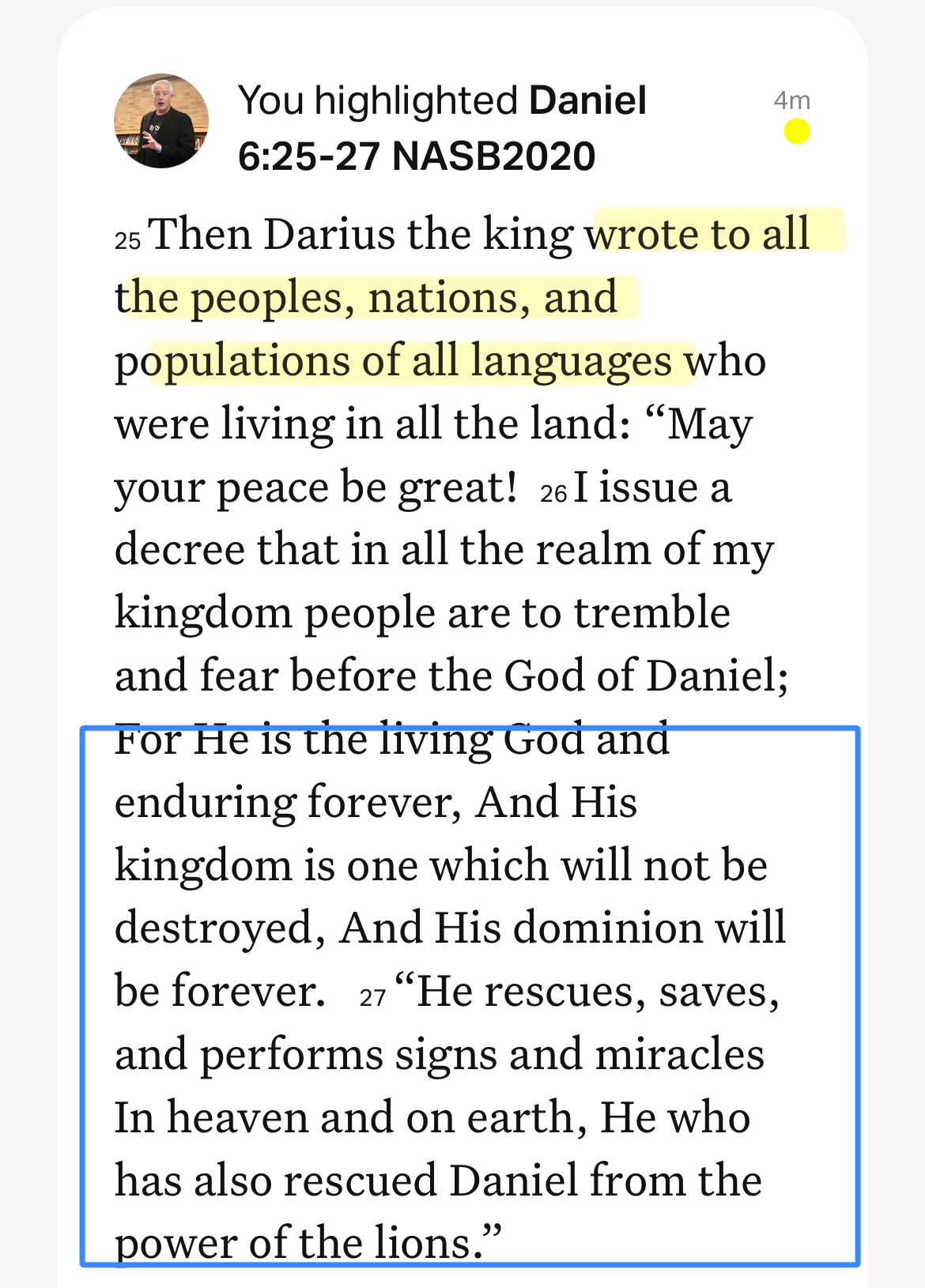
Then Darius the king wrote to all the peoples, nations, and populations of all languages who were living in all the land: “May your peace be great! I issue a decree that in all the realm of my kingdom people are to tremble and fear before the God of Daniel; for He is the living God and enduring forever, snd His kingdom is one which will not be destroyed, snd His dominion will be forever.He rescues, saves, and performs signs and miracles in heaven and on earth, He who has also rescued Daniel from the power of the lions.” (Daniel 6:25-27)
When you are facing adversity—even death threats—don’t ask, “God, why is this happening to me?” Instead you can declare, “God, You are going to be highly glorified among all the people! I will remain faithful and steadfast in my trust in You!”
The extent to which God will reveal His glory is not worthy to be compared to the single night we have to endure. “For I consider that the sufferings of this present time are not worthy to be compared with the glory that is to be revealed to us” (Romans 8:18).
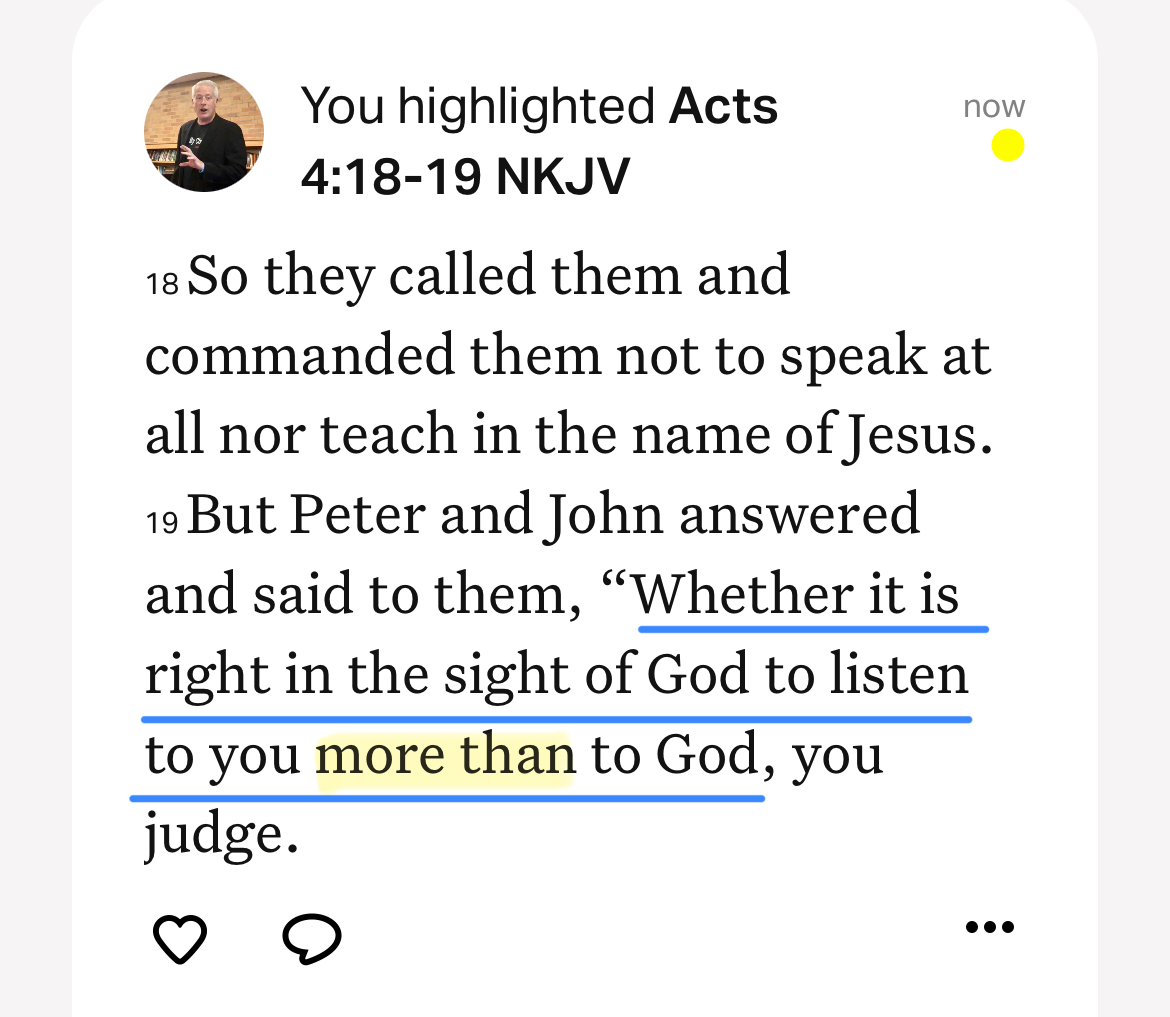
Dr. Henry Halley points out another way the eternal trumps the temporal: “There is no authority apart from God. When human authority rejects God’s authority, it becomes twisted and loses its right to demand compliance (Acts 4:19-20, 5:29). God’s people are responsible to obey the government because it has been set in place by God [Romans 13:1-2; Daniel 4:17], but when government directs against God’s will, the Giver of all authority has the higher claim on our allegiance. We must resist any command that is against God’s will (Exodus 1; Daniel 3; Hebrews 11:23).”
Listen to the audio-only version of this podcast by clicking on the player below, or scroll down to watch the video.
In today’s episode we’re going to—IMPATIENCE! Yes, we’re talking about impatience. As a leader it can be hard to resist the temptation of impatience, but Greg and I believe that developing patience is a vital skill for leaders. In this episode we’ll explore some of the pitfalls of impatience, and share strategies for you to develop into a more thoughtful and patient leader.
[0:14] We’re looking at the leadership builder vs. killer of patience vs. impatience.
[1:41] Patience is sometimes misperceived as not being in control—like we’re simply waiting around for something to happen.
[2:27] Can patience be developed?
[3:50] Patience allows a process to mature, and helps people grow.
[7:35] Warning: patience can cross a line into procrastination.
[8:30] Leaders need to avoid the temptation of impatiently answering too quickly.
[10:50] What leadership pressures make us give in to impatience?
[12:59] Leaders can help their teammates with their own impatience by asking some thoughtful questions.
[15:28] Ego + Bad advice = Dangerous impatience
[16:40] Patience helps leaders trust both the process and the people around them.
[18:33] Leaders need to be aware of what’s happening in themselves when their patience is stretched. Patient leaders grow their leadership influence.
[22:24] Greg quizzes me about the origins of patience.
[24:45] I make a confession about my impatience in my early years.
[25:55] Greg shares an insightful quote about the value of patience.
Check out this episode and subscribe on YouTube so you can watch all of the upcoming episodes. You can also listen to our podcast on Spotify and Apple.
Listen to the podcast of this post by clicking on the player below, and you can also subscribe on Apple, Spotify, or Audible.
I hope you’ve noticed so far that the parts of Christ’s model prayer that we’ve looked at so far are both an acknowledgement of the holiness of God and the greatness of His Kingdom, and also a request for us to be empowered to live in a way that makes those things known to Earthlings.
One of the ways we live to make these things seen is found in the next phrase: Your will be done on earth as it is in Heaven (Matthew 6:10).
In A Christmas Carol, Charles Dickens shows us a scene where the Ghost of Christmas Present has taken Scrooge to his nephew’s home. After dinner, these young adults begin playing games. Dickens says, “For it is good to be children sometimes, and never better than at Christmas, when its mighty Founder was a child Himself.”
Jesus loved children! Being around “the littles” lately at on our school campus, I have a whole new appreciation for this. Because Jesus loved children, their parents wanted them around Him, and He wanted them around too (see Matthew 19:13-15; Mark 10:14-16; Luke 18:15-17).
Children are loud, busy, adventurous, and easily distracted. But they are also loving, trusting, curious, innocent, and easily comforted. And Jesus loved to bless them!
What does this have to do with “Your will be done on earth as it is in Heaven”? Jesus taught us to address our praying to “Our Father.” That means we are to interact with Him as His children.
Children love to do the will of their parents. They’re not trying to earn their approval, but joyfully obeying out of innocence. When we obey God as loving children, we are doing His will on earth as it is done in Heaven!
So once again, this is both an acknowledgement and a request.
In Psalm 131, David uses this same picture of a contented child for us.
Childlike is lovingly dependent. Childish is selfishly independent. Childlike is trusting someone wiser. Childish is believing I know best.
Our prayer request should always be, “Father, may I trust You and obey You as an innocent child.”
Listen to the podcast of this post by clicking on the player below, and you can also subscribe on Apple, Spotify, or Audible.
I do my best to take care of my physical body. I exercise every day, l try to watch what I am eating, and I attempt to get the correct amount of sleep. I attend to all of these things because I want to keep my body as healthy as I can.
But in all of these efforts, I would never presume that I could determine how long I’m going to live. I thought of this the other day when I read an interesting statement from Jesus.
In my Bible, this section of Luke’s Gospel has been given the heading “Do Not Worry.” Jesus tells us that we shouldn’t fret about our lives, our food, or our clothing because our Heavenly Father will take care of those things. Then Jesus says, “Since you cannot do this very little thing, why do you worry about the rest?” (v. 26).
What is this “very little thing” Jesus says I cannot do? In the previous verse, He says, “Who of you by worrying can add a single hour to his life?”
I don’t know about you, but that seems like a very big thing to me! How could I add any time to my life!? I have no idea when my time is up. If I think that controlling the number of days I have left to live is a big thing, then the daily concerns of providing food, clothing, and shelter, seem small by comparison.
But Jesus says determining the length of my days is a very little thing. If that’s how He sees it, how infinitesimal it must be for Him to provide the basics of life for His trusting children!
This is why Jesus says to us over and over again, “Do not worry.”
Listen to the podcast of this post by clicking on the player below, and you can also subscribe on Apple, Spotify, or Audible.
When I wrote my book, I was attempting to bring church leaders back to the biblical foundation for what it means to be a pastor. In a very similar fashion, Roger Parrott does this same thing for ministry leaders in his book Opportunity Leadership.
Parrott is the president of a vibrant Christian university. As anyone who has been in the arena of higher education will tell you, making long-range plans is at the foundation of everything the administration and faculty do. But Parrott asks where did we get this model? Is this something we see in the Bible?
Actually, we see verses that subordinate human plans to God’s plan. Verses like, “Many are the plans in a person’s heart, but it is the Lord’s purpose that prevails” (Proverbs 19:21) or, “They tried [planned] to enter Bithynia, but the Spirit of Jesus would not allow them to” (Acts 16:7). This is why Parrott makes the case that we are missing out on what God has in store for us because we only want Him to work on our carefully-made plans.
Parrott makes the case that their university has grown and seized opportunities because they were open and responsive to the doors God presented them, instead of missing out because they were blinded by their plans.
Obviously, switching to this model will take tremendous buy-in from the point leader all the way through the entire organization. So the bulk of Opportunity Leadership helps prepare Christian leaders to change their paradigm, prepare for the inevitable pushback, and help their teammates move forward.
I thoroughly enjoyed this book—finding myself saying, “Yes!” frequently as I was reading it—and I am confident all Christian leaders will benefit from reading this insightful work.
Listen to the podcast of this post by clicking on the player below, and you can also subscribe on Apple, Spotify, or Audible.
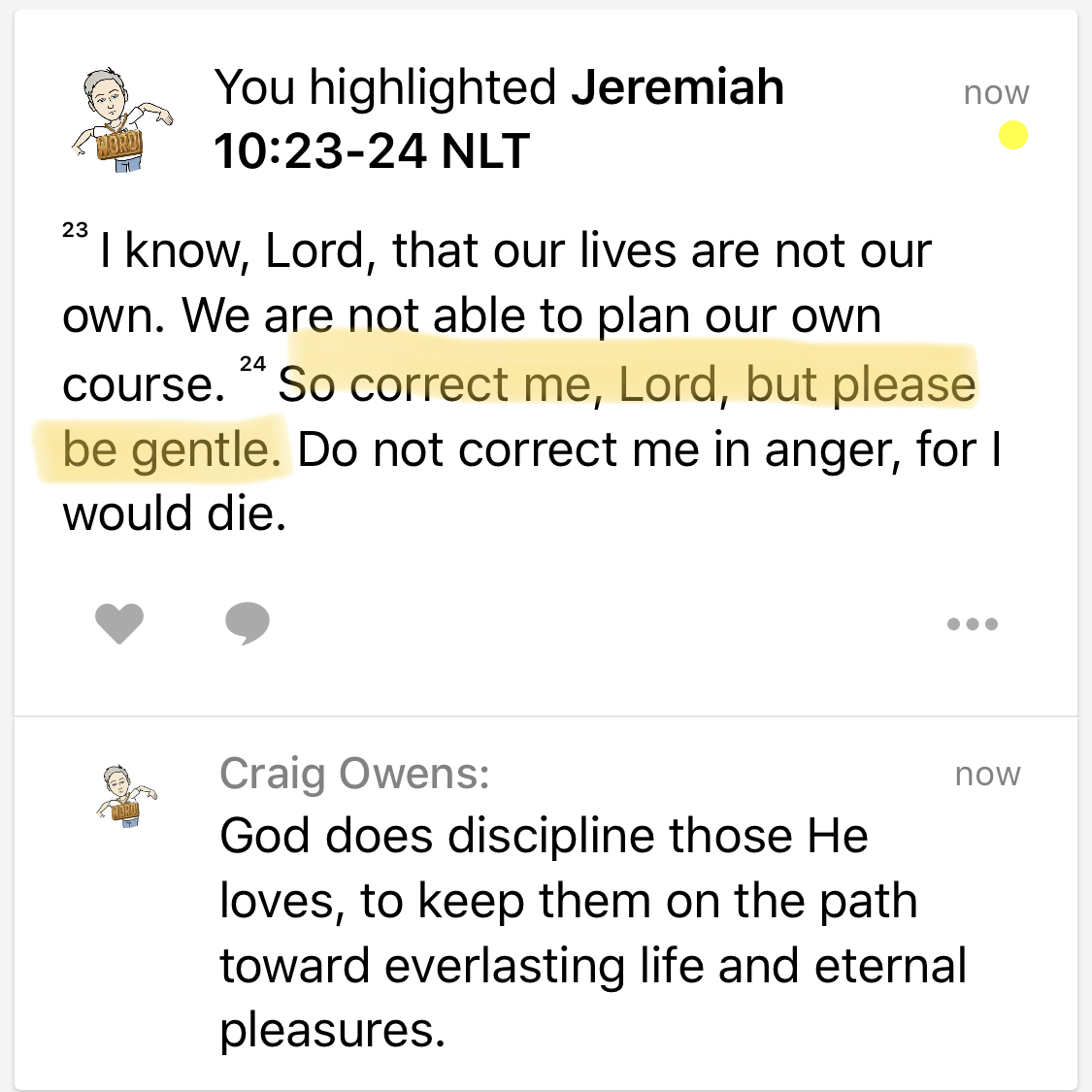
Lord, I know that people’s lives are not their own; it is not for them to direct their steps (Jeremiah 10:23 NIV).
I didn’t create my life—You did!
So “people do not control their own destiny” (NET)—You do!
“Mere mortals can’t run their own lives” (MSG)—You can!
“The way of man is not in himself” (NKJV)—it’s in You!
Discipline me, Lord, but only in due measure—not in Your anger, or You will reduce me to nothing (Jeremiah 10:24 NIV).
You can correct me “with justice” (NKJV)—I can’t!
You know how to “be gentle” (NLT)—I don’t!
God, You correct “as You see best” (MSG)—I can’t!
I’d say it’s pretty clear that there is only One who can lead me in the way I should go. So my prayer should always be: Heavenly Father, You are Sovereign, You are Love, and I trust You completely to guide me into paths of righteousness for Your name’s sake, as only You know how. Holy Spirit, help me to trust You in this journey. In Jesus’ name, amen.
I used only two verses to write this post, but I read them in multiple translations. This is another great Bible study tool that any of us can use. If you would like to read more about the various translations of the Bible and how to access them, please check out this post.
This 37th Psalm is filled with the contrasts of the temporary advantages of evil versus the eternal rewards of righteousness. Wicked people may flourish for a moment in time, but righteous people have both an inheritance that lasts forever and God’s help every single day too! In other words, the righteous get to securely live in a win-win relationship.
With this in mind, David instructs the righteous how to live out their days:
not fretting over evil people
trusting God to supply their needs
doing good for others
delighting in God
remaining steadfastly committed to God
patiently
refraining from anger
full of hope
generously
securely in God’s peace
Righteous people can live securely every single day because they know that not only does God holds them securely today, but He will continue to hold them securely for all of eternity. Secure people are empowered to live a joy-filled, others-centered, God-glorifying life.
If you know Jesus as your Savior, you can say “Amen!” to this secure way of living.



 In the wise words of John C. Maxwell, “He who thinketh he leadeth and hath no one following him is only taking a walk.” As always Maxwell is right on the money. And the first step to getting others to follow you is trust. If you want to lead your team into uncharted territory they have to first trust that you’re not going to lead them off a cliff! In today’s episode Greg and I cover why trust is so vital and offer suggestions on how to build and maintain trust.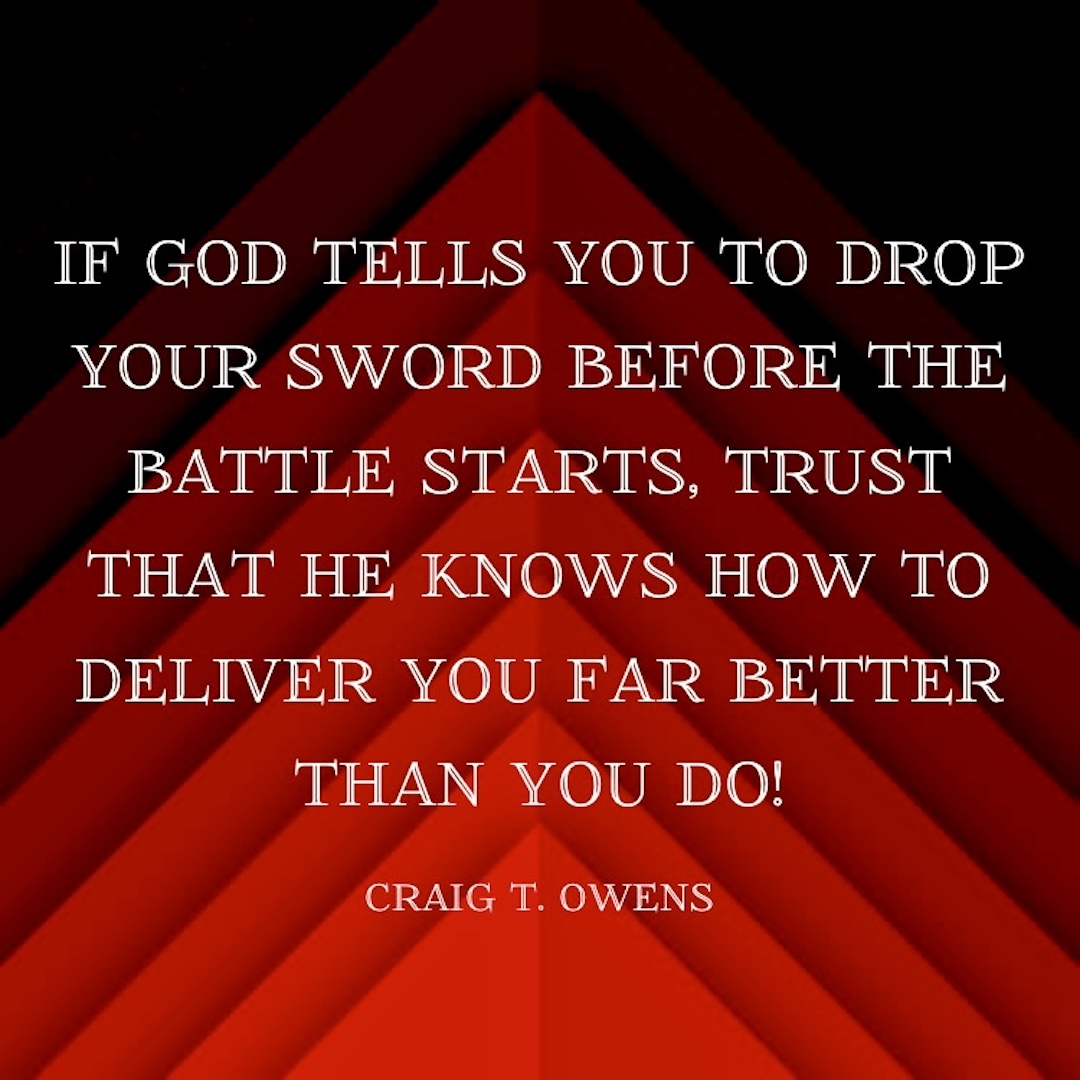








 Craig T. Owens