Praising God In The Troughs

Some people mistakenly think that the maturity of a Christian is a steady climb, and anything short of that is not God-honoring. They feel the graph has to always be moving up and to the right. In reality—if we zoom in—we will see lots of peaks and troughs that are in the climb. 

For instance, we read the worship leader of Psalm 42 saying, “By day the Lord directs His love, at night His song is with me—a prayer to the God of my life,” and we think, “Yeah, that’s what I expect from a saintly psalmist!” 

But let’s get the context. In the opening verses, this same worship leader talks about his profound thirst, his tears, and the taunts of his enemies. Twice in this psalm, he laments, “Why are you so downcast, O my soul? Why so disturbed within me?” 

Many people have gone through what has been called “the dark night of the soul.” I doubt anyone has ever given thanks because of those dark times, but they have learned to give thanks during those dark times.

Consider David’s beautiful words in Psalm 23. He points out that the Good Shepherd leads us into green pastures AND into dark valleys, beside quiet waters AND into the presence of enemies. 

But notice this: the Shepherd of our soul provides what we need in both daytime AND nighttime. He pours out blessings in the presence of our enemies, and as my grandfather wrote in the margin of his Bible next to verse 4, “Where there is shadow there must be light.” 

Consider the example of Paul who wrote to the Philippians, “Rejoice in the Lord always. I will say it again: Rejoice!” (4:4). He wrote this to the church that was birthed by Paul’s miraculous deliverance from prison, while Paul and Silas were doing just that: Praying and singing hymns to God! 

In The Screwtape Letters, C.S. Lewis gives us insight into how the demons view the temptation of Christians. Uncle Screwtape wrote to his nephew, “It may surprise you to learn that in God’s efforts to get permanent possession of a soul, He relies on the troughs even more than on the peaks; some of His special favorites have gone through longer and deeper troughs than anyone else. … It is during such trough periods, much more than during the peak periods, that the human is growing into the sort of creature He wants it to be. Hence the prayers offered in the state of dryness are those which please Him best.” 

A mark of a maturing saint is one who when he realizes he is in a trough begins to praise God in anticipation of the blessings which are coming! 

Don’t feel like you need to praise God FOR your troughs, but you can and should praise Him BECAUSE of His presence even in your driest, darkest trough. God is doing something in this trough time that He could accomplish in no other way. As David said, our Good Shepherd leads us in both sunlit and dark paths “for His name’s sake”—He will be glorified and you will be rewarded! 

Be sure to follow along on this series Thankful In The Night.

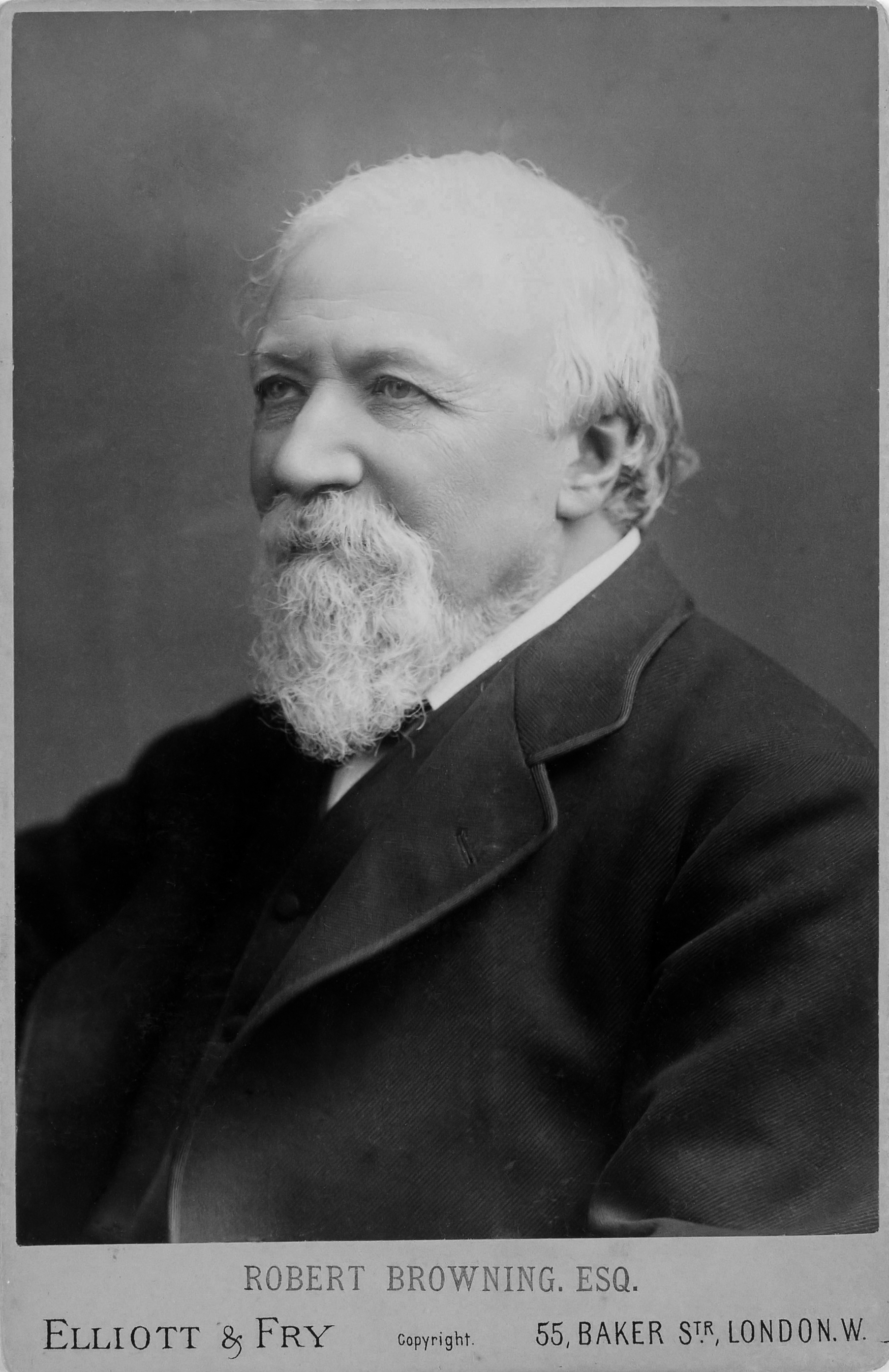
Poetry Saturday—When Sorrow Walked With Me

I walked a mile with Pleasure—
She chattered all the way
But left me none the wiser
For all she had to say.
I walked a mile with Sorrow
And ne’er a word said she,
But, oh, the things I learned from her
When Sorrow walked with me. —Robert Browning Hamilton

Thankful In The Night

The psalmist wrote, “Yet the Lord will command His loving-kindness in the daytime, and in the night His song shall be with me” (Psalm 42:8). 

Notice that the psalmist was praising God IN the night, not praising Him FOR the night. Many people have gone through what has been called “the dark night of the soul.” I don’t think anyone has ever given thanks because of being in a dark time, but certainly they have given thanks afterward because of the lessons learned in that dark time. 

Quite simply put, there are some things God wants to teach us that we can learn in no other way than to go through a dark night. So we can learn to be thankful even IN those nights. 

Join us this Sunday as we discover a lesson that will help us be thankful in the night. You can join us in person or on Facebook. 

If you have missed any of the messages in this series, you can watch the video or read the post here:

Thursdays With Spurgeon—Our Prayer Helper

This is a weekly series with things I’m reading and pondering from Charles Spurgeon. You can read the original seed thought here, or type “Thursdays With Spurgeon” in the search box to read more entries.

Our Prayer Helper 

Likewise the Spirit also helps in our weaknesses. For we do not know what we should pray for as we ought, but the Spirit Himself makes intercession for us with groanings which cannot be uttered. Now He who searches the heart knows what the mind of the Spirit is, because He makes intercession for the saints according to the will of God. (Romans 8:26-27) 

     God helps our infirmity, and with a Helper so divinely strong, we need not fear the result! … We take our burden to our heavenly Father and tell Him in the accents of childlike confidence, and we come away quite content to better whatever His holy will may lay upon us. … 

     We bathe our wounds in the lotion of prayer and the pain is lulled; the fever is removed. But the worst of it is that in certain conditions of heart we cannot pray. We may be brought into such perturbation of mind and perplexity of heart that we do not know how to pray. … We fall into such heaviness of spirit and entanglement of thought that the one remedy of prayer, which we have always found to be unfailing, appears to be taken from us. Here, then, in the nick of time, as a very present help in time of trouble, comes in the Holy Spirit! He draws near to teach us how to pray, and in this way He helps our infirmity, relieves our suffering, and enables us to bear the heavy burden without fainting under the load. … 

     He will guide you both negatively and positively. Negatively, He will forbid you to pray for such and such a thing, even as Paul essayed to go into Bithynia, but the Spirit would not allow him. And, on the other hand, He will cause you to hear a cry within your soul that will guide your petitions, even as He made Paul hear the cry from Macedonia, saying, ‘Come over to Macedonia and help us’ (Acts 16:6-10). …  

     If I am a true believer, there dwells the Holy Spirit, and when I desire to pray, I may ask Him what I should pray for as I ought and He will help me! He will write the prayers that I ought to offer upon the tablets of my heart, and I will see them there and so I will be taught how to plead! It will be the Spirit’s own Self pleading in me and by me and through me before the throne of grace!

From The Holy Spirit’s Intercession

Oh, how many times I’ve been in desperate need but cannot find the right words to pray. The Holy Spirit understands even groans that come from my anguished heart and can help me turn those groans into perfect prayers. 

Jesus said the Holy Spirit would remind us of His words and would guide us into truth. I’ve experienced this for myself: I’m at an utter loss of what or how to pray, and then a passage of Scripture comes to my mind. I start there with that phrase. Often I will begin to read the surrounding passage from the Bible out loud and feel the gentle affirmation from the Holy Spirit as I begin to personalize that portion of Scripture into my own prayer. As Spurgeon put it, this is “the Spirit’s own Self pleading in me and by me and through me before the throne of grace!” 

What a Helper we have in the Holy Spirit!

Thursdays With Spurgeon—God Directs His Wind

This is a weekly series with things I’m reading and pondering from Charles Spurgeon. You can read the original seed thought here, or type “Thursdays With Spurgeon” in the search box to read more entries.

God Directs His Wind

     At the present moment, I am not able to enter fully into the subject of the new birth. I am very weary, both in body and mind, and cannot attempt that great and mysterious theme. To everything there is a season and a time for every purpose under heaven, and it is not the time to preach upon regeneration when the head is aching, or to discourse upon the new nature when the mind is distracted.

From The Holy Spirit Compared To The Wind 

Charles Spurgeon had a sermon in mind, but a headache and a distracted mind caused a course change. Can God use a headache to accomplish what He wants done? Of course He can! God knew exactly what that audience needed to hear that evening, and He arranged for His servant Charles Spurgeon to preach that needed message. 

The apostle Paul was on his way to Rome, where God had said that Paul would speak before Caesar. But on their way, such a strong wind came up against their ship that they were blown off course. The wind ultimately caused them to shipwreck on the island of Malta. It was on Malta that Paul was able to show the power of God in a couple of miraculous ways. Can God use a storm at sea to get someone where He needs him? Of course He can! 

So too with your life. You may have some plans or desires that a wind is tossing around. Don’t fight the wind and don’t curse the wind. Can God use this adversity to get you exactly where you need to be? Of course He can! He is using this wind to put you exactly where He needs you. 

Trust God in the storms!


Not Shaken

“Anyone have a nice, neat, organized life that never gets rocked by anything unexpected?” he asked, not expecting anyone to answer. Let’s be honest: There’s a whole lot of shaking going on!  Not just now, but it’s always been this way. Even in 1000 BC when David wrote Psalm 62. 

Let me walk you through this psalm and offer a couple of observations. 

In the first two verses, David’s declaration sounds very religious. It sounds like what he’s supposed to say in difficult times. Yet some doubt is obviously creeping in because David refers to himself as a leaning wall and a tottering fence. It’s here that David has his first Selah pause. 

Selah—pause and calmly consider what’s happening. “If God is really such a strong rock and fortress, could bad guys really slip by Him? Is it likely that they could be trying to knock me over without God knowing about it?” Of course not! God knows exactly what is happening to me, and He’s allowed it to happen for a reason.  

After pausing to consider this, David makes a statement that sounds like he’s repeating the first verse. But notice that this time David is talking to himself: “I don’t believe God is my refuge just because my parents believed it, or just because it sounds religious. I declare it because it is true!” It’s good to preach the Word of God to our shaking souls! 

Verse 6 is a word-for-word repeat of verse 2 with one minor exception. Look at it in the NKJV: “I shall not be greatly moved” (v. 2). This means that in David’s mind there is still a possibility of getting knocked over. But then in verse 6: “I shall not be moved” has no qualifiers. Or as Matthew Henry commented, “I may be shocked, but I shall not be sunk.” 

After making the declarations of verses 1-2 his own in verses 5-6, David can no longer be called a hypocrite when he now encourages others to declare God’s salvation for themselves (vv. 7, 8). Then he invites everyone to Selah again, this time to weigh the Rock of God with the ways of men. He declares that mankind and his plans are only a breath, not even close to the weightiness of God! 

The word alone” dominates the first eight verses of this psalm. David is emphasizing that God alone is our refuge. As Augustine wrote, “God, You arouse us so that praising You may bring us joy, for You have made us for Yourself, and our hearts are restless until they find rest in You.” And C.S. Lewis added, “So few of us will really rest all on Him if He leaves us any other support.” 

Sometimes God allows unrest or disquiet SO THAT we will rediscover our rest and quiet in Him alone. 

During times of shaking, David calls us twice to Selah pause to reach the same conclusion he has reached—

  • Nothing is stronger than our God
  • No one is more loving than our God

You can stand firm on a God that is powerful enough to help, and loving enough to want to help. HE ALONE is our security! Let times of shaking reveal to you the flimsy supports of this world that you may have come to rely on, and then run to THE strongest, most loving place possible: God’s presence! 

If you’ve missed any of the other posts in our Selah series, you can find the complete list of them by clicking here. 

Thursdays With Spurgeon—“The Hour Has Come”

This is a weekly series with things I’m reading and pondering from Charles Spurgeon. You can read the original seed thought here, or type “Thursdays With Spurgeon” in the search box to read more entries.

“The Hour Has Come” 

After Jesus said this, He looked toward heaven and prayed: “Father, the hour has come. Glorify Your Son, that Your Son may glorify You. (John 17:1) 

     Father, the hour is come.’ This is the hour ordained in the eternal purpose. The hour prophesied of which Daniel sought to know. The hour toward which all hours had pointed. The central hour—the hour up to which man dated and from which they will date again if they read time right. The hinge, pivot, and turning point of all human history! The dark yet delivering hour! The hour of vengeance and of acceptance! ‘The hour is come.’ …  

     You and I look into the hour of darkness, as a frequent rule, and see no further, for our eyes are dim through unbelief. But [Jesus] goes on beyond the hour and His prayer is, ‘Glorify Your Son, that Your Son also may glorify You.’ He fixes His eyes upon the glory that was yet to be revealed and for joy of which He counts even His death to be but an hour—looking upon it as soon to be over and lost in the glory of His Father! 

     In all this, brothers and sisters, let us imitate our Lord and let us keep our eyes not on the present, but on the future; not on this light affliction, which is but for a moment, but on the far more exceeding and eternal weight of glory that will come of it. And let us with holy confidence, whenever our hour of darkness arrives, resort to our God in secret. The best preparation for the worst hour is prayer! The best remedy for a depressed spirit is nearness to God! 

From The Son Glorified By The Father And The Father Glorified By The Son 

Solomon became depressed when his gaze went no higher than “under the sun.” We, too, can become quite overwhelmed by our trials if our eyes only look at the present hour of darkness. 

The writer of Hebrews tells us to keep our eyes on Jesus who conquered in His hour of darkness—Fixing our eyes on Jesus, the pioneer and perfecter of faith. For the joy set before Him He endured the Cross, scorning its shame, and sat down at the right hand of the throne of God. Consider Him who endured such opposition from sinners, so that you will not grow weary and lose heart (Hebrews 12:2-3). 

No matter what you are going through, keep your eyes on Jesus. Don’t give in to the darkness because Jesus has made you more than a conqueror if you will remain in Him (Romans 8:37-39). 


‘Tis I, Be Not Afraid

Tossed with rough winds, and faint with fear, 
Above the tempest, soft and clear, 
What still small accents greet mine ear?
“‘Tis I; be not afraid.”

“‘Tis I who led thy steps aright; 
‘Tis I who gave thy blind eyes sight; 
‘Tis I, thy Lord, thy Life, thy Light. 
‘Tis I; be not afraid.

“This bitter cup fear not to drink; 
I know it well—oh! do not shrink; 
I tasted it o’er Kedron’s brink. 
‘Tis I; be not afraid. 

“Mine eyes are watching by thy bed, 
Mine arms are underneath thy head, 
My blessing is around thee shed. 
‘Tis I; be not afraid.“

When on the other side thy feet 
Shall rest ‘mid thousands welcomes sweet, 
One well known voice thy heart shall greet. 
“‘Tis I; be not afraid.”

From out the dazzling majesty 
Gently He’ll lay His hands on thee, 
Whispering: “Beloved, lov’st thou Me? 
It was not in vain I died for thee,
‘Tis I; be not afraid.” —Anonymous

Poetry Saturday—Worthwhile

It is easy enough to be pleasant
   When life flows along like a song,
But the man worthwhile is the one who will smile
   When everything goes dead wrong;
For the test of the heart is trouble,
   And it always comes with the years,
And the smile that is worth the praises of earth
   Is the smile that shines through tears.

It is easy enough to be prudent
   When nothing tempts you to stray:
When without or within no voice of sin
   Is luring your soul away;
But it’s only a negative virtue
   Until it is tried by fire,
And the life that is worth the honor of earth
   Is the one that resists desire.

By the cynic, the sad, the fallen
   Who had no strength for the strife,
The world’s highway is cumbered today;
   They make up the item of life.
But the virtue that conquers passion,
   And the sorrow that hides in a smile,
It is these that are worth the homage of earth,
   For we find them but once in a while. —Ella Wheeler Wilcox

10 Quotes From “Coronavirus And Christ”

John Piper has given us a book that is so spot-on timely for this unusual time we are going through. Check out my full book review by clicking here. 

“I am a sinner. I have never lived a day of my life—not one—without falling short of God’s standards of love and holiness. So how can this be? How can God say, ‘You, John Piper, will be with Me—live or die’ [1 Thessalonians 5:9-10]? God didn’t even wait for the question before He answered. It’s because of Jesus.” 

“To be God is to cause His own counsel to stand—always. God does not just declare which future events will happen; He makes them happen. He speaks His word, and then He adds, ‘I am watching over My word to perform it’ (Jeremiah 1:12).” 

“Jesus expresses the sweetness of God’s sovereignty for His disciples as beautifully as anyone: ‘Are not two sparrows sold for a penny? And not one of them will fall to the ground apart from your Father. But even the hairs of your head are all numbered. Fear not, therefore; you are of more value than many sparrows’ (Matthew 10: 29–31). Not one sparrow falls but by God’s plan. Not one virus moves but by God’s plan. This is meticulous sovereignty. And what does Jesus say next? Three things: you are of more value than many sparrows; the hairs of your head are all numbered; fear not.” 

“Christians get swept away in tsunamis. Christians are killed in terrorist attacks. Christians get the coronavirus. The difference for Christians—those who embrace Christ as their supreme treasure—is that our experience of this corruption is not condemnation.” 

“God put the physical world under a curse so that the physical horrors we see around us in disease and calamities would become a vivid picture of how horrible sin is. In other words, physical evil is a parable, a drama, a signpost pointing to the moral outrage of rebellion against God.” 

Physical pain is God’s trumpet blast to tell us that something is dreadfully wrong in the world. Disease and deformity are God’s pictures in the physical realm of what sin is like in the spiritual realm.” 

“Jesus wants us to see the birth pains (including the coronavirus) as reminders and alerts that He is coming and that we need to be ready [Matthew 24:44].” 

“What God is doing in the coronavirus is showing us—graphically, painfully—that nothing in this world gives the security and satisfaction that we find in the infinite greatness and worth of Jesus.” 

“Paul does not view this experience of desperation as satanic or random [2 Corinthians 1:8-9]. It is purposeful. And God is the One whose purpose is mentioned: this life-threatening experience ‘was to make us rely not on ourselves but on God who raises the dead.’” 

“Jesus taught His followers to ‘let your light shine before others, so that they may see your good works and give glory to your Father who is in heaven’ (Matthew 5:16). What is often not noticed is that being the salt of the earth and the light of the world in this way was the more salty and the more bright because the good deeds were to be done even in the midst of suffering. …

“It is nor mere good deeds that give Christianity its tang and luster. It is good deeds in spite of danger.”