A Leadership Measurement Trap

Listen to the podcast of this post by clicking on the player below, and you can also subscribe on AppleSpotify, or Audible. 

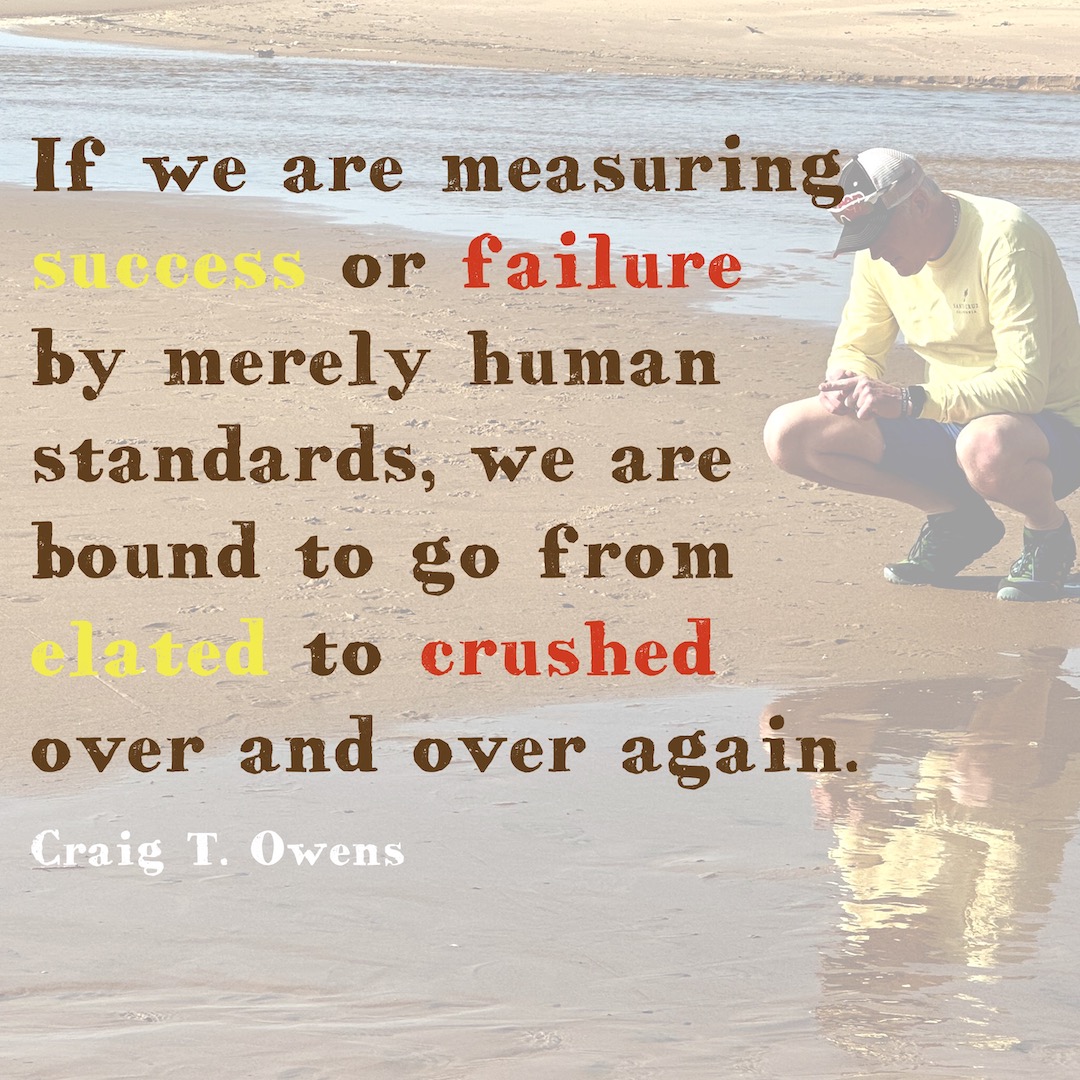
Leaders have to be very careful of the trap of measuring the growth of their teammates by the wrong metrics. The things that matter most are often the things that are the most difficult to measure, but leaders must find a way.

Check out the full conversation we had on this topic on this episode of The Craig and Greg Show. 

In my book Shepherd Leadership, I have a chapter entitled ‘Don’t Try to Grow Your Own Ministry.’ This book is mainly written for church and non-profit leaders, but there are helpful principles here for every kind of leader. Here’s an except from this chapter—

     Businesses think in terms of quantitative gains—things they can count—but churches and nonprofits should be thinking in terms of qualitative gains—a quality improvement that isn’t as easily counted. I think we all know this, and yet we still persist in wanting to define success in a church or a nonprofit by those quantitative standards such as attendance growth, donations, and the like. When we think qualitative over quantitative, suddenly what seemed “small” is so significant and so valuable that it cannot be calculated! … 

     Don’t try to grow your ministry. First, because it’s not yours, it’s [God’s]; and second, because your measure of success is probably more slanted toward quantitative measurements than qualitative. Jesus wasn’t concerned about bigger numbers: “What do you think?” He asked, “If a man has a hundred sheep, and one of them goes astray, does he not leave the ninety-nine and go to the mountains to seek the one that is straying?” (Matthew 18:12). 

     Philip went to Samaria to tell people about Jesus. He didn’t go there because it fit his plan, but because Jesus said, “You will be My witnesses in Jerusalem, and in all Judea and Samaria, and to the ends of the earth” (Acts 1:8). Philip’s obedience brought God’s success: hundreds turned to Jesus as their Savior, demon-possessed people were delivered, the sick were healed, and the new Christians were baptized in the Holy Spirit. Yet God called Philip to leave these “ninety-nine” and go to the desert to cross paths with just one confused and wondering sheep (Acts 8). After that, Philip virtually disappears from Luke’s historical record. 

     What’s the value of one government official’s life? God says that his value is incalculable. Apparently, God knew that Philip was the perfect shepherd to lead this Ethiopian to the pasture where he would accept Jesus as his Savior. Philip was obedient, a sheep was saved, and God was pleased. But I wonder how many people today might think Philip’s ministry was unsuccessful because he left a bigger ministry in Samaria to go to a smaller ministry in the desert? 

Leaders need to be very cautious about using the right metrics to measure the growth of their teammates and the success of their organization.

►► Would you please prayerfully consider supporting this ministry? My Patreon supporters get behind-the-scenes access to exclusive materials. ◀︎◀︎

Let Others Have The First Pancakes

Listen to the podcast of this post by clicking on the player below, and you can also subscribe on AppleSpotify, or Audible. 

If you’re a leader, I have a very interesting challenge for you. I would like to challenge you to let other people eat the first pancakes. 

A mark of a godly leader is one who lets others eat the pancakes first!

The Scriptures I reference in this video are Mark 10:45; Romans 15:1-2; John 13:1-17. 

I elaborate on the example Jesus gave us in John 13 in my posts Only One Kind of Leader Can Serve Well and Are You Healthy Enough to Love Serving Others? 

If you would like to hone your leadership to be more Christ-like, check out my book Shepherd Leadership and When Sheep Bite. 

This is part 83 in my series on godly leadership. You can check out all of my posts in this series by clicking here.

►► Would you please prayerfully consider supporting this ministry? My Patreon supporters get behind-the-scenes access to exclusive materials. ◀︎◀︎

Links & Quotes

Hey, leaders, let me ask you a simple question: Is your workplace a safe place for people to make mistakes? It should be or else we will be limiting the potential of both our teammates and our whole organization. Greg and I unpack this in greater detail in this episode.

I have a lot of new video content on my YouTube channel every week. Please check it out and subscribe so you don’t miss anything.

“You yearn for a simplified lifestyle, so that your communication with Me can be uninterrupted. But I challenge you to relinquish the fantasy of an uncluttered world. Accept each day just as it comes, and find Me in the midst of it all. … Remember that your ultimate goal is not to control or fix everything around you; it is to keep communing with Me. A successful day is one in which you have stayed in touch with Me, even if many things remain undone at the end of the day. Do not let your to-do list (written or mental) become an idol directing your life. Instead, ask My Spirit to guide you moment by moment.” —Sarah Young, Jesus Calling [1 Thessalonians 5:17; Proverbs 3:6]

“God is God, and since He is God, He is worthy of my worship and my service. I will find rest nowhere else but in His will, and that will is necessarily infinitely, immeasurably, unspeakably beyond my largest notions of what He is up to.” —Elizabeth Elliot 

“If you want to lift yourself up, lift up someone else.” —Booker T. Washington 

As I have mentioned previously, T.M. Moore and I share the conviction that pastors are called by God to shepherd the sheep God has placed under their care. Moore writes, “Jesus indicated six disciplines that shepherds must master in leading His churches.” Check out this post where he outlines these six disciplines.

Pornography adversely effects the viewer’s brain, leading to a growing list of physical and emotional problems. Check out this post from Fight The New Drug, in which they report, “No matter what you believe about porn, ‘what is undeniable is that we’re consuming far more of it than at any point in human history, and the effects of this are yet to fully register.’”

I have always loved the fact of God’s laughter—the perfect joy He has must be expressed in perfect laughter! David Mathis writes about the encouragement in God’s laugh: “One way to enjoy the smile of our fiercely happy Father is to tune your ears to the wonders of His laughter.”

Scientists took a cubic millimeter of a mouse’s brain and mapped out the neurons and connections. The result is astounding! In Nature, they wrote, “A cubic millimetre might not sound like much—roughly the size of a grain of sand—but to neuroscientists, it is enormous. One cubic millimetre of a mammalian brain contains tens of thousands of neurons with hundreds of millions of connections, or synapses, between them.” Can you imagine what the human brain is like?! How amazing is our Creator! 

“Fairy tales do not tell children the dragons exist. Children already know that dragons exist. Fairy tales tell children the dragons can be killed.” —G.K. Chesterton 

Links & Quotes

Why do Christians lift their hands to God? This is a clip from one of the sermons in our series looking at the worship songs that Israelite pilgrims sang as they ascended to Jerusalem to celebrate the feasts.

I have a lot of new video content on my YouTube channel every week. Please check it out and subscribe so you don’t miss anything.

“Civil governments are established by God [Romans 13:1] to restrain the criminal elements of human society—even though these officers are often filled and run by evil people. We must divorce our feelings about the people that hold these offices from the authority of the office itself.” —Dr. Henry Halley 

“Outstanding leaders go out of their way to boost the self-esteem of their personnel. If people believe in themselves, it’s amazing what they can accomplish.” —Sam Walton 

This article opens with this thought: “Scientists will probably never fully understand photosynthesis as additional research uncovers even more fascinating mysteries.” It then goes on to outline how plants use quantum mechanics nearly perfectly to manage the flow of energy during photosynthesis. Truly this is more evidence of an All-Wise Creator.

In sharing a mini-biography of Henry Martyn, this article outlines how God prepares missionaries for the field to which He has called them. “God used [Martyn’s] classical education at Cambridge alongside his spiritual maturity formed by intentional mentorship to get him ready for his unique task of engaging Muslims and translating the Bible.”

T.M. Moore has an outstanding series for pastoral leaders. In a recent post, Moore wrote, “Paul’s vision was too vast, too all-encompassing, too transformative, too urgent, and too other-worldly to stop with, say, a vision that focused on more members, better facilities, larger budgets, additional staff, or regular ‘growth.’ None of these, nor any of a thousand other ways church leaders might express their hopes for their churches, is a proper vision for church leaders.” I was grateful for T.M.’s endorsement of my book Shepherd Leadership where I talk about the biblical metrics for church leaders.

“One of the dangers of having a lot of money is that you may be quite satisfied with the kinds of happiness money can give, and so fail to realize your need for God. If everything seems to come simply by signing checks, you may forget that you are at every moment totally dependent on God.” —C.S. Lewis 

What’s Inside?

Listen to the podcast of this post by clicking on the player below, and you can also subscribe on AppleSpotify, or Audible. 

Far too many leaders spend more time making sure things look good on the outside than they do addressing whether things are good on the inside. Of course, I’m talking about issues like character, and humility, and servant-mindedness. 

Greg and I addresses this on a recent episode of our leadership podcast The Craig and Greg Show. 

Check out the full conversation Greg and I had on this episode called Healthy Leaders. 

And I dive a lot deeper into the issue of true leadership coming from the inside out in my book Shepherd Leadership. 

►► Would you please prayerfully consider supporting this ministry? My Patreon supporters get behind-the-scenes access to exclusive materials. ◀︎◀︎
Murmuring Sheep

Listen to the podcast of this post by clicking on the player below, and you can also subscribe on AppleSpotify, or Audible. 

If you’re a shepherd leader, what do you do when the sheep under your care go, “Grrrr!”? 

To make sure that you haven’t done anything that caused the murmuring, you should humbly pray, “Search me, O God” (Psalm 139:23-24). And then, if you see you have done something wrong, repent and make things right. You may want to check out my blog post A Leader’s Sincere Apology. 

After this, Moses has given us in Exodus 16:8-9 two actions to take with murmuring sheep:

  1. If it wasn’t anything that you did, you need to remind yourself that the people are murmuring against God. 
  2. If it wasn’t anything that you did, you need to remind the sheep that they are murmuring against God. 

The other Scriptures I reference in this episode are Ephesians 4:15; Proverbs 27:5; Numbers 20:2-12. And the blog post I referred to in this video is How Are Godly Leaders To Use Their Authority. 

I would also encourage you to pick up a copy of When Sheep Bite to help you handle your murmuring sheep in a productive and God-honoring way. 

►► Would you please prayerfully consider supporting this ministry? My Patreon supporters get behind-the-scenes access to exclusive materials. ◀︎◀︎

The Craig And Greg Show: Healthy Leaders

Listen to the podcast of this post by clicking on the player below, and you can also subscribe on AppleSpotify, or Audible.

In today’s episode, Greg and I discuss what it means to be a healthy leader. We break down the various facets of leadership health, and highlight why each piece is part of an essential structure that supports all of the other parts. This was a very important part in my book Shepherd Leadership.

  • [0:12] Greg and I are looking dapper today!
  • [1:26] We have both gone through the process of writing books.
  • [2:30] I reveal the section of my book Shepherd Leadership that has gotten the most attention.
  • [6:01] I highlight the development of Jesus as recorded in the Gospel of Luke.
  • [8:40] All aspects of health are important because they support each other.
  • [10:06] What happens when we get bumped?
  • [12:25] How do we maintain healthy relationships?
  • [15:11] Investing time into yourself gives you a greater capacity to serve others.
  • [16:50] What signs should we watch for that tell us a relationship is strained?
  • [17:52] Leaders should empower others to solve problems instead of always solving them on their own.
  • [18:54] It’s easier to avoid relational health in the short-term, but it will hurt you down the road.
  • [21:28] What’s the best way to improve a relationship?
  • [22:55] If we have a desire to improve a relationship, how can we get the other person to reciprocate?
  • [25:40] What was my “aha” moment when writing Shepherd Leadership?
  • [27:11] Maximize Leadership is a great coaching resource for you.

Check out this episode and subscribe on YouTube so you can watch all of the upcoming episodes. You can also listen to our podcast on Spotify and Apple.

The Craig And Greg Show: The Silent Killers

Listen to the podcast of this post by clicking on the player below, and you can also subscribe on AppleSpotify, or Audible.

To you the term “silent killer” might conjure visions of a lone assassin from a spy movie, or perhaps more mundane but equally deadly things like high blood pressure or carbon monoxide leaks. In today’s episode Greg and I are discussing toxic behaviors that creep into the workplace. They aren’t quite as deadly as the ones listed above, but can still cause massive anger, frustration, and discord in your organization. Join us as we discuss some of the most prevalent toxins we’ve seen, and highlight how you as the leader are responsible for being the safeguard against them.

  • [0:20] Toxic things can sneak into our workplace unless we proactively look for them.
  • [1:35] Leaders need to be honest with their team so their team feels they can be honest with them in return.
  • [3:43] Greg and I discuss some of the toxic behaviors we have seen that create problems in the workplace.
  • [3:54] -Gossip
  • [4:51] -Office Politics
  • [6:42] -Negative Competition
  • [8:37] -Negativity
  • [10:20] -Bureaucracy
  • [12:46] -Braggadocio
  • [14:12] -Bashing
  • [14:46] Toxicity will come to every organization. We as leaders shine in the way we deal with it.
  • [17:47] When I wrote Shepherd Leadership, I spent two chapters discussing the balance between confidence and humility because of how important it is.
  • [19:08] One of our main jobs as leaders is to develop others, but toxicity squashes that.
  • [20:26] A coach can come alongside you to be the “detector” for the silent killers that might be lurking in your organization.

Check out this episode and subscribe on YouTube so you can watch all of the upcoming episodes. You can also listen to our podcast on Spotify and Apple.

The Maturing Steward

Listen to the podcast of this post by clicking on the player below, and you can also subscribe on AppleSpotify, or Audible.

And the Lord said to [Moses], “What is that in your hand?” And he said, “A rod.” … And Moses took his wife and his sons and set them on donkeys, and he returned to the land of Egypt; and Moses took the rod of God in his hand. (Exodus 4:2, 20 AMPC) 

What Moses originally called merely “a rod” he later called “the rod of God.” He recognized that what he thought was his was in actuality what God had given him to use. 

When we recognize that what’s in our hands isn’t our creation, but a God-given talent, it marks a defining moment in both our maturity and our humility. Or to borrow a phrase I elaborate on in my book Shepherd Leadership, this helps us view our God-given talents or positions with confident humility (or, if you like, humble confidence). 

With this shift in Moses’ understanding and language in mind, this is how we should treat every strength God has given us:

• It’s not mine, but God’s 

• I am only a steward of this talent 

I must use this God-given strength only for God’s glory 

• I will have to give an account to God for how I invested or squandered what He entrusted to me

When we realize that we are not self-made men or women, but that any talents, abilities, or opportunities we have are God-appointed, we show a marked maturity in our understanding of our stewardship of God’s gifts. As our maturity grows, our confidence and our humility will grow proportionately. And as we become more confidently humbled in the way we steward God’s gifts, our leadership cannot help but exhibit more of God’s blessing on it. 

All of this growth starts with just the simple recognition that what’s in my hands is there only because God placed it there. 

►► Would you please prayerfully consider supporting this ministry? My Patreon supporters get behind-the-scenes access to exclusive materials. ◀︎◀︎
Wolf Deterrent

Listen to the podcast of this post by clicking on the player below, and you can also subscribe on AppleSpotify, or Audible. 

As Paul is on his way to Jerusalem, he makes time to meet with the leaders of the Church in Ephesus. An important reminder Paul gives them comes from the example he lived out while he was in Ephesus: “For I have not hesitated to proclaim to you the whole will of God” (Acts 20:27). 

Some translations say “the whole counsel of God,” but I like the simple, straightforward wording in the KJV: “all the counsel of God.” In other words, Paul’s textbook was everything in the Scriptures. 

One of Paul’s traveling companions was Luke, who made frequent use of the Greek word boulē, which is translated “counsel.” He is the only Gospel writer to use this word, and then he uses it seven more times in the Book of Acts. Putting together Luke’s usage of boulē with the three other appearances in the New Testament, we can come up with a good overview of what Paul meant by “the whole will of God.” 

Boulē tells us that…

  • God’s purpose always prevails (Acts 2:23, 4:28, 5:38, 13:36; 1 Corinthians 4:5; Ephesians 1:11) 
  • Man’s counsel can be flawed (Luke 23:51; Acts 27:12, 42) 
  • God’s counsel if immutable (Hebrews 6:17) 
  • Men who mutate God’s counsel are the wolves that seek to destroy the flock (Luke 7:29-30; Acts 20:27-31)

(Check out all of these Scriptures by clicking here.)

Paul warned these Ephesians leaders: 

Keep watch over yourselves and all the flock of which the Holy Spirit has made you overseers. Be shepherds of the church of God, which He bought with His own blood. I know that after I leave, savage wolves will come in among you and will not spare the flock. Even from your own number men will arise and distort the truth in order to draw away disciples after them. So be on your guard!… (Acts 20:28-31, emphasis added) 

In my book When Sheep Bite I have a chapter called’ Driving Away the Wolves.’ In that chapter I point out—

  There is a phrase that is often associated with the behavior of wolves: a lone wolf. Normally, wolves travel and live in packs. The phrase “lone wolf” is associated with those who leave in order to find a mate, carve out their own territory, and then form their own pack. 

   Jesus said that His sheep hear His voice and follow Him. Lone wolves hear the shepherd’s voice but ignore it to follow their own pursuit of forming their own pack. Remember that these lone wolves don’t want to stay alone: they want to build their own following.

Jesus said we could spot imposters—wolves in sheep’s clothing—by their fruits (Matthew 7:15-20). Two evident fruits are: 

  1. Mutating the immutable counsel of God’s Word to suit their own needs 
  2. Ignoring or criticizing the whole counsel of God’s Word that godly shepherd leaders faithfully teach and preach

For shepherd leaders and their flocks, the whole counsel of God’s Word is the best wolf deterrent you can find! Another passage from my book says—

   David’s beautiful description of the Good Shepherd in Psalm 23 has a phrase that sounds unusual to my ears. He writes, “Your rod and Your staff, they comfort me.” How can such wooden instruments bring comfort to sheep? When the sheep know their shepherd has the rod of God’s Word in his hand and is skilled at using it, the sheep are far more relaxed around the shepherd. This is because a shepherd’s rod is not used against the sheep, but only against the enemies of the sheep. 

   Throughout the Old Testament, the rods in the hands of leaders were the symbol of their God-appointed authority (think of the staffs of Moses and Aaron). Those rods were symbolic of the words God had spoken to these shepherds to empower them to lead His sheep. In the New Testament setting, the Bible is described in similar terms. Shepherds are directed to correctly handle the rod of God’s Word, knowing that His Word is the only thing that can reliably care for the sheep by teaching, rebuking, correcting, and training (2 Timothy 2:15, 3:16). The sheep will welcome this; the wolves will fight against this. 

Pastors, immerse yourself in the whole counsel of God’s Word. Not just the parts that are comfortable for you or pleasant to preach about, but all of God’s Word! This will strengthen the rod of leadership God has given you, it will bring health and comfort to the sheep in your flock, and it will be a strong deterrent against the wolves that would seek to infiltrate your pasture. 

I would also humbly recommend that you pick up a copy of my book When Sheep Bite to help resource you to heal from old or ongoing injuries, and to fortify you to remain faithful to the call God has on your ministry. 

►► Would you please prayerfully consider supporting this ministry? My Patreon supporters get behind-the-scenes access to exclusive materials. ◀︎◀︎