My books are for my fellow pastors. Shepherd Leadership will help us keep the biblical metrics in mind when we are thinking about our leadership roles. When Sheep Bite is an invaluable resource to help pastors continue to serve their flock, even after being painfully attacked. And Amen Indeed is a book of prayers for pastoral effectiveness.
If you are a pastor—or if you love your pastor—please pick up copies of these books today!
Listen to the podcast of this post by clicking on the player below, and you can also subscribe on Apple, Spotify, or Audible.
Leadership is influence.
Influence doesn’t try to get a following, but people naturally follow a leader who quietly, consistently, and effectively shows up for them.
Jesus saw the needs of people and was moved by compassion to relieve their distress. Peter said He simply went around doing good (Acts 10:38). He gave value to the overlooked, He touched the so-called untouchable, He embraced the rejected.
Jesus said, “I didn’t come to be served but to serve and to give My life away” (Mark 10:45).
This commentary from the folks at He Gets Us is spot-on:
So often our idea of leadership is about asserting dominance and wielding authority; Jesus on the other hand revealed a radically different approach to greatness.
Jesus chose a path that seemed almost counterintuitive, especially to many of those around Him. He showed that true influence doesn’t come from throwing your weight around or flexing your authority—it comes from genuine empathy, authentic care, and intentionally seeing people and going toward them.
Instead of building a platform or demanding attention, Jesus moved quietly through communities, transforming lives through genuine relationships.
He didn’t network with the powerful or chase prestigious connections.
He sat with the overlooked.
He listened to the ignored.
He gave dignity to those society had dismissed.
Jesus’ approach to influence and greatness wasn’t about commanding rooms or dominating conversations—it was about creating spaces where others felt seen, heard, and valued, demonstrating great love in those moments.
When He had opportunities to grasp power, He chose instead to empower others.
His visible leadership wasn’t built on titles or positions, but on authentic relationships He cultivated and the lives He transformed through His genuine care and concern. (‘What is Greatness?’)
Listen to the podcast of this post by clicking on the player below, and you can also subscribe on Apple, Spotify, or Audible.
We are getting ready to kick off a new series at Calvary Assembly of God based on the Book of Jude. When I read the opening line of this letter, it makes me pause. Jude writes, “Jude, a servant of Jesus Christ and a brother of James” (v. 1).
Men like Peter and John had spent years in Christ’s company, and they called Him Lord and said they were His servants. Paul had supernatural encounters with the risen Savior, and said that he was a man devoted to His service. James and Jude shared a home and family with Jesus, and they call themselves His servant.
How could I ever claim a title any higher than servant?
Even if Jude didn’t say it in a bragging fashion, if he simply stated, “Jesus is my Brother,” I am pretty sure that has got to be a door opener for him! People would probably give him an audience and an opportunity—perhaps they would even give his words greater weight—simply because of the fact that they were brothers. But Jude uses this open door to point people to Jesus, not to himself.
So that got me thinking, “What will I do with the open doors, the opportunities, and the listening audiences that are before me? Will I use those things to promote my own agenda or will I use those things to promote Jesus? Will I speak what’s on my mind or what the Holy Spirit puts in my mind?”
I pray that I may use every opportunity to turn as many eyes and hearts as I am able to Jesus. May I use every open door to invite others to come closer to Christ. May I never promote my agenda, but merely be a servant who is speaking the words which I’ve been instructed and anointed to share.
Listen to the podcast of this post by clicking on the player below, and you can also subscribe on Apple, Spotify, or Audible.
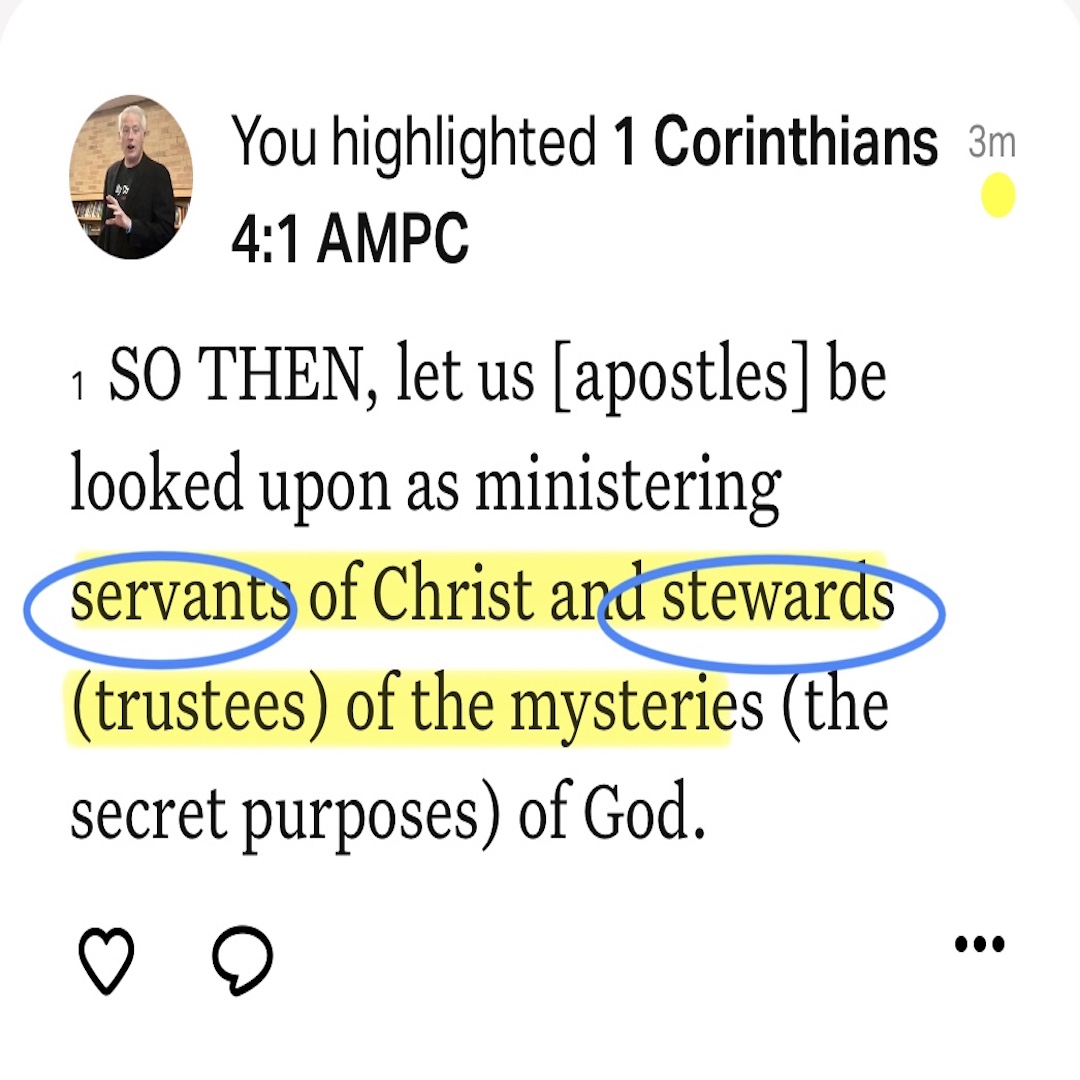
Godly leaders should be secure enough to think of themselves as servants and stewards—nothing more, nothing less. And people in the church should look on their leaders as servants and stewards—nothing more, nothing less.
So then, let us apostles be looked upon as ministering servants of Christ and stewards (trustees) of the mysteries (the secret purposes) of God. (1 Corinthians 4:1 AMPC)
Q: How do I know if I am a servant?
A: People treat me like one.
Q: How do I know I have a servant’s attitude?
A: I don’t mind being treated like a servant.
Paul lived this out—Now, brothers and sisters, I have applied these things to myself and Apollos for your benefit, so that you may learn from us the meaning of the saying, “Do not go beyond what is written.” Then you will not be puffed up in being a follower of one of us over against the other(1 Corinthians 4:6).
I closed the chapter ‘Secure to Serve’ in my book Shepherd Leadership like this—
God wants to use you as a leader. He has called you to great things. Just remember that He does the calling and the equipping so that you can serve and shepherd others. It may be a prominent, noticeable position, or it may be an obscure position unseen by very many. It may be a position God keeps you in until the day He calls you home, or it may be a temporary position. A humbly confident leader doesn’t fight to climb a ladder nor strive to keep a position on a higher rung of the ladder. The shepherd leader is confident to serve where God places him, and humble enough to be moved, or even removed, as God sees best. But most of all, a secure shepherd leader knows that God’s desire for His leader in any position is a heart to serve others.
Listen to the podcast of this post by clicking on the player below, and you can also subscribe on Apple, Spotify, or Audible.
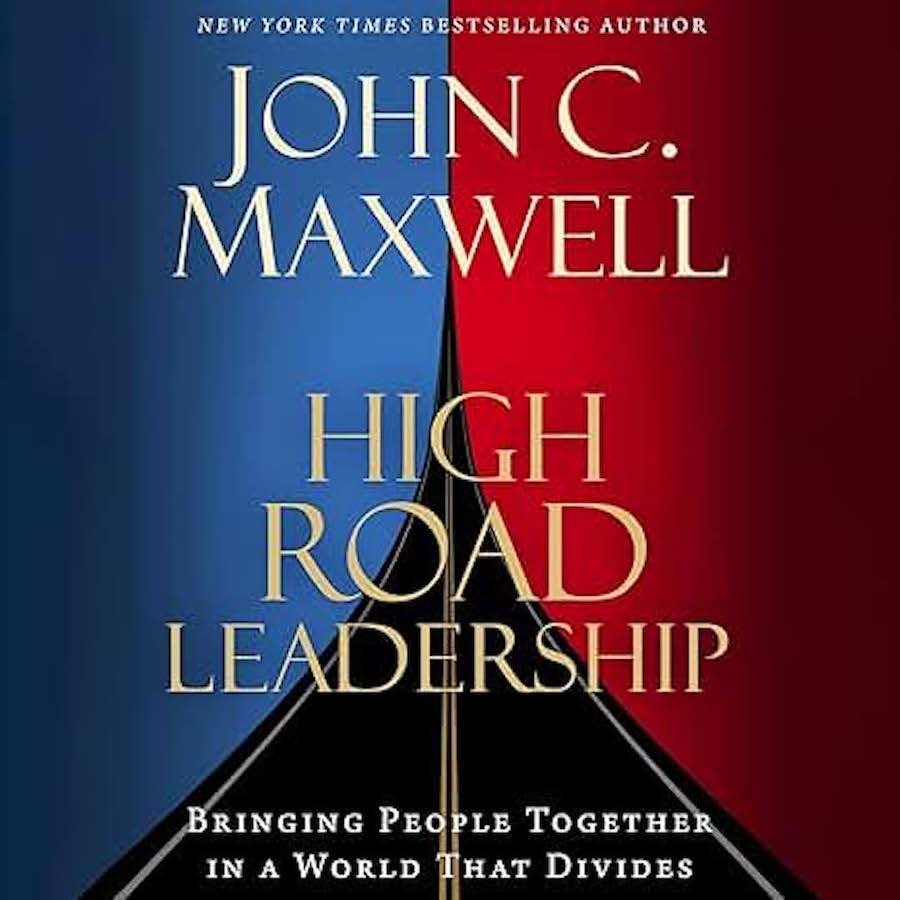
I have been a longtime fan of John Maxwell. His ability to distill so many insights into accessible action steps is a true gift. High Road Leadership is no exception to this, and it is a timely read at this cultural moment.
I was recently talking with a friend about the stark divide in American politics today. I was recalling a time when a US President would nominate someone for a cabinet position or an opening on a judicial bench, and the vote in the Senate would be something like 89-8 in favor of the nominee. Now it is more likely that the vote will end in a 50-50 tie with the vice president stepping in to cast the tie-breaking vote. It’s become axiomatic that a senator’s vote has to be a “nay” if the president making the nomination was of a different political party.
As a pastor, I’ve even experienced people moving to a different church because someone else in the church is perceived to support something that they are against. It’s heartbreaking, to say the least!
This is why I said that Maxwell’s book is timely in this cultural moment.
As with all of his books, the focal point is leadership. More specifically, John Maxwell calls leaders to continue to grow in their ability to serve more people; with the emphasis on “serve.”
High Road Leadership challenges leaders on ways to take the high road. One illustration that encapsulates the ideas in this book comes from Maxwell’s observation on the well known story of the good Samaritan. The thieves took the low road by saying to the man they robbed, “What’s yours is mine.” The leaders who passed by the man who was injured took the middle road by exempting themselves from action by saying, “What’s mine is mine.” However, the good Samaritan who helped the injured man at his own expense took the high road in saying, “What’s mine is yours.”
High road leaders are always looking for ways to bring people together, to go above and beyond what would be culturally expected of them, to embrace those who are different, to find common ground that can unite disparate groups.
This is the consistent example and teaching of Jesus Christ Himself, but it is an attitude and lifestyle that is routinely ignored. Everyone seems to be waiting for “them” to go first, but high road leaders always take the Christ-like initiative of going first.
High Road Leadership is a practical guide to help all of us consistently operate on the high road.If you are ready to help heal what divides us, this book will become your go-to resource.
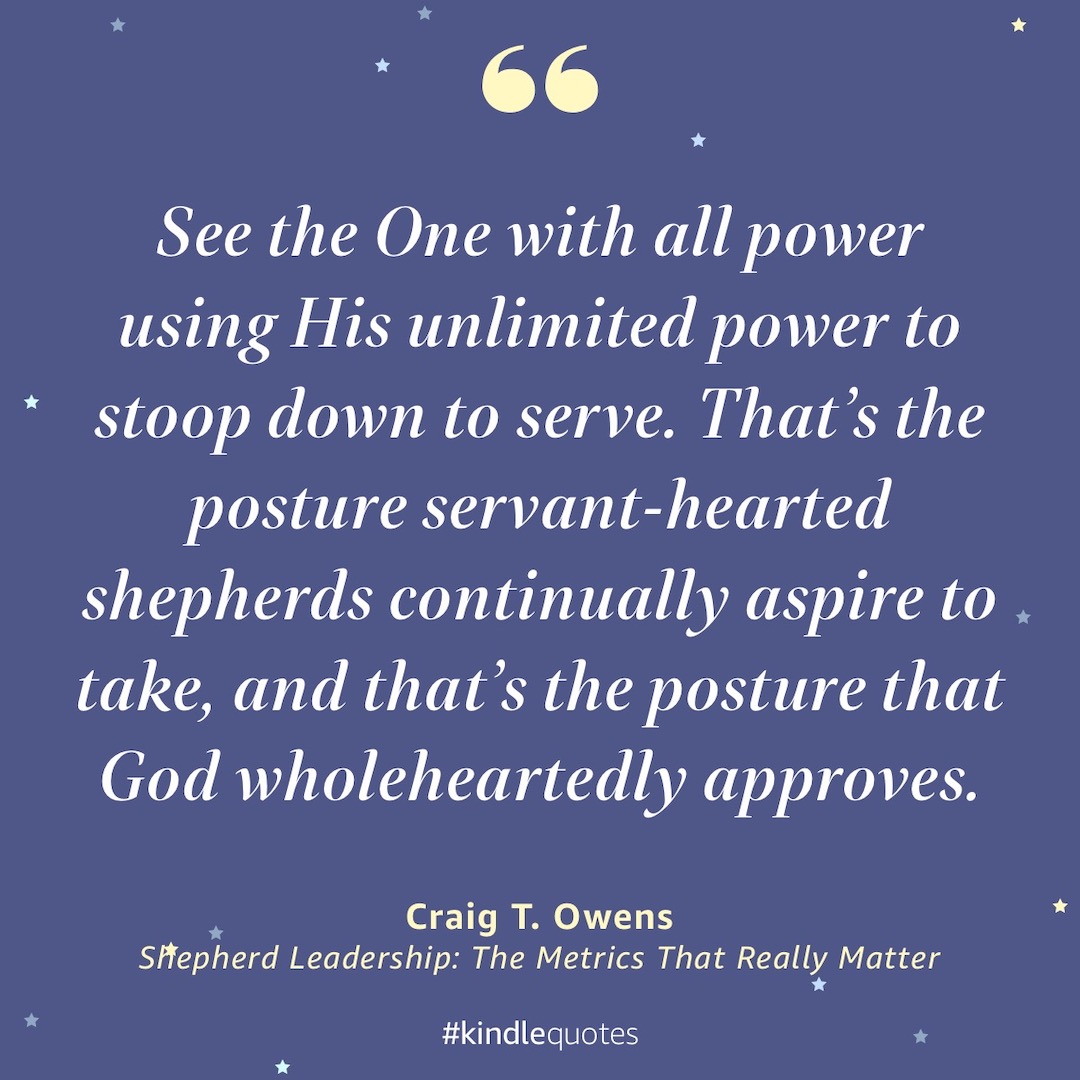
“If we truly want to be considered successful, we must turn our backs on what is typically termed ‘success’ so that we can keep our eyes on our Chief Shepherd. See the One with all power using His unlimited power to stoop down to serve. That’s the posture servant-hearted shepherds continually aspire to take, and that’s the posture that God wholeheartedly approves.” (From the chapter ‘The Wrong Ladder’ in my book Shepherd Leadership)
Listen to the podcast of this post by clicking on the player below, and you can also subscribe on Apple, Spotify, or Audible.
We live in a celebrity-obsessed culture. Sadly, this unbiblical pursuit has infected our churches too. Let’s talk about this on this episode of The Podcast.
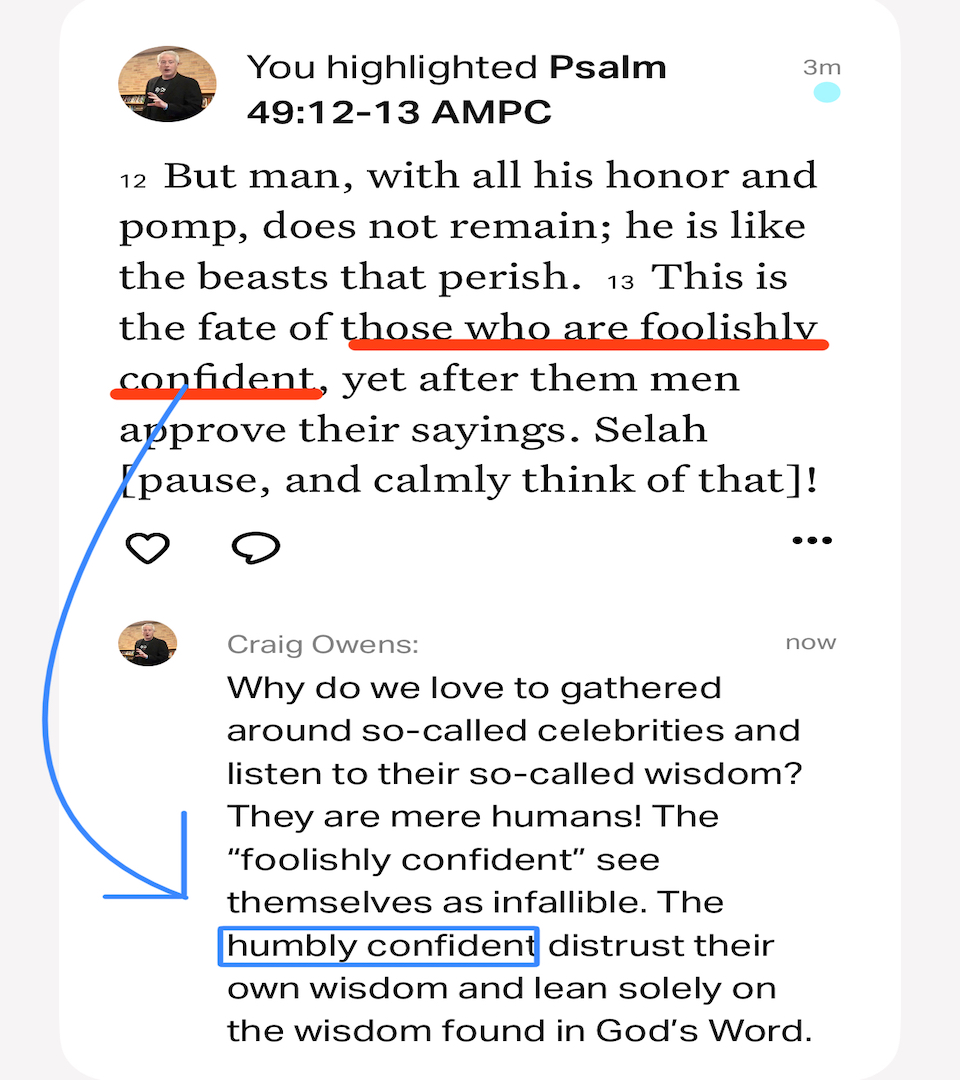
In my book Shepherd Leadership, I have two chapters that address a godly leader’s confident humility and humble confidence. You can also check out several blog posts on videos on this subject by clicking here.
Why do Christians lift their hands to God? This is a clip from one of the sermons in our series looking at the worship songs that Israelite pilgrims sang as they ascended to Jerusalem to celebrate the feasts.
“Civil governments are established by God [Romans 13:1] to restrain the criminal elements of human society—even though these officers are often filled and run by evil people. We must divorce our feelings about the people that hold these offices from the authority of the office itself.” —Dr. Henry Halley
“Outstanding leaders go out of their way to boost the self-esteem of their personnel. If people believe in themselves, it’s amazing what they can accomplish.” —Sam Walton
This article opens with this thought: “Scientists will probably never fully understand photosynthesis as additional research uncovers even more fascinating mysteries.” It then goes on to outline how plants use quantum mechanics nearly perfectly to manage the flow of energy during photosynthesis. Truly this is more evidence of an All-Wise Creator.
In sharing a mini-biography of Henry Martyn, this article outlines how God prepares missionaries for the field to which He has called them. “God used [Martyn’s] classical education at Cambridge alongside his spiritual maturity formed by intentional mentorship to get him ready for his unique task of engaging Muslims and translating the Bible.”
T.M. Moore has an outstanding series for pastoral leaders. In a recent post, Moore wrote, “Paul’s vision was too vast, too all-encompassing, too transformative, too urgent, and too other-worldly to stop with, say, a vision that focused on more members, better facilities, larger budgets, additional staff, or regular ‘growth.’ None of these, nor any of a thousand other ways church leaders might express their hopes for their churches, is a proper vision for church leaders.” I was grateful for T.M.’s endorsement of my book Shepherd Leadership where I talk about the biblical metrics for church leaders.
“One of the dangers of having a lot of money is that you may be quite satisfied with the kinds of happiness money can give, and so fail to realize your need for God. If everything seems to come simply by signing checks, you may forget that you are at every moment totally dependent on God.” —C.S. Lewis
“Friendship is a path that leads very close to the perfection which consists of the enjoyment and knowledge of God, such that a man who is a friend of man is made into a friend of God, according to what the Savior said in the gospel: ‘Now I will not call you servants, but My friends [John 15:15].’” —Aelred of Rievaulx
In studying the intense volcanic activity on Jupiter’s moon Io, the ICR concludes, “Since 2013, evidence of a youthful solar system has only gotten stronger. Scientists have been forced to acknowledge that Saturn’s rings are indeed young, and belief in deep time continues to pose real problems for conventional scientists.” The prestigious Nature concurs, saying, “Some such proposals make planetary researchers uncomfortable, because it is statistically unlikely that humans would catch any one object engaged in unusual activity—let alone several.”
Parents and teachers trying to keep up with the ever-changing lexicon of today’s youth will really appreciate this list of slang from Axis.
“Those who are really in earnest must be willing to be anything or nothing in the world’s estimation.” —Susan B. Anthony
The story of Esther in the Bible is one of my all-time favorites. “While Esther herself has not been identified, nor has the plot to destroy the Jewish people been confirmed, the absence of evidence is not evidence of absence.” To that point, here are 10 pieces of archeological evidence related to this amazing story.
Charisse Compton asks, “When was the last time meditating on your body elicited worship?” She goes on to make this case from Psalm 139: “Your body, as much as your soul, is one of God’s glorious works. It bears the unmistakable signature of the divine Artist so that, like creation, your body ‘declare[s] the glory of God’ (Psalm 19:1).”



 A couple of other blog posts that may help you on this topic of servant leadership are:





 Craig T. Owens