“The trouble isn’t so much that we don’t know enough, but it’s as if we aren’t good enough. The trouble isn’t so much that our scientific genius lags behind, but our moral genius lags behind. The great problem facing modern man is that, that the means by which we live have outdistanced the spiritual ends for which we live. So we find ourselves caught in a messed-up world. The problem is with man himself and man’s soul. …
“The great danger facing us today is not so much the atomic bomb that was created by physical science. Not so much that atomic bomb that you can put in an aeroplane and drop on the heads of hundreds and thousands of people—as dangerous as that is. But the real danger confronting civilization today is that atomic bomb which lies in the hearts and souls of men, capable of exploding into the vilest of hate and into the most damaging selfishness—that’s the atomic bomb that we’ve got to fear today. …
“My friends, all I’m trying to say is that if we are to go forward today, we’ve got to go back and rediscover some mighty precious values that we’ve left behind.” —Martin Luther King, Jr., February 28, 1954 (empahsis added)
For this is how Godloved the world: He gave… (John 3:16 NLT)

My beloved friends, let us continue to love each other sincelove comes from God. Everyone who loves is born of God and experiences a relationship with God. The person who refuses to love doesn’t know the first thing about God, because God is love—so you can’t know Him if you don’t love. This is how God showed His love for us: God sent His only Son into the world so we might live through Him. (1 John 4:7-9 MSG)
…the twenty-four elders fell down before the Lamb. Each one had a harp, and they held gold bowls filled with incense, which are the prayers of God’s people (Revelation 5:8).
Then another angel with a gold incense burner came and stood at the altar. And a great amount of incense was given to him to mix with the prayers of God’s people as an offering on the gold altar before the throne. The smoke of the incense, mixed with the prayers of God’s holy people, ascended up to God from the altar where the angel had poured them out (Revelation 8:3-4).
No prayer is ever lost.
Every prayer is a weapon.
Every prayer is an incense of worship before God’s throne.
I may not see the result of my prayers immediately, but they are all known in Heaven, and they are being stored up for a day when God will unleash His power.
I must never think my prayers are trivial, temporary, or impotent.
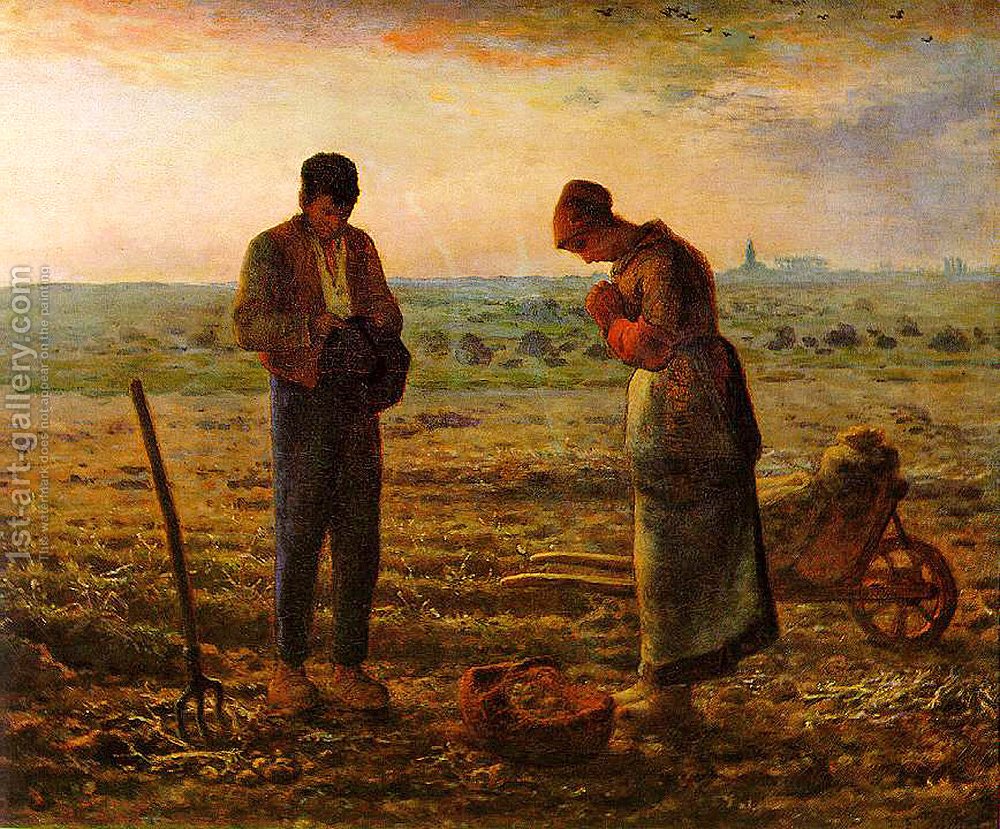
“Have you seen the painting The Angelus by Jean-Francois Millet? It portrays two peasants praying in their field. A church steeple sits on the horizon, and a light falls from heaven. The rays do not fall on the church, however. They don’t fall on the bow heads of the man and woman. The rays of the sun fall on the wheelbarrow and the pitchfork at the couple’s feet.
“God’s eyes fall on the work of our hands. Our Wednesdays matter to Him as much as our Sundays. He blurs the secular and sacred. One stay-at-home mom keeps this sign over her kitchen sink: Divine tasks performed here daily. An executive hung this plaque in her office: My desk is my altar. Both are correct. With God, our work matters as much as our worship. Indeed, work can be worship.” —Max Lucado, in You!
(To read some other quotes from You!click here, please .)
“‘Knitted together’ is how the psalmist described the process of God making man [Psalm 139:13]. Not manufactured or mass-produced, but knitted. Each thread of personality tenderly intertwined. Each string of temperament deliberately selected.
God as Creator. Pensive. Excited. Inventive.
An Artist, brush on pallet, seeking the perfect shade.
A Composer, fingers on keyboard, listening for the exact cord.
A Poet, pen poised on paper, awaiting the precise word.
The Creator, the Master Weaver, threading together the soul.
Each one different. No two alike. None identical.” —Max Lucado, in You!
(Check out my review of You! by clicking here. You can also read some other inspiring quotes from this book here.)
I will instruct you and teach you in the way you should go; I will guide you with My eye. (Psalm 32:8)
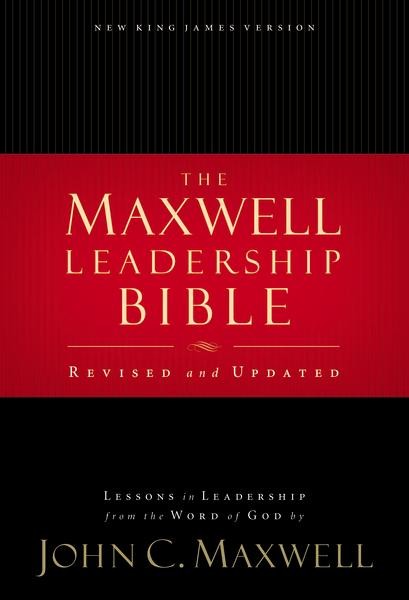
“God does not expect leaders to be perfect, but to be whole. To have integrity means to be whole, as in a whole number (an ‘integer’). Despite their human frailties, leaders can effectively guide those who follow.
“This Scripture reminds us that leaders must closely observe the flock for its needs and problems. God expects spiritual leaders to serve as guides. A guide takes a person or group safely to a planned destination. The Hebrew words for ‘guide’ gives us several clues as to what God expects from those He uses as leaders:
A guide is a spiritual head who unites and directs people in their walk with God.
A guide takes people on the straight path that leads to fellowship with God.
A guide gives accurate and godly counsel to those who need it.
A guide leads with gentleness and trustworthiness, making others feel safe.
A guide bases his or her direction on the Spirit and the Word of God.” —John Maxwell, in The Maxwell Leadership Bible
When we’re down to the last minutes before a crucial deadline, we often refer to it as “the eleventh hour.”
Have you been there? You’re sweating it out, wondering if God is going to come through for you. Or perhaps thinking about what you might need to handle yourself in order to meet the deadline. And then God comes through for us, and we let out a deep sigh of relief and gratitude.
But why a sigh? Were we worried that God wouldn’t come through? Did we think God’s supply was limited? And what made us think that it was “the eleventh hour” anyhow?
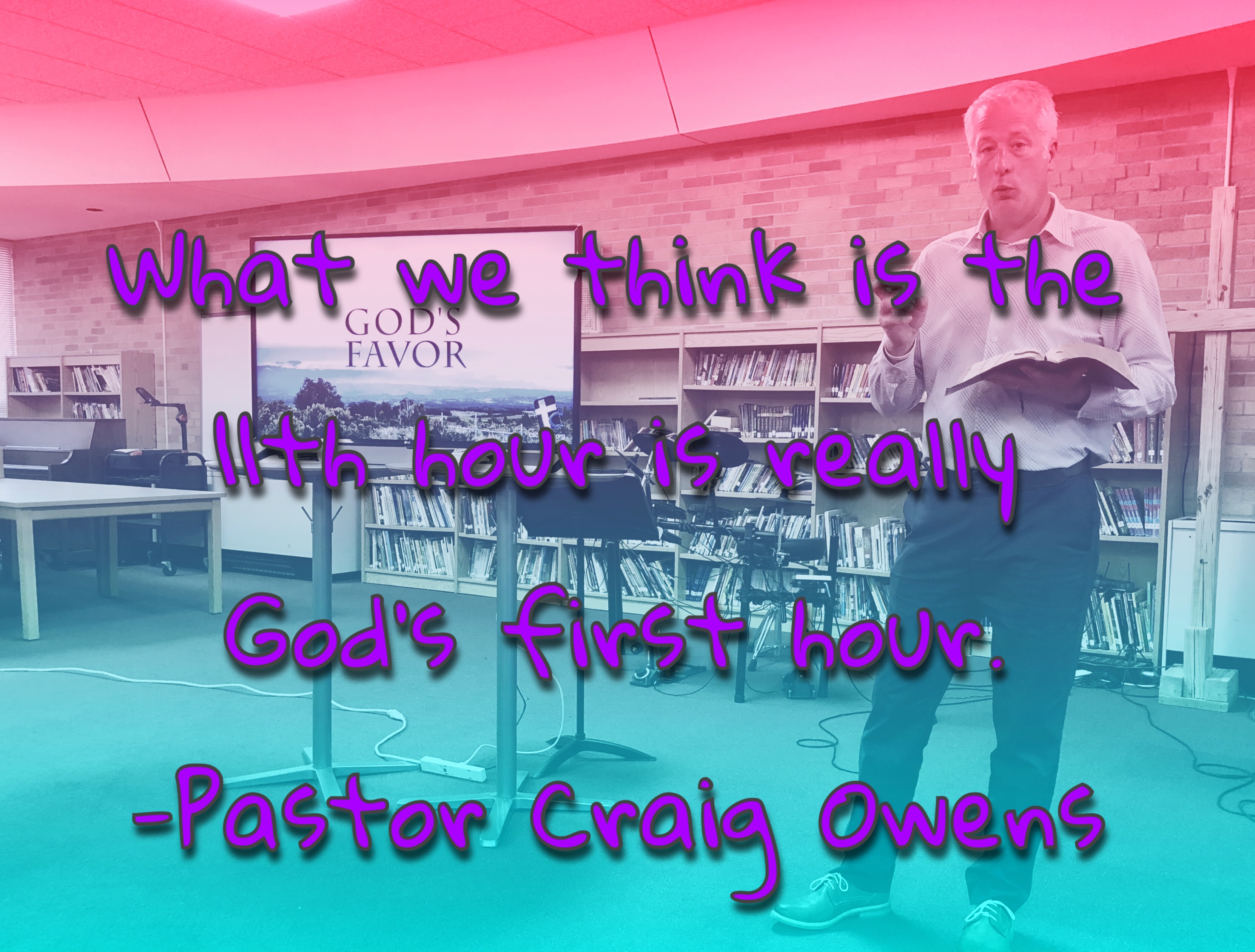
What we often think is the eleventh hour is really God’s first hour! God is never late. He’s never scrambling to come up with what we need. We might be the ones “scrambling,” but God never is. He always has the perfect resources at the perfect moment.
We should know this because the Bible tells us: God who did not spare His own Son, but gave Him up for us all—how will He not also, along with Him, graciously give us allthings? (Romans 8:32)
Jesus tells a story about an eleventh-hour situation in Matthew’s Gospel. Men were waiting around to work for the day when a landowner came along to hire them. He hired some guys first thing in the morning and agreed to pay them a full day’s pay. He hired some other workers at 9:00 AM and promised to pay them fairly, and then he hired even more workers at noon and at 3:00 PM, also promising to pay them what was fair. Finally, he hired some workers at 5:00 PM—literally at the eleventh hour—without any mention of pay.
At the end of the day, every single worker was paid a full day’s wage. Every single one of them.Jerry Bridges notes why this is significant:
“Each worker, regardless of how long he had worked, received a day’s wages. He received not what he had earned on an hourly basis, but what he needed to sustain his family for a day. … Those eleventh-hour workers were hired because they needed to receive a day’s wages. They had been standing all day waiting for someone to hire them so they could earn money to support their families. They needed to work more than the landowner needed their work. He hired them, not because of his need, but because of their need.” (emphasis added)
You see, God knows what you NEED and He generously supplies that NEED right on time.
Jesus taught us to pray, “Give us this day our daily bread.” The problem comes when we start looking down the road wondering what’s going to happen tomorrow, and the next day, and the next day (see Matthew 6:11, 31-34).
God’s favor toward us is out of all proportion to our work or sacrifice. He gives exactly what we need, exactly when we need it.
If you’re feeling anxious—like the clock is ticking down to the eleventh hour—perhaps you should recall how God has provided for you in the past. Then discipline your thoughts from running ahead to tomorrow as you pray, “Give me this day what I need.”
Here’s a prayer I’m praying—
“God, I remember the wonderful deeds You have done for me. They are constantly in my thoughts. I cannot stop thinking about Your mighty works in the past. Therefore, I ask you today for my daily bread. Let my heart be on guard against scrambling as though I were in an eleventh-hour situation. You are my all-loving, all-gracious Father. You know what I have need of even before I ask. May my attitude be one of assured contentment in your abundant, right-on-time supply. May you be glorified as others see this confidence in my attitude.”
Listen to the podcast of this post by clicking on the player below, and you can also subscribe on Apple, Spotify, or Audible.
If you’ve been reading or watching my series on God’s favor the last few weeks, I hope you truly know this: God is for you!
But the key question for Christians comes down to this—Do others know that you know that God is for you?
You see, God is for you because God is joyful and happy, and He wants you to not only know this but to radiate this joy and happiness to those around you.
Here’s how it works:
(1) Joy is an inside job. The dictionary defines joy as “a feeling of great delight caused by something exceptionally good or satisfying.” When we know by our personal experience with Him how good God is, joy is birthed in our hearts as we see Him as All-Good and All-Satisfying.
(2) Joy is regardless of my external circumstances. Some people try to pursue happiness apart from joy. Trying to get happy without having the foundation of joy is like having a flower that has been picked from the plant. Happiness may be pretty for a short while, but it is already fading because it is completely dependent on the environment around it. True happiness isn’t dependent on external circumstances because it is rooted in something far greater.
(3) Knowing God’s favor fuels our joy. There is a Hebrew word for know which means “knowledge through intimate, personal experience.” Psalm 100 describes happy people and their joyful praise. Their joy comes from this: They knowthat their Lord is God and that He is good. This joy comes from seeing and savoring God’s favor.
(4) Our internal joy should bubble up into external happiness. All throughout the Bible, we read how those who are filled with joy as they get to know this exceptionally good, all-satisfying God cannot help but burst out in songs of happy praise (see Psalm 28:7 and Luke 10:21).
(5) Our external happiness becomes our testimony. In Psalm 126 we read that God’s people who were full of God’s joy burst out into happy praise. When they did the people around them recognized that God had done great things for them.
Check this out—
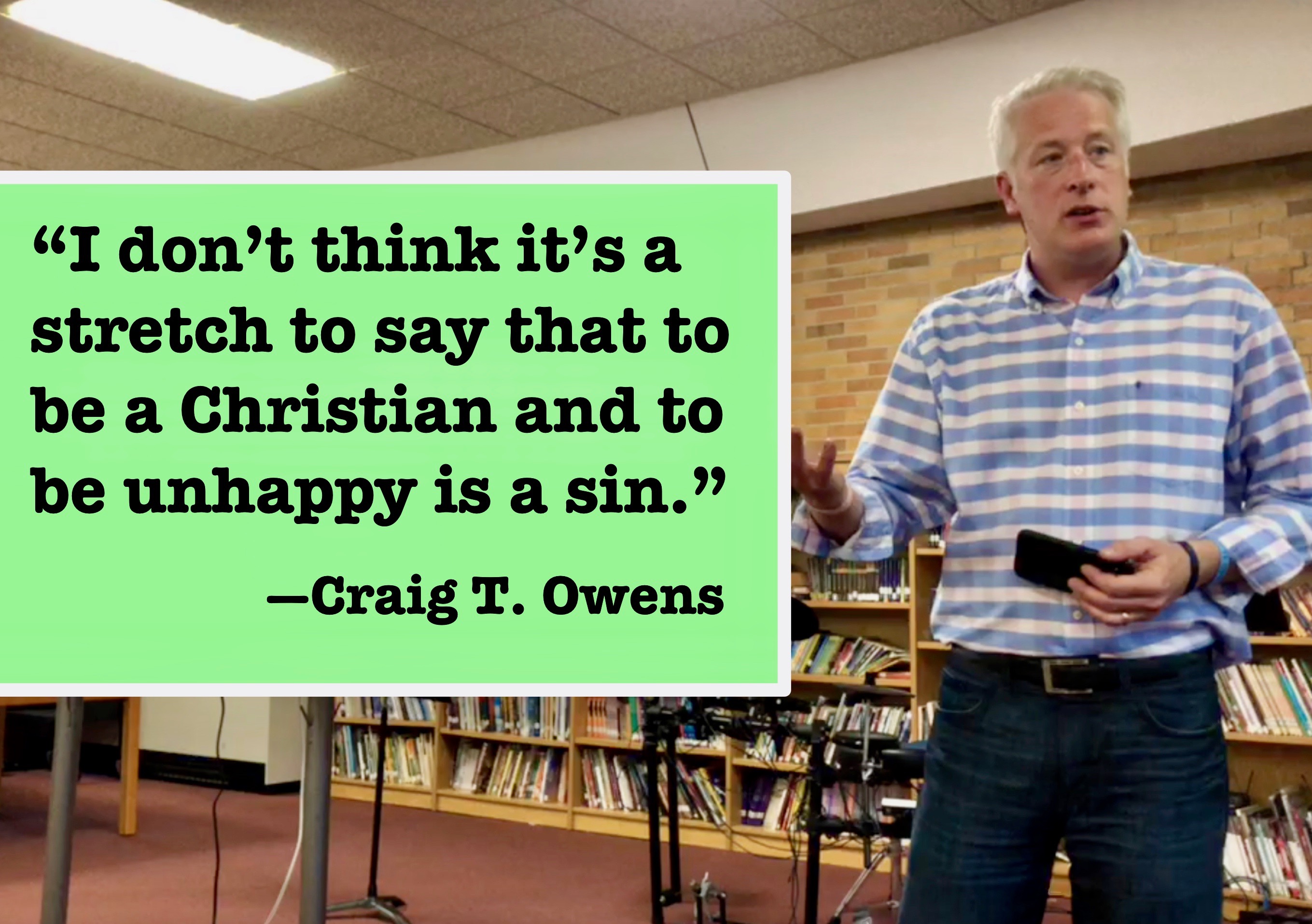
“I don’t think it’s a stretch to say that to be a Christian and to be unhappy is a sin. An unhappy Christian gives God no praise, robs Him of glory, and paints God in a bad light. A happy Christian knows the Lord is his strength, his comfort, his supply. The happy Christian lifts God high and invites others to know this All-Good, All-Happy God too!” —Craig T. Owens
So let me ask you again: If you call yourself a Christian, do people know that you know that God is for you? Are you making God look All-Good and All-Satisfying by your deeply fueled joy and your face-brightening happiness?
What a testimony it is when God’s people are happy in Him!
“I’m not an atheist, and I don’t think I can call myself a pantheist. We are in the position of a little child entering a huge library filled with books in many languages. The child knows someone must have written those books. It does not know how. It does not understand the languages in which they are written. The child dimly suspects a mysterious order in the arrangement of the books but doesn’t know what it is. That, it seems to me, is the attitude of even the most intelligent human being toward God. We see the universe marvelously arranged and obeying certain laws but only dimly understand these laws. Our limited minds grasp the mysterious force that moves the constellations.” —Albert Einstein