When biblical authors use repetition or parallelism, it’s important to take note. They are wanting to make sure their message is heard loud and clear. They want what they’re sharing to stand out from everything around it. This is sort of how we would use bold or italics, a different colored font, or even a LARGER FONT to make something stand out.
In this Psalm…
…the Lord is clothed in majesty and strength
…He is established, immovable, everlasting, from time immemorial, firm, unshakeable
…“God ismightier than the thunder of the great waters, mightier than the breakers of the sea—the Lord on high is mighty”
…His Word is very sure, lasting forever, holy, unchangeable, endless
The bottom line—
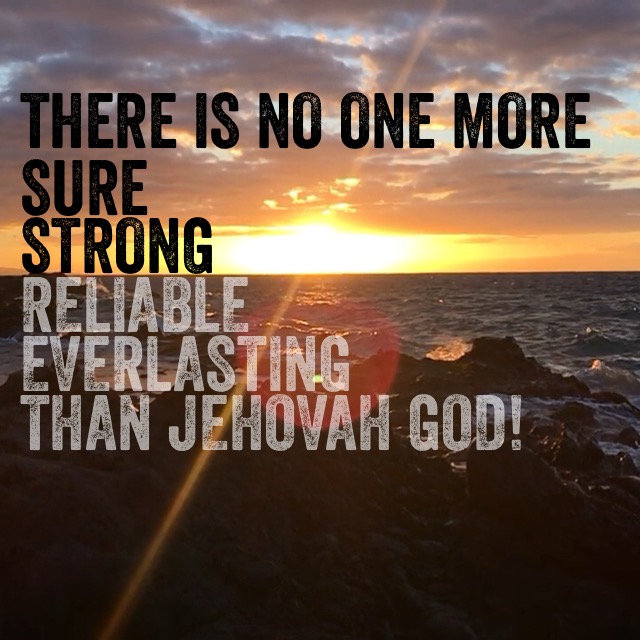
There is no one more sure, strong, reliable, and everlasting than Jehovah God!
“This week we pray that God will demolish Antichrist strongholds We are surrounded by systems and strongholds that oppose Christ the Lord and King. There are social, political, economic, and legal structures and schemes that try to disparage God. We are not for or against a particular political system. We are Bible-believers, Christ-worshippers; and we come from all walks of life and backgrounds. We seek the glory of God and His alone. We align ourselves with His Word. We should not harbor enmity or hatred toward anyone. Even if they oppose us, deride our faith, doubt our God, and insult our Savior and King, they are not our enemies. The real enemy is satan who manipulates them. Our war is against satan and his strongholds. Such people are poor humans who need love and compassion from us, and mercy and forgiveness from God. We do not depend on human methods or material weapons, because this is spiritual warfare against satanic powers. Rather, our method is prayer, and that is all.
“O Lord our God, may You be praised for ever and ever! Why do the nations rage? Why do the peoples plot in vain? The kings of the earth set themselves, and the rulers take counsel together, against You and against Your Anointed One (Psalm 2:1-2). Help us arm ourselves with the weapons You gave us in Your Word: the belt of truth, the breastplate of righteousness, the readiness of the gospel of peace, the shield of faith, the helmet of salvation, and the sword of the Spirit (Ephesians 6:14-17). He who sits in the heavens laughs; the Lord derides them. At the name of Jesus every knee will bow, in heaven and on earth and under the earth, and every tongue confess that Jesus Christ is Lord, to the glory of God the Father (Psalm 2:4; Philippians 2:10-11).” —Sobhi Malek, in Praying For Muslims
If you haven’t already, check out my review of Praying For Muslimshere. I shared some other prayers from this book here, and I also shared some quotes here.
David and his men are on the run from King Saul, but they hear that the small town of Keilah is being harassed by the Philistines. The bad guys are stealing the harvest from the people of Keilah, making it a very real possibility that they would starve during the upcoming winter. In his usual habit, David prays and asks God if he should help the people of Keilah, and God gives him the go-ahead to attack.
David and his men defeat the Philistines, not only returning the crops that had been stolen but also delivering some livestock that they took from the defeated Philistines. You might expect that David and his men were given a ticker-tape parade. Instead, as soon as David was within the city’s walls, he finds out that the people of Keilah are planning to sell him out to King Saul. Talk about ingratitude!
David and his men flee to the Desert of Ziph, where they won’t be a bother to anyone. Except the Ziphites get word to King Saul that they will gladly turn him over to the King whenever he asks for it.
What is David’s response? As usual, it’s prayer. His prayer is short and straight to the point—
Help, Lord, for the godly are no more; the faithful have vanished from among men.
In other words, David asks God, “Where have all the decent people gone?” It’s no different in our day, as Paul told his friend Timothy that people will only become more hypocritical liars, with their conscience not bothering them a bit!
What I love about David’s prayer is that he quotes God back to God. Check out the quotation mark: “Because of the oppression of the weak and the groaning of the needy, I will now arise. I will protect them from those who malign them.” And then David is quick to add that God’s words never fail!
I am convinced that our spiritual battles are largely lost or won in our minds. We need to recall God’s Word—Yet this I call to mind and therefore I have hope: Because of the Lord’s great love we are not consumed, for His compassions never fail (Lamentation 3:21-22).
So we cry, “Help!” to God because He is the only One who can help us: The Lord is my Helper; I will not be afraid. What can man do to me? (Hebrews 13:6).
But David has an important question to ask: “How long do we continue to call for help?” Have you ever asked God that?
Jesus said that the key to our successful praying is for us to remain in Him and for His Words to remain in us, like a branch remains connected to the vine (John 15:7). So let me ask you a question: How long should the branch remain connected to the vine before it’s ready to go off on its own?
The answer is simple—if the branch wants to remain alive and fruitful, it must stay in relationship with the vine forever!
So once again, look at how Jesus answers the “How long?” question—Keep on asking and it will be given you; keep on seeking and you will find; keep on knocking reverently and the door will be opened to you. (Matthew 7:7)
“Help!” is a great prayer that God loves to answer. “How long” do we pray that prayer? Until it’s answered … keep on, keep on, KEEP ON!
When I consider Your heavens, the work of Your fingers… (Psalm 8:3).
David starts and ends this psalm with the same phrase: O Lord, our Lord, how excellent is Your name in all the earth! In the middle, David marvels at the diversity and beauty of God’s creation. David observes…
the blue skies
the wide-eyed wonder of children
the moon and stars
the marvel of man
the flocks and herds of the field
the birds in the air
the fish in the seas
David takes nothing for granted. He observes, he sees God, and then he worships God as Creator. David’s constant cycle is—observation and contemplation which leads to adoration.
A mark of a godly leader is one who is continually learning about his Creator.
Don’t ever stop observing; don’t ever stop learning. Become a lifelong learner, and let your contemplation lead you to adoration of our excellent Lord and Creator!
This is Part 18 in my series on godly leadership. You can check out all of my posts on this topic by clicking here.
A psalm. A song for the Sabbath day (preface to Psalm 92).
The Sabbath is—
a day of reflection
a day of rejoicing
a day of reconnecting
a day of meditating on past blessings
a day of strengthening for the upcoming week
a day of acknowledging the Creator
a day of appreciating creation
a day of assessing the investment of my God-given talents
a holy day—different from all other days
So … “It is good to give thanks to the Lord, and to sing praises to Your name, O Most High; to declare Your lovingkindness in the morning, and Your faithfulness every night” (vv. 1, 2).
Sabbath is not just a noun, but a verb—sabbathing—something that can be done every day, but something which also takes on special significance for the one day each week that we set aside as our holy day or worship and reflection.
The Creator’s works and wisdom should be pondered and praised as we sabbath (vv. 4-6), something “a fool” doesn’t take time to do.
As we sabbath, we should confess to God—and then turn over to Him—those things which have overly preoccupied our minds (vv. 7-9).
We should recommit that the place of growth and blessing is in God’s presence (v. 13) as we endeavor to keep our hearts there. And then we can be energized and joy-filled as we contemplate His blessing which never diminishes nor grows old (vv. 14, 15).
Truly sabbathing is a good thing!
Do you have a Sabbath day? Do you find time to regularly sabbath in God’s presence?
A lot of Christians struggle with what is considered “worldly,” trying hard to avoid such things. In our last Q Series, this was a question that was asked by a couple of people: what exactly makes something “worldly”? Check out this short video clip…
In the video I reference the following Scriptures:
Lord, You have been favorable … You have forgiven … You have covered all their sin. Selah (Psalm 85:1-2).
God’s favor, forgiveness, and covering of sin. Justice would say that God doesn’t have to do any of these things. The people sinned—they violated the holy law—and thus deserve death. But pause and consider this [that’s what Selah means]: God instead shows His favor, deliverance, and forgiveness. All His anger has been turned away!
How do we respond to this? The psalmist asks for restoration and revival. Revival comes when we turn back to God and turn away from our sin, and here we see God initiating revival … making revival possible.
Listen to God’s voice: He speaks peace, which allows us to experience revival. Jesus didn’t say, “Go and sin no more; I do not condemn you.” No! He said, “Neither do I condemn you, now go and sin no more” (John 8:11).
The removal of the wrath of condemnation makes the revival of the soul possible!
Once we hear God’s voice of peace, we can then know His…
… mercy
… truth
… righteousness
… goodness
… pathway
… freedom
God, You are so good! So loving, kind, merciful! Showing Your favor to all who will listen to Your words of peace!
Give ear to my words, O Lord, consider my meditation. Give heed to the voice of my cry, my King and my God, for to You I will pray (Psalm 5:1-2).
When David prays, he prays with confidence—he is confident that God will hear him.
Where does his confidence come from? From these two truths about the nature of God:
You are a God who takes no pleasure in wickedness (v. 4), so David must confess his sin quickly.
In fear of You I worship (v. 7), so David doesn’t have to cower before God wondering if God will forgive his sin.
David didn’t take the condition of his soul for granted (v. 5), but he came quickly into God’s presence because he knew of God’s mercy to forgive.
Not only was David confident that God would hear his prayer, but he also eagerly anticipated receiving…
…God’s answer to his prayer
…God’s joy
…God’s blessing
…God’s protection
A mark of a godly leader is one who prays confidently and then eagerly expects God to answer.
If you want confidence in your earthly leadership, do what David modeled: Enter God’s presence quickly and confidently, and then eagerly anticipate what God is going to do!
This is Part 16 in my series on godly leadership. You can check out all of my posts on this topic by clicking here.
I will utter dark sayings of old, which we have heard and known, and our fathers have told us. We will not hide them from their children, telling to the generation to come the praises of the Lord… (Psalm 78:3-4).
If George Santayana* was right about the dangers of unlearned history lessons for the general population, he identified something even more vital for those who follow God.
Asaph recounts a history of God’s people where God blessed them, the people became complacent in His blessing, until they turned from God and became subject to His wrath. The cycle, sadly, repeats again and again.
Asaph wants today’s generation to learn this lesson and to break this cycle.
He calls on this generation to continually remind the next generation of God’s blessings for obedience, and God’s judgment for disobedience—
Make them known to their children (v. 5).
The children who would be born, that they may arise and declare them to their children (v. 6)
For today’s parents this means…
No complacency.
No assumptions.
No letting kids “figure it out on their own.”
Constant diligence.
Constant communication.
May this generation speak words of life to the generation to come!
* George Santayana said, “Those who do not learn from history are doomed to repeat it.” And he also noted, “A child educated only in school is an uneducated child.”



 When biblical authors use repetition or parallelism, it’s important to take note. They are wanting to make sure their message is heard loud and clear. They want what they’re sharing to stand out from everything around it. This is sort of how we would use bold or italics, a different colored font, or even a LARGER FONT to make something stand out.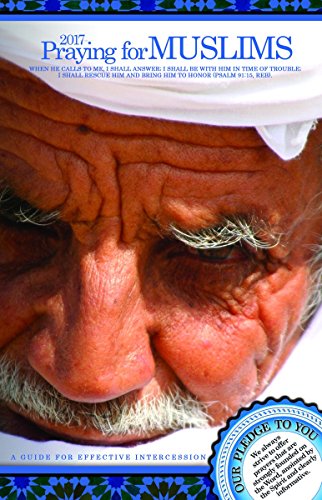








 Craig T. Owens