Do People Know That You Know That God Is Good?

Listen to the podcast of this post by clicking on the player below, and you can also subscribe on AppleSpotify, or Audible.

If you’ve been reading or watching my series on God’s favor the last few weeks, I hope you truly know this: God is for you! 

But the key question for Christians comes down to this—Do others know that you know that God is for you? 

You see, God is for you because God is joyful and happy, and He wants you to not only know this but to radiate this joy and happiness to those around you. 

Here’s how it works:

(1) Joy is an inside job. The dictionary defines joy as “a feeling of great delight caused by something exceptionally good or satisfying.” When we know by our personal experience with Him how good God is, joy is birthed in our hearts as we see Him as All-Good and All-Satisfying. 

(2) Joy is regardless of my external circumstances. Some people try to pursue happiness apart from joy. Trying to get happy without having the foundation of joy is like having a flower that has been picked from the plant. Happiness may be pretty for a short while, but it is already fading because it is completely dependent on the environment around it. True happiness isn’t dependent on external circumstances because it is rooted in something far greater. 

(3) Knowing God’s favor fuels our joy. There is a Hebrew word for know which means “knowledge through intimate, personal experience.” Psalm 100 describes happy people and their joyful praise. Their joy comes from this: They know that their Lord is God and that He is good. This joy comes from seeing and savoring God’s favor.  

(4) Our internal joy should bubble up into external happiness. All throughout the Bible, we read how those who are filled with joy as they get to know this exceptionally good, all-satisfying God cannot help but burst out in songs of happy praise (see Psalm 28:7 and Luke 10:21).

(5) Our external happiness becomes our testimony. In Psalm 126 we read that God’s people who were full of God’s joy burst out into happy praise. When they did the people around them recognized that God had done great things for them. 

Check this out—

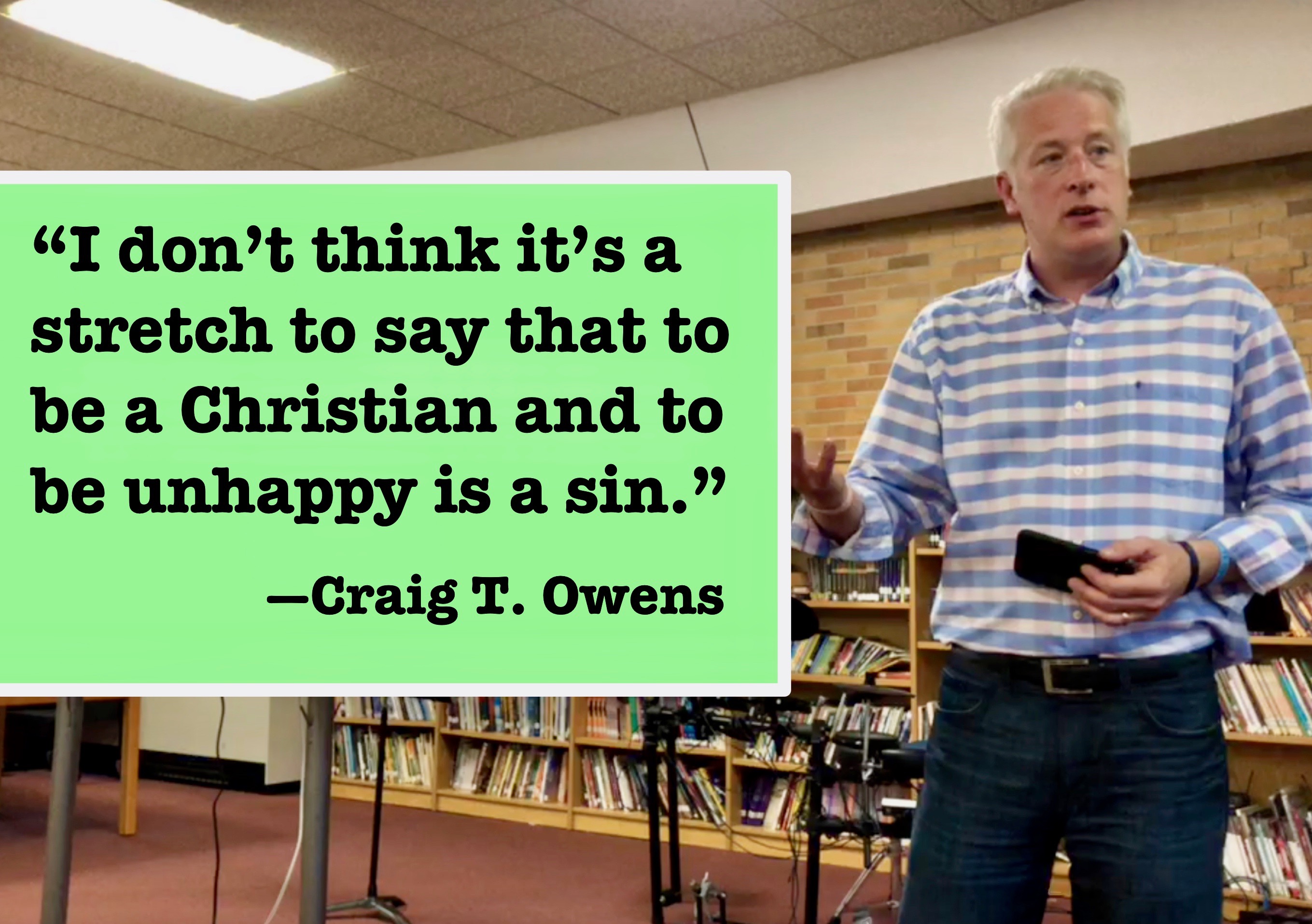
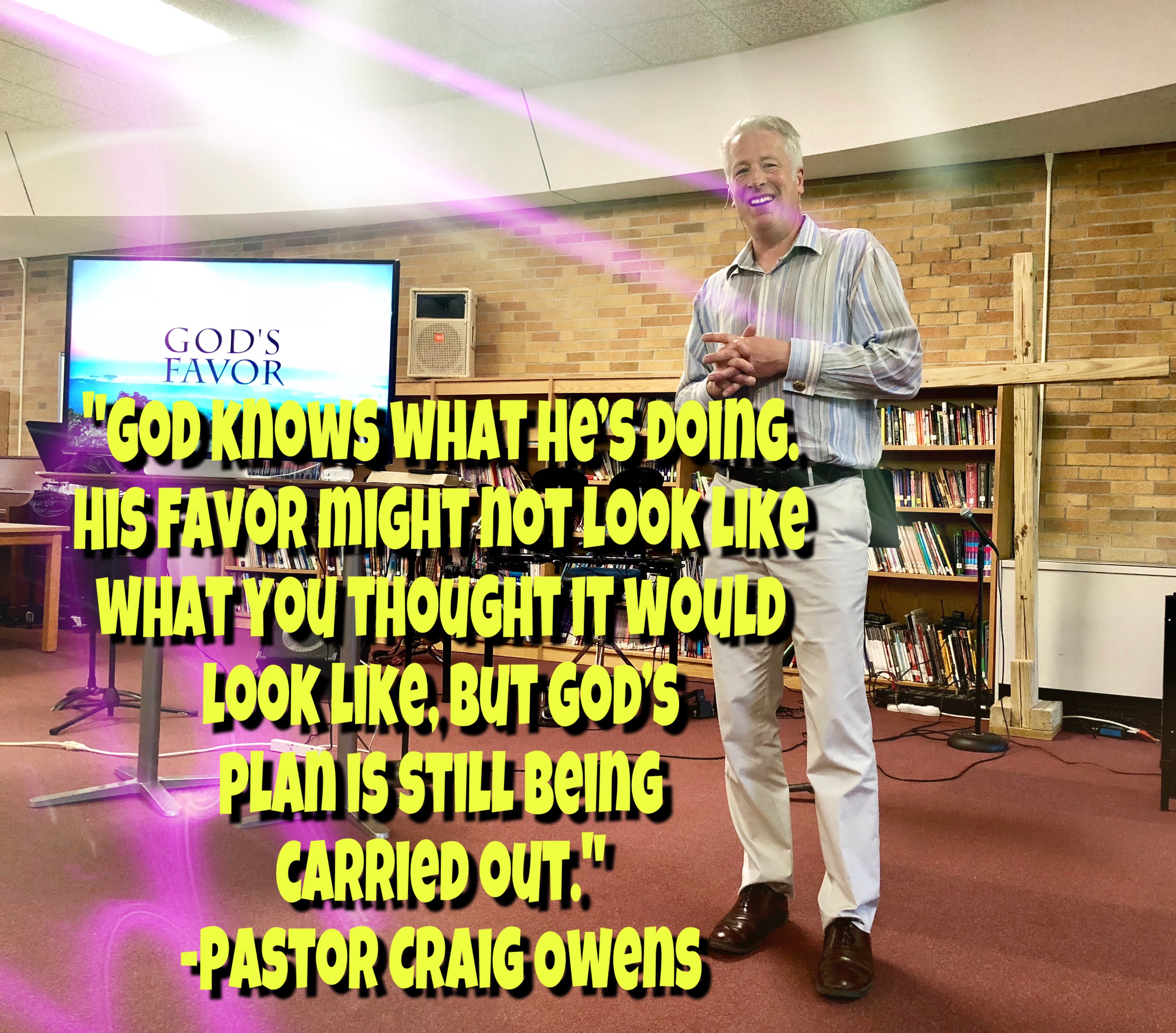
“I don’t think it’s a stretch to say that to be a Christian and to be unhappy is a sin. An unhappy Christian gives God no praise, robs Him of glory, and paints God in a bad light. A happy Christian knows the Lord is his strength, his comfort, his supply. The happy Christian lifts God high and invites others to know this All-Good, All-Happy God too!” —Craig T. Owens 

So let me ask you again: If you call yourself a Christian, do people know that you know that God is for you? Are you making God look All-Good and All-Satisfying by your deeply fueled joy and your face-brightening happiness? 

What a testimony it is when God’s people are happy in Him! 

►► Would you please prayerfully consider supporting this ministry? ◀︎◀︎

If you have missed any of my other posts about God’s favor, you may check them out by clicking here.
5 Lessons From 2 Mothers

If you’ve been reading my series of posts on God’s favor, I hope you are becoming more aware of how strongly I want you to know this: God is for you! He’s not looking for opportunities to blast you, but to bless you. (If you want to read some of these previous posts, check out the link at the bottom of this post.) 

In writing his account of the birth of Jesus, Luke is captured with the idea of God’s favor. Luke uses the word favor more than any of the other gospel writers, and he uses the word quite frequently as he relates the events leading up to the birth of Jesus. During his narrative we meet two women—Elizabeth and Mary. Here are five lessons we can learn from these two mothers. 

(1) “Favor” is not the same thing as “favorite.” To say, “I am the one on whom God’s favor rests” is not the same as saying, “I am God’s favorite.” Elizabeth recognized God’s favor on both herself and on Mary (Luke 1:25 & 43), and Mary also recognized God’s favor on herself (Luke 1:28, 30, 48-49). But nowhere did these women think they were God’s favorites. God has no favorites, but instead He showers His abundant, never-ending favor on everyone! 

(2) “Favor” probably didn’t look like what they would have planned for themselves. Elizabeth didn’t get pregnant until the age when she should have been a grandmother, and Mary got pregnant before she was even married. I’m sure neither of them thought their lives would go this way! But God knew what He was doing all along (see Isaiah 45:7-9; Psalm 139:16). 

(3) They needed humility, obedience, and perseverance to remain in the place where they could recognize God’s favor. No one can stop God’s favor, but the devil would love to keep you from recognizing God’s favor. One way satan does this is by trying to get us to appeal to our pride (“I think I can do this better”) because then obedience to God and perseverance through the trying times is very difficult to maintain. 

(4) God’s favor is for God’s glory (not necessarily for our comfort). God is accomplishing HIS plan through us. His favor toward us places us where He needs us, when He needs us there, and with the talents we need to respond correctly when we get to that moment. Mary spoke the words that I’m sure were also in Elizabeth’s heart: “I am the Lord’s servant. May it be to me just as you have said.” 

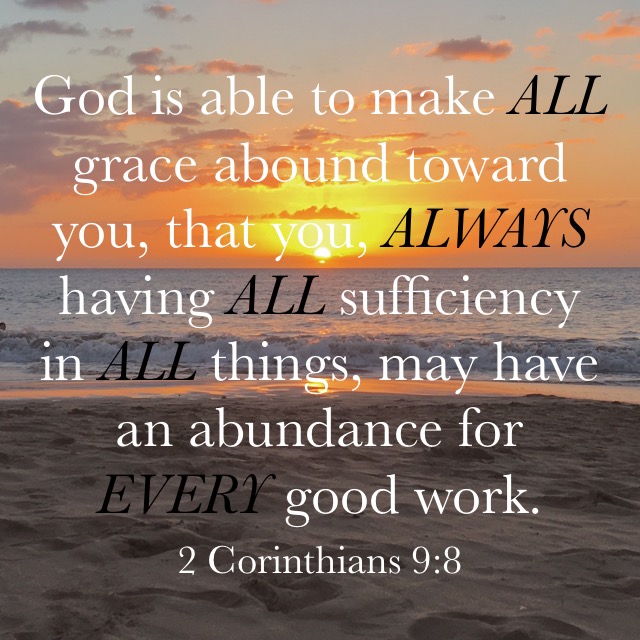
(5) God’s favor doesn’t necessarily answer all our questions. Even though God’s favor places us in the right place, at the right time, with the right skills, we will still undoubtedly have questions about why God is doing what He’s doing. If you feel that way, you’re not alone—Hebrews 11 is full of people who felt the same way. But hang in there and keep trusting God: He knows what He’s doing! In the meantime remember this: God is able to make ALL grace abound toward you, that you, ALWAYS having ALL sufficiency in ALL things, may have an abundance for EVERY good work (2 Corinthians 9:8). 

Check out this video of the full message I shared on these lessons from the life of Elizabeth and Mary. 

Join me this Sunday as we continue looking at God’s favor. You can join me either in person or on Facebook Live. 

If you’ve missed any of my previous posts on God’s favor, check out: 

A Leader’s Priority

But now your kingdom must end…because you have not kept the Lord’s command (1 Samuel 13:14). 

How tragic! 

Saul, as the first king ever of Israel, could have set the standard. He could have raised the bar high. He could have been the measuring stick by which every other king in Israel’s history was judged. But he missed out on all that.

It was not only tragic but short-sighted too. The prophet Samuel told Saul, “How foolish! You have not kept the command the Lord your God gave you. Had you kept it, the Lord would have established your kingdom over Israel forever. 

Saul’s priority was about appearances. Saul’s priority was about betting on a sure winner. Saul’s priority was about working his agenda.

A mark of a godly leader is one who has made obedience to God’s Word his first priority. 

The psalmist tells us some of the benefits—

  • God’s Word keeps us pure
  • God’s Word keeps us from sin
  • God’s Word is the key to God’s blessings
  • God’s Word strengthens us
  • God’s Word preserves us
  • God’s Word does us good
  • God’s Word keeps us from going astray
  • God’s Word lights our path

Make God’s Word your first—and highest—priority! 

This is part 22 in my series on godly leadership. You can check out all of my posts on this topic by clicking here.

A.L.I.V.E.—The “V” Is For Verified Prophecy

This is part 4 in my 5-part series, “I can know Jesus is A.L.I.V.E. because of ….” I have already addressed A—Apologetics, L—Lives changed, and I—It is finished. Today I want to consider the prophecies that the life, death, and resurrection of Jesus supposedly fulfilled. 

We have all heard about “copycat” crimes. Could the life and death of Jesus fit that? Since Jesus was born from the family line of King David, and His family really wanted the promised Messiah to finally appear, perhaps He was pushed that way. Perhaps He lived in a certain way to make it look like He was fulfilling prophecy. 

Detective J. Warner Wallace wrote, “Homicide detectives are perhaps the least trusting people in the world. My own experience investigating murders has taught me to consider everyone a liar—until, at least, I have good reason to believe otherwise.” 

So was Jesus a liar? Was He following some copycat script to make it merely look like He was the Messiah? Or do we have good reasons to believe He was telling the truth? Consider three points—

  • How could David describe a crucifixion scene in 1000 BC, since the Persians didn’t invent it until around 400 BC (see Psalm 22:12-18)?
  • How could Jesus control others’ actions (i.e. Judas’ betrayal; being killed by crucifixion, not by stoning; soldiers gambling for His clothes)? 
  • Even His own followers—whom He would need to perpetrate the hoax—didn’t understand what He was doing (John 12:16). 

Prosecutors have to present enough evidence to convince a jury that they have arrested and brought to trial the right man. One of the key terms is beyond a reasonable doubt—“a part of jury instructions in all criminal trials, in which the jurors are told that they can only find the defendant guilty if they are convinced ‘beyond a reasonable doubt’ of his or her guilt.” 

Let’s consider a hypothetical case that a prosecutor might present: 

  • multiple eyewitnesses saw a man fleeing the scene, and all of them identified the suspect in a police line-up
  • the shoe prints at the crime scene were the same size and design that of the suspect was wearing when he was arrested
  • prosecutors presented text messages in which the suspect threatened to do to the victim exactly what was done to the victim
  • the wounds made by the weapon which was used on the victim correspond with the weapon the police found in the suspect’s car
  • the blood on that weapon matched the blood of the victim
  • the fingerprints on that weapon are the suspect’s fingerprints

That is the evidence. From that evidence, the jury is asked to draw inferences about the reasonableness of that suspect being the one who committed the crime. 

I have listed just six pieces of evidence. How strong do you think the prosecutor’s case is? What if the jurors were presented with 50 pieces of evidence? What about 100? 200? How about 300 pieces of evidence? 

Jesus fulfilled at least 300 prophecies—which were made before He was born!—in His life, death, and resurrection!

Math professor Peter Stoner calculated that the odds for just one man in history to fulfill only 8 prophecies is 1-in-1×10¹⁷. How amazing is that!? To give us a little perspective, Stoner says that 1×10¹⁷ silver dollars would cover the entire state of Texas in silver dollars two-feet thick. If just one of those silver dollars was marked, and a blindfolded man could select that one marked coin on his very first attempt, that would be about the same odds of Jesus fulfilling only 8 prophecies. 

As a juror, if you weighed this evidence, do you find enough proof to “convict” Jesus? 

But ultimately Jesus didn’t come just to fulfill prophecy; He came to rescue you and me from the penalty of our sin (Luke 4:16-21), and that is the best news of all! 

Join me either in person or on Facebook Live this Sunday for the final message in this 5-part series. 

Saturday In The Psalms—Happy!!

…happy are the people whose God is the Lord! (Psalm 144:15).

Happy indeed are people who have learned that there is only One God, and have also acknowledged Him as the Lord of their life.

David lists some fabulous blessings for those have made God their Lord…

  • …are equipped by God for victory
  • …experience His lovingkindness
  • …are intimately known by God
  • …know that God bends heaven and earth to help those who love Him
  • …are protected from evil people
  • …have new songs to sing
  • …experience God’s miraculous deliverance and rescue
  • …see blessings on their children and their work and their home
  • …are used as peacemakers and unity-restorers

Happy, happy, HAPPY!

Happy are the people who are in such a state;
Happy are the people whose God is the Lord!

Saturday In The Psalms—Childlike Not Childish

Lord, my heart is not haughty… (Psalm 131:1).

This psalm is only three verses long, but they are three verses of immense trust in God. Truly these verses reveal extraordinary childlike dependence on God.

My heart is not haughty—I am subduing my pride.

My eyes are not lofty—I’m not looking for great things for myself.

I do not concern myself with great matters—I stay away from burdens I don’t need to carry.

I have no interest in things too profound for me—I don’t spend time on the “what ifs,” but I quietly trust God to provide for me.

I have calmed and quieted my soul—if my emotions start running too far ahead, I remind myself that God knows best what I need.

Childlike not childish!

Childlike is lovingly dependent. Childish is selfishly independent.

Childlike is trusting someone wiser. Childish is believing I know best.

John Maxwell said, “The Christian leader is mature enough to not act childish, yet remains trusting enough to stay childlike.”

Think of it this way: a “weaned child” (v. 2) is able to eat more grown-up food than an infant, but it is still dependent on a loving parent to provide that food—food that is best. It’s not necessarily food I want, but it is food I need.

David implores us to adopt this childlike dependence on God, and give up our childish independence apart from God. This attitude, David says, starts in a humbled heart.

Holy Spirit, work in my heart today. Drive out any childish selfishness for what I want, and create in me a childlike trust in my God Who gives me all that I need. Amen.

Saturday In The Psalms—Creation Recognizes Its Creator

The sea saw it and fled; Jordan turned back, the mountains skipped like rams … rocks turned into a pool of water… (Psalm 114:3, 4, 8).

What would cause a sea to shrink?

Or a river to stop flowing? Or mountains and hills to quake in fear?

What could turn flint rocks into puddles?

God’s presence!

Creation recognizes its Creator!

Do we?

Waters and mountains and rocks cannot think or feel or appreciate majesty and beauty—but they can and do recognize their majestic Creator and bow in His presence.

How much more so we who can think and feel and appreciatehow much more so should we bow before our Majesty, the Creator of all!

Jesus may have had this Psalm 114 in mind when He said that rocks would cry out in praise if we humans did not [Luke 19:37-40]. I, for one, am not going to let rocks or waters praise on my behalf!

What’s The Best That Could Happen?

I’ve had a good friend recommend a musical artist to me and I haven’t enjoyed the music.

I’ve had a good friend take me to a restaurant I haven’t liked.

I’ve had a good friend tell me how wonderful a certain movie was, and I thought it was a dud.

And I’m sure some of my good friends could say the same thing about my recommendations.

But you know what? All of these folks are still my friends.

I’ve never had one person say to me, “Your restaurant suggestion was awful. I’m unfriending you on Facebook and blocking your number from my phone. I never want to see or hear from you again!”

Yet sometimes I think church-going Christians feel like this might happen if they invite a friend to come to their church.

Seriously?!

Let’s consider the odds—

  • How likely is it that if you invite a friend to church and they say “no” that they are also going to say, “Get out of my life forever”?
  • If they do accept your invitation, but find that your church wasn’t a good fit for them, how likely is it that they’re going to say, “We can never hang out again”?

I think you would agree with me that both of these responses are highly unlikely!

But consider the other side—what if you invite them to your church and they say “yes”? What if after attending your church they like it? And what if by attending your church they enter into a personal relationship with Jesus?

If that happens, you’ve changed the course of their eternal destiny! 

Instead of focusing on the worst-case scenarios (which seem highly unlikely), we should be focusing on the best-case scenario!

If you’re still uneasy about inviting someone to your church, or even trying to have a conversation with them about your personal faith, here is a simple phrase to consider: Come and see.

Invite them to come and see your lifestyle that seeks to glorify Jesus (see Matthew 5:16). Let them see that you live your life like Jesus: doing good (Acts 10:38).

Invite them to come and see the Creator behind the creation (see Psalm 66:5). Whenever there is a discussion about the weather, or nature, or a medical science breakthrough, ask them, “Have you ever thought that if there is such a beautiful design there must also be an intelligent Designer?”

Christian, you have the best news ever! Don’t keep it to yourself. Invite those around you to come and see what a personal relationship with Jesus Christ is all about. Who knows? You may be a part of changing someone’s eternal destiny.

Saturday In The Psalms—Blessings For The Obedient

Praise the Lord! Blessed is the man who fears the Lord, who delights greatly in His commandments (Psalm 112:1).

For the one who loves God and wants to obey Him, check out these blessings—

  • blessed, powerful descendants
  • blessing the current generation
  • taking care of his household
  • keeping his righteousness intact
  • giving him light in dark times
  • multiplying his graciousness, compassion, and righteousness
  • blessing him to be a blessing to others
  • giving him discretion
  • a solid, unshakable foundation
  • a legacy to pass on to his children
  • no fear of evil
  • steadfastness
  • more than enough to share with others in need
  • exalted on earth and in heaven

Bring it on!

The Wonder Of God’s Forgiveness

King David was intimately confident that God would hear his prayers. No matter what—even if David had sinned.

The prophet Nathan confronted David after David had committed adultery with another man’s wife, gotten her pregnant, and then had her husband killed to try to cover up their affair. David assumed he had gotten away with it, but God sent Nathan to tell David that He knew all about it.

David immediately went to prayer.

His prayer is instructive for us when we sin too. David’s appeal to God for forgiveness is based solely on God’s ability and willingness to forgive, not on any merits David brings.

In this prayer, David presents a tally sheet. On his side of the ledger, he lists my transgressions, my iniquity, my sin, my bloodguilt. He sums it up with, “Against You, You only, have I sinned and done what is evil in Your sight.

David also tallies up God’s side of the ledger: You are right, You are just, You are righteous.

We might be tricked into thinking that a Perfect Being like this wants nothing to do with a sinful creature like you and me. But this is completely wrong! David appeals to God’s unfailing love, and Your great compassion. He lists God’s desire to cleanse, wash, blot out sins, restore, and release from blood-guiltiness.

David said, “I have sinned against the Lord.” And immediately Nathan responded, “The Lord has taken away your sin.”

Sin is all on me! Restoration is all on God!

With this in mind, we learn that the mark of a maturing Christian is not one who never sins, but one who…

  1. …feels a broken heart because of their sin (see Psalm 51:10)
  2. …confesses my sin
  3. …confidently asks for His forgiveness
  4. …helps others who have sinned (v. 13)
  5. …continues to abide in Jesus (vv. 10-12)

God is quick to forgive. Are we equally as quick to ask for His forgiveness?

You can study more of the lessons from the prayers of David: