Listen to the podcast of this post by clicking on the player below, and you can also subscribe on Apple, Spotify, or Audible.
Can we take just a couple of minutes to talk about fear? This isn’t on the list of anyone’s favorite topics, but it is something we all have to confront.
But when I am afraid, I will put my trust in You. I praise God for what He has promised. I trust in God, so why should I be afraid? What can mere mortals do to me? … I praise God for what He has promised; yes, I praise the Lord for what He has promised. I trust in God, so why should I be afraid? What can mere mortals do to me? (Psalm 56:3-4, 10-11 NLT)
Listen to the podcast of this post by clicking on the player below, and you can also subscribe on Apple, Spotify, or Audible.
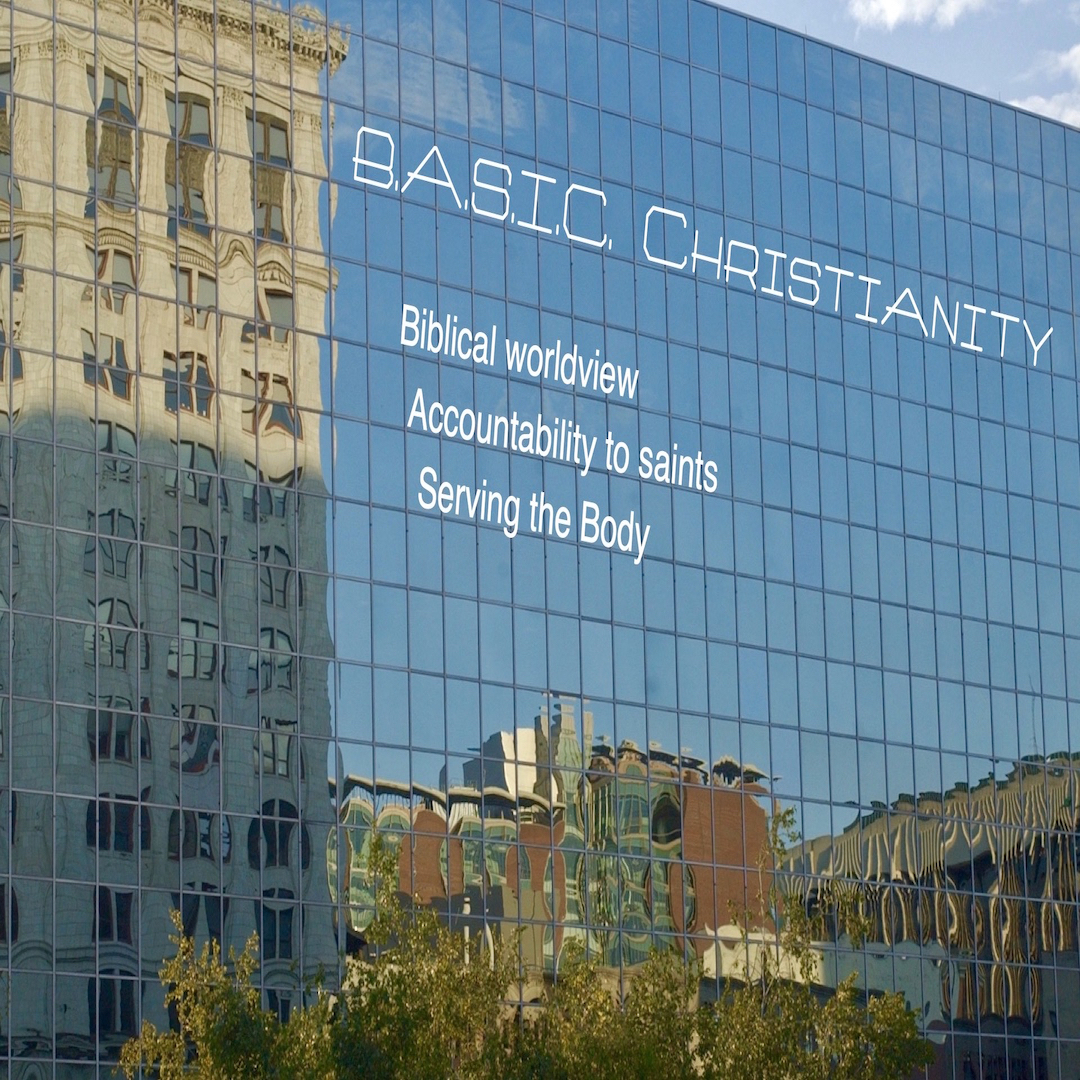
Last week we were reminded that sanctification (or as I call it “saint-ification”) is an ongoing process that usually involves the help of other saints. There is something else we need to do with other saints: serve them.
We are all a part of the same Body so it is beneficial for the whole Body if we care for every part of the Body (1 Corinthians 12:25 AMPC; Ephesians 5:30).
In order to serve others, we are going to have to check our attitude. We have been called to have the attitude that Jesus had about the Church (Ephesians 5:29; Philippians 2:3-7; John 13:3-5, 14-17).
We must all know:
I have a gift—notice the phrase each of you in 1 Peter 4:10
I must use my gift to serve the Body of Christ (Luke 17:10)
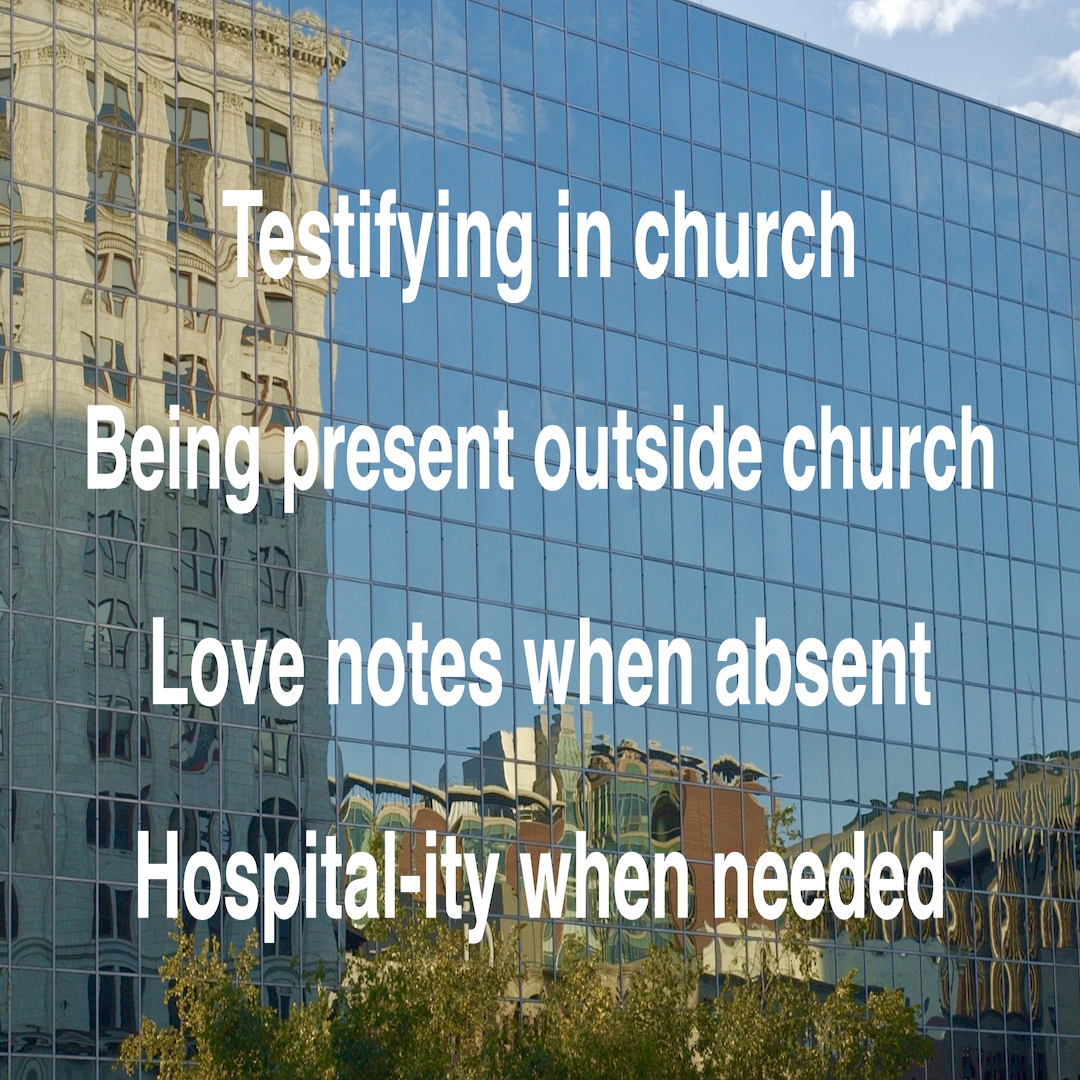
In the early Church, we see so much togetherness that they rewrote the definition of the Greek word koinonia (see Acts 2:42). Here’s what koinonia looks like in the Church:
(1) Testifying in church (Psalm 40:9-10 NLT)
(2) Being present with saints outside of church. From Acts 20-28, the pronouns “we” and “us” are used over 80 times! Paul was blessed simply by Luke being with him, just as saints are blessed when you are truly with them.
(3) Love notes when a saint is absent. The apostle John was brilliant at this. Look at his three epistles:
dear children 9x in 1 John
chosen / dear lady 2x in 2 John
dear friend 4x in 3 John
(4) Hospital-ity whenever it’s needed. Be a place of healing and refreshment for the saints God has placed in your life, just as Philemon did (Philemon 2-7, 22).
What a testimony it is when we live this way (Romans 12:10, 13)!
Remember the saint-ification process brings fruitfulness, joy-fullness, and an enhanced testimony. I love this quote from Richard Stearns, “The beautiful simplicity of our faith is that it distills down to the exact same bottom line for both the brilliant theologian and the five-year-old child: love God and love each other—period. Everything else derives from that.”
When the Bible calls Christians to be strong, it is really calling them to be stronger and more courageous than they were previously. This requires a workout plan for our spiritual muscles!
Oh, how great is Your goodness, which You have laid up for those who fear, revere, and worship You, goodness which You have wrought for those who trust and take refuge in You before the sons of men! (Psalm 31:19 AMPC)
“God is not a symbol of goodness. Goodness is a symbol of God.” —G.K. Chesterton
Remember that all of the attributes of God existed before the words for those attributes existed. Words like love and awesome and power and goodness were created to point us to the I AM.
God is all of these attributes and infinitely more than any attributes we can ever describe or define.
“Psychologists, since the beginning of the discipline, have argued about the essence of what it means to be human. Some, like [Sigmund] Freud, insist that we are motivated by physical pleasure, while others, like Victor Frankl or Abraham Maslow, believe that some higher purpose…. Human beings, made in the image and likeness of God, only realize their full potential and pleasure as they participate in the very being of God and know and experience the pleasure He takes in Himself and His glory.” —T.M. Moore
“If you are persevering in faith today, you owe it to the blood of Jesus. The Holy Spirit, who is working in you to preserve your faith, is honoring the purchase of Jesus. God the Spirit works in us what God the Son obtained for us. The Father planned it. Jesus bought it. The Spirit applies it—all of them infallibly.” —John Piper
“The Hebrew word Davar (דבר, pronounced ‘daw-var’) reveals something profound about God’s Word—it’s not merely information, but transformation. … Throughout Scripture, God’s Word consistently proves both living and active. It has the power to create worlds (Genesis 1), transform lives (Psalm 119:105), and accomplish God’s purposes (Isaiah 55:11).” —Dave Adamson
More fascinating archeology that supports the Bible’s historicity. This is a look at the library of letters found at Tell el-Amarna in Egypt. “The most obvious connection between the Amarna Letters and biblical history is that some of the letters appear to be describing, in real-time, the attacks of the Israelites during the period of the conquest. Remember, the initial conquest battles took a period of some 5–6 years, but the attempts by various tribes to conquer their allotted territories lasted into the period of the Judges. The letters from the rulers of some of the very cities named in the biblical conquest calling for help from the attacking ʿapîru/ḫa-bi-ru, provide a poignant backdrop to this period of biblical history.”
“Because I am your constant Companion, there should be a lightness to your step that is observable to others. Do not be weighed down with problems and unresolved issues, for I am your burden-bearer.” —Jesus in Sarah Young’s Jesus Calling, based on Psalm 31:19–20; John 16:33
My book When Sheep Bite is all about recovering after difficulties—whether they were created by your mistakes or someone else’s mistakes. In the Introduction to my book I wrote:
I want to give you what I wanted when this happened to me: empathy, insight, a helpful perspective, and a manual of help that God has provided in the Bible. I don’t want to try to one-up your story of pain, because I’m confident that no one could truly know how deeply you’ve been hurt. But I do want to give you some assurance that I know what I’m talking about. …
Your pain and your circumstances are unique. Your pain is real, and it is incomparable to anyone else’s pain. But the biblical principles that God revealed to me—those things that helped me heal and the thoughts I want to share with you—are applicable for any shepherd. These tried-and-true principles can help you not just survive this pain but thrive in spite of this pain. I would say to you something that C.S. Lewis wrote, “Think of me as a fellow-patient in the same hospital who, having been admitted a little earlier, could give some advice.”
Psychologists call it “projection” when I see so quickly in others what’s really in myself.
If I see sin in others, my first response would be to hit my knees and ask the Holy Spirit to search me to point out the same sin in myself.
It’s only after confessing my sin and receiving God’s complete forgiveness that I am equipped with the empathy and mercy to help someone else find the same freedom I have found.
Lord, may I be more sensitive to the sin in my life than I am aware of the sin in the world.
Listen to the podcast of this post by clicking on the player below, and you can also subscribe on Apple, Spotify, or Audible.
Our Royal Psalms take us from King David to King Jesus. David went from the anointed king on the run from King Saul, to being king over Judah (2 Samuel 2:4), to being king over “all the tribes” (2 Samuel 5:1-3; 8:15).
David’s kingdom stretched far and wide (1 Chronicles 22:14-16; 29:10-13). This absolute control King David now wields over every nation surrounding Israel puts fear into the hearts of Israel’s enemies. Fear of David brings freedom for the people of his kingdom.
As the Sons of Korah think about this fear that brings them freedom, they look beyond their earthly king to the King of Heaven and compose this Royal Psalm recorded in Psalm 47. This psalm has majestic terminology for God in almost every verse; including, Lord Most High, great King over all the earth (vv. 2, 7, 9), God reigns over the nations; and God is seated on His holy throne.
I’m especially intrigued by the word awesome in verse 2. The KJV says “the Lord Most High is terrible” because it does take two Hebrew words to give us the full definition of awesome. First, “Most High” is best thought of with the suffix -est: greatest, highest, noblest. In other words, there is nothing above Him. Then “terrible” is to be held in awe, to be honored, to be reverenced.
Just as the Israelites had no fear of enemies because David was on the throne, God says the same thing to us: Because the Most High is on the throne, His people have no fear of their enemies.
When we fear God we need not fear anything else.
When we fear God:
…we hate our own sin (Psalm 36:1-3)
…we love His mercy that forgives our sin (Psalm 103:2-3, 10-12)
…we hate sin in the world (2 Timothy 2:26)
…we love sinners (2 Timothy 2:24-26; Acts 10:38; Jude 20-23)
…we hate the darkness that traps people (2 Corinthians 4:4)
…we love shining the light of King Jesus (Philippians 2:15-16)
…we hate this life (John 12:25)
…we love eternal life (Romans 3:23-24, 8:18)
When the people of Israel reverenced David as their king, they would be able to know his blessings. When we fear our awesome God, we will also receive His blessings. Take a look at the amazing blessings Jesus Himself—the King of kings—lists for those who reverence His awesome Kingship (Revelation 2:7, 11, 17, 26-28; 3:5, 11-12, 21)!
God is awesome and asks us to reverence Him and then enjoy life in His freedom.
Listen to the podcast of this post by clicking on the player below, and you can also subscribe on Apple, Spotify, or Audible.
Ahab, king of Israel, and Jehoshaphat, king of Judah, are strategizing a battle plan against Syria when they call for God’s prophet to share with them God’s counsel in this matter.
Then Micaiah said, “I did see all Israel scattered upon the mountains as sheep that have no shepherd, and the Lord said, ‘These have no master. Let each return to his house in peace.’ … Now, you see, the Lord put a lying spirit in the mouths of your prophets; and the Lord has spoken evil concerning you. … If you return at all in peace, the Lord has not spoken by me” (2 Chronicles 18:16, 22, 27).
You would think this would cause these kings to scrap their battle plans and keep their armies at home. But the next verse says they utterly rejected the prophet’s warning. “So Ahab king of Israel and Jehoshaphat king of Judah went up to Ramoth-gilead” (v. 28).
What in the world is Jehoshaphat doing?!
He asked for a prophet from God and then when he hears from God that this combined army will be defeated, Jehoshaphat still goes with Ahab?!
But let’s back up: Why was Jehoshaphat even here hanging out with Ahab? And before even hearing from Micaiah, why does he commit his army and cavalry to this joint-venture (v. 3)?
I think the clue is in v. 1: Jehoshaphat “was allied by marriage to Ahab.” Jehoshaphat’s son Jehoram is married to Ahab’s daughter Athaliah (2 Kings 8:18).
Jehoshaphat thought this was a strategic move. Like a chess master moving his pieces on the board, he calculated that this alliance would give him an advantage. But instead this move resulted in years of heartache and destruction.
First, Jehoshaphat feels trapped into allying with Ahab in this ill-fated battle against the Syrians. Ahab is killed in this battle, and Jehoshaphat barely escapes with his life, although his army is embarrassed in defeat.
As he is returning to Jerusalem, another prophet meets him and pronounces this heartbreaking message, “Should you help the ungodly and love those who hate the Lord? Because of this, wrath has gone out against you from the Lord” (2 Chronicles 19:2).
Later on, Jehoshaphat again partners with Ahab’s son, “After this, Jehoshaphat king of Judah joined with Ahaziah king of Israel, who did very wickedly” (20:35).
After Jehoshaphat died, his son Jehoram ascends the throne.
His reign as king is only eight years long, and is noted for him walking “in the ways of the kings of Israel” by doing evil in God’s sight (2 Kings 8:15). Jehoram was killed in battle.
Ahaziah his son then sits on the throne in Jerusalem for only a year, manipulated by his mother Athaliah. “He walked in the ways of the house of Ahab and did evil in the sight of the Lord, as did the house of Ahab, for his father was son-in-law of Ahab” (2 Kings 8:27). This alliance led to another disastrous joint military campaign with Israel. Ahaziah was killed by Jehu shortly after this.
Look what happens next: “When Athaliah the mother of King Ahaziah of Judah saw that her son was dead, she arose and destroyed all the royal descendants (2 Kings 11:1). This began a six-year reign of terror in which Athaliah assumed the throne.
Where did all of this mayhem begin? When Jehoshaphat calculated his own destiny.
We have such a limited view; whereas, God is timeless, all-knowing, all-powerful. It is the highest form or arrogance to think we can out-maneuver God’s plan, or that we can even begin to know what’s best for our lives.
The One who has all of our days written in His book is also the One who tells us that we can call to Him to learn things we don’t know and access the wisdom we don’t have (Psalm 139:16; Jeremiah 33:3; James 1:5).
Think of the misery that could have been avoided if Jehoshaphat would have heeded the counsel of his forefather Solomon: “Lean on, trust in, and be confident in the Lord with all your heart and mind and do not rely on your own insight or understanding. In all your ways know, recognize, and acknowledge Him, and He will direct and make straight and plain your paths” (Proverbs 3:5-6 AMPC).
What a miserable strategist I am when I make plans that I think are clever! Instead, I’m trying my best to follow Solomon’s counsel, and I pray you are too.