A Caution About Success

CautionAfter King David had been firmly established as the king of Israel, he wanted to show the world how devoted he was to God, and undertook to bring the ark of the covenant to Jerusalem.

This move came after “David knew that the Lord had established him as king” and “that his kingdom had been highly exalted for the sake of God’s people” (2 Samuel 5:12; 1 Chronicles 14:2). David also asked the people about bringing the ark to Jerusalem and “it seemed right to all the people” (1 Chronicles 13:4).

Hooray! It sure sounds like David is using his new position as king to do something wonderful for his people. But…

Even with David’s knowledge that God had established him, David proceeded in a way that was displeasing to God, by attempting to move the ark in a way that God never sanctioned (2 Samuel 6:3; 1 Chronicles 13:7).

When things are going well and there seems to be a lot of positive momentum, we cannot abandon the things that brought God’s success in the first place! 

David had a habit of inquiring of God (2 Samuel 5:19, 23; 1 Chronicles 14:10, 14) which had led to his God-given success (1 Chronicles 14:17). But in the excitement of moving the ark, and the applause of the people David said, “We did not inquire of Him” (15:13) nor did they undertake the task “in accordance with the Word of the Lord” (15:15).

CAUTION!!! We can never be too careful about inquiring of God nor consulting His Word. A danger of success is that we abandon those things which God blesses and simply ride the positive momentum of the moment. No matter how popular or obvious a thing may seem, don’t forget to pray about it and consult God’s Word about it!

Monologue Or Dialogue

Dialogue with GodTrue prayer, according to the Bible, is a dialogue. If we ever think of it as a monologue, it ceases to be true prayer.

Look at the contrasting statements in the opening verses of Psalms 13 and 14—

How long, O Lord? Will You forget me forever? (13:1)

The fool says in his heart, “There is no God.” (14:1)

We can have a dialogue with God—even asking questions of the Almighty—or we can monologue to ourselves.

The dialoguer asks a lot of questions (five of them in the first two verses of chapter 13) and anticipates that God will answer. In fact, David wrote in an earlier psalm, “In the morning, O Lord, You hear my voice; in the morning I lay my requests before You and wait in expectation” (Psalm 5:3).

God’s answers are expected, as the dialoguer stops asking questions of God and begins to express his trust in God’s love, as he rejoices in God’s salvation, and sings about God’s goodness (13:5-6). Clearly, this trust, rejoicing, and singing come from assurances received in his dialogue with God.

The monologuer asks no questions of God, but makes definitive conclusions that he himself concocted. He talks to himself, making himself the final authority! The result is inevitable: “There they are, overwhelmed with dread” (14:5).

Jesus told a similar account of a man whom Jesus said, “prayed about himself” (see Luke 18:9-14). That word “about” is probably better translated “to.” That’s right: this man was so sure of himself that he now monologued to himself and thought he was praying. But Jesus said this about the monologuer: He went home without God taking notice of his prayer.

May we always be dialoguers in prayer, and never monologuers.

God wants to talk with you, even hearing and answering your many questions. Be sure you allow Him time to speak with you, as you anticipate His loving reply.

I will be continuing our series on prayer next Sunday, and I would love to have you join me!

Don’t Exasperate Them

Pastoring is not for the faint of heart. Nor those easily offended. Nor those lacking in patience…. You get the idea!

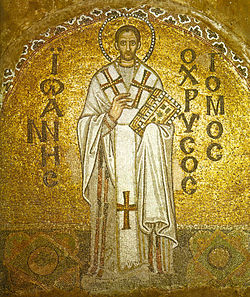
ChrysostomJohn Chrysostom (347-407) gave this counsel to pastors—

“Thus then must the Priest behave towards those in his charge, as a father would behave to his very young children; and as such are not disturbed either by their insults or their blows, or their lamentations, nor even if they laugh and rejoice with us, do we take much account of it; so should we neither be puffed up by the promises of these persons nor cast down at their censure, when it comes from them unseasonably.”

The Bible tells fathers not to irritate and provoke your children to anger [do not exasperate them to resentment], but rear them [tenderly] in the training and discipline and the counsel and admonition of the Lord. (Ephesians 6:4, Amplified Bible)

Instead we should follow the example of Jesus, the Great Shepherd—

When He saw the throngs, He was moved with pity and sympathy for them, because they were bewildered (harassed and distressed and dejected and helpless), like sheep without a shepherd. (Matthew 9:36, Amplified Bible)

Ask our Shepherd to give you His patience, and compassion, and tenderness, and wisdom to carry His sheep in your arms. After all, it’s His flock that we’ve been given the privilege and responsibility to care for!

God’s Answers Are Bigger

I’m studying for our current series on prayer at Calvary Assembly of God, and I came across this amazing story (see John 20:10-15). I’m not sure if we will have time to get to it during this series or not, but in either case it’s just too good to hold back any longer …


If you are praying for something right now and the answer hasn’t arrived yet, keep on praying. God is doing something in the waiting time. Perhaps He wants you to modify your prayer, or perhaps He has something even bigger in store for you, bigger than you could have even imagined.

Keep on praying!

Prayer’s Empowerment

Prayer is not about insurance, but assurance. Prayer is not about figuring things out, but about getting God’s mind on a subject.

But how does the faith to believe for that assurance, and the faith to capture God’s discernment come to us? It comes through the Third Person of the Trinity: the Holy Spirit. The Holy Spirit empowers us; He’s the central part of our prayer life.

Check out what Jesus said about the Holy Spirit’s role in your prayer life (see John 14:15-27).

EmpowermentAssurance—the Counselor [will] be with you forever (v. 16). The Holy Spirit doesn’t come and go, but He abides constantly. Jesus said I will not leave you as orphans (v. 18), but you will be loved by My Father (vv. 21-23). The Holy Spirit plays a vital role in bringing you into this intimate relationship (Romans 8:15).

Discernment—Jesus said a key component of your prayer life was if you remain in Me and My words remain in you (John 15:7). The Holy Spirit helps teach you what the Word says, and He will remind you of everything I have said to you (John 14:26). The more you can be reminded of God’s Word, the more you can pray and live with God’s discernment.

Peace—My peace I give you … do not be afraid (v. 27). One of the names given to the Holy Spirit is Comforter. The Amplified Bible defines this title as, “Counselor, Helper, Intercessor, Advocate, Strengthener, and Standby.”

Boldness—when you have greater assurance of God’s Word, deeper discernment into the mind of the Lord, and a more tranquil peace because of prayer, you can pray and live boldly! Want to see boldness in action? Check out how the followers of Jesus lived and prayed after they were baptized in the Holy Spirit (Acts 1:8; 2:14; 4:8; 4:31).

Make no mistake about it:

How we pray is how we will live! 

Our prayers and our lives will be more assured, more discerning, more peace-producing and more bold when we let the Holy Spirit empower every aspect!

We will be continuing our series on prayer—If You Will Ask—next Sunday. I would love to have you join us!

Sunday Recap

In remembering Sanctity of Human Life Sunday we looked at some sobering, heart-breaking stats—

Planned Parenthood reported:

  • They performed 327,166 abortions in the course of one year and only 2,197 adoption referrals.
  • That’s 149 abortions for each adoption referral (149:1).
  • In order to hit this astronomical number they had to perform approximately one abortion every 96 seconds.
  • That means they killed more than the population of Grand Rapids AND Lansing. Combined!
  • They did all of this while receiving over $540 million in government grants and reimbursements.

But we also learned some happier stats from Alpha Family Center of Cedar Springs—

  • Alpha has been providing pro-life, pro-family services in Cedar Springs for 22 years.
  • 11,300 baby and toddler related items were given out in 2013. That includes 1000+ packs of diapers, 214 cans of formula, 900 jars of baby food & baby cereal, and nearly 5200 articles of clothing for babies, toddlers and pregnant women.
  • Alpha’s counselors provided over 1000 peer counseling sessions, taught 850 parenting classes, and gave 70 free pregnancy tests.
  • And they did all of this without one cent of government aid! 

Please support Alpha with your prayers and financial support.

In our series on prayer, I shared this great quote from Charles Spurgeon:

“Why do I not call on God’s Name? Why do I run to this neighbor and that when God is so near and will hear my faintest call? Why do I sit down and devise schemes and invent plans? Why not at once roll my self and my burden on the Lord?”

Great questions! In answering those we learned this great truth: How we pray is how we will live!

Pray = Live

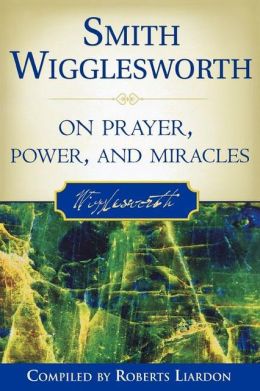
Smith Wigglesworth On Prayer, Power, And Miracles (book review)

Prayer, Power & MiraclesWhenever I need a booster shot of faith, or a challenge to believe God for even greater things, or just a unabashed reminder of the power of the Scriptures, I pick up a book by Smith Wigglesworth. By the time I got done reading Smith Wigglesworth On Prayer, Power, And Miracles compiled by Roberts Liardon I was totally fired up!

This book is a collection of sermons delivered by Wigglesworth and articles he authored for various Pentecostal publications. Every one of the chapters is simply saturated in Scripture and the anointing of the Holy Spirit! Each of the articles made we want to dig into the Bible more, believe God for more, and crave the empowerment of the Spirit more!

If you are tired of humdrum church-as-usual, or if you are ready for your faith to be stretched like it’s never been stretched before, pick up a copy of this book and strap yourself in. I promise that you will not think about the things of God the same after these messages have worked their way into your heart.

The Prophet Almost Blew It

Jeremiah 33-3Samuel had anointed Saul to be the first king of Israel, but Saul’s disobedience led to God’s rejection of him as the king. God dispatched Samuel to anoint the next king of Israel, and that’s when Samuel almost blew it.

God knows what He’s doing. He has a purpose and a plan, and He invites us to be a part of it. So when God sent Samuel on his mission, He gave him very specific instructions, “I have chosen one of Jesse’s sons to be king. I will show you the one I have chosen” (1 Samuel 16:1-4).

That seems clear enough, but Samuel’s mistake is often our mistake: we think we can figure out what God is doing, and then we rush ahead of Him.

When Jesse’s oldest son Eliab appeared, he was a tall, handsome man. Samuel knew that the next king would be one of Jesse’s sons, and when he saw Eliab he thought to himself, “Surely this is the one” (v. 6). One problem: Eliab wasn’t the one.

God told Samuel, “You are looking with your eyes and can only see the things on the surface. I don’t look like you look; I see the way things really are” (v. 7). In other words, God has a discernment that we don’t have.

Here’s great news: God wants to give us His discernment! But we need to ask Him for it—

Call to Me and I will answer you and tell you great and unsearchable things you do not know. (Jeremiah 33:3, emphasis added)

One thing that stands out to me in this story is how many times it says, “The Lord said.” God is always speaking to us, but are we listening? If not, we’re missing out on His vital discernment.

There is an important link between reading the Bible and getting God’s discernment. That’s why the Bible is more than a Book to read, it’s a Book to pray! A.W. Tozer said it this way—

“To think God’s thoughts requires much prayer. If you do not pray much, you are not thinking God’s thoughts. If you do not read your Bible much and often and reverently, you are not thinking God’s thoughts.”

Don’t make the mistake that Samuel almost made. Read the Bible, pray the Bible, and you will be amazed at how much discernment God gives to you.

I will be continuing our series on prayer—If You Will Ask—this Sunday, and I hope you can join us!

19 Quotes From “If Ye Shall Ask”

If Ye Shall AskA challenging and educational look at prayer from the unique perspective of Oswald Chambers is If Ye Shall Ask. You can read my book review of this book and another book on prayer Chambers wrote by clicking here. These are some of the quotes that I especially liked from this book.

“Prayer is not an interruption to personal ambition, and no man who is busy has time to pray. What will suffer is the life of God in him, which is nourished not by food but by prayer.”

“The purpose of prayer is to reveal the Presence of God, equally present at all times and in every condition.”

“Our Lord in His teaching regarding prayer never once referred to unanswered prayer; He said God always answers prayer.” 

“As long as we are self-sufficient and complacent, we don’t need to ask God for anything, we don’t want Him; it is only when we know we are powerless that we are prepared to listen to Jesus Christ and to do what He says.”

“If prayer is not easy, we are wrong; if prayer is an effort, we are out of it.” 

“If once we accept the Lord Jesus Christ and the dominion of His Lordship, then nothing happens by chance, because we know that God is ordering and engineering circumstances.”

“A thing is worth just what it costs. Prayer is not what it cost us, but what it cost God to enable us to pray. It cost God so much that a little child can pray. It cost God Almighty so much that anyone can pray.” 

“It is not a prayer that is strenuous, but the overcoming of our own laziness.”

“We must be in continual practice so that when we find ourselves in a tight place we are perfectly fit to meet the emergency.” 

“There is no such thing as a holiday for the beating of your heart. If there is, the grave comes next. And there is no such thing as a moral or spiritual holiday. If we attempt to take a holiday, the next time we want to pray it is a struggle because the enemy has gained a victory all around, darkness has come down and spiritual wickedness in high places has enfolded us. If we have to fight, it is because we have disobeyed; we ought to be more than conquerors.”

“God’s silences are His answers.”

“Can it be said of us that Jesus so loved us that He stayed where He was because He knew we had a capacity to stand a bigger revelation?”

“Some prayers are followed by silence because they are wrong, others because they are bigger than we can understand.” 

“Jesus Christ does not make monks and nuns, He makes men and women fit for the world as it is (see John 17:15).”

“God does not expect us to work for Him, but to work with Him.” 

“God will not leave us alone until we are one with Him, because Jesus has prayed that we may be.”

“A Christian’s duty is not to himself or to others, but to Christ. We think of prayer as a preparation for work, or a calm after having done work, whereas prayer is the essential work. It is the supreme activity of everything that is noblest in our personality.”

“As long as we get from God everything we ask for, we never get to know Him, we look upon Him as a blessing-machine, that has nothing to do with God’s character or with our characters. … Then why pray? To get to know the Father.”

“All other fields have the glorious but risky snare of publicity; prayer has not.”

Knocking At Heaven’s Door & If Ye Shall Ask (book reviews)

If Ye Shall AskOswald Chambers challenges me like few authors do. He so plainly states how Scripture should be applied to my daily life that it often makes me squirm. In these two books about prayer: If Ye Shall Ask and Knocking At Heaven’s Door my prayer life is challenged.

In the preface to the first edition of If Ye Shall Ask in 1937, Oswald Chambers’ friend John Skidmore said that Chambers addressed “most of our difficulties concerning prayer.” And truly, Chambers makes it clear that most of our understandings about prayer are really misunderstandings which have been shaped by culture. So Chambers makes a strong case that we get back to exactly what Jesus said about prayer.

Chambers wrote, “Jesus Christ does not make monks and nuns, He makes men and women fit for the world as it is (see John 17:5).” Chambers makes sure that all of our prayer life is grounded on Scripture, not on what others have told us about prayer, to prepare us to live out God’s plan for our lives everyday.

Then in Knocking At Heaven’s Door we get a chance to see Oswald Chambers practice what he preaches. This book is a collection of prayers from his personal journals, which his wife compiled. Reading Chambers’ prayers we see that he believed and prayed just like he taught. A true treasure!

If you want to grow in your prayer life, these books will launch your forward.