Listen to the podcast of this post by clicking on the player below, and you can also subscribe on Apple, Spotify, or Audible.
Former Assembly of God General Superintendent W.T. Gaston wrote an article of warning in 1953 that pastors and ministry leaders would do well to heed again today. This part especially caught my attention—
Gaston suggested, “If we are to have a future that is better or even comparable and worthy of our past, we will need to learn over again some of the lessons of yesterday.” One of the important lessons to rediscover, he wrote, was the importance of promoting “pure, undefiled” religion.
He recalled that many early 20th-century Pentecostal pioneers were bivocational ministers, that often met in homes or rented buildings, and that most were not very impressive by the standards of the surrounding culture. However, they did not need worldly goods and accolades in order for the Holy Spirit to accomplish great things through their lives and ministries.
Gaston wrote that he witnessed an “utter disregard for poverty or wealth or station in life” in the early Pentecostal movement. Yet “those rugged pioneers,” he noted, “had something that made them attractive and convincing.” The contrast between the attitudes of the world and the early Pentecostals was striking. According to Gaston, early believers were “completely satisfied without the world’s glittering tinsel, and content to be the objects of its scornful hatred.”
My larger concern is that churches, parachurch organizations, and nonprofit ministries that are largely founded to fulfill a biblical mandate are straying from the simple, freeing truths found in the Bible. Or maybe I should say that they are adding things to their ministries that aren’t in the pages of Scripture. Whichever way you want to say it, the result is the same: We are using the wrong metrics to define “success” for our ministries. I fear that in our focus on unbiblical practices, we are missing the joy of really doing ministry.
All of these titles, flowcharts, and non-essential things that we are discussing, revamping, implementing, and measuring aren’t doing anything to liberate us, but they are keeping us focused on checking off meaningless boxes. We’re spending far too much valuable time and resources on keeping the machinery running, but we’re not correctly evaluating the outputs. We need to recalibrate our understanding of leadership: God’s leaders are servants. …
I believe that leaders of churches and nonprofit ministries will find the greatest freedom and enjoyment—and ultimately experience the full blessing of God—when they learn to view themselves as shepherd leaders. Jesus is our ultimate example: Our Good Shepherd showed us how to live out the lifestyle that pleases Him and glorifies our Heavenly Father.
I hope you will buy a copy of this book. And I invite you to also check out this video where I explain a little more what I hope this book will accomplish in all of our ministries.
This is a weekly series with things I’m reading and pondering from Charles Spurgeon. You can read the original seed thought here, or type “Thursdays With Spurgeon” in the search box to read more entries.
Listen to the podcast of this post by clicking on the player below, and you can also subscribe on iTunes or Spotify.
God Is The Great Worker
I planted, Apollos watered, but God gave the increase. So then neither he who plants is anything, nor he who waters, but God who gives the increase. Now he who plants and he who waters are one, and each one will receive his own reward according to his own labor. For we are God’s fellow workers; you are God’s field, you are God’s building. (1 Corinthians 3:6-9)
God Himself is the Great Worker. He may use what laborers He pleases, but the increase comes only from Him. Brothers, you know it is so in natural things—the most skillful farmer cannot make the wheat germinate, grow, and ripen. … And in the spiritual farm it is even more so, for what can man do in this business? … We can tell out the truth of God, but to apply the truth to the heart and conscience is quite another thing. …
Well said our Lord, ‘Without Me you can do nothing’ (John 15:5). What is the effect of all this upon your minds? Briefly I would draw certain practical lessons out of this important truth of God. (1) The first is, if the whole farm of the church belongs exclusively to the great Master Worker and the laborers are worth nothing without Him, let this promote unity among all whom He employs. …
(2) Next, notice that this fact ennobles everybody who labors in God’s husbandry. …
(3) But lastly, how this should drive us to our knees! Since we are nothing without God, let us cry mightily to Him for help in this, our holy service!
From Farm Laborers
I learned long ago of both the confidence and the humility in reminding myself that God chose me to work in His field. Here’s how I describe that in my book Shepherd Leadership: The Metrics That Really Matter—
There is nothing wrong about aspiring to a leadership position. The apostle Paul wrote to his young protégé Timothy, “This is a trustworthy saying: ‘If someone aspires to be a church leader, he desires an honorable position’” (1 Timothy 3:1 nlt). Yet this desire needs to be tempered by Jeremiah’s words to his scribe Baruch, “Should you then seek great things for yourself? Do not seek them” (Jeremiah 45:5). Taken together, a shepherd leader’s passion for greater leadership should be to gain greater things not for himself but for others.
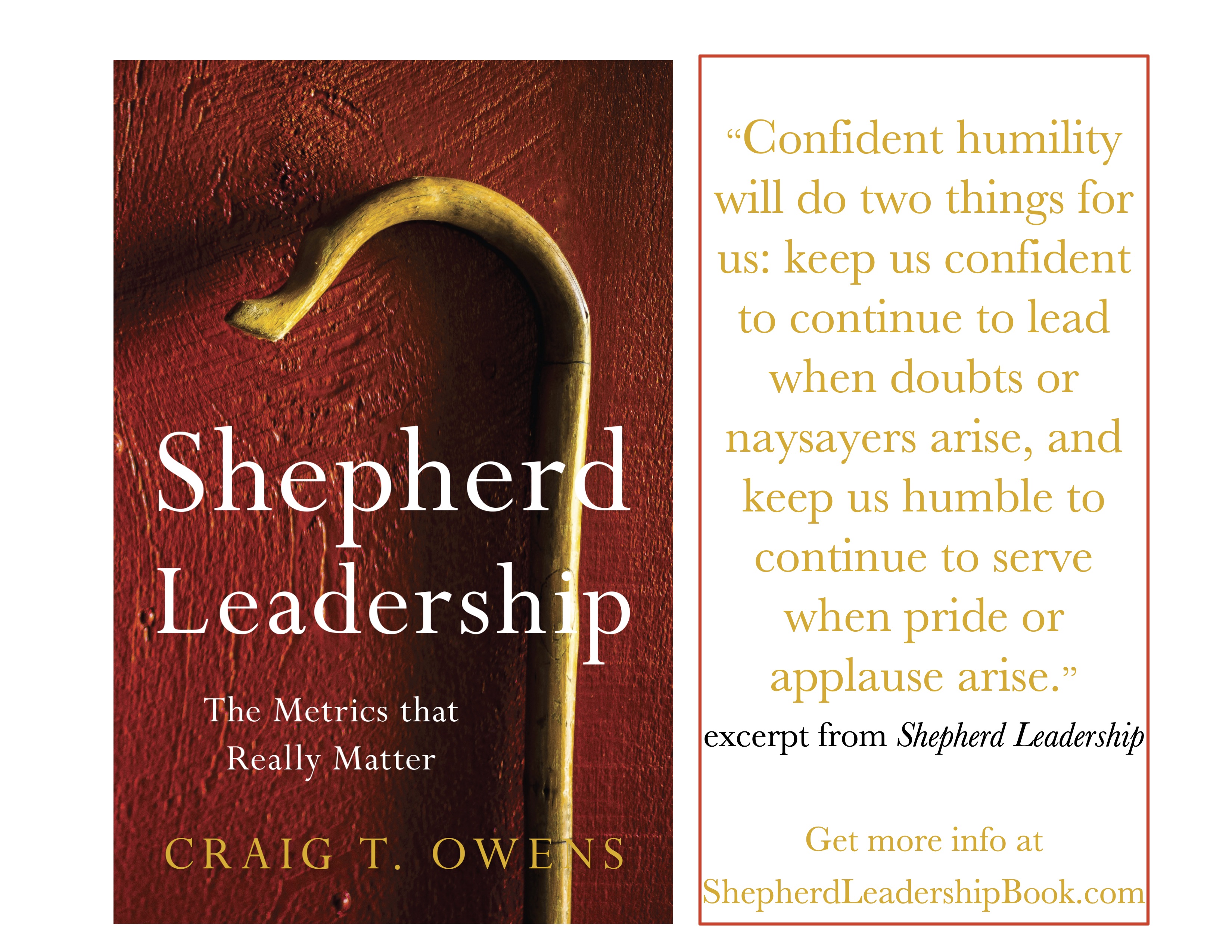
Shepherd leaders need to remind themselves frequently of this simple statement: God chose me. The confidence comes from remembering “God chose.” If God has chosen me, then He has also equipped me. He foresaw the needs of this organization, and He has prepared me to step into this role for such a time as this. The humility comes from remembering “God chose me.” Who am I that God would think so highly of me? Of all the people on Earth that God could have placed here, why did He pick me? This confident humility will do two things for us: keep us confident to continue to lead when doubts or naysayers arise, and keep us humble to continue to serve people when pride or applause arises. (except from chapter 2 “Secure To Serve”)
This is a weekly series with things I’m reading and pondering from Charles Spurgeon. You can read the original seed thought here, or type “Thursdays With Spurgeon” in the search box to read more entries.
Listen to the podcast of this post by clicking on the player below, and you can also subscribe on iTunes or Spotify.
A Word To Preachers
I planted, Apollos watered, but God gave the increase. So then neither he who plants is anything, nor he who waters, but God who gives the increase. Now he who plants and he who waters are one, and each one will receive his own reward according to his own labor. For we are God’s fellow workers; you are God’s field, you are God’s building. (1 Corinthians 3:6-9)
Paul is a laborer, Apollos is a laborer, Cephas is a laborer, but not so much as a foot of the farm is Paul’s, nor does a single parcel of land belong to Apollos, or the smallest allotment to Cephas. ‘You are Christ’s, and Christ is God’s’ (1 Corinthians 3:23). The fact is that in this case the laborers belong to the land and not the land to the laborers, ‘for all things are yours: whether Paul or Apollos or Cephas’ (3:21-22). …
Brothers, a laborer may work very hard at a whim of his own and waste his labor, but this is folly! Some discourses do a little more than show the difference between a Tweedledum and Tweedledee, and what is the use of that? …
All God’s laborers must go to Him for their seed, or else they will scatter tares. All good seed comes out of God’s granary. If we preach, it must be the true word of God or nothing can come of it. … A sermon is vain talk and dreary word spinning unless the Holy Spirit enlivens it. …
Here we have mention of a personal service and a personal reward: ‘Each one will receive his own reward according to his own labor.’ The reward is proportionate, not to the success, but to the labor! Many discouraged workers may be comforted with that expression. You are not to be paid by results, but by endeavors.
From Farm Laborers
My dear preacher friend, God sees you. He has placed you in the field where He needs you to be, and He has given you the skills you need to have to labor for Him. Never doubt that!
You may be the one breaking up hard ground, or the one sowing seed, or the one watering, or the one bringing in the harvest. Wherever you are and whatever you are doing, rely on the strength God gives you. He will illuminate His Word to your heart first so that you can share a timely word with those under your care. Then He will send the Holy Spirit to enliven all that you preach.
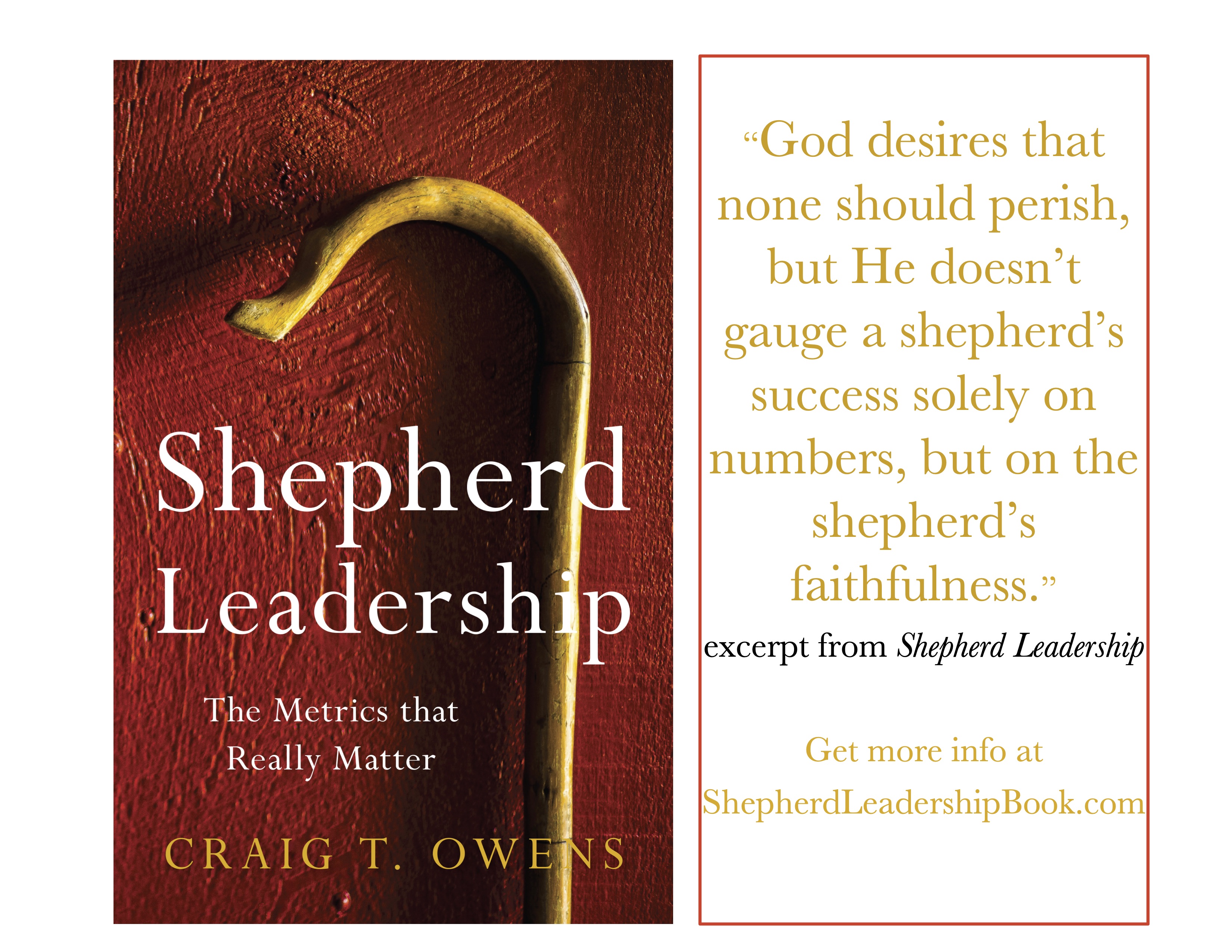
God has given you the tools and skills, now you must diligently supply the effort. Don’t become discouraged by what seems to be a lack of “success.” As God tells us through Paul, He will reward your faithful labor in His field.
My book Shepherd Leadership: The Metrics That Really Matter elaborates on this point. The thoughts in this book will remove from you the burden of trying to live up to any unbiblical metric of “success” in your ministry. I hope you will get a copy of this book! Check out ShepherdLeadershipBook.com for more details.
Listen to the podcast of this post by clicking on the player below, and you can also subscribe on Apple or Spotify.
A.W. Tozer pulls no punches in the way he confronts modern-day preachers (those he calls “sons of the prophets”). He challenges pastors to return to the Scriptures, hit their knees in prayer, and do some serious soul searching on where they may be falling short of the standard set by the biblical prophets. You can read my full book review of Voice Of A Prophet by clicking here.
“It is not the messenger, it is the message that needs to be proclaimed. If you study the Old and New Testaments you will discover that no prophet can ever be a celebrity. The most significant thing about the prophet is the message he conveys, and that message had better by rooted in the heart of God.”
“The responsibility of the prophet is not to come up with his own message, but to faithfully deliver the message—the warning—that is coming from God.”
“The song of the prophet is, ‘Thus saith the Lord.’ Any other song will never do for God’s man to be God’s voice to his generation.”
“God takes so much delight in us that He will go to any length to bring us back to that delight.”
“Jesus said that our problem is a spiritual danger, not a physical danger, and our visible enemies are rarely our real enemies. The man who comes at you with a gun is not your real enemy, though his intention may be to kill you. Your real enemy is that enemy within you that makes you vulnerable to him. Esau was Jacob’s enemy because of what Jacob had done to him, but Esau was not Jacob’s real enemy. Jacob was Jacob’s enemy. The crookedness in Jacob’s heart was against Jacob, and when God straightened that out, Esau was not his enemy anymore.”
“Well do I know, Thou God of the prophets and the apostles, that as long as I honor Thee Thou will honor me. Help me therefore to take this solemn vow to honor Thee in all my future life and labors, whether by gain or by loss, by life or by death, and then to keep that vow unbroken while I live. … Save me from the error of judging a church by its size, its popularity or the amount of its yearly offering. Help me to remember that I am a prophet—not a promoter, not a religious manager, but a prophet. Let me never become a slave to crowds.”
Listen to the podcast of this post by clicking on the player below, and you can also subscribe on Apple or Spotify.
I’ve always appreciated A.W. Tozer’s prophetic voice. By that I mean, his unabashed call for Christians to live up to the Christlike standard given to us in the Scriptures. But in Voice Of A Prophet, Tozer hits a little closer to home for me (and for all of us who are in ministry positions) as he specifically calls on pastors to live up to the prophetic standard given to us in the Bible.
Sometimes people misunderstand the title “prophet” to be one who foretells future events. At times, that is the function of a prophet, but primarily the prophet is more of a forthteller than a foreteller. The prophet is called upon to boldly proclaim God’s truth and tell forth where godly people are falling short. Prophets are God’s messengers to God’s people, usually sent to reawaken His people to truths that they have forgotten or strayed from.
Tozer calls modern-day pastors and preachers—those he calls “the sons of the prophets”—to look to the prophetic fathers of the Scripture. He calls us to live up to the God-fearing standard of the prophets like Elijah, Isaiah, John the Baptist, and Jesus. He forthtells how too many have succumbed to the voice of culture instead of adhering to the voice of their Lord, and how they have traded “Thus saith the Lord” for “Thus saith me.”
The opening chapter of Voice Of A Prophet reprints a prayer that Tozer wrote out when he was ordained in 1920. Part of that prayer for himself should remain a prayer for all who are called by God to be pastors today: “Let me stand before the great or minister to the poor and lowly; that choice is not mine, and I would not influence it if I could. I am Thy servant to do Thy will, and that will is sweeter to me than position or riches or fame and I choose it above all things on earth or in heaven.”
Voice Of A Prophet is an important read for those in pastoral ministry. FAIR WARNING: You will be challenged and convicted by Tozer’s timeless words! But if you will heed those words, God will be pleased to bless your efforts. I would also recommend this book to anyone who would like to know how they can better support and pray for their pastor, as I think they will find valuable insights in this book.
Listen to the podcast of this post by clicking on the player below, and you can also subscribe on Apple or Spotify.
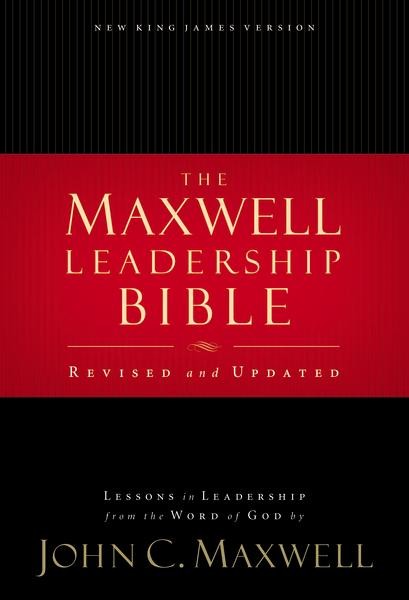
Pastors and other Christian leaders, this is from theMaxwell Leadership Bible and it’s well worth your time to contemplate.
“God contrasts the poor leader with the godly leader in Ezekiel 22. The poor leader oppresses and destroys his or her followers, while the godly leader ‘stands in the gap’ on behalf of the land and the people. These leaders represent God to the people, and represent the people to God. They serve as ‘middle-men,’ serving God and serving the needs of the people. This text describes ten traits of the leader God affirms:
Consecration: They set themselves apart and remain committed to their call.
Discipline: They do what is right even when it is difficult.
Servanthood: They model a selfless life, lived for the benefit of others.
Vision: They see what God sees and live off the power of potential.
Compassion: Love for their cause and their people moves them to action.
Trustworthiness: They keep their word regardless of what others do.
Decisiveness: They make good decisions in a timely manner.
Wisdom: They think like God thinks and avoid impetuous moves.
Courage: They take risks for what is right.
Passion: They demonstrate enthusiasm for their divine calling.” —John Maxwell
Check out what God Himself says:
“Your princes plot conspiracies just as lions stalk their prey. They devour innocent people, seizing treasures and extorting wealth. They make many widows in the land. Your priests have violated My instructions and defiled My holy things. They make no distinction between what is holy and what is not. And they do not teach My people the difference between what is ceremonially clean and unclean. They disregard My Sabbath days so that I am dishonored among them. Your leaders are like wolves who tear apart their victims. They actually destroy people’s lives for money! And your prophets cover up for them by announcing false visions and making lying predictions. They say, ‘My message is from the Sovereign Lord,’ when the Lord hasn’t spoken a single word to them. Even common people oppress the poor, rob the needy, and deprive foreigners of justice. I looked for someone who might rebuild the wall of righteousness that guards the land. I searched for someone to stand in the gap in the wall so I wouldn’t have to destroy the land, but I found no one.” (Ezekiel 22:25-30 NLT)
Pastor, will you be that righteous one who will stand in the gap? Will you stand strong against the onslaught of sin and a compromising culture? Will you be a leader that God can use?
This is a weekly series with things I’m reading and pondering from Charles Spurgeon. You can read the original seed thought here, or type “Thursdays With Spurgeon” in the search box to read more entries.
An Exhortation To Preachers
He will glorify Me, for He will take of what is Mine and declare it to you. All things that the Father has are Mine. Therefore I said that He will take of Mine and declare it to you. (John 16:14-15)
Ah, brothers, the Holy Spirit never comes to glorify us, or to glorify a denomination, or, I think, even to glorify a systematic arrangement of doctrines! He comes to glorify Christ! If we want to be in accord with Him, we must preach in order to glorify Christ. May we never have this thought: ‘I will put that bit in. It will sound well….’No, no!
I would say, ‘Brother, though it is a very delightful piece, strike that out, because if you have had a thought of that kind about it, you had better not put yourself in the way of temptation by using it.’ …
Well then, it may be very admirable, and further, it might be a very right thing to give them that precious piece; but if you have that thought about it, strike it out! Strike it out ruthlessly! Say, ‘No, no, no! If it is not distinctly my aim to glorify Christ, I am not in accord with the aim of the Holy Spirit and I cannot expect His help!’ …
How then does the Holy Spirit glorify Christ? It is very beautiful to think that He glorifies Christ by showing Christ’s things. If you wanted to do a honor to a man, you would, perhaps, take him a present to decorate his house. But here, if you want to glorify Christ, you must go and take the things out of Christ’s house ‘the things of Christ.’ …
Again, I think that the blessed Spirit glorifies Christ by showing us the things of Christ as Christ’s. Oh, to be pardoned! Yes, it is a great thing, but to find that pardon in His wounds, that is a greater thing! Oh, to get peace! Yes, but to find that peace in the blood of His Cross! … That it came from Christ is the best thing about the best thing that ever came from Christ! …
‘He will glorify Me, for He will take of what is Mine and declare it to you.’ Yes, it does glorify Christ for the Holy Spirit to show Christ to us. … Since it is for the honor of Christ for His things to be shown to men, He will show them to us, that we may go and show them to other people.
From Honey In My Mouth
My fellow pastor, I cannot add anything to these wise words except this simple exhortation: Read these words again and ask the Holy Spirit to show you how you can more accurately live this out in your sermon preparation and preaching.



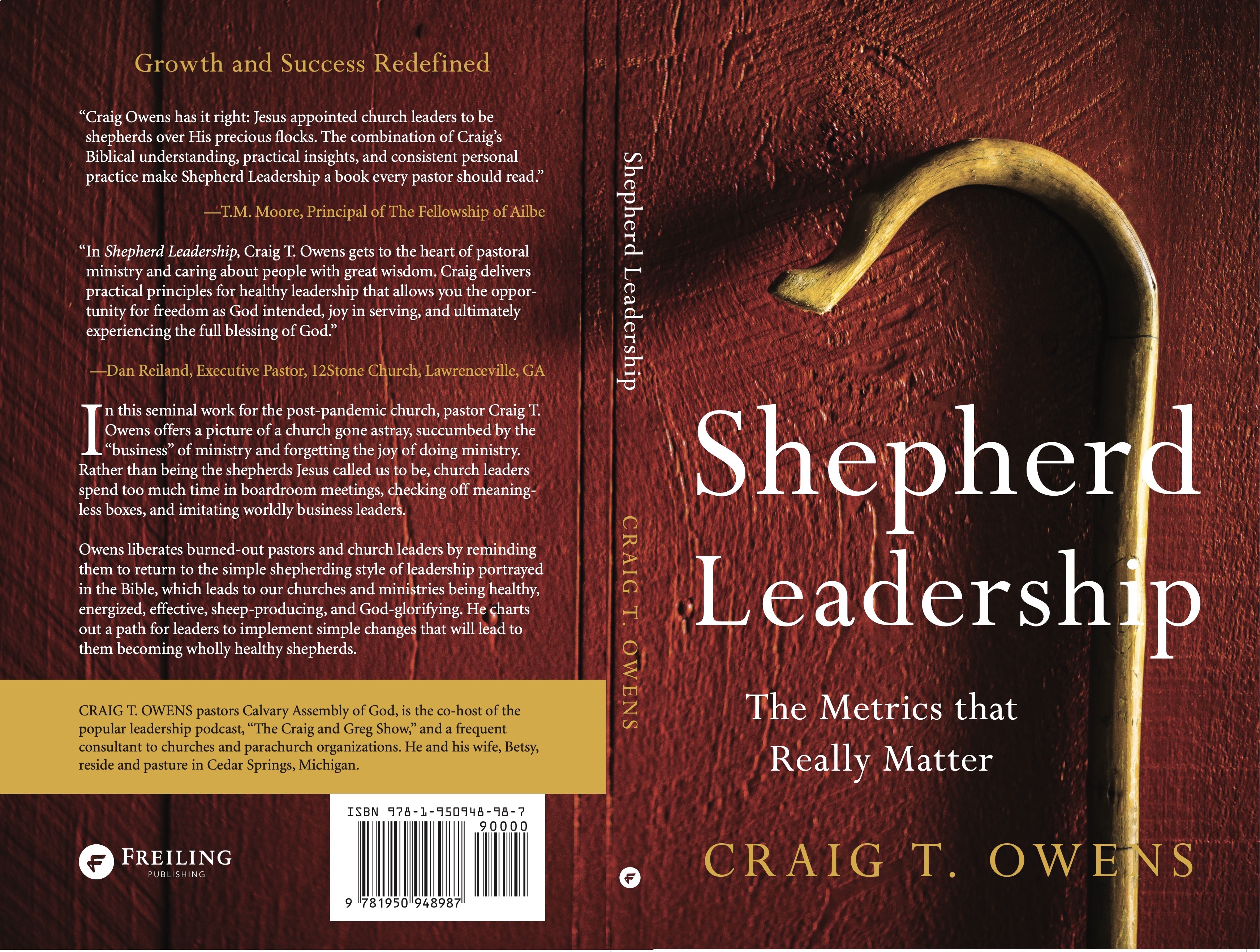 My book Shepherd Leadership: The Metrics That Really Matter releases TODAY!! I can hardly believe it.




 Craig T. Owens