“Are you allowing satan to magnify the memories of your spiritual failures? He will always keep them before you unless you take your stand and move up in faith. … Remember, the Bible does not teach that if a man falls down, he can never rise again. The fact that he falls is not the most important thing—but rather that he is forgiven and allows God to lift him up.” —A.W. Tozer
“Away with tears and fears and troubles! United in wedlock with the eternal Godhead Itself, our nature ascends into the Heaven of Heavens. So it would be impious to call ourselves ‘miserable.’ On the contrary, Man is a creature whom the Angels—were they capable of envy—would envy. Let us lift up our hearts!” —C.S. Lewis
The 112th Psalm begins with an interesting idea that almost sounds like an oxymoron: delightful fear—
Blessed is the man who fears the Lord, who finds great delight in His commands. (v. 1)
Fear and delight
Worship and obedience
Reverence and action
Awe and love
These are not contrasting ideas, but two sides of the same coin. They are completions of each other, and they are essential to a healthy relationship with Jehovah. And then, oh!, the blessings that flow from God to me!
Mighty children (v. 2)
Abundant household (v. 3a)
Enduring righteousness (v. 3b)
Brightly shining life (v. 4)
Reciprocated generosity (v. 5)
Security in troubled times (v. 6a)
A lasting legacy (v. 6b)
No fear of calamity (v. 7)
Eternal life (v. 8)
Highly honored (v. 9)
After nine verses of these amazing blessings to the one who delightfully fears God, only one verse is left for the one who doesn’t—he is vexed, wasting away, and frustrated.
I don’t know about you, but I want to delightfully fear—worship, obey, revere and love—Jehovah my God!
“There are no unsacred places; there are only sacred places and desecrated places.” —Wendell Berry
“It may be that when we no longer know which way to go that we have come to our real journey. The mind that is not baffled is not employed. The impeded stream is the one that sings.” —Wendell Berry
“Wherefore seeing that all Christians know that the death of the religious beggar amongst the dogs, licking his sores, was better than the death of the wicked rich man in all his silks and purples, what power hath the horror of any kind of death to affright their souls that have led a virtuous life?” —Augustine
“We have thus plainly before us the principle, that our Lord in His infinite wisdom and superabundant love, sets so high a value upon His people’s faith, that He will not screen them from those trials by which faith is strengthened.” —Charles Spurgeon
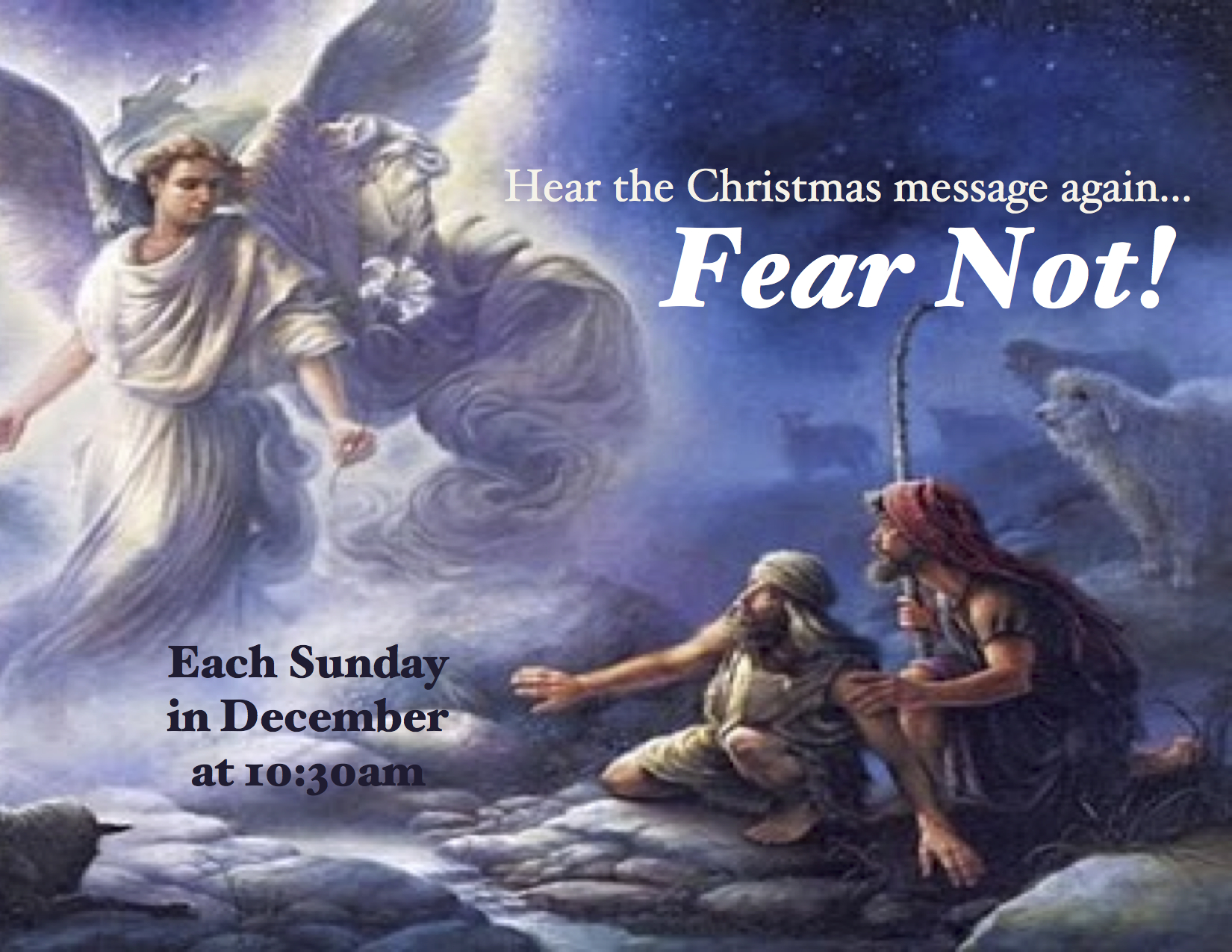
Christmas is a time of celebration, peace on earth, and goodwill toward men! But have you ever stopped to wonder why the celebration? Yes, it’s the time we celebrate Jesus Christ’s birth, and the advent of His ministry on earth. But what’s the real good news about that?
In the Christmas stories recorded in the gospels of Matthew and Luke, there is a recurring phrase—
FEAR NOT!
Fear paralyzes. Fear blinds. Fear immobilizes. Fear exaggerates all that is wrong. Fear obscures all that is right.
Before Jesus comes into our lives, we are slaves to fear. Before Jesus comes into our lives, we aren’t truly alive.
So let the good news of Christmas ring out again—FEAR NOT!
We will be talking about the good news of this Christmas message each Sunday leading up to Christmas. I hope you can join me at Calvary Assembly of God as we learn more about the fear-busting, joyful news that Jesus can set you free.
If you missed any of the messages in this series, check them out here:
Have you ever been doing or saying something, and then “the look” on someone’s face caused you to stop or change what you were saying/doing? We often look to certain people for their (dis)approval to gauge how we’re doing.
But what if we’re looking at the wrong faces?
God called Jeremiah to be a prophet while he was still fairly young. So when this young man starts saying, “This is what God says,” can you imagine the looks he’s going to get?!
So right out of the gate, God says two things to Jeremiah: Do not be afraid of them … Do not be terrified by them (Jeremiah 1:8, 17). I like how the King James Version renders these verses: Do not be afraid of their faces … Do not be dismayed by their faces.
Afraid means to look at faces for approval.
Dismayed or terrified means to look at faces for disapproval.
But people’s faces aren’t the faces Jeremiah—or you or I—should be looking at. The only face that matters is God’s! Look how many “I” statements God makes about Himself in this chapter:
I formed you (v. 5a)
I knew you in advance (v. 5b)
I set you apart (v. 5c)
I appointed you (v. 5d, 10)
I am sending you (v. 7a)
I give you the words to say (v. 7b, 17)
I am with you (v. 8a, 19a)
I will rescue you (v. 8b, 19b)
I will put my words in your mouth (v. 9)
I am watching over you (v. 12)
I am making you strong (v. 18)
The faces of people are not how you and I should gauge (dis)approval.
How sad to look at other faces for approval, only to hear God say, “Depart from Me. I never knew you!”
How liberating to know that even though other faces may disapprove me, I can still hear my Master say, “Well done, good and faithful servant!”
Listen to the podcast of this post by clicking on the player below, and you can also subscribe on Apple, Spotify, or Audible.
Bringing correction is one of the toughest jobs for those in leadership, but it’s a responsibility that cannot be delegated or ignored. In order for correction to be effective, it must not be too light or too heavy. Unfortunately, many of us have experienced far too many ineffective forms of leadership correction.
I read a great example of how to properly correct in the life of Samuel. In 1 Samuel 12, the people had gotten off track, and Samuel lovingly and effectively brought them back into line. Here’s what his example teaches us on how to correct followers:
1. Shared history (v. 2). Samuel reminded them of what had happened in their history, and even what they had experienced together. “Newbie” leaders need to be cautious about bringing correction that violates an organization’s established culture.
2. Integrity (v. 3). Samuel’s words and lifestyle lined up. That doesn’t mean he never made a mistake, but it does mean that he was willing to acknowledge and repair his mistakes. Nothing is worse than a leader who says, “Do as I say, not as I do!”
3. Common ground (vv. 6-11). A leader needs to get everyone on the same page. Find something somewhere on which everyone can agree, and then move forward from there.
4. Just say it (vv. 12-13). Don’t beat around the bush; don’t try to bring correction through a parable; don’t soften the blow. Just say it: “This is where I believe you made a mistake.” Far too many leaders talk too much and leave their followers saying, “Huh?” If you are going to bring correction, make sure your followers know exactly what it is you are correcting.
5. Give the remedy (vv. 14-15, 20-21). Samuel pointed out the error, and he just as clearly told them how to get back on track. The remedy should be as clear and simple as possible.
6. Remove the fear (vv. 20, 22). Don’t let the corrected follower be afraid of you! Fear will never re-establish trust. Samuel couldn’t have been more clear on this. He literally said to the Israelites, “Do not be afraid.”
7. Demonstrate servant leadership (v. 23). At the close of the meeting, Samuel said he would do two things: “I will continue to pray for you, and I will continue to teach you.” In telling them this, Samuel was really saying, “Let’s walk through this together.”
If you lead your family, your church, your company, or your team, you are going to have to bring correction at some point. When you need to do this, take some time to review this list and bring correction the way Samuel did: lovingly and effectively.
P.S. You can also check out this post where the apostle Paul gives us another example of how to handle correction properly.
I love studying leadership—leadership principles, leadership practices, and leadership people. There’s a great leadership case study in the Bible in the life of Joshua that always intrigues me.
Joshua had been through extensive preparation to become Moses’ successor. He was a recognized leader in his tribe, the general of the army, and an aide-de-camp to Moses for a number of years. But his most important leadership qualification: He was called by God.
As the story of his leadership opens in the first chapter of the Book of Joshua, God gives four requirements for Joshua (and you and me) to be effective in our leadership roles.
1. Be yourself. God didn’t say, “Be like Moses.” In fact, the only time God talks about Moses to Joshua is to reassure him, “I will be with you like I was with Moses.” But never once does God uses a “Moses Grading Scale” for Joshua. God simply says, “You will lead these people.”
2. Have an objective measuring stick. Feelings may change, but God’s Word never does. So God counsels Joshua to always rely on the Book of the Law.
3. Guard your thoughts. Leaders have so many people “in their ear” wanting to lobby for their way. So God tells Joshua to not only read the Bible but meditate on it as well. One definition of meditation is to hum God’s Word. In other words, humming God’s Word will help a leader know which lobbying voice is in harmony with God’s Voice, and which lobbying voice is off-key.
4. Guard your attitude. God repeats this to Joshua, “Do not be afraid; do not be discouraged.” Even doing everything they are supposed to be doing, leaders can become afraid to make a change, or discouraged because people aren’t following along. These feelings must be driven out with one firm declaration: “I know the Lord has called to this leadership position, so I know the Lord is with me. He will enable me to complete what He has called me to do.”
God’s direction to Joshua is still great counsel for leaders today.
I was really challenged by the message Andy Lapins brought to our youth group.
Andy opened with a simple question, “Have you ever been afraid to tell someone about your relationship with Jesus.” My hand went up, along with just about every other hand in the room.
Andy followed up: “Why? Why are you afraid to share this good news?” The number one answer: Fear of rejection.
Andy then asked us, “If you share the good news of Jesus with someone and they accept what you have to say, is that a good thing or a bad thing?” We all answered, “Good!”
Then he asked, “If you share the good news of Jesus with someone and they neither accept it nor reject it, but you know you have planted or watered a seed, is that a good thing or bad thing?” Again, we all answered, “Good!”
Then he asked, “If you share the good news of Jesus with someone and they completely reject it—they curse you out or tell you you’re a weirdo—is that a good thing or a bad thing?” We all answered, “Bad!”
To which Andy said, “Really?!?” Then he dropped these two Bible passages on us:
So be happy when you are insulted for being a Christian, for then the glorious Spirit of God rests upon you. (1 Peter 4:14)
Blessed are you when men hate you, when they exclude you and insult you and reject your name as evil, because of the Son of Man. Rejoice in that day and leap for joy, because great is your reward in heaven. (Luke 6:22-23).
Andy followed up, “So what do you think now? If someone rejects you for sharing Jesus with them, is it a good thing or a bad thing?” Now we all answered, “Good!”
You can’t lose when you share Jesus with others!
There are only three possible outcomes:
They accept Jesus = good thing
You plant or water a seed = good thing
You earn rewards in heaven = good thing (cha-ching!!)
I challenged our youth group to write “Cha-ching!” on their status line on Facebook whenever they shared the good news of Jesus with a friend.
Regardless of the outcome, you can’t lose! So go tell more people about Jesus today!
Have you ever noticed the overarching message throughout the Christmas story? In both Matthew’s and Luke’s account of the birth of Jesus there is a repeated angelic message to humankind: “Do not be afraid.”
“Do not be afraid, Zechariah; your prayer has been heard” (Luke 1:13).
“Do not be afraid, Mary, you have found favor with God” (Luke 1:30).
“Joseph, son of David, do not be afraid to take Mary home as your wife” (Matthew 1:20).
“Do not be afraid. I bring you good news of great joy that will be for all people” (Luke 2:10).
Why all this fear? Quite simply sin brings fear: Fear of God’s impending judgment. But the canceling power is Jesus. In the Christmas carol Joy To The World there are powerful, fear-lifting words in the third verse:
No more let sins and sorrows grow,
Nor thorns infest the ground;
He comes to make His blessings flow
Far as the curse is found,
Far as the curse is found,
Far as, far as, the curse is found.
His blessing comes to bring joy wherever the curse of sin has brought fear! Jesus defeats sin, and so therefore His joy displaces all fear!
“His mercy extends to those who fear Him” (Luke 1:50).
“Praise be to the Lord, the God of Israel, because He has come and has redeemed His people…. To show mercy to our fathers…. To enable us to serve Him without fear…. To give His people the knowledge of salvation through the forgiveness of their sins” (Luke 1:68, 72, 75, 77).
“He will save His people from their sins” (Matthew 1:21).
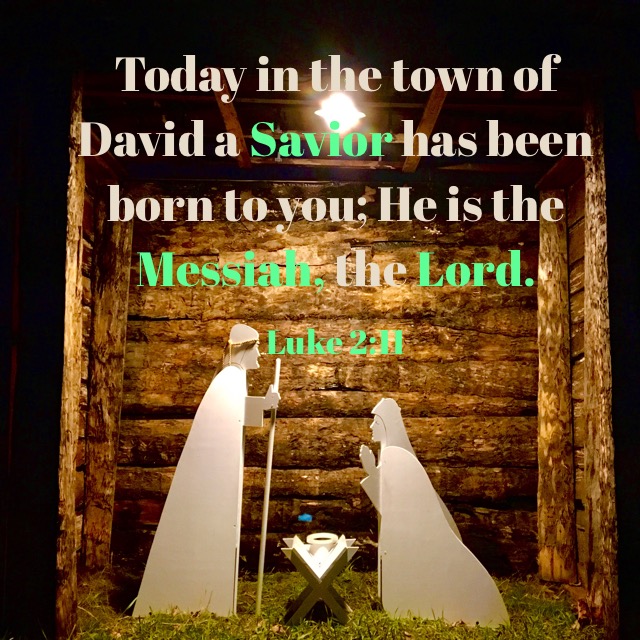
“Today in the town of David a Savior has been born to you; He is Christ the Lord” (Luke 2:11).
Sin forgiven. Curse canceled. Fear removed. Joy has come because Jesus has come.
My prayer for you is that you are living without fear because you are living without sin. It’s only possible because Jesus came for you. Merry CHRISTmas!
Max Lucado has always had a unique way of turning a phrase, of capturing a moment in Scripture that makes biblical truths pop off the page. I’ve always appreciated the way he can bring first-century truths into twenty-first-century applications. Fearlessis no exception to this.
Fearless is also exceptionally well-timed in its release. Lucado quotes Frank Furedi’s findings that the appearance of the term “at risk” was printed in US newspapers more than 18,000 times in the year 2000. A ninefold increase over the previous six years. A ninefold increase! We are a fear dominated society:
“Fear loves a good stampede. Fear’s payday is blind panic, unfounded disquiet, and sleepless nights. Fear’s been making a good living lately.” —Max Lucado
In his unique style, Lucado unmasks thirteen fears that have been “making a good living.” He unmasks these fears by countering each of them with Christ’s admonishment to us to “Fear not!” This is not a fear-denying book, nor is it a run-for-the-hills-because-the-sky-is-falling book.
Lucado presents a straightforward look into our most besetting fears and shows the fears for what they really are: monsters in the dark. And once these “monsters” are exposed to the light of Jesus Christ, they become toothless, harmless shadows.
A great read for anyone! I also loved the discussion questions at the back of the book. These helped me confront some fears head-on. They would also be an excellent springboard for a Bible study group.
I’m giving this book five unreserved stars! Imagine your life without fear— you can do it—this book will help.











 Craig T. Owens