Thursdays With Oswald—I Hope I Am Insane!

This is a weekly series with things I’m reading and pondering from Oswald Chambers. You can read the original seed thought here, or type “Thursdays With Oswald” in the search box to read more entries.

I Hope I Am Insane!

     Insanity simply means that a man is differently related to affairs from the majority of other men and is sometimes dangerous. Paul was charged with madness (Acts 26:24-25), and the same charge was brought against Jesus Christ—“For they said, He is beside Himself.” 

     Have you ever noticed the wisdom of the charge? Both Jesus Christ and Paul were unquestionably mad, according to the standard of the wisdom of this world; they were related to affairs differently from the majority of other men, consequently, for the sake of self-preservation, they must be got rid of. Our Lord was crucified, and Paul was beheaded. When we are imbued with Jesus Christ’s Spirit and are related to life as He was, we shall find that we are considered just as mad according to the standard of this world. 

From Biblical Psychology (emphasis added)

The teachings of Jesus are not only counter-cultural, but they are also are 180-degrees out-of-sync with worldly wisdom. I don’t want to be worldly wise; I want to be called insane by the “wise” men of this world!

Later in this same chapter Oswald Chambers writes:

Read the expositions of the Sermon on the Mount today and you will find some of the cleverest dialectics that have ever been written. The writers try to prove that Jesus is not mad according to the standards of this world; but He is mad, absolutely mad, and there is no apology needed for saying it. Either the modern attitude to things must alter, or it must pronounce Jesus Christ mad. 

Holy Spirit, may I never live my life by the “sane” beliefs and practices of this world’s culture, but may I be imbued with Jesus Christ’s Spirit and related to life as He was.

Thursdays With Oswald—Choose Health

This is a weekly series with things I’m reading and pondering from Oswald Chambers. You can read the original seed thought here, or type “Thursdays With Oswald” in the search box to read more entries.

Choose Health

     Such passages as Romans 12:2 (‘be transformed by the renewing of your mind’) and Ephesians 4:23 (‘be renewed in the spirit of your mind’) apply directly to the moral life of those who have been supernaturally saved by the grace of God, those in whom the Holy Spirit dwells and is at work. To renew means to transform to new life. These passages make it clear that we can be renewed in our mind when we choose. … Continual renewal of mind is the only healthy state for a Christian.

From Biblical Ethics

Far too often it seems easier to say, “If only God would change me” or “I pray that the Spirit would free me from…,” when in reality you can choose to be renewed.

God gave you a mind, emotions, and a will. Even if you don’t think you can be free, you can choose to be renewed. Even if you don’t feel free, you can choose to be renewed.

Stop letting your mind or your emotions keep you from the freedom that could be yours! Remember: “Continual renewal of mind is the only healthy state for a Christian.”

Being Quiet

I love technology. But along with all of the technology comes a whole lot of noise. Not necessarily the noise that your ears pick up, but the noise in your mind.

  • We’ve got Facebook for the latest social updates
  • Twitter and blogs for the latest news and commentary
  • Flickr, Twitpic, and Intragram for the latest pictures
  • LinkedIn for the latest business interactions
  • Smart phones for instant messaging

And if we miss out on any of those things, we feel left behind.

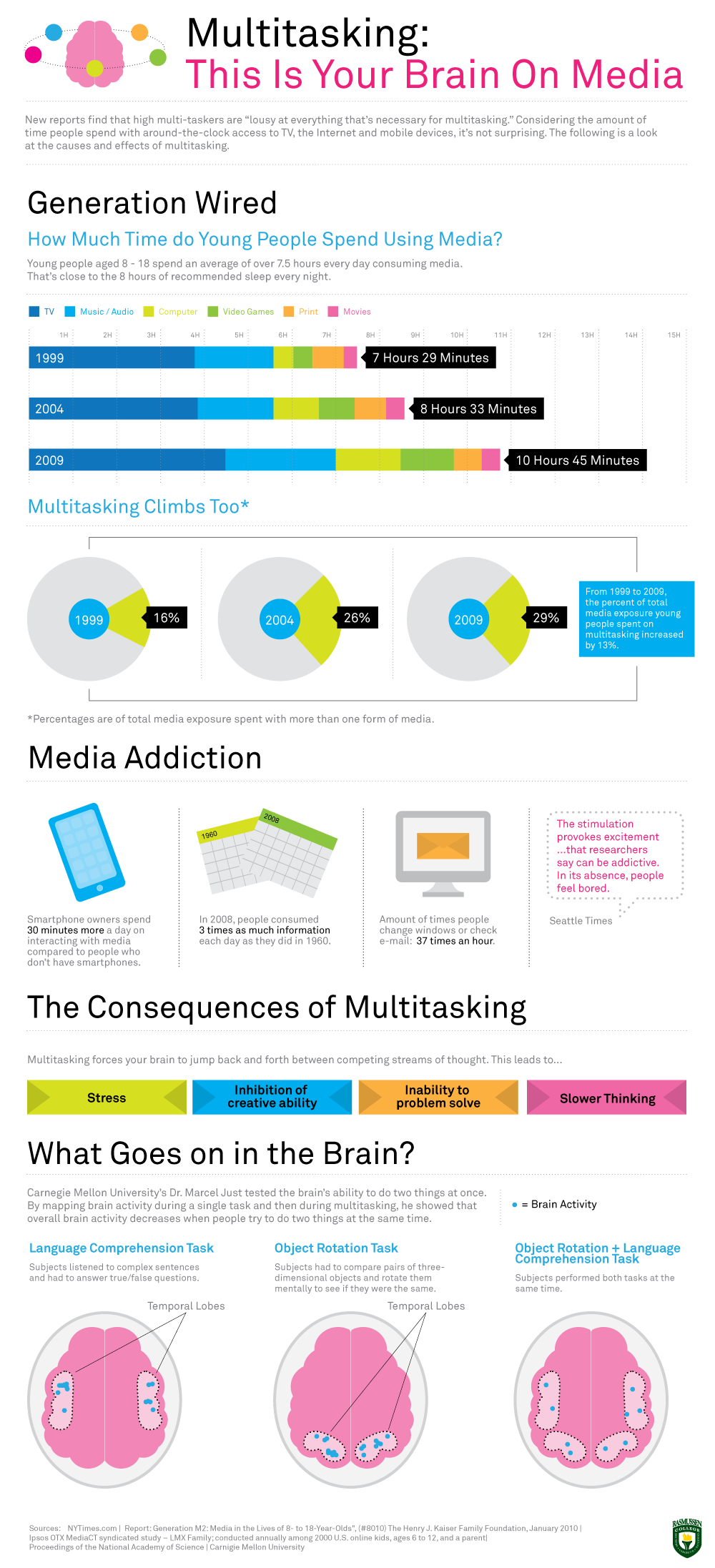
Here’s the ironic thing about all of this social media. Trying to keep up with everything and everyone raises the level of cortisol (a stress hormone) in our bodies. And cortisol actually increases anti-social behavior.

Look what multi-tasking does to our brains


In the midst of trying to tune in and keep up with all of these other voices, we often miss out on the most important Voice.

Jesus says: Listen! I am standing and knocking at your door. If [not when] you hear My voice and open the door, I will come in and we will eat together. (I added the bracketed commentary.)

Today I’m trying to quiet all of the other voices and just listen to The Voice. So today is a media/technology fast.

  • No blogging (I wrote this post yesterday)
  • No Twitter or Facebook
  • No texting
  • No iPod or TV or computer time

I’m taking time to make sure I’m tuning into the most important Voice. I challenge you to try it too. Listen to see what Jesus has to say to you.

The Doctor & The Pastor—Part II

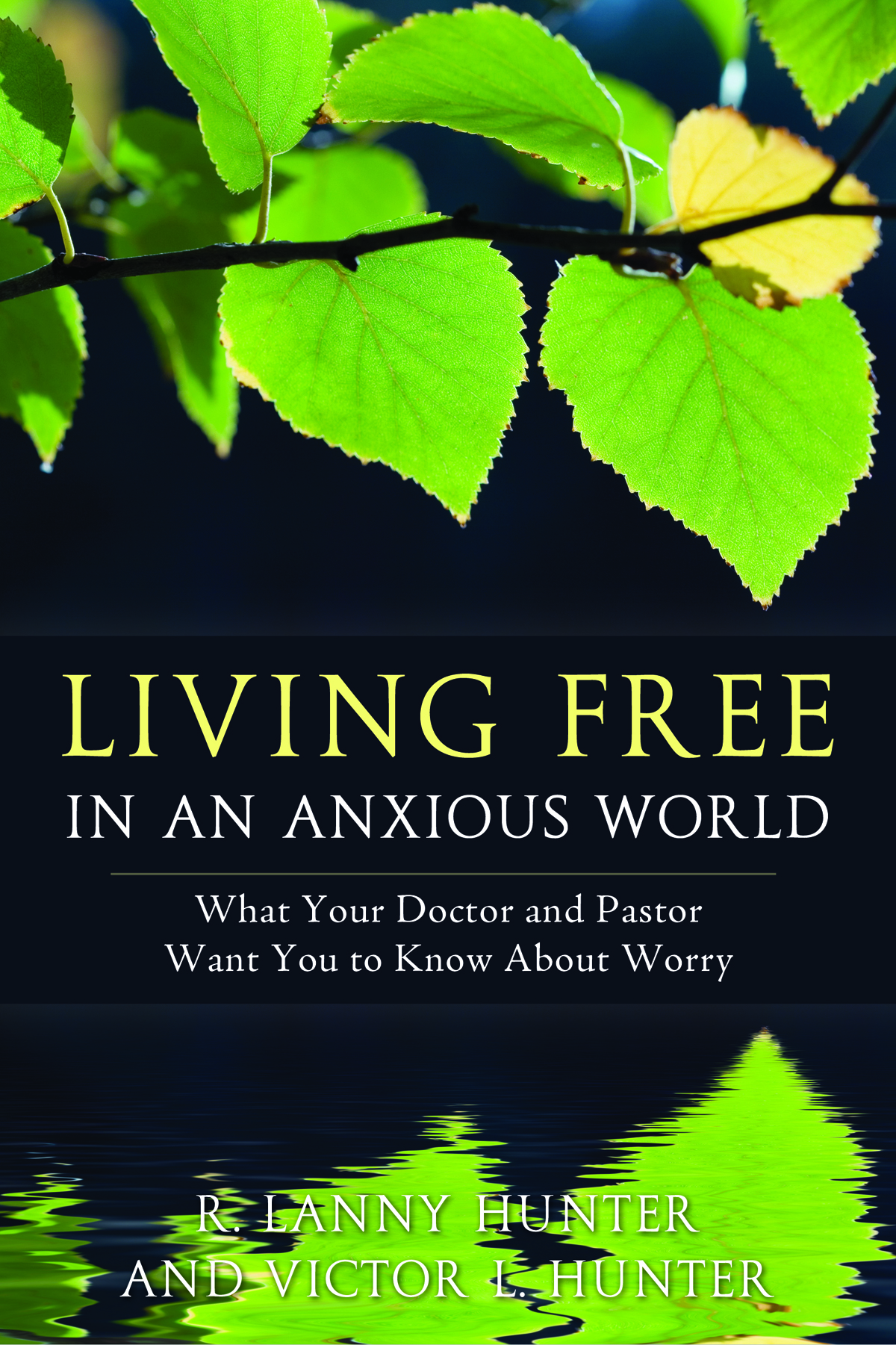
Friends, I recently reviewed the manuscript for a new book Living Free In An Anxious World. This is an essential book for pastors, Christian counselors, psychologists, and medical doctors which deals with a problem that is only expanding: worry, stress, anxiety. Stay tuned to this blog for a chance to win a free copy in just a couple of weeks.

In the meantime, I am absolutely thrilled that the co-authors of Living Free In An Anxious World have agreed to write to my blog readers! Today is the second installment from Dr. Lanny Hunter. (If you missed Part I from Victor Hunter, you can check it out here.)

Guest Author: Dr. R. Lanny Hunter

In my profession as a dermatologist, it’s fair to say that most of my patients come to see me because they are worried. Patients may have developed a rash that worries them. What is it? Is it contagious? Is it serious? Will it scar? What will people think? Can I get rid of it?

Patients may have developed a skin growth, a lump, a sore that won’t heal, a place that is changing color, causing pain, or bleeding. Again, they are worried. Is it cancer? Is it life-threatening? Can it be cured? If I do make a diagnosis of cancer, their anxiety escalates. Will I die? How long do I have to live? How will it be treated? What should I tell my spouse? My family?

Beyond questions of diagnosis, treatment, and questions of severity of illness, many worry about medical costs. How much will it cost? Will my insurance pay for it? They may confide that their insurance has a very high deductible, or that they have no insurance at all, or that they live only on Social Security and Medicare. Will treatment bankrupt them?

In the course of consultation, medical care, and surgery, patients reveal more than their medical worries. They confide their life disappointments—marriage problems, work conflicts, children in trouble, personal and vocational failures, criminal escapades.

Patients with worry and anxiety are my life’s work. To that end, I use all of the interpersonal skills, psychological insights, religious convictions, and medical skills that I have acquired through training and experience. I must listen compassionately and constructively, and be armed with the latest medical techniques in treating disease. I must be cognizant of my limitations in skill and time. I may need to refer a patient to a psychologist, psychiatrist, pastor, priest, social worker, or another physician. I must always remember that I’m not treating the skin. I’m treating the whole person.

With that holistic approach in mind, my brother (a pastor) and I (a physician) have authored a book, Living Free in an Anxious World, which combines the insights of our two vocations to help people manage worry and anxiety in order to free them for more productive living. 

The Doctor & The Pastor—Part I

Friends, I recently reviewed the manuscript for a new book Living Free In An Anxious World. This is an essential book for pastors, Christian counselors, psychologists, and medical doctors which deals with a problem that is only expanding: worry, stress, anxiety. Stay tuned to this blog for a chance to win a free copy of this book later this month.

In the meantime, I am absolutely thrilled that the co-authors of Living Free In An Anxious World have agreed to write to my blog readers! Today is the first installment from Rev. Victor Hunter.

Guest Author: Rev. Victor L. Hunter

Whether it was the Carter family’s version in the 1930s, Woody Guthrie’s in the 40s, the Kingston Trio’s in the 50’s, Ramblin’ Jack Elliott’s in the 60s, or Devo’s in the 70s and 80s, “Worried Man Blues” has been a ubiquitous presence in the bluegrass/folk song genre of cultural music throughout the “century of anxiety.” Its words and tune have provided a common background theme playing in our minds for decades:  “It takes a worried man to sing a worried song.” Most of us, men and women, have hummed along, literally and/or figuratively, with its sentiments.

During these decades, my brother and I have listened to the song’s lyrics and contemplated the reality of worry and anxiety both personally and professionally. He’s a physician. I’m a pastor. I can say without hyperbole that there hasn’t been a week go by in nearly a half-century of preaching, pastoral care and counseling, and teaching that worry and anxiety haven’t been at the forefront of conversations with people, young and old, men and women, who have said to me, “I need to talk with you about something.”

This is so because anxiety is part of what it means to be human beings. It’s part of our biological makeup and spiritual reality. It is essential to our survival, as well as being a core theological question. It can also be devastatingly paralyzing, keeping people from living free, living life fully alive.

During the past four decades, the doctor and the pastor, the brothers, have been in conversation about our disciplines of science and theology and our professions in medicine and religion. We have become increasingly sensitive to the many issues that meet at the intersection of biology and theology. It’s about being human before God. We share in Living Free in an Anxious World this conversation and our passion for a holistic understanding of our humanity in light of faith and science . . . as well as our hope for the healing and redemption of our lives. We affirm that while anxiety and worry are unavoidable, they can be our teachers rather than our masters. Our goal is to provide realistic, practical, and helpful guidance in understanding worry and facing our fears that we might travel the road of freedom and grace.

Check out the guest post from Dr. R. Lanny Hunter by clicking here

An Extra Hour Of Sleep

I’m a morning person. I absolutely love getting up early and spending some quiet time alone with my Bible. This is the time of day I most absorb all that God is saying to me. It’s my most creative time too. In fact, I so love getting up early that most mornings I’m awake before my alarm clock goes off.

But not this morning.

Today my alarm clock began playing Way-FM and I felt like I was in a fog. It took me a minute or so to even open my eyes and sit up.

I was about to press ahead with my morning, when I thought, “I should sleep some more.”

You see, I’ve learned a few things about myself. When I’m tired…

  • I have a shorter attention span.
  • I’m not as creative.
  • I’m not as patient.
  • I am more prone to give in to temptation.
  • I make decisions that are too short-sighted.
  • I’m more susceptible to colds and flu.

So I re-set the alarm and slept another hour.

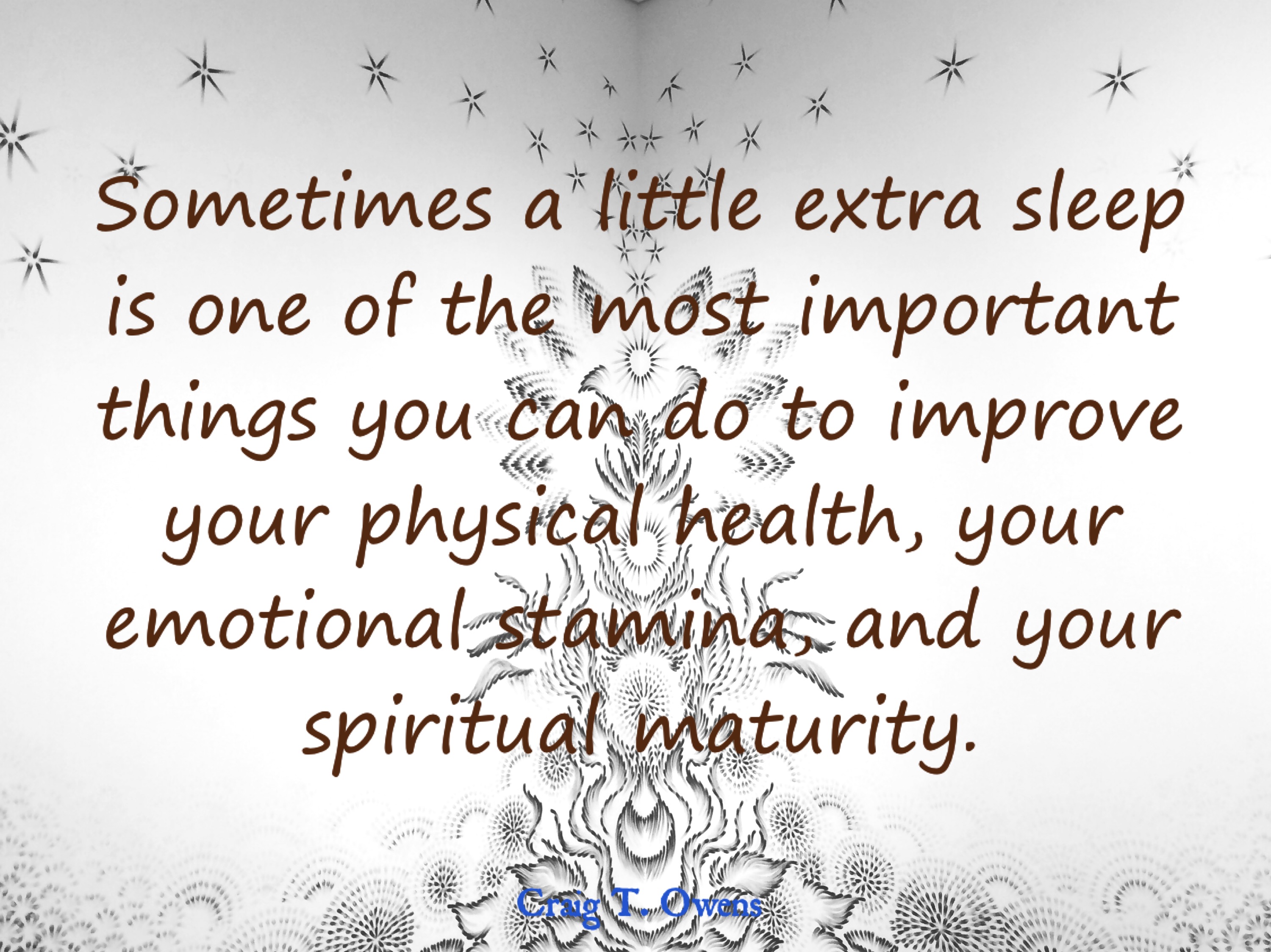
Sometimes a little extra sleep is one of the most important things you can do to improve your physical health, your emotional stamina, and your spiritual maturity.

UPDATE: In my book Shepherd Leadership: The Metrics That Really Matter I have five chapters about a leader’s health—mental, physical, spiritual, and emotional health is vital to a leader’s effectiveness and longevity.

Spiritual Cross-Training

Several years ago the term “cross-training” became more popular in physical fitness circles. The idea was that training or working out in a secondary sport better prepared the athlete for their primary sport. For example, a long-distance cyclist playing basketball would help develop some of the fast-twitch muscles needed for quick bursts on the bike. This was valuable insight and has helped many athletes excel.

It’s just as true spiritually.

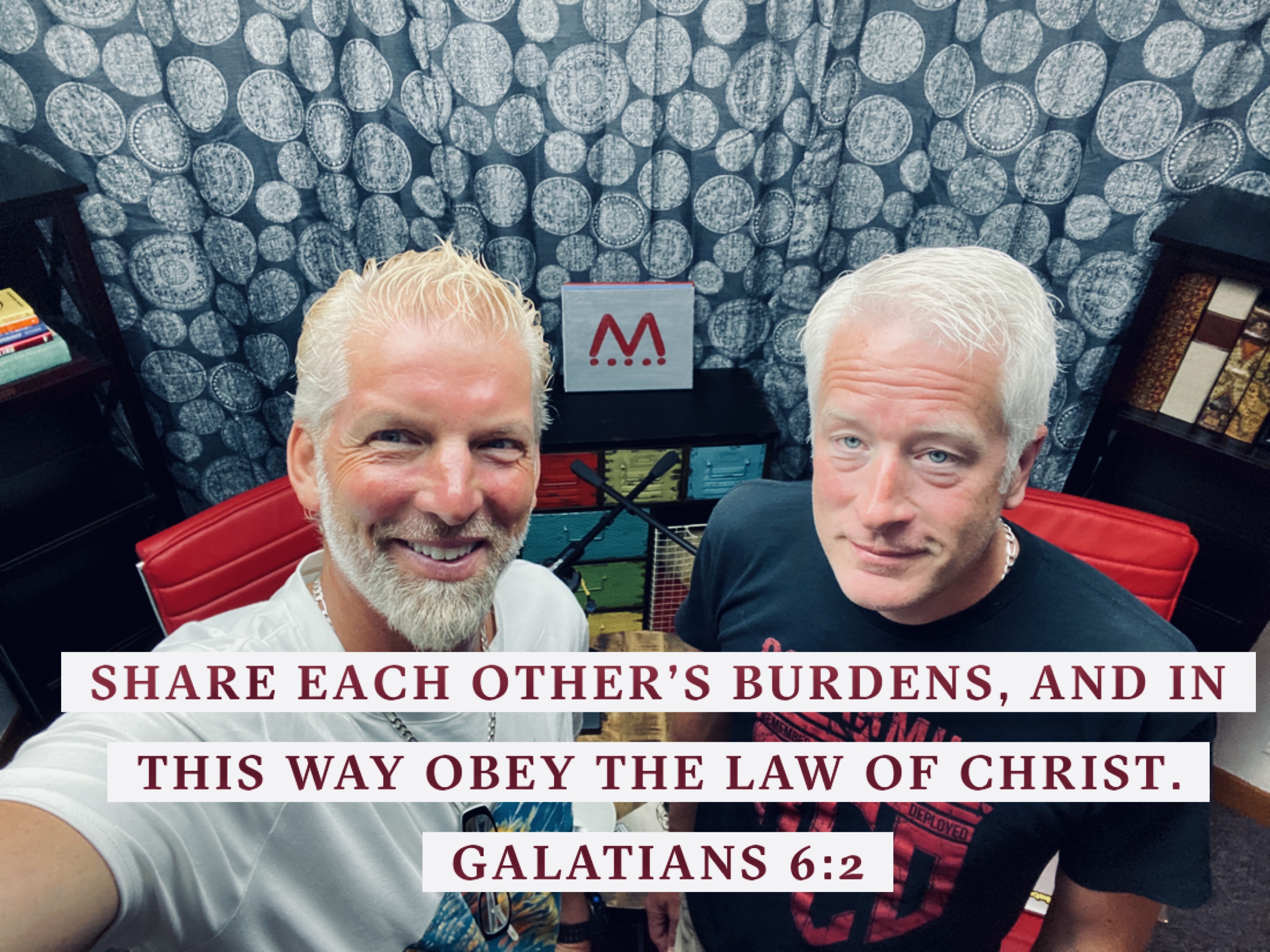
The Apostle Paul encourages us to, “Carry each other’s burdens.” No small task in itself. In fact, that usually requires some very heavy lifting. But if I’m going to be prepared for the heavy lifting, I’ve got to put in some spiritual cross-training time.

It’s no secret that if I don’t eat right, my body doesn’t have the fuel to burn. If I don’t sleep enough hours, my body doesn’t have the stamina to function properly. If I’m not handling stress right, my mind and emotions will be clouded in their processing capabilities.

All of these areas are just as true spiritually. If I’m not getting the right spiritual food, rest, and peace, I’m going to break down. I won’t be any good to myself or others.

In the same burden-carrying / cross-training passage, Paul says, “Brothers, if someone is caught in a sin, you who are spiritual should restore him gently. But watch yourself, or you also may be tempted.”

Yesterday I did some cross-training. I was having lunch with a B.T.D.T. pastor friend (been there, done that). I was soaking up his counsel on vision-casting for my church, enjoying his encouragement for the road ahead of me, and just generally being filled up.

As our lunch was wrapping up, I received a call from another friend who needed help. This friend was in trouble and needed me to help shoulder a burden. I spent the next three hours doing some very heavy lifting.

Here’s the deal: if I hadn’t been doing some spiritual cross-training to prepare myself, I may not have been able to lift that burden. Or, worse yet, I may have been tempted to take shortcuts and fall into the same trap as my struggling friend.

It doesn’t always happen back-to-back like this. But I know the joy of being able to carry a heavy burden for a brother because I have done my cross-training time, and I (unfortunately) also know the heartache of not being a very effective lifter because I didn’t make the time for cross-training.

We never know when we’ll be called upon by a friend. So we need to stay in tip-top spiritual fitness all the time. Your spiritual cross-training regime should include time with God’s Word and time in prayer; reading good books; spending time with encouraging, uplifting people; plenty of rest, good food, and physical exercise; and an attentive ear to those in need.

Cross-train regularly so you can be a great burden-lifter when a friend-in-need calls on you.

A Healthy Breakfast

Listen to the podcast of this post by clicking on the player below, and you can also subscribe on AppleSpotify, or Audible.

Health experts say breakfast is the most important meal of the day. Your body has been without food (or fasting) during the hours you are asleep, so in the morning you are breaking your fast = break-fast.

Do you want to lose weight? Eat breakfast. Studies show that those who do best on their diets eat breakfast every morning.

Do you want to fire up your metabolism to burn more calories during the day? Eat breakfast. The way you stoke your body’s engine in the morning determines how it will run all day.

Do you want to maintain a stable blood sugar level so you don’t get sleepy mid-morning? Eat breakfast. A good breakfast regulates your insulin and blood sugar levels.

Do you want to learn more? Eat breakfast. Studies show those who eat breakfast regularly have longer attention spans and greater learning capacities.

What you put in your body in the morning determines the course of the rest of your day.

What you put in your mind in the morning determines the course of the rest of your day, too.

Even if you’re not a “morning person” your mind is highly receptive in the hours right after you wake up. So a healthy mental breakfast goes a long way toward how you will deal with the situations that face you throughout your day.

Just a few things to consider—

  • What’s on your wake-up playlist in the morning? Not-so-cheery headline news? Coarse radio hosts with crude humor? Music with lyrics that are not very uplifting? A harsh buzzer? Perhaps you could rethink your morning mental breakfast with something more positive and affirming.
  • How do you speak to yourself when you wake up? “Ugh, I just gotta get through today”? “I need a vacation”? “Grrr, I hate my job”? Try thinking instead of all of the blessings you have: a roof over your head, a bed of your own, clothes to wear, a family to love, and a family that loves you.
  • How do you speak to others when you wake up? “Leave me alone”? “<Grrrr!>”? Maybe you could serve others the good mental breakfast they need with some kind, encouraging words.
  • What fuel do you put in your mind? Talking heads on the morning TV shows? Your horoscope? Perhaps switching to something more substantial would help fuel your mind for the challenges you are going to face today.

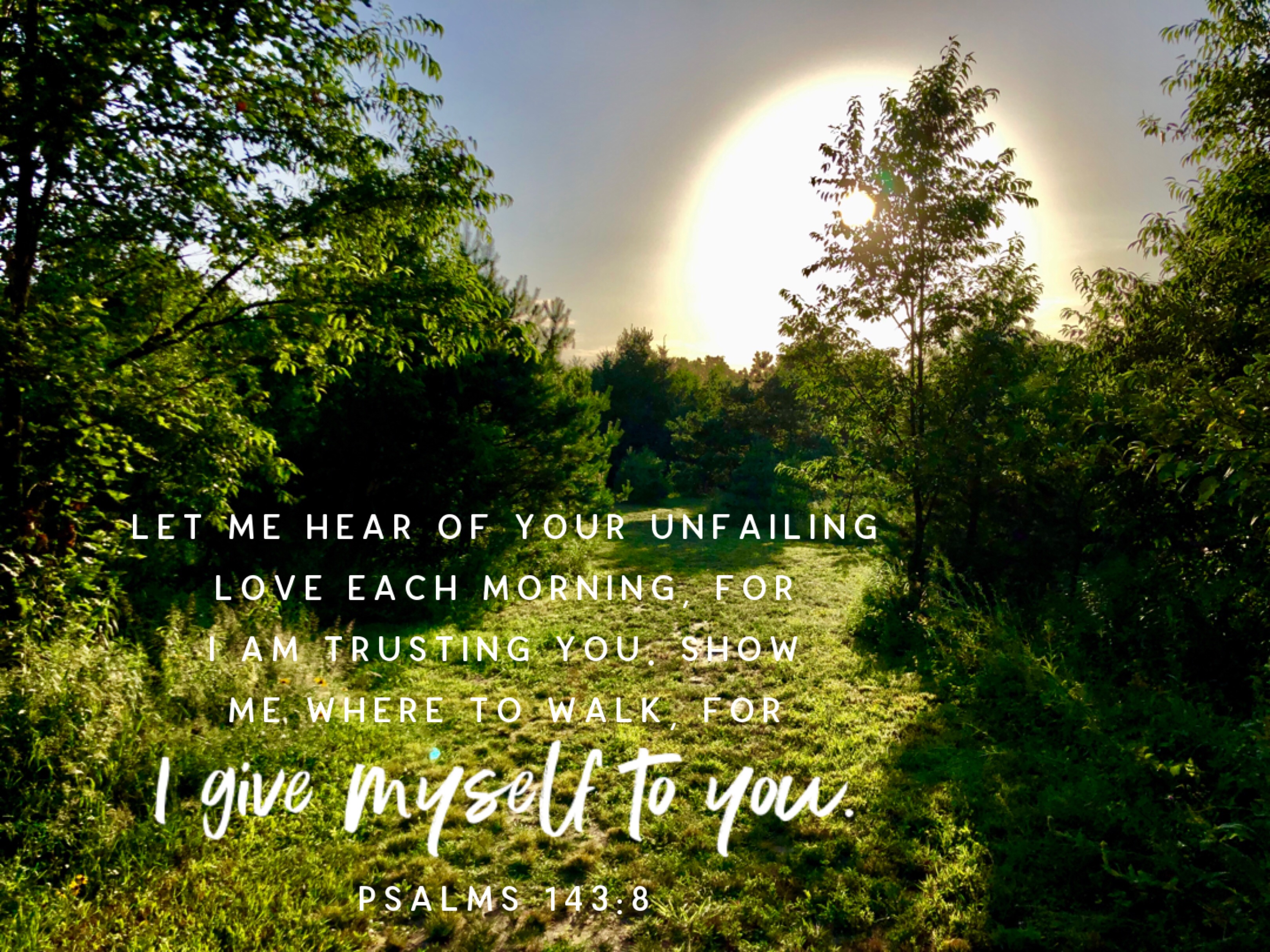
The psalmist David had a God-diet each morning, “Let me hear of Your unfailing love each morning, for I am trusting You. Show me where to walk, for I give myself to You” (Psalm 143:8, The Living Bible).

Jesus had a healthy mental breakfast, too: “Very early in the morning, while it was still dark, Jesus got up, left the house and went off to a solitary place, where He prayed” (Mark 1:35).

So let me ask you: What’s your morning mental breakfast like? do you need to make a diet change? I think a few tweaks and you will begin to see some remarkable changes for the better! Try it out and let me know.

►► Would you please prayerfully consider supporting this ministry? My Patreon supporters get behind-the-scenes access to exclusive materials. ◀︎◀︎

Be An Intrusive Friend

Yesterday I talked about how to defeat depression in our personal lives. Maybe you’re not battling depression yourself, but since anti-depressants are one of the most prescribed medications, there’s a good chance that someone you know is dealing with depression. Beyond medicine or counseling, one of the greatest antidotes for depression is a friend: an intrusive friend.

In 1 Kings 19 when Elijah was running scared and slipping into depression, there is an important verse at the beginning of the story—Elijah was afraid and ran for his life. When he came to Beersheba in Judah, he left his servant there (v. 3).

One of our most natural reactions when we’re battling depression is to withdraw from others. It’s natural to want to be alone, but it is one of the worst things to do. Throughout Scripture, powerful people became vulnerable to attack when they left their friends behind—Samson, David, and Peter are prime examples. Even Jesus was tempted by the devil when He was alone in the wilderness.

So if it’s natural to want to be alone when depression is raining on our souls, a true friend will have to be an intrusive friend … a tenacious friend … a persistent friend. I love the lines in the Toby Mac song “Face Of The Earth” that say—

Now Hope Road is calling
Let’s pack you up and move
‘Cause real friends are willing to intrude
So I’m gonna push you in because I wanna love you well
Let the ghosts of your past rest

If you have a friend who is starting to become distant, dropping out of activities, or spending more time alone, these may be the warning signs of depression. Don’t let him be like Elijah and leave you behind, but love him or her enough to intrude in his or her life. Your encouragement just may be the best anti-depressant he/she will ever receive.

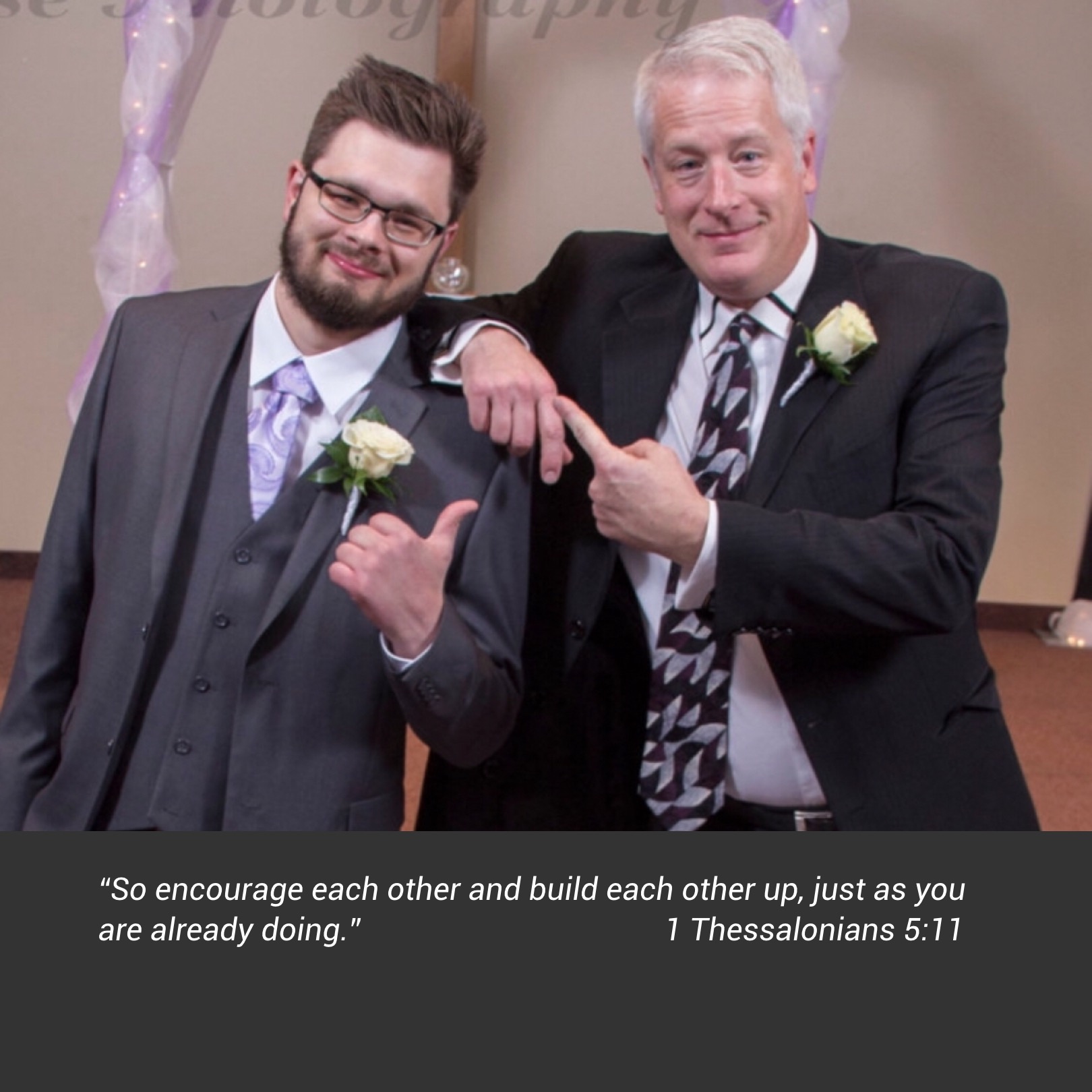
So speak encouraging words to one another. Build up hope so you’ll all be together in this, no one left out, no one left behind. I know you’re already doing this; just keep on doing it. (1 Thessalonians 5:11, The Message)

Jonathan went to find David and encouraged him to stay strong in his faith in God. (1 Samuel 23:16, New Living Translation)