I was thinking about the disciples of Jesus. Can you imagine the things they heard and saw! With their own eyes they saw those jaw-dropping miracles. With their own ears they heard His profound teaching. They watched and heard Him pray. No one ever had the kind of access to Jesus than these men.
And yet, they were still so spiritually dull…
They couldn’t grasp what Jesus was teaching, even when He explained it to them privately.
Their faith was sorely lacking.
They argued among themselves over such petty things.
If these men—with their almost limitless access to Jesus—were still struggling in their faith, what would make me think I have ever “arrived”?
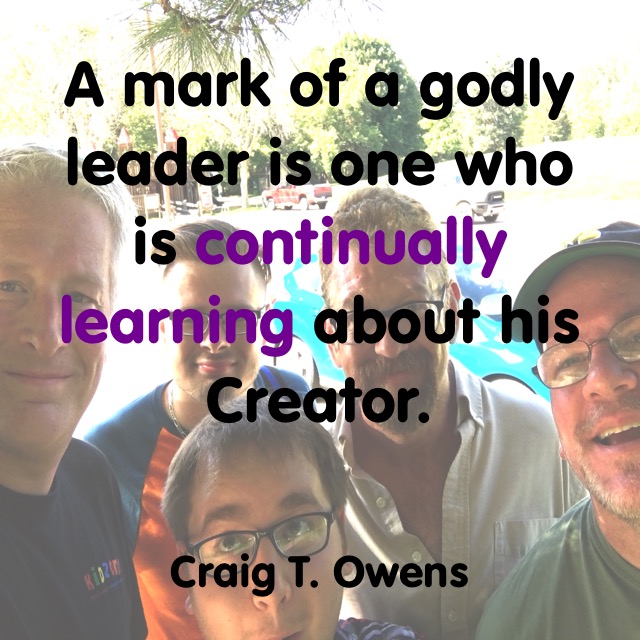
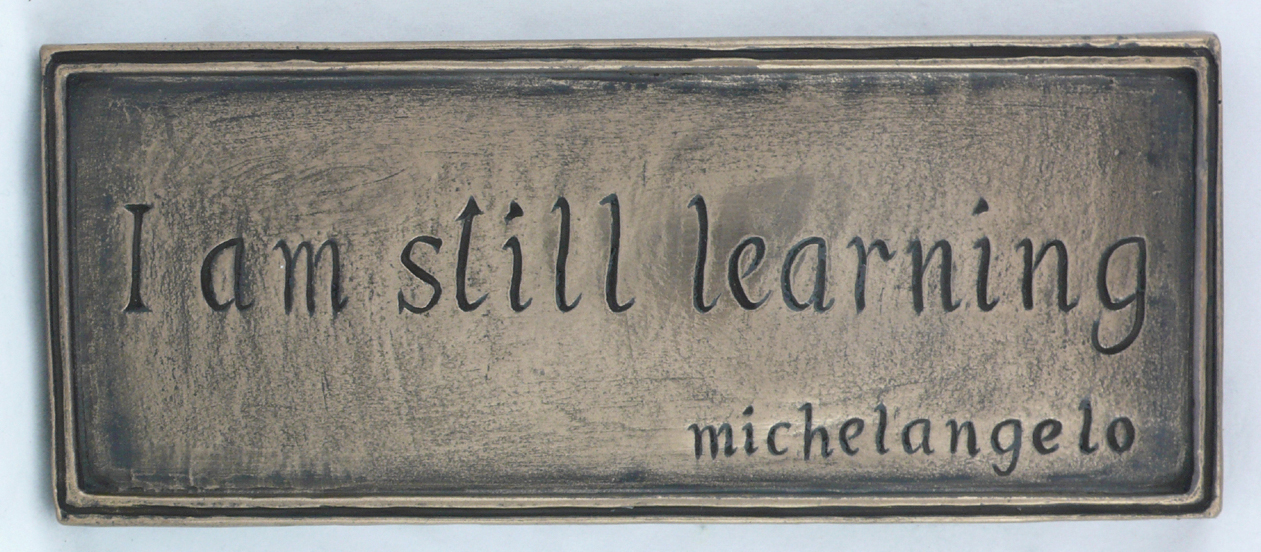
There is still so much more for me to learn about Jesus.
And I do want to learn more! I want to press in—closer and closer, deeper and deeper! I never want to stop learning my Savior’s heart and will!
Listen to the podcast of this post by clicking on the player below, and you can also subscribe on Apple, Spotify, or Audible.
Blind spots can be deadly. I simply don’t see what’s right there until—wham!—it crashes into me.
These blind spots have been called our “unconscious incompetence” zone. I’m not doing well in a certain area, but I just don’t know it yet until—wham!
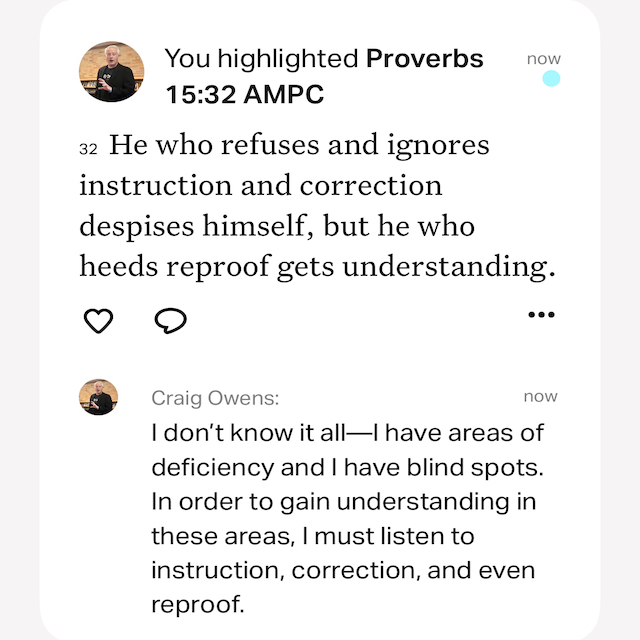
Up to that point everything seems fine, but wise King Solomon said, “Smugness will destroy fools” (Proverbs 1:32).
It seems there are two ways I could deal with my unconscious incompetencies. (1) I could wait until I get blindsided by one of them; or (2) I could ask the Holy Spirit to reveal them to me. Neither option seems very pleasant, but if I’m going to get hit—wham!—it seems like a better option to let Someone who loves me, and wants the best for me, to do it (see Hebrews 12:5-11).
David thought so too. He prayed—
Search me thoroughly, O God, and know my heart! Try me and know my thoughts! And see if there is any wicked or hurtful way in me, and lead me in the way everlasting. (Psalm 139:23-24)
Or, how about Sir Francis Drake’s prayer:
Disturb us, Lord, when We are too well pleased with ourselves, When our dreams have come true Because we have dreamed too little, When we arrived safely Because we sailed too close to the shore.
Disturb us, Lord, when With the abundance of things we possess We have lost our thirst For the waters of life; Having fallen in love with life, We have ceased to dream of eternity And in our efforts to build a new earth, We have allowed our vision Of the new Heaven to dim.
Disturb us, Lord, to dare more boldly, To venture on wider seas Where storms will show Your mastery; Where losing sight of land, We shall find the stars.
We ask You to push back The horizons of our hopes; And to push us into the future In strength, courage, hope, and love.
The wham! moments will come. The question is how do you want them to come?
Hello, my name is Craig Owens and I’m a pastor. I wasn’t a PK (pastor’s kid). This isn’t the profession I chose for myself. I envisioned myself doing other things, but God had different plans for me.
He called, and I said “yes.” He called me to be a pastor and so He equipped me for the pastorate. I can relate to what the Apostle Paul wrote—
By God’s grace and mighty power, I have been given the privilege of serving Him by spreading this Good News. (Ephesians 3:7)
Paul, too, didn’t choose be a minister telling people about Jesus Christ. But God had different plans for him.
And so, since God has called me to do this, I must do it to the best of my ability. I don’t have the natural ability for it, I simply have God’s grace and mighty power. And to that grace and power I must add my best effort—
Studyandbe eager and do your utmost to present yourself to God approved (tested by trial), a workman who has no cause to be ashamed, correctly analyzing and accurately dividing [rightly handling and skillfully teaching] the Word of Truth. (2 Timothy 2:15, AMP)
I like the counsel of Charles Spurgeon:
“Again, the theme of a minister should be Christ Jesus in opposition to mere doctrine. Some of my good brothers are always preaching doctrine. Well, they are right in so doing, but I would not care myself to have as the characteristic of my preaching doctrine only. I would rather have it said, ‘He dwelled much upon the person of Christ and seemed best pleased when he began to tell about the atonement and sacrifice. He was not ashamed of the doctrines; he was not afraid of threatening. But he seemed as if he preached the threatening with tears in his eyes, and the doctrine solemnly as God’s own Word. But when he preached of Jesus, his tongue was loosened, and his heart was at liberty.’”
I didn’t choose this, but God chose me. And for that I am extremely humbled and grateful.
People who call themselves Christians should know how to read the Bible, right? Maybe, but many times I think we assume far too much. Fortunately How To Read Your Bible by A.J. Conyers can help.
Some people avoid the Old Testament, saying, “It’s too confusing!”
Some people simply flip their Bibles open to any passage and simply start reading.
Some people only open their Bibles when they’re at church.
All of these methods may work, but they’re not the best way to learn what God has to say to us in His Word. A.J. Conyers explains to his readers the art of reading the Bible, as well as the practice of reading the Bible. He gives enough background information to get you started in the right direction, and he gives you ample resources to continue digging into God’s Word more.
As you might have noticed, I love to read. But hands-down-without-question my favorite book is the Bible. Every time I open it up, I find something new to apply to my life. If you’re having difficulty getting started on a Bible study, this book may be just the thing to help get things rolling.
(I’m also a big fan of YouVersion: the Bible app for your smart phone. You can download it for your iPhone or Droid by clicking here.)
When I was in the 6th grade my school was at the end of a dead-end street, which was at the top of a not-too-steep hill. Coming home from school we would try to see how far we could coast on our bikes before we had to start pedaling. We’d pedal really hard across the parking lot, and then start coasting as we hit the top of the hill. I think my record was nearly four blocks!
Coasting is so much fun! It’s easy and exciting, and involves no work at all. Your legs are never tired at the end of a long coasting spree.
But you can only coast downhill. (Well, okay, I guess you might be able to coast for a short distance on level ground, but not nearly as far.)
Downhill might be fun on a bike, but it’s a lousy way to live. Solomon wrote:
The path of life leads upward for the wise to keep him from going down to the grave. (Proverbs 15:24)
Coasting is easy, but it’s taking you in the wrong direction.
Coasting doesn’t cause any muscle pain, but it doesn’t build any muscle strength either.
Coasting is fun for awhile, but the longer you coast, the harder the journey back.
Save coasting for your bike rides, but in your life be very cautious of coasting too long.
Instead…
Keep learning new things
Keep reading challenging things
Keep growing in new areas
Keep setting stretching goals
Keep forgiving
Keep strengthening relationships
Keep climbing higher and higher
It may be work to climb to the top, but the view is incredible!
This is a weekly series with things I’m reading and pondering from Oswald Chambers. You can read the original seed thought here, or type “Thursdays With Oswald” in the search box to read more entries.
Obstinacy Or Determination?
It is easy to be determined, and the curious thing is that the more small-minded a man is the more easily he makes up his mind. If he cannot see the various sides of a question, he decides by the ox-like quality of obstinacy. Obstinacy simply means “I will not allow any discernment in this matter; I refuse to be enlightened.” We wrongly call this strong-mindedness. Strength of mind is the whole man active, not discernment merely from an individual standpoint. The determination in a disciple is a comprehending one, “For I determined not to know any thing among you, save Jesus Christ, and Him crucified,” says Paul.
From Facing Reality
The difference between an obstinate man and a strong-minded man lies just here: an obstinate man refuses to use his intelligence when a matter is in dispute, while a strong-minded man makes his decision after having deliberately looked at it from all standpoints, and when opposed, he is willing to give reasons for his decision.
From Baffled To Fight Better
“The difference between perseverance and obstinacy is, that one often comes from a strong will, and the other from a strong won’t.” —Henry Ward Beecher
So in hanging onto (and defending) what I believe, am I being obstinate or justly determined?
Today is Ash Wednesday: the start of the season of Lent. For the next 46 days, people all around the world will be preparing themselves to celebrate Good Friday, Holy Saturday, and Resurrection Sunday.
Whether you have celebrated Lent for years, or you aren’t quite sure what Lent even is, I’d like to suggest a great tool. I love how YouVersion has made the Bible so accessible. Not only in multiple languages and a variety of translations, but via smart phones and the web, it’s so easy to read the Word.
There is a daily devotional plan now available for the Lent season. You can access it by clicking here. This is a 46-day Bible and devotional reading plan. I started it today, and I encourage you to read along with me.
Let’s keep learning more and more about the amazing work Christ did for us on Calvary, and what our response to His atoning work should be. As I tweeted this morning:
Keep learning: "The mind of the prudent is ever getting knowledge & the ear of the wise is ever seeking (inquiring for & craving) knowledge"
I’ve been studying the lives of the kings of Judah. The last God-fearing king before the fall of Jerusalem was a man named Josiah. He became king as an 8-year-old and really began looking for God as a teenager. Apparently, during all of this time, the book of the Law (the first five books of our current Bible) was hidden away and forgotten. As Josiah started seeking God, he gave orders that the temple in Jerusalem be repaired. During the clean-up work, the workers rediscovered the book of the Law and brought it to the palace. They began to read the Law to Josiah…
When the king heard the words of the Law, he tore his robes.
Tearing of the robes is a sign of deep mourning. The words of Scripture cut Josiah like a dagger to the heart because he knew he and his people weren’t living according to God’s standards. He started telling everyone the Scriptural standards that they needed to honor, and had the words of the Law read aloud for everyone to hear. Then in the presence of everyone, Josiah reaffirmed his commitment to be a man who lived by the words of God’s Word.
This got me thinking:
Do I have an emotional response when I read the Bible? Or is it just a mental exercise? Or worse yet, just a meaningless daily habit?
Am I truly sorry when I read in the Bible where I’ve fallen short of what God desires? Or do I make excuses?
Do I ask the Holy Spirit to help me live out what I’ve read in the Word? Or do I convince myself that those parts don’t pertain to me?
Do I share with others what’s been revealed to me? Or do I keep it to myself?
Am I willing to be accountable to others about the changes I need to make? Or am I trying to be a lone ranger saint?
Do I just read the Bible? Or do I allow the Bible to read me?
This is a weekly series with things I’m reading and pondering from Oswald Chambers. You can read the original seed thought here, or type “Thursdays With Oswald” in the search box to read more entries.
The Preacher And The Word
Keep yourself full to the brim in reading; but remember that the first great Resource is the Holy Spirit Who lays at your disposal the Word of God. The thing to prepare is not the sermon, but the preacher. …
It is easy to tell men they must be saved and filled with the Holy Spirit; but we have to live amongst men and show them what a life filled with the Holy Spirit ought to be.
From Approved Unto God
My takeaways: (a) My other reading is fine, but it should never take the place of the reading of the Bible; and (b) People would rather see a sermon in me than hear a sermon from me any day.
I love learning new things, listening to innovative ideas, and talking with other learners too. This weekend I’ll get to do a whole lot of this.
I’m heading to The Genius Of And Conference at Granger Community Church this morning. I love thinking about both-and when others are stuck on either-or. As an added bonus, I’m traveling and rooming with some innovative young leaders who are campus missionaries at Western Michigan University. I know we’ll have some great discussions around the topics we cover at the conference.
(By the way… for those of you who follow me on Twitter, I’ll be tweeting and blogging during the conference. The hashtag for the conference is #and10.)
Then our youth group is going to the Assembly of God Michigan District’s annual Youth Convention on Friday and Saturday. I love how fired up our youth get when they are worshipping, learning, and praying with their peers. Can’t wait to debrief with them when they return and let some of their passion rub off on me.
On Sunday we have a special guest speaker at Calvary A/G. Brad Leach is a dynamic young church planter. He planted a church in the metro-Detroit area, and just as it was really hitting its stride, he felt God calling him to leave Detroit and plant a new church in Philadelphia. I love that sensitivity to the Holy Spirit’s prompting, so I can’t wait to hear what word God has laid on Brad’s heart for our community. If you can, please come and join us this Sunday, November 7, at 10:30am.
I hope you are intentionally looking for opportunities to expand your horizons. As George Washington Carver noted, “How much of God are we missing because we don’t stop to listen to the many voices God uses to speak to us?”



 I was thinking about the disciples of Jesus. Can you imagine the things they heard and saw! With their own eyes they saw those jaw-dropping miracles. With their own ears they heard His profound teaching. They watched and heard Him pray. No one ever had the kind of access to Jesus than these men.