John Maxwell famously said, “The entire world—with one minor exception—is made up of other people.” That “one minor exception”? It’s the person staring at you in the mirror every morning! Obviously learning how to get along with all the “others” in the world is hugely important.
It’s even more important for those who call themselves Christians.
The Bible makes it quite clear that people watch how Christians treat one another to see if the message they preach is one worth living. And Jesus told one of His most well-known stories to make the point that all of the Bible is fulfilled in just two things: (1) Loving God and (2) Loving others.
To live above with the God that we love,
Oh, wouldn’t that be glory!
But to live below with the saints that we know,
Well, that’s a different story!
The Bible says a lot about “one another.” In fact, that phrase is used nearly 60 times in the New Testament! Not only is there much that the Scripture has to say to us about getting along with one another, but most of what was written has been confirmed by modern psychology.
Join me this Sunday at Calvary Assembly of God as we begin a new series called How To Get Along With Others. We’ll be learning some practical training along with biblical insights to help us excel at this vitally important life skill.
You can find directions to our church here, and if you can’t join us in person, be sure to tune in to our Periscope broadcast (follow me @craigtowens to be notified when the broadcast starts).
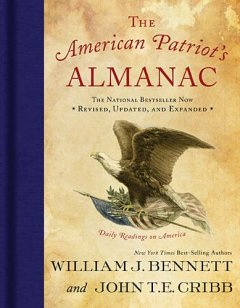
I feel so blessed to live in the United States of America! With the blessing of living in this great country comes the responsibility of knowing as much as I can about our country’s founding and guiding principles. A wonderful help on this journey of discovery is The American Patriot’s Almanac: Daily readings on America by William Bennett and John Cribb.
I am now on my second time through this book, and I’m still discovering how much there is to love about the USA. Each day Bennett and Cribb present a snapshot of a notable event in our nation’s history, that makes me so proud of our heritage all over again. There are cool stories about both the well-known and little-known folks who sacrificed and invested to make this country what it is.
At only a page a day, there’s no excuse for American patriots not to read this book through over the course of a year, and re-discover what a privilege it is to live in the land of the free and the home of the brave. We all owe it to our future generations to keep these memories alive, so that no one forgets our amazing heritage.
The last Sunday of each year I take some time with our church family to look back to review what we’ve learned. Then we look forward to a theme God is impressing on us for the new year. Check it out here—
“What a great responsibility God has laid upon us preachers of His gospel and teachers of His Word. In that future day when God’s wrath is poured out, how are we going to answer? How am I going to answer? I fear there is much we are doing in the name of the Christian church that is wood, hay and stubble destined to be burned up in God’s refining fire. A day is coming when I and my fellow ministers must give account of our stewardship: What kind of a gospel did we preach? Did we make it plain that men and women who are apart from Christ Jesus are lost? Did we counsel them to repent and believe?” —A.W. Tozer
“Prayer pursues God’s glory by treating Him as the inexhaustible reservoir of hope and help. In prayer, we admit our poverty and God’s prosperity, our bankruptcy and His bounty, our misery and His mercy.” —John Piper
“We love beauty with simplicity, and we love the pursuit of knowledge without effeminacy. We employee wealth properly, for use rather than for noisy display, and we do not consider poverty to be a disgrace but do regard it as shameful for someone not to seek to escape poverty through labor. We citizens of Athens care for both our own domestic concerns and for the affairs of state; those of us engaged in business are not lacking in understanding of public matters. For we alone consider those who avoid engagement in public affairs not as ‘uninvolved’ but as useless. And we, as we judge and reflect carefully on matters, do not consider words to be a hindrance to actions. Rather, the real hindrance to action is to enter into whatever must be done without taking forewarning through discussion.” —Pericles, speaking about Athenian culture, quoted in the Archaeological Study Bible
I like Seth Godin’s thoughts on our vocabulary. “It’s not about knowing needlessly fancy words (but it’s often hard to know if the fancy word is needless until after you learn it). Your vocabulary reflects the way you think (and vice versa). It’s tempting to read and write at the eighth-grade level, but there’s a lot more leverage when you are able to use the right word in the right moment.” Read more in Does Vocabulary Matter?
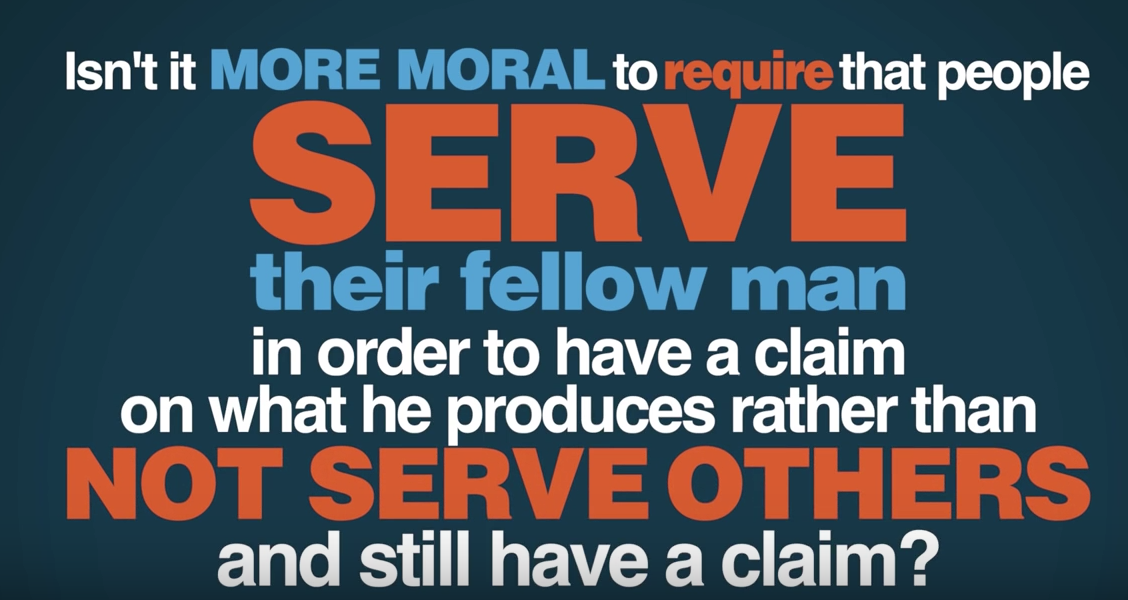
This is an absolutely brilliant description by Professor Walter Williams of the morality and viability of free-market capitalism. Please take just 5 minutes to get educated on this.
I thoroughly enjoy photography. Looking at the way a photographer creatively captures his image has always fascinated me, and I’ll never forget the thrill of the first time I developed my own roll of film from my 35mm SLR camera. I’m still learning this art, and Bryan Peterson’s book Learning To See Creatively is a wonderful textbook to help me grow.
Although, it’s really more than just a textbook. The way Bryan walks the reader through the process of seeing the shot, setting up the shot, and processing the shot feels like I was taking a class with him, allowing me to look through his viewfinder with him. This book is chockfull of pictures that are detailed in their account of which lens he used, at what settings, and what point of attraction caught his attention.
God has given us an amazing camera in the eyes He created for us. Learning To See Creatively allows us to capture the way we are seeing the world to share with those around us. What a gift this is! Anyone interested in upping their photographic game will enjoy this book.
When you read a John Maxwell book, you are going to get a full serving of practical counsel to help you soar. I just finished reading 15 Invaluable Laws Of Growth, and my highlighter almost ran dry marking all of the helpful passages!
Dr. Maxwell states right up front that no one grows by accident, but we need to have a plan to help us grow. Consider this book your growth manual from someone who has the life experience to back-up his words of wisdom. Every chapter builds on the ones before to help you remove any hindrances to your growth.
Not only are Maxwell books instructional, they are motivational as well. I have heard him say numerous times, “Hi, my name is John, and I’m your friend.” Indeed this book feels like a wise friend is sitting across the table from you, giving you pearls of wisdom and practical steps to apply that wisdom, as well as cheering you on to success.
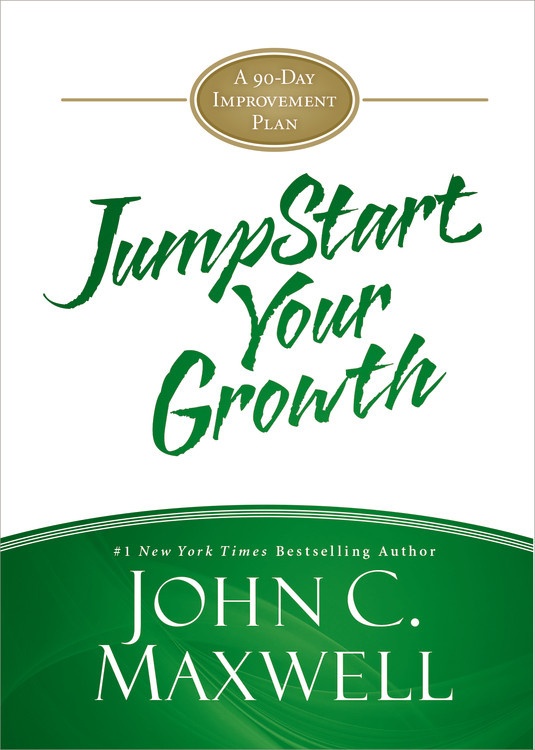
A great companion to 15 Laws is JumpStart Your Growth. This book is designed for you to read one selection each day for three months. You will be reminded of a principle John taught you in 15 Laws, but then you will find a blank journal page with a suggested exercise for that day. I would highly recommend reading JumpStart right after you complete 15 Laws, so that you are putting into practice the phenomenal truths you were just taught.
“The Apostle Paul tells us that a temple of God, properly adorned and maintained, grows in unity and maturity in the Lord Jesus, as pastors and teachers equip church members to do the work of ministry (Ephesians 4:11-16). A building and other facilities can aid in this process, but they are not essential. Indeed, in many ways they can actually distract us from our task by so defining and confining what we do in the name of ministry that our endeavors consistently look more like the ways of the world than the work of the Lord, more like maintaining and maximizing an institution than seeking and advancing a Kingdom not of this world. … As we build our churches let us not lose sight of the fact that what matters most to the Lord is not the number, shape, and usability of the buildings we erect, but the health, growth, and ministries of the people in whom He has come to dwell.” —T.M. Moore
“When we blindly adopt a religion, a political system, a literary dogma, we become automatons. We cease to grow.” —Anais Nin
“The Lord’s Prayer contains 56 words; the Gettysburg Address, 266; the Ten Commandments, 297; the Declaration of Independence, 300; and a recent U.S. government order setting the price of cabbage, 26,911. At the state level, over 250,000 bills are introduced each year. And 25,000 pass the legislatures to disappear into the labyrinths of the law.” —Al Ries and Jack Trout
“For some (even for some Christians), faith is best defined as ‘believing in something that lacks supporting evidence.’ But this is not the definition of faith that is presented on the pages of Christian Scripture.” Read more from J. Warner Wallace on how Christianity Promotes Rational (and Evidential) Exploration.
Frank Turek points out, “Remember, Moses was on the wrong side of the golden calf. And [Abraham] Lincoln’s Emancipation Proclamation was on the wrong side of Dred Scott.…”In this post he shares why same-sex “marriage” proponents are on the wrong side of God, evolution and humanity.
[VIDEO] This 5-minute clip of noted New Testament scholar N.T. Wright on homosexuality is well worth your time—
I am a huge John Maxwell fan! Most of his books are quite in-depth, and feel like a graduate-level class in leadership. For those that are ready to go on a leadership development journey with Dr. Maxwell, The Complete 101 Collection would be a great place to start.
In college, the 101-level classes are intended to be the introduction to a subject. This is the class that will educate you, but more than that, it should whet your appetite to move on to the 201- 301, and 401-level classes in that subject. John Maxwell’s 101 books will do exactly the same thing.
When you read the books in this collection on attitude, self-improvement, leadership, relationships, success, teamwork, equipping, and mentoring, you will be able to see (a) which subject peaks your interest for more, and (b) which subject is calling you to more improvement. Then you can move on to other Maxwell books which will be the higher level classes in that subject.
This is an excellent book for anyone wanting to improve their interactions with others.



 Is it raining, little flower?