7 Quotes From David Livingstone

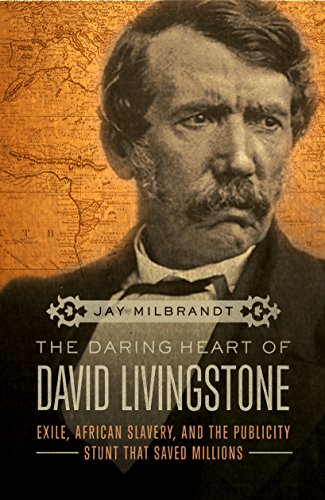
The Daring Heart Of David Livingstone by Jay Milbrandt is an amazing account of this man’s heroic and history-altering life. Check out my full book review by clicking here. Below are a few quotes that Milbrandt shared in his biography. 

“It is something to be a follower, however feeble, in the wake of the great Teacher and only model missionary that ever appeared among men.” —David Livingstone 

“People talk of the sacrifice I have made in spending so much of my life in Africa. Can that be called a sacrifice which is simply paid back as a small part of a great debt owing to our God, which we can never repay? Is that a sacrifice which brings its own blest reward in healthful activity, the consciousness of doing good, peace of mind, and a bright hope of a glorious destiny hereafter? Away with the word in such a view and with such a thought! It is emphatically no sacrifice. Say rather it is a privilege. Anxiety, sickness, suffering, or danger now and then with a foregoing of the common conveniences and charities of this life, may make us pause and cause the spirit to waver and the soul to sink; but let this only be for a moment. All these are nothing when compared with the glory which shall be revealed in and for us. I never made a sacrifice.” —David Livingstone 

“I shall hold myself in readiness to go anywhere, provided it be forward. … Our duty is to go forward … I have observed that people who have sat long waiting have sat long enough before they saw any indication to go.” —David Livingstone 

“As they are experts with the spear I don’t know how it missed, except that he was too sure of his aim and the good hand of God was upon me.” —David Livingstone, after surviving two spears thrown at him during an ambush 

“The Gospels reveal Jesus, the manifestation of the blessed God over all as minute in His care of all. He exercises a vigilance more constant, complete, and comprehensive, every hour and every minute, over each of His people than their utmost selflove could ever attain. His tender love is more exquisite than a mother’s heart can feel.” —David Livingstone 

“If the good Lord permits me to put a stop to the enormous evils of the inland slave-trade, I shall not grudge my hunger and toils. I shall bless His name with all my heart. The Nile sources are valuable to me only as a means of enabling me to open my mouth with power among men. It is this power I hope to apply to remedy an enormous evil [in the East African slave trade]. Men may think I covet fame, but I make it a rule never to read aught written in my praise.” —David Livingstone 

“I am a missionary, heart and soul. God had an only Son, and He was a missionary and a physician. A poor, poor imitation I am or wish to be. In this service I hope to live, in it I wish to die.” —David Livingstone 

The Daring Heart Of David Livingstone (book review)

I’ll be honest: I only knew one small story about David Livingstone prior to reading The Daring Heart Of David Livingstone by Jay Milbrandt, and now I’m kicking myself that I didn’t learn more about this amazing man much earlier! 

Dr. Livingstone was a missionary, a world-renown explorer, and an avid abolitionist. Very rarely have I come across a biography that reads like a novel, but this book is just that! Milbrandt is a brilliant storyteller, and he makes the biography of Livingstone so intriguing that I could scarcely put it down. I love how many of Livingstone’s personal letters and diary entries are included in this book, as it almost makes it feel more like a memoir or autobiography. 

Dr. Livingstone first went to Africa as a missionary but then gained fame as an explorer, becoming the first man to traversing Africa on foot—from the Atlantic coast to the Indian Ocean. He wrote a book about these travels (including the people he met, the animal and plant life he observed, and the stories of the dangers he faced), which gave him celebrity status in England. So much so that when he wanted to return to Africa, both the London Missionary Society and the Royal Geographical Society wanted to be his sending agency. 

Livingstone desperately wanted to see the end of slavery on the African continent, and returned to Africa with that sole focus burning in his heart. Along the way, he met with massive struggles—some self-imposed and some unavoidable in the harsh environment of interior Africa. Yet through all of these hardships, Livingstone repulsed at the idea that anything he ever went through could be called a sacrifice, stating emphatically: “I never made a sacrifice!” 

Milbrandt writes, “Livingstone died perhaps believing he had failed in every aspect. Yet, in the few short years after his death, everything Livingstone had worked for had come to fruition.” Including the complete eradication of the foul slave trade across the African continent. 

What an amazing example for leaders to aspire to follow today! 

(Tomorrow I will share some quotes from David Livingstone that you won’t want to miss!) 

The Servant Of God

…Joshua, son of Nun, the servant of the Lord… (Joshua 24:29). 

There are not many people in the Bible called “the servant of the Lord”:

  1. Moses
  2. Joshua
  3. David (in the introduction to Psalms 18 and 36)
  4. Jesus (in Isaiah 42 and 49)

In Joshua’s final address to the Israelites, I believe he shares some common themes for anyone who wants to be called a servant of the Lord:

  • A firsthand, personal encounter of God’s miracles (Joshua 23:3; 24:7)
  • Constant recall of God’s provision (23:4; 24:7)
  • Awareness that my doing is only possible because of God’s doing (23:5, 10; 24:12)
  • Obedience to God’s Word (23:6; 24:21)
  • Wholehearted love for God (23:11; 24:23)
  • Reverent fear of God (23:12-13; 24:14, 19-20)
  • Based on what God has already done, trust in His future grace (23:14; 24:24)
  • Choosing to do all of the above every single day (24:15, 18)

All of these principles were fulfilled in the Ultimate Servant of the Lord: Jesus of Nazareth. And that Servant told us that His Spirit would empower us to live like He lived. It’s not impossible to live like this, but the Holy Spirit wants to empower us to live this out. The question is: will we let Him?

Sadly, the were no other leaders that came immediately after Joshua who were called “servant of the Lord.” Israel failed primarily because they violated the the very first principle—they had no first-hand, personal experience of God’s miracles. They lived off the miracles of their parents’ age: it was for them “the Lord your God” and never “the Lord my God” (see Joshua 24:31; Judges 21:25).

May our prayer today be: Heavenly Father, I want to be a legacy leader. Jesus, I want to be a servant of God just like You were. Holy Spirit, I invite you into my life to empower me to live this servant lifestyle every single day. 

The Source Of A Leader’s Moral Authority

Samuel said to all Israel… (1 Samuel 12:1-25). 

A mark of a godly leader is one who leads with God’s moral authority. 

Samuel had always been a public person: accessible and visible to all. Now he calls all Israel together to challenge them to point out where he may have taken a bribe or used his position to his own advantage. All Israel was silent on this—no one could speak a word against him (v. 4). This gave him the moral authority to speak a hard word to the people. 

Samuel reminds Israel that God is sovereign:

  • God appoints leaders
  • God overrules evil plans
  • God fulfills all His purposes

Samuel had to “confront [them] with evidence” (v. 7) that they had not acted like those things were true about God. A prophet frequently has to say, “Here is God’s standard, and here is where you are falling short of His standard.” But a shepherd’s voice quickly adds, “Far be it from me that I should sin against the Lord by failing to pray for you. And I will teach you the way that is good and right” (v. 23). 

This prophet-shepherd is attested to by God Himself. God will sometimes thunder His thunder (vv. 17-18), but God will always make sure that none of His servant’s words fall to the ground (3:19). This moral authority is gained by both fearing God and delighting in Him.

Fear of God brings the prophet’s voice forward. Delighting in God brings the shepherd’s voice forward. God’s effective leader needs both voices to lead with moral authority.

This is part 47 in my series on godly leadership. You can check out all of my posts in this series by clicking here.

Poetry Saturday—Worthwhile

It is easy enough to be pleasant
   When life flows along like a song,
But the man worthwhile is the one who will smile
   When everything goes dead wrong;
For the test of the heart is trouble,
   And it always comes with the years,
And the smile that is worth the praises of earth
   Is the smile that shines through tears.

It is easy enough to be prudent
   When nothing tempts you to stray:
When without or within no voice of sin
   Is luring your soul away;
But it’s only a negative virtue
   Until it is tried by fire,
And the life that is worth the honor of earth
   Is the one that resists desire.

By the cynic, the sad, the fallen
   Who had no strength for the strife,
The world’s highway is cumbered today;
   They make up the item of life.
But the virtue that conquers passion,
   And the sorrow that hides in a smile,
It is these that are worth the homage of earth,
   For we find them but once in a while. —Ella Wheeler Wilcox

Sowing Seeds For The Future

Tell the Israelites to designate the cities of refuge, as I instructed you through Moses. … The Lord commanded through Moses that you give us [Levites] towns to live in… (Joshua 20:2; 21:2).

The Israelite leadership designated 6 cities of refuge and 48 Levitical cities. It was a big responsibility for the leadership of those towns to protect both the innocent person who was being pursued by the avenger of blood, and ensuring that the Levites were taken care of.

There is one city that particularly stands out to me: Hebron.

This city was formally called Kiriath Arba: so named after the biggest, baddest of the Anakite giants who had lived there. This is the strongly-fortified city that was inhabited by not one—but three!—giants that the 85-year-old Caleb defeated (15:13-14).

Hebron became both a city of refuge and a Levitical city. Caleb also secured Debir, which became a Levitical city too (15:15-17; 20:7; 21:11-15). Later on, Hebron would be David’s capital city for seven years until he moved his throne to Jerusalem.

A mark of a godly leader is one who sows the seeds that others will harvest.

What would have happened if Caleb hadn’t defeated those giants?

Or if he wasn’t willing to take on the added responsibilities for fugitives and priests?

Caleb conquered in his lifetime to benefit people for hundreds of years after he was gone!

God still needs these forward-looking, boldly-conquering servant leaders. I want to be a leader like that, and I hope you do too! 

This is part 46 in my series on godly leadership. You can check out all of my posts in this series by clicking here.

In > On

When it comes to the Holy Spirit’s involvement in a Christian’s life: In > On.

Sometimes, instead of referring to the two major divisions of the Bible as Old Testament and New Testament, I prefer to use First Testament and Second Testament. This helps me remember that “Old” doesn’t mean outdated, and “New” doesn’t mean forgetting what came before it.

B.B. Warfield had a great analogy. He imagined the First Testament to be a perfectly-constructed mansion. Only the finest materials had been used, and the mansion had been constructed by the best craftsmen being overseen by the world’s premier Architect. The only problem was this mansion had no lights. With the appearing of Jesus in the Second Testament, finally the lights are turned on. Jesus reveals the beauty that was already there! 

In the First Testament, we frequently read that the Holy Spirit comes ON people, usually for leadership functions. We see this phrase with Moses and his co-leaders, several of the judges, Israel’s first two kings, and many of the prophets (see Numbers 11:25; Judges 3:10, 6:34, 11:29, 15:14; 1 Samuel 11:6, 16:13; 2 Kings 2:15). 

However, there is one leader in the First Testament about which we notice the Spirit came IN him. Twice Ezekiel says this (2:2, 3:24). This was hinting at a to-be-fulfilled promise in the Second Testament (36:25-27). 

The Holy Spirit being IN God’s people—which makes them God’s leaders—is described by Jesus in Acts 1:5. Many translations render this verse, “You will be baptized with the Holy Spirit.” But the NIV footnote and The Message both say “in the Holy Spirit.” Indeed, the Greek word means “by, with, or in.” But in context to being baptized (which means immersed, submerged, cleansed, overwhelmed), I think the best word is: baptized IN the Holy Spirit.  

Let me say it again: When it comes to the Holy Spirit’s involvement in a Christian’s life: In > On. 

“You hardly need to pray to have the Spirit poured out, for that has been done. What you need is a baptism of the Holy Spirit; to go down personally into that glorious flood that has been poured forth. Oh, to be immersed in the Holy Spirit and into fire—covered with His holy influence—plunged into the Godhead’s deepest sea and lost in His immensity! Here is our life and power.” —Charles Spurgeon 

Jesus wants all of His followers to be baptized IN the Holy Spirit. So He told us to keep on asking, keep on seeking, keep on knocking, keep on waiting for God’s promised infilling (Luke 11:9-13; Acts 1:4-8). 

Don’t stop at salvation—with just the Holy Spirit deposited in you—press on to be submerged deep into the Holy Spirit. 

If you missed the first couple of posts in this series, check out Where’s God Today? and The Holy Spirit Keeps Christians “Oscar Mike.” 

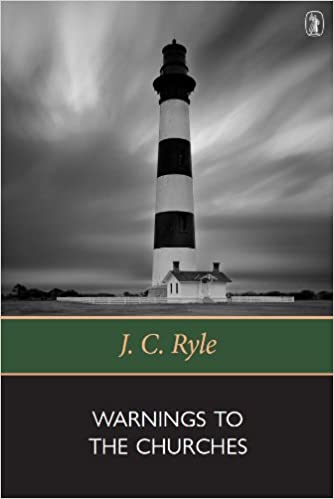
8 Quotes From “Warnings To The Churches”

This hard-hitting, no-pulled-punches book is directed primarily at pastors and other church leaders. However, I think anyone who loves Christ and His Bride will find much to ponder in Warnings To The Churches by J.C. Ryle. You can read my full book review by clicking here. 

“Go forward, beloved brethren, and fear not the adversary. Only abide in Christ and the victory is sure. Marvel not at the hatred of the gates of hell. ‘If you were of the world, the world would love you as its own’ [John 15:19]. So long as the world is the world, and the devil is the devil, there must be warfare, and believers in Christ must be soldiers! The world hated Christ, and the world will hate true Christians as long as the earth stands. As the great reformer, [Martin] Luther, said, ‘Cain will go on murdering Abel so long as the Church is on earth.’” 

“He who cannot lie has pledged His royal word that all the powers of hell shall never overthrow His Church. It shall continue, and stand, in spite of every assault. It shall never be overcome.” 

“Weak as this true Church may appear to the eye of man, it is an anvil which has broken many a hammer in times past, and perhaps will break many more before the end. He who lays hands on it is touching the apple of God’s eye!” 

“We corrupt the Word of God most dangerously when we throw any doubt on the absolute inspiration of any part of Holy Scripture.” 

“We corrupt the Word of God when we make defective statements as doctrines. We do so when we add to the Bible the opinions of the Church or of the Church Fathers, as if they were of equal authority. We do so when we take away from the Bible for the sake of pleasing men. We do so when from a feeling of false liberality, keep back any statement which seems narrow, or harsh, or hard. We do so when we try to soften down anything that is taught about eternal punishment or the reality of hell. We do so when we bring forward doctrines in their wrong proportions.” 

“May we never care what men say of us so long as we walk in the light of God’s Word! May we strive and pray to be wholly independent of, and indifferent to, man’s opinion, so long as we please God!” 

“Chosen as believers are by God the Father, justified as they are by the blood and righteousness of Jesus Christ, sanctified as they are by the Holy Spirit, believers are still only men—they are still in the body and still in the world. They are ever near temptation. They are ever liable to misjudge, both in doctrine and in practice. Their hearts, though renewed, are very feeble; their understanding, though enlightened, is still very dim. They ought to live like those who dwell in an enemy’s land, and every day to put on the armor of God. The devil is very busy: he never slumbers or sleeps.” 

“Like the fruit of which Eve and Adam ate, at first sight it looks pleasant and good, and a thing to be desired. ‘Poison’ is not written up on it and so people are not afraid. Like counterfeit coin it is not stamped ‘bad.’ It passes for the real thing, because of the very likeness it bears to the truth. Let us be on our guard against the very small beginnings of false doctrine.” 

Warnings To The Churches (book review)

J.C. Ryle died in 1900, placing his writings two centuries before our own. And yet his Warnings To The Churches sound an alarm that is just as relevant to the Church and her leaders as if it were written last week! 

Bishop Ryle spoke and wrote with an authority that sounded much like the Old Testament prophets thundering, “Thus saith the Lord!” And at the same time, you can also hear his ardent love for Christ’s Bride as tenderly as the beloved disciple John, who called himself “the disciple whom Jesus loved.” Taken together, that means Ryle’s words are steeped in authoritative, loving Scripture. 

He pulls no punches in pointing out how even Church leaders have bought into a definition of “church” that doesn’t quite line up with the way Jesus defined it. He reminds pastors of their heavy responsibility to preach the Word of God in all its purity. Just like Jesus, Ryle warns church leaders of the “leaven of the Pharisees and Sadducees.” And he calls for loving confrontation of those leaders who have succumbed to the “leaven” just as Paul confronted Peter. 

This is a challenging book to read simply because of the gut-level honest introspection that it will require. I certainly couldn’t read through this book thinking I’ve got my act together, and I doubt few others will be able to either. If you are a church leader and you would like Ryle’s iron to sharpen your iron, Warnings To The Churches is a definite must-read for you.

Certainty In Uncertain Times

… Perhaps the Lord will act in our behalf … The God we serve is able to save us from the furnace…but even if God does not save us… (1 Samuel 14:6 and Daniel 3:17-18).

We often remember and even hold in high regard those leaders who rise up in times of crisis or uncertainty. But I think we might be shocked if we knew exactly how scared these seemingly unflappable leaders actually were! 

The Philistines really had the Israelites on the ropes. Israel’s army was slowing melting away, as soldiers one by one were deserting and heading home. The Philistines had captured all of the sword-makers, so that there were only two swords left—one for King Saul and one for his son Jonathan. 

And to make matters even more desperate, the Philistines occupied all the strategic high ground, so that even if the Israelites were going to attempt an attack, they would have to scale the cliffs in order to do so.

For Jonathan, this situation was unbearable. So he said to his armor-bearer (keep in mind that this armor-bearer didn’t really have any armor to bear!), “Let’s go attack the Philistines.” And then he adds this line that probably didn’t instill too much confidence in anyone, “Perhaps the Lord will give us victory.” 

Perhaps?!

Many years later, when the nation of Israel was in exile in Babylon, three Jewish young men found themselves in a literal hot spot. King Nebuchadnezzar had built an enormous statue of himself and commanded that everyone bow down and worship it. Shadrach, Meshach, and Abednego had been promoted into leadership positions in the capital city of Susa, so there was no hiding in the outreaches of the countryside for them. Their disobedience to the king’s command would make them stand out to everyone. The king had ordered that anyone who disobeyed his edict would be thrown into a fiery furnace. 

Shadrach, Meshach, and Abednego were God-fearing men and knew that they could not worship any other god except Yahweh. When the king confronted their disobedience, they also responded with words that didn’t sound very confident, “God can save us, but we’re not sure if He will save us. But even if He doesn’t, we’re not going to bend our knee.” 

If?!

“Perhaps” and “if” don’t sound like very confident words, do they? 

And yet these godly leaders were totally certain in their uncertain times. They weren’t certain of the outcome, but they were certain of God’s ability to bring the ultimate victory. Even in dark times of crisis, godly leaders are certain that God is greater than their uncertain circumstances. 

A mark of a godly leader is one who has a certain confidence in God even in an uncertain crisis.

Jonathan, and Shadrach, and Meshach, and Abednego would all tell us, “Whether God was going to give us victory in the moment of crisis or not, we will remain in God’s presence! We will not compromise. We will not give in to fear. We will not disobey God. We will continue to cling to Him—rescue or not—knowing that He will be glorified in whatever way He chooses to respond.” 

These young men teach an invaluable lesson for all of us even today: Trust God no matter how uncertain the times are. 

This is part 45 in my series on godly leadership. You can check out all of my posts in this series by clicking here.